At What Age Is a Dog Considered Senior

Learn Senior Age Ranges, Early Decline Signals, and Protective Steps That Work

Essential Summary

Why is it important to know at what age a dog is considered senior?

Most dogs are considered senior around age seven, but size and breed can shift that timeline, with larger dogs often aging earlier. The more useful question is when your dog’s needs change—mobility, sleep, appetite, and recovery. Thoughtful, system-level support can make senior years feel steady and familiar.

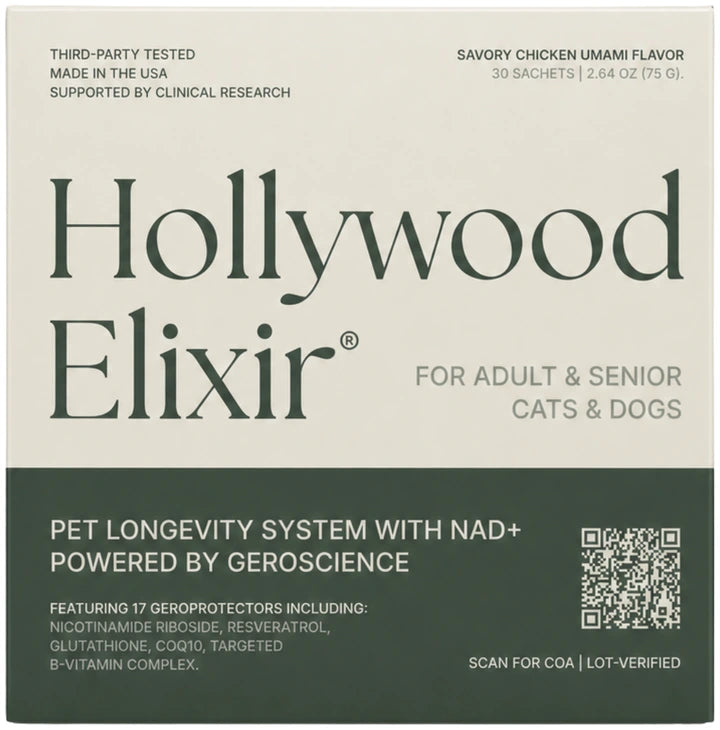
Hollywood Elixir™ is designed for graceful aging support that complements good food and veterinary care—less about “fixing” one symptom, more about supporting the broader systems that help older dogs stay comfortable, engaged, and resilient over time.

The question at what age is a dog considered senior sounds simple, but it’s usually asked with a quieter concern underneath: Am I about to miss something important? The common reference point is around seven years old, with meaningful variation by breed and size. Larger dogs often arrive there earlier; many small dogs take their time. But the most helpful answer isn’t a number—it’s a way of noticing.

Seniorhood tends to announce itself in small edits: a longer pause before jumping, a slower morning, a narrower appetite for chaos. These changes can be normal, and they can also be the moment when supportive choices start to matter more than heroic fixes later. This page walks through the age ranges people mean when they ask what age is a senior dog, the signs that often appear first, and how to think about middle age as the runway into the senior years.

If you’re science-minded, you may also wonder: if my dog eats well, exercises, and sees the vet, why add anything else? The honest answer is that aging isn’t a single-nutrient problem. It’s a whole-body shift in resilience, recovery, and tolerance for stress. That’s where a system-level daily formula can stay relevant—supporting the broader network that helps your dog remain steady over time, rather than chasing one symptom at a time.

By La Petite Labs Editorial, ~15 min read

Featured Product:

  • Seven years old is a common senior benchmark, but it’s only a starting point (Laflamme DP, 2005).
  • Large breeds often become seniors earlier, while many small dogs stay “adult” longer (Schauf S, 2021).
  • Middle age is the quiet runway: small changes in stamina and recovery appear before obvious slowing.
  • Look for trendlines—mobility, sleep, appetite, and behavior—rather than one-off “bad days.”
  • Nutrition often needs to evolve with age, because aging can change overall health management needs (Stockman J, 2024).
  • Cognitive changes can be subtle at first; early notes help your vet interpret what you’re seeing (Simon KE, 2024).
  • Aging support that’s system-level can stay relevant even when diet seems “covered,” which is where Hollywood Elixir™ fits.

The Age Most Dogs Enter Their Senior Years, and Why It Varies

If you’re wondering at what age is a dog considered senior, the most common benchmark is around seven years old—but it’s not a rule so much as a starting point (Schauf S, 2021). Dogs don’t age on a single calendar. Size and breed shape the pace: larger dogs tend to move into “senior” territory earlier, while many small dogs stay spry well past seven (Laflamme DP, 2005).

A useful way to think about it is this: “senior” is less a birthday and more a cluster of subtle shifts—sleep, stamina, appetite, recovery, and the way your dog handles change. The goal isn’t to label your dog; it’s to time your support so the later years feel steady rather than sudden.

Mitochondria artwork highlighting longevity science connected to what age is middle age for a dog.

Size and Breed: the Fastest Way to Estimate Senior Timing

Size is the simplest predictor of when “senior” begins. Larger breeds tend to age faster and may be classified as senior earlier than smaller breeds (Schauf S, 2021). That doesn’t mean large dogs are fragile; it means their timeline compresses. A Great Dane at six may be in a comparable life stage to a toy breed at ten.

If you’re trying to decide what age is a senior dog for your specific pet, start with size, then layer in individual history: past injuries, weight changes, and activity level. Two dogs of the same breed can age differently depending on lifestyle and health background.

Scientific DNA render highlighting oxidative defense supported by what age is middle age for a dog.

Beyond Birthdays: Using Functional Age to Read Your Dog

Breed influences more than lifespan; it can influence how aging shows up. Some dogs develop stiffness early, others show changes in hearing or vision first, and some simply slow down in a way that’s easy to miss. The point isn’t to predict every issue—it’s to notice your dog’s pattern.

If you’re asking what age is a dog considered a senior because you want to plan ahead, consider your dog’s “functional age.” Can they do the same activities with the same ease? Do they recover the same way? Those answers often matter more than the number on the calendar.

Molecular structure graphic reflecting research-driven design behind what age is middle age for a dog.

Early Signs of Aging That Often Hide in Plain Sight

The earliest senior signs are often quiet. You may notice your dog hesitating before jumping into the car, taking stairs more slowly, or choosing softer surfaces to lie on. None of these automatically mean something is wrong; they can be normal adaptations.

What matters is change over time. A single “off day” is less informative than a gradual shift across weeks. If you keep a simple log—energy, appetite, mobility, sleep—you’ll have a clearer picture of whether your dog is entering a senior phase or just responding to a temporary stressor.

Pug image representing loving care routines supported by what age is a senior dog.

Weight Drift and Metabolism: the Slow Shift with Big Consequences
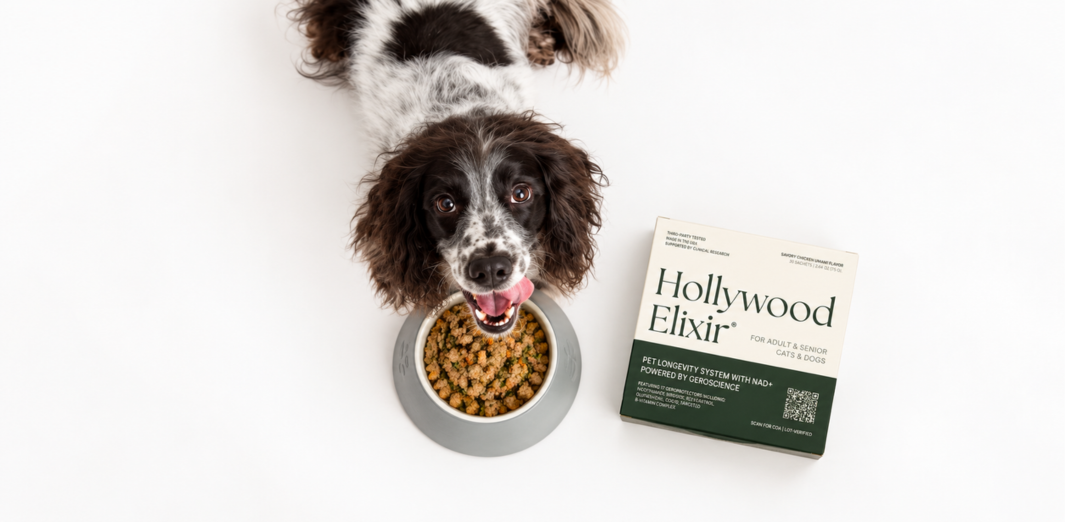
Weight can drift upward in middle age and early senior years, even when you haven’t changed food. A slightly slower metabolism and less spontaneous activity can add up. The challenge is that extra weight can make joints work harder, which then reduces movement further.

Aim for a body condition that keeps your dog comfortable and willing to move. If you’re unsure, ask your veterinarian to score body condition and recommend a target. The best senior plan is often boring: consistent portions, measured treats, and daily movement that your dog can sustain.

Hollywood Elixir™ is amazing and makes my 13 y/o young again!

— Jessie

We go on runs. Lately he's been keeping up with no problem!

— Cami

“Senior is less a birthday than a pattern: recovery, comfort, and steadiness over time.”

Dental Health in Older Dogs: Comfort, Appetite, and Daily Joy

Dental health becomes more consequential with age. Older dogs may chew more cautiously, drop kibble, or prefer softer foods. Sometimes the change is subtle: slower eating, one-sided chewing, or less interest in hard treats.

Because dental discomfort can affect appetite and mood, it’s worth treating it as part of senior wellness rather than a separate category. Home care helps, but professional evaluation is often needed to understand what’s happening below the gumline. If your dog’s breath changes suddenly, note it and mention it at the next visit.

Dog portrait symbolizing confidence and healthy aging support from what age is a senior dog.

Hearing and Vision: Helping Your Dog Navigate with Ease

Hearing and vision changes can arrive gradually. You might notice your dog sleeping through familiar sounds, startling more easily, or hesitating in dim light. Many dogs compensate well—until the environment changes.

Support often looks like small environmental edits: consistent furniture placement, night lights, and clearer cues. If sensory changes appear suddenly, treat that as a medical question rather than “just aging.” The earlier you clarify what’s going on, the easier it is to keep your dog confident and oriented.

Dog looking ahead, capturing presence and calm energy supported by what age is a dog considered a senior.

Digestion in Senior Dogs: When Tolerance Gets More Selective

Digestive tolerance can narrow with age. Some senior dogs do fine on the same diet for years; others become more sensitive to rich treats, abrupt food changes, or stress. If stool quality becomes inconsistent, it’s a signal to slow down and simplify.

Because senior dogs may require different nutritional needs to support their aging process, it can help to evaluate diet as a whole rather than chasing one supplement at a time (German K, 2025). Work with your veterinarian to rule out medical causes, then adjust gradually. Consistency tends to be kinder to older digestion.

Product info graphic highlighting testing and standards behind what is considered a senior dog.

Behavior Changes: Interpreting Mood, Stress, and Sensitivity

Behavior changes can be the most emotionally loaded sign of aging. Increased clinginess, irritability, or withdrawal can reflect discomfort, sensory changes, or cognitive shifts. It can also reflect a dog who simply has less tolerance for chaos than they used to.

Treat new behavior as information, not attitude. If your dog avoids being touched in certain areas, start by assuming pain until proven otherwise. A calm household rhythm, predictable walks, and gentle enrichment can go a long way—especially when paired with veterinary guidance to address underlying causes.

Middle Age: the Quiet Transition That Sets up Senior Comfort

When people ask what age is middle age for a dog, they’re usually trying to catch the moment before “senior” arrives. Middle age is the stretch when your dog still looks like themselves, but the margins get thinner: less bounce after a long walk, slightly longer naps, a slower return to baseline after stress. Those are normal, but they’re also informative.

Practically, middle age is when preventive habits pay the highest dividends: consistent weight management, muscle-preserving activity, and routines that reduce wear-and-tear. It’s also a good time to establish a “normal” for your dog’s behavior and energy so later changes are easier to spot and discuss with your veterinarian.

“Large dogs often age on a faster clock; small dogs often stretch the timeline.”

Professional uniform showing commitment to quality in support of what age is a senior dog.

Cognitive Changes: Subtle Clues That Deserve Calm Attention

Aging isn’t only physical. Some dogs show small cognitive changes as they get older—getting “stuck” in corners, seeming less responsive, or appearing disoriented in familiar spaces (Simon KE, 2024). These shifts can be intermittent at first, which is why owners often second-guess themselves.

If you notice new confusion, disrupted sleep-wake patterns, or changes in social engagement, write down what you see and when it happens. Patterns matter. Your veterinarian can help rule out pain, sensory loss, or medical issues that can mimic cognitive change. The earlier you notice trends, the more options you usually have for supportive care.

Shop Now
Ingredients around product reflecting antioxidant support within what age is middle age for a dog.

Nutrition in Later Years: Matching Food to a Changing Body

Nutrition often needs to evolve with age. As dogs get older, age-related changes can affect nutritional needs and overall health management (Stockman J, 2024). The “right” diet is less about a single ingredient and more about the whole picture: body condition, stool quality, appetite, mobility, and how your dog recovers after activity.

Senior-focused feeding is typically about maintaining lean mass, supporting comfortable movement, and keeping digestion predictable. If your dog is gaining weight on the same portions, or losing weight without trying, it’s worth a conversation with your veterinarian. Small adjustments made early can prevent a cascade of secondary issues later.

Shop Now
Owner and dog moment highlighting wellness rituals supported by what age is a senior dog.

Exercise for Seniors: Consistency, Recovery, and Confidence

Exercise for older dogs is rarely about intensity; it’s about consistency. Many seniors do best with shorter, more frequent outings that keep joints moving and muscles engaged without leaving them sore the next day. Warm-up time matters more than it used to, and so does recovery.

Watch for “next-day feedback.” If your dog is stiff after a new route or longer play session, that’s useful information—not a failure. Adjust duration, surfaces, and pacing. The aim is to preserve confidence and comfort, because older dogs often self-limit when they expect discomfort.

Shop Now

Sleep and Rest: When New Patterns Signal a New Stage

Sleep changes can be one of the earliest signs that your dog is entering a new life stage. Seniors may nap more during the day, wake more at night, or seem restless when they used to settle easily. Sometimes it’s simply aging; sometimes it’s discomfort, anxiety, or a new medical issue.

A few practical checks help: is the bed supportive, is the room too warm, are nighttime bathroom breaks increasing, and is there new noise sensitivity? If sleep disruption is persistent, bring it up at your next veterinary visit. Better sleep supports mood, appetite, and resilience—especially in older dogs.

Coat, Skin, and Grooming: Small Signals You Can Actually See

Coat and skin can quietly signal age. You might see graying around the muzzle, a drier coat, slower regrowth after shaving, or more dandruff. These changes are common, but sudden shifts—itching, hair loss, or recurrent ear and skin issues—deserve attention.

Grooming also becomes more than cosmetic in senior years. Regular brushing helps you notice lumps, tenderness, or changes in body condition early. It’s a calm, low-stakes way to keep a running inventory of your dog’s comfort—something that becomes increasingly valuable as the years add up.

Comparison graphic showing what age is a dog considered a senior benefits versus typical supplement formulas.

Vet Visits in Senior Years: Tracking Trends, Not Just Symptoms

Veterinary care often shifts in emphasis once your dog is older. Instead of only reacting to problems, the focus becomes trend-spotting: weight drift, dental changes, mobility, and behavior. Because “normal aging” and “treatable issues” can look similar at home, routine check-ins help separate the two.

Bring specifics: a short list of changes, when they started, and what makes them better or worse. Videos can help, especially for gait changes or nighttime pacing. The most useful senior care is usually quiet and incremental—small course corrections that keep your dog feeling like themselves.

Shop Now
Open box with Hollywood Elixir inside, reinforcing what is considered a senior dog premium cues.

A Practical Definition of Senior: Needs, Not Labels

So what is considered a senior dog in everyday life? It’s the dog who still wants to be with you, still enjoys their routines, but benefits from a little more planning: softer landings, steadier schedules, and fewer extremes. Seniorhood is often a long chapter, not a short finale.

The best approach is to treat “senior” as a prompt to refine support rather than reduce expectations. Many older dogs thrive with thoughtful adjustments—especially when you protect their confidence. When their world feels predictable and comfortable, they tend to stay engaged longer.

Shop Now

Putting It Together: a Simple Way to Decide Your Dog’s Life Stage

If you’re deciding whether your dog has crossed into senior years, combine the calendar with what you observe. Seven is a common marker, with earlier transitions for large breeds (Schauf S, 2021). But the more meaningful question is whether your dog’s needs have changed: recovery time, appetite steadiness, sleep quality, and tolerance for novelty.

Aging support works best when it’s system-level—supporting the whole network that underpins energy, mobility, and resilience—rather than chasing one symptom at a time. That’s why many owners add a daily, broad-based aging formula alongside good food, movement, and veterinary care.

“The best senior care is usually incremental: small course corrections that keep life feeling familiar.”

Educational content only. This material is not a substitute for veterinary advice. Always consult your veterinarian about your dog’s specific needs. These statements have not been evaluated by the Food and Drug Administration. Products mentioned are not intended to diagnose, treat, cure, or prevent any disease.

Glossary

  • Senior dog: A life stage typically beginning around seven years, adjusted for breed and size.
  • Middle age (dogs): The transitional adult stage before senior years, when recovery and stamina may subtly change.
  • Functional age: Your dog’s “age” as reflected by mobility, energy, sleep, and recovery rather than birthdays.
  • Breed-size effect: The tendency for larger breeds to age faster and become seniors earlier than smaller breeds.
  • Recovery time: How long it takes your dog to return to normal after exercise, travel, or stress; often lengthens with age.
  • Body condition score (BCS): A veterinary scale used to assess whether a dog is underweight, ideal, or overweight.
  • Cognitive change: Age-associated shifts in awareness, sleep-wake patterns, or responsiveness that may appear in seniors.
  • Trendline tracking: Noting small changes over weeks (sleep, appetite, mobility) to distinguish aging from short-term issues.

Related Reading

References

Schauf S. Healthy Ageing Is Associated with Preserved or Enhanced Nutrient and Mineral Apparent Digestibility in Dogs and Cats Fed Commercially Relevant Extruded Diets.. PubMed. 2021. https://pubmed.ncbi.nlm.nih.gov/34359256/

Laflamme DP. Nutrition for aging cats and dogs and the importance of body condition.. PubMed. 2005. https://pubmed.ncbi.nlm.nih.gov/15833567/

German K. Exploratory analysis of nutrient composition of adult and senior dog diets.. PubMed. 2025. https://pubmed.ncbi.nlm.nih.gov/41487487/

Stockman J. Nutrition and Aging in Dogs and Cats.. PubMed. 2024. https://pubmed.ncbi.nlm.nih.gov/38625530/

Simon KE. A randomized, controlled clinical trial demonstrates improved owner-assessed cognitive function in senior dogs receiving a senolytic and NAD+ precursor combination.. PubMed. 2024. https://pubmed.ncbi.nlm.nih.gov/38811634/

Willems A. Results of Screening of Apparently Healthy Senior and Geriatric Dogs.. PubMed. 2017. https://pubmed.ncbi.nlm.nih.gov/27747924/

Waters. Frailty and Mortality Risk Among Dogs with Extreme Longevity: Development and Predictive Validity of a Clinical Frailty Index in the Exceptional Aging in Rottweilers Study. 2024. https://www.mdpi.com/2076-2615/14/24/3651

Le Brech. Evaluation of Two Practical Tools to Assess Cognitive Impairment in Aged Dogs. 2022. https://www.mdpi.com/2076-2615/12/24/3538

Guelfi. Dog Aging: A Comprehensive Review of Molecular, Cellular, and Physiological Processes. 2024. https://www.mdpi.com/2073-4409/13/24/2101

Bermingham EN. Nutritional needs and health outcomes of ageing cats and dogs: is it time for updated nutrient guidelines?. PubMed Central. 2024. https://pmc.ncbi.nlm.nih.gov/articles/PMC11188961/

Kang Y. Age-related changes in growth and fecal parameters, nutrient digestibility, hematology, and serum biochemistry of Beagle dogs.. PubMed Central. 2025. https://pmc.ncbi.nlm.nih.gov/articles/PMC12516631/

Yamka. Serum Metabolomics of Senior Dogs Fed a Fresh, Human-Grade Food or an Extruded Kibble Diet. 2025. https://www.mdpi.com/2218-1989/15/10/676

FAQ

At what age is a dog considered senior for most breeds?

Most dogs are generally considered senior around seven years old, but the timeline can vary with breed and size. Large dogs often reach senior status earlier, while small dogs may stay in an “adult” stage longer.

If you’re unsure, pair age with what you observe—recovery time, sleep, and mobility. Many owners add broad, daily aging support alongside routine care; Hollywood Elixir™

Why does the senior label matter for my dog’s care?

“Senior” is useful because it prompts earlier, gentler adjustments—before problems feel urgent. Aging can change how dogs handle weight, activity, and daily stressors, so the same routine may stop fitting as well over time(Stockman J, 2024).

Think of it as timing: you’re aligning food, movement, and check-ins with your dog’s current needs. For owners who want system-level support that complements those basics, Hollywood Elixir™

What age is a dog considered a senior if they’re large?

Large breeds tend to age faster than smaller breeds and may be classified as seniors earlier(Laflamme DP, 2005). In real life, that can mean a big dog starts showing “older dog” patterns—slower recovery, stiffness, or more sleep—before the seven-year mark.

The best approach is to combine size with your dog’s day-to-day comfort and stamina. Many owners support the broader aging picture with a daily formula like Hollywood Elixir™

What age is a senior dog if they’re small or toy-sized?

Small dogs often age more slowly than large dogs, so they may not feel “senior” at seven even if that’s the general benchmark. Many toy breeds keep adult energy and mobility well into later years.

Rather than relying on a number, watch for trend changes in sleep, appetite steadiness, and recovery after activity. For owners who want gentle, system-wide aging support, Hollywood Elixir™

What age is middle age for a dog, roughly speaking?

Middle age is the in-between chapter: your dog still looks like themselves, but the edges soften—slightly longer naps, slower recovery, or less interest in intense play. The exact timing varies with size, since larger dogs tend to age faster overall(Schauf S, 2021).

It’s a smart time to build habits that make senior years easier: steady weight, consistent movement, and predictable routines. Many owners also add daily aging support such as Hollywood Elixir™

What signs suggest my dog is entering their senior years?

Common early signs include slower rising, hesitation with stairs or jumping, longer recovery after walks, and changes in sleep patterns. Some dogs also show subtle behavior shifts, like less tolerance for noise or more clinginess.

What matters most is a pattern over weeks, not a single off day. To support aging from multiple angles—comfort, resilience, and daily steadiness—many owners choose Hollywood Elixir™

Can a dog be senior by age but act young?

Yes. A dog can meet a calendar definition of senior and still have youthful energy, especially if they’re small, lean, and consistently active. The “senior” label is a planning tool, not a verdict on vitality.

Even when a dog seems young, aging support can be about preserving what’s working—steady routines, good recovery, and comfortable movement. Owners who want that broader support often use Hollywood Elixir™

At what age is a dog considered senior by veterinarians?

Many veterinary references use around seven years as a general senior threshold, with adjustments for breed and size(German K, 2025). In practice, veterinarians also weigh functional changes—mobility, weight trends, and behavior—when discussing life stage.

If you’re on the border, it’s reasonable to ask your vet what life stage they consider your dog and why. For owners who want daily, system-level aging support to pair with that plan, Hollywood Elixir™

Do senior dogs need different food than adult dogs?

Often, yes. As dogs age, their nutritional needs and overall health management can change, even if they look fine on the surface. Some seniors do well with adjusted calories, different fiber levels, or formulas that better match their activity and digestion.

The best choice depends on body condition, stool quality, and comfort, so it’s worth reviewing with your veterinarian. Many owners also add broad aging support beyond diet alone with Hollywood Elixir™

Is cognitive decline normal in senior dogs, and when?

Some senior dogs may experience cognitive decline, and owners can sometimes notice early changes like disorientation, altered sleep patterns, or reduced responsiveness(Simon KE, 2024). These signs can overlap with pain or sensory loss, so it’s important not to self-diagnose.

Track what you see and discuss it with your veterinarian, especially if changes are new or accelerating. For daily support aimed at the broader aging picture, many owners consider Hollywood Elixir™

Are supplements safe for senior dogs with other medications?

It depends on the ingredients and your dog’s medication list. Because older dogs are more likely to be on prescriptions, it’s wise to review any supplement with your veterinarian or pharmacist, especially if your dog takes pain medications, thyroid meds, or heart medications.

Bring the label and your dog’s current doses to the conversation so interactions can be screened thoughtfully. If you’re exploring a daily aging formula, discuss whether Hollywood Elixir™ fits your dog’s plan.

What side effects should I watch for with new senior supplements?

With any new supplement, the most common issues are digestive: softer stool, gas, or reduced appetite. Less commonly, you might see itchiness or behavior changes if an ingredient doesn’t agree with your dog.

Introduce one new product at a time, keep notes for a week or two, and stop if you see concerning reactions—then check in with your veterinarian. For a daily option designed for aging support, ask your vet about Hollywood Elixir™

How quickly will I notice changes after starting an aging routine?

Timelines vary. Some owners notice small shifts—like steadier energy or easier mornings—within a few weeks, while other changes are gradual and best seen by comparing month-to-month notes. Aging support is usually about maintaining trends, not dramatic overnight differences.

A simple log of sleep, walks, and appetite can make progress easier to see. If you want a daily formula that fits into a long-term aging plan, consider Hollywood Elixir™

How do I choose a quality supplement for senior dogs?

Look for clear labeling, consistent manufacturing standards, and a product purpose that matches your goal. Avoid formulas that promise to cure diseases or replace veterinary care. For seniors, “quality” often means tolerability, consistency, and a sensible, system-level approach.

It also helps when a product fits easily into daily life, because adherence matters more than perfection. If you’re evaluating options for broad aging support, review Hollywood Elixir™ with your veterinarian.

Can I give aging supplements daily, or should I cycle them?

Many owners use aging support daily because consistency is what makes routines workable. Whether daily use is appropriate depends on the specific formula, your dog’s health history, and any medications.

If your dog has chronic conditions, ask your veterinarian what schedule makes sense and what to monitor. For a daily, system-oriented option designed to complement senior care, consider Hollywood Elixir™

How should I introduce a new supplement to a senior dog?

Start slowly and keep everything else stable. Introduce the supplement with a familiar meal, avoid adding new treats at the same time, and watch stool quality and appetite for the first week. Seniors can be less forgiving of sudden changes.

If your dog has a sensitive stomach or a complex medical history, check with your veterinarian before starting. For an aging-support formula that’s meant to fit into daily routines, look at Hollywood Elixir™

Is senior status the same for dogs and cats?

No. Dogs and cats age differently, and even within dogs, size and breed shift the timeline. The “around seven” benchmark is commonly used for dogs, but it’s not automatically transferable to cats or to every dog(German K, 2025).

If you have multiple species at home, it helps to think in life stages rather than birthdays. For dog-specific, system-level aging support that complements routine care, consider Hollywood Elixir™

When should I call the vet about ‘normal’ senior changes?

Call sooner if changes are sudden, severe, or escalating—especially appetite loss, collapse, persistent vomiting/diarrhea, breathing changes, or acute pain. For gradual changes, it’s still worth scheduling a visit if sleep, mobility, or behavior shifts persist for a few weeks.

Older dogs can mask discomfort, so your observations are valuable clinical context. To support your dog’s aging plan between visits, many owners incorporate Hollywood Elixir™

At what age is a dog considered senior for insurance plans?

Insurance definitions vary by company, and some apply “senior” labels earlier for large breeds. Many use age thresholds similar to general guidance, with seven years often appearing as a reference point.

The best move is to read your policy’s fine print and ask how age affects premiums, coverage, or enrollment. For daily support that aligns with long-term aging care, consider Hollywood Elixir™

What is considered a senior dog if age is unknown?

If you adopted your dog as an adult, your veterinarian can estimate age using teeth, body condition, and overall appearance, but it’s not exact. In that case, “senior” is best defined by function: stamina, recovery, mobility, and sensory changes.

Treat your dog’s current needs as the truth, and adjust routines accordingly. Many owners with age-unknown dogs choose steady, system-level aging support like Hollywood Elixir™

5K+ Happy Pet Parents

Excellent 4.8

At What Age Is a Dog Considered Senior | Why Thousands of Pup Parents Trust Hollywood Elixir™

"He seems more happy overall. I've also noticed he has more energy which makes our walks and playtime so much more fun."

Olga & Jordan

"He's got way more energy now! We go on runs pretty often; he use to get tired halfway through, but lately, he's been keeping up without any problem."

Cami & Clifford

"I want her to live forever. She hasn't had an ear infection since!"

Madison & Azula

"It helps with her calmness, her immune system. I really like the clean ingredients. Highly recommend La Petite Labs!"

Maple & Cassidy

"He seems more happy overall. I've also noticed he has more energy which makes our walks and playtime so much more fun."

Olga & Jordan

"He's got way more energy now! We go on runs pretty often; he use to get tired halfway through, but lately, he's been keeping up without any problem."

Cami & Clifford

"I want her to live forever. She hasn't had an ear infection since!"

Madison & Azula

"It helps with her calmness, her immune system. I really like the clean ingredients. Highly recommend La Petite Labs!"

Maple & Cassidy

"He seems more happy overall. I've also noticed he has more energy which makes our walks and playtime so much more fun."

Olga & Jordan

"He's got way more energy now! We go on runs pretty often; he use to get tired halfway through, but lately, he's been keeping up without any problem."

Cami & Clifford

"I want her to live forever. She hasn't had an ear infection since!"

Madison & Azula

"It helps with her calmness, her immune system. I really like the clean ingredients. Highly recommend La Petite Labs!"

Maple & Cassidy

"He seems more happy overall. I've also noticed he has more energy which makes our walks and playtime so much more fun."

Olga & Jordan

"He's got way more energy now! We go on runs pretty often; he use to get tired halfway through, but lately, he's been keeping up without any problem."

Cami & Clifford

"I want her to live forever. She hasn't had an ear infection since!"

Madison & Azula

"It helps with her calmness, her immune system. I really like the clean ingredients. Highly recommend La Petite Labs!"

Maple & Cassidy

SHOP NOW