The 12 Hallmarks of Aging in Dogs, Explained
Read full insightWhen Sleep Changes Signal Disease in Aging Dogs
By La Petite Labs Editorial 15 min read
When a senior dog suddenly sleeps all day, paces at night, or wakes restless and disoriented, treat it as a medical clue, not just "getting old." Most sleep changes in aging dogs come from a short list of drivers: pain, cognitive change, hormone shifts, heart or breathing strain, or medication effects. You don't need to diagnose at home; you need to notice which pattern fits best so the vet visit is faster and more accurate.
This differential guide focuses on the two causes that explain most senior-dog sleep changes: pain-driven disruption (especially arthritis and dental disease) and canine cognitive dysfunction (CCD) with day-night reversal. Endocrine disease (Cushing's and hypothyroidism), heart disease, and sleep-disordered breathing are covered as important secondary causes that change what to test next. Because even where a dog sleeps can change sleep quality, household routines belong in the story you bring to the clinic (Baranyai, 2025).
- Sleep changes in senior dogs most often signal pain or CCD, with hormones, heart, breathing, and medications as key alternatives.
- Restless nights with repeated repositioning and stiffness after rising point toward pain.
- A day-night flip plus wandering, staring, or getting stuck after dark points toward CCD.
- Cushing's tends to add thirst, panting, and nighttime urination; hypothyroidism trends toward excessive sleepiness.
- Old-age snoring and choking sounds can mean sleep-disordered breathing, not just deep sleep; video helps interpretation.
- Keep a 7-10 day log (wake-ups, pacing minutes, water and urination, cough or snore, the sequence of events) to sharpen the vet handoff.
- Urgent signs include breathing struggle, collapse, blue or pale gums, or sudden severe confusion.
Why Sleep Changes Matter in Older Dogs
Sleep is one of the body’s most sensitive “readouts,” so it often changes before other signs look dramatic. In older dogs, the brain’s sleep timing, the comfort needed to settle, and the ability to stay asleep can all shift when disease lowers restoration pace. Veterinary sleep disorders can look like trouble falling asleep, frequent waking, or unusual movements during sleep, and sorting the pattern is part of a sleep disorder differential dogs approach (Mondino, 2021). (see our Dog Sleep Calculator →)
At home, the most useful question is: what changed compared with last month? A dog that used to nap after breakfast but now roams, pants, or asks to go out repeatedly is giving a different signal than a dog who simply sleeps longer after a busy day. Also note household changes—new stairs, a moved bed, a different bedtime, or sleeping away from people—because those can fragment sleep and mimic illness (Baranyai, 2025).
Pain Is the Most Common Sleep Thief
Pain is the single most common reason a senior dog stops sleeping through the night, especially with arthritis, dental disease, or abdominal discomfort. Pain makes it hard to find a position that doesn't pull on sore joints or inflamed tissue, so the dog cycles between dozing and waking. Over time that choppy sleep lowers daytime endurance, which weakens muscles and feeds more discomfort, a self-reinforcing loop.
At home it is often subtle: repeated repositioning, getting up to change rooms, licking a joint, or choosing the floor over a bed. Some dogs wake when they try to stand, then hesitate and "warm up" before walking. A practical test is to watch the first two minutes after rising, stiffness, short steps, or reluctance to jump onto a favorite spot points toward pain as the driver of nighttime restlessness.
Arthritis Patterns: Night Pacing and Early-morning Stiffness
Arthritis-related sleep disruption has a recognizable rhythm. Joints cool and stiffen during long rest, so the first stand-up after a nap can hurt, and the dog may avoid deep sleep because getting up feels difficult. Dogs may also guard painful hips or elbows by sleeping in odd positions, which can strain other areas and keep the body from settling into more controlled sleep.
Owners often notice a “3 a.m. loop”: the dog wakes, paces, drinks a little, circles, then lies down briefly and repeats. Floors can feel cooler and firmer, so a thin bed may stop working in winter. Helpful observations include whether a warm compress, a thicker mattress, or a short leash walk before bed leads to fewer wake-ups—those shifts point toward comfort and mobility as the main lever to discuss with the vet.
Dental or Mouth Pain Can Masquerade as Anxiety
Mouth pain is an under-recognized cause of dog sleep problems disease patterns. A cracked tooth, gum infection, or oral mass can throb more when the dog lies down and blood flow shifts, making it hard to stay asleep. Because dogs rarely “complain” directly, the sleep change may be the first sign, especially in seniors who already eat more slowly.
At home, look for small tells: pawing at the face, dropping kibble, chewing on one side, sudden dislike of hard treats, or waking to lick lips repeatedly. Some dogs choose to sleep with the head elevated on a couch cushion, which can be a comfort strategy. If sleep disruption pairs with bad breath or blood on toys, a dental exam becomes a high-value next step in the differential.
CCD and the Day–night Flip
Canine cognitive dysfunction (CCD) often shows up as a timing problem: the dog sleeps more during the day and becomes restless at night. This is one of the most classic senior dog sleep disease signs, and it can coexist with arthritis, making the picture confusing. Research in aging dogs links sleep architecture and brain function, supporting the idea that sleep changes can travel alongside cognitive change rather than being “just behavior” (Mondino, 2023).
At home, CCD-related restlessness often includes wandering with no clear goal, staring at walls, getting stuck behind furniture, or seeming “lost” in familiar rooms—especially after dark. Some dogs ask to go outside repeatedly but then stand there, as if the request was more about disorientation than bladder need. If these signs cluster with a day–night flip, it’s time to discuss a dog-dementia workup and management plan with the veterinarian.
“Sequence matters: how a dog wakes often points to why.”
Case Vignette: Two Nights That Changed the Story
A 13-year-old mixed-breed who always slept through the night begins waking at 1 a.m., pacing, and vocalizing. The family assumes it is CCD, but they also notice the dog hesitates before lying down and avoids the usual couch jump. After a week, daytime naps increase and the dog seems “foggy,” but the fogginess is worst after nights with the most pacing.
In a vet visit, the most useful detail is that the pacing is preceded by repeated attempts to settle, not by confusion episodes. That pattern often pushes pain higher on the sleep disorder differential dogs list, even when mild disorientation exists too. The household takeaway is to describe the sequence—try to sleep, reposition, stand, pace—because sequence is often more diagnostic than the total hours slept.
Endocrine Clues: Cushing’s Versus Hypothyroidism
Hormone disease can change sleep by changing thirst, urination, temperature comfort, and overall energy. With Cushing’s disease, increased drinking and urination can drive nighttime wake-ups, and panting can make it hard to settle. With hypothyroidism, the pattern is often excessive sleepiness and low drive, but it can still include restless nights if the dog feels cold or uncomfortable. These are secondary causes here, but they matter because they change what the vet tests next.
At home, pair sleep notes with “body clues.” For possible Cushing’s, note increased water bowl refills, larger urine clumps, panting at rest, and skin or coat changes (useful context for cushings-skin-changes-in-dogs). For possible hypothyroidism, note weight gain without diet change, seeking warm spots, and thinning coat (ties to hypothyroidism-hair-loss-in-dogs). Bringing these paired observations helps the vet separate bladder-driven wake-ups from brain-driven wake-ups.
Medication Effects That Alter Sleep and Dreams
Medications and supplements can shift sleep timing, depth, and dream activity, especially in seniors with less physiologic “buffer.” Some drugs can cause restlessness, increased urination, or stomach upset that wakes a dog repeatedly. Others may change REM sleep expression, leading to twitching, paddling, or vocalizing that looks alarming; REM sleep behavior disorder–like episodes have been described in dogs, and video evidence can help the veterinarian interpret what is happening (Mondino, 2021).
Owners should compare the sleep change to the medication timeline: did it start within days of a new pain medication, steroid, thyroid pill, or anxiety aid? Also note dosing time—some dogs do better when certain meds are moved earlier in the day, but that decision should be vet-guided. Never stop a prescribed drug abruptly without guidance; instead, bring a list of all products and exact timing to the appointment.
Heart Disease: Night Restlessness from Breathing and Position
Cardiac disease can disturb sleep because lying flat may feel harder when fluid balance and breathing effort change. Dogs may wake to reposition, sit up, or seek cooler air, and some develop a cough that is worse at night. This is not the most common cause of old dog not sleeping causes, but it is a high-stakes one because it changes urgency and the type of exam the vet prioritizes.
At home, watch for sleep disruption paired with faster breathing at rest, a new nighttime cough, reduced interest in walks, or a “can’t get comfortable” pattern that improves when the head is elevated. Count resting breaths when the dog is truly asleep, not dreaming or panting from heat. If breathing looks strained or gums look pale/blue, that is a same-day veterinary concern rather than a routine sleep discussion.
Respiratory Sleep Problems: Snoring, Apnea, and Low Oxygen
Respiratory conditions can fragment sleep by repeatedly interrupting airflow, especially in brachycephalic dogs or dogs with laryngeal changes. Loud snoring, choking sounds, or repeated waking with a start can point toward sleep-disordered breathing rather than anxiety. Even without a formal sleep study, the pattern matters because poor nighttime oxygen and repeated arousals can leave a dog sleepy by day and restless by night.
Owners can capture short videos of sleep sounds and body posture: neck extended, mouth open, or frequent position changes. Note whether restlessness is worse after excitement, heat, or a large evening meal. A simple household adjustment—cooler room, avoiding late-night heavy play, and using a supportive bed that keeps the head slightly elevated—can make sleep more controlled while waiting for the veterinary evaluation.
“Night pacing is a symptom, not a personality change.”
DVM Voice: Clinical Vignette of a Common Pattern in Senior Dog Aging
Case provided by JoAnna Pendergrass, DVM
Rex, a 7-year-old Labrador Retriever, was brought in after his owner noticed he was slower to rise, hesitant on stairs, and less able to play as before. Examination showed stiffness and reduced hip mobility; radiographs confirmed degenerative joint changes.
His care required weight management, veterinary-guided pain control, nutritional support, and rehabilitation — a comprehensive plan, but one started only after visible decline appeared.
Clinical takeaway: Rex’s case reflects the value of proactive aging support: maintaining lean body condition, monitoring mobility early, and supporting cellular resilience, antioxidant defense, and healthy inflammatory balance before decline becomes obvious.
Single-case vignette. Not generalizable. Veterinary oversight is essential for pain, stiffness, or suspected joint disease.
A Practical Differential Decision Tree for Night Restlessness
A sleep disorder differential dogs approach works best when it starts with the “why now” question. If the dog wakes and immediately needs to urinate or drink, endocrine disease, urinary disease, or medication timing rises on the list. If the dog wakes and cannot settle, repeatedly changing positions, pain and breathing discomfort rise. If the dog wakes and seems disoriented—staring, getting stuck, or wandering without purpose—CCD becomes more likely, especially with a day–night flip.
One unique misconception is that CCD always looks like forgetting people or commands. Many dogs with CCD still recognize family but show sleep reversal first, so “memory seems fine” does not rule it out. Another common misunderstanding is blaming “attention seeking” when the dog is actually responding to pain or bladder urgency. Using this decision tree at home helps owners describe the pattern without guessing a diagnosis.
Owner Checklist: Quick At-home Pattern Checks
A short checklist can turn worry into usable information for the clinic. Check: (1) Does the dog wake to reposition repeatedly before pacing (pain pattern)? (2) Does the dog wake and urgently ask to go out, with larger urine volumes (bladder/hormone pattern)? (3) Does the dog wake confused, stuck, or staring (CCD pattern)? (4) Is there coughing, loud snoring, or neck-stretched sleeping (breathing pattern)? (5) Did the change start after a new medication or dose timing shift (drug effect pattern)?
Run the checklist for three nights, not just one. Owners often discover that the dog’s “bad nights” follow high-activity days, colder evenings, or late water access, which can help separate arthritis from endocrine thirst. If the dog sleeps better when someone is nearby, note that too—sleep can be more fragmented when dogs sleep away from their people, which can confuse the picture (Baranyai, 2025).
What to Track: Shift Indicators to Compare Between Vet Visits
Tracking turns “old dog not sleeping causes” into a clearer story. Useful shift indicators include: bedtime and wake time, number of wake-ups, total pacing minutes, whether wake-ups start with repositioning or disorientation, water intake changes, nighttime urination count, cough/snore episodes, and any dream-enactment movements. Objective notes matter because sleep complaints are easy to misremember, and short videos can help the veterinarian interpret unusual movements or vocalizations (Mondino, 2021).
Use a simple grid on the fridge or phone notes and keep it consistent for 7–10 days. Add one daytime column: naps (time and length) and whether the dog seems refreshed or still tired. Also record environmental context—heat, thunderstorms, visitors, sleeping location—because those can change sleep quality independent of disease. This “what to compare between vet visits” record often shortens the path to the right tests and treatment adjustments.
What Not to Do When a Senior Dog Won’t Sleep
When sleep disruption is scary, it’s tempting to try quick fixes, but several common choices backfire. What not to do: (1) give human sleep aids or pain relievers—many are toxic to dogs; (2) sharply restrict water to “stop nighttime potty,” which can worsen dehydration and misses endocrine causes; (3) punish or crate a pacing dog without checking pain or breathing; (4) change multiple things at once, making it impossible to tell what helped.
Instead, make one safe comfort change at a time while planning the vet visit: improve bedding, keep the room cool, add a short calm walk before bed, and keep a consistent lights-out routine. If the dog is on arthritis medication (for example, owners researching rimadyl-for-dogs), do not adjust dose timing without veterinary direction; bring the sleep log and ask whether timing or pain control needs refinement.
What Workup to Expect at the Veterinary Visit
A good workup for senior dog sleep disease signs usually starts broad and then narrows. The veterinarian may focus on pain mapping (joints, spine, mouth), neurologic screening for CCD patterns, and a heart–lung check for murmurs, cough triggers, or airway noise. Basic lab work often looks for endocrine and organ clues that can drive thirst, panting, or fatigue. In select cases, referral testing may be discussed if seizures, severe breathing events, or complex neurologic signs are suspected.
Owners can make the visit more efficient by bringing: a medication list with timing, 2–3 short videos (pacing, sleep sounds, dream movements), and the 7–10 day log. If CCD is a concern, the vet may discuss a plan that includes routine changes and, when appropriate, medications (owners often cross-read selegiline-for-dogs or propentofylline-for-dogs). The key is matching the workup to the pattern, not running every test at once.
Vet-visit Prep: Questions That Clarify the Differential
Arriving with a few targeted questions helps the veterinarian separate pain, CCD, endocrine disease, and medication effects. Useful questions include: “Does this sleep pattern fit pain or confusion more?” “Should dental pain be ruled out with an oral exam?” “Do the thirst/urination changes suggest Cushing’s testing?” and “Could any current medications be shifting sleep timing or causing restlessness?” This keeps the conversation anchored to the sleep disorder differential dogs framework.
Also bring two observations that owners often forget: the exact sequence of events during a wake-up (repositioning versus disorientation) and what reliably settles the dog (food, water, going outside, being near a person, or nothing). If the dog sleeps better when someone is present, mention it; owner presence can measurably change canine sleep quality, which affects how symptoms are interpreted.
Supportive Routines While Waiting for Answers
While diagnostics are underway, supportive routines can make nights more controlled without masking important clues. A consistent daily schedule, morning daylight, and calm evenings help dogs whose sleep timing has drifted. Gentle, regular exercise can also support sleep quality in older bodies by improving comfort and endurance (Unknown, 2012). The goal is not to wear the dog out, but to keep movement predictable and joint-friendly.
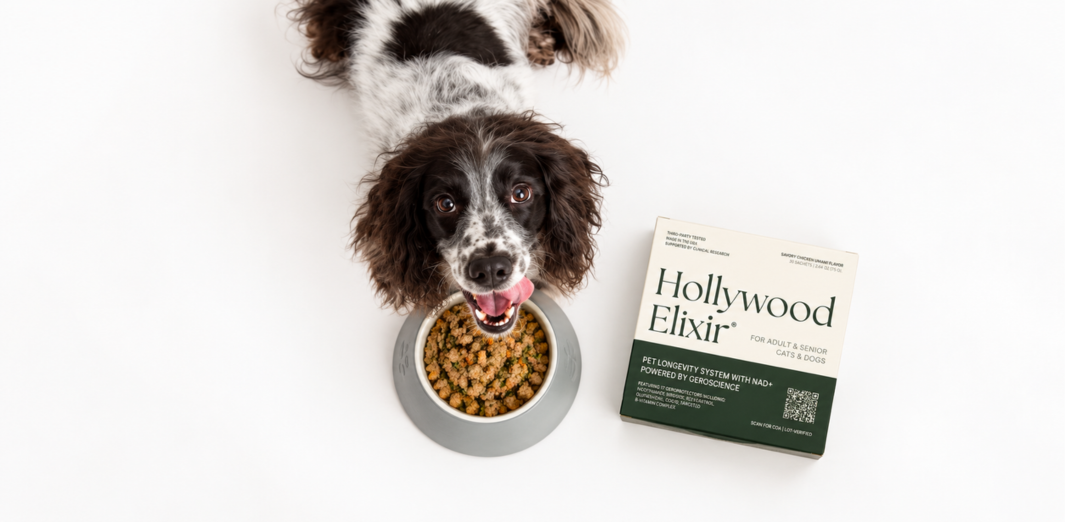
Once your veterinarian has ruled out the medical drivers above, a steady senior routine can also include daily cellular-energy support. Hollywood Elixir is a food-mixed powder whose NAD+ actives are disclosed per sachet, including nicotinamide riboside at 60 mg, to support normal cellular energy and everyday engagement in aging dogs; it is not a treatment for CCD or any sleep disorder, and it does not replace the workup. At home, also avoid slippery floors and add ramps for arthritis-prone dogs, keep nightlights and a stable furniture layout for CCD-prone dogs, and keep the sleep space warm, quiet, and easy to reach.
Putting It Together: a Calm, Actionable Next Step
The most helpful mindset is that sleep is a symptom with a short list of common roots. For many families, the primary fork in the road is pain versus CCD, with endocrine, heart, breathing, and medication effects as important secondary branches. Research in dogs supports that sleep features can reflect aging brain changes, which is why a day–night flip deserves attention rather than dismissal (Mondino, 2023). A clear differential prevents both overreaction and underreaction.
If the dog is otherwise stable, the next step is usually a 7–10 day log plus a scheduled exam. If breathing looks difficult, collapse occurs, or the dog cannot settle at all, the timeline should move up. Owners who are also reading endocrine-system-and-aging-in-dogs can use that lens to connect sleep with thirst, panting, and coat changes. The best outcome is a vet plan that targets the true driver and makes nights more fluid again.
“Track patterns for a week; bring videos, not guesses.”
Educational content only. This material is not a substitute for veterinary advice. Always consult your veterinarian about your dog’s specific needs. These statements have not been evaluated by the Food and Drug Administration. Products mentioned are not intended to diagnose, treat, cure, or prevent any disease.
Glossary
- Day–Night Reversal - Sleeping more by day and becoming restless or awake at night.
- Canine Cognitive Dysfunction (CCD) - Age-related brain change that can affect sleep timing, orientation, and nighttime behavior.
- Sleep Fragmentation - Sleep that is repeatedly interrupted by brief wake-ups.
- Dream Enactment - Movements or vocalizing during sleep that may resemble acting out dreams.
- Resting Respiratory Rate - Breaths per minute counted when a dog is truly asleep and relaxed.
- Polyuria/Polydipsia - Increased urination and increased drinking, often linked to endocrine or kidney issues.
- Pain-First Wake-Up Sequence - Waking that begins with repositioning, stiffness, or reluctance to lie down.
- Disorientation Episode - Wandering, staring, or getting stuck in familiar spaces, often worse at night.
- Differential Diagnosis - A structured list of possible causes, narrowed by pattern, exam, and testing.
Related Reading
Aging & Senior Dog Guidance
• Dog Age Calculator
• Dog Dementia
• Lethargy in Dogs
• My Dog Won't Eat
• Dog Pacing At Night
• Dog Licking Paws
• Can Dogs Dehydrate
Healthy Aging Support
• NAD+ for Dogs
• NMN for Dogs
• Antioxidants Supplements for Dogs
• Best Senior Dog Supplements & Vitamins
• Rapamycin for Dogs
References
Mondino. Sleep Disorders in dogs: A Pathophysiological and Clinical Review. PubMed. 2021. https://pubmed.ncbi.nlm.nih.gov/33556640/
Mondino. Sleep and cognition in aging dogs. A polysomnographic study. PubMed Central. 2023. https://pmc.ncbi.nlm.nih.gov/articles/PMC10175583/
Baranyai. Family Dogs' Sleep Macrostructure Reflects Worsened Sleep Quality When Sleeping in the Absence of Their Owners: A Non-Invasive Polysomnography Study. PubMed. 2025. https://pubmed.ncbi.nlm.nih.gov/41227510/
Unknown. Exercise training improves sleep quality in middle-aged and older adults with sleep problems: a systematic review. 2012. https://www.ncbi.nlm.nih.gov/books/NBK142866
FAQ
What does When Sleep Changes Signal Disease: A Differential Guide for Aging Dogs mean?
When Sleep Changes Signal Disease: A Differential Guide for Aging Dogs means treating new sleep changes as a symptom with a short, organized list of likely causes. In seniors, the biggest buckets are pain (especially arthritis or dental disease) and canine cognitive dysfunction (CCD), with hormones, heart, breathing, and medications as important alternatives.
The “differential” part matters because the same behavior—night pacing—can come from very different problems. Owners do not need to diagnose; the goal is to describe the pattern and sequence so the veterinarian can choose the right exam and tests.
How can sleep changes be an early disease sign?
Sleep depends on comfort, breathing, brain timing, and stable body chemistry. When any of those are strained, sleep often becomes more choppy before daytime symptoms look obvious. That is why dog sleep problems disease patterns can show up as frequent waking, pacing, or a day–night flip.
Owners can help by noting what starts the wake-up: repositioning (pain), urgent potty trips (bladder/hormones), coughing or snoring (breathing/heart), or confusion (CCD). That first step in the sequence is often the most informative detail for the vet.
What are the most common old dog not sleeping causes?
The most common old dog not sleeping causes are pain (arthritis, dental disease, back pain) and CCD-related day–night reversal. Both can exist together, which is why a single label like “anxiety” can miss the real driver.
Secondary causes include endocrine disease (Cushing’s or hypothyroidism), medication side effects, heart disease, and sleep-disordered breathing. A week of tracking plus a focused exam usually separates these categories quickly.
How does arthritis disrupt sleep in senior dogs?
Arthritis disrupts sleep because sore joints make it hard to settle into a comfortable position and harder to rise after deep rest. Dogs may avoid fully relaxing, leading to frequent small wake-ups and nighttime pacing.
At home, look for repeated repositioning, stiffness in the first minutes after standing, reluctance to jump, or choosing the floor over a bed. If a thicker mattress and a calm bedtime walk make nights more controlled, pain rises on the sleep disorder differential dogs list.
What sleep pattern suggests CCD rather than pain?
CCD is more likely when sleep changes come with a day–night flip and signs of disorientation: wandering without purpose, staring, getting stuck behind furniture, or seeming unsure in familiar rooms. The dog may wake and roam even after a comfortable setup.
Pain is more likely when wake-ups start with repeated attempts to lie down, stiffness, or guarding a limb. Because many seniors have both, describing the sequence—what happens first—helps the veterinarian decide whether to prioritize pain control, CCD management, or both.
Can Cushing’s disease cause nighttime restlessness?
Yes. Cushing’s disease can drive nighttime restlessness through increased thirst, increased urination, and panting. A dog may wake because the bladder feels full or because panting makes it hard to settle.
At home, pair sleep notes with water bowl refills, larger urine volumes, and skin/coat changes. Those combined clues help the vet decide whether endocrine testing belongs early in the workup, rather than assuming the problem is purely behavioral.
Does hypothyroidism make dogs sleep more than normal?
Hypothyroidism often shows up as low energy and increased sleeping, but it does not automatically explain nighttime pacing. Some dogs sleep longer yet still wake because they feel cold, uncomfortable, or have another issue layered on top.
Owners can note weight gain without diet change, seeking warm spots, and coat thinning alongside the sleep shift. Those details help the veterinarian decide whether thyroid testing is appropriate and whether another cause (pain, CCD, breathing) is also present.
Which medications commonly change sleep in older dogs?
Many medication categories can change sleep indirectly by causing restlessness, stomach upset, increased urination, or altered dream activity. Steroids, some pain medications, and certain behavior drugs are common examples, but the exact risk depends on the individual dog and dose timing.
The most helpful owner step is to match the sleep change to the medication timeline and bring a complete list (including supplements) with exact dosing times. Do not stop prescription medications abruptly; ask the veterinarian whether timing adjustments or alternatives are safer.
Is twitching or barking in sleep always a seizure?
Not always. Some dogs vocalize, paddle, or twitch during dreams, and REM sleep behavior disorder–like episodes have been described in dogs. Seizures are still possible, especially if there is loss of awareness, stiffening, or confusion afterward.
Owners should take a short video and note whether the dog can be gently awakened and returns to normal quickly. If episodes are frequent, violent, or followed by prolonged disorientation, the dog should be evaluated promptly to separate sleep phenomena from neurologic events.
When should a vet see a dog for sleep changes?
A veterinary visit is appropriate when sleep changes persist more than a few days, disrupt the household nightly, or come with other shifts like thirst, coughing, stiffness, or confusion. Sudden severe change is especially important in seniors.
Seek urgent care if breathing looks difficult, collapse occurs, gums look pale/blue, or the dog cannot settle at all. For non-urgent cases, a 7–10 day log and a few short videos make the appointment far more productive.
What should owners track for a sleep disorder differential dogs workup?
Track shift indicators that separate causes: bedtime and wake time, number of wake-ups, pacing minutes, whether wake-ups start with repositioning or disorientation, water intake changes, nighttime urination count, cough/snore episodes, and any dream-enactment movements.
Add context columns for heat, storms, visitors, and where the dog slept. Environment can fragment sleep, and dogs may sleep more choppily when separated from their owners, so that detail can change interpretation. Bring the log, not just a summary.
What tests might a vet recommend for senior dog sleep disease signs?
Many workups start with a thorough physical exam focused on pain (joints, spine, mouth), plus heart and lung assessment. Basic lab work is common to look for endocrine or organ clues that can drive thirst, panting, or fatigue.
Depending on the pattern, the vet may recommend X-rays for arthritis, dental evaluation, endocrine testing for Cushing’s or thyroid disease, or cardiac imaging. The best test list is pattern-driven, which is why logs and videos are so valuable.
Can changing where my dog sleeps change sleep quality?
Yes. Sleep quality can change with environment, including whether a dog sleeps near their people. Polysomnography research in family dogs found sleep was more fragmented when dogs slept without their owners present.
That does not mean every dog must co-sleep, but it does mean a recent sleeping-location change can mimic illness. If the sleep problem began after moving the bed, changing rooms, or adding stairs, tell the veterinarian so the pattern is interpreted correctly.
Do large breeds or small breeds have different sleep risks?
Breed and size change the odds of certain drivers. Large and giant breeds often show arthritis earlier, which can make nighttime settling harder. Short-nosed breeds are more prone to noisy breathing and sleep disruption from airway resistance.
The differential logic stays the same: identify whether wake-ups start with discomfort, urgent potty needs, breathing trouble, medication timing, or disorientation. Owners should describe the pattern and the dog’s body type so the vet can prioritize joints, airway, or heart-lung evaluation appropriately.
Is this differential guide relevant for younger dogs too?
The pattern-based approach can help at any age, but the probabilities shift. In younger dogs, sleep disruption is more often linked to environment, training routines, parasites/itch, or acute illness, while CCD and endocrine disease are less common.
In seniors, the same behavior is more likely to reflect pain, cognitive change, or chronic disease. That is why When Sleep Changes Signal Disease: A Differential Guide for Aging Dogs emphasizes sequence, timing, and paired body clues rather than assuming a single “normal aging” explanation.
How is When Sleep Changes Signal Disease: A Differential Guide for Aging Dogs different from advice articles?
When Sleep Changes Signal Disease: A Differential Guide for Aging Dogs is built around decision-making, not generic tips. It separates the most likely medical drivers—pain versus CCD—then shows how endocrine disease, heart disease, breathing issues, and medication effects change the next best step.
Advice-only articles often jump straight to calming routines. Routines can help, but without a differential, they can delay care for arthritis, dental pain, Cushing’s, or heart-lung problems. The goal here is a clearer vet handoff and fewer missed clues.
What lifestyle steps can support sleep while awaiting diagnosis?
Supportive steps should be low-risk and consistent: a calm bedtime routine, a cool and quiet sleep space, a supportive mattress, and a brief potty break right before bed. For CCD-prone dogs, nightlights and stable furniture placement can reduce nighttime confusion.
Regular, gentle exercise earlier in the day can support sleep quality in aging bodies, based on broader evidence in older individuals with sleep problems(Unknown, 2012). The goal is predictable movement that supports comfort, not late-night high-arousal play that can worsen pacing.
Can a daily supplement replace a veterinary workup for sleep changes?
No. New sleep changes in a senior dog can reflect pain, CCD, endocrine disease, heart strain, breathing problems, or medication effects, and those require veterinary evaluation. A supplement cannot tell which cause is present. The priority is still identifying the driver of the sleep change.
How long should owners wait before expecting a clearer pattern?
Many patterns become clearer within 7–10 days of consistent tracking. That window is long enough to see whether wake-ups cluster after active days, cold nights, medication timing, or increased drinking, and short enough to avoid delaying care.
If the dog is worsening quickly, seems distressed, or shows breathing difficulty, waiting is not appropriate. For stable dogs, the tracking period improves the quality of the veterinary visit and helps measure whether changes are becoming more controlled or more choppy over time.
Are there quality signals to look for in senior dog supplements?
Quality signals include clear labeling, consistent batch information, and a realistic role in the plan (supportive, not curative). Owners should also consider calorie contribution, since snacks and chews can quietly add up and affect weight—an important factor for arthritis and endocrine risk.
Bring any supplement labels to the vet, especially if the dog has liver, kidney, or endocrine disease. The best supplement choice is one that fits the dog’s overall medical picture and does not distract from addressing the primary cause of sleep disruption.
What is the safest way to give a daily supplement daily?
Daily use should be veterinarian-guided, especially for seniors on multiple medications or with endocrine, heart, or kidney concerns. The safest approach is to introduce one new product at a time and keep timing consistent so any changes in sleep, stool, or appetite are easy to interpret. Any vomiting, itching, or behavior change should prompt a pause and a call to the clinic.
Discover LPL-01: How This Fits Into a Larger Canine Longevity System
Aging in dogs is not driven by a single pathway. It’s the result of interacting biological systems—energy metabolism, oxidative stress, immune signaling, and structural integrity—changing over time.
This article explores one piece of that puzzle. If you want to understand how these pieces connect—and what actually moves the needle—you need to zoom out.
Start with the underlying science:
- Canine Geroscience Framework →
A structured view of how aging progresses across cellular energy, inflammation, and resilience systems. - Senior Biological Defense Coverage (BDC) Modeling →
A systems-level map of which biological pathways decline first, and how layered interventions can support them. - 2026 Market Research: Best Dog Longevity Supplements →
A 2026 industry report and review of leading senior-dog and cellular-aging formulas. - LPL-01 Standard →
The formulation system that translates these models into real-world supplementation—covering multiple pathways in a coordinated way.
Essential Summary
Why Is Sleep Change Differential In Aging Dogs Important?
Sleep shifts can be an early, practical signal of pain, cognitive change, hormone disease, heart strain, breathing problems, or medication effects. A simple differential approach helps owners describe patterns clearly, choose the right urgency, and support a more targeted veterinary workup.
Hollywood Elixir is designed to support normal aging functions as part of a broader care plan.
Hollywood Elixir®
Starting at $89/mo
Hollywood Elixir is amazing! She put back on 5 lbs to a healthy weight, her eyes are shiny, her coat is beautiful!
— Jessie
We go on runs. Lately he's been keeping up with no problem!
— Cami
Considering Senior Dog Sleep Changes?
If You're Researching Senior Dog Sleep, Here's What Matters Most
Start with a 7–10 day sleep log, short videos of nighttime behavior, and a medication/timing list. Ask the veterinarian to separate pain, CCD, endocrine disease, and heart or breathing causes based on the sequence of wake-ups. If using a daily supplement such as Hollywood Elixir, treat it as supportive alongside veterinary diagnosis and treatment.
Learn about how our DVMs think about dog aging
Dr. JoAnna Pendergrass DVM
Hollywood Elixir®
Starting at $89/mo
Explore your dog’s changing needs over time
Related Reading
The goal is not to diagnose at home, but to notice which pattern fits best so the vet visit is faster and more accurate. Endocrine disease (Cushing’s and hypothyroidism), heart disease, and sleep-disordered breathing are covered as important secondary causes that change what to test next.