Exercise Routines for Senior Dogs

Learn How Low-impact Workouts Support Joints, Heart, Balance, Weight, and Cognition

Essential Summary

Why is senior dog exercise important?

Senior dog exercise is important because the right dose maintains stability, comfort, and daily confidence while avoiding flare-ups. The goal is not distance; it is a more reliable routine with recovery built in. Small, repeatable sessions protect durability better than occasional “big days.”

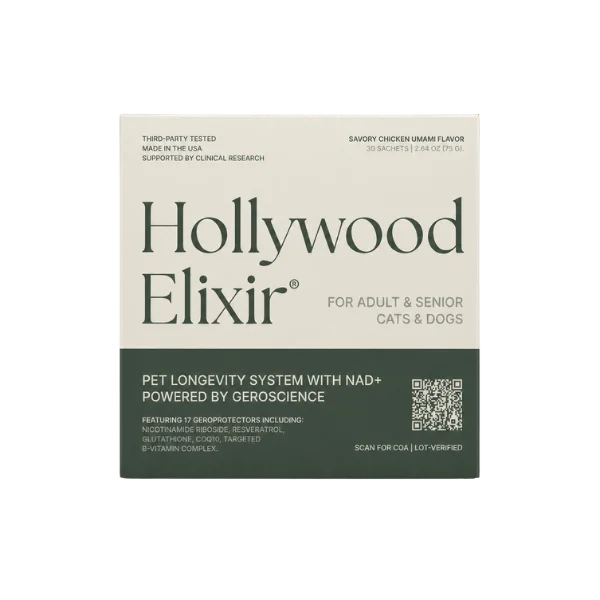
For dogs building a gentler routine, Hollywood Elixir™ can be part of a daily plan that supports normal energy and comfort resilience. It fits best alongside joint-safe walks, simple strength work, and recovery days—especially when owners are tracking change signals and adjusting gradually.

Older dogs often get trapped between two bad options: long walks that trigger next-day stiffness, or so much rest that muscles fade and movement becomes less confident. The practical answer is a third path—senior dog exercise built around joint-safe conditioning, simple strength for stability, and planned recovery days. That approach keeps the routine more reliable while protecting comfort.

The key confusion is treating exercise like a test of how much a dog can still do. Aging changes the ceiling for impact and the rebound capacity between sessions, so “big days” can create a payback day even when the dog seemed happy in the moment. Conditioning is different: it uses small, repeatable doses that build durability without provoking flare-ups. For many families, the most effective tool is not a new gadget or a heroic goal—it is a weekly rhythm that includes sniffaris, low-load strength work, and easy days that still keep the habit alive.

This page compares common approaches—walking versus stop-and-go play, hills versus flat routes, rest versus scaled-down movement—and explains what actually differs in an aging body. It also provides a decision framework, what to watch for in the first 4–6 weeks, and the specific notes that make a veterinary visit more productive when keeping aging dog active becomes complicated.

By La Petite Labs Editorial, ~15 min read

Featured Product:

  • The best exercise routines for senior dogs favor short, repeatable sessions with recovery, not occasional long “test” walks.
  • Compare walking versus stop-and-go play: predictable pacing is usually gentler on aging joints than fast pivots and hard stops.
  • Strength for stability (slow sit-to-stands, controlled step-overs) often matters as much as cardio for keeping aging dog active.
  • Sniffaris provide low-impact movement plus mental work, helping routines stay more reliable without overloading joints.
  • Track change signals for 4–6 weeks: next-day stiffness, gait symmetry at the start of walks, and willingness to rise.
  • Avoid common mistakes: weekend-only long outings, repeated ball throwing, steep descents, and forcing a stiff dog to push through.
  • Bring videos and specific patterns to the vet so the plan can match the dog’s real limits and rebound capacity.

Why Senior Dogs Need Conditioning, Not Fitness Tests

Most older dogs don’t lose the need for movement—they lose slack. The common confusion is treating “exercise” as either long cardio walks or complete rest, when senior dog exercise is usually about joint-safe conditioning plus recovery. Aging joints and soft tissues handle repetitive impact less reliably, while muscles that stabilize hips, knees, and spine can shrink if they are not asked to work. That shift changes the goal from distance to durability: short, repeatable sessions that protect stability.

At home, the first clue is variability: one day a dog looks fine, the next day stiff or hesitant. That pattern often means the plan is too “spiky” in effort, not that the dog is done exercising. A better starting point is a simple weekly rhythm—two easy days, one slightly harder day, then a recovery day—so the body can rebound capacity without flare-ups.

In practice, this often connects to anti-aging for dogs, especially when owners are comparing options over weeks rather than days.

That's why cellular function in dogs tends to matter most when you're tracking patterns rather than one-off flareups.

Mitochondria illustration showing cellular energy support linked to gentle exercise for older dogs.

Conditioning Versus Testing: the Next-day Difference

Two approaches get mixed up: “conditioning” versus “testing.” Conditioning builds capacity in small doses; testing asks the dog to prove what it can do today. Senior dog exercise should almost never be a test, because older bodies can mask strain until later. The difference shows up in the next 24 hours: a conditioning session leaves the dog normal or slightly tired, while a test often produces stiffness, licking, or reluctance to rise.

A simple household rule is to end sessions with the dog still moving smoothly. If the dog starts to shorten stride, drift behind, or sit down during pauses, that is the body asking for a stop. Owners can keep a “two-minute buffer”: turn for home when the dog still looks good, so the last minutes are not a limp back. This makes keeping aging dog active feel safer and more predictable.

Genetic structure image symbolizing long-term wellness supported by gentle exercise for older dogs.

Reduce Impact First: Surfaces, Jumping, and Repetitive Load

Impact is the hidden divider between safe movement and flare-ups. Pavement, stairs, and repeated jumping create higher peak forces than many owners realize, especially when a dog is a little stiff and lands unevenly. In seniors, cartilage and tendons may tolerate less repetitive load, and small asymmetries can snowball into compensation patterns. That is why “more steps” is not always the right metric.

At home, swap impact for time-under-control. Choose grass, packed dirt, or rubberized surfaces when possible, and use ramps for cars or couches. If stairs are unavoidable, slow them down with a harness and treat pacing rather than letting the dog rush. Gentle exercise for older dogs often looks like fewer dramatic movements and more careful ones, repeated often enough to keep muscles engaged.

Protein structure illustration showing biological precision behind gentle exercise for older dogs.

Warm-up as a Daily Read on Comfort and Mechanics

Warm-up is not optional for many seniors; it is the bridge between stiffness and smooth movement. Older joints often feel tight after rest because synovial fluid circulation and soft-tissue elasticity respond to motion. A warm-up also gives owners a real-time read on how the dog is doing that day. If the first minute looks off, the plan can shift to an easier session without losing the habit.

A practical warm-up is five minutes of slow walking with wide turns, then a brief pause to check posture and breathing. Indoors, it can be a few laps through the hallway on a runner rug before going outside. If the dog improves during the warm-up, proceed with a short, easy route. If the dog worsens, that is a change signal to stop and try again later or contact a veterinarian if it persists.

Dog portrait capturing warmth and companionship supported through gentle exercise for older dogs.

Case Vignette: the Weekend Hike That Backfired
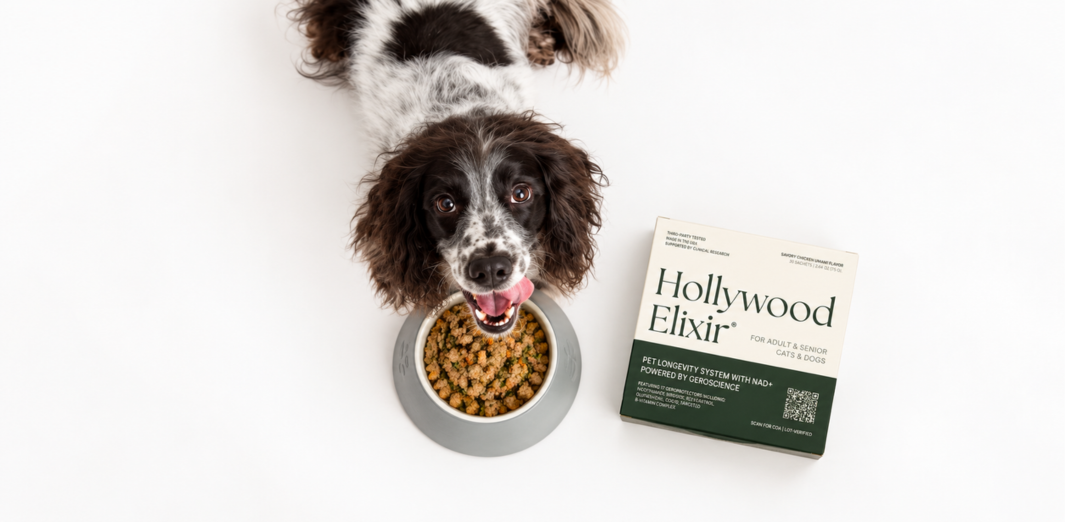
Case vignette: a 12-year-old Labrador used to do a 45-minute weekend trail walk, then spent Monday moving stiffly and avoiding the couch. The owner assumed the dog was “just old,” so weekday activity dropped to almost nothing. When the plan flipped to 15 minutes most days plus two short sniffaris, the dog’s gait became less variable and the Monday stiffness eased.

This scenario shows the core contrast: frequency builds durability, while occasional big outings act like stress tests. For senior dog exercise, the most useful question is not “How far did we go?” but “How did the dog look later that day and the next morning?” A calendar with checkmarks for short sessions often outperforms a single long walk, because it keeps the body practicing movement without exceeding its ceiling.

Hollywood Elixir™ is amazing and makes my 13 y/o young again!

— Jessie

We go on runs. Lately he's been keeping up with no problem!

— Cami

“In seniors, repeatable movement beats occasional big days.”

Correcting the “Rest Until Better” Misconception

There is a specific misconception that derails plans: “If the dog is stiff, rest until it passes.” For many seniors, extended rest lowers muscle support and makes the next outing feel harder, creating a loop of less movement and more stiffness. Rest is appropriate after a true flare-up, but long gaps often reduce stability and confidence. The goal is to find the smallest dose that stays comfortable.

A better approach is to scale down, not to zero. Keep the routine with a shorter loop, slower pace, and more sniffing, then reassess the next morning. If stiffness is clearly worse after even a small session, that is information to take seriously. Keeping aging dog active is not about ignoring discomfort; it is about choosing movement that supports comfort and function without provoking a setback.

Weimaraner portrait reflecting poise and wellness support tied to gentle exercise for older dogs.

Walking Versus Fetch: Predictable Pacing Wins

Compare two “cardio” options for seniors: steady walking versus stop-and-go play. Walking tends to be joint-friendlier because it is predictable and can be paced; chasing games add acceleration, deceleration, and twisting that load joints unevenly. For older dogs with early arthritis or weakness, the stop-and-go pattern is a common reason a dog looks fine in the moment but sore later. Predictability is protective.

If a dog loves retrieving, switch the game rather than removing it. Roll a toy on the ground instead of throwing it high, keep distances short, and ask for a calm return rather than speed. Limit repetitions and end early. This keeps the joy while making the movement more reliable, which is the heart of gentle exercise for older dogs.

Profile shot of a dog showing attentive expression supported by senior dog exercise.

Hills and Stairs: When “Harder” Helps and When It Hurts

Hills and stairs are another place where “harder” is not always “better.” Side A is using hills to build strength; side B is avoiding them to prevent strain. What actually differs is control: a slow, short incline can build hip and core engagement, while fast climbing or long descents can overload joints. Downhill work is often the bigger problem because it increases braking forces.

A household compromise is to use one gentle incline once or twice per week, at a pace that keeps the dog’s back end aligned. Skip long descents; take a flatter route home if possible. If stairs are part of daily life, add a runner for traction and use a harness to slow the pace. Senior dog exercise should build durability without creating a “payback” day.

Supplement breakdown graphic emphasizing no fillers approach within senior dog exercise.

Indoor Conditioning for Weather, Heat, and Traction Control

Indoor conditioning is often the missing tool during heat, cold, or smoky days. Seniors are more likely to struggle with temperature extremes, and overheating can look like sudden fatigue or reluctance to continue. Indoor work also allows better footing and tighter control of movement quality. This is not a downgrade; it is a way to keep the routine consistent when outdoor conditions are risky.

Set up a simple circuit: two minutes of hallway walking on a rug, a few slow sit-to-stands, a short “find it” sniff game, then rest. Repeat once if the dog stays comfortable. Fans, water breaks, and shorter sessions help prevent overheating. For keeping aging dog active, consistency across seasons matters more than any single workout.

Use Sniffaris to Add Movement Without Extra Joint Impact

“Sniffaris” are the underused side of keeping aging dog active: they load the brain and senses while keeping joint impact low. The misconception is that a walk only “counts” if it raises heart rate. For many seniors, slow exploration creates a more reliable daily habit, and it can lower the urge to do occasional long, high-impact outings that trigger next-day stiffness. Mental work also changes pacing—dogs naturally stop, scan, and reset.

A practical sniffari routine is to pick one safe loop and allow frequent stops, then end while the dog still looks comfortable. Use a longer leash in low-traffic areas, avoid tight turns on slick sidewalks, and keep sessions short enough that the dog’s gait stays consistent. If the dog starts lagging behind, toe-dragging, or choosing grass over pavement, that is a change signal to shorten the route next time.

“Track next-day stiffness; it tells the truth about load.”

Lab coat visual symbolizing disciplined formulation supporting gentle exercise for older dogs.

Build Strength for Stability with Low-load Home Exercises

Strength work for seniors should look boring—and that is the point. Side A is “just walk more,” which can build endurance but may not rebuild the stabilizers that protect joints. Side B is targeted, low-load strength that improves stability without pounding. In older dogs, the muscles around the hips and shoulders act like guy-wires; when they weaken, joints take more shear and the dog becomes less confident on turns and stairs.

At home, gentle exercise for older dogs can include 3–5 slow sit-to-stands on a non-slip surface, a few seconds of “stand-stay” while the owner lightly shifts a treat side-to-side, and controlled step-overs using a broom handle on the floor. The rule is clean form over reps: if the dog swings hips, collapses a knee inward, or rushes, stop early and try again another day.

Shop Now
Ingredient still life illustrating clean formulation principles for keeping aging dog active.

Plan Recovery Days to Protect Rebound Capacity

Recovery is not laziness; it is where adaptation happens. Older tissues often have a lower ceiling for “hard days,” and the rebound capacity between sessions can be slower. Owners sometimes interpret a recovery day as “giving up,” then compensate with a long weekend hike. That pattern creates variability—good day, sore day—rather than a more stable baseline.

A recovery day can still include movement: a short sniffari, a few minutes of easy indoor walking, or gentle range-of-motion games that keep joints moving without load. Warmth helps some dogs loosen up before activity, while a calm, quiet evening helps others settle after. If stiffness lasts beyond the next morning, the prior session was likely too much, and the plan should step down for a week.

Shop Now
Lifestyle shot of dog owner and Hollywood Elixir aligned with senior dog exercise.

Match Calories and Treat Habits to Activity Level

Weight and fueling quietly shape how exercise feels. Extra body weight increases joint load with every step, while under-fueling can leave a senior dog flat and less willing to move. “Senior” diets vary widely in nutrient and calorie profiles, so the label alone does not guarantee an ideal match for activity level (German, 2025). The practical goal is a body condition that supports movement without asking joints to carry unnecessary load.

Treat habits matter because they can quietly crowd out balanced nutrition and add calories that show up as stiffness on walks. Keeping snacks near or below about 10% of daily intake helps maintain diet balance while owners adjust activity (Príncipe, 2025). For a dog starting a new senior dog exercise plan, it is often easier to measure treats for the day in a cup, then pull from that cup during training and strength sessions.

Shop Now

What to Track for the First 4–6 Weeks

The “what to track” rubric keeps decisions grounded in change signals rather than hope. The key is choosing markers that reflect both comfort and function, because older dogs can push through discomfort until they suddenly refuse. Tracking also helps owners separate normal day-to-day variation from a true trend. A simple log makes it easier to adjust one variable at a time instead of changing everything at once.

What to watch for in the first 4–6 weeks: (1) time to loosen up after rest, (2) gait symmetry on the first minute of a walk, (3) willingness to sit-to-stand without bracing, (4) ability to do a slow turn on a rug without slipping, (5) next-day stiffness score (0–3), and (6) nap length after activity. If two markers worsen for a full week, the plan should step down and a vet check is reasonable.

Owner Checklist: Home Signs Your Plan Needs Adjusting

Owner checklist: the most useful home observations are the ones tied to mechanics. Look for (1) shortened stride behind, (2) “bunny hopping” when trotting, (3) hesitation before jumping into the car, (4) repeated licking of one joint after walks, and (5) nails scuffing on one side. These signs do not diagnose a condition, but they do indicate that the current load may be exceeding the dog’s slack.

Use the checklist before and after activity, not only on bad days. If the dog starts the walk with a tight back end but looks better after five minutes, a longer warm-up may be the missing piece. If the dog looks fine during the walk but is reluctant to rise later, the session likely needs less total time or fewer hills. This is how gentle exercise for older dogs becomes more reliable instead of guesswork.

Visual comparison highlighting no fillers advantage aligned with keeping aging dog active.

Vet Visit Prep: Bring Patterns, Videos, and Clear Questions

Vet visit prep works best when it is specific. Instead of “she’s slowing down,” bring a short summary of what changed, what triggers it, and what helps. That allows the veterinarian to separate pain, weakness, neurologic change, and heart or lung limits. It also helps the clinic recommend a plan that matches the dog’s real routine rather than an idealized one.

Bring these notes and questions: (1) a 10–20 second video of the first minute of walking, (2) whether stairs or slick floors are harder, (3) the next-day stiffness pattern after longer outings, and (4) current supplements and treats. Ask: “Which movements should be avoided for now?”, “What strength work is safe at home?”, and “What change signals mean stop and recheck?” This makes senior dog exercise planning a shared decision.

Shop Now
Open box with Hollywood Elixir inside, reinforcing gentle exercise for older dogs premium cues.

What Not to Do When Keeping an Aging Dog Active

What not to do: the most common mistakes are well-intended. Avoid (1) weekend-only long walks after quiet weekdays, (2) repeated ball throwing with fast stops and pivots, (3) steep stairs as “conditioning,” and (4) forcing a dog to “push through” stiffness. These patterns increase joint shear and can make the dog less willing to move, which then accelerates deconditioning.

Also avoid sudden surface changes. A dog that does fine on grass may slip on tile, and one slip can create a fear-based change in gait that looks like pain. Use rugs, traction booties if tolerated, and ramps for cars or beds. When keeping aging dog active, the safest plan is the one the dog can repeat without a flare-up, not the one that looks impressive on a fitness tracker.

Shop Now

A Simple Decision Framework for Safer Weekly Progress

A decision framework keeps the “compare and contrast” practical. If the dog’s main limit is stiffness and joint sensitivity, prioritize short walks, sniffaris, and stability strength with recovery days. If the main limit is general deconditioning, build frequency first, then add gentle hills or longer duration. If breathing, coughing, fainting, or sudden fatigue appears, exercise should pause until a veterinarian rules out heart or lung constraints.

Behavior-change research in dog walking shows that structured plans and consistent routines can meaningfully shift activity patterns over time (Richards, 2016). For senior dogs, structure is also a safety tool: it prevents “all-or-nothing” weeks. The best outcome is not a heroic month; it is a more stable year of movement, with enough slack to handle travel, weather, and the occasional off day.

“Strength for stability can be quieter than cardio, but decisive.”

Educational content only. This material is not a substitute for veterinary advice. Always consult your veterinarian about your dog’s specific needs. These statements have not been evaluated by the Food and Drug Administration. Products mentioned are not intended to diagnose, treat, cure, or prevent any disease.

Glossary

  • Sniffari - A slow, exploration-focused walk emphasizing sniffing over distance.
  • Recovery day - A planned low-load day that supports rebound capacity between harder sessions.
  • Stability muscles - Muscles that control joint position and reduce unwanted shear during movement.
  • Impact load - Peak force transmitted through joints during landing, jumping, or fast direction changes.
  • Gait symmetry - How evenly a dog uses left and right limbs during walking.
  • Next-day stiffness - Reduced ease of movement the morning after activity, used as a change signal.
  • Time-under-control - Slow, deliberate movement that prioritizes form over speed or repetitions.
  • Conditioning versus testing - Building capacity with small doses versus pushing limits to see what happens.

Related Reading

References

Richards. Evaluation of the Dogs, Physical Activity, and Walking (Dogs PAW) Intervention: A Randomized Controlled Trial.. PubMed. 2016. https://pubmed.ncbi.nlm.nih.gov/27124255/

German. Exploratory analysis of nutrient composition of adult and senior dog diets.. PubMed Central. 2025. https://pmc.ncbi.nlm.nih.gov/articles/PMC12757753/

Príncipe. Assessment of the Nutritional Impact of the 10% Snack Recommendation in Pet Diets.. PubMed Central. 2025. https://pmc.ncbi.nlm.nih.gov/articles/PMC11945345/

FAQ

What makes exercise different for older dogs than adults?

The main difference is variability: older bodies often have less slack for sudden increases in load. That means long, occasional “big walks” can create next-day stiffness even if the dog looked fine during the outing.

Senior dog exercise works best when it is frequent, low-impact, and paired with recovery days. Owners should judge a session by how the dog moves later that day and the next morning, not by distance alone.

How much walking is appropriate for a senior dog?

There is no single time goal that fits every dog, because arthritis, fitness, and body weight change the ceiling. A safer approach is to start with a duration the dog can repeat without next-day stiffness, then build frequency before adding minutes.

If the dog’s gait shortens, the dog drifts behind, or rising later becomes harder, the walk was likely too long. Keeping aging dog active is about repeatability, not proving endurance.

Are stairs good exercise for senior dogs?

Stairs can build strength, but they also concentrate load and increase slipping risk. For many seniors, stairs become a “test” rather than conditioning, especially when the dog rushes or lands unevenly.

If stairs are unavoidable, slow them down with a harness, add traction, and limit extra trips. If stairs clearly worsen next-day stiffness, choose ramps and flatter routes and ask a veterinarian for safer strength options.

What is a sniffari and why does it help seniors?

A sniffari is a slow walk designed for sniffing and exploring rather than covering distance. It adds mental work while keeping impact low, which can make daily movement more reliable for older dogs.

Because the dog naturally pauses and resets, pacing becomes gentler than a brisk “fitness walk.” For gentle exercise for older dogs, sniffaris often reduce the urge to do occasional long outings that trigger soreness.

Is fetch safe for senior dogs with stiff joints?

Fetch is risky when it involves sprinting, hard stops, and sharp pivots, because those forces load aging joints unevenly. Many seniors look enthusiastic during the game but pay for it later with stiffness or licking.

A safer compromise is rolling toys on the ground, keeping distances short, and limiting repetitions. If next-day movement becomes less reliable after fetch, switch to sniff games or controlled strength work.

What strength exercises are gentle for older dogs at home?

Good options are slow sit-to-stands on a non-slip surface, brief stand-stays while a treat moves side-to-side, and controlled step-overs with a low object on the floor. These build stability muscles without impact.

Stop early if form breaks—hip swinging, rushing, or knee collapse are change signals that the load is too high today. A veterinarian or rehab professional can tailor exercises if pain or neurologic issues are suspected.

How can owners tell if exercise is causing pain?

The most useful clue is delayed change: reluctance to rise later, licking a joint after activity, or stiffness that lasts into the next morning. During the session, watch for shortened stride, lagging behind, or repeated sitting.

Track these patterns for 4–6 weeks so decisions are based on trends, not one day. If discomfort escalates or the dog suddenly refuses walks, a veterinary exam is warranted before increasing activity.

Should a stiff senior dog rest completely for a few days?

Complete rest can be appropriate after a true flare-up, but long gaps often reduce muscle support and make the next outing feel harder. That can create a loop of less movement and more stiffness.

A common better option is scaling down: shorter, slower walks with more sniffing and a longer warm-up. If even small sessions worsen next-day movement, pause increases and consult a veterinarian.

How quickly should activity increase for an aging dog?

Increase one variable at a time—either frequency, duration, or terrain—so the cause of any setback is clear. Older dogs often do better with small weekly changes than with sudden “catch-up” workouts.

Use next-day stiffness and gait symmetry at the start of walks as the gatekeepers. If those markers worsen for a week, step down and rebuild more gradually. This keeps senior dog exercise more reliable.

What are red flags that mean stop exercise and call the vet?

Stop and contact a veterinarian for sudden lameness, yelping, collapse, fainting, repeated coughing during activity, or a rapid change in willingness to move. These are not normal “aging” signals.

Also seek care if stiffness persists beyond the next morning after a modest walk, or if the dog’s back end seems weak or wobbly. Video of the first minute of walking can help the clinic assess the pattern.

Do senior dogs need warm-ups and cool-downs?

Many do. A warm-up helps joints and soft tissues transition from rest to movement, and it gives owners a quick read on how the dog feels that day. Cool-downs help prevent a sudden stop after effort, which can leave some dogs stiff.

Keep both simple: a few minutes of slow walking with wide turns before and after. If the dog looks worse during warm-up rather than better, shorten the session and consider a veterinary check if the pattern repeats.

Is swimming a good option for senior dog exercise?

Swimming can be low-impact and useful for conditioning, but it is not automatically safe for every senior. Some dogs panic, swallow water, or fatigue quickly, and slippery pool decks can cause injuries.

If swimming is used, keep sessions short, use a life jacket, and watch for coughing or unusual fatigue afterward. For many dogs, shallow-water walking or controlled leash walks provide a more predictable, gentle exercise for older dogs.

How do diet and treats affect exercise tolerance in seniors?

Body weight changes joint load, and “senior” foods vary widely in calorie and nutrient profiles, so the label alone is not a guarantee of fit(German, 2025). Treats can quietly add calories and crowd out balanced nutrition, which can show up as stiffness on walks.

Keeping snacks near or below about 10% of daily intake helps maintain diet balance while activity is adjusted(Príncipe, 2025). For keeping aging dog active, stable body condition often matters as much as the exercise plan itself.

Can Hollywood Elixir™ replace joint medications or rehab exercises?

No. Hollywood Elixir™ is not a substitute for veterinary diagnosis, pain control, or a rehab plan. When a dog is limping, refusing movement, or showing rapid decline, the priority is a veterinary exam.

It may help support normal energy and comfort resilience as part of a broader daily plan that includes joint-safe walks, strength for stability, and recovery days. Any supplement should be discussed with a veterinarian, especially for dogs on multiple medications.

How should Hollywood Elixir™ fit into a senior dog routine?

The best fit is alongside a consistent, low-impact schedule rather than on days when owners “do extra.” Pairing support with a predictable routine makes it easier to judge change signals over time.

Consider using Hollywood Elixir™ as part of a daily plan that supports normal energy and comfort resilience while the exercise plan is built gradually. If anything about appetite, stool, or behavior changes, pause and check in with the veterinarian.

When should owners expect results from a new exercise plan?

Most meaningful changes show up as less variability, not sudden transformation. In the first 1–2 weeks, owners may notice smoother starts to walks or less reluctance to rise. Over 4–6 weeks, the goal is a more stable pattern: fewer sore mornings and more consistent pacing.

If the dog is steadily worse, the plan is likely exceeding the dog’s ceiling or the underlying problem needs medical attention. Tracking next-day stiffness and gait symmetry helps clarify which is happening.

Are exercise routines for senior dogs the same for small breeds?

The principles are the same—low-impact, repeatable, recovery-aware—but the practical risks differ. Small dogs often face more jumping on and off furniture, which concentrates impact even if daily walks are short.

Ramps, step stools, and traction mats can matter as much as leash time. For senior dog exercise in small breeds, owners should also watch for shivering, quick fatigue in cold weather, and reluctance to navigate slick floors.

How does arthritis change what exercise should look like?

Arthritis often shifts the goal from “more” to “more reliable.” Predictable pacing, softer surfaces, and strength for stability usually matter more than distance. Downhill work, fast pivots, and jumping tend to be the biggest flare triggers.

Owners should coordinate with a veterinarian on pain control and safe progression, because untreated pain can cause compensation patterns that worsen mechanics. Gentle exercise for older dogs with arthritis should end before gait quality changes.

Can senior dogs and cats follow the same activity plan?

Not really. Dogs are usually conditioned through leash walking and structured routines, while cats tend to exercise in short bursts and need environmental enrichment rather than long-duration sessions.

Trying to “walk a cat like a dog” is rarely appropriate, and trying to “play like a cat” with a senior dog can add too much stop-and-go strain. Each species needs movement that matches its natural mechanics and motivation.

What should owners bring to the vet about exercise problems?

Bring specifics: a short video of the first minute of walking, notes on whether stairs or slick floors are harder, and the next-day stiffness pattern after longer outings. Include current diet, treats, and any supplements.

Ask targeted questions such as: “Which movements should be avoided right now?”, “What home strength work is safe?”, and “What change signals mean stop and recheck?” This makes keeping aging dog active a clearer shared plan.

Is there research supporting structured dog-walking programs?

Yes—structured behavior-change approaches have been tested to increase dog walking and physical activity, showing that routines and planning can shift owner behavior over time(Richards, 2016). For seniors, structure is also a safety tool because it prevents “all-or-nothing” weeks.

The practical takeaway is to schedule short sessions, track change signals, and adjust gradually. Consistency tends to produce a more reliable baseline than relying on motivation or occasional long outings.

What quality signals show a supplement is worth discussing?

Look for clear labeling, consistent dosing instructions, and a company willing to share sourcing and quality-control practices. Products should avoid disease-treatment promises and instead position support as part of a broader plan.

If considering Hollywood Elixir™, discuss it with the veterinarian in the context of the dog’s medications, appetite, and exercise plan. The goal is support for normal function, not a replacement for diagnosis or rehab.

5K+ Happy Pet Parents

Excellent 4.8

Exercise Routines for Senior Dogs | Why Thousands of Pup Parents Trust Hollywood Elixir™

"He seems more happy overall. I've also noticed he has more energy which makes our walks and playtime so much more fun."

Olga & Jordan

"He's got way more energy now! We go on runs pretty often; he use to get tired halfway through, but lately, he's been keeping up without any problem."

Cami & Clifford

"I want her to live forever. She hasn't had an ear infection since!"

Madison & Azula

"It helps with her calmness, her immune system. I really like the clean ingredients. Highly recommend La Petite Labs!"

Maple & Cassidy

"He seems more happy overall. I've also noticed he has more energy which makes our walks and playtime so much more fun."

Olga & Jordan

"He's got way more energy now! We go on runs pretty often; he use to get tired halfway through, but lately, he's been keeping up without any problem."

Cami & Clifford

"I want her to live forever. She hasn't had an ear infection since!"

Madison & Azula

"It helps with her calmness, her immune system. I really like the clean ingredients. Highly recommend La Petite Labs!"

Maple & Cassidy

"He seems more happy overall. I've also noticed he has more energy which makes our walks and playtime so much more fun."

Olga & Jordan

"He's got way more energy now! We go on runs pretty often; he use to get tired halfway through, but lately, he's been keeping up without any problem."

Cami & Clifford

"I want her to live forever. She hasn't had an ear infection since!"

Madison & Azula

"It helps with her calmness, her immune system. I really like the clean ingredients. Highly recommend La Petite Labs!"

Maple & Cassidy

"He seems more happy overall. I've also noticed he has more energy which makes our walks and playtime so much more fun."

Olga & Jordan

"He's got way more energy now! We go on runs pretty often; he use to get tired halfway through, but lately, he's been keeping up without any problem."

Cami & Clifford

"I want her to live forever. She hasn't had an ear infection since!"

Madison & Azula

"It helps with her calmness, her immune system. I really like the clean ingredients. Highly recommend La Petite Labs!"

Maple & Cassidy

SHOP NOW