Vitamin B2 (Riboflavin) for Dogs

Map Redox and Mitochondrial Clues and Support Energy, Skin, and Liver

Essential Summary

Why Is Vitamin B2 (Riboflavin) for Dogs Important?

Vitamin B2 becomes FMN and FAD, cofactors that help mitochondria make energy and keep antioxidant recycling moving. When intake or absorption is strained—especially with GI upset or liver disease—dogs may show fading stamina and coat changes. Document patterns and involve a veterinarian for targeted evaluation.

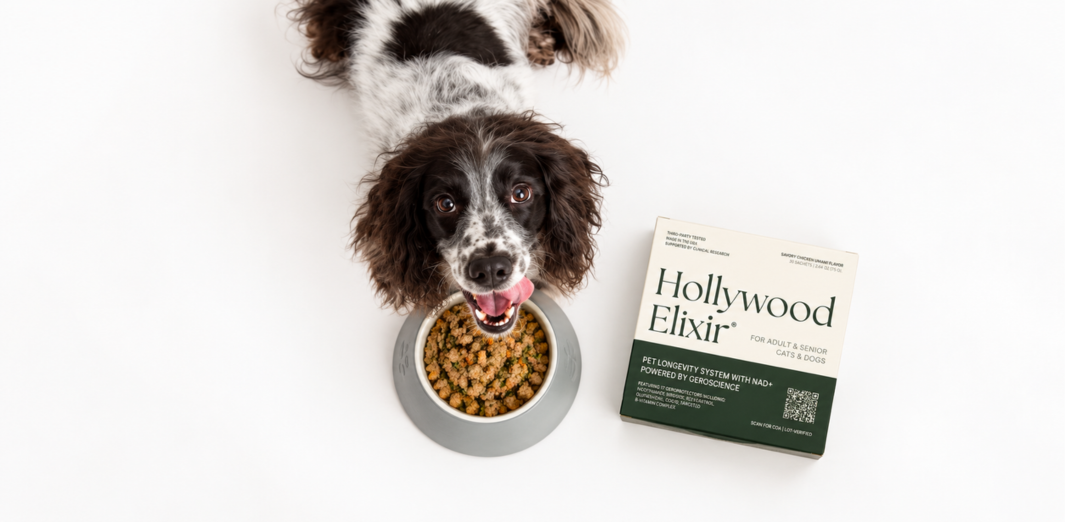
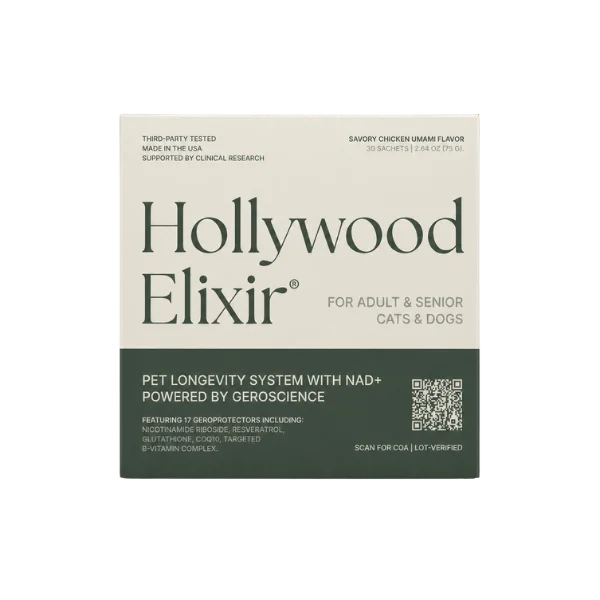
Hollywood Elixir™ is designed to support normal cellular cooperation across energy and antioxidant pathways as part of a daily plan. For dogs whose routines, appetite, or digestion make nutrition feel less predictable, it may help support a more balanced approach alongside a complete diet and veterinary guidance.

Vitamin B2 (Riboflavin) for Dogs matters most when a dog looks tired, recovers slowly, or develops a dull coat even though meals seem “fine.” Riboflavin is a redox vitamin: it becomes FMN and FAD, cofactors that help mitochondria move electrons to make energy and keep antioxidant systems working in step. When that electron flow has less overhead—because intake is inconsistent, absorption is strained, or chronic disease is changing nutrient handling—daily stamina can look shorter and less balanced.

This page follows a symptom-first triage approach. Start with what is visible at home: fading enthusiasm on walks, more “next-day” fatigue, coat dryness, or skin discomfort. Then work backward through the most common differentials—pain, thyroid disease, anemia, infection, diet mismatch, and GI issues—before narrowing to when riboflavin support is a reasonable conversation. The clinical focus here is the overlap between redox strain and chronic liver disease, where water-soluble vitamin status can be altered and worth discussing with a veterinarian.

By La Petite Labs Editorial, ~15 min read

Featured Product:

  • Vitamin B2 (Riboflavin) for Dogs matters because it helps convert food into usable energy and supports antioxidant recycling through FMN/FAD cofactors.
  • Owners often notice early signs as fading stamina, slower recovery after play, and a coat that looks dry or less glossy.
  • Top differentials include pain/arthritis, thyroid disease, anemia, infection, diet inconsistency, and GI issues that limit absorption.
  • Dogs with chronic liver disease can have altered water-soluble vitamin status, so B-vitamin review may be relevant in that clinical context.
  • What to document for the vet: walk distance before slowing, next-day recovery, stool consistency, appetite variability, weight trend, and photos of skin changes.
  • Avoid stacking multiple B products or changing food, treats, and supplements at the same time; it makes patterns harder to interpret.
  • If symptoms are sudden or severe (collapse, vomiting, pale gums, painful lesions), treat it as urgent and contact a veterinarian promptly.

When Energy Fades, Think Conversion Not Calories

When a dog seems “out of gas” despite normal meals, the issue is often not calories but conversion. Vitamin B2 becomes FMN and FAD, helper molecules that let enzymes move electrons through mitochondria and keep antioxidant systems working in step (Preeti Patel, 2024). Without enough riboflavin support, energy metabolism can feel like it stalls: the dog eats, yet cellular work has less depth and the day looks shorter.

At home, this can show up as a dog that starts walks with enthusiasm, then asks to turn back early, or naps hard after minor activity. Note whether the “fade” is predictable (after meals, after play, or late afternoon) and whether it pairs with dull coat or slower recovery after exertion. These patterns help separate training issues from a body that is running with less redox overhead.

Energy production graphic tied to antioxidant protection supported by vitamin b2 riboflavin for dogs.

Home Signs That Point Toward Redox Drag

Symptom-first triage starts with the obvious: low stamina, dullness, and a coat that loses shine. Those signs can come from pain, thyroid disease, anemia, infection, or diet mismatch, but riboflavin sits in a specific lane—electron handling. Because riboflavin is water-soluble and has limited storage, day-to-day intake and absorption matter more than many owners expect (Preeti Patel, 2024).

Owner checklist for this topic: (1) energy “drop-off” after mild activity, (2) slower bounce-back the next day, (3) coat looks dry despite grooming, (4) appetite is normal but enthusiasm is not, (5) urine looks brighter yellow after any new supplement (a common riboflavin clue, not automatically a problem). Bring these notes to the vet alongside diet brand, treats, and any recent changes.

DNA close-up symbolizing resilience at the cellular level via vitamin b2 riboflavin for dogs.

The Coat-only Myth That Misses the Real Mechanism

A common misconception is that riboflavin is only “for skin and coat,” so it is ignored when the main complaint is fatigue. In reality, FMN and FAD are central to the electron transport chain and to flavoproteins that keep redox reactions moving, which is why energy and antioxidant systems can become less balanced together (Preeti Patel, 2024). Coat changes may be a downstream signal, not the main event.

In a household routine, this misconception can lead to chasing topical fixes while missing the bigger pattern: the dog that looks “older” in motion and mood. If grooming products, omega-3s, and protein tweaks do not match the symptom pattern, it is reasonable to re-check the diet’s overall B-vitamin complex profile and the dog’s ability to absorb it, especially during GI upset or appetite swings.

Bioactive protein structure illustrating synergy in wellness supported by vitamin b2 riboflavin for dogs.

Absorption Limits: Why Formulation and Gut Health Matter

Riboflavin is absorbed in the small intestine through transport that can become saturated, meaning “more” is not always “more absorbed.” Formulation and timing can change how much is available for uptake, which is why some delivery approaches focus on extending contact time rather than stacking high amounts (Ahmed, 2007). This is also why riboflavin status can drift when a dog has chronic loose stool or rapid transit.

Practically, owners can watch for patterns around digestion: does the dog’s energy dip coincide with soft stool, frequent bowel movements, or a sudden switch in food? Keep a simple log of stool quality, meal timing, and activity tolerance for two weeks. That record helps a veterinarian decide whether the priority is diet consistency, GI workup, or a broader plan that supports mitochondrial renewal rate.

Dog portrait symbolizing calm and wellness supported by vitamin b2 riboflavin for dogs.

Food Matrices and Why Some Diets Deliver Less

Food sources matter, but the food matrix matters too. Riboflavin bioavailability differs between plant and animal products, and absorption is constrained by transport capacity rather than unlimited diffusion (Vrzhesinskaia, 1994). For dogs on boutique, home-prepared, or heavily plant-forward patterns, the question is not only “is riboflavin present,” but “is it consistently available in a form the gut can use.”

In the kitchen, the risk often comes from well-meaning variety: rotating foods weekly, adding unbalanced toppers, or relying on a single “healthy” recipe. If a dog’s energy and coat look less balanced after diet experimentation, pause the churn. Stabilize the base diet, measure toppers, and bring the exact recipe and supplement labels to the next appointment so the vet can evaluate the full B-vitamin complex picture.

Hollywood Elixir™ is amazing and makes my 13 y/o young again!

— Jessie

We go on runs. Lately he's been keeping up with no problem!

— Cami

“Energy problems often reflect conversion limits, not a lack of food.”

Primary Focus: Liver-linked Fatigue and Dull Coat

Primary clinical focus for this page is liver-related fatigue and skin/coat changes that travel with redox strain. In dogs with chronic liver disease, circulating water-soluble vitamins—including riboflavin—can differ from healthy controls, supporting the idea that B-vitamin status deserves attention in this group (Habermaass, 2025). The liver is a hub for nutrient handling, so when it is compromised, the whole “electron economy” can feel tighter.

At home, liver-linked patterns may include lower appetite on some days, a dog that tires quickly, and a coat that looks dry even with good grooming. These signs are not specific enough to self-diagnose, but they are specific enough to document. Note appetite variability, stool color changes, and any new sensitivity to fatty treats, then share that timeline with the veterinarian.

Weimaraner portrait reflecting poise and wellness support tied to vitamin b2 riboflavin for dogs.

A Realistic Case: the “Borderline Liver Values” Dog

Case vignette: a 9-year-old mixed-breed dog with a history of “borderline liver values” starts lagging behind on walks and develops flaky skin along the trunk. The owner adds oils and changes shampoos, but the dog’s stamina still has less depth and recovery feels slower. A vet visit finds chronic hepatopathy and prompts a nutrition review that includes water-soluble vitamin support as part of the plan (Habermaass, 2025).

This scenario highlights a useful handoff: symptoms first, then context, then targeted labs. Owners can help by bringing a 30-day calendar of energy, appetite, stool quality, and any supplements started. That level of detail makes it easier to decide whether the main limiter is pain, endocrine disease, liver handling, or a diet pattern that is not meeting the dog’s redox needs.

Dog profile photo emphasizing steady vitality supported by vitamin b2 riboflavin for dogs.

When Skin Becomes a Dashboard for Liver Stress

Some dogs show dramatic skin lesions when liver disease and nutrition collide, such as hepatocutaneous syndrome or related hepatopathy. These cases are complex and require veterinary management, but they illustrate the theme: when amino acids, liver function, and nutrient handling are strained, the skin can become a visible “dashboard” for deeper metabolic stress (Loftus, 2022). Riboflavin is not a stand-alone answer, yet it fits the broader redox story.

Owners should treat severe crusting, painful footpads, or rapidly worsening lesions as urgent, not as a supplement project. Photograph lesions weekly under the same lighting, track licking or limping, and write down any appetite or weight changes. Those observations help the veterinarian judge pace and severity and decide what diagnostics and nutrition support are needed right away.

Product breakdown image highlighting 16 actives and benefits supported by vitamin b2 riboflavin for dogs.

What to Track so the Vet Can Decide Faster

What to track rubric (two-week baseline, then monthly): (1) walk distance before slowing, (2) recovery time after play, (3) coat shine and dandruff score, (4) stool consistency and frequency, (5) appetite variability, (6) weight trend, (7) any new skin redness or paw discomfort. These markers translate “redox power” into daily outcome cues without pretending to measure mitochondria directly.

Tracking works best when it is gentler and consistent. Use the same route, the same time of day, and the same treat load so the comparison is fair. If a dog is also being evaluated for thyroid disease, arthritis, or anemia, keep those treatments stable while tracking. That separation helps the vet see whether energy metabolism is becoming more balanced or simply masked by changing routines.

Riboflavin as a Connector in Redox Biology

Vitamin B2 (Riboflavin) for Dogs is often discussed as a single nutrient, but it behaves like a connector. FAD and FMN sit inside flavoproteins that pass electrons forward, linking food-derived fuel to ATP production and linking oxidative stress to antioxidant recycling. This is why riboflavin belongs in conversations about mitochondrial function, cellular redox, and NAD coenzymes rather than only in “coat vitamin” lists.

In daily life, connector nutrients matter most when a dog is under layered demands: aging, chronic inflammation, or recovery from illness. Owners may notice that the dog can still “do the thing,” but the next day looks flatter. That pattern is a clue to discuss upstream support—diet quality, B-vitamin complex consistency, and vet-guided evaluation—rather than adding random single-ingredient products.

“Track recovery after activity; it reveals more than a single tired day.”

Branded lab coat reflecting precision and trust supporting vitamin b2 riboflavin for dogs.

Vet Visit Prep for Suspected Redox Strain

Vet visit prep is most helpful when it is specific. Bring: (1) the exact food label or recipe, (2) a list of treats and chewables, (3) the tracking rubric results, and (4) photos of any skin changes. Ask the veterinarian: “Could liver function or GI absorption be limiting water-soluble vitamins?” and “Would checking B-vitamin status fit this case?” because chronic liver disease can alter these nutrients (Habermaass, 2025).

Also ask: “Are there medications that might change appetite or stool and indirectly affect riboflavin intake?” and “What timeline should be used to judge whether nutrition changes are helping?” These questions keep the visit focused on decision-making. They also prevent the common trap of switching foods repeatedly, which can make absorption and stool patterns harder to interpret.

Shop Now
Ingredient spread with supplement box highlighting formulation depth behind vitamin b2 riboflavin for dogs.

What Not to Do with B Vitamins

What not to do: (1) do not stack multiple B-complex products on top of a complete diet without veterinary guidance, (2) do not use bright-yellow urine as the only “proof” a plan is working, (3) do not change three variables at once (food, treats, supplements), and (4) do not ignore persistent GI upset that can limit absorption. Riboflavin is generally excreted when excess is present, but that does not make indiscriminate dosing a smart strategy.

Owners often mean well and still create noise in the data. A gentler approach is to stabilize the base diet, add only one new support at a time, and track outcome cues for at least two weeks. If the dog has known liver disease, treat any sudden lethargy, vomiting, or appetite collapse as a reason to call the clinic rather than “waiting for vitamins to kick in.”

Shop Now
Lifestyle image showing supplement use in real homes supported by vitamin b2 riboflavin for dogs.

Eyes, Tissues, and the Cost of Deficiency

Older veterinary literature describes riboflavin deficiency affecting the eyes in dogs, a reminder that B2 is not cosmetic—it is functional tissue support tied to cellular energy handling (Spies, 1943). Modern commercial diets are typically formulated to meet requirements, yet real-world intake can drift with picky eating, chronic disease, or home-prepared patterns. The goal is not to fear deficiency, but to recognize when symptoms justify a closer look.

In the home, watch for subtle “whole-dog” changes that cluster: less interest in play, more squinting or eye rubbing, and a coat that looks tired at the same time. Any eye discomfort should be evaluated promptly, since many causes are unrelated to nutrition. Still, bringing the full symptom cluster helps the vet decide whether to focus on ophthalmic disease alone or include nutrition and redox support in the broader plan.

Shop Now

Diet Variability and Hidden Nutrient Drift

Diet quality is not only about ingredients; it is also about consistency and formulation. An exploratory analysis of adult and senior dog diets highlights how nutrient composition varies across products, which is one reason two “similar-looking” foods can support different outcomes over time (German, 2025). For riboflavin, the practical takeaway is to choose a complete, reputable diet and avoid frequent switches that make trends hard to read.

Owners who rotate foods for novelty can unintentionally create a stop-start pattern in B-vitamin intake, especially if toppers displace the balanced portion. If a dog’s stamina and coat become less balanced during rotation, consider a 6–8 week period of one stable diet while tracking the rubric markers. That window gives enough time to see whether the dog’s renewal rate and daily energy cues settle.

How B2 Relates to NAD and Mitochondria

Riboflavin rarely acts alone, which is why it pairs naturally with discussions of NAD coenzymes and cellular redox. When electron flow is constrained, the body may show a combined picture: lower stamina, more oxidative stress pressure, and slower recovery. Riboflavin-derived cofactors help enzymes hand off electrons cleanly, supporting a more balanced relationship between energy production and antioxidant recycling.

For owners, the actionable point is sequencing. First, confirm the dog is eating a complete diet and that pain, thyroid disease, and anemia have been considered. Next, address GI stability so absorption has a fair chance. Only then does it make sense to discuss targeted nutritional support with the veterinarian, because a supplement cannot compensate for a diet pattern that keeps changing or a gut that is not settling.

Visual comparison highlighting no fillers advantage aligned with vitamin b2 riboflavin for dogs.

Urgency Ladder: When Symptoms Need Fast Help

Urgency ladder: seek same-day veterinary advice if fatigue is sudden and profound, if there is vomiting, collapse, pale gums, or labored breathing, or if painful skin lesions appear. These signs point to problems far beyond a single vitamin. For slower changes—gradual stamina loss, dull coat, intermittent soft stool—schedule a visit and bring documentation so the clinician can prioritize differentials and decide whether liver evaluation belongs near the top.

Owners can reduce stress during the wait by keeping routines gentler: shorter walks, consistent meals, and fewer new treats. Avoid “testing” the dog with big exercise days to see if energy returns. The goal is to preserve overhead while information is gathered, not to force performance. A calm baseline makes it easier to see whether the plan is moving the dog toward a more balanced day.

Shop Now
Unboxed supplement reflecting refined experience and trust in vitamin b2 riboflavin for dogs.

Where Supplements Fit in a Balanced Plan

Where supplements fit is in supporting normal function when the foundation is already being handled: complete diet, medical evaluation, and consistent routines. Because riboflavin absorption is limited by transport capacity, the “best” approach is not always maximal dosing; it is a thoughtful plan that respects digestion, timing, and the dog’s broader nutrient context (Ahmed, 2007). This is especially relevant for dogs whose stools or appetite fluctuate.

If a veterinarian recommends nutritional support, keep the stack simple and track outcomes rather than chasing sensations. Choose one change, hold it steady, and document the rubric markers. If the dog is also on liver-support diets or medications, ask how to coordinate timing with meals. The goal is a plan that supports stamina and antioxidant systems without creating a confusing swirl of variables.

Shop Now

Putting Vitamin B2 (Riboflavin) for Dogs into Action

Vitamin B2 (Riboflavin) for Dogs ultimately belongs in a “redox power” conversation: how well the body moves electrons to make energy while keeping oxidative stress in check. Most dogs on complete diets do fine, but symptoms like fading stamina plus coat changes—especially with liver or GI context—justify a more careful look. The most useful next step is not guessing; it is documenting patterns and partnering with a veterinarian.

A strong owner plan is simple: stabilize diet, track outcome cues, and avoid rapid switches. If the vet identifies liver disease or malabsorption risk, discuss how B-vitamins, amino acids, and mitochondrial support fit together. This page connects naturally to deeper reading on NAD coenzymes, mitochondrial dysfunction, and cellular redox—topics that help explain why a dog can look tired even when meals look “perfect.”

“A stable routine makes nutrition signals easier to interpret.”

Educational content only. This material is not a substitute for veterinary advice. Always consult your veterinarian about your dog’s specific needs. These statements have not been evaluated by the Food and Drug Administration. Products mentioned are not intended to diagnose, treat, cure, or prevent any disease.

Glossary

  • Riboflavin - Vitamin B2; a water-soluble vitamin used to form FMN and FAD.
  • FMN (Flavin Mononucleotide) - Riboflavin-derived cofactor that helps enzymes move electrons.
  • FAD (Flavin Adenine Dinucleotide) - Riboflavin-derived cofactor central to redox reactions in mitochondria.
  • Flavoprotein - An enzyme that uses FMN or FAD to carry out electron-transfer chemistry.
  • Electron Transport Chain - Mitochondrial process that uses electron flow to generate ATP.
  • Redox - The balance of oxidation and reduction reactions that move electrons in cells.
  • Oxidative Stress - A state where reactive molecules outpace antioxidant handling capacity.
  • Glutathione Reductase - A flavoprotein enzyme that helps recycle glutathione, an antioxidant.
  • Water-Soluble Vitamin - A vitamin with limited storage; excess is typically excreted in urine.
  • Hepatopathy - A general term for liver disease that can affect nutrient handling.

Related Reading

References

Habermaass. Water-Soluble Vitamins (Riboflavin, Niacin, Pantothenic Acid) in Dogs with Chronic Liver Disease vs. Healthy Controls.. PubMed Central. 2025. https://pmc.ncbi.nlm.nih.gov/articles/PMC12474323/

Preeti Patel. Vitamin B2 (Riboflavin). 2024. https://www.ncbi.nlm.nih.gov/books/NBK525977

Ahmed. Bioavailability of riboflavin from a gastric retention formulation.. PubMed. 2007. https://pubmed.ncbi.nlm.nih.gov/17034968/

Vrzhesinskaia. [Absorption of vitamin B2 from plant and animal food products].. PubMed. 1994. https://pubmed.ncbi.nlm.nih.gov/7713225/

Loftus. Clinical features and amino acid profiles of dogs with hepatocutaneous syndrome or hepatocutaneous-associated hepatopathy. 2022. https://www.mdpi.com/2813-9372/1/3/16

Spies. THE NATURAL OCCURRENCE OF RIBOFLAVIN DEFICIENCY IN THE EYES OF DOGS.. PubMed. 1943. https://pubmed.ncbi.nlm.nih.gov/17748289/

German. Exploratory analysis of nutrient composition of adult and senior dog diets. 2025. https://www.frontiersin.org/articles/10.3389/fvets.2025.1717409/full

FAQ

What does Vitamin B2 do in a dog’s body?

Vitamin B2 is converted into FMN and FAD, cofactors used by many enzymes that move electrons during energy production and antioxidant recycling. When those handoffs are constrained, a dog may look like it has less stamina and a slower renewal rate after activity.

Because it is water-soluble, day-to-day intake and digestion patterns can matter more than owners expect. The practical goal is a consistent, complete diet and a symptom log that helps a veterinarian decide whether nutrition is part of the picture.

Why do owners search Vitamin B2 (Riboflavin) for Dogs?

Most searches start with a symptom: a dog that fades on walks, seems dull, or has a coat that looks tired. Vitamin B2 (Riboflavin) for Dogs comes up because riboflavin is tied to mitochondrial energy handling and antioxidant systems, not just “coat support.”

The useful next step is to treat riboflavin as a clue, not a diagnosis. Document stamina, stool quality, appetite variability, and any skin changes, then share that pattern with a veterinarian to sort diet issues from medical causes.

Can riboflavin help with low energy in dogs?

Riboflavin supports normal energy metabolism because its cofactors (FMN/FAD) help enzymes move electrons during ATP production. If low energy is related to inadequate intake or poor absorption, addressing diet consistency and GI stability may help support a more balanced day.

Low energy can also come from pain, thyroid disease, anemia, infection, or heart disease. A veterinarian should evaluate persistent fatigue, especially if it is sudden, severe, or paired with weight loss, vomiting, or breathing changes.

Is Vitamin B2 (Riboflavin) for Dogs usually met by diet?

Many complete commercial dog foods are formulated to meet riboflavin needs, so outright deficiency is not the most common scenario. Still, real-world intake can drift with picky eating, frequent diet rotation, or chronic GI issues that change absorption.

Even when requirements are met on paper, supporting the broader redox story can still matter for aging dogs or dogs under layered demands. The best approach is to stabilize the diet first, then discuss targeted support with a veterinarian if symptoms persist.

How is riboflavin absorbed, and why does timing matter?

Riboflavin absorption relies on transport mechanisms that can become saturated, so uptake is not unlimited(Ahmed, 2007). That is one reason formulation and timing can influence how much is available for the body to use, especially when digestion is already variable.

For owners, the practical takeaway is consistency: give any vet-approved supplement the same way each day and avoid changing multiple variables at once. If stool quality is unstable, that information is as important as the supplement choice.

What are signs a dog might be low in riboflavin?

Signs are not specific, which is why they should be treated as prompts for evaluation rather than proof. Owners may notice fading stamina, slower recovery after activity, dull coat, or skin that looks dry alongside normal eating.

Older veterinary reports describe riboflavin deficiency affecting dogs’ eyes, showing that B2 can matter beyond appearance(Spies, 1943). Any eye discomfort, squinting, or redness should be assessed promptly because many causes are unrelated to nutrition.

Is riboflavin safe for dogs in general?

Riboflavin is water-soluble and excess is generally excreted, which is one reason it is commonly included in balanced diets and supplements. Safety still depends on the full product formula, the dog’s health status, and whether multiple supplements are being stacked.

Owners should avoid combining several B-complex products without veterinary guidance. If a dog has chronic disease, is on medications, or has persistent GI upset, a veterinarian can help decide whether supplementation fits and how to monitor outcome cues.

Can riboflavin cause side effects like upset stomach?

Riboflavin itself is generally well tolerated, but any supplement can coincide with loose stool if the dog is sensitive to fillers, flavorings, or sudden changes. Because absorption is transport-limited, adding more does not guarantee better uptake.

If stool changes appear after starting a new product, pause and contact the veterinarian for guidance, especially if the dog is small, older, or already has GI instability. Track timing, stool consistency, and appetite to make the next step clearer.

Why is my dog’s urine bright yellow after B vitamins?

Bright yellow urine can happen because riboflavin is water-soluble and excess is excreted, which can color urine. This is a common observation and does not automatically mean harm or benefit.

Urine color should not be used as the main outcome cue. More meaningful markers are stamina on a consistent walk, recovery time, stool quality, appetite stability, and coat/skin comfort. If urine is dark, bloody, or paired with lethargy, contact a veterinarian.

Does liver disease change riboflavin needs in dogs?

In dogs with chronic liver disease, circulating water-soluble vitamin concentrations, including riboflavin, can differ from healthy controls. That supports discussing B-vitamin status as part of a broader liver plan rather than assuming diet alone always covers it.

Owners can help by documenting appetite variability, stool patterns, and sensitivity to fatty treats, then sharing the full diet and supplement list. The veterinarian can decide whether testing, diet adjustment, or targeted support best matches the dog’s clinical picture.

Is riboflavin relevant for dogs with chronic skin lesions?

Some severe skin patterns in dogs are linked to complex liver and nutritional problems, such as hepatocutaneous syndrome or related hepatopathy(Loftus, 2022). These cases require veterinary care and are not appropriate for self-treatment with a single nutrient.

Riboflavin can still be part of the broader redox and nutrition conversation, but only within a clinician-led plan that addresses liver function, amino acids, and overall diet structure. Owners should photograph lesions weekly and seek prompt evaluation if pain or rapid spread occurs.

How long does it take to see changes from riboflavin support?

Timelines depend on the cause of the symptoms. If the main issue is inconsistent intake or mild GI instability, owners may notice more balanced energy cues over a few weeks once diet and routines are stabilized.

If fatigue is driven by pain, endocrine disease, anemia, or liver disease, nutrition support alone may not shift the picture. Track walk distance before slowing, next-day recovery, stool quality, and coat comfort for at least two weeks before judging direction.

Should puppies or pregnant dogs take extra riboflavin?

Life-stage diets are formulated to meet different nutrient needs, so the first step is choosing a complete food designed for puppies or reproduction. Adding extra single nutrients without guidance can unbalance the overall plan.

If a breeder or owner is considering supplements, a veterinarian should review the full diet, growth curve, and any GI issues. The goal is a gentler, consistent foundation that supports normal development rather than chasing isolated nutrients.

Do large-breed dogs need different riboflavin strategies?

Large-breed dogs do not automatically need special riboflavin strategies, but they often show fatigue from orthopedic pain, conditioning gaps, or aging earlier in visible ways. Those factors can mimic “low energy metabolism” symptoms.

The best strategy is to separate movement limits from cellular limits: track when slowing happens, whether stiffness is present, and whether recovery is delayed the next day. A veterinarian can then decide whether the focus should be joints, thyroid/anemia screening, diet review, or combined support.

Can dogs take a human riboflavin supplement?

Human supplements can contain sweeteners, xylitol risk in other products, flavorings, or dose designs that are not intended for dogs. The larger concern is not riboflavin itself but the full ingredient panel and the temptation to stack multiple products.

A veterinarian should guide product choice and dosing approach, especially for small dogs or dogs with liver or GI disease. If a product is already used, bring the label to the clinic so the clinician can evaluate safety and fit.

Is Vitamin B2 (Riboflavin) for Dogs the same as B-complex?

Vitamin B2 (Riboflavin) for Dogs refers to one B vitamin, while “B-complex” typically includes multiple B vitamins together. Because these nutrients work in connected pathways, a complete diet often covers them as a set rather than as isolated pieces.

The main risk with B-complex is stacking: combining a complete diet, a multivitamin, and a B-complex can create unnecessary overlap. A veterinarian can help decide whether a single targeted product or a broader formula best matches the dog’s symptoms and diet pattern.

What quality signals matter in a riboflavin-containing supplement?

Quality signals include clear labeling, transparent ingredient lists, and manufacturing practices that support consistency batch to batch. Owners should also look for products that fit the dog’s routine—easy administration and minimal unnecessary additives—so the plan stays stable.

If a dog has GI sensitivity, the “best” product is often the one that can be given consistently without stool disruption. Bring any candidate labels to a veterinarian, especially when the dog has chronic liver disease or is taking multiple medications.

How should riboflavin support be given with meals?

Because absorption is transport-limited, consistency tends to matter more than aggressive dosing strategies. Many owners find it easiest to give vet-approved support with a regular meal so timing is repeatable and GI tolerance can be observed.

If a dog has intermittent loose stool, keep the rest of the routine steady while introducing any new product. Track stool quality and appetite for 7–14 days. If problems appear, contact the veterinarian rather than switching products repeatedly.

When should a vet be called about fatigue and dull coat?

Call promptly if fatigue is sudden, severe, or paired with collapse, vomiting, pale gums, breathing changes, or painful skin lesions. Those signs can indicate urgent problems unrelated to vitamins.

For gradual stamina loss and coat changes, schedule a visit and bring a two-week log: walk distance before slowing, next-day recovery, stool consistency, appetite variability, and weight trend. That documentation helps the veterinarian decide whether to prioritize pain, endocrine screening, anemia evaluation, GI workup, or liver assessment.

How does Hollywood Elixir™ fit into a riboflavin conversation?

For owners thinking about upstream support, Hollywood Elixir™ is positioned to support normal cellular cooperation across energy and antioxidant pathways as part of a daily plan. It is not a substitute for diagnosing pain, thyroid disease, anemia, or liver disease.

The best fit is when a dog already has a stable, complete diet and the owner is tracking outcome cues like stamina and recovery. A veterinarian can help decide whether adding a supportive formula makes sense given the dog’s symptoms and digestion patterns.

Can Hollywood Elixir™ be used daily for aging dogs?

Daily use is a reasonable framework for many supportive nutrition products because consistency makes trends easier to interpret. Hollywood Elixir™ is designed to support normal function as part of a broader plan that includes a complete diet, movement appropriate to the dog, and veterinary oversight.

Owners should track walk tolerance, next-day recovery, stool quality, and appetite variability for several weeks. If fatigue is worsening or sudden, a veterinarian should evaluate for medical causes rather than relying on any supplement approach.

5K+ Happy Pet Parents

Excellent 4.8

Vitamin B2 (Riboflavin) for Dogs | Why Thousands of Pup Parents Trust Hollywood Elixir™

"He seems more happy overall. I've also noticed he has more energy which makes our walks and playtime so much more fun."

Olga & Jordan

"He's got way more energy now! We go on runs pretty often; he use to get tired halfway through, but lately, he's been keeping up without any problem."

Cami & Clifford

"I want her to live forever. She hasn't had an ear infection since!"

Madison & Azula

"It helps with her calmness, her immune system. I really like the clean ingredients. Highly recommend La Petite Labs!"

Maple & Cassidy

"He seems more happy overall. I've also noticed he has more energy which makes our walks and playtime so much more fun."

Olga & Jordan

"He's got way more energy now! We go on runs pretty often; he use to get tired halfway through, but lately, he's been keeping up without any problem."

Cami & Clifford

"I want her to live forever. She hasn't had an ear infection since!"

Madison & Azula

"It helps with her calmness, her immune system. I really like the clean ingredients. Highly recommend La Petite Labs!"

Maple & Cassidy

"He seems more happy overall. I've also noticed he has more energy which makes our walks and playtime so much more fun."

Olga & Jordan

"He's got way more energy now! We go on runs pretty often; he use to get tired halfway through, but lately, he's been keeping up without any problem."

Cami & Clifford

"I want her to live forever. She hasn't had an ear infection since!"

Madison & Azula

"It helps with her calmness, her immune system. I really like the clean ingredients. Highly recommend La Petite Labs!"

Maple & Cassidy

"He seems more happy overall. I've also noticed he has more energy which makes our walks and playtime so much more fun."

Olga & Jordan

"He's got way more energy now! We go on runs pretty often; he use to get tired halfway through, but lately, he's been keeping up without any problem."

Cami & Clifford

"I want her to live forever. She hasn't had an ear infection since!"

Madison & Azula

"It helps with her calmness, her immune system. I really like the clean ingredients. Highly recommend La Petite Labs!"

Maple & Cassidy

SHOP NOW