Senolytics in Pets: What 'Zombie Cells' Means and How to Think About Fisetin and Quercetin Safely

Compare Fisetin, Quercetin Safety for Heart, Liver, Kidneys, Joints, Cognition, Immunity

Essential Summary

Why Is Senolytics In Pets Safety Thinking Important?

Senolytic ideas are exciting because they target a real aging mechanism, but pets are not small humans. The safest approach is to treat fisetin and quercetin as research topics, avoid DIY protocols, and use veterinary guidance plus tracking to keep choices predictable.

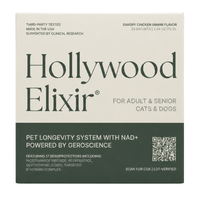
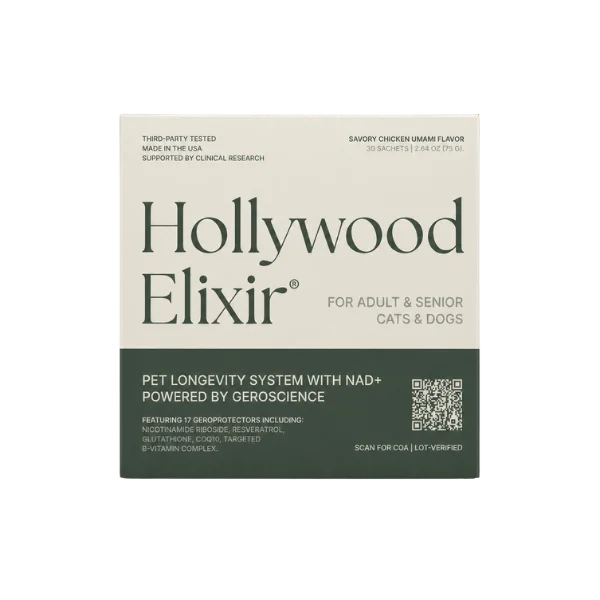
Hollywood Elixir™ is designed to support normal aging routines as part of a veterinarian-informed plan.

“Zombie cells” is a nickname for worn-out cells that should have retired, but instead linger and irritate nearby tissues. In pets, the practical question is not whether the phrase is catchy—it is whether a supplement or “senolytic” plan is safe, appropriate, and worth discussing with a veterinarian right now.

Cellular senescence is a normal protective response: a damaged cell stops dividing to avoid becoming cancerous, but it can also start releasing inflammatory signals that change how surrounding tissue behaves (Tchkonia, 2013). Over years, that can narrow a pet’s repair window—making stiffness, slower recovery after exercise, and “older dog” behavior changes feel more stubborn.

Interest in senolytic therapy pets has surged because compounds like fisetin and quercetin are discussed as possible ways to target senescent cells in lab models, not because they are proven anti-aging tools for dogs or cats. This page translates the biology into household-relevant observations, explains why fisetin for dogs and quercetin senolytic pets conversations require extra caution, and lays out what to track and what not to do while research is still catching up.

By La Petite Labs Editorial, ~15 min read

Featured Product:

  • Senolytics in Pets: What 'Zombie Cells' Means and How to Think About Fisetin and Quercetin Safely means learning what senescent “zombie” cells are, why they can stir inflammation, and why pet use is still a safety-first, evidence-limited decision.
  • Senescent cells are not “bad cells” by default; they can prevent damaged cells from dividing, but they may also leak inflammatory signals (SASP) that affect nearby tissue (Tchkonia, 2013).
  • Aging can increase senescent cell burden, which may shrink a pet’s flexibility for recovery after stressors like surgery, heat, or intense play.
  • Fisetin is studied as a senotherapeutic in mice, with healthspan/lifespan signals in specific models, but that does not translate into a home dosing plan for pets (Yousefzadeh, 2018).
  • Quercetin is widely discussed; the best-known senolytic research often involves combinations (including dasatinib + quercetin) in animals, not over-the-counter pet supplements (Saccon, 2021).
  • Responses can differ by sex and context in animal studies, reinforcing why “one protocol for every pet” is risky (Fang, 2023).
  • Owners can make smarter choices by avoiding DIY stacks, logging progress indicators, and bringing targeted questions to a veterinarian before trying any senolytic-like approach (Romashkan, 2021).

What “Zombie Cells” Really Means in Pets

A “zombie cell” is a casual way to describe a senescent cell: a cell that has stopped dividing because it is stressed or damaged, but has not been cleared away. This can be protective at first, because it prevents risky cells from multiplying. The problem is that senescent cells can linger and send out chemical signals that nudge nearby cells toward inflammation and poor tissue behavior over time (Tchkonia, 2013).

At home, this concept shows up as patterns rather than one dramatic symptom: an older dog that takes longer to “warm up” on walks, seems sore after normal play, or becomes less predictable in energy and mood. Those changes can have many causes, so “zombie cells” should never be treated as a diagnosis. It is a biology lens that can help owners ask better questions about aging, pain, and recovery.

How Senescent Cells Accumulate with Age

Senescent cells can build up when the body’s cleanup systems do not remove them efficiently. Aging, chronic inflammation, obesity, and repeated tissue stress can all increase the odds that more cells enter senescence and stay there. Over time, that can narrow the body’s range for repair—meaning the same small injury or stressor can leave a bigger footprint than it did years earlier.

Owners often notice this as “my dog used to bounce back faster.” A weekend hike, a long car ride, or a cold day can lead to stiffness that lasts longer than expected. It helps to separate normal aging from treatable problems: arthritis pain, dental disease, endocrine disorders, and anemia can mimic “aging.” A vet exam and basic labs often clarify what is truly age-related versus fixable.

NAD for dogs DNA double helix

SASP: the Messy Signals Senescent Cells Release

One reason senescent cells matter is the senescence-associated secretory phenotype (SASP). SASP is a mix of inflammatory proteins and signaling molecules that senescent cells release into their neighborhood. This “leakiness” can change how surrounding tissue behaves, encouraging inflammation and disrupting normal repair cues. Senolytic and senomorphic strategies are often framed around either removing senescent cells or quieting SASP.

In a household context, SASP is not something that can be measured with a home test. Instead, owners can watch for inflammation-adjacent patterns: slower recovery after exercise, more frequent “off days,” or skin that seems more reactive to minor irritants. These signs are not specific to senescence, but they are useful to log because they help a veterinarian judge pain control, mobility plans, and whether a new supplement is making life calmer or more erratic.

What Senolytics Aim to Do (and What They Don’t)

Senolytics are research tools designed to selectively push senescent cells toward death, ideally lowering senescent cell burden. That is different from pain medicine, which changes how pain is felt, and different from anti-inflammatories, which mainly dial down inflammatory pathways. The promise in lab models is that removing a source of SASP could widen the repair window in aging tissues, but the risk is that “selective” is not perfect in real bodies.

For owners, the key is expectation-setting: senolytics are not a quick comfort fix, and they are not a substitute for arthritis management, weight control, or dental care. If a dog is limping, panting at rest, or refusing stairs, that needs a clinical plan first. Senolytic therapy pets conversations belong in the “research interest” category, not the “treat at home” category.

Fisetin: Why Researchers Pay Attention

Fisetin is a plant flavonoid studied as a senotherapeutic, including senolytic-like effects in certain experimental systems. In aged mouse models, fisetin has been associated with reduced senescence markers and improved healthspan signals in specific settings (Yousefzadeh, 2018). That is the scientific reason fisetin shows up in “zombie cells in aging pets” discussions—but it is still a leap from mouse outcomes to safe, effective pet use.

At home, fisetin for dogs is often searched when an owner sees slower movement, more sleeping, or new confusion in routines. Those signs can come from pain, vision loss, hearing loss, or cognitive change, and each has different first-line steps. A responsible approach is to treat fisetin as a topic to discuss, not a self-directed experiment—especially if a dog has liver disease, kidney disease, or is on multiple medications.

Hollywood Elixir™ is amazing and makes my 13 y/o young again!

— Jessie

We go on runs. Lately he's been keeping up with no problem!

— Cami

“Senescence is real biology, but pet decisions still need real pet data.”

Quercetin: Popular Name, Complicated Reality

Quercetin is another flavonoid that appears in senescence conversations, but “quercetin” is not one single, predictable intervention. Different forms, doses, and combinations can behave differently, and much of the best-known senolytic research involves pairing quercetin with prescription drugs rather than using it alone. That is why quercetin senolytic pets claims online often sound more certain than the evidence actually is.

Owners may be tempted to add quercetin because it is easy to buy, but “easy to buy” is not the same as “easy to use safely.” If a dog already takes NSAIDs, steroids, seizure medications, or blood thinners, any new supplement can change the overall risk picture. The safest routine is to bring the exact product label to the vet and ask about interactions and monitoring.

nad plus for dogs

Dasatinib Plus Quercetin: the Famous Research Pair

A lot of “senolytic” excitement comes from studies using dasatinib (a prescription drug) combined with quercetin. In animal models, this pairing has been used to reduce senescence markers and inflammatory signals in specific tissues, including the gut (Saccon, 2021). In rats, the combination has also been studied in the context of age-related healing at tendon-to-bone interfaces (Cai, 2025). These are controlled research contexts, not a template for home use.

This matters because some online advice quietly swaps “dasatinib + quercetin” research into “quercetin supplement” recommendations. That is a category error. If a pet owner is reading about D+Q, the practical takeaway is not to copy it—it is to recognize how far the science is from over-the-counter products, and why veterinary oversight is essential for anything drug-adjacent.

NAD+ for dogs portrait good boy

Dogs, Cats, and Humans Don’t Process Flavonoids the Same

Species differences are the quiet deal-breaker in many supplement trends. Dogs and cats can absorb, transform, and clear plant compounds differently than humans, and cats in particular have unique liver metabolism constraints that can change safety margins. Even within a species, age, body size, and existing disease can shift how a compound behaves. That is why “works in mice” is only a starting point, not a conclusion.

A practical rule: if a pet is a senior, on multiple medications, or has kidney/liver concerns, the bar for adding new compounds should be higher, not lower. Owners can support safer decisions by keeping a single updated medication-and-supplement list on the fridge or phone. That list is one of the most helpful handoffs a veterinarian can receive when discussing senolytic therapy pets.

Hollywood Elixir contains 16 longevity actives including NAD for dogs

Safety and Unknowns: Why “Natural” Isn’t Automatically Gentle

The biggest safety issue with senolytic-like ideas is uncertainty: the target (senescent cells) is real, but the selectivity and downstream effects are not fully mapped in pets. Animal data also show that outcomes can vary by sex and context, even when the same compounds are used (Fang, 2023). There are also cautionary signals in the broader literature that flavonoids can have unexpected effects in certain settings, reinforcing the need for restraint (Pihl, 2024).

At home, “safe” should mean predictable: no new vomiting, diarrhea, appetite change, agitation, or unusual sleepiness after starting anything new. If a supplement is tried with veterinary guidance, it should be introduced one change at a time, with a clear stop rule. A pet that becomes less predictable after a new product is giving useful information—and that information should be shared quickly.

Why This Isn’t Ready for Pet Store Shelves Yet

Senescence biology is compelling, but “compelling” is not the same as “ready.” To responsibly recommend a senolytic approach for pets, research needs clear answers on dosing ranges, safety monitoring, which pets should be excluded, and what outcomes matter (mobility, cognition, kidney values, quality of life). Expert workshops on senolytics emphasize careful trial design and cautious interpretation, even in humans (Romashkan, 2021). That caution is even more important in companion animals.

Owners can use this as a filter when reading marketing claims: if a product promises dramatic “anti-aging” results without discussing exclusions, monitoring, or veterinary involvement, it is skipping the hard parts. A safer mindset is to treat senolytics as a research frontier while focusing on proven basics—weight, pain control, dental health, and predictable daily movement that keeps joints within a comfortable range.

“If a new supplement makes life more erratic, that is a meaningful signal.”

nad+ for dogs La petite labs scientist lab coat

What Responsible Pet Research Looks Like

The best pet-focused evidence comes from controlled trials in real dogs, with clear outcomes owners can recognize and veterinarians can measure. One randomized controlled trial in senior dogs evaluated a senolytic plus an NAD+ precursor combination and reported improved owner-assessed cognitive scores, showing that canine studies are possible and informative (Simon, 2024). Even so, that does not validate every senolytic ingredient or every dosing style—each intervention needs its own evidence.

A useful household takeaway is to look for research that matches the pet in front of the owner: similar age, similar health status, and outcomes that matter day-to-day (sleep-wake patterns, house training reliability, engagement on walks). When a study uses mice, rats, or cell cultures, it can still teach biology, but it should not be treated like a shopping list for supplements.

Shop Now
nad for dogs hollywood elixir ingredient breakdown marketing

Senescence as One Hallmark of Aging, Not the Whole Story

Cellular senescence is often discussed as one “hallmark of aging,” meaning one repeating pattern that shows up across tissues as bodies get older. That framing helps explain why joints, brain, skin, and kidneys can all feel like they age together, even when the symptoms look different. But it also prevents tunnel vision: a pet can have pain, anxiety, or confusion for reasons that have nothing to do with senescent cells.

For owners, the best use of the hallmark idea is prioritization. If mobility is the main issue, start with a joint exam, weight plan, and a home setup that reduces slipping and jumping. If cognition is the main issue, start with a vet conversation about hearing/vision, pain, sleep disruption, and predictable routines. Senescence biology can sit in the background as context, not as the driver of every decision.

Shop Now
NAD+ for dogs hollywood elixir with dog product campaign shot

Case Vignette: When “Anti-aging” Searches Start

A 12-year-old medium-size dog starts hesitating at stairs, sleeping later, and seeming “foggy” in the evening. The owner reads about zombie cells in aging pets and finds fisetin for dogs discussed as a senolytic option. The dog is also on an NSAID for arthritis and recently had mildly elevated liver enzymes on routine bloodwork.

In this scenario, the safest next step is not adding a new compound—it is tightening the clinical picture. A vet can confirm whether pain control is adequate, whether the liver values change the supplement risk, and whether the “foggy” behavior fits canine cognitive dysfunction, medication side effects, or sleep disruption. Bringing a short behavior log and the exact supplement label makes the appointment more productive.

Shop Now

Owner Checklist Before Trying Senolytic-like Supplements

Before any senolytic therapy pets experiment is even discussed, it helps to separate “aging” from “untreated problem.” Use this owner checklist: (1) Is there a new limp, stair hesitation, or trouble rising? (2) Any appetite change, vomiting, diarrhea, or weight loss? (3) Any new confusion at night, pacing, or house-training accidents? (4) Any new lumps, bleeding, or persistent cough? (5) Is the pet on NSAIDs, steroids, seizure meds, or blood thinners?

If any item is “yes,” a vet visit should come first, because those clues can change what is safe. Even when everything seems stable, owners should still gather basics: current weight, a list of every pill/chew/powder, and the last bloodwork date. That preparation turns a vague “should this help aging?” question into a safer, more concrete conversation.

What to Track: Progress Indicators to Log Between Vet Visits

Because senolytic-like approaches are not quick symptom relievers, tracking matters more than opinions. Useful progress indicators include: (1) time to stand after resting, (2) willingness to take the first 20 steps on a walk, (3) number of slips on hard floors per day, (4) evening pacing or restlessness minutes, (5) appetite consistency, (6) stool quality, and (7) next-day soreness after a known activity. These markers are specific enough to compare week to week.

A simple routine is to log two numbers daily (stairs hesitation yes/no and pacing minutes) and one weekly “standard walk” note. If anything new is introduced, keep everything else the same for two weeks so the signal is not lost in noise. If the log becomes more erratic after a change, that is a reason to pause and call the clinic rather than pushing forward.

NAD+ for dogs

A Common Misconception That Leads to Risky Choices

A unique misconception in this space is the idea that “senolytic” automatically means “gentle cleanup,” like taking out the trash. In reality, senescent cells can play roles in wound healing and short-term protection, and the body’s signaling is context-dependent. Removing or altering these cells at the wrong time—or in the wrong pet—could theoretically narrow the repair window rather than widen it. That is why the science is cautious, even when the concept is exciting.

At home, this misconception shows up as stacking: adding fisetin, quercetin, and other “anti-aging” ingredients all at once, then attributing any change to the whole stack. That makes it impossible to know what helped, what harmed, or what did nothing. A safer approach is to treat aging support like any other health plan: one variable at a time, with clear goals and clear stop rules.

Shop Now
nad supplements for dogs nad+ for dogs

Vet Visit Prep: Questions That Make the Conversation Safer

A productive vet visit is specific. Bring: the supplement label(s), the medication list, the progress log, and the last lab dates. Then ask targeted questions: (1) “Given my dog’s kidney and liver values, are flavonoids like fisetin or quercetin a concern?” (2) “Which symptoms look like pain versus cognitive change?” (3) “If anything new is tried, what labs or side effects should trigger stopping?” (4) “What proven steps should happen first for mobility or sleep?”

This preparation helps the veterinarian place senolytic therapy pets into the right lane: research interest, not replacement care. It also protects the pet from accidental interactions and from delaying effective treatment. If the vet recommends against a senolytic-like supplement, it is often because the risk is clearer than the potential upside for that individual dog.

Shop Now

What Not to Do with Fisetin or Quercetin at Home

What not to do: (1) do not copy human “senolytic cycles” or internet dosing charts for pets, (2) do not combine multiple new supplements at once to “cover all hallmarks,” (3) do not use quercetin as a stand-in for dasatinib+quercetin research, and (4) do not start anything new right before surgery, dental work, or a vaccine visit. These choices increase uncertainty exactly when predictability matters most.

Also avoid using a supplement to explain away red flags. If a dog is losing weight, vomiting repeatedly, collapsing, or suddenly refusing walks, that is not “aging” and not “zombie cells”—it is a reason to call the veterinarian promptly. The safest way to engage with fisetin for dogs or quercetin senolytic pets ideas is to keep the focus on safety, monitoring, and proven care foundations.

“One variable at a time keeps aging support safer and more predictable.”

Educational content only. This material is not a substitute for veterinary advice. Always consult your veterinarian about your dog’s specific needs. These statements have not been evaluated by the Food and Drug Administration. Products mentioned are not intended to diagnose, treat, cure, or prevent any disease.

Glossary

  • Cellular Senescence - A state where a cell stops dividing after stress or damage.
  • Senescent Cell Burden - The amount of senescent cells present in a tissue or body.
  • SASP - Senescence-associated secretory phenotype; inflammatory signals released by senescent cells.
  • Senolytic - A research strategy intended to selectively eliminate senescent cells.
  • Senomorphic - An approach aimed at changing SASP signaling without necessarily removing senescent cells.
  • Fisetin - A plant flavonoid studied as a senotherapeutic candidate in preclinical models.
  • Quercetin - A plant flavonoid discussed in senescence research, often in combinations.
  • Dasatinib - A prescription drug used in some senolytic research when paired with quercetin.
  • Progress Indicators - Simple, repeatable home observations logged to judge whether a plan is becoming calmer and more predictable.

Related Reading

References

Cai. Senolytic Combination of Dasatinib and Quercetin Promotes Tendon-to-Bone Healing by Mitigating Age-Related Senescence in Rats.. PubMed. 2025. https://pubmed.ncbi.nlm.nih.gov/41105426/

Yousefzadeh. Fisetin is a senotherapeutic that extends health and lifespan.. PubMed Central. 2018. https://pmc.ncbi.nlm.nih.gov/articles/PMC6197652/

Saccon. Senolytic Combination of Dasatinib and Quercetin Alleviates Intestinal Senescence and Inflammation and Modulates the Gut Microbiome in Aged Mice.. PubMed. 2021. https://pubmed.ncbi.nlm.nih.gov/33406219/

Fang. Sexual dimorphic metabolic and cognitive responses of C57BL/6 mice to Fisetin or Dasatinib and quercetin cocktail oral treatment.. PubMed. 2023. https://pubmed.ncbi.nlm.nih.gov/37296266/

Tchkonia. Cellular senescence and the senescent secretory phenotype: therapeutic opportunities.. Nature. 2013. https://www.nature.com/articles/s41598-021-02544-0

Romashkan. National Institute on Aging Workshop: Repurposing Drugs or Dietary Supplements for Their Senolytic or Senomorphic Effects: Considerations for Clinical Trials.. PubMed Central. 2021. https://pmc.ncbi.nlm.nih.gov/articles/PMC8521777/

Simon. A randomized, controlled clinical trial demonstrates improved owner-assessed cognitive function in senior dogs receiving a senolytic and NAD+ precursor combination.. PubMed Central. 2024. https://pmc.ncbi.nlm.nih.gov/articles/PMC11137034/

Pihl. Oral administration of quercetin and fisetin potentiates photocarcinogenesis in UVR-exposed hairless mice. 2024. https://www.sciencedirect.com/science/article/pii/S2667031324000253

FAQ

What are “zombie cells” in older pets?

“Zombie cells” is a nickname for senescent cells—cells that stop dividing after stress or damage but don’t get cleared away. They can release inflammatory signals that affect nearby tissue behavior over time.

In a home setting, this is not something that can be diagnosed by symptoms alone. It is a way to understand why aging can look like slower recovery, more stiffness, or less predictable energy, while still keeping the focus on treatable causes like pain, dental disease, or endocrine problems.

What does Senolytics in Pets: What 'Zombie Cells' Means and How to Think About Fisetin and Quercetin Safely mean?

It means separating an exciting biology idea from what is actually ready for routine pet use. Senolytics are studied for selectively targeting senescent cells, while fisetin and quercetin are plant compounds discussed in that research space.

“Safely” means no DIY dosing, no supplement stacking, and no delaying proven care. It also means tracking clear progress indicators and involving a veterinarian—especially for seniors, pets on medications, or pets with kidney or liver concerns.

Are senolytics proven to help dogs live longer?

No. While senolytic concepts have promising animal-model findings, that is not the same as proving lifespan or healthspan benefits in pet dogs living normal lives. Dogs have different genetics, diets, environments, and medical histories than lab animals.

The most responsible stance is “research interest.” Owners can still use the topic to guide good questions: what is driving stiffness, what is driving confusion, and what monitoring would make any new intervention more predictable and safer.

Is fisetin for dogs considered a senolytic?

Fisetin is discussed as a senotherapeutic in preclinical research, including senolytic-like effects in certain models. That scientific interest is real, but it does not automatically create a safe, effective pet protocol.

For owners, the practical point is to treat fisetin as a conversation starter with a veterinarian. A dog’s age, medications, and liver/kidney status can change the risk picture, and “natural” does not guarantee predictable results.

Is quercetin senolytic pets information reliable online?

Online information is often mixed because “quercetin” can mean different forms and different combinations. Some of the most cited senolytic research involves pairing quercetin with prescription drugs, which is not the same as using an over-the-counter supplement.

A reliability check: trustworthy sources discuss exclusions, interactions, and monitoring—not just “benefits.” If a post skips safety details or suggests copying human protocols, it is not a good guide for pet decisions.

Can senolytics replace arthritis medications in senior dogs?

No. Arthritis pain control has proven tools—weight management, appropriate exercise, physical therapy, and veterinarian-prescribed medications. Senolytic ideas target a different layer of biology and are not established as symptom control.

If a dog is limping, avoiding stairs, or struggling to rise, that should be treated as a pain and mobility problem first. Senolytic therapy pets discussions, if they happen at all, should be an add-on conversation after the basics are stable and predictable.

What side effects should owners watch for first?

Any new supplement can cause GI upset or behavior changes. Watch for vomiting, diarrhea, appetite drop, new itchiness, agitation, unusual sleepiness, or a sudden change in drinking and urination.

The most useful safety habit is a stop rule: if a new product makes life less predictable for more than a day or two, pause it and contact the veterinarian. Bring the label and a timeline of when signs started.

Are senolytics safe for dogs with kidney disease?

Kidney disease raises the stakes for any new compound because clearance and hydration balance can be fragile. There is not enough pet-specific evidence to assume senolytic-like supplements are safe in kidney-compromised dogs.

A veterinarian should review current kidney values, blood pressure status, diet, and medications before anything new is tried. If a supplement is used, the plan should include what to monitor at home and when to recheck labs.

Do fisetin or quercetin interact with NSAIDs or steroids?

Potential interactions are a real concern because many senior dogs take NSAIDs, steroids, or other long-term medications. Even when an interaction is not guaranteed, adding compounds can change GI risk, bleeding risk, or how predictable a pet feels day to day.

The safest step is to ask the veterinarian or pharmacist to review the full list, including supplements. Owners should not “trial” a new flavonoid during a medication change, because it becomes hard to tell what caused a new symptom.

Should puppies or pregnant dogs ever use senolytic supplements?

No. Growing and reproducing bodies rely on tightly timed cell signals, and senescence-related pathways can be involved in normal development and repair. There is no good reason to introduce senolytic-like ideas in puppies or during pregnancy/lactation.

If an owner is considering “longevity supplements” for a young dog, the highest-value steps are nutrition appropriate for life stage, parasite prevention, dental habits, and safe exercise. Those choices protect long-term health without adding unnecessary uncertainty.

How long would it take to notice any change?

Senolytic concepts are not designed like fast-acting pain relief, so expecting a quick visible change sets owners up for confusion. If anything is noticed, it would more likely be gradual shifts in recovery, comfort, or daily routines rather than a sudden “before and after.”

That is why tracking matters. Choose a few progress indicators—like time to rise, evening pacing minutes, and next-day soreness after a standard walk—and log them for several weeks. If the log becomes more erratic, that is a reason to stop and reassess.

What quality signals matter when choosing a supplement?

Quality signals include clear labeling, batch/lot identification, a way to contact the manufacturer, and avoidance of “proprietary blends” that hide amounts. Products should also avoid disease claims and should be willing to share third-party testing when asked.

Owners should also consider whether the product fits the dog’s real goal. If the main issue is arthritis pain, a supplement should not distract from proven mobility care. If the main issue is confusion at night, the plan should prioritize sleep routines and a vet evaluation.

Can owners combine fisetin and quercetin together?

Combining compounds increases uncertainty and makes side effects harder to interpret. It also encourages “stacking,” where multiple ingredients are added without a clear goal or monitoring plan.

If a veterinarian supports trying a supplement approach, the safer method is one change at a time with a defined timeline and stop rule. That keeps the dog’s daily life more predictable and gives the clinic usable information if something goes wrong.

Is there a safe dose range owners can follow?

No dosing guidance should be taken from internet protocols for this topic. Senolytic research often uses specific formulations and controlled conditions, and pets vary widely in size, age, and medical complexity.

A veterinarian is the right person to advise on whether a specific product is appropriate at all, and what monitoring would be needed. If a source provides confident mg/kg dosing for “senolytic cycles” in pets, it is moving beyond what the evidence can safely support.

Do dogs and cats respond the same to senolytics?

No. Dogs and cats differ in metabolism and medication sensitivity, and cats have unique liver processing constraints that can change safety margins for many compounds. That makes copy-pasting dog supplement trends into cats especially risky.

For cat owners, the safest approach is to avoid assuming that a “dog-safe” flavonoid is cat-safe. Any senolytic-like discussion should be veterinarian-led, with attention to appetite, weight trends, hydration, and lab monitoring when appropriate.

When should a vet be called urgently?

Call urgently for repeated vomiting, black/tarry stool, collapse, severe weakness, trouble breathing, facial swelling, or sudden refusal to walk. These are not “normal aging” signs and should not be watched at home.

If a new supplement was started within the last week, share that immediately and bring the container to the clinic. Even if the supplement is not the cause, the timeline helps the veterinarian make faster, safer decisions.

How does SASP relate to stiffness or brain changes?

SASP is the inflammatory “signal cloud” senescent cells can release. In theory, that can make tissues behave as if they are under chronic irritation, which may narrow the repair window in joints or influence how the brain handles stress and recovery.

In real pets, stiffness and cognitive changes have many causes. The best use of SASP as a concept is to motivate careful tracking and a thorough vet workup, rather than assuming one supplement can address every aging-related change.

What’s the biggest red flag in senolytic marketing?

The biggest red flag is certainty without safety structure—big promises with no mention of exclusions, interactions, monitoring, or veterinary involvement. Another red flag is implying that “natural” automatically means gentle or universally safe.

A safer message sounds more cautious: it acknowledges the gap between mouse studies and pets, encourages one-variable changes, and emphasizes tracking. If a claim sounds like a shortcut around arthritis care, dental care, or diagnostics, it is not pet-centered.

How does Hollywood Elixir™ fit into aging support decisions?

A general aging-support product is not the same as senolytic therapy pets research. The safest way to think about any blend is as something that may help support normal function alongside proven care, not as a way to target “zombie cells” directly.

If considering Hollywood Elixir™, the best next step is to review the ingredient list with a veterinarian, introduce it as the only new change, and log progress indicators like mobility, sleep routine, appetite, and stool quality.

What does Senolytics in Pets: What 'Zombie Cells' Means and How to Think About Fisetin and Quercetin Safely recommend first?

It prioritizes proven foundations: pain control for mobility issues, weight management, dental health, traction and ramps at home, and predictable daily movement. Those steps often make life calmer and more functional without adding uncertainty.

Only after the basics are stable should owners consider research-forward topics like fisetin for dogs or quercetin senolytic pets ideas—and even then, with veterinary guidance, one change at a time, and a clear monitoring plan.

Can Hollywood Elixir™ be used with other supplements?

Combining multiple supplements can make outcomes less predictable and can raise interaction risk, especially in senior pets on medications. The safest approach is to avoid stacking and to keep a clear list of everything the pet receives.

If using Hollywood Elixir™, consider it one variable in the plan and discuss other add-ons with a veterinarian. That keeps it clearer whether the routine is becoming calmer and more predictable or drifting toward more erratic days.

5K+ Happy Pet Parents

Excellent 4.8

Senolytics in Pets: What 'Zombie Cells' Means and How to Think About Fisetin and Quercetin Safely | Why Thousands of Pup Parents Trust Hollywood Elixir™

"He seems more happy overall. I've also noticed he has more energy which makes our walks and playtime so much more fun."

Olga & Jordan

"He's got way more energy now! We go on runs pretty often; he use to get tired halfway through, but lately, he's been keeping up without any problem."

Cami & Clifford

"I want her to live forever. She hasn't had an ear infection since!"

Madison & Azula

"It helps with her calmness, her immune system. I really like the clean ingredients. Highly recommend La Petite Labs!"

Maple & Cassidy

"He seems more happy overall. I've also noticed he has more energy which makes our walks and playtime so much more fun."

Olga & Jordan

"He's got way more energy now! We go on runs pretty often; he use to get tired halfway through, but lately, he's been keeping up without any problem."

Cami & Clifford

"I want her to live forever. She hasn't had an ear infection since!"

Madison & Azula

"It helps with her calmness, her immune system. I really like the clean ingredients. Highly recommend La Petite Labs!"

Maple & Cassidy

"He seems more happy overall. I've also noticed he has more energy which makes our walks and playtime so much more fun."

Olga & Jordan

"He's got way more energy now! We go on runs pretty often; he use to get tired halfway through, but lately, he's been keeping up without any problem."

Cami & Clifford

"I want her to live forever. She hasn't had an ear infection since!"

Madison & Azula

"It helps with her calmness, her immune system. I really like the clean ingredients. Highly recommend La Petite Labs!"

Maple & Cassidy

"He seems more happy overall. I've also noticed he has more energy which makes our walks and playtime so much more fun."

Olga & Jordan

"He's got way more energy now! We go on runs pretty often; he use to get tired halfway through, but lately, he's been keeping up without any problem."

Cami & Clifford

"I want her to live forever. She hasn't had an ear infection since!"

Madison & Azula

"It helps with her calmness, her immune system. I really like the clean ingredients. Highly recommend La Petite Labs!"

Maple & Cassidy

SHOP NOW