
The 12 Hallmarks of Aging in Dogs, Explained
Read full insightAnti-Aging Pill for Dogs
By La Petite Labs Editorial 15 min read
There is no pill that reverses aging in dogs — but “anti-aging pill for dogs” can mean two very different things, and sorting them out is the whole game. One is a dietary supplement you can buy without a prescription, designed to support healthy aging. The other is a drug that would need veterinary oversight and evidence for a specific use. The standards for testing, labeling, and legal claims are not the same, so decide which category you are looking at before you buy anything.
For supplements, evaluate the claim, not the hype: favor honest language like “supports healthy aging” or “supports mobility,” and be wary of anything that implies it can treat, prevent, or reverse disease. For drugs, ask what condition it targets, what dog studies support it, and what monitoring it needs. Either way, your vet belongs in the decision — “anti-aging” is not a diagnosis, and the right choice depends on your dog’s health, medications, and risk factors.
- There is no pill that reverses aging — realistic “anti-aging” for dogs is about healthspan: steadier comfort, energy, and engagement.
- The strongest supplement logic supports several systems at once, since aging is rarely a single deficiency.
- Favor conservative claims, transparent per-ingredient labels, and a formula built for long-term tolerability — not miracle language.
- Side effects are usually digestive (loose stool, vomiting, appetite dips) in the first two weeks; stop and call your vet if they appear.
- Track what you can see: rising from rest, sleep quality, play interest, and recovery after walks; judge value over weeks to months.
- Introduce one product at a time and coordinate with your vet when medications or chronic disease are involved.
Red Flags in Anti-Aging Marketing (and Green Flags of Quality)
When you’re evaluating an “anti-aging” product, the fastest way to protect your dog is to screen the label and the company’s proof.
Red flags:
- Disease-treatment promises (claims to cure, reverse, or prevent arthritis, dementia, kidney disease, cancer, etc.). Supplements should not be marketed as drugs.
- “Proprietary blend” formulas that hide individual ingredient amounts—this makes it hard to assess whether dosing is meaningful or safe.
- No clear dosing instructions by weight, life stage, or frequency.
- No testing documentation, or vague statements like “third-party tested” without showing results.
- Overreliance on testimonials instead of data. (see our Dog Life Stages →)
Green flags:
- Transparent dosing for every active ingredient (no hidden blend totals).
- A current COA (Certificate of Analysis) that matches the batch you’re buying and includes identity/purity testing.
- Realistic structure/function language (supporting normal aging processes) rather than disease claims.
- Clear manufacturer quality standards (e.g., GMP compliance) and responsive customer support.
If a product can’t show what’s in it and how it’s verified, it’s not a good candidate for long-term use (Crimmins, 2015).
What to Ask Your Vet Before Trying an 'Anti-Aging Pill'

Bring the exact product label (or a photo) to your appointment and use a short checklist to reduce risk.
Questions to cover:
- Current diagnoses: What health conditions should change our supplement/drug choices right now?
- Medication list: Are there interactions with my dog’s prescriptions, preventives, pain meds, thyroid meds, seizure meds, or supplements already in use?
- Baseline labs: Do we need recent bloodwork (CBC/chemistry), urinalysis, or other baseline values before starting—especially for liver/kidney considerations?
- Dosing and duration: What dose is appropriate for my dog’s weight and age, and how long before we reassess?
- Monitoring plan: What signs should we track at home (appetite, stool, sleep, activity tolerance), and when should we recheck labs or vitals?
- Timing: Should we avoid starting anything new close to dental work, anesthesia, or surgery?
- Stop criteria: What specific side effects or changes mean we stop immediately and call you?
This keeps the decision individualized and makes it easier to tell whether the product is helping or creating avoidable risk (Crimmins, 2015).
What Research Suggests About Multi-target Aging Support
The most interesting “anti-aging” research in dogs is increasingly about combinations rather than single ingredients. In one randomized, controlled trial, a combination of a senolytic and an NAD+ precursor was associated with improved cognitive function in senior dogs, using owner assessments as a primary measure (Simon KE, 2024). That doesn’t mean every supplement will replicate those results, but it does support a broader idea: multi-pronged support may be more realistic than a single magic compound.
For owners, the takeaway is practical. Look for products that are designed around complementary roles—supporting cellular housekeeping, energy availability, and inflammation balance—without overpromising. And remember that cognition, mobility, and vitality are interconnected; when one improves, the others often become easier to support.
Nutraceuticals and Aging: Where They Fit in a Real Plan
Nutraceuticals are not pharmaceuticals, and that distinction matters. They can support normal function, but they shouldn’t be positioned as treatments for disease. Reviews of aging pets suggest that enriched diets and nutraceuticals may help support cognitive function and mental well-being in older dogs and cats, though outcomes vary by individual and formulation (Blanchard T, 2025). The best approach is to treat supplements as part of a long horizon plan—subtle, cumulative, and evaluated over months.
If you’re choosing between “more ingredients” and “better design,” choose design. A shorter, coherent formula with clear purpose is often easier to tolerate and easier to assess. Your dog’s response—stool quality, appetite, comfort, and demeanor—should guide whether you continue.
Safety First: Tolerability, Ingredients, and Sensible Expectations
What are the side effects? For most anti-aging supplements they are digestive and mild — loose stool, vomiting, or a dip in appetite — and they usually show up in the first 10 to 14 days. Even “natural” ingredients can cause GI upset, interact with medications, or be wrong for certain conditions, and seniors with kidney, liver, or GI issues tend to be more sensitive.
Introduce one new product at a time, keep the rest of the routine stable, and watch closely for two weeks. If vomiting, diarrhea, itchiness, or marked lethargy appears, stop and call your veterinarian. If your dog takes prescriptions, have your vet or pharmacist screen for interactions before you begin. Safety is the first filter, not an afterthought.
“The most credible goal isn’t turning back time—it’s protecting the shape of your dog’s everyday life.”
Dosing Without Guesswork: Conservative Use and Vet Alignment
Dosing should be conservative and label-driven, with veterinary input when your dog is very small, very large, medically complex, or on multiple medications. Avoid products that encourage “more is better” thinking. In aging support, the goal is steady tolerability—something your dog can take consistently without digestive fallout or appetite changes.
Because supplement quality varies, follow the manufacturer’s directions and don’t combine multiple overlapping formulas unless your veterinarian agrees. If you’re already using joint, skin, or calming products, review ingredient overlap to reduce the risk of excessive stacking. When in doubt, simplify rather than escalate.
Choosing Outcomes: the Small Wins Worth Tracking
When owners describe wanting a dog anti aging pill, they often mean “I want my dog to feel like themselves again.” That’s a reasonable aim, but it helps to define what “themselves” looks like now. Is it getting up without hesitation, greeting you with interest, settling more comfortably at night, or recovering faster after a walk? Those are measurable outcomes that fit the reality of aging.
Set a baseline before you start: take a short video of your dog rising from rest, note sleep patterns for a week, and track play interest. Small improvements can be easy to miss when you see your dog every day. A supplement is only worth continuing if it supports the life you actually share.
Age, Size, and Timing: When Support Becomes Relevant
Age and size move the timeline. Large breeds often show “senior” patterns earlier, while small dogs stay spry longer but still hit cognitive and metabolic shifts. The most useful approach is to start support when subtle changes first appear — slightly slower recovery, a little less spark — rather than waiting for an obvious problem, since gentle early support fits aging better than late, aggressive changes.
Puppies and young adults generally do not need anti-aging supplements unless a veterinarian directs it for a specific reason. For midlife dogs, the centerpiece is weight stability, dental care, and muscle maintenance; a supplement is an add-on to those fundamentals, not a substitute for them.
How Long It Takes: Setting a Timeline You Won’t Regret
Results timelines are usually slower than marketing suggests. With anti aging pills for dogs, you’re often looking at weeks to notice changes, and months to judge whether the trend is real. Cognitive support research in senior dogs has used owner assessments to capture changes that emerge over time, which matches how these benefits typically show up—subtle, lived-in, and cumulative (Simon KE, 2024).
Give a product a fair trial, but not an endless one. If nothing meaningful changes after a reasonable period, it’s okay to stop. If you do see improvement, keep expectations grounded: the best outcome is often fewer bad days, not a total absence of them.
Special Cases: Chronic Conditions, Medications, and Extra Caution
If your dog has a chronic condition, the question isn’t “Can they take an anti aging dog pill?” but “What’s the safest way to support them without complicating care?” Dogs with kidney disease, liver disease, seizure disorders, endocrine conditions, or a history of pancreatitis may need extra caution with concentrated supplements, novel botanicals, or high-fat formats. Safety depends on formulation quality, ingredient choices, and how the product fits the whole medication picture (Finno CJ, 2020).
Bring your vet a full list of everything your dog gets—prescriptions, preventives, chews, and “occasional” add-ons. Ask specifically about interactions, lab monitoring, and whether any ingredient should be avoided before anesthesia or dental procedures. A careful plan can keep support steady while respecting the realities of medical management.
“Aging support works best when it’s consistent, tolerable, and measured in small, trackable wins.”
DVM Voice: Clinical Vignette of a Common Pattern in Senior Dog Aging
Case provided by JoAnna Pendergrass, DVM
Rex, a 7-year-old Labrador Retriever, was brought in after his owner noticed he was slower to rise, hesitant on stairs, and less able to play as before. Examination showed stiffness and reduced hip mobility; radiographs confirmed degenerative joint changes.
His care required weight management, veterinary-guided pain control, nutritional support, and rehabilitation — a comprehensive plan, but one started only after visible decline appeared.
Clinical takeaway: Rex’s case reflects the value of proactive aging support: maintaining lean body condition, monitoring mobility early, and supporting cellular resilience, antioxidant defense, and healthy inflammatory balance before decline becomes obvious.
Single-case vignette. Not generalizable. Veterinary oversight is essential for pain, stiffness, or suspected joint disease.
Quality Signals That Separate Serious Formulas from Hype
Quality matters more in anti aging pills for dogs than most owners expect. Two products can share a label claim and behave very differently in the real world because of sourcing, stability, and contaminants. Nutraceutical safety is influenced by formulation and the presence of any harmful ingredients, including unexpected additives or inconsistent potency (Finno CJ, 2020). Look for clear ingredient lists, manufacturing standards, and conservative positioning that avoids miracle language.
Practical signals include: lot tracking, expiration dating, storage guidance, and a brand that answers questions without defensiveness. If a company can’t explain why each ingredient is there—or leans on vague “proprietary blend” claims—consider that a yellow flag. For aging support, you want boring reliability: the same thing, every day, for months.
Making It Easy: Formats, Palatability, and Daily Consistency
Administration is where good intentions often fail. If a supplement becomes a daily negotiation, it won’t last long enough to matter. Choose a format your dog reliably accepts—soft chew, capsule hidden in food, powder mixed into a topper—and keep the routine consistent. If your dog is picky, start with a smaller amount and build up over several days, watching stool quality and appetite.
Pair the supplement with a stable cue: after the morning walk, with breakfast, or during evening wind-down. Consistency reduces missed days and makes it easier to notice true changes. If you’re using multiple products, avoid stacking “kitchen sink” formulas; it becomes harder to identify what helps and what irritates.
Daily or Cycled: Building a Routine You Can Sustain
Owners often ask whether an anti-aging pill for dogs should be “cycled” or used continuously. For most wellness-oriented supplements, steady use is the point: the goal is gentle, ongoing support rather than a dramatic short-term effect. That said, it’s reasonable to reassess every 8–12 weeks. If you can’t name a benefit you care about—mobility comfort, steadier energy, calmer evenings, brighter engagement—then the routine may not be worth it.
A simple tracking note helps: appetite, sleep, play interest, stairs, and “good days vs. Off days.” Supplements should never substitute for diagnostics when something changes quickly. If your dog’s behavior shifts abruptly, treat it as a medical question first, and a supplement question second.
Brain and Behavior: Supporting Mental Clarity in Later Years
Cognitive aging can be subtle: a dog who seems “a little lost,” wakes at odd hours, or forgets familiar routines. Nutraceuticals and enriched diets are being studied for their role in supporting cognitive function in aging pets, with some evidence suggesting benefits for mental well-being over time (Blanchard T, 2025). The most realistic expectation is support—helping the brain stay more resilient—rather than reversing established decline.
If cognition is your main concern, combine supplement support with environmental steadiness: predictable schedules, gentle enrichment, and lighting that reduces nighttime confusion. Talk with your veterinarian about whether a medical workup is needed, since pain, thyroid issues, and sensory loss can mimic cognitive changes.
Mobility and Recovery: What Realistic Improvement Can Look Like
Mobility is often the first place owners look for proof that a dog anti aging pill is “working.” That’s understandable: movement is visible. But mobility is also influenced by weight, nail length, muscle mass, and pain control. A supplement can support comfort and recovery, yet it won’t replace strength. Consider pairing any aging-support routine with low-impact conditioning—short, frequent walks; controlled sit-to-stand; and traction at home.
If your dog is already on anti-inflammatory medications, ask your vet before adding additional anti-inflammatory botanicals or oils. The goal is a clean, coordinated plan that supports daily life without increasing risk. When mobility improves, it should look like steadier gait, easier transitions, and more willingness—not a sudden burst that fades.
Skin, Coat, and Vitality: the Visible Clues That Matter
Skin, coat, and “sparkle” are often marketed as anti-aging outcomes because they’re easy to photograph. They can also be meaningful: coat quality reflects digestion, inflammation tone, and grooming comfort. Still, changes here are usually gradual. If your dog’s coat suddenly dulls, sheds excessively, or develops odor, think medical causes first—parasites, endocrine disease, infection—then consider supportive nutrition.
A well-designed anti aging pills for dogs approach supports the whole system: appetite, absorption, and the body’s ability to maintain tissues over time. When coat improvements happen, they tend to show up as less dandruff, softer texture, and steadier shedding patterns over several weeks.
Why Supplements Still Matter When Diet Is Already Strong
It is worth naming the tension a science-minded owner feels: if many nutrients are in food, why buy an anti-aging pill at all? The honest answer is that aging is not a single-deficiency problem — it is a systems problem, many small pressures adding up, which is why dog-aging research points to multiple modifiable targets rather than one (Crimmins, 2015). Multi-angle support fits that reality.
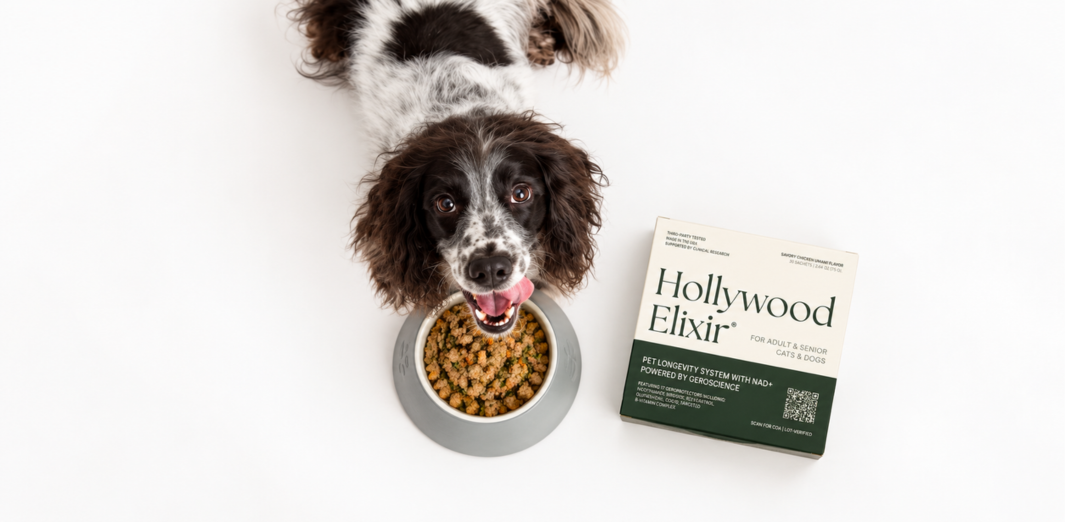
That is the lane Hollywood Elixir is built for. Instead of chasing one trendy molecule, it pairs NAD+ support (nicotinamide riboside at 60 mg) with antioxidant defense (glutathione, astaxanthin, resveratrol) and mitochondrial cofactors like CoQ10 at 40 mg, in a food-mixed sachet designed for energy, recovery, and resilience over the long haul. It is structure-and-function support for healthy aging — not a disease treatment — and for owners already doing the basics well, it is a quiet way to keep the whole routine durable across the years.
When to Stop, When to Call, and How to Stay Safe
When to call your veterinarian: any sudden change in appetite, vomiting/diarrhea that lasts more than a day, collapse, new coughing, marked lethargy, or behavior changes that feel out of character. Also call if your dog is pregnant, nursing, scheduled for surgery, or starting a new prescription. Supplement safety is real, but it’s not automatic; formulation and ingredient choices influence risk, especially in seniors with multiple conditions (Finno CJ, 2020).
If you want aging support, aim for a plan your vet can live with: conservative, trackable, and compatible with medical care. The best outcome is not a dramatic transformation, but a steadier version of your dog’s normal—more comfortable days, more engagement, and fewer setbacks that steal momentum.
“If a product can’t describe support without promising outcomes, it’s not the right kind of serious.”
Educational content only. This material is not a substitute for veterinary advice. Always consult your veterinarian about your dog’s specific needs. These statements have not been evaluated by the Food and Drug Administration. Products mentioned are not intended to diagnose, treat, cure, or prevent any disease.
Glossary
- Healthspan: The years a dog lives with good function, comfort, and engagement—not just years lived.
- Lifespan: Total length of life; not the same as quality of life.
- Nutraceutical: A supplement-like product used to support normal body functions, not to treat disease.
- Senescent Cells: Older cells that no longer divide normally and may contribute to age-related tissue stress.
- Senolytic: A compound studied for its ability to reduce the burden of senescent cells.
- NAD+ Precursor: A nutrient-like compound studied for supporting cellular energy and repair processes.
- Oxidative Stress: An imbalance between reactive molecules and the body’s defenses, associated with aging.
- Inflammation Tone: The baseline level of inflammatory signaling; chronic elevation is common with aging.
- Cognitive Dysfunction: Age-associated changes in memory, sleep-wake cycles, and orientation in some dogs.
Related Reading
Aging & Senior Dog Guidance
• Dog Age Calculator
• Dog Dementia
• Lethargy in Dogs
• My Dog Won't Eat
• Dog Pacing At Night
• Dog Licking Paws
• Can Dogs Dehydrate
Healthy Aging Support
• NAD+ for Dogs
• NMN for Dogs
• Antioxidants Supplements for Dogs
• Best Senior Dog Supplements & Vitamins
• Rapamycin for Dogs
References
Crimmins. Lifespan and Healthspan: Past, Present, and Promise. Springer. 2015. https://link.springer.com/article/10.1007/s11357-025-01521-z
Simon KE. A randomized, controlled clinical trial demonstrates improved owner-assessed cognitive function in senior dogs receiving a senolytic and NAD+ precursor combination. PubMed Central. 2024. https://pmc.ncbi.nlm.nih.gov/articles/PMC11137034/
Blanchard T. Enhancing cognitive functions in aged dogs and cats: a systematic review of enriched diets and nutraceuticals. PubMed. 2025. https://pubmed.ncbi.nlm.nih.gov/39827310/
Finno CJ. Veterinary Pet Supplements and Nutraceuticals. PubMed Central. 2020. https://pmc.ncbi.nlm.nih.gov/articles/PMC7802882/
Rumbeiha W. A review of class I and class II pet food recalls involving chemical contaminants from 1996 to 2008. PubMed Central. 2011. https://pmc.ncbi.nlm.nih.gov/articles/PMC3614097/
FAQ
What is an anti aging pill for dogs, realistically?
An anti aging pill for dogs is typically a supplement intended to support normal function as dogs get older—things like comfort, energy steadiness, and cognitive resilience. It should not be framed as reversing age or treating disease. The most credible approach is system support over time, paired with basics like weight management and veterinary screening.
Why do owners look for anti aging pills for dogs?
Most owners aren’t chasing immortality; they’re trying to protect the everyday joys that fade quietly with age—easier movement, calmer sleep, and a dog who seems more present. That’s a healthspan mindset, and it’s a reasonable one. A well-chosen supplement can add consistency to an already good routine, especially in seniors with changing appetite or digestion.
How might an anti aging pill for dogs support healthspan?
The most plausible benefits come from supporting multiple age-sensitive systems at once—cellular maintenance, energy steadiness, inflammation balance, and brain resilience—rather than betting on one ingredient. Research in canine aging suggests healthspan and lifespan drivers can overlap. That’s why thoughtful formulas aim for coordinated support you can evaluate over months.
Is a dog anti aging pill safe for most seniors?
Often, yes—when the product is well-formulated and used as directed—but “safe” depends on the dog. Seniors may have kidney, liver, GI, or heart issues that change tolerability. Nutraceutical safety is influenced by formulation quality and potentially harmful ingredients. Introduce one new supplement at a time and involve your veterinarian if your dog takes medications.
What side effects can anti aging pills for dogs cause?
The most common side effects are digestive: softer stool, gas, reduced appetite, or occasional vomiting—especially when starting too fast or stacking multiple products. Skin itchiness or behavior changes are less common but worth taking seriously. Stop the supplement and call your veterinarian if symptoms are persistent, severe, or paired with lethargy.
Can an anti aging pill for dogs interact with medications?
Yes. Even non-prescription supplements can interact with prescription drugs by affecting absorption, sedation, bleeding risk, or GI tolerance. This is especially relevant for dogs on anti-inflammatories, seizure medications, thyroid meds, or heart drugs. Bring your vet a complete list of everything your dog takes, including “occasional” chews.
When should I start an anti aging pill for dogs?
Start when you notice early, repeatable changes—slower recovery after walks, more stiffness after rest, or subtle sleep and engagement shifts—rather than waiting for a crisis. Earlier, gentler support is often easier to evaluate and tolerate. Puppies and young adults usually don’t need “anti-aging” support unless your veterinarian recommends it.
Do large breeds need anti aging pills for dogs earlier?
Often, yes. Large and giant breeds tend to show age-related changes earlier, particularly in mobility and endurance. That doesn’t mean aggressive supplementation; it means earlier attention to weight stability, muscle maintenance, and comfort. Choose products that emphasize steady, whole-body support and are easy to use consistently.
How long until an anti aging pill for dogs shows results?
Expect gradual change. Some owners notice small differences in comfort or sleep within a few weeks, but a fair evaluation usually takes 6–12 weeks. In cognition-focused research, owner assessments have been used to capture changes that emerge over time(Simon KE, 2024). Track a few simple markers (rising from rest, stairs, nighttime waking) so you’re not relying on memory.
What should I look for in anti aging pills for dogs?
Prioritize transparent labeling, consistent manufacturing, and a formula that makes sense as a cohesive whole. Avoid products that promise dramatic reversal or rely on vague “proprietary blends” without clear amounts and purpose. Also consider practicality: a supplement only works if your dog will take it daily.
Are anti aging pills for dogs the same as joint supplements?
Not necessarily. Joint supplements focus mainly on mobility tissues and comfort. An “anti-aging” supplement is often broader, aiming to support multiple age-sensitive systems—energy steadiness, recovery, and cognitive resilience—alongside comfort. Some dogs do well with both, but stacking can create overlap and digestive issues.
Can an anti aging pill for dogs support brain health?
It may support normal cognitive function, especially when paired with predictable routines and gentle enrichment. Reviews suggest nutraceuticals and enriched diets can potentially enhance cognitive function in aging pets, though responses vary(Blanchard T, 2025). If disorientation, nighttime waking, or house-soiling appears, involve your veterinarian to rule out pain or medical causes.
Is there research behind the idea of anti aging pills for dogs?
There is growing research interest in canine aging and healthspan. Studies suggest the biology of aging in dogs includes multiple targets that may be modifiable, and that healthspan improvements can align with longevity goals. That doesn’t validate every product on the shelf; it supports the broader concept of thoughtful, multi-system support.
Should I use an anti aging pill for dogs every day?
Usually, yes—if your dog tolerates it well and your veterinarian agrees. Aging support is typically about consistency, not occasional “boosts.” Daily use also makes it easier to notice patterns in sleep, comfort, and energy. Reassess every couple of months: if you can’t name a benefit you care about, simplify.
How do I give an anti aging pill for dogs reliably?
Choose a format your dog accepts without negotiation, then attach it to a stable daily cue—breakfast, after a walk, or evening wind-down. Consistency matters more than perfect timing. If your dog is sensitive, start slowly and watch stool quality and appetite.
Can I combine anti aging pills for dogs with a senior diet?
Often, yes. A senior diet can provide a strong baseline, while a supplement can offer more consistent, targeted support for the broader aging network. Reviews suggest dietary enrichment and nutraceuticals may support cognitive function in older pets. The key is avoiding excessive overlap and monitoring tolerance.
Are anti aging pills for dogs appropriate for puppies?
Usually not. Puppies need balanced growth nutrition, and adding unnecessary supplements can complicate digestion or create nutrient imbalances. If a young dog has a specific medical or developmental need, your veterinarian should direct the plan. For most dogs, “anti-aging” support becomes relevant in midlife or early senior years, when subtle changes appear.
Can cats take an anti aging pill for dogs?
Don’t assume cross-species safety. Cats metabolize certain compounds differently, and some dog-formulated ingredients can be inappropriate for feline physiology. Always use a cat-specific product unless your veterinarian explicitly recommends otherwise. If you’re shopping for a dog, stick to dog-intended formulas and keep your vet in the loop—especially in multi-pet homes.
What’s a sensible decision framework for anti aging pills for dogs?
Start with your goal (comfort, sleep, engagement, recovery), then confirm the basics are handled (weight, dental care, screenings). Next, choose one well-made supplement, introduce it slowly, and track a few outcomes for 8–12 weeks. If benefits are meaningful and tolerability is good, continue; if not, simplify.
When should I call a vet about an anti aging pill?
Call if you see persistent vomiting/diarrhea, collapse, marked lethargy, hives, breathing changes, or sudden behavior shifts. Also call before starting if your dog is pregnant, nursing, scheduled for anesthesia, or managing chronic disease. Supplement safety varies with formulation and ingredients. A quick vet check can prevent weeks of uncertainty and help you choose a safer plan.
Discover LPL-01: How This Fits Into a Larger Canine Longevity System
Aging in dogs is not driven by a single pathway. It’s the result of interacting biological systems—energy metabolism, oxidative stress, immune signaling, and structural integrity—changing over time.
This article explores one piece of that puzzle. If you want to understand how these pieces connect—and what actually moves the needle—you need to zoom out.
Start with the underlying science:
- Canine Geroscience Framework →
A structured view of how aging progresses across cellular energy, inflammation, and resilience systems. - Senior Biological Defense Coverage (BDC) Modeling →
A systems-level map of which biological pathways decline first, and how layered interventions can support them. - 2026 Market Research: Best Dog Longevity Supplements →
A 2026 industry report and review of leading senior-dog and cellular-aging formulas. - LPL-01 Standard →
The formulation system that translates these models into real-world supplementation—covering multiple pathways in a coordinated way.
Essential Summary
Why is an anti-aging pill for dogs important?
An anti aging pill for dogs is best understood as long-horizon support for comfort, vitality, and resilience—not a promise of reversal. Aging touches many systems at once, so the most credible supplements focus on steady, coordinated support and are evaluated by real-life changes you can track over weeks and months.
Hollywood Elixir is designed for system-level graceful aging support—helping reinforce the routines that keep older dogs steady, comfortable, and engaged over time, without relying on miracle claims or single-ingredient hype.
Hollywood Elixir®
Starting at $89/mo
Hollywood Elixir is amazing! She put back on 5 lbs to a healthy weight, her eyes are shiny, her coat is beautiful!
— Jessie
We go on runs. Lately he's been keeping up with no problem!
— Cami
Considering an anti-aging pill for dogs?
If you're considering anti-aging pills for dogs
If you’re considering an anti aging pill for dogs, choose one that respects how aging actually works: as a slow, multi-system shift. The best formulas are designed for steady use, with ingredients selected to support resilience rather than chase dramatic claims. Start with one product, introduce it gradually, and track a few outcomes you care about—sleep quality, willingness to move, recovery after walks, and overall engagement. Keep your veterinarian in the loop, especially if your dog takes medications or has kidney, liver, or GI concerns. For owners who want system-level support that fits a long horizon, Hollywood Elixir is built to complement strong basics without trying to replace them.
Learn about how our DVMs think about dog aging
Dr. JoAnna Pendergrass DVM
Hollywood Elixir®
Starting at $89/mo
Explore your dog’s changing needs over time
Related Reading
An anti aging pill for dogs can mean two very different things: a dietary supplement you can buy without a prescription, or a drug that would require veterinary oversight and evidence for a specific use. Before you purchase anything, clarify which category you’re looking at—because the standards for testing, labeling, and legal claims are not the same.