
'Clinically Backed' and Other Claims: a Decoder for Pet Supplement Marketing Language

Compare Marketing Phrases to Evidence and Choose Support for Gut, Skin, Joints, and Heart

Essential Summary

Why Is Decoding Supplement Claims Important?

Marketing terms can sound like medical proof while staying vague. Decoding them helps owners choose options that are more reliable, less variable, and safer to trial—because the label, the testing scope, and the study design determine what a pet owner should realistically expect.

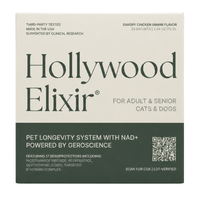
Hollywood Elixir™ supports normal aging-related wellness as part of a veterinarian-informed routine.

Most supplement labels sound medical on purpose, but the words often don’t tell an owner what was actually tested, in which species, or at what dose. The practical answer is this: treat every bold claim as a request for receipts—study details, testing documents, and a label that matches what was studied. In the pet supplement world, evidence quality is variable, and ingredient amounts can be inconsistent across products, so the same phrase can hide very different realities (Finno, 2020).

This page is a decoder ring for pet supplement marketing claims, with a focus on what owners can verify at home: what the company shows (or won’t show), what the label actually says, and what changes are reasonable to watch for in the first 4–6 weeks. It also explains why “clinically proven” is not the same as “clinically studied,” why “vet recommended” may mean nothing more than a paid relationship, and why “third-party tested” can refer to anything from identity checks to heavy-metal screening. The goal is not to shame supplements—it’s to help owners choose options that are more reliable, less variable, and safer to discuss with a veterinarian.

By La Petite Labs Editorial, ~15 min read

Featured Product:

  • “Clinically backed” and similar phrases are marketing shortcuts unless the company shows species-specific studies, exact doses, and testing documents that match the product.
  • When owners ask what does clinically proven mean pet supplements, the most useful answer is: proven for what outcome, in which pets, compared to what control.
  • “Clinically studied” may only mean a study exists; it does not guarantee good design, adequate size, or relevance to the finished formula.
  • Vet recommended supplements meaning is often informal—treat it as a prompt to ask your own veterinarian for ingredient- and safety-specific guidance.
  • Science backed pet supplement claims should be graded by the evidence ladder: lab data < animal data < controlled clinical outcomes in the target species.
  • “Third-party tested” matters only when the scope is named (potency, contaminants, stability) and tied to your batch via a COA.
  • A reliable home plan is one change at a time, track change signals for 4–6 weeks, and bring labels/logs to the vet.

Why Marketing Language Matters When You’re Worried

Pet supplements sit in a gray zone: they’re widely used, but the strength of evidence and the consistency of manufacturing can vary a lot from one product to the next (Finno, 2020). That’s why marketing language matters—because it can sound like a medical promise while staying legally vague. Words like “clinically backed,” “premium,” or “advanced” are often style choices, not proof.

At home, this shows up as confusion: a dog with stiff mornings gets a “joint support” chew, but the owner can’t tell whether it contains a studied amount, whether it’s stable on the shelf, or whether it could interact with other products. A simple rule helps: if a claim changes what an owner expects to see, it should come with something an owner can check—an ingredient amount, a testing report, or a study link. If the claim can’t be verified, treat it as decoration.

What “Clinically Proven” Usually Tries to Imply

Owners often ask: what does clinically proven mean pet supplements? In practice, “clinically proven” is frequently a marketing phrase, not a regulated standard, and it may refer to anything from a small internal trial to research on a similar ingredient in a different product. In veterinary supplements, robust clinical evidence exists for some ingredients and conditions, but it is not universal, and study quality varies (Finno, 2020).

A household way to translate the phrase is to ask, “Proven for what, in which pets, and compared to what?” If a label doesn’t specify the outcome (for example, mobility scores), the time frame, and the population (dogs vs cats, age range), the word “proven” is doing emotional work, not informational work. When a company can’t show the study design, an owner should assume the claim is weaker than it sounds.

NAD for dogs DNA double helix

“Clinically Studied” Vs “Clinically Proven”: the Gap

“Clinically studied” can mean a study happened, but it doesn’t tell an owner whether the study was well designed, large enough, blinded, or done in the target species. “Clinically proven” tries to leap from “a study exists” to “the answer is settled.” In reality, even when nutraceuticals are studied for common problems like osteoarthritis, the strength of evidence can range from solid to shaky depending on the ingredient and the trial design (Barbeau-Grégoire, 2022).

A practical check is to look for specifics: the exact product name used in the study, the exact daily amount, and the outcome measure. If the study is on “ingredient X” but the product uses a different form, a different dose, or a blend where ingredient X is tiny, the “clinically studied” halo doesn’t transfer cleanly. That mismatch is one of the most common ways pet supplement marketing claims sound stronger than they are.

Case Vignette: When “Proven” Doesn’t Match the Label

A 9-year-old dog starts slowing down on stairs, so the family buys a “clinically proven joint formula” online. The front label looks convincing, but the back panel lists a “proprietary blend” with no amounts, and the company can’t provide a study on that exact product. The dog’s routine doesn’t change, but the owner expects a dramatic turnaround and keeps adding more products.

In a situation like this, the best next step is not to chase stronger wording—it’s to make the plan more reliable. Pick one product with transparent amounts, track change signals for 4–6 weeks, and bring the label to the veterinarian. If pain is present, supplements should be framed as support alongside weight management, appropriate exercise, and veterinary guidance, not as a replacement for diagnosis.

“Vet Recommended” Often Has No Minimum Standard

Owners commonly search vet recommended supplements meaning, expecting it to reflect a formal review. In reality, “vet recommended” is usually not a regulated claim; it may mean a veterinarian likes it, a veterinarian was paid to endorse it, or a survey found some vets have heard of it. Because supplement evidence and quality control can be inconsistent, a recommendation without details doesn’t tell an owner much about reliability.

A more useful translation is: “Which vet, recommended for which pet, and based on what?” At home, owners can treat “vet recommended” as an invitation to ask their own veterinarian specific questions: Is this appropriate for this dog’s age and medications? Is the dose on the label meaningful? Is there a safer alternative with clearer testing? That turns a vague badge into a real clinical conversation.

Hollywood Elixir™ is amazing and makes my 13 y/o young again!

— Jessie

We go on runs. Lately he's been keeping up with no problem!

— Cami

“A bold claim is only as strong as the details behind it.”

“Science-backed” Can Mean Many Different Evidence Levels

Science backed pet supplement claims can refer to anything from lab work on cells to controlled trials in pets. Lab studies can be useful for early ideas, but they don’t guarantee the same result in a living animal with digestion, metabolism, and real-world variability. Veterinary nutraceuticals are widely used, yet the evidence base is uneven, so “science-backed” should trigger a question: what kind of science, and how close is it to the pet in front of you?

A household-friendly way to grade “science-backed” is to look for three anchors: the species studied (dog/cat), the outcome measured (mobility score, itch score, stool quality), and the time frame (weeks vs days). If the only “science” is a blog summary or a single ingredient paper that doesn’t match the product’s form, the claim is weaker. Stronger claims usually come with citations, not just confidence.

nad plus for dogs

Third-party Tested: Tested for What, Exactly?

Third-party tested” sounds like a safety guarantee, but it’s only meaningful when the testing scope is named. Testing might confirm identity (is it the right ingredient), potency (how much is there), contaminants (heavy metals, microbes), or stability (does it stay accurate over time). In the broader pet nutrition space, “quality” claims often outpace measurable outcomes, so owners do best when they ask for the actual report, not the slogan (Jobe, 2025).

At home, the practical move is to look for a COA (certificate of analysis) tied to the batch number on the container. If the company only shows a generic badge, ask whether the test includes potency and contaminants, and whether results are available for the specific lot being fed. This is also where NASC participation can be a useful signal—less about perfection, more about a company choosing clearer standards.

NAD+ for dogs portrait good boy

Human-grade: a Label Phrase with Specific Limits

“Human-grade” is often used to imply safety and superiority, but it doesn’t automatically tell an owner whether a product is effective for a pet’s goal. It may refer to ingredient sourcing or facility standards, and it still doesn’t replace species-specific evidence. A “human-grade” supplement can be poorly matched to a dog’s needs if the dose is off, the blend is unclear, or the product is unstable on the shelf.

In the kitchen, “human-grade” can create a false sense of security: owners may feel comfortable doubling up products or sharing human supplements. That’s where problems start—pets can be more sensitive to certain ingredients, and the label may not account for pet-safe amounts. The safer routine is to keep pet products and human products separate, and to bring every supplement label to the vet visit, even if it “looks clean.”

Hollywood Elixir contains 16 longevity actives including NAD for dogs

Natural: Comforting Word, No Consistent Definition

“Natural” is one of the most persuasive pet supplement marketing claims because it sounds gentle. But “natural” doesn’t guarantee safety, correct dosing, or freedom from contaminants, and it doesn’t mean “can’t interact with medications.” Reports of toxicity linked to supplement use are a reminder that “natural” should never be treated as a safety clearance (Corcoran, 2025).

At home, “natural” often leads to stacking: a calming chew, a joint chew, and an “immune” powder all at once. That makes it hard to tell what’s helping, what’s doing nothing, and what’s causing side effects like diarrhea or sleepiness. A more reliable approach is to introduce one change at a time, keep a simple log, and stop the newest product first if new signs appear.

Pharmaceutical Grade: Sounds Precise, Often Isn’t

“Pharmaceutical grade” suggests drug-level oversight, but on supplement labels it may be used loosely. It might refer to a raw material specification, not the finished product’s testing, stability, or accuracy. Even inactive ingredients can matter—excipients may cause intolerance or toxicity in some animals, and labeling doesn’t always make their relevance obvious (Thomazini, 2024).

Owners can treat “pharmaceutical grade” as a prompt to look closer at the full ingredient list, including flavors, sweeteners, and fillers. If a pet has a history of food sensitivities, pancreatitis, or recurring GI upset, those “inactive” ingredients can be the difference between a smooth trial and a messy one. When a company won’t disclose excipients or uses vague terms like “natural flavors,” the claim loses value.

“If the label hides amounts, the evidence can’t be matched.”

nad+ for dogs La petite labs scientist lab coat

How to Evaluate Evidence Claims Without a Science Degree

A useful way to decode science backed pet supplement claims is to separate “ingredient evidence” from “product evidence.” Ingredient evidence asks whether a compound has research behind it; product evidence asks whether this exact formula, at this exact dose, was tested and shown to be more reliable than placebo. In veterinary supplements, that second step is often missing, which is why outcomes can feel less predictable than owners expect.

At home, evidence evaluation can be simple: look for a study link, then scan for three details—species, dose, and outcome. If the label hides amounts in a proprietary blend, it becomes impossible to match the study to the product. If the company provides a COA, check whether it includes potency and contaminants, not just identity. These steps turn “trust me” language into checkable facts.

Shop Now
nad for dogs hollywood elixir ingredient breakdown marketing

The Evidence Ladder: Lab, Animal, Then Clinical Outcomes

Evidence has a hierarchy. Lab studies can show a mechanism, but they don’t predict real-life results; animal studies are closer, but may still be a different species or a controlled setting; clinical trials in the target species are the most relevant for owners. Even in well-studied areas like osteoarthritis, a systematic review found that evidence strength varies by ingredient and study design, which is why “clinically backed” should never be assumed to mean “settled” (Barbeau-Grégoire, 2022).

A household translation is: the closer the study looks to the pet’s real life, the more it should guide expectations. If a claim is based on a test tube result, expect subtle changes at best. If it’s based on a blinded clinical trial in dogs with the same problem, expectations can be more concrete—still not magical, but more reliable. This mindset helps owners avoid disappointment and overspending.

Shop Now
NAD+ for dogs hollywood elixir with dog product campaign shot

Owner Checklist: Quick Ways to Pressure-test a Claim

Pet supplement marketing claims become clearer when they’re forced into yes/no questions. Owner checklist: (1) Does the label list exact amounts for key ingredients, not just a blend? (2) Is there a batch number and an easy way to request a COA? (3) Does the company name the testing type (potency, contaminants, stability)? (4) Are study links provided for the finished product, not just an ingredient? (5) Are cautions and contraindications written plainly?

At home, this checklist prevents the “add another supplement” spiral. If two products both claim “advanced joint support,” the one with transparent amounts and accessible testing is usually the more reliable choice. If a company avoids specifics, an owner can assume the product may be more variable. This is also a good moment to cross-check other educational pages on COAs and third-party testing, because those documents are where the truth usually lives.

Shop Now

What to Track in the First 4–6 Weeks

Supplements rarely create instant, dramatic change, so tracking matters more than hope. What to watch for in the first 4–6 weeks: (1) stair speed and hesitation, (2) time to settle after a walk, (3) willingness to jump into the car or onto a bed, (4) morning stiffness duration, (5) stool consistency and gas, (6) itch/licking frequency if skin is part of the goal, and (7) overall sleep pattern. These markers are more reliable than “seems better.”

A simple routine helps: pick two mobility markers and one side-effect marker, write them down twice a week, and keep everything else stable (diet, exercise, treats). If multiple products are started at once, it becomes impossible to know what caused a change. Tracking also protects the pet—if diarrhea, vomiting, restlessness, or new weakness appears, the log helps identify the timing and the most likely trigger.

Red Flags That Signal a Claim Is Mostly Theater

Some red flags show up again and again in pet supplement marketing claims: “miracle” language, before/after photos without context, proprietary blends that hide dosing, and claims that sound like disease treatment. Another red flag is when safety is implied instead of stated—no cautions, no interaction notes, no guidance for pregnant pets or pets with chronic disease. Veterinary supplement reviews note that adverse effects and interactions can occur, so silence on safety is not reassuring.

At home, red flags often correlate with chaotic use: owners feel pushed to give more, faster, and in combination. A safer pattern is boring on purpose—one product at a time, a defined trial window, and a stop rule if side effects appear. If a company discourages veterinary involvement or suggests replacing prescribed medications, that is a strong signal to walk away.

NAD+ for dogs

What Not to Do When Trying a New Supplement

What not to do: (1) Don’t stack multiple new supplements in the same week. (2) Don’t assume “more is better” or double the label amount to chase faster results. (3) Don’t share human supplements with pets without veterinary guidance. (4) Don’t ignore “inactive” ingredients—flavors and sweeteners can matter for sensitive dogs. These mistakes make outcomes less reliable and can raise safety risk.

A real-world reminder comes from a report where two dogs developed acute manganese toxicosis after ingesting a joint-health supplement, showing that “joint support” products can carry meaningful risk when dosing goes wrong or exposure is high (Jaffey, 2024). Even without dramatic toxicity, overdosing can cause GI upset and derail the entire plan. The safest home routine is measured: one change, clear tracking, and quick communication if anything looks off.

Shop Now
nad supplements for dogs nad+ for dogs

Vet Visit Prep: Make the Conversation Efficient

A good vet handoff turns marketing language into clinical facts. Vet visit prep questions: (1) “Is my dog’s problem more likely pain, weakness, or neurologic?” (2) “Which ingredients have the best evidence for this specific goal?” (3) “Are there medication interactions or conditions that make this unsafe?” (4) “What change signals should trigger stopping and calling?” Bringing the container (or clear photos of all panels) matters more than bringing a screenshot of the front label.

Owners can also bring a one-page log: baseline mobility notes, current diet, and every supplement and treat being used. This is especially important if the dog has heart disease, seizures, liver disease, or is on long-term medications, because “natural” products can still be involved in adverse events. When the veterinarian can see the whole picture, recommendations become more reliable and less variable.

Shop Now

What Responsible Evidence Communication Looks Like

Responsible brands don’t rely on foggy language; they show their work. That means clear ingredient amounts, clear cautions, and evidence that matches the finished product—not just a borrowed study on a similar ingredient. It also means acknowledging uncertainty: supplements can support normal function, but they are not a substitute for diagnosing pain, arthritis, endocrine disease, or heart problems. This is the difference between education and persuasion.

At home, responsible communication feels calmer: fewer dramatic promises, more practical instructions, and a clear plan for what to watch for in the first 4–6 weeks. It also fits into a bigger ecosystem of transparency—COAs, third-party testing explanations, and straightforward regulatory language. When a company makes it easy to verify claims, owners can make choices with more slack and less second-guessing.

“The safest trials are slow, trackable, and easy to stop.”

Educational content only. This material is not a substitute for veterinary advice. Always consult your veterinarian about your dog’s specific needs. These statements have not been evaluated by the Food and Drug Administration. Products mentioned are not intended to diagnose, treat, cure, or prevent any disease.

Glossary

  • Clinically proven - Marketing phrase implying effectiveness; meaningful only with clear trial details.
  • Clinically studied - Indicates a study exists; does not guarantee quality, relevance, or adequate size.
  • Science-backed - Broad claim that may refer to lab, animal, or clinical evidence; the level matters.
  • Vet recommended - Nonstandard phrase that may reflect opinion, sponsorship, or limited survey data.
  • Third-party tested - Testing performed by an outside lab; must specify what was tested (potency, contaminants, stability).
  • COA (Certificate of Analysis) - Batch-specific lab report showing results like potency and contaminant screening.
  • Proprietary blend - Combined ingredients listed without individual amounts, making evidence matching difficult.
  • Stability testing - Checks whether ingredient amounts stay accurate through shelf life under expected storage.
  • Excipients - “Inactive” ingredients (flavors, fillers, binders) that can still affect tolerance or safety.
  • Evidence hierarchy - A ranking of evidence strength, with controlled clinical outcomes typically most relevant.

Related Reading

References

Jobe. Systematic Review and Meta-Analysis of Quality Claims Associated with Fresh Pet Food: Evaluating Scientific Evidence for Additives, Ingredient Quality, and Effects of Processing in Pet Nutrition.. PubMed Central. 2025. https://pmc.ncbi.nlm.nih.gov/articles/PMC12784728/

Jaffey. Acute manganese toxicosis related to joint health supplement ingestion in two dogs.. PubMed. 2024. https://pubmed.ncbi.nlm.nih.gov/38788832/

Thomazini. Impact of concerning excipients on animal safety: insights for veterinary pharmacotherapy and regulatory considerations.. PubMed Central. 2024. https://pmc.ncbi.nlm.nih.gov/articles/PMC11087455/

Finno. Veterinary Pet Supplements and Nutraceuticals.. PubMed Central. 2020. https://pmc.ncbi.nlm.nih.gov/articles/PMC7802882/

Corcoran. Cardiovascular toxicity associated with supplement use.. PubMed. 2025. https://pubmed.ncbi.nlm.nih.gov/40960841/

Barbeau-Grégoire. A 2022 Systematic Review and Meta-Analysis of Enriched Therapeutic Diets and Nutraceuticals in Canine and Feline Osteoarthritis.. PubMed Central. 2022. https://pmc.ncbi.nlm.nih.gov/articles/PMC9499673/

FAQ

What does “clinically backed” mean on pet supplements?

“Clinically backed” usually means the brand wants the product to feel medically supported, but the phrase itself has no single, enforced standard. The only way it becomes meaningful is if the company can show a study (or studies) that match the finished product, the dose on the label, and the species being fed.

A practical approach is to ask for the study link and a batch-specific COA. If the label hides amounts in a proprietary blend, it’s difficult to connect the claim to real evidence.

What does clinically proven mean pet supplements, realistically?

When owners ask what does clinically proven mean pet supplements, the realistic answer is: it depends on the study design. “Proven” might refer to a controlled trial, or it might refer to weaker evidence like an uncontrolled observation or research on a similar ingredient.

Look for specifics: dogs or cats, the exact daily amount, the outcome measured, and how long the trial ran. Without those details, “clinically proven” is more persuasion than proof.

Is “clinically studied” stronger or weaker than “clinically proven”?

“Clinically studied” simply means a study occurred; it doesn’t automatically mean the study was large, blinded, or well controlled. “Clinically proven” is usually a stronger-sounding conclusion, but it may be used even when the underlying study is limited.

The best move is to ignore the ranking of words and read the study details. A well-designed “studied” claim can be more trustworthy than a vague “proven” claim.

How many studies should support a supplement claim?

One study can be a starting point, not a finish line. Replication matters because pets, diets, and manufacturing lots vary, and a single positive result can happen by chance or because of a narrow study population.

Stronger support usually looks like multiple studies pointing in the same direction, ideally with controlled designs and outcomes owners can recognize (mobility scores, itch scores, stool quality). If only one small study exists, expectations should stay modest.

What does vet recommended supplements meaning actually require?

Vet recommended supplements meaning is often misunderstood. In many cases, it doesn’t require a formal review panel, published evidence summary, or any minimum number of veterinarians. It may reflect a single clinician’s opinion, a paid partnership, or a limited survey.

Treat it as a conversation starter with your own veterinarian: recommended for which goal, in which pets, and with what safety cautions. The best “recommendation” is one that fits your pet’s history and medications.

Are “science-backed” pet supplement claims always trustworthy?

Science backed pet supplement claims can be truthful, but the phrase is broad. It might refer to lab research, animal research in another species, or controlled trials in dogs or cats. Those levels are not interchangeable.

A quick filter is to ask: was the finished product tested, or only a single ingredient? If the label dose doesn’t match the studied dose, the “science-backed” label is less informative for real-life expectations.

What does “third-party tested” mean for pet supplements?

“Third-party tested” means an outside lab did some form of testing, but it doesn’t automatically mean the product is safer or more accurate. Testing could be identity-only, or it could include potency, contaminants, and stability—very different levels of protection.

Owners can ask for a COA tied to the batch number on the container. If the company can’t provide it, the phrase is mostly a badge, not a usable safety signal.

What should a COA include for a supplement batch?

A helpful COA is batch-specific and readable. It should identify the product and lot number, list what was tested, and show results with units and pass/fail criteria when relevant. Potency results are especially important when a claim depends on a specific amount.

If a COA only shows identity (confirming an ingredient exists) but not potency or contaminant screening, it provides limited reassurance. Owners can request clarification on what the testing does and does not cover.

Is “human-grade” a guarantee of pet safety?

No. “Human-grade” may describe sourcing or facility standards, but it doesn’t guarantee the product is appropriate for a dog or cat, and it doesn’t guarantee the dose is meaningful for the intended goal. Pets can also react to flavors, sweeteners, or other added ingredients.

The safer approach is to judge the full package: transparent amounts, clear cautions, and testing documentation. “Human-grade” can be a nice detail, but it should not replace species-specific thinking.

Does “natural” mean fewer side effects for pets?

Not necessarily. “Natural” has no consistent, protective definition on supplement labels, and natural substances can still cause side effects or interact with medications. Some adverse events linked to supplement exposure involve products that owners assumed were harmless because they sounded gentle(Corcoran, 2025).

Owners should treat “natural” as a description, not a safety clearance. If vomiting, diarrhea, restlessness, weakness, or appetite changes appear after starting a product, stop the newest addition and contact the veterinarian.

What does “pharmaceutical grade” mean on a supplement label?

On supplements, “pharmaceutical grade” often implies drug-like precision, but it may only refer to a raw ingredient specification. It does not automatically confirm the finished product was tested for potency, contaminants, or stability, and it doesn’t guarantee the formula is appropriate for your pet.

Owners can ask what the phrase refers to: the ingredient supplier, the manufacturing facility, or the final batch testing. If the company can’t explain it clearly, the claim is mostly theater.

Why do inactive ingredients matter in pet supplements?

Inactive ingredients (excipients) can affect tolerance and safety, especially for pets with sensitive stomachs, food reactions, or chronic disease. Flavors, binders, sweeteners, and coatings can trigger GI upset or other unwanted signs even when the “active” ingredient is reasonable.

Some excipients are clinically relevant in animals, which is why vague labeling like “natural flavors” can be frustrating when a pet reacts(Thomazini, 2024). If a pet has a history of reactions, ask the company for a full excipient list.

What are common red flags in pet supplement marketing claims?

Red flags include proprietary blends that hide amounts, dramatic promises that sound like disease treatment, and a lack of clear cautions or interaction notes. Another red flag is when the company won’t provide a COA or won’t name what “third-party testing” includes.

At home, red flags often correlate with pressure to buy multiple products or to “use more for faster results.” A safer plan is one change at a time, with tracking and a clear stop rule if side effects appear.

How should owners track results from a new supplement?

Pick a few concrete markers tied to the goal, then track them consistently. For mobility, that might be stair hesitation, time to get up from a nap, and willingness to jump into the car. For skin comfort, it might be licking episodes per day and sleep disruption.

Track change signals for 4–6 weeks while keeping diet and exercise stable. If multiple products are started together, it becomes hard to tell what helped and what caused side effects.

How long should a supplement trial last before switching?

Many supplements are best judged over weeks, not days, because the changes owners hope to see (mobility comfort, coat quality, stool consistency) often shift gradually. A common, practical window is 4–6 weeks of consistent use with tracking.

Switch sooner if concerning signs appear, such as persistent vomiting, diarrhea, weakness, collapse, or behavior changes. If the pet has chronic disease or is on medications, the veterinarian should help set the trial length and stop rules.

Can supplements interact with prescription medications in pets?

Yes. Supplements can interact with medications through absorption changes, additive effects (like sedation), or effects on organs that handle drugs. This is one reason veterinarians encourage owners to disclose every supplement and treat, not just prescriptions.

If a pet has heart disease, seizures, liver disease, kidney disease, or is on long-term pain control, supplement choices should be reviewed before starting. Bring the full label and dosing schedule to the appointment.

Is it safe to combine multiple “joint support” products?

Combining multiple joint products can accidentally stack the same minerals or ingredients and push totals higher than intended. That can increase the chance of side effects and makes it harder to tell what is actually helping.

There are documented cases of toxicity linked to supplement ingestion, including manganese toxicosis associated with a joint-health supplement in dogs(Jaffey, 2024). The safer approach is one product at a time, with veterinary guidance if combining is being considered.

How does 'Clinically Backed' and Other Claims: A Decoder for Pet Supplement Marketing Language help owners choose?

'Clinically Backed' and Other Claims: A Decoder for Pet Supplement Marketing Language helps owners translate persuasive phrases into checkable details: study design, species relevance, exact dosing transparency, and the scope of third-party testing.

It also supports better vet conversations by focusing on what can be brought to an appointment: the full label, the batch number, and a short log of change signals. That’s how marketing becomes decision-making.

What questions should be asked before buying a supplement online?

Ask questions that force specifics: Are ingredient amounts listed clearly? Is there a batch number and a COA available? What does “third-party tested” include—potency, contaminants, stability? Is there a study on the finished product, not just an ingredient?

Also ask about safety: contraindications, interactions, and what to do if vomiting or diarrhea occurs. If customer service can’t answer plainly, the product may be more variable than the marketing suggests.

When should a veterinarian be called after starting a supplement?

Call promptly if a pet develops repeated vomiting, persistent diarrhea, weakness, collapse, severe lethargy, trouble breathing, or new agitation after starting a supplement. These signs are not “detox” and should not be waited out.

Also call if the pet has heart disease, seizures, diabetes, kidney disease, or is on multiple medications and a new supplement was added. Bringing the product container and the timing of signs helps the clinic respond faster.

How should Hollywood Elixir™ be evaluated among other options?

Evaluate it the same way as any other supplement: match the label to the goal, confirm transparent ingredient amounts, and look for accessible quality documentation like batch testing. Then set a simple tracking plan for change signals over 4–6 weeks.

If you’re reviewing Hollywood Elixir™, it should be framed as supporting normal wellness, not as a replacement for diagnosing pain, arthritis, or other medical causes of slowing down.

5K+ Happy Pet Parents

Excellent 4.8

'Clinically Backed' and Other Claims: a Decoder for Pet Supplement Marketing Language | Why Thousands of Pup Parents Trust Hollywood Elixir™

"He seems more happy overall. I've also noticed he has more energy which makes our walks and playtime so much more fun."

Olga & Jordan

"He's got way more energy now! We go on runs pretty often; he use to get tired halfway through, but lately, he's been keeping up without any problem."

Cami & Clifford

"I want her to live forever. She hasn't had an ear infection since!"

Madison & Azula

"It helps with her calmness, her immune system. I really like the clean ingredients. Highly recommend La Petite Labs!"

Maple & Cassidy

"He seems more happy overall. I've also noticed he has more energy which makes our walks and playtime so much more fun."

Olga & Jordan

"He's got way more energy now! We go on runs pretty often; he use to get tired halfway through, but lately, he's been keeping up without any problem."

Cami & Clifford

"I want her to live forever. She hasn't had an ear infection since!"

Madison & Azula

"It helps with her calmness, her immune system. I really like the clean ingredients. Highly recommend La Petite Labs!"

Maple & Cassidy

"He seems more happy overall. I've also noticed he has more energy which makes our walks and playtime so much more fun."

Olga & Jordan

"He's got way more energy now! We go on runs pretty often; he use to get tired halfway through, but lately, he's been keeping up without any problem."

Cami & Clifford

"I want her to live forever. She hasn't had an ear infection since!"

Madison & Azula

"It helps with her calmness, her immune system. I really like the clean ingredients. Highly recommend La Petite Labs!"

Maple & Cassidy

"He seems more happy overall. I've also noticed he has more energy which makes our walks and playtime so much more fun."

Olga & Jordan

"He's got way more energy now! We go on runs pretty often; he use to get tired halfway through, but lately, he's been keeping up without any problem."

Cami & Clifford

"I want her to live forever. She hasn't had an ear infection since!"

Madison & Azula

"It helps with her calmness, her immune system. I really like the clean ingredients. Highly recommend La Petite Labs!"

Maple & Cassidy

SHOP NOW