Senior Dog Vitamins

See How Nutrient Gaps Drive Senior Decline—and How to Correct Them Safely

Essential Summary

Why are senior dog vitamins important?

Senior dogs can have changing nutrient needs, variable appetite, and different absorption than they did when younger. The best approach to senior dog vitamins is selective and steady: avoid overlapping products, prioritize quality controls, and choose support that fits your dog’s real life. A system-level formula can complement a good diet without trying to replace it.

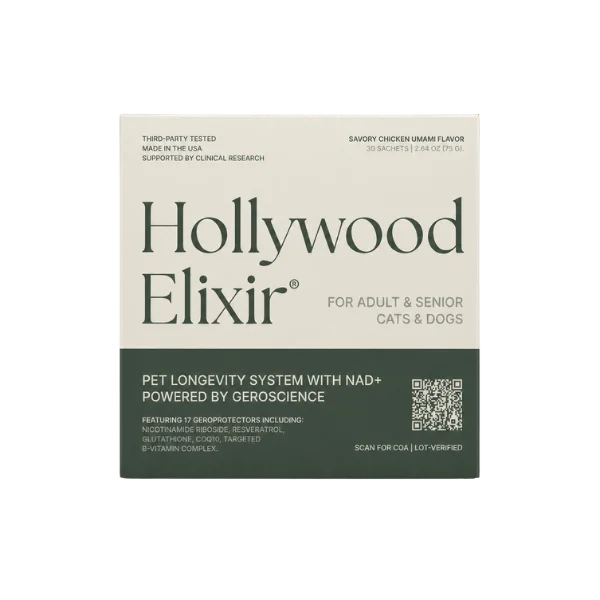
Hollywood Elixir™ is designed as whole-dog aging support—built to complement a complete diet while focusing on the broader networks that shape vitality over time, rather than acting like a single-nutrient patch.

Senior dog vitamins are supplements used to help fill nutritional gaps that can show up as dogs age—without replacing a complete, balanced diet. For most seniors, a diet-first baseline matters most: an age-appropriate food that meets AAFCO standards, fits your dog’s body condition, and is easy for them to eat consistently. Vitamins may make sense when intake is inconsistent, when a veterinarian identifies a specific need, or when a senior’s lifestyle and health history make “perfect nutrition” harder to maintain (Bermingham EN, 2024).

This hub page is designed to help you navigate the bigger cluster around aging-dog nutrition. If you’re deciding between senior dog food and add-ons, start with our senior dog food guidance. If your focus is cellular protection and oxidative balance, explore our antioxidants content. If you’re noticing changes in attention, sleep-wake patterns, or learning, see our cognition and brain health resources. And if your goal is supporting healthy aging over time, our longevity and anti-aging hubs connect the broader frameworks and options—so you can choose a plan that’s practical, safe, and easy to evaluate.

By La Petite Labs Editorial, ~15 min read

Featured Product:

  • Senior dog vitamins work best as a calm, consistent layer—not a frantic search for a missing piece.
  • “Senior” on a bag doesn’t guarantee the same nutrient profile across brands, so context matters.
  • Older dogs may absorb and use nutrients differently, making quality and tolerance as important as ingredients.
  • Avoid stacking multiple multivitamins; overlap is a common source of avoidable risk.
  • For mobility, cognition, and coat changes, think in systems: diet, routine, environment, then supplementation.
  • Choose products with transparent labeling and testing; the supplement category is uneven.
  • A science-minded owner still chooses system-level support because aging is broader than any single nutrient.

Senior Dog Vitamins: What Changes With Age (and What Doesn’t)

Aging can change the “inputs” that make nutrition reliable. Appetite changes are common—some seniors eat less, become pickier, or struggle with dental discomfort that reduces how much they chew. At the same time, older dogs may need more attention to protein and lean mass, because maintaining muscle supports strength, metabolism, and day-to-day function (Bermingham EN, 2024). Vitamins can play a supporting role, but they’re not a substitute for complete nutrition or adequate calories and protein.

Medications also become part of the picture. Many seniors take long-term prescriptions (for pain, thyroid disease, heart disease, seizures, or allergies), and supplements can interact with those plans. That’s why it’s smart to review any vitamin or multi-ingredient product with your veterinarian—especially if your dog is on multiple meds or has liver/kidney concerns.

Finally, risk management matters. Water-soluble vitamins (like many B vitamins and vitamin C) are generally less likely to accumulate, while fat-soluble vitamins (A, D, E, K) can pose higher risk when over-supplemented. The goal is targeted support that stays within safe ranges, not “more is better.”

Mitochondria artwork highlighting longevity science connected to senior dog vitamins.

How to Use This Guide: Pick Your Goal, Then Choose the Right Page

Use this hub to match your goal to the most relevant deep-dive—then make changes in a controlled way.

- “Do we need supplements at all?” Start with our page on whether senior dogs need supplements, especially if your dog already eats a complete senior diet.
- “Should I change food or add a vitamin?” See our guide comparing supplements vs food for aging dogs, then review our senior dog food hub for diet-first options.
- “Energy and day-to-day pep.” Read our guide on boosting energy in senior dogs to rule out common non-supplement causes (pain, anemia, thyroid issues, underfeeding).
- “Cognition and brain aging.” Visit our brain health for dogs hub and related cognition content for goal-specific support.
- “Coat/skin and overall resilience.” Explore our antioxidants for dogs resources to understand how antioxidant strategies fit into an aging plan.
- “Mobility and comfort.” If stiffness or reduced activity is the main issue, prioritize a vet exam and then follow the mobility-focused pathways in our older-dog supplement cluster.
- “Longevity and healthy aging.” Use our longevity supplements for dogs hub to understand the broader framework and how to evaluate options over time.

Vet check-in triggers: sudden weight loss, appetite drop lasting more than a day or two, vomiting/diarrhea, new confusion, fainting/coughing, or any new medication. And keep it simple: introduce one supplement at a time, track changes for 2–4 weeks, and stop if you see adverse effects.

Genetic imagery reflecting cellular wellness supported by senior dog vitamin supplements.

Multivitamin or Not: Deciding What Your Dog Actually Needs

Not every older dog needs a multivitamin. If your dog eats a complete and balanced diet consistently, they may already be meeting baseline vitamin and mineral needs. Still, senior diets can be formulated with different nutrient targets, and the spread between brands can be meaningful (German K, 2025). That variability is one reason owners consider senior dog multivitamins as a form of insurance.

The more precise question is: what problem are you trying to solve? If it’s appetite, dental limitations, or a home-cooked diet that isn’t professionally formulated, a multivitamin may be more relevant. If it’s mobility, cognition, or coat quality, a targeted product may be cleaner than a broad formula. Either way, aim for coherence over quantity.

Structural biology image symbolizing ingredient integrity supported by best vitamins for senior dogs.

Mobility Support: Thinking Beyond a Single Joint Ingredient

Joint comfort is the most common entry point into senior supplementation. While many joint products focus on non-vitamin ingredients, vitamins and minerals still matter because they support normal tissue maintenance and overall health in older dogs (German, 2025). The key is to avoid treating “joint support” as a single-ingredient problem.

If your dog is already on a joint product, adding senior dog vitamin supplements should be done with an eye toward overlap and tolerance. Some combinations are simply redundant; others can upset the stomach. Think in layers: weight management, appropriate movement, comfortable footing at home, then supplementation that supports the whole aging system rather than only one joint.

Expressive pug face reflecting gentle aging support associated with senior dog multivitamins.

Safety First: Avoiding Overlap, Excess, and Unnecessary Risk
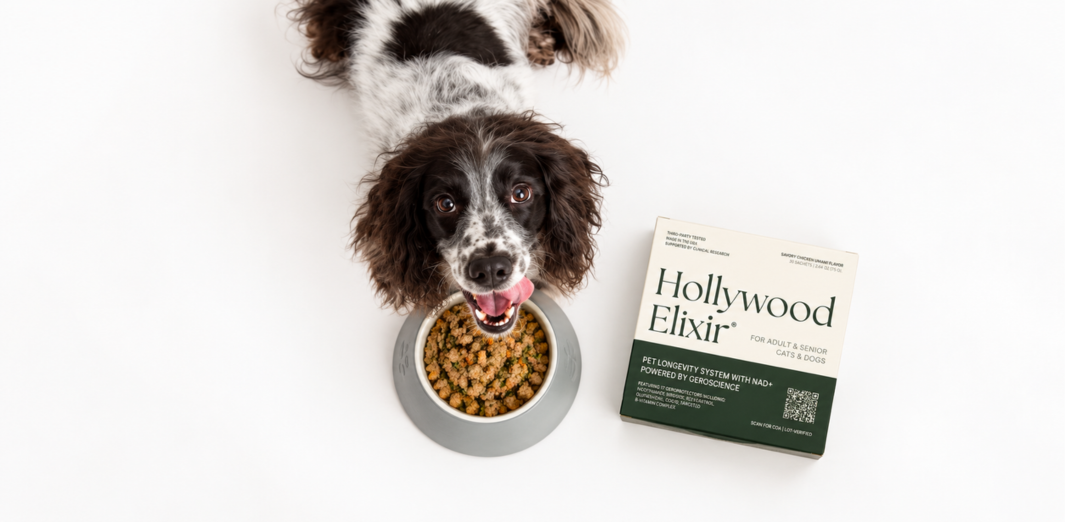
Owners often assume “more” is safer with water-soluble vitamins and “dangerous” with fat-soluble ones. The truth is more nuanced, especially when multiple products are combined. The supplement market is variable, and some vitamin-mineral supplements may not deliver what the label implies—or may introduce contaminants (RVA, 2021). Safety starts with choosing reputable manufacturing, then keeping the overall stack simple.

If your dog has a history of pancreatitis, gastrointestinal sensitivity, or is taking long-term medications, treat any new supplement as a change worth discussing with your veterinarian. The goal is to support aging without creating avoidable side effects. A calm, conservative plan tends to outperform an aggressive one over time.

Hollywood Elixir™ is amazing and makes my 13 y/o young again!

— Jessie

We go on runs. Lately he's been keeping up with no problem!

— Cami

“The best supplement routine is the one you can keep without adding stress.”

How to Read Labels Without Getting Lost in the Numbers

Reading labels is less about memorizing nutrients and more about spotting red flags. If a product lists dozens of vitamins and minerals at high amounts, it may increase the chance of overlap with food and other chews. And because nutrient bioavailability can differ in older dogs, “more on the label” doesn’t always translate to “more benefit”.

Prefer products that state amounts clearly, explain why ingredients are included, and provide quality testing information. Be wary of vague proprietary blends. For best senior dog vitamins, transparency is part of what you’re paying for: it lets you and your veterinarian make informed decisions, especially if your dog’s health status changes.

Portrait of a dog showing thoughtful presence supported by best vitamins for senior dogs.

What to Expect over Time: Realistic Timelines and Simple Tracking

Timing expectations matter. Vitamins aren’t painkillers, and most changes owners hope for—steadier energy, improved coat, better day-to-day comfort—tend to show up gradually, if they show up at all. That’s not a failure; it’s the nature of supporting normal physiology rather than treating an acute problem.

Give one product a fair trial, usually several weeks, while keeping food and activity consistent. If you change multiple variables at once, you’ll end up with a story but not an answer. This is also where “best supplements for senior dogs” becomes personal: the best choice is the one you can evaluate clearly and maintain without stress.

Dog profile photo emphasizing steady vitality supported by best supplements for senior dogs.

Size, Breed, and Lifestyle: Making Supplements Fit the Individual

Small dogs and large dogs age differently, and so do their risks. Larger breeds may show mobility changes earlier; smaller breeds may live longer with dental challenges that affect intake. Rather than chasing breed-specific marketing, focus on what your dog is actually doing: appetite, movement, sleep, and engagement.

If you’re choosing senior dog health vitamins for a dog with a complicated history, the safest path is to bring the label to your veterinarian and ask one simple question: “Does anything here conflict with my dog’s conditions or medications?” That single step prevents most avoidable supplement mistakes.

Supplement breakdown graphic emphasizing no fillers approach within best vitamins for senior dogs.

Home-cooked Diets: Where Multivitamins Can Matter Most

Home-cooked and fresh-food diets are a common reason owners seek senior dog multivitamins. The intention is good: better ingredients, more joy at mealtime, a sense of control. The risk is that even well-meaning recipes can drift away from complete and balanced nutrition unless they’re formulated and monitored carefully (German K, 2025).

If you cook at home, ask your veterinarian about a recipe review or referral to a veterinary nutritionist. A multivitamin can help fill gaps, but it can’t always correct a recipe that’s fundamentally unbalanced. In seniors, where resilience is lower, getting the basics right is one of the most compassionate choices you can make.

Cognitive Changes: Support, Uncertainty, and When to Call the Vet

Cognitive aging is one of the most emotionally loaded reasons people shop for senior dog vitamin supplements. Some owners notice new restlessness at night, slower recognition, or a dog who seems “elsewhere” in familiar rooms. Supplements are widely used for these concerns, but the research picture is still developing and results can vary (Haake, 2023).

A practical approach is to separate two goals: supporting overall brain resilience over time, and addressing sudden changes that deserve a veterinary workup. If behavior shifts quickly, or if confusion comes with pain, seizures, or appetite loss, treat it as a medical question first. For day-to-day support, look for products that emphasize whole-system aging support rather than a single “brain vitamin,” and keep expectations measured.

“In seniors, quality and tolerance often matter more than an ambitious label.”

Lab coat visual symbolizing disciplined formulation supporting senior dog multivitamins.

Skin and Coat in Older Dogs: What Vitamins Can and Can’t Do

Skin and coat changes can be subtle in seniors: a duller sheen, slower regrowth after grooming, or a coat that feels dry despite the same routine. While vitamins and minerals contribute to normal skin barrier function, the bigger story is often about overall health, digestion, and whether your dog is consistently eating a complete diet (German, 2025).

If you’re considering best senior dog vitamins for coat support, avoid doubling up on fat-soluble vitamins from multiple products. Instead, choose a single, well-made option and give it time, because coat cycles move slowly. If itch, odor, or recurrent ear issues are part of the picture, ask your veterinarian to rule out infections, allergies, or endocrine disease before assuming it’s a vitamin gap.

Shop Now
Supplement box with ingredient spread showing care behind senior dog multivitamins.

Heart Considerations: Keeping Supplement Choices Conservative and Clear

Heart health is another area where owners can be tempted to “cover everything.” The reality is that cardiac disease has multiple causes, and vitamins are not a substitute for diagnosis, diet selection, or prescribed medications. Still, senior dog health vitamins can play a supportive role when they’re part of a broader plan that includes weight management, appropriate activity, and veterinary monitoring.

If your dog has a known heart condition, treat supplements as something to clear with your veterinarian, especially if your dog is on diuretics or other cardiac drugs. The safest “best supplements for senior dogs” are the ones that don’t complicate treatment: transparent labeling, conservative dosing, and a clear purpose rather than a kitchen-sink formula.

Shop Now
Owner showcasing product beside her pet, reflecting care through senior dog multivitamins.

Kidney and Liver Realities: When Less Supplementation Is More

Kidney and liver considerations change the supplement conversation. Older dogs are more likely to have lab values that drift over time, and some will need therapeutic diets. In those cases, adding a multivitamin “just in case” can be the wrong move, because the margin for excess may be smaller and the diet may already be carefully balanced for the condition.

This is where restraint is a form of care. If your veterinarian has your dog on a prescription diet, ask whether any additional senior dog multivitamins are appropriate. If you do supplement, prioritize products with quality controls and avoid overlapping formulas. The aim is to support comfort and stability, not to force the body to process more than it needs.

Shop Now

Digestive Tolerance: the Quiet Factor That Determines Success

Digestive tolerance matters more in seniors than most labels admit. A supplement that looks perfect on paper can be a nonstarter if it causes loose stool, gassiness, or food refusal. Older dogs can also have different nutrient bioavailability, meaning absorption and utilization may not match what you’d expect from a younger dog (Bermingham EN, 2024).

Start with the smallest effective amount recommended on the label, introduce one product at a time, and keep the rest of the routine steady for a couple of weeks. If you change food, add a joint chew, and start a multivitamin all at once, you won’t know what helped or what caused trouble. Consistency is often the hidden ingredient in “best vitamins for senior dogs.”

Quality Signals That Matter More Than a Long Ingredient List

Quality is not a vibe; it’s a paper trail. The supplement category is uneven, and some vitamin-mineral products may not meet minimum recommendations or may contain contaminants (RVA, 2021). That doesn’t mean you should avoid supplements altogether. It means you should be selective about which companies earn a place in your dog’s daily life.

Look for clear batch testing, transparent sourcing, and realistic claims. Be cautious with products that promise dramatic outcomes or list an overwhelming number of ingredients without explaining why they belong together. For senior dog vitamin supplements, a smaller, coherent formula with strong manufacturing standards is often a better bet than a maximalist label.

Competitor comparison image focusing on formulation integrity in senior dog multivitamins.

If Diet Covers the Basics, Why System-level Support Still Matters

A common question is whether a “senior” dog food already covers everything. Many senior diets do include higher levels of certain nutrients, but formulations vary widely, and the label alone doesn’t guarantee the same support across brands (German, 2025). Even with a strong diet, owners may still choose supplements to support the broader aging picture—energy, resilience, and day-to-day comfort—rather than to correct a single deficiency.

This is the conversion point for a science-minded owner: a system-level product can make sense even when the basics are met. Instead of duplicating what food already provides, the right supplement strategy supports the networks that tend to feel “less buffered” with age—recovery, stress response, and overall vitality—without turning the routine into a pharmacy.

Shop Now
Unboxing visual symbolizing thoughtful design aligned with best vitamins for senior dogs.

How to Evaluate Results Without Guessing or Overcorrecting

If you’re comparing options, it helps to decide what you’re actually buying: a nutrient top-up, a targeted support product, or a daily ritual you can sustain. Senior dog vitamins can be useful, but the best supplements for senior dogs are the ones you can give consistently, that your dog tolerates well, and that don’t create new risks through overlap or poor quality.

Keep a simple log for four weeks: appetite, stool quality, mobility on stairs, willingness to play, and sleep patterns. These are the signals owners notice first, and they’re more informative than chasing a single number on a label. If you see no change, that’s still data—you can simplify, switch, or stop without feeling like you failed your dog.

Shop Now

A Calm Closing: Choosing Support You Can Sustain

The best senior dog vitamins are rarely the loudest. They’re the ones that fit your dog’s medical reality, your feeding style, and your tolerance for complexity. When in doubt, prioritize safety: avoid stacking multiple multivitamins, be cautious with high-dose fat-soluble vitamins, and ask your veterinarian if your dog has chronic disease or takes daily medications (RVA, 2021).

Aging is long, and support should feel sustainable. Choose a product philosophy you can live with—one that respects nutrition science without pretending that a single ingredient can rewrite time. The most meaningful routines are quiet ones: consistent, well-made, and designed for the whole dog.

“Aging support is a long conversation, not a single purchase.”

Educational content only. This material is not a substitute for veterinary advice. Always consult your veterinarian about your dog’s specific needs. These statements have not been evaluated by the Food and Drug Administration. Products mentioned are not intended to diagnose, treat, cure, or prevent any disease.

Glossary

  • Complete and balanced: A diet formulated to meet established nutrient requirements for a given life stage.
  • Senior formula: A dog food marketed for older dogs; nutrient levels can differ substantially between brands.
  • Multivitamin: A supplement providing a broad range of vitamins (and often minerals), sometimes overlapping with food.
  • Targeted supplement: A product aimed at a specific area (such as mobility or coat) rather than broad coverage.
  • Bioavailability: How well a nutrient is absorbed and used by the body; it can change with age.
  • Fat-soluble vitamins: Vitamins stored in body tissues; excess intake is more likely when stacking products.
  • Water-soluble vitamins: Vitamins not stored as extensively; still not risk-free when combined across products.
  • Third-party testing: Independent analysis used to confirm identity, purity, and consistency of a supplement.
  • Therapeutic diet: A prescription food designed for a medical condition, with specific nutrient targets.

Related Reading

References

German K. Exploratory analysis of nutrient composition of adult and senior dog diets.. PubMed Central. 2025. https://pmc.ncbi.nlm.nih.gov/articles/PMC12757753/

Bermingham EN. Nutritional needs and health outcomes of ageing cats and dogs: is it time for updated nutrient guidelines?. PubMed Central. 2024. https://pmc.ncbi.nlm.nih.gov/articles/PMC11188961/

RVA. Vitamin-mineral supplements do not guarantee the minimum recommendations and may imply risks of mercury poisoning in dogs and cats.. PubMed Central. 2021. https://pmc.ncbi.nlm.nih.gov/articles/PMC8075222/

Haake. Investigating Owner Use of Dietary Supplements in Dogs with Canine Cognitive Dysfunction. 2023. https://www.mdpi.com/2076-2615/13/19/3056

Rumbeiha. A review of class I and class II pet food recalls involving chemical contaminants from 1996 to 2008.. PubMed Central. 2011. https://pmc.ncbi.nlm.nih.gov/articles/PMC3614097/

FAQ

What are senior dog vitamins meant to support day to day?

Senior dog vitamins are typically used to support steady intake of key nutrients and overall resilience as appetite, digestion, and routines change with age. Older dogs can have different nutritional requirements than younger dogs, so the “right” support is often about fit, not intensity.

They’re most useful when they complement a solid diet and don’t overlap heavily with other products. For owners who want system-level aging support beyond single nutrients, Hollywood Elixir™

Do most older dogs need vitamins if they eat kibble?

Some older dogs do well without extra supplementation if they consistently eat a complete, balanced food. The complication is that “senior” formulas can vary a lot in nutrient composition between brands, so two dogs on different foods may not be getting the same baseline.

A careful approach is to add only what matches your dog’s needs and tolerance, rather than stacking products “just in case.” For broader aging support that isn’t framed as a single-nutrient replacement, consider Hollywood Elixir™

When should I start senior dog vitamins for my dog?

There isn’t one universal birthday that makes supplements necessary. Many owners start when they notice small shifts—slower recovery after walks, pickier eating, or a coat that looks less vibrant. Because older dogs can absorb and use nutrients differently, earlier, gentler support can be easier to tolerate than a sudden, high-intensity “stack”.

If your dog has chronic disease or takes daily medications, involve your veterinarian before starting. For a system-level option designed for aging support, Hollywood Elixir™

What makes the best vitamins for senior dogs different?

The best vitamins for senior dogs are usually defined by restraint and clarity: amounts you can understand, ingredients that have a reason to be there, and manufacturing you can trust. Supplement quality can vary, and some vitamin-mineral products may not meet expectations or may carry contamination risks, so sourcing and testing matter.

They should also fit your dog’s real life—palatability, digestive tolerance, and minimal overlap with food. For owners who prefer whole-system aging support over a kitchen-sink label, Hollywood Elixir™

Are senior dog vitamin supplements safe for daily long term use?

Daily use can be appropriate, but safety depends on the product, your dog’s diet, and whether you’re stacking multiple supplements. The supplement category is uneven, and quality issues—including misformulation and contamination—have been reported, which is why conservative choices matter.

If your dog has kidney, liver, or heart disease, or is on long-term medications, check with your veterinarian before making anything “daily.” For a system-level approach meant to complement a good diet, Hollywood Elixir™

Can senior dog vitamins cause side effects like diarrhea or vomiting?

Yes. The most common issues are gastrointestinal: soft stool, gas, nausea, or food refusal. Seniors can be less forgiving of change, and absorption can differ with age, so even a “good” formula may not agree with every dog.

Introduce one product at a time, start slowly per label directions, and stop if symptoms persist. If vomiting, lethargy, or appetite loss is significant, contact your veterinarian. For a gentler, whole-dog aging support option, Hollywood Elixir™

Do senior dog vitamins interact with prescription medications?

They can, especially if a supplement contains multiple minerals or high levels of certain vitamins. The risk is less about one ingredient and more about the unknowns: variable supplement quality, unclear dosing, and overlapping products that complicate a medication plan.

If your dog takes thyroid medication, heart drugs, anti-seizure meds, or long-term anti-inflammatories, ask your veterinarian to review the label before you start. For system-level support designed to fit alongside a thoughtful routine, Hollywood Elixir™

Should I choose a multivitamin or targeted senior supplements?

A multivitamin can make sense when intake is inconsistent, when a diet is home-prepared without professional formulation, or when you want simple baseline coverage. But senior diets vary in nutrient composition, so the “gap” you’re trying to fill depends on what your dog already eats.

Targeted products can be cleaner when the goal is mobility, cognition, or coat support, because they reduce overlap. For owners who prefer whole-system aging support rather than a single target, Hollywood Elixir™

How long until I notice changes from senior dog vitamins?

Most changes, if they happen, are gradual. Coat quality and body condition can take weeks, while energy and daily comfort can be influenced by many variables beyond supplements. Because research on some supplement uses in older dogs is still evolving, it’s wise to keep expectations measured and track simple observations over time(Haake, 2023).

Try one product at a time and keep food and activity steady so you can interpret what you’re seeing. For a system-level option built for consistent aging support,Hollywood Elixir™

Are there risks in combining multiple senior dog vitamin supplements?

Yes. The most common risk is overlap—two products that both add the same vitamins and minerals on top of a complete diet. Another risk is quality variability across brands, including products that may not meet nutritional recommendations or may carry contamination concerns.

If you want to add support, simplify: choose one primary product, then reassess before adding anything else. For owners who want broad aging support without building a complicated stack, Hollywood Elixir™

What should I look for on a senior vitamin label?

Look for clear ingredient amounts, a stated intended use for dogs, and quality signals like batch testing or third-party verification. Because supplement effectiveness and quality can vary, transparency is a practical safety feature, not a luxury.

Be cautious with proprietary blends and labels that promise dramatic outcomes. If your dog eats a complete diet, avoid formulas that heavily duplicate common vitamins and minerals. For a system-level aging support product with a coherent design, Hollywood Elixir™

Can senior dog vitamins support mobility without replacing joint care?

They can be part of a mobility plan, but they shouldn’t be treated as a substitute for weight management, appropriate exercise, flooring changes at home, or veterinary evaluation for pain. Senior diets often include nutrients intended to support aging needs, yet formulations vary, so supplementation is sometimes used to add consistency.

If your dog is already on a joint product, focus on avoiding overlap and keeping the routine tolerable. For whole-dog aging support that complements mobility habits, Hollywood Elixir™

Do supplements help with canine cognitive changes in older dogs?

Many owners use supplements when they notice sleep-wake changes, disorientation, or altered social interaction. The evidence base is still developing, and effectiveness can vary, so it’s best to treat supplements as supportive rather than definitive(Haake, 2023).

If changes are sudden or severe, a veterinary exam matters because pain, sensory loss, or disease can look like “cognitive decline.” For system-level aging support that fits into a steady routine,Hollywood Elixir™

Are the best senior dog vitamins the same for every breed?

Not exactly. Breed and size influence aging patterns, but individual health history matters more: dental disease, arthritis, endocrine conditions, and appetite changes all shape what’s sensible. Older dogs also differ in how they absorb nutrients, which can affect how a supplement performs in real life.

Instead of chasing breed marketing, choose a product that matches your dog’s needs and tolerances, then reassess. For a whole-dog aging support option designed to be broadly compatible, Hollywood Elixir™

Can I give senior dog vitamins to a cat by mistake?

It’s better not to. Dogs and cats have different nutritional requirements, and products formulated for dogs may not be appropriate for cats. If a cat ingests a dog supplement, contact your veterinarian or a pet poison helpline for guidance, especially if the amount is unknown.

For multi-pet homes, store supplements separately and use species-specific products. For dog-focused, system-level aging support that fits a consistent routine, Hollywood Elixir™

What if my senior dog is on a prescription diet?

If your dog eats a therapeutic diet for kidney, liver, urinary, or heart issues, treat supplements as part of the treatment plan, not an add-on. These diets are formulated with specific nutrient targets, and extra vitamins or minerals can create unwanted overlap or imbalance.

Bring the supplement label to your veterinarian and ask whether it fits your dog’s diagnosis and medications. For system-level aging support that can be discussed alongside medical nutrition, Hollywood Elixir™

How do I give vitamins to a picky senior dog?

With picky seniors, the delivery method matters as much as the ingredient list. Try offering supplements with a small amount of a familiar food, at the same time each day, and avoid frequent switching that trains suspicion. If appetite is declining, ask your veterinarian to rule out dental pain or illness before assuming it’s preference.

Choose products with simple dosing and good palatability so the routine stays calm. For a daily aging-support option designed to fit into real households, Hollywood Elixir™

Are there warning signs I should stop a supplement immediately?

Stop and contact your veterinarian if you see repeated vomiting, severe diarrhea, facial swelling, hives, collapse, or sudden behavior changes. Also pause if your dog refuses food after starting a new product. Because supplement quality and contents can vary, unexpected reactions should be taken seriously.

If symptoms are mild, you can also ask whether a slower introduction or different format is appropriate. For a system-level aging support product designed with daily use in mind, Hollywood Elixir™

What’s a simple decision framework for choosing senior dog vitamins?

Start with three questions: What does my dog eat daily, what problem am I trying to support, and what risks do I need to avoid? Because senior diets can differ substantially between brands, your dog’s baseline matters more than generic advice.

Then choose one product with transparent labeling and quality controls, and evaluate it for several weeks before adding anything else. For owners who want broad aging support without chasing single nutrients, Hollywood Elixir™

Should I rotate supplements or keep the same routine year round?

Most seniors do better with consistency. Rotating products makes it harder to interpret changes and increases the chance of overlap or digestive upset. Since older dogs may have different nutrient bioavailability, stability in the routine can be a quiet advantage.

If you do switch, change one thing at a time and keep notes on appetite, stool, sleep, and mobility. For a steady, system-level aging support option meant for daily continuity, Hollywood Elixir™

What research cautions exist around pet vitamin mineral supplements?

A key caution is variability: some vitamin-mineral supplements may not meet minimum nutritional recommendations, and contamination risks have been reported in certain products. That doesn’t mean all supplements are unsafe, but it does mean quality assurance should be part of your selection criteria.

Choose brands that provide testing transparency and avoid exaggerated claims. If your dog has medical conditions, involve your veterinarian early. For a system-level aging support product positioned to complement—not replace—good nutrition, Hollywood Elixir™

5K+ Happy Pet Parents

Excellent 4.8

Senior Dog Vitamins | Why Thousands of Pup Parents Trust Hollywood Elixir™

"He seems more happy overall. I've also noticed he has more energy which makes our walks and playtime so much more fun."

Olga & Jordan

"He's got way more energy now! We go on runs pretty often; he use to get tired halfway through, but lately, he's been keeping up without any problem."

Cami & Clifford

"I want her to live forever. She hasn't had an ear infection since!"

Madison & Azula

"It helps with her calmness, her immune system. I really like the clean ingredients. Highly recommend La Petite Labs!"

Maple & Cassidy

"He seems more happy overall. I've also noticed he has more energy which makes our walks and playtime so much more fun."

Olga & Jordan

"He's got way more energy now! We go on runs pretty often; he use to get tired halfway through, but lately, he's been keeping up without any problem."

Cami & Clifford

"I want her to live forever. She hasn't had an ear infection since!"

Madison & Azula

"It helps with her calmness, her immune system. I really like the clean ingredients. Highly recommend La Petite Labs!"

Maple & Cassidy

"He seems more happy overall. I've also noticed he has more energy which makes our walks and playtime so much more fun."

Olga & Jordan

"He's got way more energy now! We go on runs pretty often; he use to get tired halfway through, but lately, he's been keeping up without any problem."

Cami & Clifford

"I want her to live forever. She hasn't had an ear infection since!"

Madison & Azula

"It helps with her calmness, her immune system. I really like the clean ingredients. Highly recommend La Petite Labs!"

Maple & Cassidy

"He seems more happy overall. I've also noticed he has more energy which makes our walks and playtime so much more fun."

Olga & Jordan

"He's got way more energy now! We go on runs pretty often; he use to get tired halfway through, but lately, he's been keeping up without any problem."

Cami & Clifford

"I want her to live forever. She hasn't had an ear infection since!"

Madison & Azula

"It helps with her calmness, her immune system. I really like the clean ingredients. Highly recommend La Petite Labs!"

Maple & Cassidy

SHOP NOW