

Holy Basil (Tulsi) for Dogs

What the stress research on tulsi covers, where dogs are missing from it, and the calming options that have been tested in dogs.

By La Petite Labs Editorial 12 min read

As Seen On

  • AVMA, American Veterinary Medical Association
  • Today’s Veterinary Business
  • Petfood Industry
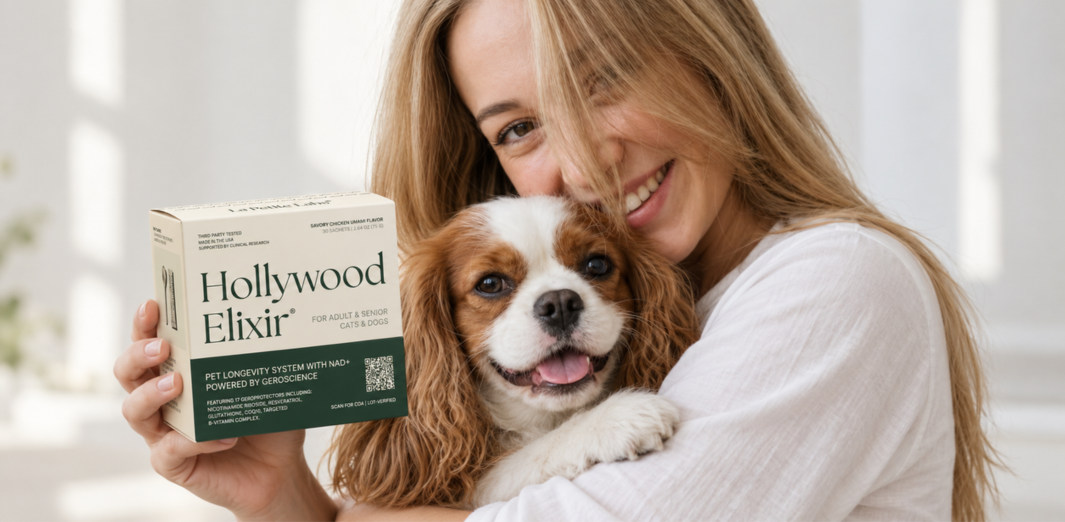
Woman hugging a golden retriever while holding a Hollywood Elixir box
Hollywood Elixir® Senior Dog Supplement

17 science-backed actives

From$50/moSave up to 47%Save up to 44%Shop Now
Contents
Holy basil, also sold as tulsi, has human stress research behind it, but we found no study testing it in dogs for anxiety, noise fear or sleep. The dog record is thin: one blood pressure experiment in an anesthetized dog, plus laboratory work.3, 22 No amount is established for dogs, and studies in other species raise questions about fertility, thyroid hormone and blood sugar.9, 11, 12

This guide covers what the research shows, the safety flags, the forms to avoid, and the calming options that have been tested in dogs.

  • What it is: Holy basil, or tulsi, is an aromatic herb from India and a relative of kitchen basil. It has been used in Ayurvedic medicine for more than 3,000 years.2
  • Dog evidence: We found no trial of holy basil for anxiety in dogs. The one live-dog experiment measured blood pressure under anesthesia.3
  • Human evidence: In a trial of 100 stressed adults, 8 weeks of holy basil extract lowered stress scores more than a placebo did. The company that supplied the extract funded it.1
  • Safety: We found no safety study in dogs. Research in other species flags sperm counts, thyroid hormone, blood sugar and clotting time.9, 11, 12, 3
  • Amount: None is established for dogs. Human trials give reference points only.1, 2
  • Better tested: Behavior work comes first, and three medicines are FDA approved for separation anxiety or noise aversion in dogs. Ask your vet about those before any herb.4
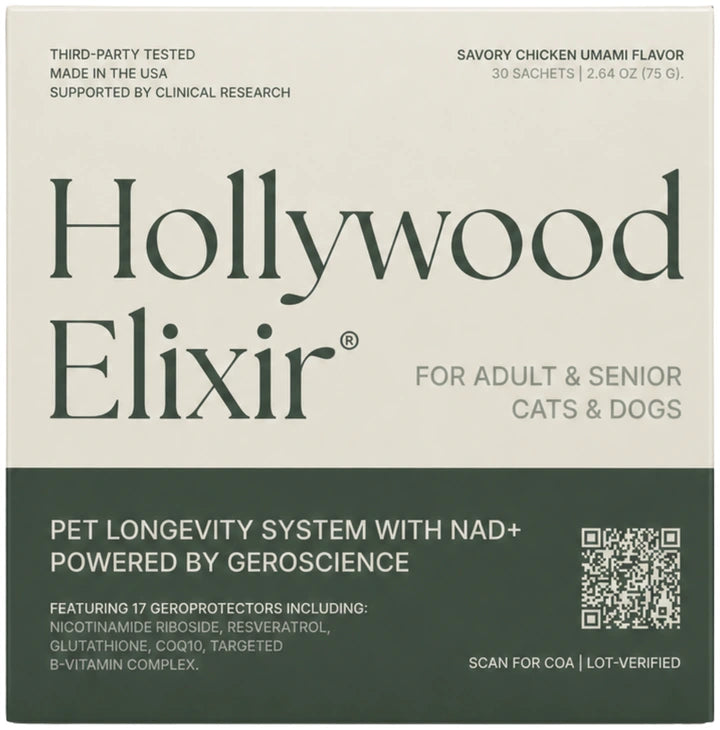
  • In Hollywood Elixir: No. Hollywood Elixir has no holy basil or tulsi. It's daily nutrition.

What is holy basil?

Holy basil is an aromatic herb native to the Indian subcontinent, where it has been used in Ayurvedic medicine for more than 3,000 years.2 Tulsi is its Hindi name. Botanists call it Ocimum tenuiflorum, and many papers use the name Ocimum sanctum for the same plant.2

Three plants turn up under these names.

  • Rama and Krishna tulsi: the green-leaved and purplish-leaved forms of Ocimum tenuiflorum.2
  • Vana tulsi: also called wild or forest tulsi. It's a different species, Ocimum gratissimum.2
  • Sweet basil: the kitchen herb, Ocimum basilicum. It's a relative, and it isn't holy basil.14

Holy basil is marketed as an adaptogen. The word was first defined as a substance that raises the body's general resistance under stress.21 The idea is broad, and it says little about one herb in one dog. Our guide to adaptogens for dogs covers the wider family.

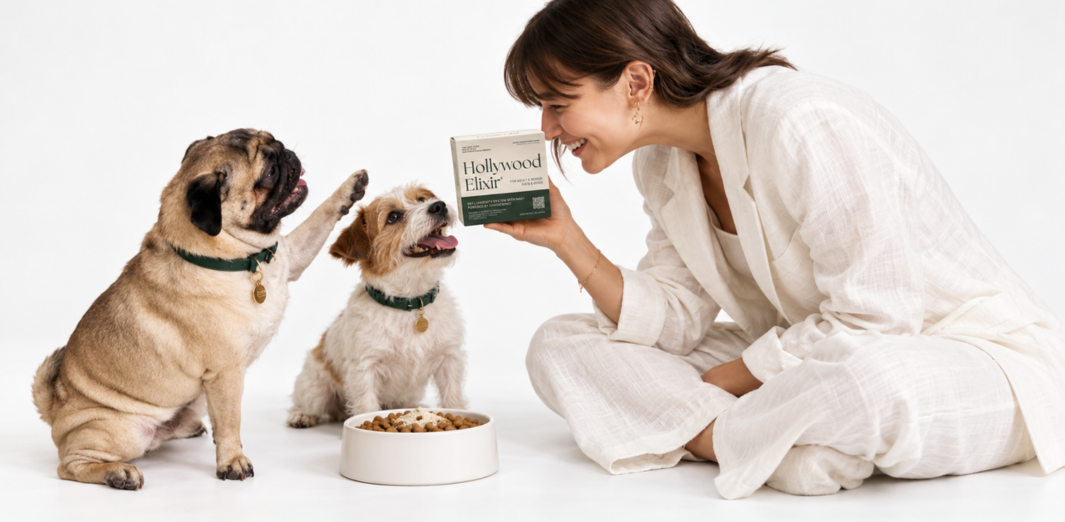
Woman holding a Hollywood Elixir box beside a pug, a terrier and a food bowl

Does holy basil help anxious dogs?

Holy basil has no trial behind it for anxious dogs that we could find. Our PubMed searches for holy basil, tulsi and both botanical names in dogs returned no study of fear, anxiety or sleep.

The Merck Veterinary Manual describes the evidence for natural calming products in dogs as limited. Beyond pheromones, it names a few with an observed calming effect: alpha-casozepine (a milk protein), a magnolia and phellodendron blend, L-theanine and lavender aromatherapy.4 Holy basil isn't among them.

The calming claims on labels come from studies in people and rats.

Woman in sportswear holding a Hollywood Elixir box beside a black-and-tan dog outdoors

What have studies of holy basil in dogs found?

Studies of holy basil in dogs are scarce. A PubMed search for holy basil, tulsi or either botanical name alongside dogs returned three papers, and none measured behavior.

  • Blood pressure, 2001: an oil from holy basil lowered blood pressure in an anesthetized dog. The same paper reports a longer blood clotting time, similar in size to aspirin's effect.3
  • Bacteria, 2025: a blend of three essential oils, one from holy basil, inhibited E. coli collected from dogs. The tests were done in the laboratory, not in dogs.22
  • Brain aging, 2025: holy basil extract raised nerve cell counts in a rat model of Alzheimer's disease. The authors present it as relevant to canine cognitive dysfunction.20

None gave holy basil to pet dogs and tracked fear, sleep or side effects.

Woman holding a Hollywood Elixir box above her forehead beside a Bernese mountain dog outdoors

What does the human research on holy basil show?

Holy basil's best human trial dates from 2022. One hundred stressed adults took 125 mg of a standardized extract twice a day, or a placebo, for 8 weeks.1

  • Stress: perceived stress scores fell 37% on holy basil and 19% on placebo.1
  • Sleep: insomnia scores fell 48% against 27%. A wrist-worn sleep tracker found no significant difference between the groups.1
  • Funding: the company that supplied the extract paid for the study.1

A 2017 review found 24 human studies of tulsi with 1,111 participants in total. Only three of the trials enrolled 100 or more people.2 These are results in people, measured with questionnaires a dog can't fill in.

Golden retriever nuzzling a woman holding a Hollywood Elixir box on the grass beside a food bowl

What do the rat studies of holy basil and noise show?

Holy basil has several rat studies on noise stress, one reason it gets pitched for dogs that fear fireworks. In one, rats exposed to 100 dB noise for 30 minutes had a surge in corticosterone, the stress hormone the researchers tracked. Giving the rats holy basil leaf extract prevented the change.8

A rat's hormone level is not a dog's behavior on a fireworks night.

For real noise fears, a 2023 veterinary review judged that most alternative products, herbal remedies included, are unlikely to be enough on their own.6 In an owner survey it cites, 35.1% of people who used herbal products during fireworks called them effective, a rate in line with a placebo effect.6

A rat's hormone level is not a dog's behavior on a fireworks night.

Is holy basil safe for dogs?

Holy basil's safety in dogs is unknown. We found no safety study in dogs at any amount, so what exists comes from people and laboratory animals.

In people, the record is reassuring. Of 24 human studies in the 2017 review, 15 reported no adverse events, 8 didn't mention them, and one reported occasional nausea.2

Studies in other species raise four flags:

  • Fertility: male rats given a leaf extract for 48 days had lower sperm counts and motility, which recovered 2 weeks after stopping. Rabbits fed fresh leaves for 30 days also had lower sperm counts.9, 10
  • Thyroid: mice given leaf extract for 15 days had lower levels of the thyroid hormone T4.11
  • Blood sugar: in people with type 2 diabetes, holy basil leaves lowered fasting blood sugar by 17.6%.12
  • Clotting and blood pressure: a holy basil oil lowered blood pressure in an anesthetized dog and, in the same paper, lengthened blood clotting time.3

The ASPCA lists sweet basil as non-toxic to dogs. We found no separate entry for holy basil on its plant list.14

Overhead view of a black-and-white dog beside a food bowl and Hollywood Elixir box

What are the side effects of holy basil in dogs?

Holy basil's side effects in dogs haven't been recorded, since we found no trial that gave it to them. The human trials offer a rough guide.

  • One study of a leaf extract in 16 adults reported occasional nausea.2
  • In the 2022 trial, one person taking holy basil dropped out with increased agitation, and one on placebo left with nausea. Side effects were about as common in both groups.1

If your vet has agreed to a trial, watch your dog for vomiting, loose stools, a drop in appetite, unusual sleepiness or new restlessness. Stop the product and call the clinic if any of these appear.

Woman smiling beside a golden retriever, a green food bowl and a Hollywood Elixir box

How much holy basil can a dog have?

No amount of holy basil has been established for dogs, and no authority recommends one. The published figures come from other species.

  • Human stress trial: 125 mg of standardized extract twice a day for 8 weeks.1
  • Human studies overall: leaf extracts at 300 mg to 3,000 mg, taken one to three times a day, for 2 to 13 weeks.2
  • Rat fertility study: 250 mg per kg of body weight for 48 days, the amount that lowered sperm counts.9

None of these is a serving for a dog. The products differed too: water extracts, alcohol extracts and whole leaf were all used.2 If your vet supports a trial, agree on the product and the amount before you start.

Man holding a Hollywood Elixir box while sitting on an outdoor sofa with a golden retriever

Which form of holy basil: tea, powder, extract or oil?

Holy basil is sold as dried leaf powder, tea, extract capsules, liquid tinctures and essential oil. The forms aren't interchangeable.

  • Extracts and leaf: human studies used water extracts, alcohol extracts, whole plant, fresh leaves and tincture, so one label can mean something quite different from the next.2
  • Tea: in a laboratory study of noise stress, hot leaf extracts were slightly less potent than cold ones.27 We found no test of tulsi tea in dogs.
  • Tinctures: check the label for alcohol, which can cause vomiting, incoordination and breathing trouble in pets.23
  • Essential oil: concentrated essential oils can be a danger to pets on the skin or by mouth, so this is the form to keep away from your dog.15

Why is holy basil essential oil a different risk for dogs?

Holy basil essential oil is far more concentrated than the leaf, and its makeup varies from plant to plant. Tulsi types are known for high levels of a compound called eugenol.2 One analysis of holy basil oil found it was 92.4% methyl eugenol, a related compound.16

Methyl eugenol has a poor record in the laboratory. In 2-year studies by the U.S. National Toxicology Program, it showed clear evidence of causing cancer in rats and mice, with liver tumors in both.17 Those animals received the pure compound by stomach tube, so the finding is a warning sign, not a measured risk for a dog.

The ASPCA says concentrated essential oils can be a danger to pets that walk through them, get them on the coat or swallow them. Signs include unsteadiness, depression, vomiting and diarrhea.15

Poison control records add a caution. Of 9 dogs exposed to plant-based flea products made with essential oils, 8 had adverse effects, most often lethargy and vomiting.24

None of these is a serving for a dog.

Woman sitting with a beagle in a kitchen while holding a Hollywood Elixir box

DVM Voice: Clinical Vignette of a Common Pattern in Senior Dog Aging

Case provided by JoAnna Pendergrass, DVM

Rex, a 7-year-old Labrador Retriever, was brought in after his owner noticed he was slower to rise, hesitant on stairs, and less able to play as before. Examination showed stiffness and reduced hip mobility; radiographs confirmed degenerative joint changes.

His care required weight management, veterinary-guided pain control, nutritional support, and rehabilitation — a comprehensive plan, but one started only after visible decline appeared.

Clinical takeaway: Rex’s case reflects the value of proactive aging support: maintaining lean body condition, monitoring mobility early, and supporting cellular resilience, antioxidant defense, and healthy inflammatory balance before decline becomes obvious.

Single-case vignette. Not generalizable. Veterinary oversight is essential for pain, stiffness, or suspected joint disease.
Explore Hollywood Elixir Research →
Spotted gray dog beside a Hollywood Elixir box held in a person's hand

Which dogs should not have holy basil?

Holy basil is a poor fit for some dogs, going by the data from other species. Check with your vet first if your dog:

  • is a breeding male, since holy basil leaf lowered sperm counts in rats and rabbits;9, 10
  • is pregnant or nursing, as we found no study in pregnant or nursing dogs;
  • has diabetes, because holy basil lowered blood sugar in people, and sweet basil did the same in a feeding study of 45 dogs;12, 13
  • takes thyroid medicine, given the drop in thyroid hormone seen in mice;11
  • is booked for surgery or takes a blood thinner, given the longer clotting time in one laboratory study;3
  • is a puppy, since we found nothing on growing dogs.

If your dog is on insulin, tell the vet who manages it before adding any herb.

Golden retriever nuzzling a man holding a Hollywood Elixir box beside a food bowl

Can holy basil be given with a dog's anxiety medicine?
Holy basil hasn't been tested alongside any veterinary medicine that we could find. In one laboratory study, a holy basil oil lengthened the sleeping time of rats given pentobarbitone, a sleep-inducing drug, and the authors suspected that the oil slowed the liver's breakdown of the drug.3

By inference, that could matter for a dog on a sedating medicine or due for an anesthetic. Tell your vet about every supplement before a new prescription or a procedure.

Don't lower or stop fluoxetine or any other prescribed medicine to make room for an herb. The Merck Veterinary Manual notes that natural products can be used alongside drugs, and that decision belongs to the prescriber.4

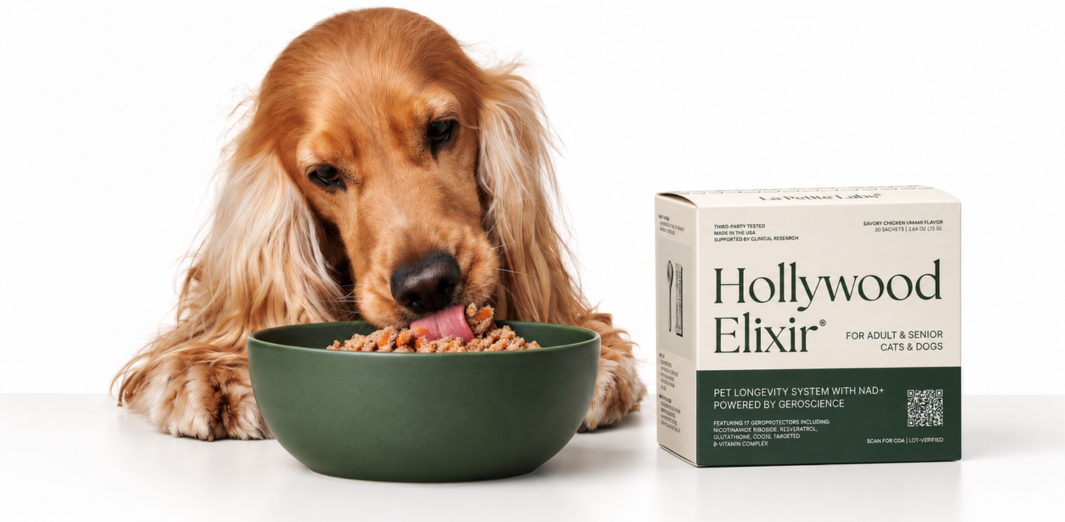
Golden spaniel eating from a green bowl beside a Hollywood Elixir box

Is holy basil worth trying for an old dog that paces at night?

Holy basil is a common idea for an old dog that paces after dark, but night pacing is a symptom to investigate first. Dogs with cognitive dysfunction pace and pant, particularly at night, and may seem disoriented.5 One paper puts the condition at 28% of dogs aged 11 to 12 years.20

Pain is the other usual suspect. In a study of cases seen by veterinary behaviorists, between 28% and 82% of patients showed signs of pain.4

The only holy basil research near this question is a rat model of Alzheimer's disease.20 A vet visit will tell you more than a jar will. Our guide to dogs pacing at night explains what the exam looks for.

How do you choose a holy basil product for a dog?

A holy basil product for a dog should tell you exactly what is in it. If your vet supports a trial, look for these on the label:

  • the botanical name, Ocimum tenuiflorum or Ocimum sanctum, since "tulsi" can also mean a different species;2
  • the plant part and type of extract, with the amount per serving in milligrams;
  • no essential oil;15
  • no xylitol, a sweetener that can cause low blood sugar and liver damage in pets;23
  • test results for heavy metals.

Heavy metals are a known problem. When researchers bought 193 Ayurvedic medicines online, 20.7% contained detectable lead, mercury or arsenic.18 The extract in the 2022 human trial, by contrast, was standardized and met U.S. Pharmacopeia limits for heavy metals and pesticides.1

A single-ingredient product is easier to judge than a calming blend. It's the rule we apply to our own label: Hollywood Elixir prints the amount of each of its 17 actives, and holy basil isn't one of them. If you'd like one product for everyday nutrition, see our guide to the best all-in-one supplements for dogs.

Is holy basil different for dogs and cats?

Holy basil raises more concern for cats than for dogs, and neither species has a behavior trial.

  • Research: cats have eaten tulsi in a feeding study, as 0.003% of a food that also held green tea and fenugreek, for 84 days.26 We found no feeding study in dogs.
  • Liver: cats have a much lower capacity than most mammals to clear phenolic plant compounds by a liver process called glucuronidation.25
  • Essential oils: in poison control records on plant-based flea products, 39 of the 48 animals were cats. Agitation and drooling were common in cats, lethargy and vomiting in dogs.24

A product bought for the dog shouldn't be shared with a cat in the same home. Our guide to holy basil for cats covers the feline side.

Woman holding a Hollywood Elixir box beside a dapple dachshund and green food bowl on a sofa

When should you see the vet instead?

Holy basil shouldn't be the first answer to a dog in distress. Book a visit if your dog:

  • howls, soils the house or destroys things after you leave;5
  • stays frightened long after a noise has stopped;5
  • has started pacing, panting or seeming lost at night;5
  • shows any sudden change in behavior, since pain is an important risk factor for behavior problems.4

Medical causes are ruled out first.4 Cornell's canine health center gives the same advice in plain terms: skip the over-the-counter remedy from the internet and book the appointment.5 Our guide to how stress shows up in dogs can help you describe what you're seeing.

Woman cuddling a brown-and-white spaniel while holding a Hollywood Elixir box

What works better than holy basil for an anxious dog?

Several options have been tested in dogs, which holy basil has not.

  • Behavior work: a safe haven, rewards during noise and gradual training with recordings are the core of care.4, 6
  • Approved medicines: fluoxetine and clomipramine are FDA approved for separation anxiety in dogs, and dexmedetomidine gel for noise aversion.4 In a fireworks trial of 182 dogs, owners rated the gel's effect good or excellent in 72% of dogs, against 37% on placebo.7
  • Supplements with dog data: the Merck manual lists L-theanine among products with an observed calming effect.4 Ashwagandha, another adaptogen, lowered cortisol in a placebo-controlled trial of 20 dogs.19

Your vet can match the option to the cause.

Is holy basil in Hollywood Elixir?

No. Hollywood Elixir doesn't contain holy basil or tulsi in any form, and it isn't a calming product.

If the adaptogen idea is what drew you in, the formula's member of that family is reishi mushroom, at 25 mg per sachet. A sachet also supplies 25 mg of quercetin and 60 mg of nicotinamide riboside (an NAD+ precursor), with 14 more actives. All 17 amounts are printed on the label.

Hollywood Elixir is a daily nutrition powder for adult and senior dogs, stirred into food: half a sachet under 7 lb, one sachet from 7 to 30 lb and two sachets above 30 lb. It hasn't been tested for anxiety, noise fears, sleep or lifespan, and it's no substitute for a behavior plan from your vet.

Our guides to reishi mushroom for dogs and quercetin for dogs explain those two ingredients. See the full Hollywood Elixir formula and serving guide.

Holy basil shouldn't be the first answer to a dog in distress.

Educational content only. This material is not a substitute for veterinary advice. Always consult your veterinarian about your dog’s specific needs. These statements have not been evaluated by the Food and Drug Administration. Products mentioned are not intended to diagnose, treat, cure, or prevent any disease.

Glossary

Holy basil: An aromatic herb from India, also called tulsi, with the botanical name Ocimum tenuiflorum.

Adaptogen: A term for substances said to raise the body's general resistance under stress.

Eugenol: A plant compound found at high levels in tulsi.

Methyl eugenol: A related compound that dominates some holy basil oils and caused liver tumors in rats and mice.

Standardized extract: An extract made to contain a set level of chosen plant compounds.

Corticosterone: The stress hormone tracked in the rat noise studies.

Related Reading

References

Numbered references identify the sources used for specific claims. Read the study design, species and evidence boundaries alongside each finding.

FAQ

Can dogs eat fresh holy basil leaves?

We found no study of fresh holy basil leaves in dogs. The ASPCA rates sweet basil, a related kitchen herb, as non-toxic to dogs, and we found no separate entry for holy basil. A nibble from a garden plant is a far smaller exposure than a daily supplement.

Can I give my dog tulsi tea?

We found no test of tulsi tea in dogs, so there's no amount to go by. Check the ingredient list for caffeine as well, which is harmful to pets. Plain water is the safer drink.

Will holy basil calm my dog during fireworks?

There's no evidence that it will. Holy basil has no noise-fear trial in dogs, and a veterinary review found herbal products as a group unlikely to be enough on their own. A prescription gel is FDA approved for noise aversion in dogs, so ask your vet well before the holiday.

How long does holy basil take to work?

In people, the main holy basil trial measured its results after 8 weeks of daily use. No study has timed any effect in dogs, so nobody can say when, or whether, a dog would respond.

Does Hollywood Elixir contain holy basil?

No. Hollywood Elixir has no holy basil or tulsi. Its 17 actives include 25 mg of reishi mushroom and 25 mg of quercetin per sachet, and it isn't a calming product.

Is holy basil the same as regular basil?

No. Holy basil (Ocimum tenuiflorum) and sweet basil (Ocimum basilicum) are related but separate species. The ASPCA's non-toxic rating is for sweet basil, and the stress research used holy basil extracts. Neither fact carries over to the other plant.

Can I give my dog my own holy basil capsules?

It's a poor idea. Human capsules are sized for adults, no amount is established for dogs, and human products can carry extras such as xylitol, which can cause low blood sugar and liver damage in pets. Use only a product your vet has seen.

Is it safe to diffuse holy basil oil around dogs?

The ASPCA's poison control team says a diffuser run for a short time in a secured area your dog can't reach is unlikely to be a problem. Concentrated oil on the skin or swallowed is the danger, so never put holy basil oil on your dog or in food.

Can puppies have holy basil?

We found no study of holy basil in puppies. With fertility and thyroid effects seen in laboratory animals, a growing dog is the wrong place to experiment. A fearful puppy needs gentle training and a vet's advice.

Does holy basil lower cortisol in dogs?

Nobody has measured it that we could find. Holy basil lowered hair cortisol in one human trial and steadied a stress hormone in rats exposed to noise. In dogs, the adaptogen with cortisol data is ashwagandha, from a 20-dog trial.

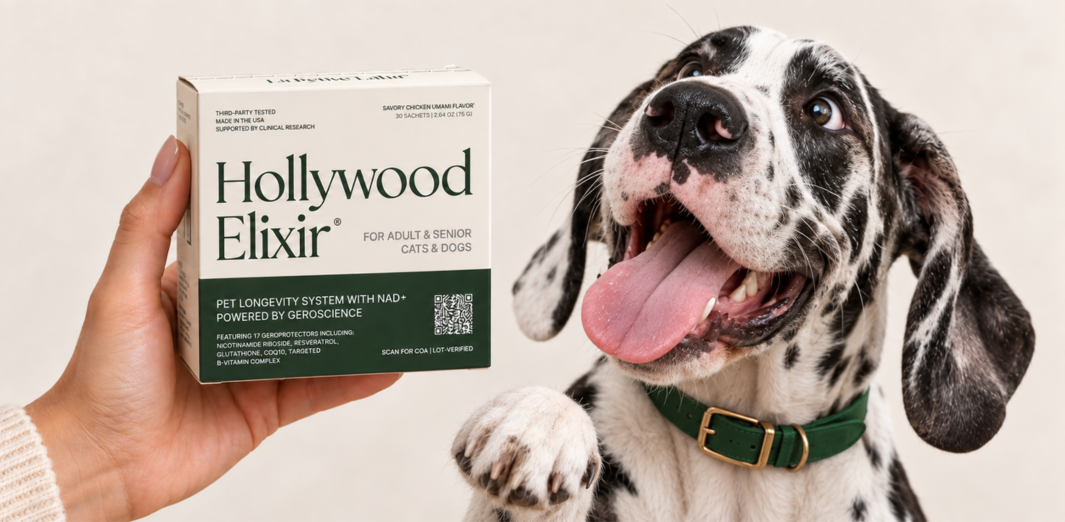
Dalmatian looking toward a Hollywood Elixir box held in a person's hand

Discover LPL-01: How This Fits Into a Larger Canine Longevity System

Aging in dogs is not driven by a single pathway. It’s the result of interacting biological systems—energy metabolism, oxidative stress, immune signaling, and structural integrity—changing over time.

This article explores one piece of that puzzle. If you want to understand how these pieces connect—and what actually moves the needle—you need to zoom out.

Start with the underlying science:

Keep exploring

What would you like to understand next?

Search practical guides about healthy aging, cellular energy, ingredients, and daily support for dogs.