





Ashwagandha for Dogs

What four small dog studies found, the amount they used, and the liver and thyroid cautions that come from human medicine.

By La Petite Labs Editorial 12 min read

As Seen On

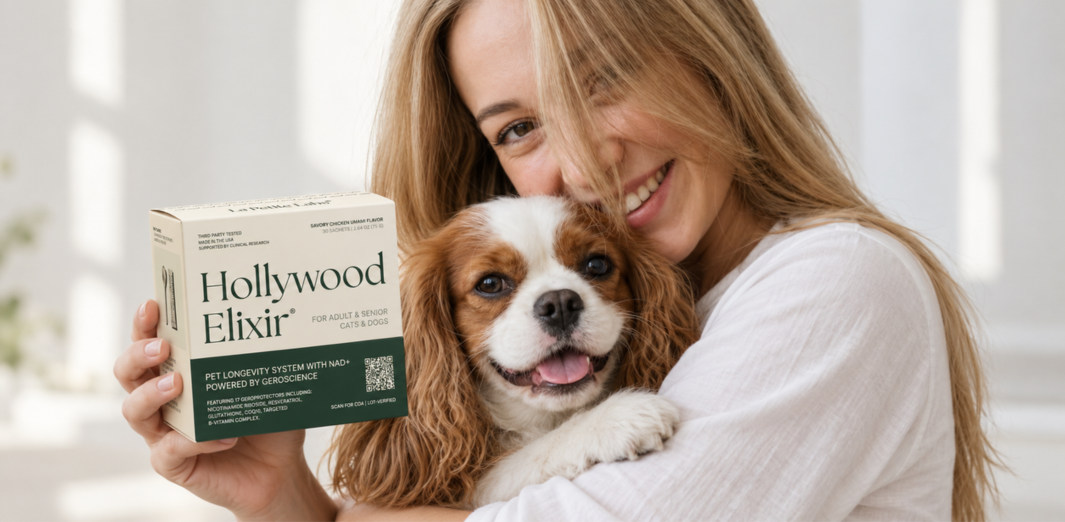
Woman hugging a golden retriever while holding a Hollywood Elixir box
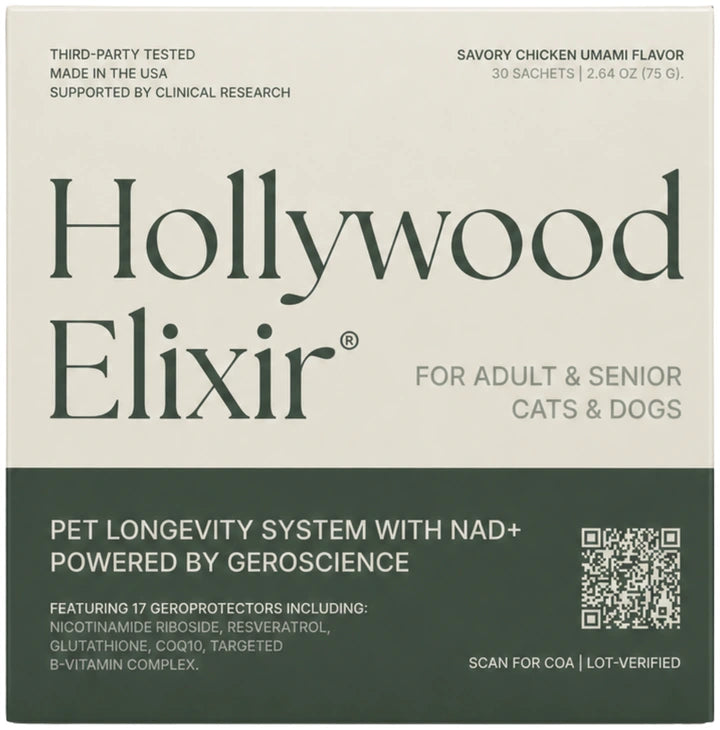
Hollywood Elixir® Senior Dog Supplement

17 science-backed actives

From$50/moSave up to 47%Save up to 44%Shop Now
Contents

Ashwagandha may help a stressed dog, but the proof is thin: two small trials found lower levels of cortisol, the stress hormone, and one of them reported fewer signs of fear and anxiety. The four dog studies we have details on cover 63 dogs in all, and none ran longer than 60 days.1, 2, 3, 4 Long-term safety in dogs is untested. In people, ashwagandha has been linked to rare liver injury and to shifts in thyroid hormone.6, 8

This guide covers what the dog studies measured, the amount they used, the side effects to watch for, and the options with stronger evidence for an anxious dog.

  • What it is: Ashwagandha is the root of a shrub used in traditional Indian medicine. Its best-known compounds are called withanolides.5
  • Anxiety: In a trial of 24 stressed dogs, 4 weeks of root extract was followed by lower cortisol and fewer signs of fear and anxiety.1, 2
  • Senior dogs: Two 60-day trials in healthy older dogs found changes in blood tests. Neither tracked illness or lifespan.1, 3
  • Safety: The 60-day trial in senior dogs recorded no adverse events.1 Longer use is untested in dogs.
  • Human warnings: Rare liver injury and raised thyroid hormone have been reported in people.6, 8
  • Amount: None is established. The dog trials gave 15 mg per kg of body weight once a day.1, 3 Agree on any amount with your vet before you start.
  • In Hollywood Elixir: No. Hollywood Elixir has no ashwagandha and isn't a calming product. It's daily nutrition.

What is ashwagandha?

Ashwagandha is a shrub with the botanical name Withania somnifera. Its root has been used in traditional Ayurvedic medicine for thousands of years.5 You may also see it sold as Indian ginseng or winter cherry.5, 3

The root contains a group of compounds called withanolides, which researchers treat as its main active ingredients.5, 1 In people, ashwagandha supplements are promoted mostly for stress, anxiety and sleep.5

Most labels call ashwagandha an adaptogen. Adaptogen is a loose term for herbs said to help the body cope with stress. It isn't a medical category, and it isn't a promise that a product works.

Dog owners reach for ashwagandha for the same reason people do: a calmer animal. Since 2022 it has been tested in dogs in a handful of small studies.

Woman holding a Hollywood Elixir box beside a pug, a terrier and a food bowl

Does ashwagandha work for dog anxiety?

Ashwagandha has one trial that we found in anxious dogs, and the result was positive. Twenty-four stressed dogs got either a root extract or a placebo in their evening meal for 4 weeks.2 A later paper sums up the outcome: the dogs on ashwagandha had lower cortisol in their urine, fewer signs of fear and anxiety, and lower scores for pain getting in the way of daily life.1

One month in 24 dogs shows that something happened.2 It can't tell you which kinds of anxiety respond, whether the effect lasts, or how ashwagandha compares with training or prescription medicine.

So treat it as a promising early result. Dogs with severe fear, panic when left alone, or aggression need a vet-led plan first.

Woman in sportswear holding a Hollywood Elixir box beside a black-and-tan dog outdoors

What did the dog studies actually measure?

Ashwagandha's dog studies mostly measured blood markers, not behavior. Here are the four we have details on:

  • Stressed dogs, 4 weeks: 24 dogs aged 3 to 8 years. Lower urine cortisol, fewer signs of fear and anxiety, lower pain-interference scores.1, 2
  • Healthy senior dogs, 60 days: 20 dogs aged 8 or older. Lower blood cortisol, more red blood cells, lower liver and kidney values.1
  • Senior beagles, 60 days: 12 dogs aged 12 to 15 years. Better stool scores and lower liver enzymes. Behavior wasn't measured.3
  • Large senior dogs, 40 days: 7 dogs given ashwagandha blended with passionflower and dandelion, with no placebo group. Lower inflammation markers.4

All three single-herb trials gave 15 mg per kg of body weight a day.1, 2, 3 Both senior-dog trials used an extract supplied free by its maker.1, 3

Woman holding a Hollywood Elixir box above her forehead beside a Bernese mountain dog outdoors

Does lower cortisol mean a calmer dog?

Ashwagandha lowers cortisol more reliably than it changes how stressed people say they feel. A 2025 analysis pooled trials covering 488 people. Cortisol fell, but scores for perceived stress didn't change significantly.10 An earlier analysis of 12 trials did find lower anxiety and stress scores, and its authors rated the certainty of that evidence as low.9

That matters for dogs, because two of the dog trials measured cortisol.1, 2 A lower hormone reading is a lab result. What you care about is whether your dog settles, eats, sleeps and recovers faster after a scare.

Golden retriever nuzzling a woman holding a Hollywood Elixir box on the grass beside a food bowl

Is ashwagandha safe for dogs?

Ashwagandha looked safe in dogs for up to 60 days, at one amount, in small groups. In the 60-day trial of 20 senior dogs, no adverse events were recorded, and liver and kidney blood values moved in a favorable direction.1

That leaves real gaps. We found no dog study longer than 60 days, and none in puppies or pregnant dogs.1, 3

For people, U.S. health authorities describe ashwagandha as possibly safe for up to 3 months and say there isn't enough information to judge longer use.5 Dogs have less data than that, so short-term safety in healthy dogs is all the record supports.

A lower hormone reading is a lab result.

What are the side effects and risks of ashwagandha for dogs?

Ashwagandha's known side effects come mostly from people. The dog trials were too small to catch uncommon problems.

  • Stomach upset and drowsiness: the usual complaints in people are drowsiness, stomach upset, diarrhea and vomiting.5
  • Liver injury: rare, and documented. One report describes 5 people who developed jaundice 2 to 12 weeks after starting ashwagandha. Liver tests returned to normal within 1 to 5 months in the four who were followed.6
  • Thyroid hormone: in a trial of 50 people with a mildly underactive thyroid, 600 mg a day for 8 weeks raised thyroid hormone levels.8
  • Blood sugar: glucose fell in the senior-dog trial, though it stayed within the normal range.1

The liver reports need context. In a series from India, the patients who did worst already had liver disease, and three of them died.7 On the other side, a 12-month study of 191 people taking 600 mg a day found no clinically relevant change in liver enzymes.19 A 2026 review adds that side effects show up mainly with long or heavy use.2

Stop ashwagandha and call your vet if your dog vomits, has diarrhea, stops eating, seems unusually sleepy, or develops yellow gums or eyes.

Overhead view of a black-and-white dog beside a food bowl and Hollywood Elixir box

How much ashwagandha did the dog trials use?

No amount of ashwagandha is established or officially recommended for dogs. The three single-herb trials all gave 15 mg of root extract per kg of body weight, once a day, in the evening meal or as a capsule.1, 2, 3

For scale, that is about 150 mg for a 22 lb (10 kg) dog and 450 mg for a 66 lb (30 kg) dog.1 The extract in the two senior-dog trials was standardized to more than 5% withanolides, so the same weight of plain root powder isn't equivalent.1, 3

In human trials, the benefit for stress appeared at 300 to 600 mg a day.9 A capsule sized for a person can hold several times the trial amount for a small dog.

Woman smiling beside a golden retriever, a green food bowl and a Hollywood Elixir box

How long does ashwagandha take to work in dogs?

Ashwagandha was judged after weeks, not hours, in every dog study we found. The anxiety trial ran for 4 weeks.2 The senior-dog trial took blood at day 30 and day 60.1

We found no study of a single serving given before fireworks, a storm or a car ride. If you and your vet decide to try ashwagandha, plan on giving it daily for about a month before you judge it, and set a review date at the start.

Man holding a Hollywood Elixir box while sitting on an outdoor sofa with a golden retriever

Which dogs should not have ashwagandha?

Ashwagandha isn't a fit for every dog. Most of the cautions below come from human safety guidance, applied to dogs as a precaution.5 Talk to your vet first if your dog:

  • has liver disease, since the worst human liver cases were in people whose livers were already damaged;7
  • has a thyroid condition or takes levothyroxine, because ashwagandha has raised thyroid hormone in people;8
  • is pregnant or nursing;5
  • has an immune-mediated disease or takes medicine that suppresses the immune system;5
  • is booked for surgery or an anesthetic;5
  • is a puppy, because the dogs in the trials were 3 years or older.1, 3

An underactive thyroid is the most common hormone disorder in dogs, so the thyroid point applies to many households.13

Can ashwagandha be given with anxiety medication?

Ashwagandha hasn't been tested alongside prescription behavior medicine in dogs, as far as we could find. That includes fluoxetine, clomipramine, trazodone and gabapentin.

The human record gives two reasons for care. First, health authorities warn that ashwagandha may interact with sedatives and anti-seizure medicines, and with thyroid, diabetes, blood pressure and immune-suppressing drugs.5 Second, a review of 1,816 adverse-event reports found cases where ashwagandha taken with the antidepressants sertraline, escitalopram or paroxetine was the likely cause of side effects such as severe diarrhea, vomiting and muscle pain.17 Sertraline and paroxetine belong to the same drug family as fluoxetine.11

Two habits keep this safe. Give your vet the full list of what your dog takes, supplements included, before any new prescription or sedation. And keep prescribed medicine at the prescribed amount unless your vet changes it.

Quieter isn't the goal.

Woman sitting with a beagle in a kitchen while holding a Hollywood Elixir box

DVM Voice: Clinical Vignette of a Common Pattern in Senior Dog Aging

Case provided by JoAnna Pendergrass, DVM

Rex, a 7-year-old Labrador Retriever, was brought in after his owner noticed he was slower to rise, hesitant on stairs, and less able to play as before. Examination showed stiffness and reduced hip mobility; radiographs confirmed degenerative joint changes.

His care required weight management, veterinary-guided pain control, nutritional support, and rehabilitation — a comprehensive plan, but one started only after visible decline appeared.

Clinical takeaway: Rex’s case reflects the value of proactive aging support: maintaining lean body condition, monitoring mobility early, and supporting cellular resilience, antioxidant defense, and healthy inflammatory balance before decline becomes obvious.

Single-case vignette. Not generalizable. Veterinary oversight is essential for pain, stiffness, or suspected joint disease.
Explore Hollywood Elixir Research →
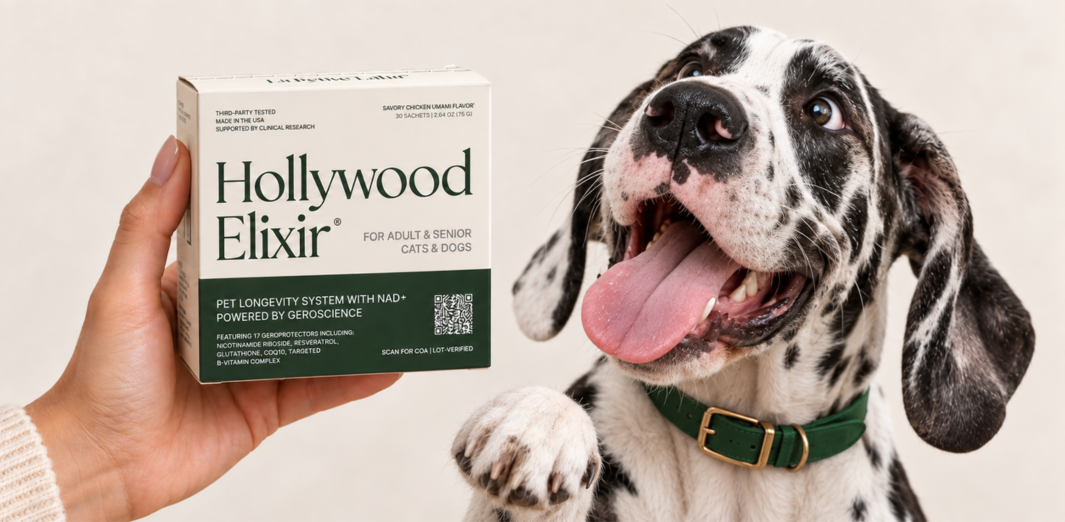
Spotted gray dog beside a Hollywood Elixir box held in a person's hand

Which form of ashwagandha is used for dogs?

Ashwagandha root extract is the form behind the dog research. The trials used a concentrated extract of the root, given as a powder in food or in a capsule.1, 3

Products for people are made from the root, the leaf, or both.5 The parts differ. Root and leaf carry different mixes of withanolides, leaf is richer in one called withaferin A, and human safety data for leaf products is sparse.18

Gummies, chews and blends made for people can also include other active ingredients. Read the whole list before anything goes in your dog's bowl.

Golden retriever nuzzling a man holding a Hollywood Elixir box beside a food bowl

Does ashwagandha help senior dogs?

Ashwagandha changed blood test results in healthy older dogs, and that's as far as the evidence goes. In a 60-day trial of 20 dogs aged 8 or older, the extract group had lower cortisol, more red blood cells, and lower liver and kidney values than the placebo group.1 Neither that trial nor the beagle study tracked illness or lifespan.1, 3

If your older dog has only recently become anxious or restless, read our guide to anxiety in old dogs first. Pain and cognitive decline can both show up as anxiety.11

For everyday nutrition, our guide to cognitive supplements for dogs compares what's on the market. Our own powder, Hollywood Elixir, is daily nutrition for adult and senior dogs and contains no ashwagandha.

Golden spaniel eating from a green bowl beside a Hollywood Elixir box

Is ashwagandha different for dogs and cats?

Ashwagandha has more research in dogs than in cats, and the thyroid caution points in a different direction for each species.

  • Evidence: the dog studies we have details on cover 63 dogs.1, 2, 3, 4 For cats we found one placebo-controlled trial, which lasted a month.19
  • Thyroid: an underactive thyroid is the common problem in dogs. In cats it's the reverse: an overactive thyroid is their most common hormone disorder, and over 10% of senior cats are expected to develop it.13, 20 An herb that can raise thyroid hormone is a bigger worry for an older cat.8

A dog's supplement shouldn't be passed to the cat on the strength of dog studies. Our guide to ashwagandha for cats covers the feline trial.

How do you choose an ashwagandha product for a dog?

An ashwagandha product for a dog should tell you exactly what is in it, because quality problems with this herb are well documented.

  • Identity: DNA testing of 103 market samples found that 77% were authentic ashwagandha. Powders were far more likely than whole roots to be swapped or mixed with other plants.14
  • Heavy metals: one-fifth of 193 Ayurvedic medicines bought online contained detectable lead, mercury or arsenic.15
  • Extract strength: in a 16-person study, two extracts with equal withanolide content produced very different blood levels.16

So look for:

  • root extract only, with the withanolide percentage stated;
  • the amount per serving in milligrams;
  • a certificate of analysis that covers heavy metals;
  • a product made for dogs, with a feeding guide by weight.

With a blend, check that every ingredient has its own amount instead of one combined total. We hold our own label to that rule: Hollywood Elixir lists all 17 amounts, and ashwagandha is not one of them.

What works better than ashwagandha for an anxious dog?

Several options have stronger evidence than ashwagandha for canine anxiety, and the strongest ones go through your vet.

  • Behavior work: gradual, controlled exposure to the trigger, a safe retreat and reward-based training are the base of the plan. Medicine and supplements make that learning easier. They don't replace it.11
  • Approved medicines: fluoxetine and clomipramine are FDA-approved for separation anxiety in dogs, used together with a behavior plan.11
  • Noise fears: a dexmedetomidine gel is FDA-approved for noise aversion.11 In a trial run on New Year's Eve, 72% of 89 treated dogs had a good or excellent result, against 37% of 93 dogs on placebo.12
  • Other calming supplements: the Merck Veterinary Manual notes calming effects with alpha-casozepine and L-theanine, and says several studies support pheromone products. It calls the evidence for natural products in dogs somewhat limited.11

Ashwagandha belongs in that last group. Our guide to a stressed dog explains how to read the signs before you choose.

Woman holding a Hollywood Elixir box beside a dapple dachshund and green food bowl on a sofa

When should you see the vet instead of trying ashwagandha?
Ashwagandha shouldn't be the first answer when a dog's behavior changes. Book a visit if your dog:

  • becomes anxious, clingy or snappy over days or weeks, with no change at home;
  • paces, pants or wakes through the night, which in an older dog can point to cognitive dysfunction;11
  • flinches when touched, limps or avoids stairs;
  • panics when left alone, to the point of injury, destruction or house soiling.

Pain is a major driver of behavior problems. In one study of dogs seen by veterinary behaviorists, between 28% and 82% showed signs of pain.11 Calming a dog that hurts only hides the problem.

Woman cuddling a brown-and-white spaniel while holding a Hollywood Elixir box

How can you tell if ashwagandha is helping your dog?

Ashwagandha is easy to misjudge, because a hopeful owner sees improvement everywhere. A simple record keeps the test fair.

  • Before you start, write down the trigger, what your dog does, how long it lasts and how fast your dog recovers.
  • Film your dog alone if the trouble starts when you leave. Signs of separation distress usually begin within 15 to 30 minutes of the owner's departure.11
  • Change one thing at a time. Two new calming products at once make the result unreadable.
  • Set a review date with your vet about a month out, the length of the anxiety trial.2

Quieter isn't the goal. A sedated dog moves less and may be just as afraid. Look for a dog that relaxes, eats, plays and bounces back.

Is ashwagandha in Hollywood Elixir?

No. Hollywood Elixir doesn't contain ashwagandha, and it isn't a calming product.

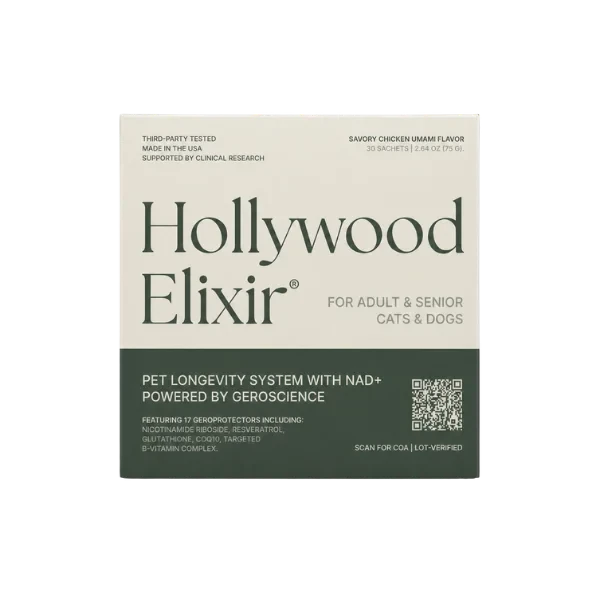
The nearest ingredient on its label is reishi mushroom, at 25 mg per sachet. Like ashwagandha, reishi is widely sold as an adaptogen. The formula also has 1 mg of vitamin B6 and 60 mg of nicotinamide riboside, an NAD+ precursor, among its 17 actives. Every amount is printed on the label.

Hollywood Elixir is a daily nutrition supplement for adult and senior dogs, a powder you stir into food. Dogs under 7 lb get half a sachet, dogs from 7 to 30 lb get one, and dogs over 30 lb get two. It hasn't been tested for anxiety, stress hormones or lifespan.

If the word adaptogen is what brought you here, start with our guides to reishi mushroom for dogs and adaptogens for dogs. See every amount on the Hollywood Elixir label, with the serving guide.

Calming a dog that hurts only hides the problem.

Educational content only. This material is not a substitute for veterinary advice. Always consult your veterinarian about your dog’s specific needs. These statements have not been evaluated by the Food and Drug Administration. Products mentioned are not intended to diagnose, treat, cure, or prevent any disease.

Glossary

Ashwagandha: A shrub, Withania somnifera, whose root is used in traditional Indian medicine and in stress supplements.

Withanolides: The group of plant compounds treated as the main active ingredients in ashwagandha.

Adaptogen: A loose label for herbs and mushrooms said to help the body cope with stress. It is not a medical category.

Cortisol: A hormone released under stress, measured in blood or urine.

Placebo-controlled trial: A study in which some animals get a look-alike with no active ingredient, so the real effect can be seen.

Hypothyroidism: An underactive thyroid gland, the most common hormone disorder in dogs.

Related Reading

References

Numbered references identify the sources used for specific claims. Read the study design, species and evidence boundaries alongside each finding.

FAQ

Can I give my dog my own ashwagandha capsules?

It's a poor idea. A capsule made for an adult can hold several times the amount the dog trials used for a small dog, and human blends can include other active ingredients. Use a product made for dogs that your vet has seen.

Is ashwagandha toxic to dogs?

We found no published report of ashwagandha poisoning in dogs, and a 60-day trial in senior dogs recorded no adverse events. Larger amounts and longer use haven't been tested in dogs, so treat that as limited reassurance.

Will ashwagandha calm my dog during fireworks or storms?

Probably not on the night. The dog trials gave ashwagandha every day for weeks, and we found no study of a single serving before a noise event. Ask your vet about the FDA-approved gel for noise aversion.

Does ashwagandha make dogs sleepy?

Drowsiness is a known side effect of ashwagandha in people. The 60-day trial in senior dogs recorded no adverse events, but it was small. A dog that seems sedated, wobbly or dull on a new supplement should stop taking it and see the vet.

Does Hollywood Elixir contain ashwagandha?

No. Hollywood Elixir has no ashwagandha and isn't a calming product. Its closest ingredient is reishi mushroom, at 25 mg per sachet, and all 17 amounts are printed on the label.

Can puppies have ashwagandha?

Ashwagandha hasn't been studied in puppies. The youngest dogs in the published trials were 3 years old, so there's no basis for giving it to a growing dog.

Is ashwagandha good for dogs with arthritis or pain?

One trial reported lower pain-interference scores in stressed dogs on ashwagandha, but we found no study in dogs with arthritis. Pain needs a diagnosis and proven pain relief first.

Can ashwagandha replace my dog's anxiety medication?

No. Ashwagandha hasn't been compared with fluoxetine, clomipramine or any other prescription medicine in dogs. Stopping a medicine that works in order to test a supplement can set your dog back, so make any change with your vet.

How long can a dog stay on ashwagandha?

Nobody knows. The longest dog study we found ran 60 days. Guidance for people calls ashwagandha possibly safe for up to 3 months and says longer use lacks data, so plan regular reviews with your vet.

Dalmatian looking toward a Hollywood Elixir box held in a person's hand

Discover LPL-01: How This Fits Into a Larger Canine Longevity System

Aging in dogs is not driven by a single pathway. It’s the result of interacting biological systems—energy metabolism, oxidative stress, immune signaling, and structural integrity—changing over time.

This article explores one piece of that puzzle. If you want to understand how these pieces connect—and what actually moves the needle—you need to zoom out.

Start with the underlying science:

Keep exploring

What would you like to understand next?

Search practical guides about healthy aging, cellular energy, ingredients, and daily support for dogs.