




Ashwagandha for Cats

What the one cat trial measured, why older cats need a thyroid check first, and what has more evidence for a stressed cat.

By La Petite Labs Editorial 11 min read

As Seen On

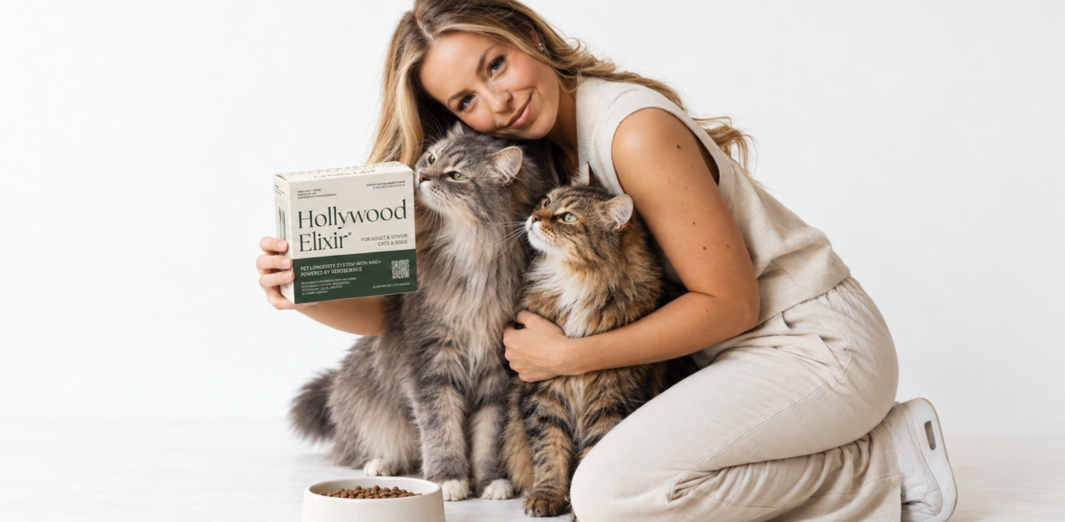
Woman cuddling an orange-and-white cat and a silver tabby while holding a Hollywood Elixir box
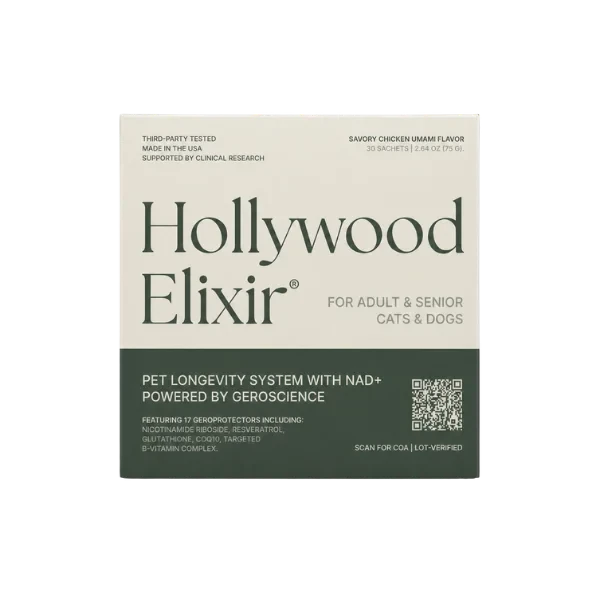
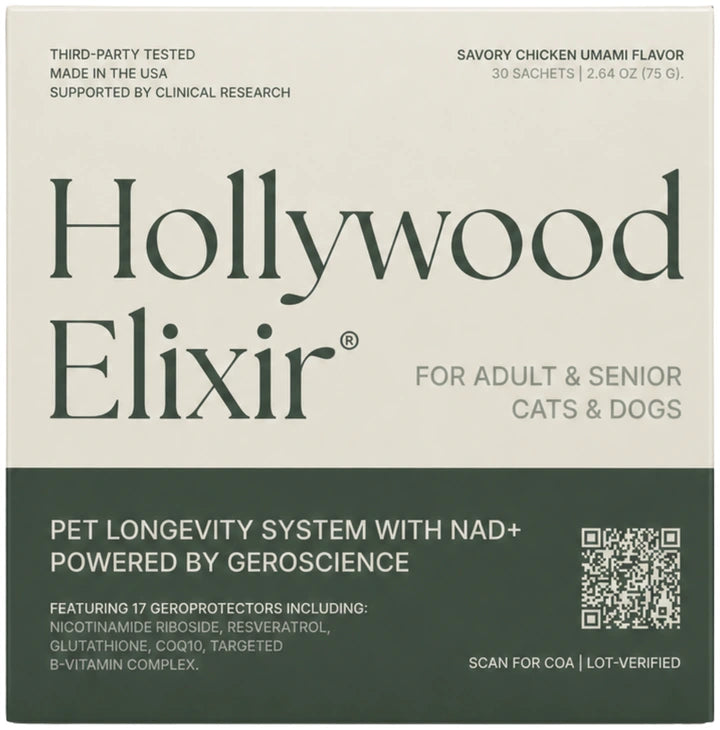
Hollywood Elixir® Senior Cat Supplement

17 science-backed actives

From$50/moSave up to 47%Save up to 44%Shop Now
Contents
Ashwagandha has been tested in cats once that we could find: in 16 healthy cats over one month, a root extract lowered the stress hormone cortisol while liver and kidney blood values stayed normal. The trial's published summary reports blood results, not behavior, so it can't tell you whether a worried cat acts calmer at home.1

One caution is specific to cats. Ashwagandha has raised thyroid hormone in people, and an overactive thyroid is the most common hormone disorder in cats.2, 3

This guide covers what the cat trial found, the amount it used, the risks, and the options with more evidence behind them.

  • What it is: Ashwagandha is a shrub root from traditional Indian medicine, promoted for stress and sleep.4
  • Cat evidence: One trial, 16 healthy cats, one month. Cortisol fell on the root extract.1
  • Behavior: The trial summary reports blood markers only. Whether cats acted calmer isn't stated.1
  • Thyroid: Ashwagandha raised thyroid hormone in a human trial, and over 10% of senior cats are expected to develop an overactive thyroid.2, 3
  • Safety: Liver and kidney values stayed normal for 30 days.1 Longer use is untested in cats.
  • Amount: None is established. The trial gave 15 mg per kg of body weight a day.1 Choose any product together with your vet.
  • In Hollywood Elixir: No. There is no ashwagandha in Hollywood Elixir, and it isn't sold for stress. It's daily nutrition.

What is ashwagandha, and why is it given to cats?

Ashwagandha is an evergreen shrub that grows in parts of India, Africa and the Middle East. Its root has a long history in Ayurvedic medicine, and the plant also goes by the name Indian ginseng.4 The compounds that get most of the credit are called withanolides.4

In people, ashwagandha supplements are promoted mainly for stress, anxiety and sleep.4 Pet products borrow the same pitch: a daily herb for a cat that hides, yowls at night or dreads the carrier.

You'll often see the word adaptogen on the label. Adaptogen is a loose term for herbs that are said to help the body handle stress, and our guide to adaptogens for cats explains the idea. The word says nothing about whether a product is safe for a cat.

The research in cats is much thinner than the marketing. We found one published trial, covered in the next section.

Woman kneeling with two long-haired tabby cats while holding a Hollywood Elixir box beside a food bowl

What did the cat trial find?

Ashwagandha's one cat trial used a sound design: randomized, double-blind and placebo-controlled. Sixteen healthy pet cats received either root extract, at 15 mg per kg of body weight, or a placebo. All of them went through four kinds of stress over one month.1

By day 30, the cats on ashwagandha had:

  • lower cortisol in their blood;
  • shifts in four markers of oxidative stress;
  • lower levels of several immune signals.1

Liver enzymes, kidney values and blood sugar showed no harmful change and stayed within the normal range.1 The authors concluded that the extract was safe in cats.

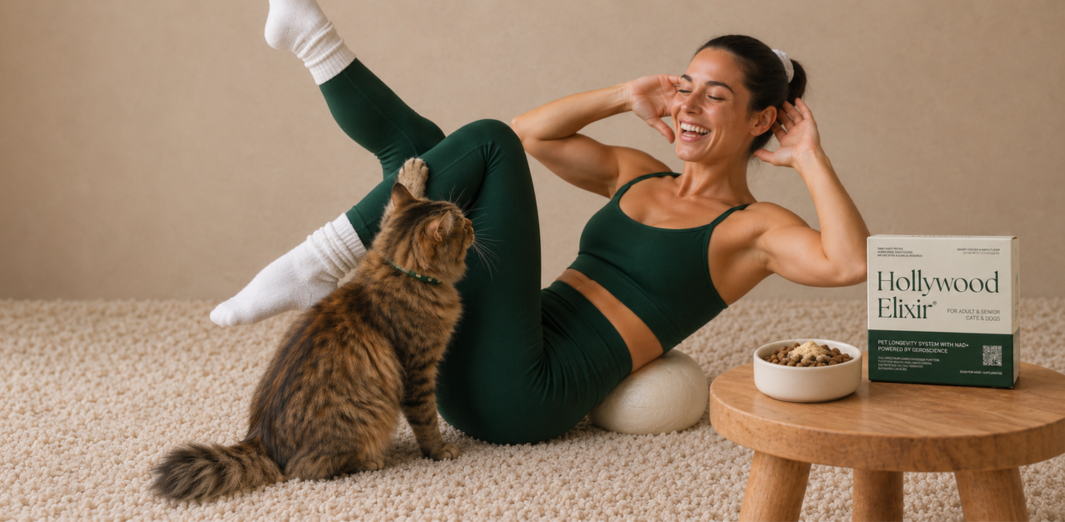
Woman exercising beside a tabby cat, with a Hollywood Elixir box and food bowl on a small table

Does ashwagandha help a stressed cat?

Ashwagandha lowered a stress hormone in cats, and that's a step short of showing a calmer cat. The trial's published summary lists blood results only: cortisol, oxidative-stress markers and immune signals.1 It says nothing about hiding, appetite, grooming, spraying or getting along with other cats.

Human research shows why the gap matters. A 2025 review pooled trials in 488 people and found that ashwagandha reduced cortisol without a significant change in how stressed the participants felt.8

So the fair answer is maybe. A cat's cortisol can drop while the cat still hides under the bed.

Orange-and-white cat reaching toward a woman holding a Hollywood Elixir box while sitting in a chair

Is ashwagandha safe for cats?

Ashwagandha appeared safe in healthy cats for 30 days, and that is the full extent of what's known. In the trial, liver enzymes, kidney values and blood sugar showed no harmful change.1

Thirty days in 16 cats can't reveal a rare reaction or a slow one.1 We found no cat study that ran longer, and none in kittens or in cats with kidney, liver or thyroid disease.

Even for people, the U.S. government's summary rates ashwagandha as possibly safe only in the short term, up to 3 months, with long-term safety unknown.4 Cats have far less data than that.

Gray-haired man holding a Hollywood Elixir box while two cats rest beside him in an armchair

Why does ashwagandha raise a thyroid question in cats?

Ashwagandha can push thyroid hormone upward in people, and cats are a species prone to an overactive thyroid. Hyperthyroidism is the most common hormone disorder in cats, and it's estimated that over 10% of senior cats will develop it.3

The human evidence is mixed. Thyroid hormone rose in a trial of 50 people with a sluggish thyroid, and stayed level in a trial of 80 healthy adults.2, 9 Doctors have also described a 73-year-old woman whose thyroid became overactive after two years on ashwagandha and recovered once she stopped.10

The cat trial's summary doesn't mention thyroid hormone.1 Until someone measures it, a cat with hyperthyroidism, or one taking methimazole, is better off without ashwagandha.

A cat's cortisol can drop while the cat still hides under the bed.

What are the side effects and risks of ashwagandha in cats?

Ashwagandha caused no harmful change in the blood tests the cat trial reported.1 The side effects worth knowing about come from human use.

  • Gut upset and sleepiness: drowsiness, stomach upset, diarrhea and vomiting are the usual complaints in people.4
  • Liver: injury is rare and real. Five patients in one report turned jaundiced 2 to 12 weeks after starting ashwagandha, and none went on to liver failure.7
  • Thyroid: hormone levels can rise, as the section above explains.2
  • Immune and adrenal effects: a 2026 safety review also lists immune reactions and adrenal suppression, mostly with long or heavy use.11

For a cat, the practical worry is appetite. If a new supplement puts your cat off a meal, drop the supplement, not the meal.

Stop ashwagandha and call your vet if your cat vomits, has diarrhea, eats less, seems dull or sleepy, or loses weight.

Tabby cat looking up at a Hollywood Elixir sachet held above it, with the product box on a small table

How much ashwagandha did the cat trial use?

No amount of ashwagandha is established for cats. The single trial gave 15 mg of root extract per kg of body weight each day for one month.1 For a 10 lb (4.5 kg) cat, that comes to about 68 mg a day.

Human products are far stronger. In human trials, the benefit for stress appeared at 300 to 600 mg a day, so one 300 mg capsule holds more than four times the trial amount for that cat.12

Read the trial figure as a record of what was tested, not as an instruction. Dog studies used the same 15 mg per kg, and we found no study that compared different amounts in cats.13

Hand gently petting an orange-and-white cat beside a food bowl and Hollywood Elixir box

Can cats have human ashwagandha capsules, gummies or powder?

Human ashwagandha products are a poor match for a cat, for three reasons.

  • Strength: capsules are sized for an adult person, several times what the cat trial used.1, 12
  • Plant part: products for people may contain root, leaf or both, and the cat trial tested root extract.4, 1 Leaf is richer in a compound called withaferin A, and its human safety data is sparse.14
  • Extras: gummies and blends can carry sweeteners, flavorings and other herbs that were never tested in cats.

Loose powder is hard to measure in cat-sized amounts, and powders were the form most often adulterated in a market survey.15 If you use ashwagandha at all, choose a product made for cats, with a feeding guide by weight.

Man holding a Hollywood Elixir box beside a black cat, an orange tabby and a food bowl

Which cats should not have ashwagandha?

Ashwagandha is best skipped, or cleared with your vet first, for a cat that:

  • has hyperthyroidism or is being treated for it;2, 3
  • has liver disease, because the people who fared worst with ashwagandha liver injury already had liver disease;16
  • is pregnant or nursing;4
  • has an immune-mediated disease or takes medicine that suppresses the immune system;4
  • is due for surgery or sedation;4
  • is a kitten, since we found no study in kittens.

Older cats deserve a thyroid test before they start, because hyperthyroidism mainly affects cats over 10 years of age.3

What does a stressed cat need before any supplement?

A stressed cat needs its surroundings fixed before it needs ashwagandha. Feline medicine groups put it bluntly: meeting a cat's environmental needs is essential, not optional, and doing so reduces stress and stress-related illness.6

Start by reading the signs. Fear in cats shows up as hiding, a low crouched posture, lowered ears, crying out and sometimes urine spraying.5

Then work through the basics:

  • perches and climbing space, so a cat can get up and away;
  • food, water, beds and litter boxes spread far enough apart that cats can avoid each other;
  • more litter boxes, in more places, cleaned more often;
  • no punishment, which adds fear to an already anxious cat.5

Our guide to a stressed cat goes through each step. A supplement works, if it works at all, on top of these changes.

Sleepier isn't the same as calmer.

Silver tabby sitting beside a food bowl and a Hollywood Elixir box held in a person's hand

DVM Voice: Clinical Vignette of a Common Pattern in Senior Cat Aging

Case provided by JoAnna Pendergrass, DVM

Sasha, a 12-year-old cat, was brought in after her owner noticed increased thirst and urination, lethargy, vomiting, and a generally unkempt appearance. Examination showed weight loss, elevated blood pressure, and reduced vitality.

Diagnostic testing revealed elevated kidney markers, poorly concentrated urine, and protein loss in the urine — findings consistent with chronic kidney disease, one of the most common chronic conditions in senior cats.

Her care required a kidney-focused diet, blood pressure management, targeted supplementation, medication support, and regular monitoring — a necessary plan, but one started after clinical signs were already visible.

Clinical takeaway: Sasha’s case reflects why senior-cat wellness should begin before obvious decline. Earlier monitoring, body-condition tracking, hydration awareness, antioxidant support, and daily cellular resilience may help support quality of life as cats age.

Single-case vignette. Not generalizable. Veterinary diagnosis and monitoring are essential for increased thirst, urination, vomiting, lethargy, weight loss, or suspected kidney disease.

Explore Hollywood Elixir Research →
Woman holding a Hollywood Elixir box toward a brown cat perched on the back of a sofa

Is ashwagandha a good idea for a senior cat?

Ashwagandha is a harder call in a senior cat than in a young one, and the reason is the thyroid. Hyperthyroidism mainly affects cats over 10, and ashwagandha has raised thyroid hormone in people.3, 2

Restlessness, night crying and weight loss in an older cat call for blood tests before a calming herb. Our guide to night vocalization in senior cats lists the medical causes to rule out.

For everyday nutrition in an older cat, calming herbs are the wrong shelf. Our guide to the best supplements for senior cats compares the options, and our own powder, Hollywood Elixir, contains no ashwagandha.

Woman leaning toward a fluffy orange cat beside a Hollywood Elixir box and green food bowl

Can ashwagandha be given with a cat's medication?

Ashwagandha hasn't been studied alongside any prescription medicine in cats, as far as we could find. Human guidance flags possible interactions with sedatives, anti-seizure medicines, thyroid hormone medicine, diabetes and blood pressure drugs, and medicines that suppress the immune system.4

Sedation is the one to think about first. Gabapentin, a common pre-visit calming medicine, already makes many cats sleepy.17 Adding a second product that can cause drowsiness is a decision for your vet.

Before any new prescription, sedative or anesthetic, tell your vet about every supplement your cat gets.

Tabby cat licking its nose beside a food bowl and Hollywood Elixir box

Is ashwagandha the same for cats and dogs?

Ashwagandha has been studied more in dogs, and the two species shouldn't share a product by default.

  • Evidence: cats have one 30-day trial in 16 animals.1 Dogs have several small trials, including a 60-day study in 20 older dogs.13
  • Amount: both species were given 15 mg per kg a day. That figure was tested, not tailored to cats.1, 13
  • Thyroid: an overactive thyroid is the common problem in older cats, so an herb that may raise thyroid hormone carries more risk for them.3, 2

A dog's chew or capsule can also be far too strong for a cat. Our guide to ashwagandha for dogs covers the canine studies.

How do you choose an ashwagandha product for a cat?

An ashwagandha product for a cat has to clear a higher bar than one for a person, because a small body leaves less room for error. Check four things.

  • Root only: the label should say root extract and state the withanolide content. Root and leaf have different chemistry, and surveys have found root material mixed with leaves and stems.14
  • Made for cats: look for a feeding guide by body weight, in milligrams.
  • Tested for metals: in a survey of Ayurvedic medicines sold online, 20.7% of the 193 products tested contained detectable lead, mercury or arsenic.18
  • Nothing extra: one herb, with no added calming blend.

Ask the maker for a certificate of analysis for the batch you're buying. A company that can't produce one hasn't earned a place in your cat's bowl.

The same rule applies to any supplement: every active ingredient should have its own amount on the label. Hollywood Elixir prints all 17 of its amounts, and you won't find ashwagandha in the list.

What works instead of ashwagandha for a stressed cat?

Several options have more cat evidence than ashwagandha. The right one depends on whether the stress is a single event or part of daily life.

  • Vet visits and travel: pregabalin is approved in the US for acute anxiety and fear around transport and vet visits.5 In a trial of 209 cats, giving it about 90 minutes beforehand eased both travel and exam anxiety compared with placebo.19
  • Gabapentin: in 20 cats, a capsule given 90 minutes before the carrier lowered stress scores. Sedation was common and wore off within 8 hours.17 Its use in cats is off-label.5
  • L-theanine: 30 of 33 cats improved over 30 days in an open-label study, which had no placebo group.20
  • Calming diets: a diet with alpha-casozepine and L-tryptophan eased anxiety in an unfamiliar room in a 24-cat study, but not fear of strangers.21
  • Pheromone diffusers: these may reduce urine marking and conflict between cats.5

Daily anxiety medicines exist too, and they take 4 to 6 weeks to reach full effect.5

Tabby cat sitting at a table with a food bowl and Hollywood Elixir box

When should a stressed cat see the vet?

Ashwagandha should wait whenever a cat's behavior changes suddenly, because illness and pain can look like stress. See your vet if your cat:

  • urinates or defecates outside the litter box, where the first step is always to rule out a medical problem;5
  • strains in the box or passes little or no urine, which needs a same-day visit;
  • hides more, eats less or loses weight;
  • turns aggressive when touched, which can be a sign of pain.5

Our guide to when a cat starts hiding explains what vets look for. A calming supplement given to a sick cat only delays the answer.

Woman cuddling a silver tabby and a cream-colored cat while holding a Hollywood Elixir box

How do you judge whether ashwagandha is working?

Ashwagandha needs a fair test, or you'll never know whether it did anything. Agree on the plan with your vet, then:

  • pick one target, such as time spent hiding, carrier struggles or night crying;
  • keep a daily note for a week before you start, and keep it going;
  • change nothing else during the test, including food, litter and diffusers;
  • review at 30 days, the length of the cat trial.1

Sleepier isn't the same as calmer. A cat that sleeps more but still won't eat near the other cat hasn't improved. If nothing has changed by the review date, stop.

Is ashwagandha in Hollywood Elixir?

No. Hollywood Elixir contains no ashwagandha, and it isn't sold for stress.

What its label does list, among 17 actives, is 25 mg of reishi mushroom per sachet. Reishi is another ingredient often marketed as an adaptogen. The label also shows 1 mg of vitamin B6 and 60 mg of nicotinamide riboside, an NAD+ precursor. You can read every amount before you buy.

Hollywood Elixir is a daily nutrition supplement for adult and senior cats, a powder mixed into food. Cats under 7 lb get half a sachet, and cats from 7 to 30 lb get one. It hasn't been tested for stress, anxiety, thyroid health or lifespan, and it's no substitute for a vet visit.

Our guides to reishi for cats and vitamin B6 for cats explain what those two ingredients do. See the Hollywood Elixir label and serving guide.

A stressed cat needs its surroundings fixed before it needs ashwagandha.

Educational content only. This material is not a substitute for veterinary advice. Always consult your veterinarian about your cat’s specific needs. These statements have not been evaluated by the Food and Drug Administration. Products mentioned are not intended to diagnose, treat, cure, or prevent any disease.

Glossary

Ashwagandha: A shrub, Withania somnifera, whose root is used in Ayurvedic medicine and sold for stress and sleep.

Withanolides: Plant compounds in ashwagandha that are treated as its active ingredients.

Cortisol: A hormone the body releases under stress. A lower blood level is no guarantee of calmer behavior.

Hyperthyroidism: An overactive thyroid gland, the most common hormone disorder in cats.

Adaptogen: A marketing and research term for herbs said to help the body cope with stress.

Double-blind trial: A study in which neither the owners nor the researchers know which animals get the real product.

Related Reading

References

Numbered references identify the sources used for specific claims. Read the study design, species and evidence boundaries alongside each finding.

FAQ

Is ashwagandha toxic to cats?

We found no report of ashwagandha poisoning in cats, and the one cat trial saw no harmful change in liver or kidney blood values over 30 days. Larger amounts, longer use and sick cats haven't been studied.

Can ashwagandha help a cat with travel or vet-visit anxiety?

We found no study of ashwagandha given once before a trip. The cat trial gave it daily for a month. For a single stressful event, vets have medicines with direct evidence in cats, including pregabalin and gabapentin.

Can ashwagandha stop a cat from spraying or peeing outside the box?

The cat trial's summary reports nothing on spraying or litter box habits. House soiling needs a vet visit first, because medical problems have to be ruled out before anyone treats it as stress.

Does Hollywood Elixir contain ashwagandha?

No. Hollywood Elixir has no ashwagandha and isn't a calming supplement. It's a daily nutrition powder for adult and senior cats, with 25 mg of reishi mushroom among its 17 printed amounts.

Can kittens have ashwagandha?

Ashwagandha hasn't been studied in kittens, so there's no evidence to support giving it to a growing cat. Human guidance also advises against it in pregnancy and while nursing, which is a reason to keep it away from a mother cat with a litter.

Does ashwagandha make cats sleepy?

Drowsiness is a recognized side effect of ashwagandha in people. The cat trial's summary doesn't report on sedation. A cat that turns dull or wobbly on any new supplement should stop it and be checked.

How long can a cat stay on ashwagandha?

The only cat data covers 30 days. For people, health authorities call ashwagandha possibly safe for up to 3 months and say longer use lacks data. Anything beyond a month in a cat is untested, so review it with your vet.

Can ashwagandha help a cat with hyperthyroidism?

No, and it may work against treatment. Ashwagandha raised thyroid hormone in a human trial, which is the opposite of what a hyperthyroid cat needs. Keep to the treatment your vet prescribed.

What is the best form of ashwagandha for cats?

If your vet supports a trial, a root extract made for cats, with its withanolide content and a weight-based feeding guide on the label, is closest to what was studied. Avoid human capsules, gummies and loose powder.

Orange-and-white cat beside a Hollywood Elixir box held in a person's hand

Discover LPL-01: How This Fits Into a Larger Feline Longevity System

Aging in cats unfolds quietly. It’s not driven by a single failure, but by gradual shifts across interconnected systems — cellular energy, oxidative balance, immune tone, and tissue integrity — each influencing the others over time.

This article explores one layer of that system. To understand what actually shapes long-term health, you need to step back and look at how these layers interact.

Start with the underlying science:

Keep exploring

What would you like to understand next?

Search practical guides about healthy aging, cellular energy, ingredients, and daily support for cats.