Vitamin B6 for Cats

Build Balanced Amino-acid Metabolism and Support Appetite, Coat, and Energy

Essential Summary

Why Is Vitamin B6 for Cats Important?

Vitamin B6 for Cats matters because B6 becomes PLP, a coenzyme that supports amino-acid metabolism and neurotransmitter pathways tied to appetite and daily stamina. Most cats meet needs through complete diets, but intake dips, homemade recipes, and supplement overlap can shift the risk in either direction.

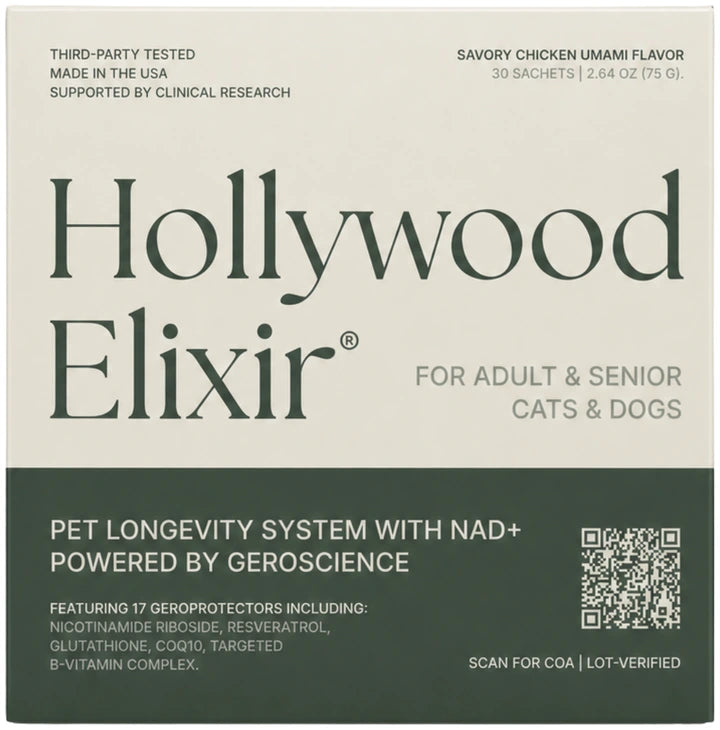
For owners building a broader daily plan, Hollywood Elixir™ can be part of a routine that supports normal cellular cooperation and overall vitality. It is best positioned alongside a complete diet, consistent feeding habits, and veterinarian guidance—especially when appetite has been uneven or multiple supplements are already in use.

Vitamin B6 for Cats matters most when a cat’s daily routine starts to look “off”: smaller meals, a duller coat, and less stamina for play. Vitamin B6 (pyridoxine) is converted into pyridoxal-5′-phosphate (PLP), a coenzyme that helps the body handle amino acids and make key neurotransmitters, which ties directly to appetite cues and energy use (NourEldin R. Abosamak, 2023). Because cats are obligate carnivores with a strong reliance on protein metabolism, B6 status can become relevant sooner when diet choices shift, intake drops, or a homemade plan is not carefully supplemented.

Most cats eating a complete commercial diet will meet B6 needs, but real life introduces gaps: picky phases, multi-cat feeding competition, chronic low-grade nausea, or well-meaning recipe diets. Analyses of homemade diets for dogs and cats repeatedly find micronutrient shortfalls unless a vitamin/mineral supplement is used, and vegetarian-style preparations add risk (Pedrinelli, 2021). This page focuses on two practical clinical areas owners can act on: deficiency patterns that show up as appetite/coat/energy changes, and the less-discussed risk of over-supplementing B6. The goal is a calmer, more balanced plan that supports daily function and gives the veterinarian clearer outcome cues.

By La Petite Labs Editorial, ~15 min read

Featured Product:

  • Vitamin B6 for Cats supports amino-acid metabolism and neurotransmitter chemistry, which can influence appetite cues, coat renewal rate, and daily stamina.
  • Cats’ obligate-carnivore biology makes protein handling a daily priority, so B6 status can matter sooner when intake drops or diets are inconsistent.
  • Complete commercial diets usually cover B6 needs; the common gap is not the food choice but the reality of how much is actually eaten.
  • Homemade recipes without a full supplement are a frequent source of micronutrient shortfalls, especially when recipes change often.
  • Track outcome cues: meal completion, treat calories, play stamina minutes, grooming, weight trend, and stool consistency.
  • Avoid the misconception that “water-soluble means harmless”; high-dose, long-term B6 supplementation can be associated with sensory neuropathy.
  • A balanced plan starts with diet stability, then vet-guided testing or supplementation when the history supports it.

Why B6 Shows up in Daily Appetite and Energy

Vitamin B6 is a family of related compounds (pyridoxine, pyridoxal, pyridoxamine) that the body converts into PLP, the working coenzyme form (NourEldin R. Abosamak, 2023). PLP helps enzymes process amino acids and supports neurotransmitter chemistry, which is one reason B6 status can echo into appetite signals and day-to-day energy use. In cats, protein handling is not optional; it is a defining feature of being an obligate carnivore, so B6 sits close to the “daily engine” rather than a niche pathway.

At home, B6 rarely announces itself as a single dramatic sign. It is more often a cluster: a cat that leaves a little more food behind, sleeps through a favorite play window, and looks slightly less glossy under bright light. Those changes are not proof of deficiency, but they are useful prompts to review diet consistency, treat volume, and whether the cat is truly eating the full ration rather than grazing and losing calories to competition.

Lab coat detail showing precision and care aligned with vitamin b6 for cats.

Cat-specific Protein Metabolism Raises the Stakes

Cats maintain a high baseline of amino-acid metabolism, and B6-dependent enzymes sit inside that work. In research on cats, vitamin B-6 deficiency interacted with dietary protein level and altered hepatic tyrosine aminotransferase activity, illustrating that B6 status and protein handling are linked in this species (Bai, 1998). That matters for owners because “high-protein” feeding is common, and a cat with reduced intake can end up short on multiple nutrients at once even if the food choice looks appropriate on paper.

A practical routine check is to separate “food offered” from “food eaten.” Measuring the daily portion, weighing leftovers, and noting treat calories can reveal that a cat is living on a narrower intake than assumed. When intake shrinks, the first priority is restoring a stable, complete diet pattern; supplements are secondary and should be discussed with a veterinarian when appetite has been uneven for more than a few days.

Still life of Hollywood Elixir and foods, reflecting premium vitamin b6 for cats cues.

Diet Patterns That Commonly Undercut B6 Intake

Commercial cat foods formulated to be complete and balanced are designed to cover vitamin needs, including B6, across typical intake ranges. Problems arise when the diet stops being “complete” in practice: heavy treat use, frequent food switching, or homemade recipes without a full vitamin/mineral mix. In a large analysis of homemade diets for dogs and cats, many recipes were not nutritionally complete, and using a supplement was associated with better nutrient adequacy (Pedrinelli, 2021).

Households often miss how quickly a routine drifts. A cat may get a new topper for pickiness, then a second topper for “variety,” and soon the base diet becomes a small fraction of calories. A useful reset is a seven-day “diet audit” on the fridge: brand, flavor, grams offered, grams eaten, treats, and any human food. That record becomes a clean handoff to the veterinarian if appetite or coat quality keeps sliding.

Owner-and-cat moment featuring supplement use supported by vitamin b6 for cats.

Homemade and Vegetarian-style Plans: Where Risk Increases

Homemade feeding can be done well, but it is less forgiving for micronutrients than it looks. Recipes that omit a complete supplement frequently miss vitamins and minerals, and vegetarian or vegan-style preparations add additional imbalance risk for dogs and cats (Pedrinelli, 2021). For cats, this concern is amplified by obligate carnivore biology and the need to align amino acids (including taurine) with the vitamins that help process them, keeping appetite and coat quality from becoming collateral damage.

A realistic case vignette: a middle-aged indoor cat is switched to a home-cooked “gentle stomach” recipe after a vomiting week. Two months later the vomiting is quieter, but the cat eats less overall, the coat looks dusty, and play stamina is shallow. The owner’s notes show the recipe changed three times and the supplement was skipped “until things settled,” creating a predictable window for micronutrient gaps.

Split-screen supplement comparison showing differences aligned with vitamin b6 for cats.

How Deficiency Can Look: Appetite, Coat, and Stamina

B6 deficiency is not a single-symptom story; it tends to blend into broader signs of undernutrition and reduced renewal rate. Because PLP supports amino-acid processing and neurotransmitter pathways, deficiency can be associated with reduced appetite drive, lower day-to-day energy, and coat changes that owners describe as dullness or increased shedding (NourEldin R. Abosamak, 2023). These signs overlap with many conditions, so the value is not self-diagnosis but earlier recognition that diet consistency and veterinary review are warranted.

Owner checklist (at-home, noninvasive): (1) document how much of each meal is actually eaten, (2) note whether the cat approaches food but walks away after a few bites, (3) watch grooming—less grooming can make the coat look worse even when nutrition is adequate, (4) track play stamina in minutes before resting, and (5) check litter box output for subtle intake changes. These observations help separate “picky” from “not feeling well.”

Hollywood Elixir™ is amazing and makes my 13 y/o kitty young again!

— Jessie

She hopped up onto the windowsill again—first time in years.

— Charlie

“Diet consistency often matters more than a new supplement.”

B6, Neurotransmitters, and the “Food Interest” Signal

PLP participates in reactions involved in neurotransmitter synthesis, which is one reason B6 status can be discussed alongside appetite behavior and mood-like changes. For cats, appetite is often the first daily metric owners notice, and it is also the metric most easily distorted by stress, pain, dental disease, or nausea. The practical takeaway is that B6 is part of the nutrition foundation, but appetite changes still deserve a full medical lens rather than a single-nutrient fix.

Routine can either support or sabotage food interest. Feeding in a quiet location, using consistent bowls, and separating cats during meals reduces competition that mimics “poor appetite.” When appetite is uneven, avoid stacking multiple new foods and supplements at once; sequential steps make it easier to see what is working and what is simply adding noise to the cat’s response.

Hollywood Elixir box in open packaging with soft light, premium cues for vitamin b6 for cats.

Coat Quality: Nutrition Versus Grooming and Stress

Owners often connect B vitamins to coat health, but coat appearance is a composite of protein intake, fatty acids, skin turnover, grooming behavior, and stress. B6 supports amino-acid metabolism, so inadequate intake can contribute to a coat that lacks depth and looks less balanced over time, especially when overall calories are low. However, a suddenly unkempt coat can also reflect arthritis pain, dental discomfort, or anxiety that reduces grooming.

A useful home routine is a weekly “coat and skin scan” during calm handling: note dandruff, mats, overgroomed patches, and whether the cat resists being touched along the back or hips. Pair that with a simple feeding log. If coat changes track with reduced intake, nutrition becomes a higher-probability contributor; if coat changes occur with normal intake but reduced grooming, discomfort or stress deserves attention first.

Energetic cat mid-air over grass, representing pep supported by vitamin b6 for cats.

Energy and Play Stamina: What Nutrition Can and Cannot Explain

When owners say a cat has “low energy,” the underlying issue can be calories, pain, sleep disruption, anemia, thyroid disease, or simply aging. B6 is relevant because PLP-dependent enzymes help convert dietary building blocks into usable chemistry, and low intake can reduce the overhead a cat has for activity. The key is to treat energy as an outcome cue, not a diagnosis, and to look for patterns that align with feeding and daily comfort.

What to track rubric (over 2–3 weeks): meal completion percentage, treat calories, play stamina minutes, jump willingness (yes/no), grooming time observed, weekly body weight, and stool consistency. These markers are concrete enough to show whether changes are trending toward renewal or becoming more uneven. Bring the log to the veterinarian; it often shortens the path to the right lab work or diet adjustment.

Clinical uniform visual emphasizing scientific integrity behind vitamin b6 for cats.

Testing and Biomarkers: What PLP Can Tell a Veterinarian

Vitamin B6 status is commonly assessed using PLP concentrations as a biomarker of body stores. Broader biomarker frameworks also describe direct and functional indicators of B6 status, which helps clinicians interpret results in context rather than as a single number (Ueland, 2015). For owners, the practical point is that testing is most informative when paired with a diet history, appetite timeline, and any gastrointestinal signs that could limit absorption or intake.

Before a visit, gather labels or photos of all foods, treats, and supplements, plus the exact amounts offered. Note when appetite shifted, whether vomiting or diarrhea occurred, and whether the cat is on any medications that changed recently. This preparation turns “maybe a vitamin issue” into a structured conversation about intake, digestion, and realistic next steps.

Supplement Context: When “More B6” Becomes the Wrong Move

A unique misconception is that water-soluble vitamins are always harmless because “extra gets peed out.” In reality, excess vitamin B6 from supplements can cause sensory neuropathy, classically linked to high-dose, long-term exposure. This risk is not about complete diets; it is about concentrated products, overlapping supplements, or human formulations used without veterinary guidance. For cats, the margin for error can be narrower because body size is small and dosing mistakes compound quickly.

What not to do: (1) do not use human B6 tablets or “B-complex” gummies for cats, (2) do not stack multiple products that each contain pyridoxine, (3) do not change diet and add supplements in the same week when appetite is already uneven, and (4) do not assume a dull coat equals a vitamin deficiency. A veterinarian can help decide whether diet correction alone is the gentler first step.

“Track outcome cues, then adjust one variable at a time.”

Ingredient tableau with Hollywood Elixir, showing blend breadth for vitamin b6 for cats.

Pyridoxine Toxicity in Cats: the Neuropathy Pattern

Cats have been used in experimental models of pyridoxine toxicity, where excessive exposure produced a large-fiber peripheral sensory neuropathy that impaired balance and sensation (Payne, 2020). Reviews of pyridoxine-induced sensory ataxic neuronopathy emphasize that the condition is primarily associated with high-dose supplemental pyridoxine rather than typical dietary intake (Kulkantrakorn, 2014). For owners, this matters because wobbliness, unusual paw placement, or reluctance to jump can be misread as “aging,” delaying the real conversation about supplement history.

If a cat develops new clumsiness, document when it started and whether it is worse on slick floors or stairs. Check the home for hidden sources: multivitamin powders, “calming” blends, or shared supplements in multi-pet households. Bring every container to the appointment; the label details often reveal accidental overlap that is easy to miss when products are added one at a time.

Shop Now
Home scene with cat and supplement, showing care supported by vitamin b6 for cats.

Dose Conversations: Why Veterinarian Guidance Matters

Because both deficiency and excess can matter, B6 is best handled as part of a diet plan rather than a stand-alone experiment. High-dose pyridoxine exposure is the scenario linked to neuropathy, and the risk profile is tied to supplement use patterns over time (Kulkantrakorn, 2014). A veterinarian can decide whether the priority is restoring complete nutrition, checking for gastrointestinal disease that limits intake, or evaluating neurologic signs that should not be attributed to vitamins at all.

Vet visit prep (bring these questions and observations): (1) “Here is the full diet log—does it meet complete-and-balanced intake?” (2) “Are any current supplements duplicating B6?” (3) “Would PLP or other nutrition markers add clarity in this case?” and (4) “Do these balance or gait changes fit a sensory pattern?” Clear questions keep the plan focused and avoid scattershot additions.

Shop Now
Competitive comparison visual emphasizing clean-label design aligned with vitamin b6 for cats.

Life Stage and Appetite Swings: Kittens, Adults, Seniors

Life stage changes how B6 conversations show up. Kittens have high growth demands and can look “flat” quickly when intake drops, while seniors may have dental disease, kidney disease, or arthritis that reduces eating and grooming. B6 supports amino-acid metabolism, but the most actionable step is matching the diet to life stage and ensuring the cat is actually consuming enough of it to maintain body condition and coat renewal.

Routine adjustments can be gentler than supplement changes: smaller, more frequent meals; warmed wet food to increase aroma; and feeding on a stable schedule. For seniors, raised bowls and non-slip mats can reduce discomfort that masquerades as “picky.” When appetite is inconsistent, a veterinarian should rule out pain and nausea before any vitamin-focused plan is expanded.

Shop Now

Commercial Diet Quality Signals and Label Reality

Owners often try to infer vitamin adequacy from ingredient lists, but adequacy is determined by formulation and testing, not by whether a food “sounds healthy.” Studies measuring elements in commercial cat foods show that nutrient content varies across products, reinforcing the value of choosing diets made to meet established standards rather than relying on marketing cues (Bilgiç, 2025). For B6, the practical goal is consistency: a complete diet fed in sufficient quantity, with treats kept as a small fraction of calories.

A household routine that supports nutrition is to pick one primary diet the cat tolerates well and keep it stable for several weeks before judging coat or energy changes. If a switch is needed, transition gradually and keep a written record of the exact day each change occurred. That timeline helps the veterinarian connect appetite dips or stool changes to diet transitions rather than guessing.

Vitamin B6 for Cats and the B-vitamin “Team”

B6 does not work in isolation; it sits beside other B vitamins that support cellular cooperation, including B12 and niacin-related pathways often discussed in NAD coenzyme biology. PLP’s role in amino-acid handling means that when intake is low, multiple nutrients can become limiting at once, and the cat’s appetite and stamina may look less balanced even before obvious weight loss appears. This is why a complete diet is usually the first and most effective intervention.

For owners exploring supplements, the decision point is whether the cat’s foundation is stable. If the base diet is inconsistent, adding a “B vitamin” product can create false confidence while the real issue—insufficient calories or an unbalanced recipe—continues. A veterinarian or veterinary nutritionist can help align the plan so that B6 support fits into a broader, calmer routine.

Unboxing scene with Hollywood Elixir, emphasizing experience aligned with vitamin b6 for cats.

Integrating Supplements Without Creating Overlap

Supplement overlap is the most common way well-meaning owners drift into excessive B6 exposure. Vitamin B6 toxicity is linked to high-dose, long-term supplemental pyridoxine rather than typical dietary intake, so the risk rises when multiple products each contribute B6 without anyone adding up totals. A safer approach is to choose one plan at a time, prioritize diet adequacy, and treat supplements as optional supports rather than a replacement for complete nutrition.

A practical household rule is “one new variable per week.” If a cat is transitioning foods, pause all new supplements until stools and appetite are predictable. If a supplement is used, keep the label photo in the diet log and set a calendar reminder to reassess after two to four weeks using the tracking rubric. This keeps the plan measured and reduces the chance of accidental stacking.

Shop Now
Ingredient explainer image showing no fillers approach aligned with vitamin b6 for cats.

When to Call the Vet: Red Flags Beyond Nutrition

Nutrition is only one piece of appetite, coat, and energy. Call a veterinarian promptly if a cat stops eating, loses weight, vomits repeatedly, has persistent diarrhea, or shows new neurologic signs such as wobbliness or unusual paw placement. Because pyridoxine toxicity can produce sensory neuropathy patterns in cats, any balance change should trigger a supplement review and a medical exam rather than a wait-and-see approach (Payne, 2020).

Owners can make the visit more productive by bringing outcome cues instead of general impressions: “ate 40–60% of meals for 10 days,” “play stamina dropped from 8 minutes to 2,” or “missed the couch jump twice this week.” Those specifics help the veterinarian decide whether the next step is diet correction, lab work, pain management, or a neurologic evaluation.

Shop Now

A Practical, Balanced Plan for B6 Support over Time

The most reliable way to support B6 status is to keep the nutrition foundation complete, consistent, and actually consumed. PLP is central to vitamin B6 function, and clinicians often use PLP as a status marker when deficiency is suspected. When a cat’s appetite is uneven, the plan should prioritize restoring intake, minimizing diet churn, and using targeted testing when the history suggests a true gap or a malabsorption problem.

Over time, the goal is not perfection; it is a routine with enough overhead to handle normal disruptions like travel, stress, or a brief picky phase. Keep the diet log template available, weigh monthly, and reassess treats and toppers every few weeks. If supplements are used, keep them simple, avoid overlap, and revisit the plan with a veterinarian so support stays gentler and more balanced.

“With B6, both too little and too much can matter.”

Educational content only. This material is not a substitute for veterinary advice. Always consult your veterinarian about your cat’s specific needs. These statements have not been evaluated by the Food and Drug Administration. Products mentioned are not intended to diagnose, treat, cure, or prevent any disease.

Glossary

  • Pyridoxine - A common supplemental form of vitamin B6.
  • Pyridoxal-5′-Phosphate (PLP) - The active coenzyme form of vitamin B6 used by many enzymes.
  • Amino Acid Metabolism - The body’s processing of protein building blocks for energy and tissue renewal.
  • Transamination - An enzyme reaction that shifts amino groups between molecules; many steps rely on PLP.
  • Tyrosine Aminotransferase - A liver enzyme involved in amino-acid handling; activity can reflect B6 status in research contexts.
  • Obligate Carnivore - A species that relies on animal-based nutrients and high protein metabolism, as cats do.
  • Sensory Neuropathy - Nerve dysfunction affecting sensation and balance; can be associated with excessive B6 supplementation.
  • Diet Audit - A short, written record of foods, treats, amounts offered, and amounts eaten.

Related Reading

References

Pedrinelli. Influence of number of ingredients, use of supplement and vegetarian or vegan preparation on the composition of homemade diets for dogs and cats.. PubMed Central. 2021. https://pmc.ncbi.nlm.nih.gov/articles/PMC8605502/

NourEldin R. Abosamak. Vitamin B6 (Pyridoxine). 2023. https://www.ncbi.nlm.nih.gov/sites/books/NBK557436

Payne. Reorganization of motor modules for standing reactive balance recovery following pyridoxine-induced large-fiber peripheral sensory neuropathy in cats.. PubMed Central. 2020. https://pmc.ncbi.nlm.nih.gov/articles/PMC7509294/

Kulkantrakorn. Pyridoxine-induced sensory ataxic neuronopathy and neuropathy: revisited.. PubMed. 2014. https://pubmed.ncbi.nlm.nih.gov/25056196/

Ueland. Direct and Functional Biomarkers of Vitamin B6 Status.. PubMed. 2015. https://pubmed.ncbi.nlm.nih.gov/25974692/

Bai. Vitamin B-6 deficiency and level of dietary protein affect hepatic tyrosine aminotransferase activity in cats.. PubMed. 1998. https://pubmed.ncbi.nlm.nih.gov/9808655/

Bilgiç. Investigation of Trace and Macro Element Contents in Commercial Cat Foods.. PubMed Central. 2025. https://pmc.ncbi.nlm.nih.gov/articles/PMC11633335/

FAQ

What is Vitamin B6 for Cats used for?

Vitamin B6 for Cats refers to dietary vitamin B6 forms that are converted into PLP, a coenzyme used in many amino-acid reactions and neurotransmitter-related steps. That connection is why B6 is often discussed alongside appetite cues, coat renewal rate, and daily stamina.

In practice, the most common “use” is ensuring the diet is complete and consistently eaten, rather than targeting a single symptom with a stand-alone supplement.

Why do cats have different B6 needs than dogs?

Cats are obligate carnivores with a strong reliance on protein metabolism, so nutrients that support amino-acid handling can become relevant quickly when intake drops. Research in cats shows vitamin B-6 status can interact with dietary protein level in ways that affect enzyme activity tied to amino-acid processing.

That does not mean most cats need extra B6; it means diet consistency and adequate intake matter more, and gaps can show up as appetite, coat, and energy changes sooner than owners expect.

Can low B6 make a cat lose appetite?

Low vitamin intake, including B6, can be associated with reduced appetite drive because PLP participates in neurotransmitter-related chemistry and amino-acid metabolism. However, appetite loss has many causes in cats, including dental pain, nausea, stress, and systemic disease.

The most useful first step is documenting how much is eaten and for how long the change has persisted, then involving a veterinarian if appetite is uneven for more than a few days.

Does Vitamin B6 for Cats help coat shine?

Vitamin B6 for Cats supports amino-acid metabolism, which contributes to normal skin and coat renewal. If a cat’s coat looks dull during a period of reduced intake, overall nutrition—including B6—can be part of the picture.

Coat appearance also depends on grooming behavior, stress, and comfort. A cat that grooms less due to pain can look unkempt even with adequate nutrition, so coat changes should be evaluated alongside appetite, mobility, and handling sensitivity.

How quickly would B6-related changes show up?

Timing depends on the reason for the gap. If a cat is eating far less than usual, appetite and energy changes can appear quickly because calories and multiple nutrients drop together. If the issue is a long-term unbalanced homemade plan, coat and stamina changes may creep in more gradually.

Track meal completion, weekly weight, grooming, and play stamina for two to three weeks to see whether the pattern is trending toward renewal or becoming more uneven.

Is it safe to give a cat human B6 supplements?

Human vitamin B6 products are a common source of dosing mistakes and ingredient overlap in cats. Excess B6 from supplements is associated with sensory neuropathy in the context of high-dose, long-term exposure, so “water-soluble” does not mean risk-free.

A veterinarian should guide any B6 supplementation decision, especially if other multivitamins, calming blends, or fortified toppers are already in the routine.

What are signs of too much vitamin B6 in cats?

Excess supplemental pyridoxine has been associated with sensory neuropathy patterns, which can look like clumsiness, unusual paw placement, reluctance to jump, or balance changes. These signs are not specific to B6 and can overlap with orthopedic or neurologic disease.

Any new wobbliness should prompt a prompt veterinary exam and a full review of every supplement and fortified product in the home, including items shared across pets.

Can Vitamin B6 for Cats interact with medications?

Potential interactions depend on the medication and the cat’s underlying condition. The bigger practical risk is indirect: adding supplements during a medication change can make appetite, stool, or behavior shifts harder to interpret.

Bring a complete list of medications, preventives, and supplements to the veterinarian. That allows a safer plan that avoids overlap and keeps the routine gentler and more balanced.

Do kittens need extra B6 beyond kitten food?

Most kittens do not need extra B6 when they are eating an appropriate complete-and-balanced kitten diet in adequate amounts. The bigger risk in kittens is reduced intake from parasites, stress, or illness, which can quickly narrow calories and micronutrients together.

If a kitten’s appetite drops or weight gain slows, the priority is prompt veterinary evaluation rather than adding vitamins at home.

Do senior cats benefit from Vitamin B6 for Cats?

Vitamin B6 for Cats can become a relevant discussion in seniors because appetite, dental comfort, and digestion often change with age, and reduced intake can narrow nutrient coverage. That said, most senior cats on a complete diet still meet B6 needs.

A senior plan should start with comfort and consistency: pain control when needed, easy-to-eat textures, and a stable feeding routine. Supplements should be added only with veterinary guidance and clear outcome cues to track.

How is B6 status tested in cats?

Veterinarians may assess vitamin B6 status using PLP-based testing, since PLP is commonly used as a biomarker of body stores. Testing is most informative when paired with a detailed diet history and a timeline of appetite or gastrointestinal signs.

Owners can support interpretation by bringing food labels, exact amounts eaten, and a list of all supplements, including products used “only sometimes.”

Is a complete commercial cat food enough for B6?

For most cats, yes—if the food is formulated to be complete and balanced and the cat eats enough of it daily. The common failure point is not the formulation but the routine: partial meals, heavy treats, frequent switching, or multi-cat competition.

When appetite is uneven, measure what is eaten for a week. That simple log often clarifies whether the issue is intake, palatability, stress, or a medical problem that needs veterinary care.

Are homemade diets a common reason for low B6?

Homemade diets are a common reason for micronutrient gaps when recipes are not built with a complete vitamin/mineral supplement and when ingredients change frequently. Analyses of homemade diets for dogs and cats show many recipes are not nutritionally complete without supplementation.

If homemade feeding is the goal, a veterinary nutritionist can design a recipe that covers B6 and other essentials while matching the cat’s appetite and digestive tolerance.

Should B6 be paired with taurine for cats?

Taurine and B6 are different nutrients with different roles, but they meet in the same real-world problem: an unbalanced diet can leave multiple gaps at once. Cats rely on animal-based nutrition patterns, so homemade or restricted diets should be evaluated for taurine, B vitamins, and overall protein quality.

Rather than pairing supplements by guesswork, the safer approach is a complete diet plan or a professionally formulated homemade recipe with clear targets and a way to track outcomes.

Can Hollywood Elixir™ replace a B6 supplement for cats?

No product should be treated as a replacement for correcting an unbalanced diet or addressing a medical cause of poor appetite. If a veterinarian identifies a specific B6 deficiency risk, the plan may involve diet correction and, when appropriate, targeted supplementation.

As a broader wellness option, Hollywood Elixir™ can be part of a daily plan that supports normal cellular function, alongside a complete diet and veterinarian guidance.

How should Hollywood Elixir™ fit into a cat’s routine?

The cleanest way to add any supplement is after the base routine is stable: consistent food, predictable stool, and a clear sense of how much is eaten. That reduces the chance of confusing cause and effect when appetite or coat changes.

If a broader support product is desired, Hollywood Elixir™ is best positioned as part of a daily plan that supports normal cellular cooperation, with outcome cues tracked over several weeks.

What should be tracked after starting Vitamin B6 for Cats?

When Vitamin B6 for Cats is part of the conversation, tracking should focus on observable outcomes rather than assumptions. Document meal completion percentage, treat calories, weekly weight, stool consistency, grooming behavior, and play stamina minutes.

If any balance changes appear, add notes about jumping, stair use, and traction on slick floors. These details help a veterinarian distinguish nutrition issues from pain or neurologic patterns.

What quality signals matter in a B6-containing cat supplement?

Quality signals include clear labeling of ingredients, avoidance of unnecessary overlap with other products in the home, and a dosing plan that is veterinarian-guided. Products should be designed for cats or used only under veterinary direction, since small body size magnifies dosing errors.

Equally important is the context: if the base diet is incomplete or intake is low, correcting the routine often matters more than selecting a more complex supplement.

When should a vet be called about B6 concerns?

Call a veterinarian promptly if a cat stops eating, is losing weight, has repeated vomiting or diarrhea, or shows new wobbliness or unusual paw placement. Those signs can reflect medical problems that should not be managed with vitamins at home.

Bring a full supplement inventory to the visit. If Hollywood Elixir™ or other products are used, include exact amounts and start dates so the plan stays measured and safe.

How should owners decide whether Vitamin B6 for Cats is needed?

Decision-making should start with three questions: Is the diet complete and balanced, is the cat eating enough of it, and are there medical reasons appetite or coat quality could be changing? If any answer is uncertain, a diet audit and veterinary exam are higher value than adding supplements.

If a broader support approach is preferred while the foundation is being stabilized, Hollywood Elixir™ can be part of a daily plan that supports normal function, with outcome cues tracked and the veterinarian kept in the loop.

5K+ Happy Pet Parents

Excellent 4.8

Vitamin B6 for Cats | Why Thousands of Pet Parents Trust Hollywood Elixir™

"My go-to nutrient-dense topper. Packed with 16 powerful anti-aging actives and superfoods!"

Chanelle & Gnocchi

"We go on runs pretty often; he use to get tired halfway through, but lately, he's been keeping up without any problem."

Cami & Clifford

"He seems more happy overall. I've also noticed he has more energy which makes our walks and playtime so much more fun."

Olga & Jordan

"I want her to live forever. She hasn't had an ear infection since!"

Madison & Azula

"My go-to nutrient-dense topper. Packed with 16 powerful anti-aging actives and superfoods!"

Chanelle & Gnocchi

"We go on runs pretty often; he use to get tired halfway through, but lately, he's been keeping up without any problem."

Cami & Clifford

"He seems more happy overall. I've also noticed he has more energy which makes our walks and playtime so much more fun."

Olga & Jordan

"I want her to live forever. She hasn't had an ear infection since!"

Madison & Azula

"My go-to nutrient-dense topper. Packed with 16 powerful anti-aging actives and superfoods!"

Chanelle & Gnocchi

"We go on runs pretty often; he use to get tired halfway through, but lately, he's been keeping up without any problem."

Cami & Clifford

"He seems more happy overall. I've also noticed he has more energy which makes our walks and playtime so much more fun."

Olga & Jordan

"I want her to live forever. She hasn't had an ear infection since!"

Madison & Azula

"My go-to nutrient-dense topper. Packed with 16 powerful anti-aging actives and superfoods!"

Chanelle & Gnocchi

"We go on runs pretty often; he use to get tired halfway through, but lately, he's been keeping up without any problem."

Cami & Clifford

"He seems more happy overall. I've also noticed he has more energy which makes our walks and playtime so much more fun."

Olga & Jordan

"I want her to live forever. She hasn't had an ear infection since!"

Madison & Azula

SHOP NOW