

Holy Basil (Tulsi) for Cats

Two food studies, one liver quirk and a human stress trial: what is known about tulsi for cats, and what to try first.

By La Petite Labs Editorial 11 min read

As Seen On

  • AVMA, American Veterinary Medical Association
  • Today’s Veterinary Business
  • Petfood Industry
Woman cuddling an orange-and-white cat and a silver tabby while holding a Hollywood Elixir box
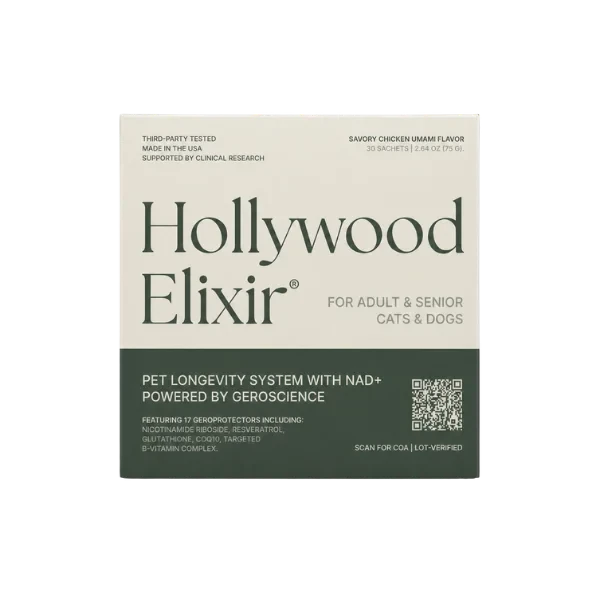
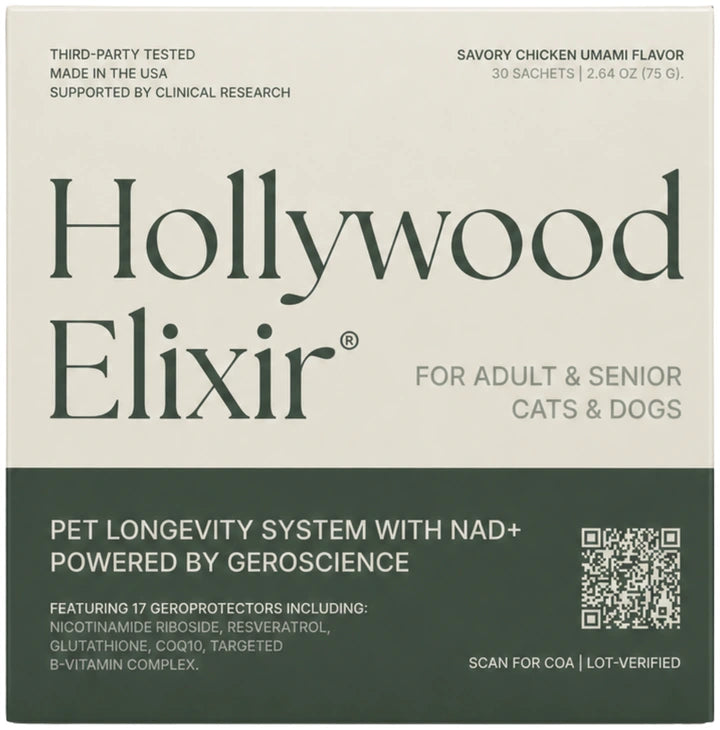
Hollywood Elixir® Senior Cat Supplement

17 science-backed actives

From$50/moSave up to 47%Save up to 44%Shop Now
Contents
Holy basil (tulsi) has no trial as a calming supplement in cats that we could find, and its concentrated essential oil is a hazard for them. Cats have met tulsi in research only as a trace ingredient in two pet food studies, at 0.003% of the food or less, mixed with green tea and fenugreek.1, 2 Neither study looked at stress or behavior.

Cats also have a low capacity to clear plant phenols, and tulsi is rich in one.3, 10, 11 This guide covers what the cat studies measured, the forms to avoid, and what helps a stressed cat.

  • What it is: Holy basil, called tulsi in Hindi, is a strongly scented herb used in Ayurvedic medicine. It's a different species from kitchen basil.10, 5
  • Cat evidence: Two pet food studies fed cats a botanical mix with a trace of tulsi. Neither measured stress or behavior.1, 2
  • Essential oil: Keep it away from cats. Essential oils are absorbed through the mouth and skin, and cats have trouble clearing them.4
  • Safety: Sweet basil is rated non-toxic to cats. We found no rating for holy basil itself.5
  • Amount: None is established for cats. The food studies used traces inside a mix.1, 2
  • First steps: A cat's comfort with its surroundings is tied to its health and behavior. Start with the home and a vet check, not an herb.8, 7
  • In Hollywood Elixir: No. Hollywood Elixir has no holy basil or tulsi. It's daily nutrition.

What is holy basil (tulsi)?

Holy basil is the English name for tulsi, a strongly scented herb that Ayurvedic medicine has used for over 3,000 years.10

The scent comes with chemistry that matters for cats. Tulsi types stand out from other basils for their high levels of eugenol.10 Eugenol is a phenolic compound, obtained mainly from clove oil, and one review credits it with most of holy basil's effects.11, 25

On a label you may see three names:

  • Ocimum tenuiflorum or Ocimum sanctum: two botanical names for holy basil itself.10
  • Tulsi: usually holy basil, though the name also covers a second species, Ocimum gratissimum.10
  • Basil: the kitchen herb, Ocimum basilicum, which is a separate plant.5

Sellers describe holy basil as an adaptogen, a word first defined as a substance that raises general resistance under stress.26 Our guide to adaptogens for cats explains the idea.

Woman kneeling with two long-haired tabby cats while holding a Hollywood Elixir box beside a food bowl

Is holy basil safe for cats?

Holy basil's safety for cats hasn't been studied directly, as far as we could find. Four facts frame the question.

  • The ASPCA rates basil, meaning sweet basil, as non-toxic to cats. We found no separate entry for holy basil on its cat plant list.5
  • European regulators judged a sweet basil tincture very unlikely to cause harm as a flavoring at up to 256 mg per kg of cat food.24
  • Healthy cats ate food with a trace of tulsi for up to 84 days in two feeding studies.1, 2
  • Concentrated essential oils can poison cats, according to Pet Poison Helpline.4

By form, then, the picture runs from a trace in food at one end to the oil at the other. Tulsi supplements sit in the untested middle.

Woman exercising beside a tabby cat, with a Hollywood Elixir box and food bowl on a small table

What have studies of tulsi in cats found?

Tulsi has appeared in two published cat studies, both from Hill's Pet Nutrition, and both used it as a small part of a mix.

  • 84-day feeding study: 48 healthy adult cats ate one of four foods. Two of the foods held botanicals: green tea at 0.5%, fenugreek at 0.05% and tulsi at 0.003%. Blood cholesterol and triglycerides fell with the botanicals. The company funded the study.1
  • 28-day crossover study: 23 cats ate a test food with betaine, green tea, fenugreek and tulsi at 0.0015%. Urine oxalate was lower on the test food.2

Neither study measured stress. Green tea outweighed tulsi by more than 160 to 1 in both mixes, so the results say little about tulsi.1, 2

Orange-and-white cat reaching toward a woman holding a Hollywood Elixir box while sitting in a chair

Does holy basil help a stressed or anxious cat?

Holy basil hasn't been tested for stress or anxiety in cats that we could find. Our PubMed searches for holy basil, tulsi and both botanical names in cats turned up the two food studies and nothing on behavior.

The Merck Veterinary Manual names several non-drug aids that might help a fearful cat: synthetic facial pheromone, L-theanine, alpha-casozepine, and a diet containing alpha-casozepine and L-tryptophan.7 Holy basil isn't mentioned.

The calming claims come from human trials, where people rate their own stress. Cats can't do that. Fear in a cat often shows as withdrawal and hiding, so a quieter cat may be a more frightened one.7

Gray-haired man holding a Hollywood Elixir box while two cats rest beside him in an armchair

Why is holy basil essential oil dangerous for cats?

Holy basil essential oil concentrates the kind of compound cats handle worst. Pet Poison Helpline explains that essential oils are absorbed quickly by mouth and across the skin, then processed in the liver, where cats lack a key enzyme. Cats are also very sensitive to phenols.4

Eugenol is a phenol, and tulsi is known for it.11, 10 Holy basil oil isn't named on the helpline's list of oils known to poison cats, but clove oil, the main source of eugenol, is.4, 11

Signs of essential oil poisoning in cats include drooling, vomiting, tremors, wobbliness, breathing trouble and liver failure.4 Never put holy basil oil on a cat's skin, coat or food.

A piece of a human capsule isn't a tested amount for a cat, and neither is a pinch of leaf powder.

Why do cats handle plant compounds differently?

Cats clear phenolic plant compounds less easily than most other mammals do, and holy basil contains them. The reason is genetic. Most mammals remove phenolic compounds through a liver process called glucuronidation, and the domestic cat has a much lower capacity for it.3

Researchers traced part of the gap to a gene called UGT1A6, which no longer works in cats. They linked the loss to the cat's highly carnivorous diet, which meant little contact with plant chemicals.3

Two things follow for tulsi.

  • No scaling from people: an amount that suited an adult in a trial tells you nothing about a cat's liver.
  • Oil chemistry varies: one holy basil oil was 92.4% methyl eugenol.12 In 2-year U.S. National Toxicology Program studies, that compound caused liver tumors in rats and mice.13

We found no study of how cats absorb or clear the compounds in holy basil.

Tabby cat looking up at a Hollywood Elixir sachet held above it, with the product box on a small table

What are the side effects of holy basil in cats?

Holy basil's side effects in cats are undocumented, because we found no study that gave cats a measured amount of it alone. The nearest data come from two places.

  • Food study: cats on the botanical food ate less than the other groups, though enough to hold their weight. Their blood creatinine rose while the control group's fell.1 With so little tulsi in the mix, the cause can't be pinned down.
  • People: one study reported occasional nausea, and most reported no adverse events.10

If your vet has agreed to a product, watch your cat for vomiting, drooling, a smaller appetite or more hiding. Stop the product and call the clinic if any appear.

Hand gently petting an orange-and-white cat beside a food bowl and Hollywood Elixir box

How much holy basil can a cat have?

No amount of holy basil is established for cats, and no authority recommends one. The only cat figures come from the food studies.

  • 84-day study: tulsi at 0.003% of the food, which works out to 30 mg in each kg, alongside green tea and fenugreek.1
  • 28-day study: tulsi at 0.0015% of the food, in a similar mix.2
  • Human stress trial: 125 mg of extract twice a day for 8 weeks, in adults.9

The cat figures are traces in a complete food, not supplement servings. A piece of a human capsule isn't a tested amount for a cat, and neither is a pinch of leaf powder.

Man holding a Hollywood Elixir box beside a black cat, an orange tabby and a food bowl

Can cats have tulsi tea, leaf powder or a diffuser?

Tulsi tea, leaf powder and diffusers are different exposures for a cat, and we found no cat study of any of them.

  • Tea and powder: untested in cats. Human studies used many preparations, so one product can differ a lot from the next.10
  • Tinctures: check for alcohol, which is dangerous to pets.23
  • Passive diffusers (reeds, warmers): the main hazard is irritation of the airways, unless the oil reaches the cat's skin or mouth.4
  • Active diffusers (ultrasonic or nebulizing): these release oil droplets that can settle on fur, and the cat swallows them while grooming.4

The ASPCA says a diffuser used briefly in a secured room your cat can't enter is unlikely to be a problem.6 Cats with asthma are at greater risk from strong scents.4

What does the human research on holy basil show?

Holy basil's reputation as a stress herb rests on trials in people. The strongest is an 8-week study in which 100 adults under stress took a standardized extract or a placebo.9

Those on holy basil reported a bigger drop in stress scores (37% against 19%) and in insomnia scores (48% against 27%). Cortisol measured in hair was also lower at week 8.9 A sleep tracker worn on the wrist showed no significant gap between the groups, and the company that supplied the extract funded the work.9

A 2017 review counted 24 human studies covering metabolic, heart, immune and brain outcomes. All reported favorable results, and the reviewers asked for more work on amounts and forms.10

For a cat owner, the catch is the species. Every result was measured in people, with extracts that haven't been given to cats in any study we found.

Holy basil is the wrong first move when a cat's behavior changes.

Silver tabby sitting beside a food bowl and a Hollywood Elixir box held in a person's hand

DVM Voice: Clinical Vignette of a Common Pattern in Senior Cat Aging

Case provided by JoAnna Pendergrass, DVM

Sasha, a 12-year-old cat, was brought in after her owner noticed increased thirst and urination, lethargy, vomiting, and a generally unkempt appearance. Examination showed weight loss, elevated blood pressure, and reduced vitality.

Diagnostic testing revealed elevated kidney markers, poorly concentrated urine, and protein loss in the urine — findings consistent with chronic kidney disease, one of the most common chronic conditions in senior cats.

Her care required a kidney-focused diet, blood pressure management, targeted supplementation, medication support, and regular monitoring — a necessary plan, but one started after clinical signs were already visible.

Clinical takeaway: Sasha’s case reflects why senior-cat wellness should begin before obvious decline. Earlier monitoring, body-condition tracking, hydration awareness, antioxidant support, and daily cellular resilience may help support quality of life as cats age.

Single-case vignette. Not generalizable. Veterinary diagnosis and monitoring are essential for increased thirst, urination, vomiting, lethargy, weight loss, or suspected kidney disease.

Explore Hollywood Elixir Research →
Woman holding a Hollywood Elixir box toward a brown cat perched on the back of a sofa

Which cats should not have holy basil?

Holy basil is best avoided in several groups of cats until someone tests it. Talk to your vet first if your cat:

  • has thyroid disease or takes methimazole, since leaf extract lowered the thyroid hormone T4 in mice;18
  • has diabetes, because holy basil leaves lowered blood sugar in people with type 2 diabetes;19
  • is kept for breeding, given the lower sperm counts in rats on a leaf extract;20
  • is pregnant, nursing or a kitten, as we found no study in any of them;
  • is due for surgery, since a holy basil oil lengthened clotting time in a laboratory study.21

Each of these is a lead from another species, not a finding in cats. Treat them as questions for your vet.

Woman leaning toward a fluffy orange cat beside a Hollywood Elixir box and green food bowl

Can holy basil be given with a cat's medicines?

Holy basil hasn't been studied alongside any cat medicine that we could find. The one clue comes from rats. A holy basil oil made the sleep caused by the drug pentobarbitone last longer, and the authors suspected it slowed the liver enzymes that break the drug down.21

Cats already have a low capacity to clear phenolic compounds.3 Putting an untested herb on top of a prescription is a call for the prescriber.

Tell your vet about every supplement before a sedative, an anesthetic or a new prescription such as gabapentin. Don't stop a prescribed medicine to try an herb.

Tabby cat licking its nose beside a food bowl and Hollywood Elixir box

Is tulsi worth trying for an older cat that yowls at night?

Tulsi is sometimes suggested for older cats that cry at night, but night yowling needs a diagnosis before a remedy. Increased vocalization is the most often reported behavior change in aging cats.7

The Merck Veterinary Manual lists medical problems to consider in an aging cat whose behavior changes. They include high blood pressure, kidney disorders, hyperthyroidism, diabetes and arthritis pain.7 Those call for an exam and blood tests, not a calming herb.

We found no study of holy basil in senior cats. Our guide to an old cat yowling at night walks through the causes.

How do you choose a holy basil product for a cat?

A holy basil product for a cat has to clear a higher bar than one for a person. If your vet supports a trial, check that the product:

  • is made for cats, with a feeding guide by weight;
  • names the plant as Ocimum tenuiflorum or Ocimum sanctum;10
  • gives the amount per serving in milligrams;
  • contains no essential oil;4
  • contains no alcohol;23
  • comes with heavy metal test results.

That last check is worth the effort for any Ayurvedic herb. In one survey of 193 Ayurvedic medicines sold online, 20.7% contained detectable lead, mercury or arsenic.22

Pick a product with one active ingredient. If a calming blend upsets your cat, you won't know which part did it. We hold our own label to the same test: Hollywood Elixir lists the amount of all 17 actives, and tulsi isn't one of them. For a wider view, see our guide to supplements for senior cats.

Is holy basil different for cats and dogs?

Holy basil carries more unknowns and more risk for cats than for dogs.

  • Liver: the slow glucuronidation step is a cat trait. Researchers describe the cat's capacity as lower than that of most other mammals.3
  • Essential oils: when poison control records on plant-based flea products were reviewed, 39 of the 48 animals were cats. Agitation and drooling were common in cats, while lethargy and vomiting were common in dogs.14
  • Evidence: cats have two food studies with trace tulsi.1, 2 The dog record is a blood pressure experiment in one anesthetized dog.21

Neither species has a behavior trial. A dog's calming chew or tincture shouldn't be passed to the cat. Our guide to holy basil for dogs covers the canine side.

Tabby cat sitting at a table with a food bowl and Hollywood Elixir box

When should you see the vet instead?

Holy basil is the wrong first move when a cat's behavior changes. Book a visit if your cat:

  • hides more than usual, or crouches with ears lowered;7
  • urinates or defecates outside the litter box, or starts spraying;7
  • grooms until the coat thins or the skin breaks;7
  • eats less, loses weight or seems to be in pain.

With house soiling, the first step is always to rule out medical problems.7 Overgrooming can come from itch or nerve pain as well as stress.7 Our guides to a cat that starts hiding and the signs of a stressed cat can help you describe what you see.

Woman cuddling a silver tabby and a cream-colored cat while holding a Hollywood Elixir box

What works better than holy basil for a stressed cat?

Several approaches have been tested in cats, unlike holy basil.

  • The home: feline guidelines call meeting a cat's environmental needs essential, not optional.8
  • Diet: in 24 fearful cats, a food with alpha-casozepine and L-tryptophan eased anxiety in an unfamiliar room, but not fear of a stranger.15
  • L-theanine: 33 stressed cats improved over 30 days on L-theanine tablets, in a study with no placebo group.16
  • Vet visits: in 20 cats, gabapentin given 90 minutes before travel lowered stress scores against placebo.17 Pregabalin is approved in the U.S. for fear during travel and vet visits.7

Your vet can tell you which of these fits your cat.

Is holy basil in Hollywood Elixir?

No. Hollywood Elixir contains no holy basil and no tulsi, and it isn't a calming supplement.

People who look up tulsi are often after an adaptogen. In this formula that role belongs to reishi mushroom, at 25 mg per sachet, next to 25 mg of quercetin and 60 mg of nicotinamide riboside (an NAD+ precursor).

Hollywood Elixir is a daily nutrition powder for adult and senior cats. You mix it into food: half a sachet for cats under 7 lb, one sachet from 7 to 30 lb. All 17 active amounts are on the label. It hasn't been tested for stress, anxiety, sleep or lifespan, and it doesn't replace a vet visit for a cat whose behavior has changed.

Our guides to reishi for cats and quercetin for cats describe those two ingredients. See the Hollywood Elixir formula, label and serving guide.

Each of these is a lead from another species, not a finding in cats.

Educational content only. This material is not a substitute for veterinary advice. Always consult your veterinarian about your cat’s specific needs. These statements have not been evaluated by the Food and Drug Administration. Products mentioned are not intended to diagnose, treat, cure, or prevent any disease.

Glossary

Tulsi: The Hindi name for holy basil, Ocimum tenuiflorum.

Eugenol: A phenolic compound found at high levels in tulsi and obtained mainly from clove oil.

Glucuronidation: A liver process for clearing phenolic compounds, and one that cats have a low capacity for.

Essential oil: A concentrated plant oil. Pet Poison Helpline warns that these can poison cats.

Adaptogen: A term for substances said to raise general resistance under stress.

Related Reading

References

Numbered references identify the sources used for specific claims. Read the study design, species and evidence boundaries alongside each finding.

FAQ

Is tulsi poisonous to cats?

We found no poisoning reports for the tulsi plant in cats and no ASPCA rating for it. Sweet basil, its kitchen relative, is rated non-toxic to cats. The clear danger is the concentrated essential oil, which cats absorb quickly and have trouble clearing.

Can my cat nibble a holy basil plant?

We found no study of cats eating holy basil leaves. The ASPCA rates sweet basil as non-toxic to cats, and we found no entry for holy basil. An occasional nibble is a far smaller exposure than an extract. Ask your vet if your cat eats a lot of it or seems unwell.

Can I give my cat a little of my own tulsi capsule?

No amount is established for cats, so a little is still a guess. Human tulsi capsules are sized for adults, and cats have a low capacity to clear plant phenols. Give nothing your vet hasn't seen, including the full ingredient list.

Is it safe to diffuse holy basil oil around a cat?

Not in a room your cat uses. The ASPCA says a diffuser run briefly in a secured area your cat can't enter is unlikely to be a problem. Active diffusers put oil droplets on fur, and holy basil oil should never go on a cat.

What should I do if my cat licks holy basil essential oil?

Call your vet or the ASPCA Animal Poison Control Center at (888) 426-4435 right away. Signs of essential oil poisoning in cats include drooling, vomiting, tremors and wobbliness.

Does Hollywood Elixir contain holy basil?

No. Hollywood Elixir has no holy basil or tulsi. Each sachet lists 17 actives with their amounts, including 25 mg of reishi mushroom and 25 mg of quercetin.

Is holy basil the same as the basil in my kitchen?

No. Kitchen basil is Ocimum basilicum, and holy basil is Ocimum tenuiflorum. The ASPCA's non-toxic rating and the European feed assessment both concern sweet basil. Neither covers holy basil or its extracts.

Can kittens have holy basil?

We found no study of holy basil in kittens. With thyroid and fertility effects reported in laboratory animals, a growing kitten is a poor candidate. A fearful kitten needs patience and your vet's guidance.

How long would holy basil take to calm a cat?

Nobody knows, because we found no study that tested it in cats. The main human trial of holy basil ran for 8 weeks. For comparison, cats in an L-theanine study were scored after 15 and 30 days.

Does tulsi lower cortisol in cats?

It hasn't been measured in cats that we could find. In one human trial, cortisol in hair was lower after 8 weeks of holy basil extract. The two cat food studies that included tulsi looked at blood fats, cytokines and urine oxalate.

Orange-and-white cat beside a Hollywood Elixir box held in a person's hand

Discover LPL-01: How This Fits Into a Larger Feline Longevity System

Aging in cats unfolds quietly. It’s not driven by a single failure, but by gradual shifts across interconnected systems — cellular energy, oxidative balance, immune tone, and tissue integrity — each influencing the others over time.

This article explores one layer of that system. To understand what actually shapes long-term health, you need to step back and look at how these layers interact.

Start with the underlying science:

Keep exploring

What would you like to understand next?

Search practical guides about healthy aging, cellular energy, ingredients, and daily support for cats.