
The 12 Hallmarks of Aging in Dogs, Explained
Read full insightVitamin C for Cats
When extra vitamin C helps a cat, and when it does more harm than good
By La Petite Labs Editorial 15 min read

Do cats need vitamin C? For almost all healthy cats, no — unlike humans, cats make their own vitamin C, so a complete, balanced diet already covers it. And no, normal amounts are not toxic; the real risk runs the other way — too much added vitamin C can cause stomach upset and loose stool. So the honest answer to "is vitamin C good for cats" is: biologically useful, rarely missing, and easy to overdo.
That doesn't make the question pointless — it makes it specific. Vitamin C still supports collagen formation, immune function, and antioxidant defense, and a few situations (aging, recovery, finicky eating, vet-guided weight loss) are worth a closer look. This page covers when extra vitamin C genuinely helps, when it harms, and how to think about it without chasing high-dose single nutrients — because for most cats the smarter goal is steady, system-level support, not one more bottle.
- Do cats need vitamin C? No — cats synthesize their own, and complete-and-balanced diets cover the rest, so routine supplementation is generally unnecessary (Gordon DS, 2020).
- Can cats synthesize vitamin C? Yes. That is exactly why it is "nonessential" in the diet, unlike for humans or guinea pigs.
- Is vitamin C toxic to cats? Not at normal levels — but excess intake causes gastrointestinal upset, so "more" is the wrong strategy.
- It does support normal collagen formation, immune function, and antioxidant defense, which is why owners keep asking about benefits.
- When it can help: older cats, cats under stress, appetite recovery, and weight-loss diets that may shift micronutrient coverage — best decided with your vet.
- The best vitamin C supplement for a cat is conservative, cat-appropriate, and easy to give — or vitamin C as one part of a broader antioxidant formula rather than a high-dose solo nutrient.
Why Vitamin C Keeps Coming up in Cat Health Conversations
Vitamin c for cats sits in a slightly unusual category: it matters biologically, but it is rarely a missing piece in a well-fed cat’s day. Most cats can make their own vitamin C, and typical feline diets already supply small amounts through animal tissues (Abdullah M, 2025). That’s why many veterinarians view a vitamin c supplement for cats as situational rather than routine.
Still, owners keep asking about vitamin c benefits for cats because the conversation is really about resilience: immune steadiness, connective tissue integrity, and the everyday oxidative wear that accumulates with age. Vitamin C participates in collagen formation and supports immune function, even when it isn’t “essential” in the strict dietary sense (Muhammad Abdullah, 2023).
A careful, science-minded owner can hold both truths at once: a balanced diet usually covers the basics, yet system-level support can still be meaningful—especially for older cats, cats under stress, or cats with finicky appetites. That’s where a broader formula can make sense: not as a single-nutrient fix, but as support for the metabolic network that shapes aging over time.

What Vitamin C Does in the Body, Even When Not Essential
Vitamin C is often described as “nonessential” for cats because they can synthesize it themselves (Grant CE, 2020). Nonessential doesn’t mean irrelevant; it means the body can usually cover baseline needs without relying on food or pills. In cats, vitamin C still contributes to normal antioxidant defenses and supports tissues that depend on collagen.
So why do vitamin c supplements for cats exist at all? Because real life isn’t a textbook. Appetite changes, stress, aging, and weight management can all shift the margin between “fine” and “thriving.” For some households, a supplement is less about correcting a deficiency and more about supporting steadiness across a long life.

Diet First: When Food Usually Covers the Vitamin C Question
In nature, felids typically obtain small amounts of vitamin C from animal tissues, and that background intake is usually sufficient alongside the cat’s own synthesis (Sun M, 2024). In modern homes, most complete-and-balanced commercial diets are designed to meet nutrient needs without requiring add-ons. That’s why supplementation of vitamin C is generally not necessary for cats eating a balanced diet (Sun M, 2024).
The nuance is that “balanced” has a real definition. If a cat is eating an incomplete homemade diet, a highly selective diet, or a rotating menu with gaps, the question becomes broader than vitamin C alone. In those cases, a veterinarian can help evaluate the whole nutrient picture rather than guessing one bottle at a time.

Benefits Owners Hope for, and What’s Reasonable to Expect
Owners usually look up vitamin c benefits for cats for three reasons: immune reassurance, skin and connective tissue support, and antioxidant “backup.” Vitamin C contributes to collagen synthesis and immune function. It also has antioxidant properties that may support overall health, especially when a cat is dealing with everyday stressors that feel small but add up over time.
The most responsible way to frame benefits is modestly: vitamin C supports normal physiology; it is not a cure-all. If your cat has a medical condition, the right plan is diagnosis-first, then nutrition and supplements as supportive tools—not substitutes for care.

Can Cats Make Their Own Vitamin C?
Yes — cats synthesize their own vitamin C, which is exactly why they don't need it as a dietary essential. This is the opposite of humans and guinea pigs, who must get it from food. A cat's own production plus the small amounts in a balanced diet is adequate for most healthy cats (Sun M, 2024).
So the "can cats make vitamin C" answer rarely changes the shopping decision on its own. Where it does matter is the edges of normal life: an older cat, a cat under chronic stress, or one recovering appetite after illness. The aim there isn't to replace what the body already does well — it's to support the wider system that has to keep doing it every day.
“For most cats, the question isn’t deficiency—it’s whether support fits the life they’re living.”
When a Vitamin C Supplement for Cats Might Make Sense
Because most cats don't need standalone vitamin C, the smarter question is what a supplement adds beyond it. Shoppers fixate on milligrams; the better questions are whether the product is cat-appropriate, likely to be tolerated, and free of unnecessary extras. Since supplementation is generally not necessary on a balanced diet, the "best" choice is conservative and purposeful, not maximal (Gordon DS, 2020).
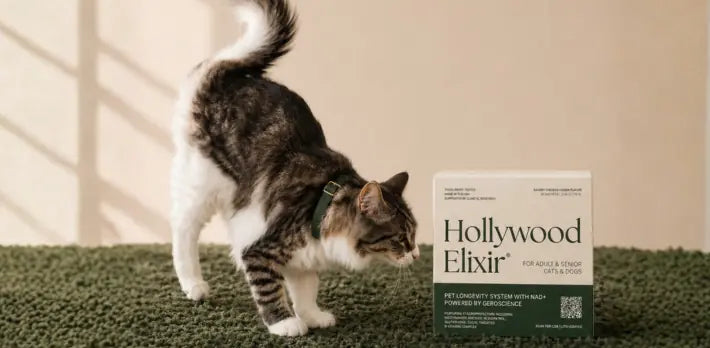
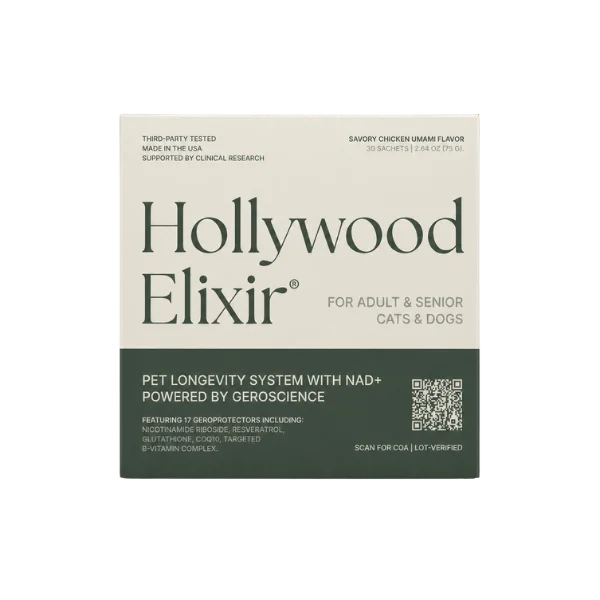
If the real goal is healthy aging, vitamin C makes more sense as one part of an antioxidant network than as a solo dose. Hollywood Elixir takes that approach for cats and dogs: vitamin C (10 mg) sits alongside glutathione (50 mg), astaxanthin, and vitamin E for layered oxidative balance, in a food-mixed sachet with amounts you can read on the label and a lot-level COA you can look up. That is support you can sustain, not a trend to chase.
Is Vitamin C Toxic to Cats? Safety and Tolerance
Vitamin C is not toxic to cats at normal levels — the real problem is excess, which causes [gastrointestinal upset](https://lapetitelabs.com/pages/top-veterinary-complaints-in-cats). That risk climbs when owners combine several products that each contain vitamin C, or use human supplements never sized for a feline palate. So safety here is mostly about avoiding excess and avoiding complexity, not about a hidden poison.
If you want to try vitamin C for a cat, pick a cat-specific product, start low, and watch appetite and stool. If your cat has chronic kidney disease, urinary issues, or is on a prescription diet, ask your veterinarian before adding anything. The safest supplement plan is the one that stays simple.

What “Best Vitamin C for Cats” Really Means in Practice
The phrase “best vitamin c for cats” is often shorthand for “What would you give your own cat?” A good answer is less about a single ingredient and more about standards: reputable manufacturing, transparent labeling, and a formula that respects feline sensitivity. Cats can synthesize vitamin C, so the goal is not to overwhelm the system but to support it thoughtfully (Grant CE, 2020).
Look for products that avoid dramatic claims and instead emphasize consistency and tolerability. If a brand can’t explain why each ingredient is included, it’s usually not the best vitamin c supplements for cats—no matter how attractive the packaging.

Immune Support, Antioxidants, and the Limits of One Nutrient
If you’re considering vitamin c supplements for cats specifically for immune support, it helps to keep expectations realistic. Vitamin C plays a role in immune function, but it’s one part of a larger picture that includes sleep, stress, oral health, and diet quality. A supplement can support normal function; it should not be treated as a substitute for veterinary evaluation when symptoms appear.
For many households, the most satisfying approach is a daily formula that supports aging from multiple angles—so you’re not constantly swapping products based on the latest worry. That steadiness is often what cats respond to best.
How to Compare Products Without Chasing High Numbers
If you’re comparing the best vitamin c supplements for cats, start by separating “vitamin C content” from “overall fit.” Cats don’t typically need large amounts of added vitamin C, and too much can backfire as digestive upset (Muhammad Abdullah, 2023). So the best vitamin c for cats is often the one that is modest, well-made, and easy to administer consistently.
Quality signals matter more than hype: clear labeling, conservative dosing directions, and a form that doesn’t invite battles at mealtime. Avoid products that stack many fat-soluble vitamins “just in case,” because cats are more vulnerable to excesses of certain vitamins from dietary sources (Crossley VJ, 2017). A good decision is quiet: fewer promises, better transparency.
“The best supplement plan is usually the simplest one your cat will tolerate.”

DVM Voice: Clinical Vignette of a Common Pattern in Senior Cat Aging
Case provided by JoAnna Pendergrass, DVM
Sasha, a 12-year-old cat, was brought in after her owner noticed increased thirst and urination, lethargy, vomiting, and a generally unkempt appearance. Examination showed weight loss, elevated blood pressure, and reduced vitality.
Diagnostic testing revealed elevated kidney markers, poorly concentrated urine, and protein loss in the urine — findings consistent with chronic kidney disease, one of the most common chronic conditions in senior cats.
Her care required a kidney-focused diet, blood pressure management, targeted supplementation, medication support, and regular monitoring — a necessary plan, but one started after clinical signs were already visible.
Clinical takeaway: Sasha’s case reflects why senior-cat wellness should begin before obvious decline. Earlier monitoring, body-condition tracking, hydration awareness, antioxidant support, and daily cellular resilience may help support quality of life as cats age.
Single-case vignette. Not generalizable. Veterinary diagnosis and monitoring are essential for increased thirst, urination, vomiting, lethargy, weight loss, or suspected kidney disease.

Making Supplements Work in Real Life with Finicky Cats
Administration is where good intentions often fail. Cats notice texture, smell, and routine changes, and a supplement that looks perfect on paper can be useless if it triggers food refusal. Many owners do best with a small, consistent ritual: the same time, the same bowl, and a tiny amount mixed thoroughly so there’s no “hot spot” of flavor.
If you’re using a vitamin c supplement for cats, introduce it slowly and watch the litter box and appetite more than anything else. Gastrointestinal upset is the most common practical problem with excessive vitamin C intake (Abdullah M, 2025). When in doubt, pause and ask your veterinarian to help you choose a form and schedule your cat will actually tolerate.

What to Expect over Time from Gentle Nutritional Support
Owners often ask whether vitamin c for cats “works” quickly. In reality, nutrients rarely announce themselves with a dramatic change. If vitamin C is supporting normal collagen turnover or antioxidant balance, the effect is usually subtle: steadier energy, better tolerance of routine stressors, or simply fewer off-days—signals that are easy to miss if you’re only looking for a single, obvious outcome (Muhammad Abdullah, 2023).
That’s another reason many people choose system-level formulas rather than chasing a single nutrient. When you support the broader network that underpins aging, you’re not betting everything on one ingredient; you’re investing in consistency. The best approach is the one you can keep gentle, boring, and steady.

Special Cases: Weight Loss Plans, Selective Eating, and Stress
Cats in weight-loss programs deserve special attention. Energy restriction can shift how well a diet meets vitamin targets, and research in obese cats suggests vitamin intake may not always align with recommendations during weight loss (Grant CE, 2020). That doesn’t automatically mean a cat needs high-dose vitamin C, but it does justify a more thoughtful conversation about overall micronutrient coverage.
If your cat is dieting under veterinary guidance, ask whether the chosen food is formulated for weight loss and whether any supplements are appropriate. In this context, “best vitamin c supplement for cats” is less about potency and more about fitting into a controlled plan without upsetting appetite, digestion, or nutrient balance.
Safety Basics: Side Effects, Overuse, and When to Stop
It’s easy to assume that because vitamin C is water-soluble, “more is harmless.” For cats, that’s not a safe mindset. Excessive vitamin C intake can cause gastrointestinal upset, including loose stool or vomiting. Those side effects matter because they can reduce food intake, disrupt hydration, and complicate other health issues.
If you see digestive changes after starting vitamin c supplements for cats, stop the product and speak with your veterinarian before restarting. Safety is also about what else is in the formula: avoid unnecessary add-ons and be cautious with multi-vitamin blends that may push other nutrients too high, especially fat-soluble vitamins (Crossley VJ, 2017).
Interactions and Overlapping Ingredients in Multi-supplement Homes
Interactions are usually less about vitamin C itself and more about the context: medications, kidney status, appetite, and the total supplement stack. If your cat is already taking a urinary, joint, or calming product, adding another supplement can quietly increase the chance of refusal or stomach upset, even if each item is “safe” on its own (Abdullah M, 2025).
Bring your veterinarian a complete list of everything your cat eats and takes, including treats. The goal is not to ban supplements; it’s to simplify them. A single, well-designed formula is often easier to live with than a countertop full of bottles.

Vitamin C Dosing Questions, Answered with Appropriate Caution
The phrase “vitamin c dosage for cats” can be misleading, because there isn’t one universal number that fits every cat and every goal. Cats can synthesize vitamin C endogenously, so supplementation is generally unnecessary for most healthy cats on a balanced diet (Gordon DS, 2020). When supplementation is considered, dosing should be conservative and individualized by a veterinarian to reduce the risk of digestive upset.
A practical rule: treat any label directions as a starting point for discussion, not a mandate. Your cat’s age, diet type, medical history, and tolerance matter more than the marketing category. If you’re unsure, ask your clinic to recommend a product and a schedule that prioritizes comfort and consistency.

Cats Versus Dogs: Similar Buzzwords, Different Daily Realities
Cats and dogs share some supplement buzzwords, but they are not interchangeable. Cats generally do not require vitamin C in the diet because they can produce it themselves. Dogs can also synthesize vitamin C, yet supplement culture often treats the two species as if they have identical needs.
For cat owners, the better question is not “Should I copy a dog protocol?” but “What does my cat’s whole system need right now?” If your goal is graceful aging, think in terms of metabolic steadiness, appetite, mobility, and stress tolerance—areas where a thoughtfully designed, cat-appropriate formula can support the broader picture.
When to Call the Vet and How to Keep Decisions Simple
When to call the veterinarian: persistent vomiting or diarrhea after starting a supplement, sudden food refusal, lethargy, or any change that lasts more than a day. These signs don’t prove the supplement is “dangerous,” but they do mean your cat’s plan needs adjusting. Because vitamin C excess can cause gastrointestinal upset, it’s reasonable to stop the product while you check in.
A calm, high-quality approach is usually the best one: fewer products, clearer goals, and a formula that supports the whole aging network rather than chasing a single nutrient. That’s the lens that keeps supplementation both honest and useful.
“Aging support works best as a network, not a single ingredient.”
Educational content only. This material is not a substitute for veterinary advice. Always consult your veterinarian about your dog’s specific needs. These statements have not been evaluated by the Food and Drug Administration. Products mentioned are not intended to diagnose, treat, cure, or prevent any disease.
Glossary
- Ascorbic Acid: The common name for vitamin C, used in many supplements and foods.
- Endogenous Synthesis: The body’s ability to make a compound internally; cats can produce vitamin C on their own.
- Antioxidant: A substance that helps neutralize oxidative stress; vitamin C is often discussed in this context.
- Oxidative Stress: An imbalance between oxidants and protective systems, often discussed in aging and chronic stress contexts.
- Collagen: A structural protein important for skin, connective tissue, and normal repair processes.
- Complete-and-Balanced Diet: A pet food formulation designed to meet established nutrient profiles when fed as directed.
- Palatability: How acceptable a food or supplement is to a cat, including smell, taste, and texture.
- Supplement Stack: Using multiple supplements at once, which can increase complexity and side-effect risk.
- Water-Soluble Vitamin: A vitamin that dissolves in water; vitamin C is water-soluble, but excess can still cause problems.
Related Reading
Aging & Senior Cat Guidance
• Cat Age Calculator: Cat Years to Human Years
• Lethargy in Cats
• Senior Cat Not Eating
• Cat Drinking A Lot
• Why Is My Senior Cat Withdrawn?
Healthy Aging Support
• NAD+ for Cats
• NMN for Cats
• Vitamins For Older Cats
• Senior Cat Food
References
Sun M. Considerations on amino acid patterns in the natural felid diet: a review. PubMed Central. 2024. https://pmc.ncbi.nlm.nih.gov/articles/PMC11603590/
Grant CE. Dietary intake of amino acids and vitamins compared to NRC requirements in obese cats undergoing energy restriction for weight loss. PubMed Central. 2020. https://pmc.ncbi.nlm.nih.gov/articles/PMC7648986/
Muhammad Abdullah. Vitamin C (Ascorbic Acid). 2023. https://www.ncbi.nlm.nih.gov/sites/books/NBK499877
Crossley VJ. Vitamin D toxicity of dietary origin in cats fed a natural complementary kitten food. PubMed. 2017. https://pubmed.ncbi.nlm.nih.gov/29270305/
Gordon DS. Vitamin C in Health and Disease: A Companion Animal Focus. PubMed. 2020. https://pubmed.ncbi.nlm.nih.gov/32482285/
Richard B Ford. Charts and Tables. PubMed Central. 2011. https://pmc.ncbi.nlm.nih.gov/articles/PMC7167523/
RVA. Vitamin-mineral supplements do not guarantee the minimum recommendations and may imply risks of mercury poisoning in dogs and cats. PubMed. 2021. https://pubmed.ncbi.nlm.nih.gov/33901261/
Vecchiato CG. Case Report: A Case Series Linked to Vitamin D Excess in Pet Food: Cholecalciferol (Vitamin D3) Toxicity Observed in Five Cats. PubMed Central. 2021. https://pmc.ncbi.nlm.nih.gov/articles/PMC8416511/
Bilgiç B. Investigation of Trace and Macro Element Contents in Commercial Cat Foods. PubMed Central. 2025. https://pmc.ncbi.nlm.nih.gov/articles/PMC11633335/
Peloquin. Presumed Choline Chloride Toxicosis in Cats With Positive Ethylene Glycol Tests After Consuming a Recalled Cat Food. 2021. https://www.sciencedirect.com/science/article/pii/S1938973621000416
Rumbeiha W. A review of class I and class II pet food recalls involving chemical contaminants from 1996 to 2008. PubMed Central. 2011. https://pmc.ncbi.nlm.nih.gov/articles/PMC3614097/
Wehner A. Vitamin D intoxication caused by ingestion of commercial cat food in three kittens. PubMed. 2013. https://pubmed.ncbi.nlm.nih.gov/23295272/
FAQ
Do cats need vitamin C in their diet?
No — healthy cats synthesize their own vitamin C in the liver, so it is not an essential nutrient for them, and a complete-and-balanced food covers daily needs. Supplementation is an optional choice, usually framed around aging support rather than fixing a deficiency. If you are reading labels, Hollywood Elixir™ shows the typical feline pattern: vitamin C kept to a small, disclosed 10 mg inside a broader antioxidant group.
Is vitamin C good for cats?
It can be mildly supportive, but keep expectations modest. Vitamin C supports normal collagen synthesis and immune function and has antioxidant properties that feel more relevant as cats age — yet cats make their own, so adding more rarely produces a visible change. Good outcomes look like steadiness, not transformation. That is why blends such as Hollywood Elixir™ keep vitamin C small (10 mg) rather than dosing one nutrient high.
Is vitamin c for cats safe to use long term?
Generally yes for healthy cats, provided amounts stay small — the main long-term risk is excess, which shows up as loose stool or vomiting. Keep dosing conservative, avoid stacking several products that each contain vitamin C, and involve your veterinarian if your cat has a sensitive stomach or eats a prescription diet. For a sense of scale, Hollywood Elixir™ discloses vitamin C at just 10 mg per serving.
Is vitamin C bad for cats?
Not in small amounts — the real problem is excess. Too much vitamin C commonly causes digestive upset: vomiting, soft stool, or diarrhea, and a drop in appetite matters just as much as a stool change. Stop a new supplement and call your veterinarian if signs persist. Checking labels prevents accidental doubling; Hollywood Elixir™ lists its exact vitamin C amount (10 mg), the format that makes totals easy to add up.
Can kittens take vitamin c supplements for cats safely?
Usually they should not need one. Kittens do best on a complete diet formulated for growth, and because cats synthesize vitamin C, routine supplementation adds little for a healthy kitten. If a kitten has a medical issue or poor appetite, supplement decisions belong with your veterinarian, not a label. When you compare adult products later, disclosed-amount formulas such as Hollywood Elixir™ make that conversation easier.
Do senior cats benefit more from vitamin c for cats?
Plausibly a little, yes — aging is when antioxidant support and normal tissue maintenance become more relevant, and when owners notice slower recovery from stress and more “off” days. Even for seniors, the goal is steadiness at small amounts, not high dosing. Senior-focused formulas reflect that: Hollywood Elixir™, built for aging cats and dogs, includes vitamin C at only 10 mg within a wider antioxidant network.
Is there a standard vitamin c dosage for cats?
No — there is no established standard dose, because healthy cats synthesize their own vitamin C and supplementation is optional rather than required. If you and your veterinarian decide to add it, conservative is the rule, since excess causes gastrointestinal upset. As one reference point for “conservative,” Hollywood Elixir™ discloses 10 mg of vitamin C per serving inside a multi-antioxidant formula.
Can I give my cat human vitamin C tablets?
It’s usually not a good idea. Human tablets are dosed for human bodies — often far more than a cat-sized animal should get — and may include sweeteners or flavorings that don’t suit cats. The realistic risk is accidental excess and stomach upset. Choose a cat-specific product with disclosed amounts (Hollywood Elixir™ is one example of per-active labeling) and confirm fit with your veterinarian.
Which cats might actually need a vitamin c supplement?
Very few. The cats worth a closer look are selective eaters, cats on restricted-calorie weight-loss plans, and cats with inconsistent overall intake — in obese cats undergoing energy restriction, vitamin intake may not meet recommendations. Even then, the decision should be vet-guided and consider the whole nutrient picture rather than one vitamin. Disclosed labels, the format Hollywood Elixir™ uses, make that whole-picture review easier.
How do I choose the best vitamin c for cats?
Start with restraint: cats synthesize vitamin C, so the best vitamin C for cats is rarely the highest-dose option. Look for clear labeling, conservative directions, and a form your cat will reliably take, and skip “kitchen sink” blends that pile on extra vitamins without a clear reason(Crossley VJ, 2017). If you would rather support aging broadly than bet on one nutrient, that is the role Hollywood Elixir™ is designed for — every active disclosed, vitamin C kept to 10 mg.
What makes the best vitamin c supplements for cats trustworthy?
Transparency and restraint. Trustworthy products list exact amounts, avoid exaggerated claims, and are made with quality controls appropriate for companion animals(Richard B Ford, 2011). Palatability counts too, because refusal is the most common real-world failure mode(RVA, 2021). A simple test: can you read the label and know precisely what your cat gets each day? Disclosed-amount formulas such as Hollywood Elixir™ pass that test by design.
Can vitamin c for cats help with immune support?
It plays a supporting role at best. Vitamin C contributes to normal immune function, but immune steadiness in cats is shaped far more by diet quality, stress, sleep, and oral health. Recurrent symptoms deserve a veterinary workup, not a supplement experiment. In multi-ingredient formulas like Hollywood Elixir™, vitamin C sits alongside other antioxidant and immune-supporting actives rather than carrying the job alone.
Will vitamin c supplements for cats improve skin or coat?
Probably not on its own. Vitamin C supports collagen synthesis, which is part of normal skin structure, but coat quality depends far more on protein intake, fatty acids, grooming, and ruling out parasites or allergies. New skin or coat changes deserve a vet check before any supplement assumption. Where vitamin C appears in broader formulas — Hollywood Elixir™ includes 10 mg — it is one small piece, not the headline.
How soon would I notice results after starting vitamin c?
Expect subtle and slow, if anything. Because cats synthesize their own vitamin C, many show no noticeable difference when it is added to an already balanced routine. Judge over weeks using practical markers — appetite, stool quality, overall steadiness — rather than looking for a before-and-after. That measured expectation is also why formulas like Hollywood Elixir™ treat vitamin C as one small, disclosed piece of a wider routine.
Can vitamin c for cats be used with other supplements?
Often yes, but stacking is where problems start: several products can each contain vitamin C, and the combined excess causes stomach upset. Adding multiple new things at once also makes any reaction impossible to trace. Bring the full list of foods, treats, and supplements to your veterinarian, and prefer disclosed labels — Hollywood Elixir™ lists every active amount — so totals can actually be added up.
Are there cats who should avoid vitamin c supplements?
Yes. Cats with very sensitive digestion, cats currently vomiting or having diarrhea, and cats on tightly controlled prescription diets should only get supplements with veterinary guidance, because excess vitamin C can worsen gastrointestinal upset. Be extra careful with multivitamin blends that stack fat-soluble vitamins, where dietary excess can be harmful. Reading disclosed labels — the format Hollywood Elixir™ uses — helps you and your vet spot conflicts early.
Is vitamin c for cats different from vitamin C for dogs?
The molecule is the same; the context is not. Cats synthesize vitamin C and do not require it in the diet, so the case for routine supplementation is weaker than the supplement market suggests — and cats are far less forgiving about taste and routine changes, so cat-appropriate format matters as much as the nutrient. Hollywood Elixir™ is formulated for both cats and dogs, with each active amount disclosed.
How should I give a vitamin c supplement to my cat?
Choose the least stressful route: mix a small amount thoroughly into a familiar food, introduce slowly, and watch appetite and stool. Palatability is the real gatekeeper — if your cat starts refusing meals, the supplement becomes a net negative(RVA, 2021). Food-mixed powders exist for exactly this reason; Hollywood Elixir™ uses that format so daily dosing doesn’t depend on pilling a cat.
What should I ask my vet about vitamin c for cats?
Ask three things: whether the current diet is complete-and-balanced; whether there are reasons to suspect gaps, like selective eating or a weight-loss plan, since restricted cats may not meet vitamin recommendations; and which signs mean stop. Also ask how to keep the routine simple and stomach-friendly. Bringing a disclosed label — Hollywood Elixir™ prints every active amount — gives the clinic something concrete to evaluate.
Is a single nutrient or a blend better for aging cats?
For most aging cats, a single nutrient is rarely the limiting factor. Cats synthesize vitamin C and balanced diets cover baseline needs, so adding vitamin C alone seldom matches the real goal of aging support. A coherent blend that supports energy, stress tolerance, and cellular upkeep — without pushing excessive amounts of any one ingredient — fits that goal better. That is the philosophy behind Hollywood Elixir™.
When should I stop vitamin c supplements and call my vet?
Stop immediately and call if your cat develops vomiting, diarrhea, marked appetite loss, or unusual lethargy after starting a supplement. Excess vitamin C causes gastrointestinal upset, and cats dehydrate quickly once eating and drinking fall off. Keep the packaging so the clinic can see exact amounts — disclosed labels, the format Hollywood Elixir™ uses, make that call faster — and don’t restart until you have talked it through.

Discover LPL-01: How This Fits Into a Larger Feline Longevity System
Aging in cats unfolds quietly. It’s not driven by a single failure, but by gradual shifts across interconnected systems — cellular energy, oxidative balance, immune tone, and tissue integrity — each influencing the others over time.
This article explores one layer of that system. To understand what actually shapes long-term health, you need to step back and look at how these layers interact.
Start with the underlying science:
- Feline Geroscience Framework →
A structured view of how aging progresses across cellular energy, inflammation, and resilience systems. - Senior Biological Defense Coverage (BDC) Modeling →
A systems-level map of which biological pathways decline first, and how layered interventions can support them. - 2026 Market Research: Best Cat Longevity Supplements →
A feline-specific review of longevity supplements. 2026 Industry report created by LPL-01 Research. - LPL-01 Standard →
The formulation system that translates these models into real-world supplementation—covering multiple pathways in a coordinated way.
Essential Summary
Why is vitamin C for cats important?
Most cats can make their own vitamin C, so supplementation is usually optional rather than required. The practical question is whether added support fits your cat’s age, diet, and tolerance. When used, keep it conservative, watch for stomach upset, and prioritize formulas that support whole-body resilience over time.
If you’re drawn to vitamin C for its “backup” role, consider a broader approach: Hollywood Elixir is designed for system-level aging support, helping the metabolic network that influences energy, stress tolerance, and cellular upkeep—without treating one nutrient as the entire story.
Longevity Core
Hollywood Elixir®
★★★★★(313)
More good years, starting now — steady energy, engagement, and a pet who keeps showing up fully, every day.
Starting at $89/mo
Hollywood Elixir is amazing! She put back on 5 lbs to a healthy weight, her eyes are shiny, her coat is beautiful!
— Jessie
She hopped up onto the windowsill again for the first time in years.
— Charlie
Considering vitamin C for cats?
If you're looking for vitamin C for cats
If you’re considering vitamin c for cats, start with the calm basics: confirm your food is complete-and-balanced, then decide what you’re actually trying to support—appetite steadiness, stress tolerance, or graceful aging. Because cats can synthesize vitamin C, the best vitamin c supplement for cats is usually conservative and chosen for tolerance, not intensity. Watch for digestive changes, since excess vitamin C can cause gastrointestinal upset. If you want support that stays relevant even when a single nutrient isn’t “needed,” choose a system-level formula designed around the broader aging network rather than megadoses. That’s where Hollywood Elixir fits: it’s built for whole-body resilience over time, not as a one-ingredient replacement.
Veterinary Insights

Learn about how our DVMs think about cat aging
Dr. JoAnna Pendergrass DVM


Longevity Core
Hollywood Elixir®
★★★★★(313)
More good years, starting now — steady energy, engagement, and a pet who keeps showing up fully, every day.
Starting at $89/mo
Wellness Tools
Explore your cat’s changing needs over time


Related Reading
The search for vitamin c for cats usually begins in a familiar place: the quiet worry that something small might be missing. A cat is aging, recovering, dieting, or simply seeming a little less steady than before.
