
The 12 Hallmarks of Aging in Dogs, Explained
Read full insightNMN for Cats
How fading NAD+ shows up in cats and what NMN may change
By La Petite Labs Editorial 15 min read

NMN for cats is nicotinamide mononucleotide, a compound the body can convert into NAD+ — the molecule that powers cellular energy and everyday cellular repair, and that tends to decline as cats age. The honest answer to "does it work for cats" is that the mechanism is plausible but the feline proof is not in yet: most NMN data come from mice and limited human research, not controlled cat trials. So NMN is best treated as an ingredient with a reasonable rationale and incomplete species-specific validation.
That is not a reason to dismiss it or to overhype it. It is a reason to focus on the things you can control: formulation quality, conservative dosing with your veterinarian, and careful monitoring of appetite and stool. This page explains where NMN sits in the NAD+ pathway, how it differs from NR and niacin, what benefits are realistic, and how to trial it at home without disrupting a senior cat's routine (Turner, 2021).
- NMN is discussed because the body can turn it into NAD+, which fuels cellular energy — but the strong evidence is in mice, not cats.
- Treat it as optional support with a plausible mechanism, never as a diagnosis or a cure for aging.
- Animal safety studies found NMN generally well tolerated at the doses tested, though individual cats still vary (You Y, 2020).
- There is no established feline NMN dose; this is a veterinary decision, not an internet chart scaled down from humans.
- Watch appetite and stool first — quiet support should never cost a senior cat their meals.
- NMN and NR are different precursors: if you want an NAD+ routine with a track record, nicotinamide riboside is the better-studied option.
NMN vs NR vs NAM: what NMN is (and isn’t) in the NAD pathway
NMN (nicotinamide mononucleotide) is one of several vitamin B3–related compounds connected to NAD metabolism. Its position in the pathway is “near” NAD+: NMN is an immediate precursor that can be converted to NAD+ through a final enzymatic step within the salvage pathway (Turner, 2021). That proximity is often why NMN is portrayed as more direct than other precursors, but “more direct” does not automatically mean “more effective,” especially across species.
NR (nicotinamide riboside) is different from NMN by one phosphate group. NR typically must be converted into NMN inside the body before it becomes NAD+. NAM (nicotinamide) is another distinct compound: it is a common form of vitamin B3 and also feeds into the salvage pathway, but it is not the same ingredient as NMN and can behave differently at higher intakes.
Common misconceptions include treating NMN, NR, and NAM as interchangeable, or assuming results in humans or mice map cleanly onto cats. Cats are not small humans; feline metabolism, diet, and disease patterns can change how a precursor is absorbed, converted, and tolerated, so ingredient identity matters when interpreting claims (Turner, 2021).

Safety and practical considerations for NMN in cats: formulation, tolerance, and monitoring
Because feline-specific outcome data are limited, practical risk management becomes the priority when considering NMN. Start with formulation quality: look for clear labeling of the single active (nicotinamide mononucleotide), transparent excipients, and basic quality controls (e.g., third-party testing or lot documentation when available). NMN can be sensitive to heat and moisture, so stability and storage matter—keep products sealed, dry, and away from high temperatures, and avoid using powders that clump, discolor, or develop off-odors.
Tolerance monitoring should be conservative. Discuss NMN with a veterinarian if your cat has kidney disease, liver disease, diabetes, hyperthyroidism, cancer, is pregnant/nursing, or takes chronic medications, since interactions and altered metabolism are plausible even when not well-studied in cats. Practical prompts for a vet conversation include: current diagnoses, medication list, baseline appetite/weight, hydration and litter box patterns, and whether any labwork should be checked before and after introducing a new supplement.
Avoid multi-ingredient “stacks” at first. Single-ingredient NMN makes it easier to attribute any change—good or bad—and reduces the chance of overlapping actives that complicate tolerance and monitoring (Turner, 2021).

What NMN May Do Inside the Body, in Plain Language
Mechanistically, NMN is discussed because it can be used to raise NAD+ availability, which is central to cellular energy handling. In mouse research, oral NMN has been shown to increase tissue NAD+ levels (Pihl C, 2025). Separately, NMN supplementation has been associated with SIRT1 activation and protective effects on mitochondria in research models, alongside anti-inflammatory and anti-apoptotic signals (Kiss T, 2020).
For cat owners, the key is to translate this carefully. These are not guarantees of specific outcomes in cats, and they’re not a substitute for diagnosing pain, arthritis, or endocrine disease. They do, however, explain why NMN is framed as “cellular support” rather than a stimulant. If you try it, you’re looking for gentle, steady changes—more consistent engagement, not a dramatic surge.

Safety First: What Animal Studies Suggest and What They Don’t
Safety is the first question responsible owners ask, and it’s the right one. NMN has been evaluated in oral toxicity and safety studies in animals, with results that did not show significant adverse effects at the doses tested (You Y, 2020). Another oral safety evaluation in rats also supports a generally favorable safety profile in that context (Cros C, 2021).
But cats are not study rats, and older cats are not healthy young animals. The practical takeaway is to treat NMN as “likely tolerable for many,” not “automatically safe for all.” Start only with veterinary awareness, especially if your cat has kidney disease, is on multiple medications, or has a history of GI sensitivity. The goal is to reduce risk while you learn how your individual cat responds.

NMN Dosage Questions: Why Vet Guidance Matters for Cats
There is no established feline dose for NMN, so any "one chart fits all cats" number — especially one scaled down from humans — should be ignored. Even in broader NMN research, dosing is still being worked out. That uncertainty is exactly why dosing belongs with your veterinarian, who can weigh your cat's age, body condition, kidney and liver status, and current medications.
If you proceed, pair conservative use with observation. Keep a simple log: appetite, stool quality, water intake, play, and sleep. The point is not to chase a milligram target; it is to protect your cat while you judge whether the addition genuinely helps. If anything slips — a skipped meal, softer stool, more hiding — pause and reassess rather than pushing the amount higher.
“The most responsible goal isn’t a boost. It’s a cat who feels quietly well in their ordinary day.”
Setting Expectations: Subtle Support Versus Dramatic Changes
NMN is not a medication, and it shouldn’t be used as a workaround for medical care. If a cat is lethargic, losing weight, vomiting, drinking more, or hiding, those are diagnostic problems first. Supplements can be layered in after you understand what you’re treating—or what you’re monitoring—so that “more energy” doesn’t become a misleading signal.
It also helps to set expectations. In research contexts, NMN is studied for its relationship to NAD+ and cellular function, which suggests gradual, background effects rather than immediate, visible changes. If you notice a sudden behavioral shift after starting any supplement, treat it as a reason to pause and reassess. Quiet support should feel quiet.
Medication and Condition Interactions to Discuss with Your Vet
Interactions are another reason to involve your veterinarian. While NMN itself is often discussed as a nutrient-like compound, cats frequently take medications where appetite, blood pressure, heart rhythm, or glucose control matter. Without cat-specific interaction maps, the safest posture is conservative: disclose everything your cat takes, including supplements, treats, and prescription diets.
If your cat is receiving chemotherapy or has a history of heart disease, be especially careful about adding anything new. In mice, NMN has been studied in the context of doxorubicin-associated cardiotoxicity (Margier M, 2022), but that does not mean it should be used alongside cancer therapy in cats without specialist oversight. Your veterinarian can help you avoid well-intended choices that complicate treatment plans.

Administration and Palatability: Making Supplements Cat-realistic
Administration is where good intentions often fail. Cats are sensitive to smell and texture, and a supplement that disrupts meals can create stress that outweighs any theoretical benefit. If you use NMN, choose a format that fits your cat’s temperament: a small capsule hidden in a familiar treat, a measured powder mixed into a strongly flavored wet food, or a formulation designed for palatability.
Consistency matters more than intensity. Pick a routine you can maintain without bargaining or force. If your cat refuses food, don’t “wait them out.” Protecting appetite is a longevity strategy in itself. A supplement should support the household rhythm, not destabilize it—especially in older cats who rely on predictability to feel safe.

Timeline and Tracking: How to Evaluate Changes Without Guesswork
Timeline expectations are worth stating plainly. With supplements aimed at cellular support, changes—if they happen—tend to be gradual. In research models, NMN has been explored for effects related to neurovascular function and age-associated decline (Kiss T, 2020). That kind of framing suggests weeks to months of observation, not days.
Choose outcomes that are meaningful and measurable: jumping confidence, grooming duration, willingness to play, or steadier sleep. Take short notes once a week. If nothing changes after a reasonable trial, it’s okay to stop. The point of trying NMN is not to prove a theory; it’s to see whether your individual cat seems more comfortable in their ordinary life.
How to Choose Quality Supplements Without Chasing Hype
If you are comparing an NMN supplement for cats, quality is less about the label's promises and more about what it prevents: inconsistent dosing, contamination, and rapid degradation. Look for clear manufacturing standards, lot-level testing, and transparent sourcing. NMN is a small molecule, but it can still be mishandled in ways that reduce reliability — which matters when you are watching for subtle changes like steadier play or easier recovery after activity.
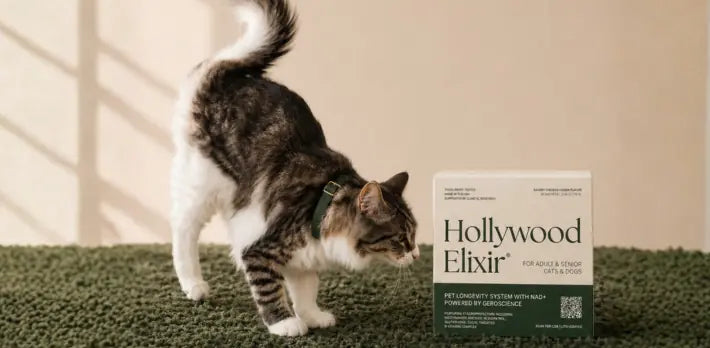
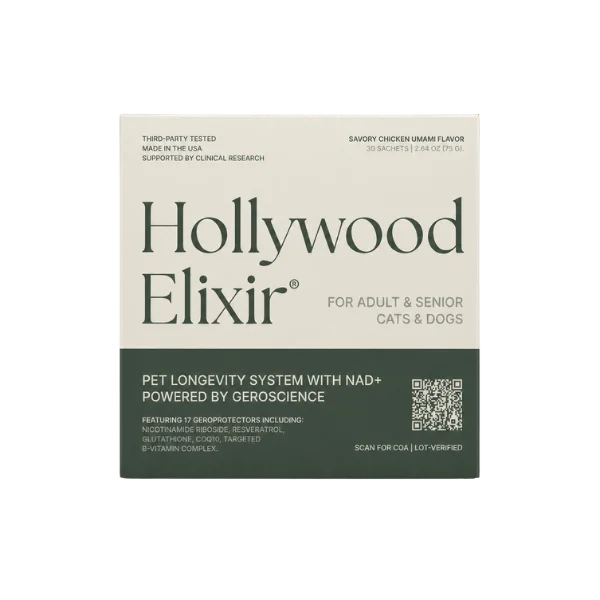
It also helps to think about the system around any single ingredient. Cats age through several bottlenecks at once: appetite shifts, inflammation, sleep disruption, and reduced muscle mass. That is why a multi-pathway routine often makes more sense than betting on one molecule. Worth knowing for the NAD+ goal specifically: Hollywood Elixir is built on nicotinamide riboside — a different NAD+ precursor than NMN — at a disclosed 60 mg per serving, alongside CoQ10 at 40 mg and a multi-antioxidant set, in a food-mixed powder for cats. It does not contain NMN; it is the better-studied way to support the same cellular-energy biology daily.
“Aging is rarely one bottleneck. Support that respects the whole system tends to age better, too.”

DVM Voice: Clinical Vignette of a Common Pattern in Senior Cat Aging
Case provided by JoAnna Pendergrass, DVM
Sasha, a 12-year-old cat, was brought in after her owner noticed increased thirst and urination, lethargy, vomiting, and a generally unkempt appearance. Examination showed weight loss, elevated blood pressure, and reduced vitality.
Diagnostic testing revealed elevated kidney markers, poorly concentrated urine, and protein loss in the urine — findings consistent with chronic kidney disease, one of the most common chronic conditions in senior cats.
Her care required a kidney-focused diet, blood pressure management, targeted supplementation, medication support, and regular monitoring — a necessary plan, but one started after clinical signs were already visible.
Clinical takeaway: Sasha’s case reflects why senior-cat wellness should begin before obvious decline. Earlier monitoring, body-condition tracking, hydration awareness, antioxidant support, and daily cellular resilience may help support quality of life as cats age.
Single-case vignette. Not generalizable. Veterinary diagnosis and monitoring are essential for increased thirst, urination, vomiting, lethargy, weight loss, or suspected kidney disease.

When Owners Typically Consider Adding NMN to a Routine
Owners often ask when they should “start” NMN. There isn’t a universal age, because cats don’t age on a calendar alone; they age through body condition, dental status, mobility, and how quickly they bounce back from routine stressors. In general, the decision becomes more relevant when you notice small, persistent changes: shorter play windows, longer naps that don’t seem restorative, or a cat who seems less tolerant of household change.
The practical approach is to pick one goal you can observe without guesswork—like willingness to jump, grooming stamina, or consistency of appetite—and track it. If you add NMN, keep everything else stable for a few weeks so you can interpret what you see. When owners treat supplements as “background support” rather than a quick fix, they tend to make better decisions and stop sooner if it’s not a fit.

Chronic Conditions: When Extra Caution Matters Most
Cats with chronic conditions deserve extra caution. Kidney disease, liver disease, diabetes, hyperthyroidism, and heart disease can all change how a cat handles nutrients and medications, and they can also change what “more energy” looks like. A supplement that seems benign in a healthy adult may be distracting or risky in a medically complex cat, especially if it leads an owner to miss a subtle decline that needs veterinary attention.
Because dosing recommendations are still being established in research settings, it’s reasonable to treat NMN as a conversation starter rather than a self-directed protocol (Turner, 2021). If your cat is on prescription diets or medications, bring the full list to your veterinarian and ask specifically about interactions, monitoring, and what would count as a reason to stop. That level of structure protects your cat and makes any benefit easier to interpret.

Possible Side Effects and What to Monitor at Home
Side effects are usually discussed in broad terms—stomach upset, appetite changes, restlessness—because cat-specific data are limited. In animal safety work, NMN has been evaluated orally with a generally favorable safety profile at tested doses (Cros C, 2021). That said, “safe in a study” is not the same as “right for every cat,” especially when a cat is older, underweight, or medically fragile.
If you try NMN, watch for changes that are easy to miss in a busy week: new pickiness, vomiting, softer stool, hiding, or a different sleep pattern. Stop and call your veterinarian if you see persistent GI signs, sudden behavior change, or any sign of dehydration. The goal is quiet support over time, not a noticeable “boost” that could mask discomfort.
The Science Context: Why Researchers Keep Studying NMN
To understand why NMN is even in the conversation, zoom out to NAD+ itself. NAD+ runs many cellular tasks that get harder with age, including energy handling and repair, and supporting it is the real goal behind "senior cat NAD supplement" searches (Turner, 2021). In mice, oral NMN raises tissue NAD+, which is one reason researchers keep studying it (Pihl C, 2025) — but those results do not automatically transfer to cats.
The useful takeaway is not "NMN makes cats live longer." It is that aging is a systems problem. When you choose support, you are choosing what to back consistently: appetite, mobility, calm, sleep, and the cellular work behind them. That is why a multi-ingredient, multi-pathway approach stays relevant even while one ingredient's feline data are still emerging — and why, for the NAD+ angle specifically, the better-studied precursor (nicotinamide riboside) tends to be the more defensible daily choice.
Cats Versus Dogs: Why Feline Practicalities Change Everything
It’s tempting to compare cats to dogs here, because canine supplement culture is louder and often better studied. But cats are not small dogs: their metabolism, taste preferences, and stress responses can make adherence harder and side effects easier to miss. A cat who refuses food because a powder smells “off” can spiral quickly, especially if they’re older or prone to hepatic lipidosis.
So the practical cat-first question is: can you administer it without turning meals into conflict? If the answer is no, the “best” supplement becomes the one you can deliver gently and consistently. For many households, that means choosing formulations designed for palatability and predictable routines, and prioritizing calm, steady support over aggressive stacking of trendy ingredients.

Kittens and Young Adults: When Longevity Talk Gets Premature
Owners sometimes ask whether NMN is appropriate for kittens or young adults. In most cases, the more responsible focus for young cats is foundational health: parasite prevention, dental habits, lean body condition, and stress-minimizing routines. Supplementing for “longevity” before there’s any sign of need can add complexity without clear upside, especially when long-term feline-specific data are limited.
If you’re considering NMN for a younger cat because of a family history of disease or a high-stress environment, treat it as a veterinary decision. The best longevity plan is usually boring: consistent nutrition, play that preserves muscle, and early detection. Supplements should fit into that plan without becoming the plan.

A Simple Decision Framework for Thoughtful Supplement Trials
A thoughtful decision framework can keep this topic from becoming a rabbit hole. First, define what you’re trying to support: energy for play, comfort with stairs, or steadier appetite. Second, decide what you will measure weekly. Third, set a stop rule—what would make you discontinue, and what would make you call your veterinarian. This keeps “trying a supplement” from turning into months of ambiguity.
Finally, remember that supplements are most meaningful when they’re part of a coherent system: nutrition, movement, sleep, and stress. NMN is being studied because of its relationship to NAD+ and cellular energy, but your cat experiences that biology as mood, appetite, and willingness to engage. Choose the approach that supports those outcomes without adding friction to daily life.
Closing Thoughts on Energy, Comfort, and Long-term Support
If you’ve read this far, you’re probably looking for something rare in pet wellness: a way to support aging without pretending there’s a shortcut. That’s the right instinct. NMN is a promising area of research, with safety work in animals and ongoing interest in how NAD+ relates to cellular function (You Y, 2020). But the best outcomes usually come from consistency, not intensity.
Treat NMN as one possible tool, not a verdict on whether you’re doing enough. If you decide to use it, do it with a veterinarian’s input, a simple tracking plan, and a product you can administer without stress. The goal is a cat who feels quietly well over time—more comfortable in their routines, and more present in the life you share.
“If a supplement disrupts meals, it’s not supporting longevity—no matter how elegant the theory.”
Educational content only. This material is not a substitute for veterinary advice. Always consult your veterinarian about your dog’s specific needs. These statements have not been evaluated by the Food and Drug Administration. Products mentioned are not intended to diagnose, treat, cure, or prevent any disease.
Glossary
- NMN (Nicotinamide Mononucleotide): A compound discussed as a precursor the body can use to build NAD+.
- NAD+ (Nicotinamide Adenine Dinucleotide): A molecule involved in cellular energy handling and maintenance tasks.
- NAD+ Precursor: A substance the body can convert into NAD+ through normal biochemical steps.
- Mitochondria: Cellular structures that help produce usable energy; often discussed in aging contexts.
- Sirtuins (e.g., SIRT1): Proteins studied for roles in cellular regulation; sometimes mentioned alongside NAD+ research.
- Oxidative Stress: An imbalance between reactive molecules and antioxidant defenses, often discussed in aging.
- Bioavailability: How much of an ingredient is absorbed and becomes available for the body to use.
- Palatability: How acceptable a product is to a cat’s taste and smell, affecting consistent use.
- Subacute Toxicity Study: A safety study that evaluates effects of repeated dosing over a limited period.
Related Reading
Aging & Senior Cat Guidance
• Cat Age Calculator: Cat Years to Human Years
• Lethargy in Cats
• Senior Cat Not Eating
• Cat Drinking A Lot
• Why Is My Senior Cat Withdrawn?
Healthy Aging Support
• NAD+ for Cats
• NMN for Cats
• Vitamins For Older Cats
• Senior Cat Food
References
You Y. Subacute Toxicity Study of Nicotinamide Mononucleotide via Oral Administration. PubMed. 2020. https://pubmed.ncbi.nlm.nih.gov/33384603/
Pihl C. Oral nicotinamide mononucleotide (NMN) increases tissue NAD(+) content in mice but neither NMN nor Polypodium leucotomos protect against UVR-induced skin cancer. PubMed. 2025. https://pubmed.ncbi.nlm.nih.gov/40439965/
Kiss T. Nicotinamide mononucleotide (NMN) supplementation promotes neurovascular rejuvenation in aged mice: transcriptional footprint of SIRT1 activation, mitochondrial protection, anti-inflammatory, and anti-apoptotic effects. PubMed. 2020. https://pubmed.ncbi.nlm.nih.gov/32056076/
Turner. Safety Evaluation for Restorin NMN, a NAD+ Precursor. PubMed. 2021. https://pubmed.ncbi.nlm.nih.gov/34867355/
Margier M. Nicotinamide Mononucleotide Administration Prevents Doxorubicin-Induced Cardiotoxicity and Loss in Physical Activity in Mice. PubMed. 2022. https://pubmed.ncbi.nlm.nih.gov/36611902/
Cros C. Safety evaluation after acute and sub-chronic oral administration of high purity nicotinamide mononucleotide (NMN-C) in Sprague-Dawley rats. PubMed. 2021. https://pubmed.ncbi.nlm.nih.gov/33587977/
Zhang. Supplementing Boar Diet with Nicotinamide Mononucleotide Improves Sperm Quality Probably through the Activation of the SIRT3 Signaling Pathway. 2024. https://www.mdpi.com/2076-3921/13/5/507
Summers S. Evaluation of iron, copper and zinc concentrations in commercial foods formulated for healthy cats. PubMed Central. 2022. https://pmc.ncbi.nlm.nih.gov/articles/PMC10812249/
Okabe. Implications of altered NAD metabolism in metabolic disorders. Nature. 2019. https://www.nature.com/articles/s41598-022-18272-y
Ahmed. Bioaccumulation of heavy metals in some commercially important fishes from a tropical river estuary suggests higher potential health risk in children than adults. Nature. 2019. https://www.nature.com/articles/s41598-021-00467-4
FAQ
What is NMN, and why do cat owners discuss it?
NMN (nicotinamide mononucleotide) is a compound the body can use to build NAD+, which supports cellular energy and maintenance. People discuss nmn for cats because aging often shows up as quieter play, slower recovery, and less flexibility around routine.
It’s best viewed as optional, vet-guided support rather than a promise of transformation. For broader aging support that fits into daily life, consider Hollywood Elixir™.
Does nmn for cats work the same as in humans?
Not necessarily. Much of the NMN excitement comes from non-feline research, including studies showing oral NMN can raise tissue NAD+ in mice(Pihl C, 2025). Cats have their own metabolism, health risks, and tolerance for supplements, so translation is uncertain.
If you try it, focus on gentle, observable outcomes and keep your veterinarian involved. For a cat-first, system-level approach to aging support, many owners pair their plan withHollywood Elixir™.
Why is NAD+ mentioned so often with NMN supplements?
NAD+ is a molecule involved in cellular energy production and repair-related work, and NMN is a precursor the body can use to make it. That relationship is the scientific reason NMN is discussed in the context of aging and resilience.
For owners, the useful takeaway is that “energy” is often a cellular, slow-moving story—not a stimulant effect. If you want broader support that respects that long view, look at Hollywood Elixir™ as part of a consistent routine.
Is NMN considered safe for most healthy adult cats?
Cat-specific safety data are limited, but oral NMN has been evaluated in animal safety and toxicity work with no significant adverse effects at tested doses. That supports cautious optimism, not a blanket guarantee for every cat.
If your cat is older, underweight, or medically complex, involve your veterinarian and monitor appetite and stool closely. For gentle, system-level aging support that’s designed to be used consistently, consider Hollywood Elixir™.
What side effects should I watch for after starting NMN?
The most practical watch list is gastrointestinal and behavioral: reduced appetite, vomiting, softer stool, hiding, or unusual restlessness. Because feline-specific research is limited, it’s wise to treat any persistent change as meaningful rather than “normal adjustment.”
Pause the supplement and contact your veterinarian if signs continue beyond a day or two, or if your cat seems dehydrated. For a steadier, broader approach to aging support, many owners choose Hollywood Elixir™ alongside good basics.
Are there cats who should not take NMN?
Cats with significant kidney or liver disease, uncontrolled endocrine disease, or those on complex medication regimens should only consider NMN with veterinary oversight. The issue is less “NMN is dangerous” and more that fragile cats have less margin for appetite disruption or interactions.
If your cat is receiving specialty care (cardiology, oncology), ask the specialist before adding anything new. For a conservative, system-supportive option that fits into a long-term plan, consider Hollywood Elixir™.
How do veterinarians think about nmn dosage for cats?
Most veterinarians approach dosing cautiously because standardized feline dosing guidelines are not established, and broader dosing recommendations are still being clarified in ongoing research. That uncertainty makes individualized decision-making more important than copying a number from a forum.
Your vet will consider age, body condition, kidney and liver status, and concurrent medications, then suggest monitoring points. For a product designed around overall aging support rather than a single dosing target, consider Hollywood Elixir™ as part of a consistent routine.
Can NMN interact with my cat’s prescription medications?
Potential interactions are hard to map in cats because formal data are limited. The safest approach is to assume interactions are possible whenever a cat takes medications affecting appetite, blood pressure, glucose, or heart rhythm, and to involve your veterinarian before adding NMN.
Bring a complete list of prescriptions, supplements, and diets to the appointment so your vet can advise on timing and monitoring. For a simpler, system-level aging support option to discuss, consider Hollywood Elixir™.
Is NMN appropriate for senior cats with lower appetite?
Possibly, but appetite is the priority. If a senior cat is already eating less, any supplement that changes smell or texture can backfire. Before adding NMN, rule out dental pain, kidney disease, hyperthyroidism, and nausea with your veterinarian.
If you proceed, choose a format that doesn’t disrupt meals and monitor weight weekly. For a gentle, broader aging-support approach that aims to fit into real feeding routines, consider Hollywood Elixir™.
How long does it take to notice changes with NMN?
If NMN helps, owners typically report subtle shifts rather than dramatic changes, and those observations often take weeks. NMN is studied in relation to cellular function and age-associated decline in research models, which suggests gradual effects rather than immediate ones(Kiss T, 2020).
Pick one or two measurable markers—jumping confidence, grooming stamina, play interest—and track them weekly. For consistent, system-level support you can keep steady over time, considerHollywood Elixir™as part of your routine.
What should I look for in an nmn supplement for cats?
Prioritize manufacturing quality and consistency: clear sourcing, third-party testing, and stable formulation. With supplements, the biggest risks are often variability and contamination, not just the ingredient itself. Also consider whether the product is realistically palatable for a cat.
Finally, look for a philosophy that supports aging as a system, not a single-ingredient promise. For a broader, cat-friendly approach to graceful aging support, consider Hollywood Elixir™.
Can I give NMN every day, long term?
Daily use is a common idea, but long-term feline-specific data are limited. Animal safety work suggests NMN can be well tolerated in studied contexts(Cros C, 2021), yet “long term” in a household cat includes changing health status, new medications, and shifting appetite.
If you use it daily, schedule periodic check-ins with your veterinarian and keep notes on weight, hydration, and stool quality. For consistent, system-level support designed for ongoing use, considerHollywood Elixir™as part of a steady plan.
Is NMN better started in middle age or older age?
There’s no single right age. Many owners consider it when they notice early, persistent shifts—less play, slower recovery, or narrower tolerance for change—after medical causes are ruled out. Starting earlier than necessary can add complexity without clear benefit.
A reasonable approach is to align any supplement with a specific, trackable goal and reassess after a defined trial. For a broader aging-support option that fits into that long view, consider Hollywood Elixir™.
How is NMN different from niacin or nicotinamide?
Niacin and nicotinamide are forms of vitamin B3, while NMN is a downstream compound discussed as a precursor to NAD+. They’re related in the broader NAD+ story, but they are not interchangeable in formulation, tolerance, or dosing logic.
Because cats can be sensitive to changes in diet and supplements, it’s worth discussing any switch with your veterinarian rather than experimenting. For a system-level aging support formula to consider, look at Hollywood Elixir™ within a consistent routine.
Are results from mouse NMN studies meaningful for cats?
They’re informative, but not definitive. Mouse studies help researchers understand whether NMN can influence NAD+ levels and related cellular functions. They don’t automatically predict what a cat will experience, especially given differences in metabolism and common feline diseases.
Use the research as context, then make a cat-specific decision with your veterinarian and a clear monitoring plan. For broader, practical aging support that doesn’t hinge on one study, consider Hollywood Elixir™.
Can NMN replace a good diet for an aging cat?
No. Diet is the foundation: adequate protein, appropriate calories, hydration support, and medical diets when needed. NMN is discussed as a support for cellular energy-related processes via NAD+, but it can’t compensate for underfeeding, poor palatability, or untreated disease.
If you’re optimizing longevity, think “diet first, supplements second,” and keep everything as simple as your cat will allow. For system-level aging support that complements strong nutrition, consider Hollywood Elixir™ as a steady add-on.
What’s a sensible way to track whether NMN is helping?
Choose two or three markers you can observe without interpretation: appetite consistency, jumping frequency, grooming time, play initiation, or stool quality. Track weekly, keep other variables stable, and decide in advance what would count as “no effect” or “stop.”
This structure protects you from placebo thinking and protects your cat from unnecessary complexity. For a broader aging-support routine that’s designed to be consistent and trackable, consider Hollywood Elixir™.
When should I call the vet after starting NMN?
Call promptly if your cat stops eating, vomits repeatedly, has persistent diarrhea, seems unusually lethargic, or shows signs of dehydration. In cats, appetite disruption is never a small detail, especially in seniors or cats with kidney disease.
Also call if you notice a sudden behavior change that could indicate pain or illness unrelated to the supplement. For a calmer, system-level aging support option to discuss with your veterinarian, consider Hollywood Elixir™.
How do I decide if nmn for cats is worth trying?
Start with a simple decision filter: your cat is medically stable, you have a clear goal (like steadier play or recovery), and you can administer a supplement without disrupting meals. If any of those are missing, address them first.
Then set a time-bound trial and a stop rule, and keep your veterinarian in the loop. If you prefer a broader, system-level approach to aging support rather than a single-ingredient bet, consider Hollywood Elixir™ as part of a consistent plan.
Does NMN support heart health or activity in research models?
In mice, NMN has been studied in the context of doxorubicin-associated cardiotoxicity and maintenance of physical activity(Margier M, 2022). That’s scientifically interesting, but it’s not a reason to self-supplement a cat with heart disease or a cat undergoing cancer treatment.
If your cat has cardiac concerns, treat supplements as a cardiology conversation, not an experiment. For a general, system-supportive aging formula to discuss within that bigger plan, considerHollywood Elixir™.

Discover LPL-01: How This Fits Into a Larger Feline Longevity System
Aging in cats unfolds quietly. It’s not driven by a single failure, but by gradual shifts across interconnected systems — cellular energy, oxidative balance, immune tone, and tissue integrity — each influencing the others over time.
This article explores one layer of that system. To understand what actually shapes long-term health, you need to step back and look at how these layers interact.
Start with the underlying science:
- Feline Geroscience Framework →
A structured view of how aging progresses across cellular energy, inflammation, and resilience systems. - Senior Biological Defense Coverage (BDC) Modeling →
A systems-level map of which biological pathways decline first, and how layered interventions can support them. - 2026 Market Research: Best Cat Longevity Supplements →
A feline-specific review of longevity supplements. 2026 Industry report created by LPL-01 Research. - LPL-01 Standard →
The formulation system that translates these models into real-world supplementation—covering multiple pathways in a coordinated way.
Essential Summary
Why is NMN for cats important?
NMN is an NAD+ precursor that’s being studied for its role in cellular energy and age-related resilience. For cats, the evidence base is still emerging, so the most responsible use is vet-guided and focused on gentle, observable support over time. Think consistency, appetite protection, and comfort—not quick transformation.
Hollywood Elixir is designed for system-level graceful aging support—helping you back the broader network that shapes energy, recovery, and day-to-day comfort, rather than relying on a single trendy ingredient. It fits best when you want a steady, low-drama routine you can maintain for months.
Longevity Core
Hollywood Elixir®
★★★★★(313)
More good years, starting now — steady energy, engagement, and a pet who keeps showing up fully, every day.
Starting at $89/mo
Hollywood Elixir is amazing! She put back on 5 lbs to a healthy weight, her eyes are shiny, her coat is beautiful!
— Jessie
She hopped up onto the windowsill again for the first time in years.
— Charlie
Considering NMN for cats?
If you're searching for NMN for cats
If you’re considering NMN for cats, the most useful next step is to decide what you’re actually trying to support: steadier play, easier recovery after activity, or a calmer day-to-day rhythm. Then rule out medical causes of fatigue and appetite change, and choose one simple marker to track weekly. NMN research is promising but still developing, and feline-specific dosing standards aren’t established, so keep your veterinarian involved and prioritize palatability and consistency over intensity. A careful owner still chooses a system-level product because aging rarely hinges on one ingredient; it’s the network that matters. Hollywood Elixir is built to support that broader aging network in a way that can stay steady over time.
Veterinary Insights

Learn about how our DVMs think about cat aging
Dr. JoAnna Pendergrass DVM


Longevity Core
Hollywood Elixir®
★★★★★(313)
More good years, starting now — steady energy, engagement, and a pet who keeps showing up fully, every day.
Starting at $89/mo
Wellness Tools
Explore your cat’s changing needs over time


Related Reading
NMN for cats refers to nicotinamide mononucleotide, a naturally occurring compound that can be converted to NAD+ inside the body. NAD+ is continually recycled through the NAD salvage pathway, which is why NMN is discussed as a “precursor” rather than a standalone nutrient.
