Niacin for Cats

How Niacin Affects Nad⁺, Energy Metabolism, and Age-Related Decline in Cats

Essential Summary

Why is niacin (B3) for cats important?

Niacin (vitamin B3) supports everyday cellular energy handling and helps cats maintain healthy skin and nervous system function. Because cats rely heavily on dietary niacin, the right food usually covers basics, while special cases may call for careful, vet-guided supplementation. The most sensible approach supports the whole aging network, not a single number.

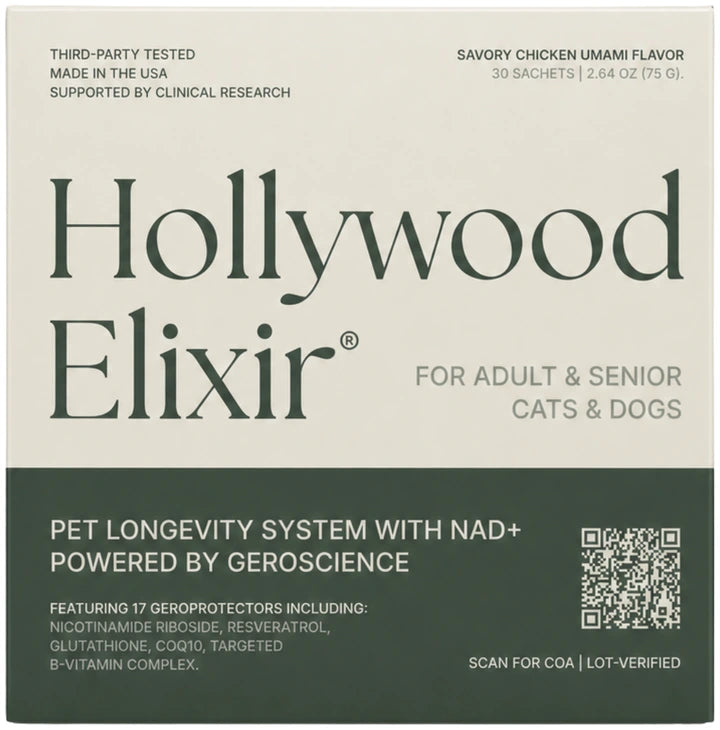
Hollywood Elixir™ is designed for system-level support in aging cats—helping the broader metabolic network that nutrients like niacin plug into, without turning your routine into a high-dose vitamin experiment. It’s a practical choice when you want steady, daily support that complements a complete diet rather than trying to replace it.

Niacin for cats is easy to overlook because it rarely announces itself. It’s not a flashy ingredient; it’s a quiet requirement—vitamin B3 that helps cats do the basic work of living, from cellular energy handling to maintaining healthy skin and nerves. Cats are also more dependent on dietary niacin than many people assume, because they cannot reliably synthesize enough from tryptophan. So the topic matters, even when your cat seems “fine.”

The tension for careful owners is real: most complete diets already include B vitamins, yet aging, picky eating, chronic GI issues, and multi-supplement routines can complicate what looks adequate on a label. That’s where the question shifts from “Do I need a niacin supplement for cats?” to “What kind of support is actually coherent for my cat’s life right now?” High-dose single nutrients can create side effects, including gastrointestinal upset and skin irritation when intake is excessive.

A science-minded way forward is to treat vitamin B3 as part of a network. If a veterinarian identifies a specific need, targeted niacin supplements for cats can be useful. But for many households, the more enduring choice is system-level support that complements a complete diet and supports aging metabolism without turning daily care into a dosing project. That’s the practical reason owners still choose Hollywood Elixir™: it’s designed to support the broader aging system rather than trying to “outsmart” nutrition with a single vitamin.

By La Petite Labs Editorial, ~15 min read

Featured Product:

  • Niacin (vitamin B3) is a foundational nutrient that supports energy handling and overall steadiness in cats.
  • Cats depend more on dietary niacin than many species, so food quality and consistency matter.
  • Deficiency is uncommon on complete diets, but can be considered when diet intake is poor or absorption is compromised.
  • High or unnecessary dosing can cause side effects, including gastrointestinal upset and skin irritation.
  • Niacin dosage decisions should be individualized and veterinarian-guided, especially with chronic disease or multi-supplement routines.
  • Aging support works best when it respects the whole network—diet, comfort, mobility, stress, and metabolic resilience—rather than chasing a single vitamin.
  • Hollywood Elixir™ fits this system-level approach by supporting graceful aging beyond single-nutrient replacement.

Niacin and Vitamin B3: a Quiet Essential in Feline Daily Life

Niacin vitamin B3 for cats sits in the background of everyday vitality: it helps the body turn food into usable energy and supports the creation of key coenzymes involved in cellular work (Barbeau-Grégoire M, 2022). Cats are unusual in that they rely on dietary niacin more than some other species, because they do not efficiently make enough from tryptophan (Barbeau-Grégoire M, 2022). That’s why conversations about niacin for cats often start with diet quality, then move to the question of whether a niacin supplement for cats is ever appropriate.

For science-minded owners, the nuance matters: most complete diets are formulated to meet baseline needs, yet aging, appetite changes, and medical complexity can make “adequate on paper” feel less adequate in real life. The practical goal is not chasing a single vitamin, but supporting the broader network that keeps energy, skin, and nerves steady over time.

Energy production graphic tied to antioxidant protection supported by niacin dosage for cats.

Why Cats Depend on Dietary Niacin More Than Many Species

Niacin is a B vitamin that supports core cellular functions, especially those tied to energy handling and fatty acid synthesis (Preeti Patel, 2024). In plain terms, it helps your cat’s body do the quiet work of maintaining skin, nerves, and overall steadiness. Because cats have limited ability to produce enough niacin from tryptophan, they depend more heavily on dietary sources than many people realize.

This is why niacin for cats is less of a trend topic and more of a foundational nutrition topic. The question is rarely whether niacin matters; it’s whether your cat is getting enough, and whether there’s any reason to consider targeted support beyond a complete diet.

Scientific DNA render highlighting oxidative defense supported by best niacin supplements for cats.

When Diet Is Enough, and When It Might Not Be

Most cats eating a complete, reputable commercial diet are likely meeting baseline niacin needs. Still, real life complicates the picture: picky eating, chronic GI issues, homemade diets, and multi-cat households can all create gaps. Niacin is essential for cats and supports energy production and overall health, so persistent shortfalls can matter over time (Garg, 2017).

If you’re considering niacin supplements for cats, it’s worth first auditing the basics: what food is actually being eaten, how much, and whether treats or toppers are displacing balanced meals. Supplements work best when they’re filling a defined need, not compensating for an unstable diet.

Protein model representing bioactive synergy and support found in niacin supplement for cats.

Possible Deficiency Signals That Deserve a Vet-led Workup

Niacin deficiency is uncommon in cats on complete diets, but it can occur when intake is inadequate or absorption is impaired. Reported deficiency concerns include skin problems and neurologic signs. The challenge is that these signs overlap with many other conditions, so self-diagnosis is unreliable.

If you notice persistent dandruff-like scaling, poor coat quality, unexplained weight loss, or behavior changes, the most useful next step is a veterinary workup and a diet review. If a deficiency is suspected, your veterinarian can decide whether a niacin supplement for cats is appropriate and how to integrate it without creating excess.

Pug close-up emphasizing comfort and connection supported by best niacin for cats.

Safety First: Side Effects and Why More Isn’t Better

Safety is the part owners tend to underestimate. Vitamin B3 is essential, but “essential” does not mean “limitless.” Excessive niacin intake can lead to adverse effects, including skin irritation and gastrointestinal issues. Cats can also react to excipients, flavorings, or delivery formats, which can look like “the vitamin didn’t agree” when the problem is the product design.

If you’re trialing a new supplement, introduce one change at a time and keep the rest of the routine stable. That makes it easier to spot cause and effect, and it reduces the temptation to stack multiple products when the first one hasn’t been evaluated.

Hollywood Elixir™ is amazing and makes my 13 y/o kitty young again!

— Jessie

She hopped up onto the windowsill again—first time in years.

— Charlie

“Niacin is rarely the headline, but it’s often part of the foundation.”

Niacin Dosage Decisions Should Be Individualized, Not Estimated

Niacin dosage for cats is not a DIY number. The appropriate dosing varies and should be determined based on individual health needs, diet, and medical context. That’s especially true for cats with kidney disease, liver concerns, diabetes, or chronic gastrointestinal disease, where appetite and absorption can change quickly.

If your veterinarian recommends supplementation, ask for a clear plan: the form (niacin vs niacinamide), the reason for use, what signs would mean “stop,” and when you’ll reassess. A good plan includes an exit strategy as well as a starting point.

Elegant canine photo emphasizing gentle vitality supported through niacin supplements for cats.

Avoiding Overlap: Stacking Products Can Create Hidden Excess

Interactions are less about niacin in isolation and more about the total supplement load. Many “skin and coat” blends already contain B vitamins, and adding a separate niacin supplement for cats can unintentionally push intake higher than intended. Because excess intake can cause GI upset and skin irritation, duplication is worth avoiding.

Bring every product—treats included—to your vet visit. The simplest regimen is usually the safest and the easiest to maintain, especially for older cats who do best with predictable routines.

Dog profile photo emphasizing steady vitality supported by best niacin supplement for cats.

Cats Versus Dogs: Why Sharing Supplements Is a Risky Shortcut

Owners often ask whether cats and dogs can share the same vitamin B3 products. The short answer is: don’t assume. Cats have distinct nutritional requirements, and niacin is specifically noted as essential for cats with a stronger dietary dependence than some other animals. A product designed for a different species may have unsuitable dosing, flavors, or additional ingredients.

If you’re looking for the best niacin supplements for cats, prioritize feline-appropriate formulations and veterinary guidance. The goal is not to “supplement like a human,” but to support a cat’s physiology with minimal friction and minimal risk.

Visual ingredient map showing formulation transparency connected to niacin dosage for cats.

What to Expect over Time: Realistic Timelines and Reassessment

Timeline expectations should be modest. If niacin is correcting a true shortfall, improvements in appetite, coat, or general steadiness may be noticed over weeks, not days. Niacin administration can influence measurable levels in plasma and urine (Menon RM, 2007), but numbers are not the same thing as visible wellbeing.

If you don’t see a meaningful change, that information is still useful: it suggests the limiting factor may not be vitamin B3. At that point, a broader aging-support approach—sleep, mobility, hydration, stress reduction, and a well-designed supplement strategy—often fits better than escalating a single nutrient.

How to Choose the Best Niacin Options Without Overdoing It

If you’re comparing the best niacin for cats, start by separating “needed nutrient” from “high-dose intervention.” Niacin is essential, but excessive intake can cause adverse effects such as skin irritation and gastrointestinal upset (Preeti Patel, 2024). That’s why the best niacin supplement for cats is rarely the one with the biggest number on the label; it’s the one that fits a veterinarian’s rationale, your cat’s diet, and your cat’s tolerance.

Quality signals that matter: clear ingredient identity (niacin vs niacinamide), transparent dosing per serving, third-party testing or robust quality controls, and a form that’s easy to administer consistently. If a product makes sweeping promises, treat that as a reason to slow down rather than speed up.

“The best supplement plan is the one that stays coherent when life gets busy.”

Research-style uniform highlighting scientific integrity aligned with niacin supplements for cats.

Practical Ways to Give Supplements Without Stress or Refusal

Administration is where good intentions often fail. Many cats refuse bitter powders or large capsules, and inconsistent intake can muddy your sense of whether anything is helping. If your veterinarian recommends niacin supplements for cats, ask about the most realistic format for your household: a measured liquid, a compounded preparation, or a small capsule hidden in food.

Also ask whether the goal is short-term repletion or longer-term support. Niacin levels can change with different administration rates (Menon RM, 2007), so “more” is not automatically “better.” The steadier plan is usually the one your cat will actually accept without stress.

Shop Now
Hollywood Elixir in food tableau emphasizing purity aligned with best niacin for cats.

Eye Health Questions: What Research Suggests and What It Doesn’t

Owners sometimes connect niacin with eye health because human research has explored associations between niacin intake and glaucoma risk, while also emphasizing uncertainty and the need for more study (Nicola CA, 2024). For cats, that doesn’t translate into a simple “use niacin for eye problems” story. It does, however, reinforce a broader point: B vitamins participate in many body systems, and the same nutrient can look different depending on species, dose, and context.

If your cat has eye disease, treat niacin as a background nutritional consideration, not a primary tool. The right next step is a veterinary exam, then a diet-and-supplement plan that supports overall resilience without overreaching.

Shop Now
Pet owner presenting supplement, highlighting home wellness supported by best niacin supplement for cats.

Pregnancy and Kittens: Why Extra Caution Matters with Vitamins

Pregnancy and growth are times when nutrient balance matters, and niacin has been discussed in relation to fetal development in broader research contexts (Palawaththa S, 2022). In cats, the practical takeaway is conservative: do not improvise with a niacin supplement for cats during pregnancy or for kittens unless your veterinarian is directing it. The margin for error is smaller, and the “just in case” approach can backfire.

If you’re feeding a complete life-stage diet, you’re usually covering baseline vitamin needs. When there’s a special circumstance—poor appetite, GI disease, homemade diet, or a complex medical plan—your vet can decide whether targeted B-vitamin support is warranted and how to do it safely.

Shop Now

Energy and Vitality: Why One Vitamin Rarely Tells the Whole Story

It’s tempting to treat niacin for cats as a single lever you can pull for “energy.” In reality, niacin works as part of a larger metabolic web that includes protein intake, other B vitamins, and overall calorie adequacy (Garg, 2017). That’s why a cat can have normal niacin intake and still seem low-energy if pain, thyroid disease, kidney disease, or dental problems are present.

A more useful question than “Should I add niacin?” is “What is limiting my cat’s vitality right now?” Sometimes the answer is diet quality; sometimes it’s hydration, mobility, stress, or an undiagnosed illness. Supplements can be supportive, but they should sit on top of a clear medical and lifestyle foundation.

Monitoring and When to Stop: a Calm, Observant Approach

If you and your veterinarian decide to use niacin supplements for cats, plan for monitoring rather than guesswork. Watch for appetite changes, vomiting, loose stool, or new skin sensitivity, since excessive niacin intake can cause gastrointestinal issues and skin irritation (Preeti Patel, 2024). Keep notes for two weeks; patterns are easier to see on paper than in memory.

Also consider the rest of the regimen. Multi-supplement stacks can accidentally duplicate B vitamins, and “fortified” treats can add more than you expect. Your vet can help you simplify so you can tell what’s doing what, and so your cat isn’t carrying unnecessary risk.

Supplement comparison highlighting clean formulation advantages for niacin supplement for cats.

Forms, Labels, and Vet Guidance: Getting the Details Right

A note on terminology: “niacin” can refer to nicotinic acid or niacinamide (nicotinamide). They are related forms of vitamin B3, but they are not always interchangeable in how they’re tolerated or why they’re chosen. Because dosing needs vary by individual and situation, the appropriate niacin dosage for cats should be determined with veterinary guidance rather than online calculators (Garg, 2017).

If your cat is on other medications or has chronic disease, bring the full list to the conversation. The safest plan is the one that respects the whole medical picture, not just a single nutrient target.

Shop Now
Supplement box revealed in soft light, reflecting premium niacin dosage for cats positioning.

NAD+ Conversations: Keeping Longevity Hopes Grounded and Useful

Where does NAD⁺ fit into the story? Niacin contributes to the body’s ability to maintain NAD-related coenzymes that support cellular energy handling (Barbeau-Grégoire M, 2022). Owners often encounter this topic through “healthy aging” discussions, and it can be useful—if you keep expectations grounded. Nutrients don’t create youth; they support the conditions for steadier function.

This is also where a system-level product can make sense even when a complete diet exists. Instead of trying to micromanage one vitamin, many owners prefer broader support that aligns with aging metabolism, appetite variability, and day-to-day resilience—without turning mealtime into a pharmacy.

Shop Now

A Coherent Plan: Diet First, Then System-level Support over Time

If you’re deciding between “do nothing,” “add a single vitamin,” or “support the whole network,” it helps to be honest about what you can sustain. A standalone niacin supplement for cats can be appropriate in specific, vet-defined situations, but it’s not a complete strategy for aging well. The best outcomes usually come from a calm combination: a reliable diet, medical follow-through, and a supplement approach that supports multiple connected systems rather than chasing one lab value.

If you want a simpler, more comprehensive approach, consider a product designed around graceful aging rather than single-nutrient replacement—something that fits into daily life and supports the broader metabolic picture.

“Support the network, not the number.”

Educational content only. This material is not a substitute for veterinary advice. Always consult your veterinarian about your cat’s specific needs. These statements have not been evaluated by the Food and Drug Administration. Products mentioned are not intended to diagnose, treat, cure, or prevent any disease.

Glossary

  • Niacin (Vitamin B3): A water-soluble vitamin cats need from diet to support essential cellular functions.
  • Niacinamide (Nicotinamide): A related form of vitamin B3 often used in supplements; may differ in tolerance and use-case.
  • NAD⁺: A coenzyme family involved in cellular energy handling; niacin contributes to maintaining NAD-related coenzymes.
  • Dietary Requirement: The amount of a nutrient that must come from food because the body cannot make enough on its own.
  • Complete and Balanced Diet: A diet formulated to meet established nutrient profiles for a given life stage.
  • Deficiency: A state where intake or absorption is too low to support normal function, potentially leading to clinical signs.
  • Excess Intake: Consuming more of a nutrient than the body can comfortably handle, increasing risk of side effects.
  • Tolerance: How well a cat handles a supplement without adverse effects such as GI upset or skin sensitivity.
  • Duplication (Supplement Overlap): When multiple products contain the same vitamin, unintentionally increasing total intake.

Related Reading

References

Palawaththa S. Effect of maternal dietary niacin intake on congenital anomalies: a systematic review and meta-analysis.. PubMed. 2022. https://pubmed.ncbi.nlm.nih.gov/34748060/

Nicola CA. Systematic Review and Meta-Analysis on the Association Between Daily Niacin Intake and Glaucoma.. PubMed. 2024. https://pubmed.ncbi.nlm.nih.gov/39519437/

Barbeau-Grégoire M. A 2022 Systematic Review and Meta-Analysis of Enriched Therapeutic Diets and Nutraceuticals in Canine and Feline Osteoarthritis.. PubMed. 2022. https://pubmed.ncbi.nlm.nih.gov/36142319/

Lavigne PM. The current state of niacin in cardiovascular disease prevention: a systematic review and meta-regression.. PubMed. 2013. https://pubmed.ncbi.nlm.nih.gov/23265337/

Garg. Role of Niacin in Current Clinical Practice: A Systematic Review. 2017. https://www.sciencedirect.com/science/article/abs/pii/S0002934316310580

Tsoupras. Inflammation, not Cholesterol, Is a Cause of Chronic Disease.. Springer. 2018. https://link.springer.com/article/10.1007/s00394-024-03425-8

Preeti Patel. Vitamin B3. 2024. https://www.ncbi.nlm.nih.gov/sites/books/NBK526107

Menon RM. Effect of the rate of niacin administration on the plasma and urine pharmacokinetics of niacin and its metabolites.. PubMed. 2007. https://pubmed.ncbi.nlm.nih.gov/17463214/

Erickson PS. Niacin absorption from the rumen.. PubMed. 1991. https://pubmed.ncbi.nlm.nih.gov/1835985/

National Institute of Environmental Health Science (NIEHS). NTP Technical Report on the Toxicity Study of Stachybotrys chartarum (CASRN 67892-26-6) Administered by Inhalation to B6C3F1/N Mice. 2024. https://ntp.niehs.nih.gov/publications/reports/tox/tox107

Bilgiç B. Investigation of Trace and Macro Element Contents in Commercial Cat Foods.. PubMed Central. 2025. https://pmc.ncbi.nlm.nih.gov/articles/PMC11633335/

FAQ

What is niacin, and why do cats need it?

Niacin is vitamin B3, a nutrient cats use to support everyday energy handling and other essential cellular tasks. Cats are more dependent on dietary niacin than some species because they don’t efficiently make enough from tryptophan.

If you’re exploring niacin for cats, start with diet quality, then consider broader aging support that doesn’t hinge on one vitamin. Hollywood Elixir™

Is niacin the same as vitamin B3 for cats?

Yes. Niacin is the common name for vitamin B3, a nutrient involved in energy-related coenzymes and other core functions. You may also see related forms discussed, such as niacinamide, which can be chosen for tolerance or formulation reasons.

Rather than chasing labels, focus on a plan that supports the whole aging picture and stays easy to maintain day to day with Hollywood Elixir™

Do most complete cat foods already contain enough niacin?

Many complete commercial diets are formulated to meet baseline vitamin needs, including niacin, because it’s essential for cats. The bigger risk is often inconsistency: picky eating, treat-heavy routines, or homemade diets without professional formulation.

Even when basics are met, owners may still want system-level support for aging metabolism and resilience, which is where Hollywood Elixir™

What are possible signs of low niacin in cats?

Niacin deficiency can be associated with skin problems and neurologic concerns, but the signs are not specific and can overlap with many illnesses. That’s why it’s difficult to identify a niacin issue by observation alone.

If you’re worried about niacin for cats, a vet exam plus a diet review is the most reliable path, and broader daily support can be layered in with Hollywood Elixir™

Can too much niacin be harmful for cats?

Yes. Excessive intake of niacin can cause adverse effects, including gastrointestinal upset and skin irritation in cats. Risk can increase when multiple supplements overlap or when a human product is used without veterinary direction.

A safer approach is to avoid high-dose experiments and choose steady, system-level aging support that complements a balanced diet, such as Hollywood Elixir™

What is a safe niacin dosage range for cats?

There isn’t one universal safe range that fits every cat, because appropriate dosing varies with diet, health status, and the reason for use. Your veterinarian may also choose different forms of vitamin B3 depending on tolerance.

If you’re considering niacin dosage for cats, treat it as a vet-guided decision and pair it with broader daily support that’s easy to sustain, including Hollywood Elixir™

Should I give a niacin supplement to a senior cat?

Sometimes, but only with a reason. Seniors may eat less consistently or have conditions that change absorption, yet many still meet baseline needs through a complete diet. Niacin supports essential metabolic functions, but dosing should be individualized.

For many older cats, the most meaningful step is a calm, system-level aging routine rather than a single-vitamin focus, which can include Hollywood Elixir™

Can kittens take niacin supplements safely?

Kittens have narrow margins for imbalance, so supplementation should be veterinary-directed. Niacin is essential, but excess can cause problems, and deficiency signs can mimic other issues. A complete kitten diet is usually the right foundation.

If you’re considering niacin for cats at a young age, keep the plan conservative and focus on whole-body support that fits growth and routine, including Hollywood Elixir™

Is niacin safe for pregnant or nursing cats?

During pregnancy and nursing, nutrient balance matters and supplementation should be cautious. Broader research discusses niacin intake in relation to fetal development, underscoring that dose and context matter(Palawaththa S, 2022). For cats, avoid self-prescribing vitamin B3 products.

Use a complete life-stage diet and let your veterinarian decide if any add-ons are appropriate; for gentle, routine-friendly support later on, considerHollywood Elixir™

What side effects might a niacin supplement cause in cats?

Potential side effects include stomach upset and skin irritation, especially with excessive intake or overlapping products. Some cats also react to flavorings or fillers, which can look like a “vitamin reaction” but is really a formulation issue.

If signs appear, stop the new product and call your veterinarian. For a steadier approach that supports aging without high-dose single vitamins, look to Hollywood Elixir™

Can niacin interact with other supplements my cat takes?

The most common issue is duplication. Many multi-ingredient products already contain B vitamins, and stacking them can increase the chance of intolerance. Since excess niacin can cause gastrointestinal issues and skin irritation, it’s worth simplifying the routine.

Bring a full list of products to your vet so the plan stays coherent, and consider a single, system-level daily option like Hollywood Elixir™

How long does it take to notice changes with niacin?

If niacin is addressing a genuine shortfall, changes may be gradual over weeks. Studies show administration rates can affect measurable niacin levels in the body(Menon RM, 2007), but visible wellbeing depends on the underlying cause of symptoms.

If nothing shifts, it may mean niacin wasn’t the limiting factor. Many owners then prefer broader aging support that doesn’t rely on a single nutrient, such asHollywood Elixir™

Is niacin for cats helpful for coat and skin quality?

Niacin is tied to overall health and deficiency has been associated with skin problems in cats. That said, coat changes can also come from parasites, allergies, stress, or underlying disease, so it’s not wise to assume a vitamin is the main driver.

A balanced diet, good grooming, and a thoughtful aging-support routine often do more than isolated add-ons. For system-level support that fits daily life, consider Hollywood Elixir™

Are there differences between niacin and niacinamide for cats?

They’re related forms of vitamin B3, and product labels may use one or the other. The right choice depends on the goal, tolerance, and the overall formulation. Because cats rely on dietary niacin and needs vary by individual, your veterinarian should guide the selection.

If you want to avoid over-focusing on a single ingredient, a broader aging-support approach can feel more stable over time, including Hollywood Elixir™

Can I use a human vitamin B3 product for my cat?

It’s not a good default. Human products may be too concentrated, include unsuitable sweeteners or flavors, or encourage dosing that isn’t appropriate for cats. Since excessive niacin can cause gastrointestinal issues and skin irritation, the risk of a mismatch is real.

If supplementation is needed, use a veterinarian-recommended feline product or a coherent system-level option that supports aging without high-dose single vitamins, like Hollywood Elixir™

What should I look for in the best niacin supplement?

Look for clarity and restraint: a clearly identified form of vitamin B3, transparent dosing per serving, and quality controls you can verify. Avoid products that stack many overlapping vitamins without justification, since dosing should be individualized.

Many owners ultimately prefer a system-level aging formula rather than a single-nutrient bet, which is the role Hollywood Elixir™

Does niacin support NAD+ levels in cats as they age?

Niacin contributes to the body’s ability to maintain NAD-related coenzymes involved in cellular energy handling. That connection is part of why vitamin B3 is discussed in longevity conversations, but it’s best viewed as supportive nutrition rather than a dramatic lever.

For aging cats, many owners choose broader daily support that aligns with this network without fixating on one ingredient, including Hollywood Elixir™

Are there breed or size differences in vitamin B3 needs?

Breed and size can influence appetite, metabolism, and health risks, but supplementation decisions are usually driven by diet intake and medical context. Because cats require a dietary source of niacin and dosing should be individualized, your veterinarian is the right person to tailor the plan.

If you want something that fits a wide range of cats without turning into a dosing project, consider system-level aging support with Hollywood Elixir™

When should I call my vet about niacin concerns?

Call your vet if your cat has persistent vomiting, diarrhea, sudden appetite loss, new skin sensitivity, or neurologic changes—especially after starting a new supplement. Excessive niacin intake can cause gastrointestinal issues and skin irritation, and it’s safer to stop and ask than to push through.

Once urgent issues are ruled out, you can build a calmer, long-term support plan that complements diet and care, including Hollywood Elixir™

What’s a sensible decision framework for niacin supplements for cats?

Start with three questions: Is the diet complete and consistently eaten? Is there a specific reason to suspect a shortfall or increased need? And can you monitor tolerance and outcomes? Niacin is essential, but the right dosing varies by individual health needs.

If the goal is graceful aging rather than correction of a proven deficiency, many owners prefer a system-level daily formula over single vitamins, such as Hollywood Elixir™

5K+ Happy Pet Parents

Excellent 4.8

Niacin for Cats | Why Thousands of Pet Parents Trust Hollywood Elixir™

"My go-to nutrient-dense topper. Packed with 16 powerful anti-aging actives and superfoods!"

Chanelle & Gnocchi

"We go on runs pretty often; he use to get tired halfway through, but lately, he's been keeping up without any problem."

Cami & Clifford

"He seems more happy overall. I've also noticed he has more energy which makes our walks and playtime so much more fun."

Olga & Jordan

"I want her to live forever. She hasn't had an ear infection since!"

Madison & Azula

"My go-to nutrient-dense topper. Packed with 16 powerful anti-aging actives and superfoods!"

Chanelle & Gnocchi

"We go on runs pretty often; he use to get tired halfway through, but lately, he's been keeping up without any problem."

Cami & Clifford

"He seems more happy overall. I've also noticed he has more energy which makes our walks and playtime so much more fun."

Olga & Jordan

"I want her to live forever. She hasn't had an ear infection since!"

Madison & Azula

"My go-to nutrient-dense topper. Packed with 16 powerful anti-aging actives and superfoods!"

Chanelle & Gnocchi

"We go on runs pretty often; he use to get tired halfway through, but lately, he's been keeping up without any problem."

Cami & Clifford

"He seems more happy overall. I've also noticed he has more energy which makes our walks and playtime so much more fun."

Olga & Jordan

"I want her to live forever. She hasn't had an ear infection since!"

Madison & Azula

"My go-to nutrient-dense topper. Packed with 16 powerful anti-aging actives and superfoods!"

Chanelle & Gnocchi

"We go on runs pretty often; he use to get tired halfway through, but lately, he's been keeping up without any problem."

Cami & Clifford

"He seems more happy overall. I've also noticed he has more energy which makes our walks and playtime so much more fun."

Olga & Jordan

"I want her to live forever. She hasn't had an ear infection since!"

Madison & Azula

SHOP NOW