Spirulina for Cats

Identify When Spirulina Helps, What It Changes Biologically, and How to Use It Safely

Essential Summary

Why is spirulina for cats important?

Spirulina can be a small, nutrient-dense add-on for cats when the base diet is already complete and stable. The real value is subtle: consistency, tolerance, and product quality, not dramatic promises. Choose tested sourcing, introduce slowly, and keep your veterinarian in the loop for seniors or medically complex cats.

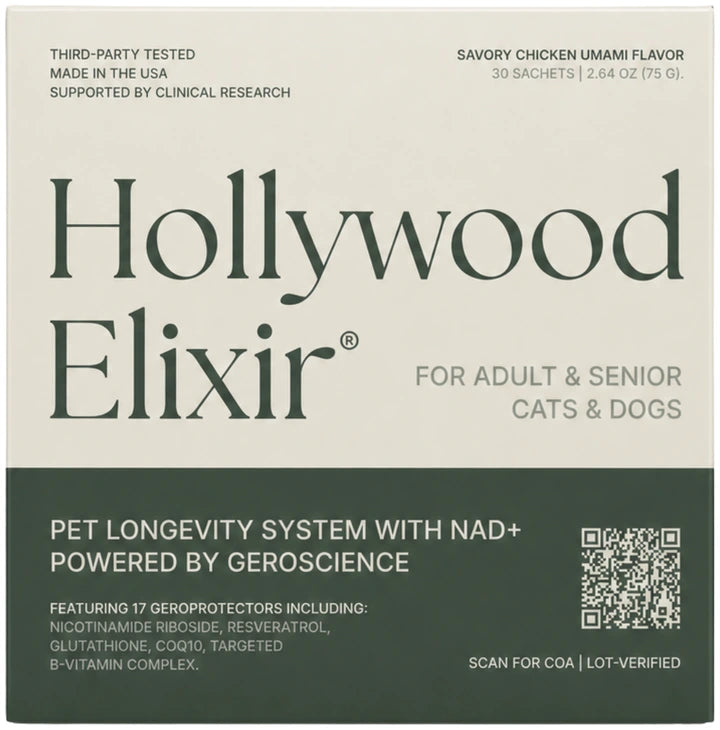
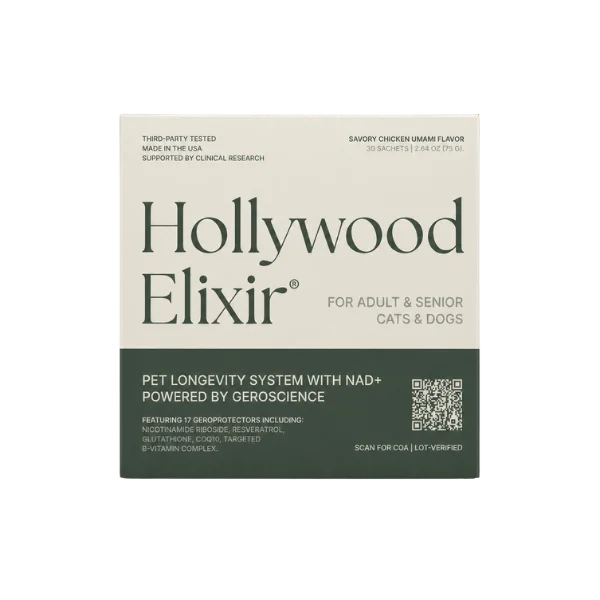
If you like the idea of spirulina but want broader, system-level support for aging and everyday resilience, Hollywood Elixir™ is designed to complement a thoughtful diet without hinging results on any single “superfood” ingredient.

Spirulina has a way of entering a cat owner’s life quietly: a recommendation from a groomer, a note in a forum thread, a green powder that promises “more vitality” in a teaspoon. The appeal is understandable. When you live with a cat long enough, you start to notice the small shifts—sleep that deepens, play that shortens, recovery that takes a little longer after stress. You don’t necessarily want a new regimen. You want something subtle that supports the long middle of a cat’s life.

Spirulina for cats is best understood in that same quiet register. It’s a concentrated microalgae used in tiny amounts, often as a topper, chosen for density rather than drama. There is feline research exploring immune-cell activity with spirulina exposure, and there is also practical reality: some cats like it, some refuse it, and some do better when nothing changes at all.

A careful owner’s dilemma is real: if a complete diet already covers the basics, why add another ingredient? The answer isn’t that spirulina is essential. It’s that longevity is rarely a single-nutrient story. Supporting the broader system—how a cat maintains energy, appetite, and resilience across years—can matter even when the diet is “good enough.” That’s also why many owners choose a system-level product rather than relying on one superfood. Hollywood Elixir™ is positioned for that broader network of aging support, while spirulina can remain an optional, well-sourced add-on when it genuinely suits the cat.

By La Petite Labs Editorial, ~15 min read

Featured Product:

  • Spirulina is a concentrated microalgae used in tiny amounts as a topper, not a meal replacement.
  • For many cats, the main “benefit” is simply a nutrient-dense addition that fits easily into routine.
  • Feline research has explored immune-cell activity in response to spirulina exposure, but outcomes should be framed as supportive, not curative.
  • Quality matters more than hype: prioritize testing, traceability, and contaminant controls over flashy claims (Summers S, 2022).
  • Start small and watch appetite and stool; palatability and tolerance are part of what determines success.
  • Cats have strict dietary requirements; spirulina should never be used to “fix” an inadequate feeding plan.
  • A science-minded approach often favors system-level aging support alongside optional add-ins like spirulina.

What Spirulina Is, and Why It Keeps Showing up for Cats

Spirulina is a blue-green microalgae used as a concentrated whole-food ingredient. For cats, it’s usually considered for its dense mix of protein, pigments, and naturally occurring micronutrients—less as a “vitamin replacement,” more as a small, steady addition to a broader wellness routine. In one feline-focused study, spirulina exposure was associated with enhanced phagocytic function of macrophages, a detail that helps explain why some owners connect it with everyday resilience rather than dramatic, overnight change (Qureshi, 1996).

Still, spirulina for cats belongs in the category of optional support. A complete, species-appropriate diet remains the foundation, and cats have specific nutrient requirements that plant-derived ingredients don’t automatically satisfy (RVA, 2020). The practical question becomes: can a small spirulina supplement for cats fit comfortably into an already good plan—without crowding out what matters most?

Scientific mitochondria render emphasizing oxidative balance supported by spirulina supplement for cats.

How Spirulina for Cats Fits into a Modern Wellness Routine

When people say “superfood,” they usually mean a food that carries a lot of nutritional weight in a small amount. Spirulina fits that definition: it’s concentrated, intensely pigmented, and typically used in tiny servings. For cats, the appeal is less about novelty and more about density—adding a small amount of something nutrient-rich without changing the entire diet. In practice, spirulina for cats is most often used as a topper or mixed into wet food, where it can be easier to accept than capsules.

It’s also important to keep expectations realistic. A spirulina supplement for cats is not a complete diet, and it shouldn’t be used to “balance” an unbalanced feeding approach. Cats have specific nutrient requirements that can be missed when plant ingredients are treated as nutritional stand-ins (RVA, 2020). Spirulina is best viewed as optional support layered onto a complete, cat-appropriate foundation.

Genetic structure image symbolizing long-term wellness supported by spirulina for cats.

The Subtle Reasons Owners Try a Spirulina Supplement for Cats

The most credible reasons owners explore spirulina supplements for cats tend to be subtle: coat appearance, day-to-day energy, and a sense that the cat is “holding steady” through seasonal changes or household stress. Spirulina contains pigments and other compounds that are often discussed in relation to oxidative balance (see: The Best Antioxidant Supplements for Cats). While direct feline outcome data is limited, spirulina has been studied for protective effects against oxidative stress in other species, which helps explain why it’s often framed as supportive rather than curative (AEH, 2017).

If you’re choosing the best spirulina for cats for general wellness, the quiet win is consistency: a small amount, used regularly, that doesn’t disrupt appetite or digestion. The moment it becomes a daily struggle, the cost outweighs the benefit.

Protein structure illustration showing biological precision behind best spirulina for cats.

Immune Support: What Feline Research Suggests Without Overpromising

Immune support is one of the most common reasons spirulina comes up in feline conversations. In a study involving cats, spirulina exposure was shown to enhance the phagocytic function of macrophages—cells involved in routine immune surveillance. That kind of finding is best interpreted as “interesting and plausible,” not as a promise that a supplement will prevent illness.

For owners, the practical takeaway is restraint. If your cat is healthy, spirulina for cats may be a reasonable, low-level addition. If your cat has an immune-mediated condition or is on immunomodulating medication, spirulina should be discussed with your veterinarian first. The best spirulina supplements for cats are the ones used with context, not optimism alone.

Black pug portrait showing gentle expression and daily vitality with best spirulina supplement for cats.

Protein Quality, Amino Acids, and Why Cats Still Need Real Food

Protein quality matters for cats, but it’s not always obvious from the front of a bag. Research comparing commercial cat foods has examined indispensable amino acid scores and other markers that help distinguish protein sources and overall formulation quality (Richards T, 2025). Spirulina contains protein, but it should not be treated as a primary protein solution for a carnivorous species.

Instead, think of spirulina powder for cats as a micro-addition: a small topper that may complement a high-quality diet rather than compensate for a mediocre one. If you’re unsure whether your cat’s food is truly complete and balanced, that question is more important than choosing between brands of spirulina.

Hollywood Elixir™ is amazing and makes my 13 y/o kitty young again!

— Jessie

She hopped up onto the windowsill again—first time in years.

— Charlie

“The best spirulina supplement for cats is the one that stays small, clean, and easy to stop.”

Best Spirulina for Cats: What “Best” Actually Means in Practice

The phrase “best spirulina supplement for cats” can be misleading, because the best choice depends on what you’re trying to accomplish: palatability, purity, or simplicity. Start with purity. Spirulina can vary widely by growing conditions, and quality control is the difference between a thoughtful supplement and a questionable one (Summers S, 2022). Look for third-party testing, clear labeling, and conservative serving guidance.

Next, consider form. Many owners prefer spirulina powder for cats because it can be mixed into wet food and adjusted easily. If your cat is sensitive to change, a product with minimal ingredients and no strong flavor masking is often the most realistic path to long-term use.

Close-up weimaraner showing calm strength and presence supported by spirulina supplement for cats.

Serving Size and Frequency: a Conservative, Cat-first Approach

Dosing is where responsible supplementation looks intentionally boring. There’s no universal “right amount” for every cat, and it’s not appropriate to treat spirulina like a medication. In a study evaluating increasing amounts of spirulina in the diets of healthy cats, palatability and owner-perceived effects were assessed, underscoring that tolerance and acceptance are part of the equation—not just the ingredient itself (Stefanutti D, 2023).

A practical approach is to start with a very small amount, watch stool and appetite for a week, and only then consider a gradual increase within the product’s label guidance. If your cat has any chronic condition, confirm the plan with your veterinarian before adding a spirulina supplement for cats.

Side-profile dog portrait highlighting focus and alertness supported by best spirulina supplement for cats.

Cats Are Not Small Dogs: Plant Ingredients and Feline Requirements

Spirulina is not a shortcut around feline nutritional biology. Cats are obligate carnivores with specific requirements that can be missed when diets lean too heavily on plant-derived ingredients. That matters because some owners encounter spirulina while exploring “natural” or “plant-forward” feeding trends and assume it can fill gaps.

If you’re using spirulina for cats, keep it in its proper lane: a small add-on to a complete, meat-based diet, not a bridge to a diet that’s nutritionally uncertain. The best spirulina for cats supports a good foundation; it doesn’t replace one.

Supplement breakdown graphic emphasizing no fillers approach within best spirulina supplement for cats.

Spirulina Types and Labels: What Matters More Than the Name

One overlooked consideration is what you’re actually buying when you buy “spirulina.” The label may say Spirulina platensis or Spirulina maxima, and while both are used in supplements, the more meaningful difference is quality control: cultivation conditions, drying methods, and contaminant screening. Safety discussions often reference broader animal data, including subchronic exposure work that did not show significant toxic effects under study conditions (Salazar M, 1998).

That background doesn’t guarantee safety for every cat or every product. If you want organic spirulina for cats, treat “organic” as a starting point, then verify testing and traceability. The best spirulina supplements for cats are the ones that can prove what they are—and what they are not.

When Spirulina Is the Wrong Fit for Your Cat’s Situation

Not every cat is a good candidate for spirulina supplements for cats. If your cat has a complex medical history, is on multiple medications, or has a condition where immune activity is already being managed, it’s worth slowing down and asking your veterinarian first. Spirulina is often discussed in the context of immune function, and feline research has explored immune-cell activity in response to spirulina exposure (Qureshi, 1996). That doesn’t make it “good” or “bad”—it makes it something to place thoughtfully.

Also consider the basics: appetite, stool quality, and hydration. If those are fragile, any new add-in can become the tipping point. When owners choose the best spirulina supplement for cats, the best choice is the one that respects the cat’s baseline: stable, predictable, and easy to discontinue if it doesn’t suit them.

“Quality control matters more than the word organic on the label.”

Lab coat detail emphasizing vet-informed standards supporting best spirulina supplement for cats.

Quality Signals That Separate the Best Spirulina Supplements for Cats

Quality is where spirulina becomes either a quiet asset or an unnecessary gamble. Because it’s grown in water, spirulina can concentrate what’s in its environment, which is why reputable sourcing and contaminant testing matter. Look for clear batch testing, transparent country of origin, and a label that doesn’t hide behind vague “proprietary” language (Summers S, 2022). If a brand can’t explain how it controls contaminants, it’s not the best spirulina for cats—no matter how attractive the marketing looks.

Organic spirulina for cats can be appealing, but “organic” alone isn’t the whole story; testing and traceability are the real safeguards. A good spirulina powder for cats should smell clean, mix easily, and come with storage guidance that protects freshness over time.

Shop Now
Ingredient still life illustrating clean formulation principles for spirulina powder for cats.

Powder, Tablets, or Chews: Choosing a Form Your Cat Accepts

If you’re comparing spirulina powder for cats versus tablets or chews, the decision is mostly about control and compliance. Powder is flexible: you can use a tiny pinch, blend it into wet food, and adjust without drama. Tablets can be convenient, but they’re harder to scale down, and some cats simply refuse them. In a study that evaluated increasing amounts of spirulina in the diets of healthy cats, palatability and owner perceptions were part of what was assessed—an important reminder that “works on paper” still has to work in a bowl (Stefanutti D, 2023).

Whichever form you choose, keep the goal modest: a consistent, low-friction addition. The best spirulina supplements for cats are the ones your cat will actually accept without turning meals into negotiations.

Shop Now
Lifestyle shot of dog owner and Hollywood Elixir aligned with organic spirulina for cats.

Diet First: Why Spirulina Cannot Fix Nutritional Gaps in Cats

Owners often ask whether spirulina can “replace” something missing from food. For most cats on complete and balanced diets, the bigger issue isn’t a single missing nutrient—it’s the long arc of maintaining condition, appetite, and comfort as years add up. Research comparing cat foods highlights how protein quality and amino acid profiles can vary across formulations, even when labels look similar (Richards T, 2025). Spirulina doesn’t solve that variability, but it can be a small, nutrient-dense add-on when the base diet is already solid.

If your cat is on a restricted or unconventional diet, be especially careful. Cats have specific dietary requirements that aren’t reliably met by plant-based approaches, and deficiencies can have real consequences (RVA, 2020). Spirulina for cats should never be used as a nutritional “patch” for an inadequate diet.

Shop Now

Side Effects and Tolerance: Reading Your Cat’s Early Signals

The most common side effects owners report with new supplements are ordinary: softer stools, brief gas, or a cat deciding the food is suddenly suspicious. These are usually dose-and-transition issues rather than signs of harm. A slow introduction is the simplest way to learn whether spirulina supplements for cats fit your household rhythm. In palatability-focused work that included healthy cats, owner perceptions were part of the evaluation—useful context for why “start small” is more than a cliché (Stefanutti D, 2023).

If vomiting, persistent diarrhea, facial itching, or appetite loss appears, stop and call your veterinarian. The goal is not to push through; it’s to keep the cat’s baseline stable. The best spirulina for cats is the one that doesn’t create new problems while you’re trying to support long-term well-being.

Spirulina for Senior Cats: a Gentle Add-on, Not a Promise

Aging cats are often the reason spirulina enters the conversation. Not because it’s a miracle ingredient, but because older cats can become more sensitive to small shifts—diet changes, stress, dental discomfort, or reduced activity. Spirulina is sometimes chosen as a gentle “nutrient-dense pinch” that owners hope will support everyday vitality (related: Anti-aging Supplements for Cats). Evidence in cats has explored immune-related activity in response to spirulina exposure, which helps explain why it’s framed as supportive rather than targeted (Qureshi, 1996).

For seniors, the best spirulina supplement for cats is the one that is cleanly sourced, easy to dose, and easy to stop. In older cats, simplicity is a feature: fewer variables, clearer observations, and less risk of confusing supplement effects with normal age-related change.

Side-by-side chart contrasting bioactives and fillers relative to organic spirulina for cats.

Liver and Kidney Considerations: Avoiding Unhelpful “Detox” Thinking

Spirulina is often discussed alongside “detox” language online, but that framing is rarely helpful for cat owners. The liver and kidneys already do the work of processing normal metabolic byproducts, and the more relevant question is whether a supplement adds avoidable burden through contaminants or poor formulation. Spirulina has shown protective effects against oxidative stress in non-feline species, which is interesting but not a direct promise for cats (AEH, 2017).

If your cat has known liver or kidney disease, don’t self-prescribe. Ask your veterinarian whether a spirulina supplement for cats fits the bigger plan, and prioritize products with transparent testing and conservative serving guidance.

Shop Now
Open package showing attention to detail consistent with spirulina supplements for cats standards.

Safety, Toxicity, and Product Purity: What We Can Say Responsibly

It’s reasonable to wonder whether spirulina is “safe,” and the honest answer is: it depends on the product and the cat. Spirulina has been evaluated in animal safety contexts, including subchronic exposure work in mice that did not show significant toxic effects under the study conditions (Salazar M, 1998). That’s reassuring as background, but it’s not a substitute for feline-specific guidance, nor does it address quality problems like contamination.

Treat spirulina supplements for cats like any add-on: choose a tested source, introduce gradually, and stop if your cat’s appetite or stool changes in a way that doesn’t settle quickly. Safety is rarely about a single ingredient in isolation; it’s about context, dose, and oversight.

Shop Now

Why System-level Longevity Support Still Matters Beyond Any Superfood

A careful, science-minded owner might ask: if my cat already eats well, why add anything at all? The most compelling answer isn’t “because spirulina has nutrients.” It’s that modern wellness is often about supporting the whole system that keeps a cat steady over time—energy, appetite, recovery from stress, and the subtle wear of aging. Spirulina for cats can be one small piece, but it’s still a single ingredient with variable quality and variable fit.

That’s why a system-level approach can make sense: instead of chasing one superfood, choose support designed around the broader metabolic network of aging. Spirulina can sit comfortably beside that kind of plan, rather than pretending to be the plan.

“Longevity is rarely a single-ingredient decision; it’s a system you support over time.”

Educational content only. This material is not a substitute for veterinary advice. Always consult your veterinarian about your cat’s specific needs. These statements have not been evaluated by the Food and Drug Administration. Products mentioned are not intended to diagnose, treat, cure, or prevent any disease.

Glossary

  • Blue-Green Algae: A common name for cyanobacteria; spirulina is marketed under this umbrella despite being used as a food ingredient.
  • Spirulina Powder: Dried, ground spirulina used as a topper; often easiest to introduce in very small amounts for cats.
  • Palatability: How willingly a cat eats a food or supplement; critical for success with any new add-in.
  • Third-Party Testing: Independent lab verification for contaminants and identity; a key quality signal for algae-based products.
  • Traceability: The ability to track an ingredient back to its origin and batch; helps reduce uncertainty in supplement quality.
  • Contaminants: Undesired substances (for example, heavy metals or unwanted microbes) that can be concentrated during algae cultivation.
  • Obligate Carnivore: A species that requires animal-derived nutrients to thrive; cats cannot rely on plant ingredients to meet all needs.
  • Complete and Balanced: A diet formulation standard indicating it meets established nutrient profiles for a life stage; supplements should not undermine this foundation.
  • Macrophage Phagocytosis: A normal immune process where cells engulf particles; spirulina exposure has been studied in cats in relation to this function.

Related Reading

References

Richards T. A Comparative Analysis of Creatine, Creatinine, Amino Acid Concentrations and Indispensable Amino Acid Scores of Grain-Free and Grain-Inclusive Commercial Extruded Adult Cat Foods.. PubMed Central. 2025. https://pmc.ncbi.nlm.nih.gov/articles/PMC12451408/

RVA. Nutritional inadequacies in commercial vegan foods for dogs and cats.. PubMed Central. 2020. https://pmc.ncbi.nlm.nih.gov/articles/PMC6968870/

Salazar M. Subchronic toxicity study in mice fed Spirulina maxima.. PubMed. 1998. https://pubmed.ncbi.nlm.nih.gov/9849634/

Qureshi. <i>Spirulina Platensis</i>Exposure Enhances Macrophage Phagocytic Function in Cats. PubMed. 1996. https://pubmed.ncbi.nlm.nih.gov/8872496/

AEH. Hepatoprotective efficacy of Spirulina platensis against lead-induced oxidative stress and genotoxicity in catfish; Clarias gariepinus.. PubMed. 2017. https://pubmed.ncbi.nlm.nih.gov/28554489/

Stefanutti D. Oral Palatability and Owners' Perception of the Effect of Increasing Amounts of Spirulina (Arthrospira platensis) in the Diet of a Cohort of Healthy Dogs and Cats.. PubMed. 2023. https://pubmed.ncbi.nlm.nih.gov/37106838/

Summers S. Evaluation of iron, copper and zinc concentrations in commercial foods formulated for healthy cats.. PubMed Central. 2022. https://pmc.ncbi.nlm.nih.gov/articles/PMC10812249/

Ahmed. Bioaccumulation of heavy metals in some commercially important fishes from a tropical river estuary suggests higher potential health risk in children than adults.. Nature. 2019. https://www.nature.com/articles/s41598-021-00467-4

FAQ

What is spirulina, and why do cat owners consider it?

Spirulina is a blue-green microalgae used as a concentrated whole-food ingredient. Cat owners usually consider it as a small topper for general vitality, especially when they want something nutrient-dense without changing the main diet.

It’s best viewed as optional support layered onto a complete, cat-appropriate feeding plan, not as a replacement for core nutrition. For broader, system-level aging support beyond any single ingredient, consider Hollywood Elixir™.

Is spirulina for cats actually useful for everyday wellness?

For many healthy cats, the “usefulness” is subtle: a nutrient-dense pinch that some owners feel supports steadiness over time. The key is not expecting dramatic changes, but noticing whether appetite, stool, and overall comfort remain stable.

If you want a more comprehensive approach that supports the broader aging network rather than a single superfood, you can pair that mindset with Hollywood Elixir™.

How might spirulina relate to immune function in cats?

Feline research has explored immune-cell activity in response to spirulina exposure, including enhanced phagocytic function of macrophages. That’s a plausible reason it’s discussed for general resilience.

It’s still not a substitute for veterinary care, vaccines, or a complete diet, and it shouldn’t be used to manage disease. For system-level support that doesn’t hinge on one ingredient, consider Hollywood Elixir™.

Is spirulina safe for cats when used as a supplement?

Safety depends on the cat and the product. Spirulina has been evaluated in animal safety contexts, including subchronic exposure work in mice without significant toxic effects under study conditions(Salazar M, 1998). That’s reassuring background, but it doesn’t replace feline-specific guidance or quality control.

Choose tested sourcing, introduce slowly, and stop if appetite or stool changes persist. For broader daily support that’s designed around aging systems, considerHollywood Elixir™.

Which cats should avoid spirulina or ask a vet first?

Cats with complex medical conditions, those on multiple medications, or those with immune-mediated issues should get veterinary guidance before adding spirulina. Because spirulina is often discussed in relation to immune activity, context matters more than enthusiasm.

Also pause if your cat has fragile digestion or inconsistent appetite; any new add-in can complicate the picture. For a system-level approach you can discuss with your vet, consider Hollywood Elixir™.

How much spirulina should I give my cat daily?

There isn’t a universal dose that fits every cat, and it’s not appropriate to treat spirulina like a medication. A conservative approach is to start with a very small amount within label guidance, then watch appetite and stool before making any changes.

If your cat is a senior or has chronic disease, ask your veterinarian to personalize the plan. For broader support that isn’t dependent on dose-tuning a single ingredient, consider Hollywood Elixir™.

What side effects can spirulina cause in some cats?

The most common issues are digestive: softer stools, brief gas, or a cat refusing food that suddenly smells different. These are often transition problems rather than signs of serious harm, especially when the introduction is abrupt.

Stop and call your veterinarian if vomiting, persistent diarrhea, itching, or appetite loss appears. For a steadier, system-level wellness approach that complements careful feeding, consider Hollywood Elixir™.

Can spirulina interact with medications or special veterinary diets?

Potential interactions depend on why your cat is medicated and what the diet is designed to control. The safest assumption is that any supplement can complicate a carefully managed plan, especially when appetite, hydration, or immune activity are part of the medical picture.

Bring the label to your veterinarian and ask whether it fits the current goals. If you want a broader longevity-focused option to discuss alongside your plan, consider Hollywood Elixir™.

Is spirulina okay for kittens, pregnant cats, or nursing queens?

Life stages with rapid growth or reproduction are less forgiving of “extras.” Because kittens and breeding cats have narrow nutritional margins, it’s best to avoid casual supplementation unless your veterinarian recommends it for a specific reason.

If you’re considering spirulina, ask your vet first and prioritize a complete life-stage diet. For adult cats where longevity support is the goal, consider Hollywood Elixir™.

Do some breeds or sizes respond differently to spirulina?

Breed is usually less important than the individual cat’s digestion, pickiness, and health history. Smaller cats may show digestive changes sooner if a new topper is introduced too quickly, simply because the relative change to the meal is larger.

Focus on tolerance and product quality rather than breed trends. For a consistent, system-level approach that doesn’t rely on breed-specific assumptions, consider Hollywood Elixir™.

Is spirulina for cats different from spirulina for dogs?

The ingredient may be the same, but the context isn’t. Cats are obligate carnivores with strict nutrient requirements, so spirulina should remain a minor add-on rather than a meaningful source of core nutrition. Dogs generally have more dietary flexibility.

For cats, the most important differences are dosing conservatism and product purity. For broader feline aging support beyond a single ingredient, consider Hollywood Elixir™.

How long does it take to notice changes after spirulina?

If you notice anything, it’s usually indirect and gradual: steadier appetite, normal stools, and a coat that looks a bit more polished over time. Many cats show no obvious “before and after,” which can still be a good outcome if the goal is quiet support.

Track one or two simple markers for a month, then decide whether it’s worth continuing. For a more comprehensive longevity strategy that doesn’t depend on visible quick wins, consider Hollywood Elixir™.

What should I look for in the best spirulina for cats?

Prioritize proof over promises: third-party testing, clear sourcing, and contaminant screening. Because spirulina can concentrate what’s in its growing environment, quality control is the real differentiator between products.

Choose a simple ingredient list and a form your cat will accept. For support that’s designed around broader aging systems rather than a single raw ingredient, consider Hollywood Elixir™.

Is organic spirulina for cats always the best choice?

Organic labeling can be a positive signal, but it doesn’t automatically guarantee purity, potency, or appropriate testing. For algae-based ingredients, traceability and contaminant screening are often more meaningful than the single word “organic” on the front.

If you choose organic, still ask for batch testing and clear origin information. For a broader, system-level wellness option that complements careful sourcing choices, consider Hollywood Elixir™.

Should I use spirulina powder for cats or capsules?

Powder is often easier for cats because you can use a tiny amount and mix it into wet food. Capsules and tablets can be convenient for humans, but they’re harder to scale down and can trigger refusal in picky cats.

Whichever form you choose, the best option is the one your cat accepts without stress. For a daily routine built around broader aging support, consider Hollywood Elixir™.

Can I mix spirulina into wet food without ruining taste?

Often, yes—if you start small. Spirulina has a distinct smell, so the goal is to keep the first servings nearly imperceptible, then adjust only if your cat remains comfortable with the change. Palatability matters, and it has been specifically evaluated in cats receiving increasing amounts.

Mix thoroughly, serve fresh, and avoid introducing it on a day your cat is already stressed. For a routine that supports longevity without relying on taste-sensitive toppers, consider Hollywood Elixir™.

Can spirulina replace vitamins or balance a homemade diet?

No. Spirulina is not a complete vitamin-mineral premix, and it can’t reliably “balance” a homemade or unconventional diet. Cats have specific requirements that plant-derived ingredients don’t automatically meet, and nutritional gaps can affect health over time.

If you feed homemade, work with a veterinary nutritionist and use a properly formulated supplement plan. For system-level aging support that complements a sound diet, consider Hollywood Elixir™.

What does research say about spirulina supplements for cats?

The cat-specific research base is smaller than many owners expect. Still, there are feline studies exploring immune-cell activity with spirulina exposure, and separate work evaluating palatability and owner-perceived effects when spirulina is added to healthy cats’ diets.

The most responsible conclusion is modest: it may be a tolerable add-on for some cats, with outcomes that are typically subtle. For broader longevity support beyond a single ingredient, consider Hollywood Elixir™.

When should I call my vet about spirulina use?

Call if your cat has persistent vomiting, diarrhea, appetite loss, facial itching, or sudden behavior changes after starting any supplement. Also call before starting if your cat is a senior with multiple diagnoses, or if they’re on a tightly managed prescription diet.

Bring the product label and describe exactly how you introduced it; that detail helps your veterinarian interpret what’s happening. For a vet-friendly, system-level longevity option to discuss, consider Hollywood Elixir™.

How do I decide between spirulina and a broader longevity supplement?

Decide based on scope. Spirulina is a single ingredient that may fit as a small topper if your cat tolerates it and the product is well tested. A broader longevity supplement is usually chosen when you want support that’s designed around the whole aging network rather than one nutrient-dense food.

Many owners use spirulina as an optional add-on while relying on a more comprehensive daily foundation for long-term goals. If that’s your preference, consider Hollywood Elixir™.

5K+ Happy Pet Parents

Excellent 4.8

Spirulina for Cats | Why Thousands of Pet Parents Trust Hollywood Elixir™

"My go-to nutrient-dense topper. Packed with 16 powerful anti-aging actives and superfoods!"

Chanelle & Gnocchi

"We go on runs pretty often; he use to get tired halfway through, but lately, he's been keeping up without any problem."

Cami & Clifford

"He seems more happy overall. I've also noticed he has more energy which makes our walks and playtime so much more fun."

Olga & Jordan

"I want her to live forever. She hasn't had an ear infection since!"

Madison & Azula

"My go-to nutrient-dense topper. Packed with 16 powerful anti-aging actives and superfoods!"

Chanelle & Gnocchi

"We go on runs pretty often; he use to get tired halfway through, but lately, he's been keeping up without any problem."

Cami & Clifford

"He seems more happy overall. I've also noticed he has more energy which makes our walks and playtime so much more fun."

Olga & Jordan

"I want her to live forever. She hasn't had an ear infection since!"

Madison & Azula

"My go-to nutrient-dense topper. Packed with 16 powerful anti-aging actives and superfoods!"

Chanelle & Gnocchi

"We go on runs pretty often; he use to get tired halfway through, but lately, he's been keeping up without any problem."

Cami & Clifford

"He seems more happy overall. I've also noticed he has more energy which makes our walks and playtime so much more fun."

Olga & Jordan

"I want her to live forever. She hasn't had an ear infection since!"

Madison & Azula

"My go-to nutrient-dense topper. Packed with 16 powerful anti-aging actives and superfoods!"

Chanelle & Gnocchi

"We go on runs pretty often; he use to get tired halfway through, but lately, he's been keeping up without any problem."

Cami & Clifford

"He seems more happy overall. I've also noticed he has more energy which makes our walks and playtime so much more fun."

Olga & Jordan

"I want her to live forever. She hasn't had an ear infection since!"

Madison & Azula

SHOP NOW