


Eggshell Membrane for Dogs

What three dog trials found for stiff joints, how much they gave, how safe it looks, and where the proof runs thin.

By La Petite Labs Editorial 12 min read

As Seen On

  • AVMA, American Veterinary Medical Association
  • Today’s Veterinary Business
  • Petfood Industry
Woman cuddling a golden retriever and a collie beside a Pet Gala box and a food bowl
Pet Gala™ Skin & Coat Supplement for Dogs

15 science-backed barrier actives

From$43/moSave up to 47%Save up to 46%Shop Now
Contents

Eggshell Membrane for Dogs

What three dog trials found for stiff joints, how much they gave, how safe it looks, and where the proof runs thin.

Eggshell membrane may ease joint pain in dogs, and the trial results are mixed. In the main trial, 51 dogs with stiff joints took eggshell membrane or a placebo for six weeks. Owners scored less pain and better movement after one week. At six weeks, those two scores no longer clearly beat placebo, though vets' pain scores and owners' quality-of-life scores did.1

This guide covers what eggshell membrane is, what three dog trials found, how much they gave, how safe it looks, and what vets use first for a stiff dog.

  • What it is: The thin, protein-rich film between an egg's shell and its white, sold as a supplement ingredient.1, 5
  • What it's for: Stiff or sore joints. It carries collagen, hyaluronic acid and chondroitin sulfate.1
  • Dog evidence: The three placebo-controlled trials we found enrolled 130 dogs in all. Some pain and mobility scores improved, and others didn't.1, 2, 3
  • Amount studied: About 6 mg per pound of body weight once a day, which is 150 mg for a 25 lb dog.1
  • Safety: No serious side effects showed up in trials lasting six weeks and 90 days. Dogs with egg allergy were kept out.1, 3
  • See a vet if: Your dog limps, is slow to rise or avoids stairs. Stiffness needs a diagnosis before a supplement.
  • In Pet Gala: No. Pet Gala has no eggshell membrane. It's daily skin, coat and nail nutrition.

What is eggshell membrane?

Eggshell membrane is the thin, flexible layer between the hard shell of a chicken egg and the egg white.1 It is about 90% protein, with small amounts of fat, sugars and minerals.5

Much of that protein is fibrous, such as type I collagen. Woven through it are compounds better known from joint supplements: hyaluronic acid, chondroitin sulfate and dermatan sulfate.1

Supplement makers separate the membrane from the shell and sell it for joints because of that mix.5, 9 On a label it appears as eggshell membrane. Research papers shorten it to ESM, and the brand used in the main dog trial is NEM.1

Eggshell membrane and eggshell are two separate materials. The shell is mostly calcium carbonate, a mineral, while the membrane is protein.6

Woman cuddling a golden retriever and a fluffy white dog while holding a Pet Gala box beside a food bowl

What does eggshell membrane do for a dog's joints?

Eggshell membrane is given to dogs to ease sore, stiff joints. How it might do that comes from laboratory work on dog cartilage cells.

In a 2026 study, eggshell membrane peptides lowered several inflammation signals in those cells. They also limited the loss of type II collagen and aggrecan, two key markers of healthy cartilage.7 In a 2024 study, eggshell membrane proteins helped cartilage cells from newborn puppies recover after chemical stress.8

Both studies were done in a dish. They give a reason to test eggshell membrane in living dogs, and the trials below are where that was done.

Woman holding a Pet Gala box beside a curly-coated brown dog outdoors

Does eggshell membrane help dogs with arthritis?

Eggshell membrane helped on some measures and not on others in the one trial that tested it alone. Vets at eight clinics gave 51 dogs with stiff, sore joints either eggshell membrane or a placebo once a day for six weeks.1

  • After one week: owners scored joint function 20.5% better and pain 19.4% better than placebo.1
  • After six weeks: those two owner scores no longer differed significantly from placebo, while owners' quality-of-life scores were 26.8% better.1
  • Vet exams at six weeks: pain was 23.6% better than placebo. Mobility and lameness were not significantly different.1

The ingredient's maker sponsored the trial, and two of the authors worked for it.1

Woman cuddling a Dalmatian while holding a Pet Gala box

What did the trials of eggshell membrane blends find?

Two more placebo-controlled trials tested eggshell membrane inside a blend, and both leaned its way.

A 2019 pilot gave 27 arthritic dogs an eggshell membrane-based supplement or a placebo for 12 weeks, and 22 finished. One owner mobility score favored the supplement at day 84. A second owner score, for pain, did not, and the authors called the changes small.2

A 2025 trial of a similar formula gave 52 arthritic dogs a soft chew or a placebo for 90 days. The chew was 3.3% eggshell membrane, with krill, astaxanthin, hyaluronic acid and Boswellia. Owners' scores for how much pain got in the way of daily life improved more than with placebo. The chew's maker funded the trial.3

A blend's result belongs to the whole recipe.

Cream-colored dog resting on a person's lap beside a Pet Gala box and a food bowl

Does eggshell membrane rebuild cartilage?

We found no study in which eggshell membrane rebuilt cartilage in a dog. What the main trial reported is a change in a blood marker.

The marker is CTX-II, a fragment of type II collagen released as cartilage breaks down. In the 26 dogs with usable blood samples, CTX-II was 47.9% better with eggshell membrane than with placebo at six weeks.1 The placebo group's level rose, and the eggshell membrane group's fell a little.1

That's a slower breakdown signal in the blood. The trial's outcomes were owner scores, vet exams and this blood test, with no scans of the joints, so cartilage itself was never measured.

Eggshell membrane helped on some measures and not on others in the one trial that tested it alone.

How much eggshell membrane did the dog trials give?

We found no official recommended amount of eggshell membrane for dogs. What exists is what the trials gave.

  • Eggshell membrane alone: tablets once a day, supplying 150 mg for every 25 lb of body weight. That is about 6 mg per pound, or 13.5 mg per kg.1
  • Where that figure came from: the researchers scaled it from the 500 mg a day used in human trials.1
  • In a blend: one soft chew a day for dogs weighing 15 to 35 kg (33 to 77 lb), for 90 days. Eggshell membrane made up 3.3% of the chew.3

How long before you'd notice anything? In the main trial, owners' scores improved within one week.1 In the 2025 blend trial, vets' exam scores in the chew group were significantly better than at the start from day 60.3

Going by those trials, six to eight weeks at the label amount is a fair test. Write down what your dog can do before you start, such as stairs climbed or minutes walked, and compare at the end. If nothing has changed, stop and tell your vet.

Hand lifting a sachet from an open Pet Gala box beside a dog's long golden coat

Is eggshell membrane good for a dog's skin and coat?

Eggshell membrane hasn't been tested for skin or coat in dogs, as far as we could find. The hints come from people and from cats.

In a 12-week trial, 88 adults took 450 mg a day of a hydrolyzed eggshell membrane or a placebo. Facial skin and hair looked better with the supplement, and nails showed no change.12 In 24 Ragdoll kittens, eggshell membrane fed with hyaluronic acid for 56 days gave a glossier coat and less water loss through the skin than a plain diet.13

Pet Gala, our skin, coat and nail powder, has no eggshell membrane. Collagen peptides and hyaluronic acid appear on its label as separate, measured ingredients. Our guide to marine collagen peptides for dogs explains that form of collagen.

Woman leaning toward a golden retriever in a kitchen while holding a Pet Gala box

Is eggshell membrane safe for dogs?

Eggshell membrane looked safe in the dog trials. In the main one, no dog had a serious side effect over six weeks, and blood tests showed no changes tied to the supplement.1 In the 90-day blend trial, no side effects were reported at all.3

Laboratory safety work points the same way. Rats given up to 2,000 mg per kg of body weight every day for 90 days showed no signs of toxicity.9

The limits are time and numbers. The longest dog trial ran 90 days, and the three trials together enrolled 130 dogs.1, 2, 3 We found no study that followed dogs on eggshell membrane for longer.

Man cuddling two dogs while holding a Pet Gala box

What are the side effects of eggshell membrane in dogs?

Side effects of eggshell membrane were no more common than with placebo in the main dog trial. Four dogs on eggshell membrane and five on placebo had minor problems, mostly vomiting or loose stool, plus two rashes. The vets judged every case unrelated to the tablets.1

The real caution is egg allergy. Dogs with a known allergy to eggs were kept out of that trial, so their risk is untested.1 Egg is a less common trigger than beef or dairy. It still accounted for 4% of 297 dogs with food-related skin reactions in one review.10

Stop the supplement and call your vet if your dog starts vomiting, itching or coming out in a rash.

Which form is best: tablet, soft chew or powder?

Eggshell membrane reached dogs in two forms in the trials: a once-daily tablet and a soft chew. We found no trial that compared forms, so the best one is the one your dog will take every day.

  • Tablets: used in the main dog trial, with the amount set by body weight.1
  • Soft chews: used in the 2025 blend trial. That chew carried four other joint ingredients.3
  • Powders: easy to stir into food. A powder was used in the cat coat study, and we found no dog trial of one.13

What's inside matters more than the shape. Eggshell membrane is hard to dissolve, so makers have developed different ways to process it.5 The powder in the cat study listed 6.8% collagen and 0.16% chondroitin sulfate, by its maker's figures.13 Two products with the same words on the front can differ a good deal inside.

A blend's result belongs to the whole recipe.

Woman in a white coat sitting with a pug while holding a Pet Gala box

DVM Voice: Clinical Vignette of When Skin Changes Point Deeper Than the Surface

Case contributed by Sarah Calvin, DVM

Rosey, a 10-year-old Shih Tzu, was brought in after two weeks of paw redness and head shaking. Her owner had also noticed lower energy, thinning abdominal hair, and mild generalized itchiness over the previous few months.

Examination showed inflammation in the ears, skin folds, and paws. Testing confirmed mixed yeast and bacterial infections, while parasites and fungal disease were ruled out. Because Rosey’s skin changes appeared alongside reduced energy and coat thinning, her veterinarian performed a broader workup, which revealed hypothyroidism as a likely underlying contributor.

Her care required a staged approach: treating the infections, addressing the thyroid imbalance, and then restoring the skin barrier through diet, bathing support, paw care, and omega-3 supplementation.

Six months later, Rosey’s owner reported a thicker coat, fewer tangles, less breakage, no itch, and restored energy.

Clinical takeaway: Rosey’s case shows why skin and coat changes should not be treated as cosmetic alone. Healthy skin depends on immune balance, endocrine health, nutrition, barrier integrity, and daily support for resilient coat growth.

Single-case vignette. Not generalizable. Veterinary diagnosis and oversight are essential for itching, redness, ear irritation, hair thinning, recurrent infections, or suspected endocrine disease.

Explore Pet Gala Research →
Woman smiling beside a chocolate-brown dog while holding a Pet Gala box

How do you read an eggshell membrane label?

Read an eggshell membrane label for three things: the name, the amount and the company it keeps.

  • The name: look for the words eggshell membrane. Plain eggshell or eggshell calcium means the mineral shell.6
  • The amount: a figure in mg per tablet or chew. Compare it with the 150 mg per 25 lb used in the main dog trial.1
  • The other actives: blends add ingredients such as krill, hyaluronic acid and Boswellia.3 A proprietary blend with one total weight hides how much eggshell membrane is in it.

Pet Gala, our own skin and coat powder, prints every active amount on its label, and eggshell membrane isn't one of them. Any supplement label should be that plain.

Hand petting a brown dog beside a Pet Gala box and a bowl of food

Eggshell membrane vs collagen, UC-II and glucosamine

Eggshell membrane is a whole material with several joint compounds in it. The products that sit beside it on the shelf are narrower.

  • Collagen powders: supply collagen only. Eggshell membrane supplies mostly type I collagen, along with hyaluronic acid and chondroitin sulfate.1
  • UC-II: undenatured type II collagen. A 2022 review put it in one group with eggshell membrane products.4
  • Glucosamine and chondroitin: in that review, these showed no pain-relief effect in dogs or cats.4

The review covered 72 trials. It rated the collagen group's effect as weak, mainly because the trials were small and loosely measured, and it rated omega-3s highest.4 Our guides to UC-II for dogs, chondroitin sulfate for dogs and collagen for dogs go deeper.

German shepherd raising a paw beside a Pet Gala box on a small table

Can you peel the membrane from kitchen eggs instead?

Peeling the membrane from kitchen eggs won't give your dog the eggshell membrane that was tested. The trial ingredient was a processed product in a tablet, measured at 150 mg per 25 lb of body weight.1 A membrane peeled at home has no known amount, and we found no dog study of it.

Crushed shell is another thing again. Shell is mostly calcium carbonate, so it works as a calcium source, and the membrane research says nothing about it.6

If you'd like to feed eggs as food, our guide to eggs and egg yolk for dogs covers how.

Which dogs is eggshell membrane for, and which should skip it?

Eggshell membrane suits an adult dog with mild to moderate joint stiffness that a vet has already checked. Dogs like that are who the trials enrolled.1, 3

  • Adult and senior dogs: the main trial took dogs aged 3 to 14 years, weighing 10 to 100 lb, with stiffness that had lasted at least 3 months.1
  • Puppies: not studied. No dog under 18 months was enrolled.1
  • Pregnant or nursing dogs: not studied. Both larger trials kept them out.1, 3
  • Dogs with egg allergy: skip it unless your vet says otherwise. Allergic dogs were excluded.1
  • Dogs on pain medicine: ask your vet first. Dogs in the main trial came off anti-inflammatory drugs two weeks before starting, so the pairing went untested.1

Never stop a prescribed pain medicine to try a supplement in its place. Eggshell membrane is an add-on at most. The trials tested it in mild to moderate stiffness, and severe pain needs more.

Is eggshell membrane different for dogs and cats?

Eggshell membrane has been put to different tests in dogs and cats. Dogs have the joint trials, and cats have far less.

For dogs, three placebo-controlled trials tested it for arthritis pain and stiffness, alone or in a blend.1, 2, 3

For cats, we found no placebo-controlled joint trial. One report followed 71 senior cats on a blend chew for 60 days. In it, 63% of owners said mobility improved, and the report describes no placebo group.14 A second study fed eggshell membrane to 24 healthy Ragdoll kittens and measured coat and skin, leaving joints out.13

Amounts don't carry across either. The dog trial set its amount by body weight, while the cat studies used one chew a day or a fixed level in food.1, 13, 14

Don't hand a dog chew to a cat on the strength of the dog trials. Our guide to eggshell membrane for cats covers the feline studies.

Man leaning toward a golden retriever while holding a Pet Gala box beside a food bowl

What are the alternatives for a stiff or arthritic dog?

The best-proven help for an arthritic dog comes from elsewhere, with eggshell membrane as a possible extra. Vets build a plan from several parts:

  • Weight loss: even modest loss improves function in overweight dogs with arthritis.
  • Anti-inflammatory drugs (NSAIDs): the most predictably effective treatment.
  • Omega-3 EPA: improved gait and mobility in dogs, and lowered the need for NSAIDs.
  • Bedinvetmab: an antibody injection given every 30 days for moderate to severe signs.
  • Exercise: regular and controlled.11

Among supplements, a 2022 review found the clearest pain-relief evidence for omega-3s.4 Our guide to green-lipped mussel for dogs covers one omega-3 source.

Brown-and-white dog raising a paw beside a Pet Gala box held in a person's hand

When should a stiff dog see the vet?

A stiff dog should see the vet before you start eggshell membrane or any other joint supplement. Arthritis is common and easy to miss. It can begin in young dogs, yet the signs usually go unnoticed until a dog is 5 to 13 years old.11

Book a visit if your dog:

  • is slow to rise, especially after a long rest;
  • has trouble going up or down stairs;
  • jumps or plays less than before;
  • limps, even if only now and then.11

Go the same day if your dog won't put weight on a leg or cries out when touched. Our guide to pain, inflammation and arthritis in dogs and cats explains how the three differ.

Is eggshell membrane in Pet Gala?

No. Pet Gala doesn't contain eggshell membrane, and it isn't a joint supplement.

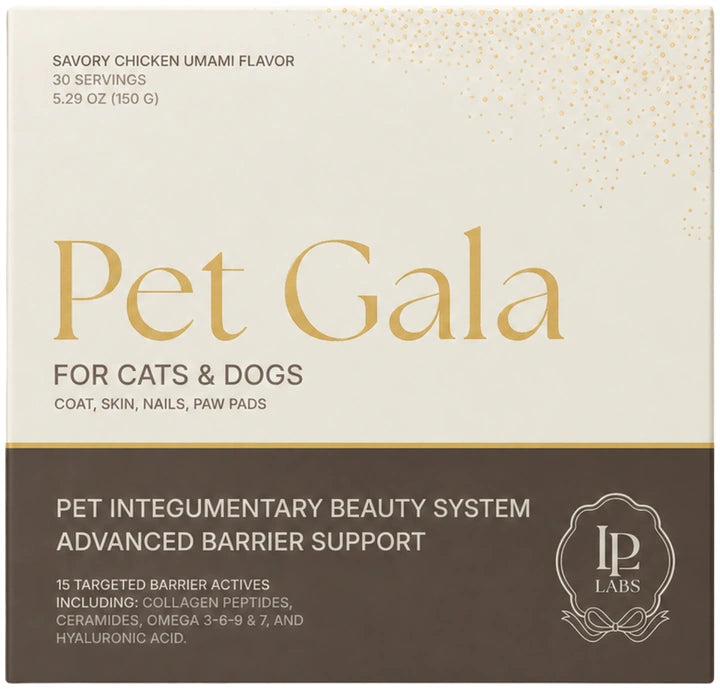
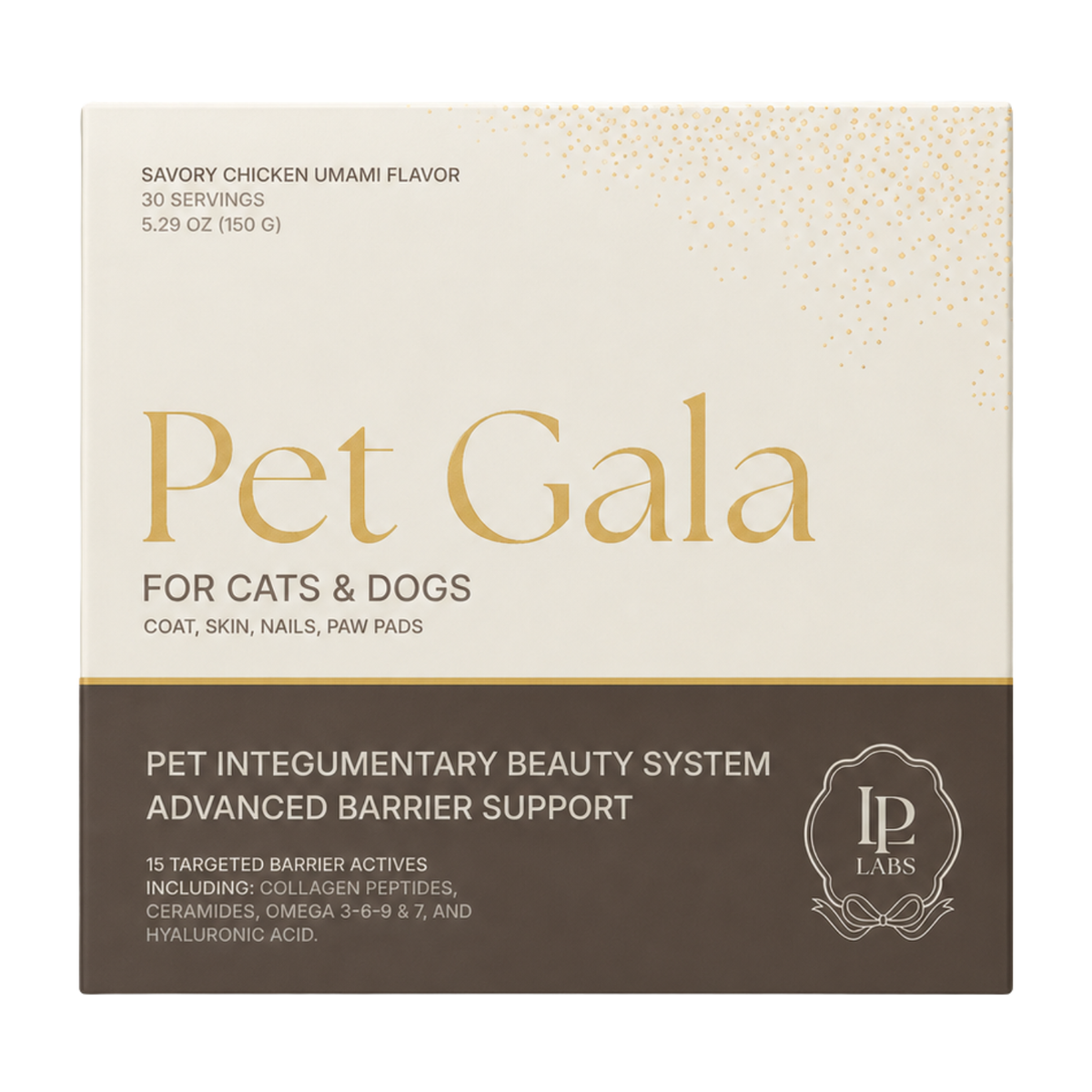
It's a daily skin, coat and nail nutrition powder for dogs and cats. Eggshell membrane is a natural mix of collagen and hyaluronic acid. Pet Gala supplies those two as separate, measured ingredients: 500 mg of Marine Collagen Peptides and 50 mg of Hyaluronic Acid per sachet, along with 100 mg of MSM. Every active amount is printed on the label.

In this formula they are there for skin, coat and nails. Pet Gala hasn't been tested for arthritis, joint pain or mobility, so it's no stand-in for the eggshell membrane in the trials above.

The powder is stirred into food once a day: half a sachet for dogs under 7 lb, one from 7 to 30 lb, and two over 30 lb. It's flavored with chicken, so check with your vet first if your dog has a food allergy.

If your dog's coat, skin or nails need attention too, see the full Pet Gala formula and serving guide. Our guides to hyaluronic acid for dogs and MSM for dogs explain two of those ingredients, and the best supplements for dog nails compares products.

A stiff dog should see the vet before you start eggshell membrane or any other joint supplement.

Educational content only. This material is not a substitute for veterinary advice. Always consult your veterinarian about your dog’s specific needs. These statements have not been evaluated by the Food and Drug Administration. Products mentioned are not intended to diagnose, treat, cure, or prevent any disease.

Glossary

Eggshell membrane: The thin protein layer between an egg's shell and its white, used as a supplement ingredient.

Glycosaminoglycans: Long sugar chains such as hyaluronic acid and chondroitin sulfate, which are part of cartilage.

Osteoarthritis: Long-term joint disease in which cartilage breaks down and the joint becomes painful and stiff.

CTX-II: A fragment of type II collagen that enters the blood as cartilage breaks down.

Placebo-controlled trial: A study in which some animals get a look-alike with no active ingredient, for comparison.

NSAIDs: Non-steroidal anti-inflammatory drugs such as carprofen and meloxicam, prescribed by vets for arthritis pain.

Related Reading

References

Numbered references identify the sources used for specific claims. Read the study design, species and evidence boundaries alongside each finding.

FAQ

Does Pet Gala contain eggshell membrane?

No. Pet Gala has no eggshell membrane and isn't a joint supplement. It's a daily skin, coat and nail powder that lists marine collagen peptides, hyaluronic acid and MSM as separate ingredients, with every amount printed on the label.

How long does eggshell membrane take to work in dogs?

In the main dog trial, owners' pain and function scores beat placebo after one week of eggshell membrane. In a 90-day blend trial, vets' exam scores were clearly better from day 60. If you see no change after six to eight weeks, tell your vet.

How much eggshell membrane would a 50 lb dog get at the trial amount?

The main dog trial gave 150 mg of eggshell membrane for every 25 lb of body weight once a day, which works out to 300 mg for a 50 lb dog. No official amount exists, so follow your product's label and check with your vet.

Is eggshell membrane the same as eggshell powder?

No. Eggshell powder is the ground mineral shell, mostly calcium carbonate, and it's used as a calcium source. Eggshell membrane is the protein film inside the shell. Joint research on the membrane tells you nothing about shell powder.

Can eggshell membrane replace my dog's arthritis medicine?

No. We found no trial comparing eggshell membrane with prescription pain relief, and dogs in the main trial had stopped anti-inflammatory drugs before it began. Keep giving prescribed medicine unless your vet changes the plan.

Is eggshell membrane safe for dogs with egg allergies?

It hasn't been tested in them. Dogs with a known allergy to eggs were excluded from the main eggshell membrane trial, so check with your vet before giving it to a dog with any food allergy.

What is NEM for dogs?

NEM is a brand of eggshell membrane made by ESM Technologies. It's the ingredient used in the 51-dog trial, where dogs received 150 mg per 25 lb of body weight once a day for six weeks. The company also sponsored that trial.

Does eggshell membrane help hip dysplasia in dogs?

The main trial included dogs with sore hips, knees, elbows and shoulders, and it reported eggshell membrane results for the whole group, with no separate hip dysplasia finding. A dog with hip dysplasia needs a vet's plan first.

Can I give eggshell membrane with fish oil or glucosamine?

One tested chew paired eggshell membrane with krill, a source of omega-3 fats, and reported no side effects in 90 days. We found no dog trial pairing it with glucosamine. Ask your vet first, and add one supplement at a time.

Black-and-white dog between a bowl of food and a Pet Gala box held in a person's hands

Discover LPL-01: How This Fits Into a Complete Canine Integumentary Support System

Skin, coat, and nails aren’t cosmetic features. They’re the visible surface of deeper biological systems—barrier function, hydration balance, structural protein turnover, and lipid integrity—working in concert.

When these systems fall out of sync, it shows: dull coat, shedding, dryness, brittleness, sensitivity.

This article explores one piece of that puzzle. If you want to understand how true coat quality and skin resilience are built—and what actually moves the needle—you need to zoom out.

Start with the underlying science:

Keep exploring

What would you like to understand next?

Search practical guides about skin, coat, barrier health, ingredients, and daily care for dogs.