Silica for Dogs

Understand Silica’s Role in Cartilage, Bone, and Skin Before Supplementing

Portrait of Dr. Sarah Calvin, DVM
Veterinary Reviewer

Reviewed by Dr. Sarah Calvin, DVM

Dr. Sarah Calvin, DVM is a small-animal veterinarian with interests in dermatology and internal medicine. She supports La Petite Labs by helping ensure our skin, coat, and nail education remains biologically accurate, conservative, and easy for pet parents to understand. A graduate of Washington State University, she has clinical experience in internal medicine, diagnostic ultrasonography, and nutrition-focused care.

Essential Summary

Why is silica for dogs important?

Silica for dogs is often discussed for coat, skin, nails, and overall “well-kept” presentation. Many diets already contain some silica, so supplementation is usually about enhancing visible condition rather than filling a clear gap. Choose pet-specific products, avoid silica gel packets, and ask your veterinarian if your dog has kidney or urinary concerns.

Pet Gala™ supports the daily signals owners care about most—comfortable-looking skin, a polished coat, and strong, clean nails—by focusing on whole-body beauty support rather than a single mineral. It’s an easy ritual that complements a complete diet and helps visible care show up in brushing, bathing, and everyday photos.

When people search for silica for dogs, they’re rarely chasing a chemistry lesson. They’re chasing a look: the coat that catches light when your dog turns, the skin that seems comfortable instead of tight or flaky, the nails that feel strong and clean when you trim them. Those are the signals that reassure you your dog is cared for—quiet proof that your routines are working.

Silica is also a word that gets used loosely. It can describe naturally occurring silica in ingredients, silica used in food processing, and even silica gel packets that come in packaging. Meanwhile, many complete dog foods already contain silica as part of their overall nutrient composition, and that composition can vary between adult and senior formulas. So the question isn’t just “Should I add silica?” It’s “What kind of support helps my dog look and feel well-kept, consistently, without taking unnecessary risks?”

This page keeps the focus on what you can actually observe—shine, softness, comfort, and grooming ease—while staying honest about safety and form. It also answers the question a careful, science-minded owner will ask: if silica may already be present in diet, why choose a product anyway? Because the best results rarely come from one nutrient; they come from a balanced, repeatable routine that supports the skin–coat–nail system as a whole. That’s the role Pet Gala™ is designed to play: daily beauty support that shows where it matters.

By La Petite Labs Editorial, ~15 min read

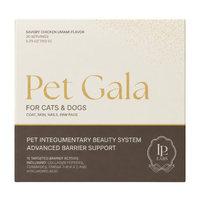
Featured Product:

  • “Silica for dogs” usually reflects a desire for visible improvements: coat shine, comfortable skin, and tidy nails.
  • Many complete diets already contain silica, and levels can vary by life stage and formula, so supplementation is often about refinement, not replacement.
  • Not all “silica” is the same; form and intended use matter, which is why pet-specific products are the safest default.
  • Avoid household or industrial sources, and treat silica gel packets as a separate safety issue, not a supplement.
  • The best silica supplements for dogs are typically those that support the full skin–coat–nail picture, not a single-ingredient bet.
  • Watch for quality signals: transparent sourcing, testing, clear directions, and a formula your dog tolerates consistently.
  • Pet Gala™ stays relevant for science-minded owners by supporting visible condition through a broader beauty routine, not high-dose mineral experimentation.

Silica in Canine Beauty Care: What Owners Notice First

Silica shows up in pet nutrition in more than one way: as a naturally occurring trace component in ingredients, and as a form used in manufacturing (often as an anticaking agent). In everyday language, “silica for dogs” usually points to the first idea—supporting the look and feel of skin, coat, and nails—while also raising practical questions about safety and product quality. Many complete diets already contain some silica as part of their overall nutrient composition, and levels can vary across adult and senior formulas (German, 2025).

For beauty-minded care, the goal isn’t chasing a single mineral like a magic switch. It’s creating the kind of daily support that shows: a coat that looks polished after brushing, skin that seems comfortable, and nails that feel strong and clean. That’s why a silica supplement for dogs is best viewed as one piece of a broader “visible condition” routine—alongside protein quality, fatty acids, hydration, grooming, and gut comfort. When owners choose best silica supplements for dogs, they’re often really choosing consistency, ingredient clarity, and a formula designed for how wellbeing presents day to day.

Coat health illustration symbolizing beauty support via best silica for dogs.

What Silica Is, and Why Form Matters for Dogs

Silica is a broad term that can refer to silicon dioxide and related forms. In pet contexts, it may appear naturally through ingredients, or as a processing aid in small amounts. That distinction matters because “silica” isn’t one uniform substance with one uniform effect. Research evaluating synthetic amorphous silicas in animal models highlights that exposure route and material type influence safety considerations (Arts JH, 2007). For pet parents, the practical point is to choose pet-intended products and avoid non-food or industrial sources.

When people search for silica for dogs, they’re usually looking for visible improvements: a coat that reflects light, skin that doesn’t look flaky, and nails that don’t seem brittle (see: Best Skin & Coat Supplements for Dogs). Those are reasonable goals, but they’re best pursued with a formula that supports multiple aspects of appearance and comfort. A single-ingredient approach can miss the bigger picture of what makes a dog look vibrant.

Close-up collagen structure tied to skin support from silica gel for dogs.

Visible Signals: Skin Comfort, Coat Luster, and Strong Clean Nails

The “beauty logic” for dogs is simple: what you see is what you trust. A glossy coat, calm-looking skin, and strong nails are signals that your dog’s daily care is working. Silica supplements for dogs are often discussed in that context because silicon is associated broadly with connective tissues and structural integrity, even though direct, dog-specific beauty outcomes can be hard to isolate. What we do know is that silica can be part of the overall nutrient composition of dog diets, and that composition varies by formula and life stage.

So the most honest framing is: silica may be one supporting character, not the whole story. If you want the “freshly groomed” look to last longer between baths, you’ll typically need a broader foundation—fatty acids, antioxidants, and gut-friendly support—so nutrients translate into visible condition (related: Omega-3-6-9 for Dogs). That’s also why many owners prefer a blended beauty supplement over a narrow silica-only product.

Beauty ingredient image emphasizing scientific formulation standards in silica gel for dogs.

Natural Silica for Dogs: Common Sources and What They Mean

“Natural silica for dogs” can mean different things depending on the label. Some products emphasize plant-based sources (like horsetail), while others use purified forms. “Organic silica for dogs” may refer to sourcing or certification language, but it doesn’t automatically tell you whether the product is well-formulated for dogs. What matters most is that the supplement is designed for canine use, has clear dosing directions, and is made under quality controls.

If your goal is appearance, prioritize what supports the skin barrier and coat feel in a way you can notice: less dullness, better softness, and a cleaner-looking finish after brushing (see: Dog Skin Care). A silica supplement for dogs can be part of that, but it should sit inside a formula that respects the whole integumentary system. Pet Gala™ is positioned to support that visible, everyday standard rather than chasing a single ingredient headline.

Close-up dog photo reflecting radiant beauty supported by organic silica for dogs.

Do Dogs Need Silica Supplements or Just a Better Routine

Owners often ask whether silica for dogs is “necessary.” In many cases, complete diets already include silica as part of their overall nutrient composition, and those levels can vary between adult and senior foods. That means supplementation is rarely about correcting a proven deficiency; it’s more often about supporting a specific, visible goal—especially when seasonal shedding, dry indoor air, or frequent bathing makes the coat look less polished.

This is where product choice becomes less about a single mineral and more about a consistent routine. The best silica for dogs is the one that fits your dog’s tolerance and your daily habits, and that supports coat shine and skin comfort through multiple complementary ingredients (related: The Best Coat Growth Supplements for Dogs). Pet Gala™ is designed to integrate into that kind of steady, beauty-forward care.

The scratching is completely gone, his coat looks healthy and shiny!

— Lena

He was struggling with itching, now he's glowing.

— Grace

“The goal isn’t more silica. It’s a dog who looks freshly cared for—today.”

Dosing Without Guesswork: Conservative, Label-led Decisions

Dosing questions come up quickly with any mineral. Because “silica” can refer to different forms, and because some silicon compounds have documented toxicity concerns in dogs, it’s not appropriate to improvise dosing or use non-pet products (Newberne PM, 1970). Preclinical studies of nanostructured silica also highlight that particle characteristics and exposure can influence how the body responds, which supports a conservative, label-directed approach (van der Zande, 2014).

The safest guidance is practical: follow the manufacturer’s directions, avoid stacking multiple silica-containing products, and ask your veterinarian if your dog has kidney issues, is pregnant, or is on long-term medications. If you want a daily beauty supplement that avoids “megadose” thinking, Pet Gala™ is designed to support visible condition with balanced, pet-appropriate formulation.

Dog photo highlighting coat health and expression supported by natural silica for dogs.

Side Effects and Red Flags: When to Stop and Reassess

Side effects from silica supplements for dogs are most often discussed in terms of digestive tolerance—looser stool, mild stomach upset, or appetite changes—especially when multiple supplements are introduced at once. The bigger red flags are situations where the source is inappropriate (industrial silicates, desiccants, or unknown powders). Safety evaluations of various silicates exist across different applications, reinforcing that “silicate” on a label doesn’t automatically mean “meant to be eaten” (Elmore AR, 2005).

If your dog shows vomiting, lethargy, persistent diarrhea, or signs of abdominal pain after a new product, stop and contact your veterinarian. For day-to-day beauty support, choose a pet-specific formula with clear quality controls. Pet Gala™ is intended to be a steady, tolerable part of a visible-care routine.

Dog portrait from the side highlighting beauty supported by silica supplements for dogs.

Puppies, Seniors, and Sensitive Dogs: Tailoring the Approach

Puppies, seniors, and dogs with chronic conditions deserve extra care in supplement decisions. Nutrient composition differs across life-stage diets, which can influence how much silica is already present in the baseline food. Seniors may also have more medical complexity, making it more important to avoid “stacking” multiple products that overlap or add unnecessary mineral load.

For puppies, the priority is steady growth with a complete diet; for seniors, it’s comfort and a well-kept appearance that reflects good daily support. In both cases, choose supplements that are clearly formulated for dogs and that emphasize balanced, visible-condition support rather than aggressive single-nutrient dosing. Pet Gala™ is designed to complement a complete diet while supporting the skin-coat-nail presentation owners notice (see: Best Supplement for Dog Nails).

Supplement overview graphic emphasizing beauty ingredients aligned with silica for dogs.

Best Silica for Dogs: How to Compare Products That Look Similar

“Best silica for dogs” is less about a universal winner and more about matching the product to your dog’s visible needs. If the coat looks dull, you may need broader lipid support; if the skin looks dry, barrier support and bathing frequency matter; if nails seem fragile, overall nutrition and trimming habits play a role. Silica can be part of the conversation, but it’s rarely the only lever that changes what you see.

A strong choice is a formula that’s transparent, pet-specific, and designed to support multiple “appearance signals” at once—so you’re not chasing one ingredient from one bottle to the next. That’s the logic behind Pet Gala™: daily support that shows up in coat sheen, skin comfort, and a well-kept look.

When Diet Already Covers It, Why Supplements Still Matter

If your dog eats a complete and balanced food, silica may already be present as part of the ingredient matrix, and its level can differ between life-stage formulas (German, 2025). That reality doesn’t make “best silica for dogs” irrelevant—it changes the question. Instead of “Is silica missing?” many owners are really asking, “What helps my dog look and feel well-kept right now?” Coat luster, comfortable skin, and tidy nails are visible signals that reflect the whole routine.

A thoughtful supplement can still earn its place when it supports the broader picture: skin barrier support, fatty-acid balance, antioxidant coverage, and digestive steadiness that helps nutrients show up where you can see them. This is also why “natural silica for dogs” is only one quality marker; the best formulas are built to complement diet, not compete with it. If you want a beauty-forward daily option that fits into real life, Pet Gala™ is designed to support visible care beyond any single nutrient.

“Quality shows up in the label: pet-specific intent, clear sourcing, and directions that stay conservative.”

Clinical image tied to evidence-based beauty positioning for natural silica for dogs.

Silica Gel for Dogs: Packaging Hazard, Not a Supplement

Owners often ask about silica gel for dogs because it’s common in packaging. Silica gel is a desiccant meant to keep products dry; it is not the same thing as a silica supplement for dogs. The bigger concern is usually the packet itself—choking risk, intestinal upset, or exposure to indicator beads or added chemicals depending on the product type (Scheuchenzuber WJ, 1985). If your dog chews a packet, treat it as a “call and confirm” moment rather than a wait-and-see gamble.

For supplementation, choose products made for ingestion, with transparent labeling and pet-appropriate forms. If you’re building a routine for coat shine and comfortable skin, the safest path is to avoid improvising with household silica sources and instead use a formula intended for dogs. Pet Gala™ fits that daily-care role with a beauty-first approach that supports how your dog looks and feels.

Shop Now
Ingredient spread with supplement box highlighting formulation depth behind best silica for dogs.

Safety Boundaries: Forms, Sources, and When to Be Cautious

Safety is where “more” stops being a virtue. Certain silicon compounds have been associated with kidney damage in dogs, which is why form, dose, and product intent matter—and why you should avoid experimenting with industrial or non-pet silicon products (Newberne PM, 1970). Separately, preclinical work on nanostructured silica has explored sub-chronic oral exposure and how the body handles these particles, underscoring that not all “silica” behaves the same way (van der Zande, 2014).

For most owners, the practical takeaway is simple: stick to reputable pet supplements, follow label directions, and involve your veterinarian if your dog has kidney disease, is on multiple medications, or has a history of urinary issues. The best silica supplements for dogs are the ones that respect safety boundaries while supporting visible condition. Pet Gala™ is positioned as daily beauty support, not a high-dose mineral experiment.

Shop Now
Pet owner presenting supplement, highlighting home beauty support from best silica supplements for dogs.

Natural and Organic Silica for Dogs: Labels Versus Real Quality

If you’re comparing “organic silica for dogs” versus other options, focus on what “organic” is actually describing. In supplements, it may refer to a plant-derived source or a broader certification approach, not a guarantee of better outcomes. What tends to matter more for visible results is consistency, tolerability, and whether the formula supports the skin-coat-nail trio in a balanced way. Many dogs already consume silica as part of their diet’s overall nutrient composition, so supplementation should complement, not overwhelm (German, 2025).

Quality signals to look for include clear sourcing, third-party testing, and a label that reads like a pet product—not a chemistry set. If your goal is a coat that looks freshly brushed and skin that seems calm, you’ll usually do better with a multi-support beauty formula than with a single-ingredient “silica only” approach. Pet Gala™ is designed for that kind of polished, everyday presentation.

Shop Now

Joint and Bone Conversations through a Visible-comfort Lens

Joint and bone conversations often come up alongside silica for dogs, largely because owners notice mobility in the same “everyday life” way they notice coat quality: ease on stairs, comfort after play, willingness to jump up. While silica is discussed in broader nutrition contexts, the visible-care lens stays grounded: support the tissues that help your dog move comfortably and look confident. Diet formulation varies across life stages, which can influence the overall nutrient mix your dog receives.

If you’re using a silica supplement for dogs with mobility in mind, keep expectations realistic and avoid disease claims. Think of it as part of a routine that includes weight management, appropriate exercise, and veterinarian guidance when needed. A beauty-forward product can still matter here because comfort shows—through posture, gait, and willingness to engage. Pet Gala™ supports the “shows up in daily life” side of care, including skin and coat that reflect overall wellbeing.

What Results Look Like: Coat, Skin, and Nail Timelines

Timing matters because owners are watching for visible signals. With silica supplements for dogs, some changes—like a softer feel to the coat or less “dry look” to the skin—may be noticed sooner than structural changes like nail growth, which follows a slower cycle. The most reliable “timeline” is the one you can observe: brushing feels smoother, shedding looks more manageable, and the coat holds a healthy sheen between baths.

If nothing changes after several weeks, it doesn’t automatically mean silica is useless; it may mean the limiting factor is elsewhere (protein quality, omega-3 intake, grooming frequency, or underlying skin sensitivity). This is why the best silica for dogs is often found inside a formula that supports multiple visible-condition levers at once. Pet Gala™ is built for that broader, everyday presentation rather than a single-nutrient bet.

Supplement comparison highlighting clean formulation advantages for silica supplements for dogs.

Interactions and Special Cases: Medications, Kidneys, and Sensitivities

Interactions and special situations deserve a cautious, calm approach. If your dog has kidney disease, a history of urinary stones, or is taking multiple medications, talk with your veterinarian before adding any mineral-focused product; certain silicon compounds have been linked to renal damage in dogs, which is a reminder that “silicon” is a broad category with meaningful safety differences (Newberne PM, 1970). For dogs with immune-mediated conditions, it’s also reasonable to be conservative, since preclinical research has explored how nanostructured silica might influence immune function (Gmoshinski, 2020).

In healthy dogs, reputable supplements used as directed are typically chosen for tolerability, but the safest plan is always: one change at a time, monitor stool and appetite, and stop if anything seems off. Pet Gala™ is intended as a daily beauty-support option that fits into a veterinarian-informed routine.

Shop Now
Unboxed supplement reflecting refined experience and trust in best silica supplements for dogs.

Choosing the Best Silica Supplements for Dogs with Confidence

Choosing between “best silica supplements for dogs” can feel like decoding labels. Start with form and intent: is it a pet-specific supplement, or a repurposed human/industrial ingredient? Safety assessments of various silicates exist for different applications, reinforcing that not every silicate is meant for the same use case (Elmore AR, 2005). Next, look for manufacturing transparency: batch testing, contaminant screening, and clear directions that don’t encourage aggressive dosing.

Then return to the beauty question: does the formula support the visible trio—skin comfort, coat shine, and nail strength—without pretending one mineral can do it all? The best silica for dogs is often the one that sits inside a well-rounded, daily ritual you’ll actually keep. Pet Gala™ is designed to make that ritual feel simple and consistent.

Shop Now

The Practical Bottom Line for Polished, Everyday Condition

A science-minded owner doesn’t want hype; they want a reasoned choice that still respects what they can see. Silica for dogs belongs in that category: it’s a topic with real nuance (dietary presence, different chemical forms, and safety boundaries) and a very practical goal—supporting a dog that looks cared-for. Because silica can already be present in complete diets, the smartest approach is not “more silica,” but “better overall visible-condition support,” anchored in quality ingredients and consistent use.

That’s where a beauty-forward product remains relevant: it supports the skin-coat-nail system as a whole, so the results show in brushing, petting, and everyday photos—not just on a label. If you want a polished, daily-care option that complements diet rather than replacing it, Pet Gala™ is built to support that visible standard.

“A polished coat is a visible signal of a routine you can keep.”

Educational content only. This material is not a substitute for veterinary advice. Always consult your veterinarian about your dog’s specific needs. These statements have not been evaluated by the Food and Drug Administration. Products mentioned are not intended to diagnose, treat, cure, or prevent any disease.

Glossary

  • Silica: A general term often referring to silicon dioxide; used in foods and supplements in various forms.
  • Silicon: The element associated with silica and silicates; discussed in relation to structural tissues.
  • Silicates: A broad group of silicon-containing salts; different silicates have different intended uses and safety profiles.
  • Synthetic Amorphous Silica (SAS): A manufactured, non-crystalline form of silica used in various applications; safety depends on form and exposure context.
  • Nanostructured Silica: Very small particle forms of silica studied in preclinical research; particle size can influence biological handling.
  • Integumentary System: The skin, coat, and nails—key “visible condition” tissues owners notice daily.
  • Coat Sheen: The reflective, polished appearance of fur often influenced by grooming, diet quality, and skin barrier comfort.
  • Skin Barrier: The outer protective layer of skin that helps retain moisture and maintain a comfortable look and feel.
  • Desiccant (Silica Gel): A moisture-absorbing material packaged in small packets; not intended for ingestion.

Related Reading

References

Mansilla WD. Adult dogs of different breed sizes have similar threonine requirements as determined by the indicator amino acid oxidation technique.. PubMed Central. 2020. https://pmc.ncbi.nlm.nih.gov/articles/PMC7085255/

German. Exploratory analysis of nutrient composition of adult and senior dog diets. 2025. https://www.frontiersin.org/articles/10.3389/fvets.2025.1717409/full

Arts JH. Five-day inhalation toxicity study of three types of synthetic amorphous silicas in Wistar rats and post-exposure evaluations for up to 3 months.. PubMed. 2007. https://pubmed.ncbi.nlm.nih.gov/17524541/

Elmore AR. Final report on the safety assessment of potassium silicate, sodium metasilicate, and sodium silicate.. PubMed. 2005. https://pubmed.ncbi.nlm.nih.gov/15981734/

Newberne PM. Renal damage associated with silicon compounds in dogs.. PubMed. 1970. https://pubmed.ncbi.nlm.nih.gov/5266156/

Van der Zande. Sub-chronic toxicity study in rats orally exposed to nanostructured silica.. PubMed. 2014. https://pubmed.ncbi.nlm.nih.gov/24507464/

Gmoshinski. Toxicity Evaluation of Nanostructured Silica Orally Administered to Rats: Influence on Immune System Function.. PubMed. 2020. https://pubmed.ncbi.nlm.nih.gov/33114664/

Scheuchenzuber WJ. Effects of prolonged inhalation of silica and olivine dusts on immune functions in the mouse.. PubMed. 1985. https://pubmed.ncbi.nlm.nih.gov/2998752/

Mendoza-López CI. Canine Silica Urolithiasis in Mexico, Associated with the Concentration of Dissolved Silica in Tap Water.. PubMed. 2021. https://pubmed.ncbi.nlm.nih.gov/34285795/

Kim HT. Evaluation of selected ultra-trace minerals in commercially available dry dog foods.. PubMed Central. 2018. https://pmc.ncbi.nlm.nih.gov/articles/PMC6042527/

FAQ

What does silica for dogs usually refer to in supplements?

In supplements, silica typically refers to silicon-containing compounds (often silicon dioxide) used in small amounts or included as part of a broader beauty-support formula. It’s different from household desiccants and different forms can behave differently in the body, so pet-specific products matter(Arts JH, 2007).

If your goal is a polished coat and comfortable-looking skin, choose a formula designed for daily visible care rather than a single-ingredient experiment, such asPet Gala™

Why do owners consider silica for dogs for coat shine?

Owners often connect silica with “structure” and want support that shows up as a smoother feel, better sheen, and a more well-kept look. Many dogs already consume some silica through complete diets, and levels can vary by formula, so supplementation is usually about enhancing visible condition rather than filling an obvious gap.

A balanced beauty formula can support the full skin–coat–nail picture in a way you can notice during brushing, like Pet Gala™

Is silica supplement for dogs the same as silica gel packets?

No. Silica gel packets are desiccants meant to keep products dry; they are not intended as a supplement. The packet itself can be a choking or GI hazard, and some packets contain additives that increase concern(Scheuchenzuber WJ, 1985).

For beauty support, stick with pet-intended products that are labeled for ingestion and fit into a daily routine, such asPet Gala™

Are silica supplements for dogs safe for daily use?

Safety depends on the form, dose, and whether the product is made for dogs. Some silicon compounds have been associated with kidney damage in dogs, which is why you should avoid non-pet sources and follow label directions.

If your dog has kidney or urinary concerns, check with your veterinarian before adding anything new; for daily visible-care support, consider a balanced option like Pet Gala™

What side effects can occur with silica for dogs?

When issues occur, they’re often digestive—soft stool, mild stomach upset, or reduced appetite—especially if multiple supplements are started together. Bigger concerns arise when owners use inappropriate sources (industrial silicates or unknown powders), since different silicates are assessed for different applications(Elmore AR, 2005).

Introduce one product at a time and stop if symptoms persist; for a steady beauty routine, choose a pet-specific formula likePet Gala™

Can silica for dogs interact with medications or health conditions?

If your dog has kidney disease, urinary issues, or takes multiple medications, it’s smart to ask your veterinarian before adding mineral-focused products. Certain silicon compounds have documented renal toxicity in dogs, making cautious selection especially important in medically complex pets.

For appearance goals, a balanced daily supplement that’s designed for dogs can be easier to fit safely into a plan, such as Pet Gala™

How quickly might silica supplements for dogs show visible results?

Timelines vary. Some owners notice coat feel and “finish” sooner because grooming is a fast feedback loop, while nail changes depend on growth. If your dog’s diet already includes silica, the difference you see may come from the overall formula and consistency rather than silica alone.

Track changes you can observe—softness, sheen, and comfort—and choose a routine-friendly option like Pet Gala™

What is the best silica for dogs: natural or synthetic?

“Natural” versus “synthetic” isn’t a shortcut to quality. What matters is the specific form, purity, and whether it’s intended for ingestion by dogs. Animal research on synthetic amorphous silicas shows that material type and exposure context influence safety considerations, which is why sourcing and testing matter(Arts JH, 2007).

For visible condition, prioritize a pet-specific, well-rounded formula over a label claim, such asPet Gala™

Do puppies need silica for dogs in their routine?

Most puppies do best with a complete, growth-appropriate diet and simple routines. Because silica can already be present in formulated foods, adding extra isn’t automatically beneficial and should be approached conservatively.

If you’re considering supplements for coat and skin presentation, ask your veterinarian and choose a gentle, daily beauty-support option like Pet Gala™

Is silica for dogs appropriate for seniors with kidney concerns?

Seniors often have more medical complexity, so it’s important to be careful with mineral-focused products. Some silicon compounds have been linked to renal damage in dogs, so veterinarian guidance is especially important if kidney values are a concern.

If your veterinarian approves supplementation for appearance support, choose a balanced formula designed for daily use, such as Pet Gala™

Can small breeds use silica supplements for dogs safely?

Small breeds can be more sensitive to dose changes, so product selection and label directions matter. Avoid “DIY” powders or industrial silicates; safety varies across silicate types and intended uses, which is why pet-specific formulations are the safer choice.

Start low per label, monitor stool and appetite, and choose a routine-friendly beauty formula like Pet Gala™

Are silica supplements for dogs different from those for cats?

Yes—species differences in diet formulation and tolerance mean you shouldn’t assume a cat product fits a dog, or vice versa. Even within dog foods, nutrient composition varies by formula and life stage, which can change what’s already provided.

Choose supplements labeled for dogs and aligned with visible-condition goals; for a dog-focused beauty routine, consider Pet Gala™

What quality signals matter when choosing best silica supplements for dogs?

Look for pet-specific labeling, transparent sourcing, batch testing, and clear directions that don’t encourage aggressive dosing. Because different silicates are evaluated for different applications, it’s important that the product is intended for ingestion and made under appropriate controls.

Also consider whether the formula supports the full skin–coat–nail picture; a balanced option for daily visible care is Pet Gala™

Should I give silica for dogs with food or on empty stomach?

Many dogs tolerate supplements best when given with food, since it can reduce mild stomach upset and makes the routine easier to maintain. Because silica can already be present in the diet, pairing supplementation with meals also helps you keep the overall routine consistent and observable.

Follow the label directions and keep changes simple; for an easy daily beauty add-in, use Pet Gala™

Can I combine silica supplements for dogs with fish oil?

Often, owners pair coat-focused products, but it’s wise to avoid stacking too many supplements at once. Start one change at a time so you can tell what’s helping and what’s causing digestive changes. If your dog has kidney disease or other conditions, consult your veterinarian first because mineral-related safety can matter in special cases.

For a streamlined approach that supports visible condition without a crowded cabinet, consider Pet Gala™

Does silica for dogs help with joints and bones too?

Owners often connect silica with structural support, but joint and bone comfort is multi-factorial and shouldn’t be reduced to one ingredient. Diet formulation varies across life stages, which can influence the overall nutrient mix supporting connective tissues and mobility.

For mobility concerns, involve your veterinarian and focus on a whole routine; for daily visible-care support that complements overall wellbeing, consider Pet Gala™

What should I do if my dog eats silica gel?

Treat it as a safety check. The main risks are choking, intestinal blockage from the packet, and stomach upset; some packets may include indicator additives that increase concern(Scheuchenzuber WJ, 1985). If your dog is coughing, vomiting, lethargic, or can’t keep water down, contact your veterinarian promptly.

For ongoing coat and skin support, use pet-intended supplements rather than household desiccants, such asPet Gala™

Is organic silica for dogs always better than regular silica?

Not always. “Organic” may describe sourcing or certification, but it doesn’t automatically guarantee better tolerability or better visible results. What matters is whether the product is formulated for dogs, tested for quality, and used consistently as part of a routine that supports coat and skin presentation.

If you want a straightforward daily option focused on visible condition rather than label claims, consider Pet Gala™

What does research say about silica supplements for dogs overall?

Direct, dog-specific outcomes for beauty are limited, and “silica” covers many forms. Preclinical work on nanostructured silica has examined sub-chronic oral exposure and how the body handles it, highlighting that material characteristics matter for safety discussions(van der Zande, 2014).

For owners, the most reasonable approach is conservative: choose pet-specific products, follow directions, and focus on visible-condition routines, includingPet Gala™

When should I call a vet about silica for dogs?

Call your veterinarian if your dog ingests a silica gel packet, shows repeated vomiting, severe diarrhea, lethargy, abdominal pain, or if your dog has kidney disease and you’re considering any silicon-containing product. Kidney safety matters because some silicon compounds have been associated with renal damage in dogs.

For routine beauty support in otherwise healthy dogs, choose a pet-specific daily formula like Pet Gala™

5K+ Happy Pet Parents

Excellent 4.8

Silica for Dogs | Why Thousands of Pup Parents Trust Pet Gala™

"It's so good for his coat, and so easy to mix into food."

Alex & Cashew

"Gives him that glow from head to tail!"

Elisabeth & Chai

"The scratching is completely gone, his coat looks healthy and shiny."

Lena & Bear

"Magical. He was struggling with itching and shedding. Now he's literally glowing."

Grace & Ducky

"It's so good for his coat, and so easy to mix into food."

Alex & Cashew

"Gives him that glow from head to tail!"

Elisabeth & Chai

"The scratching is completely gone, his coat looks healthy and shiny."

Lena & Bear

"Magical. He was struggling with itching and shedding. Now he's literally glowing."

Grace & Ducky

"It's so good for his coat, and so easy to mix into food."

Alex & Cashew

"Gives him that glow from head to tail!"

Elisabeth & Chai

"The scratching is completely gone, his coat looks healthy and shiny."

Lena & Bear

"Magical. He was struggling with itching and shedding. Now he's literally glowing."

Grace & Ducky

"It's so good for his coat, and so easy to mix into food."

Alex & Cashew

"Gives him that glow from head to tail!"

Elisabeth & Chai

"The scratching is completely gone, his coat looks healthy and shiny."

Lena & Bear

"Magical. He was struggling with itching and shedding. Now he's literally glowing."

Grace & Ducky

SHOP NOW