Skin Barrier Restoration for Dogs

Learn How to Restore Coat Resilience and Reduce Itching, Ear Infections, and Paw Irritation

Essential Summary

Why is restoring a dog’s skin barrier important?

Because a leaky barrier keeps letting irritants in, itching can restart even after a “good” bath. A daily plan that supports normal skin structure—topically and nutritionally—can widen the repair window and make flare-ups less erratic, especially when paired with vet-guided itch control.

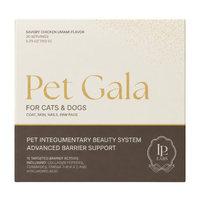
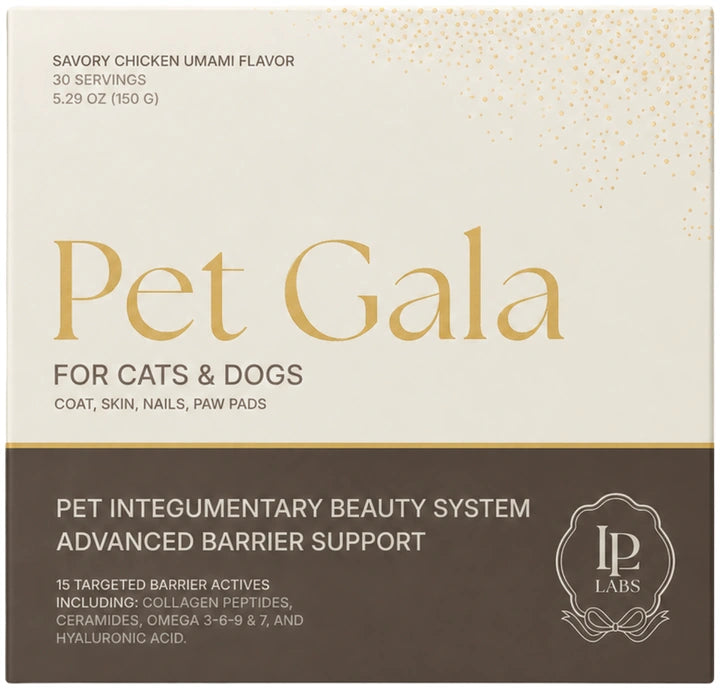
Pet Gala™ is designed to support whole-body nutrition that contributes to normal skin function as part of a daily plan. It can fit alongside topical barrier care and veterinarian guidance when a dog’s skin needs a calmer, more predictable baseline.

Itchy, flaky skin is often treated like a simple dryness problem, but that assumption keeps many dogs stuck in a cycle. When the outer layer is leaky, water escapes and everyday exposures—grass, dust, detergents, saliva—reach deeper skin and trigger bigger reactions. The practical goal is not a one-time “soothing” moment; it is building a barrier that holds up between triggers so symptoms become calmer and more predictable.

Skin barrier restoration for dogs works best as a layered plan: stop self-trauma, support the lipid-and-protein structure topically, and provide steady inside-out nutrition so the skin has consistent building materials. Many owners notice the same pattern—brief relief after bathing, then a quick return of paw licking, belly redness, or dandruff. That rhythm suggests the barrier has a narrow repair window and gets overwhelmed by routine life.

This page focuses on two primary clinical realities: allergic skin disease (especially atopic dermatitis) and the relapse loops that follow barrier breakdown. It also shows what to observe at home, what to log between vet visits, and which common “helpful” habits can quietly make the barrier more fragile. The aim is a plan that changes one variable at a time, then reassesses with clear progress indicators.

By La Petite Labs Editorial, ~15 min read

Featured Product:

  • Skin barrier restoration for dogs means rebuilding structure so water stays in and irritants stay out.
  • The biggest myth is that dryness is only a “moisture” problem; barrier lipids and proteins matter.
  • When the barrier is leaky, itch and inflammation can feed each other, creating relapse loops.
  • Topical routines work best when gentle cleansing is paired with leave-on barrier support.
  • Inside-out support (including fatty-acid strategies) can contribute to the skin’s daily substrate.
  • Use a simple tracking rubric—itch timing, paw licking after walks, sleep disruption, flake return time.
  • Vet-directed itch control can protect the repair window while longer-term barrier work takes hold.

The Moisture Myth That Keeps Dogs Itchy

The most common misconception is that a flaky, itchy dog just needs “more moisture.” In reality, dog skin barrier repair is about rebuilding the outer layer’s structure—lipids, proteins, and tightly packed cells—so water stays in and irritants stay out (Combarros, 2021). When that structure is leaky, the immune system gets more chances to react, and itching becomes a relapse loop rather than a one-time problem.

Owners often notice the pattern first: a few calmer days after a bath, then sudden paw chewing, ear rubbing, or belly redness after grass time. That “better-then-worse” rhythm is a clue that the barrier has a narrow repair window and gets overwhelmed by routine exposures. The goal is to make symptoms more predictable by supporting the barrier every day, not only during flare-ups.

Scientific view of skin barrier tied to coat beauty with restore dog skin barrier.

What “Barrier” Means in Real Skin Biology

To restore dog skin barrier function, it helps to picture the stratum corneum as bricks and mortar. The “bricks” are flattened skin cells; the “mortar” is a lipid blend that includes ceramides and related fats. In allergic skin disease, the upper epidermis can be measurably altered, which helps explain why small triggers can cause outsized itching (Combarros, 2021). Barrier work is therefore structural, not cosmetic.

At home, the barrier shows its status through texture and behavior: a waxy feel, dandruff that returns within days, or a dog that can’t settle after coming in from outdoors. A routine that pairs gentle cleansing with leave-on barrier care can widen the repair window. The key is consistency—skipping weekdays and “catching up” on weekends often keeps the cycle erratic.

Molecular beauty graphic tied to skin and coat support from restore dog skin barrier.

How Barrier Failure Creates Relapse Loops

A useful myth to drop: “If the skin looks red, the problem is only inflammation.” In many dogs, inflammation and barrier breakdown feed each other; a leaky barrier invites more allergen contact, which drives more scratching, which further disrupts the barrier. Research in atopic dogs shows barrier-related structural differences in the upper epidermis, supporting the idea that the barrier is part of the disease process, not just a victim of it (Combarros, 2021).

That loop is why a plan often has layers: vet-directed itch control to stop self-trauma, plus daily barrier support to reduce how often the loop restarts. Owners can help by trimming nails, using a cone when needed, and keeping paws clean after walks. These steps do not replace medical care, but they can make the home environment less punishing while the barrier rebuilds.

Beauty visualization highlighting formulation depth and rigor in dog skin barrier repair.

Topical Lipids: Supporting the Skin’s “Mortar”

Topical barrier care works best when it targets the “mortar.” Ceramide-based moisturizers have been used in dogs with atopic dermatitis, reflecting the practical idea that replenishing barrier lipids can support a calmer skin surface over time (Jung, 2013). This is different from simply adding fragrance-heavy conditioners that feel silky but do not meaningfully support barrier structure.

Household routine matters as much as the bottle: lukewarm water, short contact time, and thorough rinsing reduce residue that can irritate already-reactive skin. Leave-on products are often easier to use on “hot spots” like paws, belly, and armpits, where friction and licking are constant. A practical rule is to choose one topical change, use it consistently for two weeks, then reassess before adding another variable.

Dog image representing beauty care routines supported by dog skin barrier repair.

Inside-out Substrate for Dog Skin Barrier Repair

Inside-out support is the other half of dog skin barrier repair. Skin cells rely on dietary fats to build lipid layers, and omega-3 fatty acids have been studied as a nutritional approach in canine atopic dermatitis (Mueller, 2004). Nutrition does not act like a fast-acting itch medication, but it can contribute to the substrate the skin uses during its repair window.

This is where “skin barrier supplements dogs” searches often lead owners: to fish oils, fatty-acid blends, and multi-ingredient formulas. The most useful mindset is not “find the one miracle capsule,” but “support the daily building materials while reducing avoidable irritants.” If stools become loose or the coat becomes greasy after starting oils, that feedback matters; it may signal a need to adjust the plan with a veterinarian.

The scratching is completely gone, his coat looks healthy and shiny!

— Lena

He was struggling with itching, now he's glowing.

— Grace

“Barrier care is structural work, not a quick cosmetic fix.”

Fatty-acid Balance Without Constant Diet Whiplash

Fatty-acid balance is more nuanced than “more omega-3 is always better.” Reviews across species, including dogs, emphasize that the n-6:n-3 ratio is a practical way to think about inflammatory tone and dietary sources (Burron, 2024). For barrier goals, the point is to provide a consistent pattern of fats that supports normal skin lipid composition, rather than swinging between very different foods and oils week to week.

Owners can unintentionally create variability by rotating toppers, adding table scraps, or switching brands frequently in response to itching. A steadier feeding plan—same base diet, measured add-ons, and a single supplement strategy—often makes the dog’s skin response more predictable. When change is needed, change one variable at a time, then log the result for at least 14 days.

Dog portrait tied to beauty and care supported by skin barrier supplements dogs.

Case Vignette: Spring Flares and a Narrow Repair Window

CASE VIGNETTE: A two-year-old French bulldog develops belly redness and paw licking every spring. The owner tries weekly baths and coconut oil, but the dog becomes greasier, then itchier, and starts waking at night to chew. At the vet visit, the pattern points to allergic flares plus a barrier that cannot hold its ground between exposures, so the plan focuses on stopping self-trauma and building a daily barrier routine.

This scenario is common because short-term soothing can mask the underlying problem: the barrier needs repeated, gentle support over weeks, not a single “reset.” Owners can help by noting seasonality, where the dog itches most, and whether symptoms follow walks, cleaning days, or diet changes. Those details make the next steps more targeted and less trial-and-error.

Side-profile dog portrait highlighting coat shine and beauty supported by skin barrier supplements dogs.

Owner Checklist: Signs the Barrier Needs Support

OWNER CHECKLIST: Signs that the barrier may be struggling include (1) dandruff that returns within 48–72 hours of bathing, (2) a “stale corn chip” paw odor that comes back quickly after cleaning, (3) pink skin in friction zones like armpits and groin, (4) frequent paw licking after outdoor time, and (5) coat that feels waxy or brittle instead of flexible. These are not diagnoses, but they help frame whether the goal is symptom control alone or also restoring barrier function.

The checklist works best when paired with context: what changed in the last two weeks—shampoo, detergent, treats, weather, or daycare. Owners can take photos in the same lighting and keep a simple log of itch timing. That record helps the veterinarian separate infection, allergy, and barrier issues that can look similar at a glance.

Inside-the-box graphic showing beauty blend design supporting skin barrier supplements dogs.

What to Track so Progress Becomes Predictable

“WHAT TO TRACK” RUBRIC: Between vet visits, log (1) itch score morning and evening, (2) paw-licking minutes after walks, (3) number of nights sleep is interrupted, (4) stool consistency after diet or oil changes, (5) frequency of ear scratching, and (6) how long after bathing flakes return. These progress indicators turn a vague goal like “restore dog skin barrier” into measurable steps.

Tracking also protects against overreacting to one bad day. Barrier work tends to move in a slower rhythm than itch medications, so the trend matters more than a single spike. If the log shows worsening despite consistent routine, that is useful information—not failure—because it suggests infection, mites, or an allergy trigger may be dominating the picture.

Why “Natural Oils” Can Backfire on Sensitive Skin

A common misunderstanding is that “natural oils” automatically repair the barrier. Some oils can sit on the surface, trap moisture, and feel soothing, but they can also disrupt the intended lipid balance or encourage licking in sensitive dogs. Barrier care is less about greasiness and more about the right lipid types in the right context, plus reducing the scratch-lick cycle that keeps reopening the surface.

If a topical makes the dog smell stronger, leaves residue on bedding, or increases licking, it is a signal to stop and reassess. Switching products every few days often creates noise that hides what is actually helping. A calmer plan is to pick a veterinary-appropriate cleanser and a leave-on barrier product, then evaluate using the tracking rubric rather than “how it looks right after application.”

“Consistency widens the repair window more than constant product switching.”

Lab coat with La Petite Labs logo symbolizing science-backed standards for dog skin barrier repair.

Prepare for the Vet Visit with Barrier-specific Details

VET VISIT PREP: Bring (1) photos of the same areas over 2–3 weeks, (2) the exact shampoo/wipes used and how often, (3) a list of all foods, treats, and oils, and (4) the tracking rubric summary. Ask: “Do you suspect infection, allergy, or primary barrier weakness?” “Should ears and paws be sampled?” “What is the safest way to stop scratching while the barrier rebuilds?” These questions help the appointment stay focused on decision points.

Guidelines for antipruritic drugs emphasize choosing therapies based on the dog’s condition and monitoring needs, which is why it helps to share the full pattern rather than a single symptom (Bruet, 2022). If medications are prescribed, owners can ask what changes should be expected in the first week versus the first month. That timeline clarifies what is “working as planned” versus what needs adjustment.

Shop Now
Premium ingredient tableau framing Pet Gala aligned with skin barrier supplements dogs.

What Not to Do When the Barrier Is Fragile

“WHAT NOT TO DO” for barrier goals: (1) avoid frequent harsh degreasing shampoos that leave skin squeaky, (2) avoid human dandruff products unless a veterinarian directs them, (3) avoid layering multiple new topicals at once, and (4) avoid assuming redness always means “needs antibiotics.” These missteps can shrink the repair window by adding irritation or by delaying the right diagnostic step.

Another common mistake is over-bathing during a flare because it feels proactive. For some dogs, too much washing strips lipids faster than they can be replaced, even if the shampoo is labeled gentle. A better approach is targeted cleaning—paws and belly after outdoor time—plus leave-on barrier care, while the veterinarian addresses itch and infection risk.

Shop Now
Lifestyle image showing supplement use in real homes supported by skin barrier supplements dogs.

When Medications Protect the Repair Window

When itch is intense, barrier work often needs a “pause button” so the dog can stop damaging the surface. Oclacitinib (Apoquel) has been studied in client-owned dogs with atopic dermatitis and can reduce pruritus, with safety monitoring as part of treatment decisions (Cosgrove, 2013). This kind of vet-directed control can create a wider repair window for topical and nutritional support to matter.

Owners sometimes worry that using itch medication means “giving up” on dog skin barrier repair. The more practical view is layered: medication reduces self-trauma now, while daily routines support the barrier’s structure over time. If a dog becomes lethargic, develops gastrointestinal upset, or has recurrent infections, those changes should be reported promptly so the plan stays appropriate.

Shop Now

Barrier Proteins, Inflammation, and the Same Old Loop

Barrier biology also shows up at the protein level. In atopic dogs, filaggrin-related pathways and other barrier proteins can be altered, and changes have been evaluated before and after anti-inflammatory treatment (Villalobos, 2025). This supports a key point: inflammation control and barrier structure are linked, so the plan should not treat them as separate projects competing for attention.

At home, this means the “best” routine is the one a household can repeat without burnout. A simple schedule—paws wiped after walks, leave-on barrier product every other day, and bathing at a veterinarian-recommended interval—often outperforms a complicated regimen done inconsistently. Consistency makes progress indicators easier to interpret and keeps the dog’s response less erratic.

Diet Pitfalls That Undercut Barrier Progress

Diet experiments can either support or sabotage efforts to restore dog skin barrier. Analyses of home-prepared diets for dogs have found frequent nutrient imbalances, including minerals and trace elements, which can complicate skin and coat goals if a recipe is not properly formulated (Pedrinelli, 2019). That does not mean home cooking is impossible; it means the margin for error is real when the skin already has limited flexibility.

If a household wants to change diets during a flare, it helps to coordinate with the veterinarian rather than stacking changes. Keep treats simple, measure oils carefully, and avoid adding multiple “skin toppers” at once. A calmer approach is to stabilize the base diet first, then add one targeted support—such as a fatty-acid strategy—while tracking stool and itch trends.

Chart contrasting minimal formulas with full-spectrum beauty support in dog skin barrier repair.

A Realistic Timeline for Skin Barrier Restoration

Owners often ask how long skin barrier restoration for dogs takes. The outer skin layer renews over weeks, and the barrier’s “feel” can lag behind itch relief, especially if the dog has been scratching for months. Ceramide-based topical approaches in dogs are typically used consistently over time rather than as a one-time fix, reflecting the reality that barrier structure is rebuilt gradually (Jung, 2013).

A practical timeline is to look for early signs of a calmer surface—less frequent licking after walks, flakes returning more slowly, fewer “hot” friction zones—before expecting dramatic cosmetic change. If nothing shifts after 4–6 weeks of consistent routine, the plan may need a different diagnosis focus, such as infection, ectoparasites, or a more specific allergy strategy.

Shop Now
Pet Gala box in open packaging, showing premium presentation for skin barrier supplements dogs.

Choosing Skin Barrier Supplements Dogs Actually Tolerate

Skin barrier supplements dogs are most useful when they fit into a layered plan: stable diet, topical barrier care, and vet-directed itch control when needed. Omega-3 fatty acids have evidence in canine atopic dermatitis, but results vary, and they are best viewed as part of a daily substrate strategy rather than a rescue tool (Mueller, 2004). The goal is to support normal skin function so the barrier has more buffer against routine triggers.

Quality signals matter: clear labeling, appropriate dosing instructions from the manufacturer, and a plan for monitoring stool and coat changes. Owners should also consider the dog’s full picture—pancreatitis history, concurrent medications, and calorie needs—before adding oils or multi-ingredient products. When in doubt, bring the exact product label to the veterinarian to avoid hidden overlaps.

Shop Now

A Boring Plan That Works: Routine, Tracking, Reassessment

A workable home plan for dog skin barrier repair is intentionally boring: reduce irritant load, support the barrier daily, and measure outcomes. Start with one gentle cleanser, one leave-on barrier product, and one inside-out support strategy, then use the tracking rubric to decide what to keep. This approach makes it easier to see whether the dog is becoming calmer between exposures or simply cycling through short-lived relief.

When the plan is working, owners usually notice fewer “surprise” flare-ups, less frantic paw attention after walks, and skin that feels more flexible rather than tight. When it is not working, the log helps the veterinarian pivot quickly—toward infection testing, allergy control, or medication adjustments—without losing weeks to guesswork. The end goal is not perfection; it is a more predictable baseline the household can maintain.

“Track the pattern, not the mood of a single bad day.”

Educational content only. This material is not a substitute for veterinary advice. Always consult your veterinarian about your dog’s specific needs. These statements have not been evaluated by the Food and Drug Administration. Products mentioned are not intended to diagnose, treat, cure, or prevent any disease.

Glossary

  • Stratum corneum - The outermost skin layer that provides the main barrier function.
  • Transepidermal water loss (TEWL) - Water escaping through the skin; higher values suggest a leakier barrier.
  • Ceramides - Lipids in the skin’s “mortar” that help maintain flexibility and water retention.
  • Corneocytes - Flattened “brick” cells in the stratum corneum.
  • Filaggrin - A family of proteins involved in skin structure and hydration-related functions.
  • Atopic dermatitis - A common allergic skin disease in dogs associated with itch and barrier disruption.
  • Relapse loop - A cycle where itch and scratching repeatedly disrupt the barrier, triggering more itch.
  • Friction zones - Areas like armpits and groin where rubbing increases irritation risk.
  • N-6:n-3 ratio - A way to describe dietary fatty-acid balance that can influence inflammatory tone.

Related Reading

References

Mueller. Effect of omega-3 fatty acids on canine atopic dermatitis.. PubMed. 2004. https://pubmed.ncbi.nlm.nih.gov/15206474/

Burron. The balance of n-6 and n-3 fatty acids in canine, feline, and equine nutrition: exploring sources and the significance of alpha-linolenic acid.. PubMed Central. 2024. https://pmc.ncbi.nlm.nih.gov/articles/PMC11161904/

Bruet. Clinical Guidelines for the Use of Antipruritic Drugs in the Control of the Most Frequent Pruritic Skin Diseases in Dogs.. PubMed Central. 2022. https://pmc.ncbi.nlm.nih.gov/articles/PMC9030482/

Pedrinelli. Concentrations of macronutrients, minerals and heavy metals in home-prepared diets for adult dogs and cats.. PubMed Central. 2019. https://pmc.ncbi.nlm.nih.gov/articles/PMC6736975/

Cosgrove. A blinded, randomized, placebo-controlled trial of the efficacy and safety of the Janus kinase inhibitor oclacitinib (Apoquel®) in client-owned dogs with atopic dermatitis.. PubMed Central. 2013. https://pmc.ncbi.nlm.nih.gov/articles/PMC4286885/

Villalobos. Evaluation of filaggrin 2 expression in dogs with atopic dermatitis before and after oclacitinib maleate administration.. PubMed. 2025. https://pubmed.ncbi.nlm.nih.gov/40042058/

Combarros. The upper epidermis of atopic dogs is altered at the functional and structural levels.. PubMed. 2021. https://pubmed.ncbi.nlm.nih.gov/34519123/

Jung. Clinical use of a ceramide-based moisturizer for treating dogs with atopic dermatitis.. PubMed Central. 2013. https://pmc.ncbi.nlm.nih.gov/articles/PMC3694192/

FAQ

What does a dog’s skin barrier actually do?

A dog’s skin barrier is the outer layer that limits water loss and blocks irritants, microbes, and allergens from penetrating too easily. It relies on tightly packed cells plus a lipid “mortar” that keeps the surface flexible.

When that structure is disrupted, the skin can feel dry or waxy, and itching becomes easier to trigger. Barrier support is therefore about structure and routine, not just making the coat feel soft.

How is barrier damage different from a simple dry coat?

A dry coat can be cosmetic—seasonal shedding, low humidity, or grooming habits. Barrier damage is more functional: the skin loses flexibility, flakes return quickly, and irritants trigger licking or redness in predictable zones like paws and belly.

If symptoms cycle “better then worse” after baths or outdoor time, that pattern often points to a narrow repair window. That’s when dog skin barrier repair strategies tend to matter most.

What are the most common signs the barrier is struggling?

Common signs include flakes that return within days, pink friction areas (armpits, groin), frequent paw licking after walks, and skin that feels tight or waxy. Some dogs also develop recurrent ear scratching or a quick-return paw odor.

These signs are not a diagnosis on their own. They are useful observations to share with a veterinarian so infection, allergy, and barrier issues can be separated.

Can allergies prevent the skin barrier from rebuilding?

Yes. Allergies can keep the immune system activated at the skin surface, which encourages scratching and licking that repeatedly disrupt the outer layer. That creates a relapse loop where the barrier never gets a long enough repair window.

In many dogs, the most practical plan combines vet-guided itch control with daily barrier support. The goal is a calmer baseline that holds up better between exposures.

How long does it take to restore dog skin barrier function?

Barrier change is usually measured in weeks, not days. The outer skin layer renews over time, and the “feel” of the skin often lags behind early behavior changes like less paw licking after walks.

If a consistent routine shows no trend after 4–6 weeks, it is reasonable to revisit the diagnosis and triggers with a veterinarian. Infection, mites, or a dominant allergy driver can overwhelm barrier work.

Are ceramide sprays or mousses worth trying for dogs?

Ceramide-based topicals are commonly used because ceramides are part of the lipid “mortar” that supports normal barrier structure. For many dogs, leave-on formats are practical for paws, belly, and friction zones where washing alone is not enough.

The key is consistency and simplicity: choose one product, use it as directed for at least two weeks, and track progress indicators. Switching products every few days makes results hard to interpret.

Do omega-3s help with dog skin barrier repair?

Omega-3 fatty acids are studied in canine allergic skin disease as a nutritional approach that can support a calmer inflammatory tone. For barrier goals, they are best viewed as part of the daily substrate the skin uses while rebuilding.

Results vary by dog, and gastrointestinal side effects can occur with oils. A veterinarian can help decide whether omega-3s fit the dog’s history, calorie needs, and other medications.

What are skin barrier supplements dogs owners commonly use?

Common options include fish oil or algae oil, fatty-acid blends, and multi-ingredient formulas that include nutrients involved in skin and coat maintenance. The best choice depends on the dog’s diet, stool sensitivity, and medical history.

A product like Pet Gala™ can be part of a daily plan that supports normal skin function, alongside topical care and veterinarian guidance.

Can coconut oil or olive oil restore a dog’s barrier?

Some household oils can make the coat feel slick, but that does not necessarily mean the barrier is rebuilding. Oils may sit on the surface, attract dirt, or encourage licking in sensitive dogs, which can keep the cycle going.

If an oil increases odor, residue, or licking, it is reasonable to stop and switch to a veterinary-appropriate barrier product. Barrier work is about the right lipids in the right context, not maximum greasiness.

How often should an itchy dog be bathed?

Bath frequency depends on the dog’s diagnosis, shampoo type, and how quickly the skin becomes reactive again. Over-bathing with harsh cleansers can strip lipids and shrink the repair window, even if it feels helpful short-term.

Many households do better with targeted cleaning—paws and belly after outdoor time—plus leave-on barrier care. A veterinarian can recommend a schedule that fits the dog’s skin and infection risk.

Is dog skin barrier repair possible without prescription medications?

Some dogs with mild, intermittent irritation can do well with consistent topical barrier care and nutrition support. However, when itch is intense, self-trauma can repeatedly reopen the surface and block progress.

In those cases, vet-directed itch control can protect the repair window while longer-term routines take effect. The decision is less about “meds or no meds” and more about preventing ongoing damage.

What should be tracked at home between vet visits?

Track progress indicators that reflect real life: itch score morning and evening, paw licking after walks, sleep disruption, stool consistency after diet changes, and how fast flakes return after bathing. Photos in consistent lighting are also helpful.

This log turns a vague goal like “restore dog skin barrier” into measurable trends. It also helps a veterinarian adjust the plan efficiently if the pattern suggests infection or a strong allergy trigger.

When should a veterinarian be called urgently for skin issues?

Seek prompt veterinary care if the dog has rapidly spreading redness, oozing lesions, facial swelling, severe ear pain, lethargy, fever, or stops eating. These signs can indicate infection, allergic reaction, or significant discomfort that needs medical attention.

Also call if itching suddenly becomes relentless or sleep is consistently disrupted. Protecting the skin from self-trauma is often the first step in creating a workable repair window.

Do puppies and senior dogs need different barrier support?

They can. Puppies may have more sensitive skin and grooming tolerance, so gentle products and simple routines matter. Senior dogs may have additional conditions or medications that affect what supplements or bathing schedules are appropriate.

For any age, the safest approach is to keep changes minimal and track outcomes. If adding a daily supplement such as Pet Gala™, discuss fit with a veterinarian, especially if the dog has other health concerns.

Are some breeds more prone to barrier problems?

Yes. Breeds predisposed to allergic skin disease often show earlier or more persistent barrier disruption, especially in high-friction areas and on paws. Coat type and skin folds can also change how moisture and microbes behave on the surface.

Breed risk does not replace diagnosis, but it can guide earlier routine building. A consistent plan—gentle cleansing, leave-on barrier care, and nutrition support—often makes flare-ups more predictable.

Can dogs and cats use the same skin barrier supplements?

Not automatically. Cats and dogs have different nutritional requirements and sensitivities, and some ingredients that are fine for dogs are not appropriate for cats. Product dosing and flavoring can also differ.

If a household has both species, choose species-specific products and confirm with a veterinarian before sharing supplements. The safest approach is to treat each pet’s barrier plan as its own project.

How can a diet change affect the skin barrier?

Diet changes can shift fatty-acid patterns, calorie intake, and micronutrient balance, all of which influence skin and coat maintenance. Rapid switching can also cause stool changes that complicate supplement tolerance.

If the goal is dog skin barrier repair, stabilize the base diet first, then change one variable at a time. This makes it easier to see whether the dog is becoming calmer between exposures or simply reacting to constant dietary variability.

What questions should owners bring to a skin-focused vet visit?

Ask focused questions: “Do you suspect allergy, infection, mites, or primarily barrier weakness?” “Should ears or paws be sampled today?” “What should change in the first week versus the first month?” Bring product labels, photos, and a short itch log.

If considering a daily nutrition product like Pet Gala™, ask how it fits with the dog’s diet, calories, and any prescribed medications.

Can probiotics restore dog skin barrier on their own?

Probiotics are sometimes used as part of broader skin and gut support, but they are not a direct substitute for topical barrier care or allergy management. If the main driver is environmental allergy plus self-trauma, the barrier may still be repeatedly disrupted.

A more reliable approach is layered: gentle skin routine, stable diet, and vet-guided itch control when needed. Supplements should be chosen based on the dog’s full history and monitored for stool changes.

How should Pet Gala™ be used in a barrier-focused plan?

In a barrier-focused plan, Pet Gala™ is best thought of as daily nutrition support that contributes to normal skin function. It fits alongside topical barrier care and any veterinarian-directed therapies rather than replacing them.

Keep the rest of the routine stable when starting it, and log progress indicators like itch timing, paw licking after walks, and stool consistency. That makes it easier to judge fit over several weeks.

What’s a simple decision framework for persistent itching and flaking?

First, rule out urgent problems and obvious parasites with a veterinarian. Next, decide whether the pattern looks like infection (odor, oozing, pain) versus allergy-driven itch (seasonality, paws, face, belly). Then build a barrier routine that is simple enough to repeat.

If the household wants inside-out support, choose one approach—diet stabilization, fatty-acid strategy, or a multi-ingredient product such as Pet Gala™—and track outcomes before adding more.

5K+ Happy Pet Parents

Excellent 4.8

Skin Barrier Restoration for Dogs | Why Thousands of Pup Parents Trust Pet Gala™

"It's so good for his coat, and so easy to mix into food."

Alex & Cashew

"Gives him that glow from head to tail!"

Elisabeth & Chai

"The scratching is completely gone, his coat looks healthy and shiny."

Lena & Bear

"Magical. He was struggling with itching and shedding. Now he's literally glowing."

Grace & Ducky

"It's so good for his coat, and so easy to mix into food."

Alex & Cashew

"Gives him that glow from head to tail!"

Elisabeth & Chai

"The scratching is completely gone, his coat looks healthy and shiny."

Lena & Bear

"Magical. He was struggling with itching and shedding. Now he's literally glowing."

Grace & Ducky

"It's so good for his coat, and so easy to mix into food."

Alex & Cashew

"Gives him that glow from head to tail!"

Elisabeth & Chai

"The scratching is completely gone, his coat looks healthy and shiny."

Lena & Bear

"Magical. He was struggling with itching and shedding. Now he's literally glowing."

Grace & Ducky

"It's so good for his coat, and so easy to mix into food."

Alex & Cashew

"Gives him that glow from head to tail!"

Elisabeth & Chai

"The scratching is completely gone, his coat looks healthy and shiny."

Lena & Bear

"Magical. He was struggling with itching and shedding. Now he's literally glowing."

Grace & Ducky

SHOP NOW