






Marine Collagen Peptides for Dogs

From fish skin to the food bowl: how marine collagen fits into your dog’s skin, coat and joint care.

By La Petite Labs Editorial 19 min read

As Seen On

Woman cuddling a golden retriever and a collie beside a Pet Gala box and a food bowl
Pet Gala™ Skin & Coat Supplement for Dogs

Contains 500 mg Marine Collagen Peptides

From$43/moSave up to 46%Shop Now
Contents

Marine Collagen Peptides for Dogs

From fish skin to the food bowl: how marine collagen fits into your dog’s skin, coat and joint care.

Marine collagen peptides are fish-derived protein fragments used in dog supplements. They contribute amino acids associated with collagen, the protein that helps support the skin beneath the coat. The hair itself is mostly keratin. That distinction makes marine collagen an interesting part of skin-and-coat nutrition—and explains why its source, formulation and serving deserve more attention than a promise of shine.

Marine collagen peptides are fish-derived protein fragments used in skin-and-coat supplements. Collagen supports the deeper skin, while the hair and claws you can see are made mainly of keratin. Research involving dogs offers some encouraging joint findings, but the fish-derived report combined collagen with glucosamine, and a newer controlled trial used porcine collagen. Neither establishes a marine-collagen dose or timetable for a shinier canine coat. Compare the actual collagen amount, the complete formula and your dog’s feeding directions; known fish allergy or a prescribed elimination diet needs individual review.

From fish skin to a spoonful of peptides

Marine collagen peptides are short protein fragments made from fish collagen. Skin and scales are useful starting materials because they contain the structural protein the manufacturer wants to extract. Hydrolysis then cuts its long chains into smaller pieces. “Marine” names the source; “hydrolyzed” describes the processing.

Those two words answer different questions. A fish-derived powder may contain a different mixture of peptides from another fish-derived powder, depending on the raw material and manufacturing process. A molecular-weight number describes the average size of those pieces, not their exact identity. The human absorption study discussed below tested fish, pork and cattle sources processed to specified sizes. 2

If you are comparing this with other short-chain proteins, our peptides for dogs guide explains the broader category. Here, the focus is the fish-derived ingredient you might actually put in the bowl.

Woman cuddling a golden retriever and a fluffy white dog while holding a Pet Gala box beside a food bowl

The collagen is beneath the coat

Run your hand along your dog’s back and you feel hair. Beneath it sits living skin, with blood vessels, oil glands and hair follicles. Collagen helps support that deeper layer, the dermis. The hair itself is made mainly of another protein, keratin. 1 6

This matters because “supports collagen” and “grows a shinier coat” describe different steps. Healthy skin provides the setting in which follicles grow hair; the follicle still needs a suitable supply of nutrients to make keratin. Skin oils also help give the finished coat its sheen. Marine collagen contributes to that nutrition beneath the coat, alongside the other nutrients the follicle and surrounding skin need.

The distinction also explains why collagen belongs in a conversation about skin and connective tissue without becoming the answer to every change in fur.

Woman holding a Pet Gala box beside a curly-coated brown dog outdoors

What happens after your dog swallows it?

Digestion continues the cutting that began during manufacturing. The body can use individual amino acids to make its own proteins, while further breakdown can release small collagen-derived fragments that enter the bloodstream. That second possibility is why researchers study collagen peptides as more than a bag of protein building blocks.

In a 2024 crossover study, six healthy people drank fish, porcine and bovine collagen preparations on separate occasions. Blood testing found both free hydroxyproline—an amino acid abundant in collagen—and hydroxyproline still joined to other amino acids. The volunteers absorbed material from all the tested sources. This was a human experiment, funded by the collagen manufacturer Rousselot, measuring absorption rather than a visible health benefit. 2

The absorbed mixture can include both individual building blocks and small joined sequences. Researchers are interested in whether those sequences also influence cells involved in maintaining connective tissue. Absorption is the first step in that investigation; the result in an animal still has to be measured.

Woman cuddling a Dalmatian while holding a Pet Gala box

Marine, bovine and type II are different label decisions

Choosing fish rather than cattle changes the source of the ingredient. Choosing hydrolyzed rather than undenatured collagen changes its form. Neither choice can be reduced to the number of collagen “types” printed on the front of a tub.

For example, a canine joint trial used a small amount of active undenatured type-II collagen, known as UC-II. Another trial used much larger amounts of a specific hydrolyzed porcine preparation. These were different ingredients, studied differently; their milligram figures do not form a strength ranking for marine collagen. 4 5

Nor did the small human absorption comparison establish a universal fish-source advantage. Different peptides behaved differently, while uptake of free hydroxyproline was comparable across sources. For a buyer, the useful distinction is the named preparation and the result it was tested for—not whether fish sounds more premium than beef. 2

Cream-colored dog resting on a person's lap beside a Pet Gala box and a food bowl

The fish-collagen joint report used a combination

There is an uncontrolled clinical report involving fish-derived collagen and dogs. In 2011, researchers described 68 dogs and three cats with orthopedic problems given fish-scale collagen peptides together with glucosamine. Lameness scores fell during follow-up. 3

That is an encouraging observation, with a narrower meaning than “marine collagen treats arthritis.” The animals received both ingredients, and the report did not separate out a collagen-only effect. It also studied animals with joint problems, rather than healthy dogs receiving collagen for their coats.

The paper’s fish-scale material is therefore relevant to the research story. It cannot tell you how much a different marine powder would improve your dog’s movement—or whether it would change coat shine at all.

The coat you can touch is mostly keratin. Collagen helps support the skin beneath it.

A newer dog trial measured how the feet loaded the ground

A 2024 study followed dogs with osteoarthritis for 12 weeks, comparing a collagen preparation with placebo and an omega-3/vitamin-E supplement. Thirty-one dogs completed the study. A treadmill fitted with force plates measured how they loaded their limbs. The relative change in peak vertical force—the largest downward force the affected paw put on the treadmill during a step—improved significantly with collagen compared with placebo. 4

The ingredient was PETAGILE, derived predominantly from type-I porcine collagen. It was not marine collagen. Owner-rated quality of life was not significantly better than placebo, and activity monitors did not show an increase in daily activity. The manufacturer, GELITA, funded the study, and the paper disclosed company and patent interests.

This gives a specific collagen preparation a credible canine research result. It leaves a separate question for a fish powder: does that actual preparation produce a similar benefit? Calling both products “collagen peptides” does not settle it.

Hand lifting a sachet from an open Pet Gala box beside a dog's long golden coat

Coat softness is a different outcome from joint comfort

Skin contains collagen, and maintaining skin and hair requires an adequate supply of amino acids. That gives marine collagen a nutritional rationale for skin-and-coat formulas. Measuring an improvement in walking, however, does not establish what happens to hair texture or shedding. 3 4 6

A coat can also look different as the seasons change, after grooming or while a skin problem improves. Nutrition and hormones affect the follicles that produce the hair; surface oils contribute its sheen. A photograph of a glossy dog cannot distinguish those influences. 1

For an otherwise healthy dog, the choice is whether marine collagen fits the nutrition you want to add. For a dog losing fur or scratching constantly, the cause of that change takes priority.

Woman leaning toward a golden retriever in a kitchen while holding a Pet Gala box

Brittle nails and relentless itching need a closer look

A cracked nail does not establish that an older dog has run out of collagen. Claws are made of keratin, grow from their base, and can become damaged through injury, infection or other disorders. A painful split, repeated nail loss or inflamed nail base needs examination rather than a larger scoop of powder. 10

The same distinction applies to itching. A dog licking its feet through the night may have a skin problem that nutritional support alone will not resolve. Veterinary assessment looks for parasites, secondary infections and allergic disease; similar-looking irritation can have different causes. 8

Marine collagen remains a nutrition choice within that care. Relief from ongoing discomfort should not depend on waiting for a cosmetic supplement to show a result.

Man cuddling two dogs while holding a Pet Gala box

Fish collagen and fish oil bring different things to the bowl

Fish-derived collagen supplies protein fragments. Fish oil is sold for its fats, including the omega-3s EPA and DHA. A marine source on the collagen label does not tell you how much EPA or DHA a serving contains.

Read those amounts separately when comparing a combination formula. “500 mg marine collagen” is a collagen amount; it is not 500 mg of omega-3. Likewise, a large fish-oil number is not a collagen serving. This is simple label arithmetic, but it prevents a common mistake when products promise overlapping skin or joint benefits.

A formula may reasonably include both categories. The reason to combine them is that they contribute different ingredients, not that one can silently stand in for the other.

Sometimes the coat is showing a problem elsewhere

A change in coat can accompany changes in the rest of the dog. Hormonal conditions and other internal disorders can affect the skin; nutritional deficiencies can too, although deficiency-related skin disease is uncommon in dogs eating balanced diets. 11

That is why new hair thinning alongside low energy, or a skin problem that keeps returning, deserves a wider look. Adding a source of amino acids does not tell you whether the dog lacks those amino acids in the first place.

Marine collagen supplies protein fragments; fish oil supplies fatty acids. Skin needs structural proteins and lipids, which is why a skin-and-coat formula can include both.

Woman in a white coat sitting with a pug while holding a Pet Gala box

DVM Voice: Clinical Vignette of When Skin Changes Point Deeper Than the Surface

Case contributed by Sarah Calvin, DVM

Rosey, a 10-year-old Shih Tzu, was brought in after two weeks of paw redness and head shaking. Her owner had also noticed lower energy, thinning abdominal hair, and mild generalized itchiness over the previous few months.

Examination showed inflammation in the ears, skin folds, and paws. Testing confirmed mixed yeast and bacterial infections, while parasites and fungal disease were ruled out. Because Rosey’s skin changes appeared alongside reduced energy and coat thinning, her veterinarian performed a broader workup, which revealed hypothyroidism as a likely underlying contributor.

Her care required a staged approach: treating the infections, addressing the thyroid imbalance, and then restoring the skin barrier through diet, bathing support, paw care, and omega-3 supplementation.

Six months later, Rosey’s owner reported a thicker coat, fewer tangles, less breakage, no itch, and restored energy.

Clinical takeaway: Rosey’s case shows why skin and coat changes should not be treated as cosmetic alone. Healthy skin depends on immune balance, endocrine health, nutrition, barrier integrity, and daily support for resilient coat growth.

Single-case vignette. Not generalizable. Veterinary diagnosis and oversight are essential for itching, redness, ear irritation, hair thinning, recurrent infections, or suspected endocrine disease.

Explore Pet Gala Research →
Woman smiling beside a chocolate-brown dog while holding a Pet Gala box

How much marine collagen should a dog receive?

The amount on a pet product’s directions is a serving for that formulation. There is no well-established universal marine-collagen dose for canine coat improvement in the studies reviewed here.

The fish-scale report supplied collagen alongside glucosamine, while the newer dog trial used a different, porcine preparation. Those study amounts describe their respective interventions, not an interchangeable target for a marine blend. 3 4

Start your comparison with three separate quantities: the weight of the whole serving, the collagen contained in it, and the amount the directions assign to your dog. In a blend, those figures can be very different. Increasing the blend to reach somebody else’s collagen number also increases every other ingredient in it.

Hand petting a brown dog beside a Pet Gala box and a bowl of food

Does liquid collagen work faster?

A liquid can be convenient if your dog accepts it; a powder can be convenient if it mixes into a meal your dog finishes. The delivery format does not identify the peptide mixture or establish how well it works.

The human absorption study used powdered collagen dissolved in water. It showed that the resulting amino acids and small peptides reached the blood, not that a bottled liquid would outperform the same preparation mixed at home. 2

For daily feeding, the practical difference may be simpler: does the measured amount reach the dog? Powder left as a dry layer at the bottom of the bowl is part of the offered serving, not part of the eaten serving. Follow the product’s mixing and storage directions, and choose a format you can measure without guessing.

German shepherd raising a paw beside a Pet Gala box on a small table

What a good marine-collagen label should disclose

The word “marine” leaves several useful details unanswered: which fish species supplied the material, whether it came from skin or scales, how the collagen was processed, and how much is in each serving. A label that names those details is easier to compare with research and with your dog’s diet history.

For testing, look for information connected to the product and batch. A certificate of analysis should identify what was tested, the laboratory, the lot and the result. For a fish-derived ingredient, contaminant testing—including relevant heavy metals—is a reasonable part of that review. “Wild-caught,” a pristine ocean photograph or a general quality badge cannot show those results.

Our quality and testing standards explain how La Petite Labs approaches that documentation. The same questions are useful when comparing another brand.

Where marine collagen fits in Pet Gala

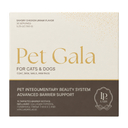
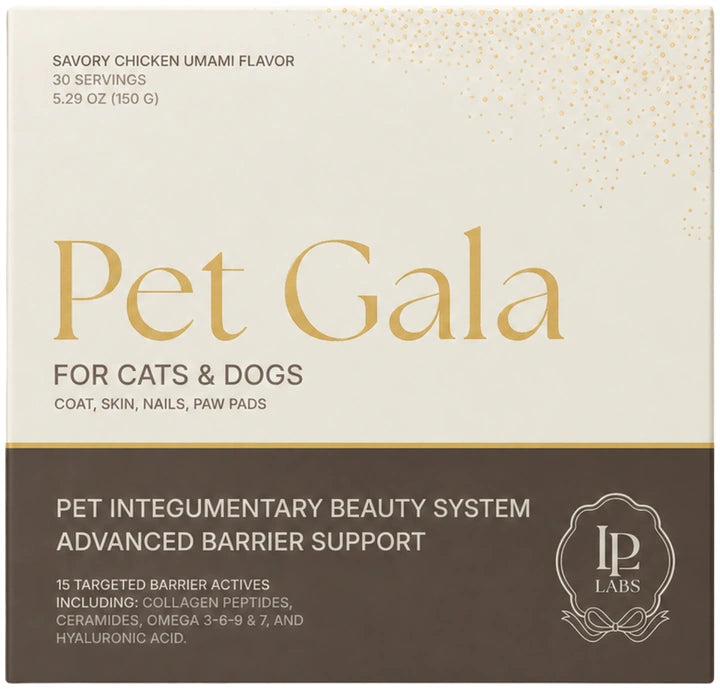
Pet Gala lists 500 mg of marine collagen peptides in a 2.5 g sachet. That is 500 mg within 2,500 mg of formula, not a sachet filled entirely with collagen. The same panel lists hydrolyzed whey protein, beef gelatin and bone broth, along with ingredients such as omega 3-6-9, ceramides, hyaluronic acid, zinc and biotin. 12

Our reason for combining these ingredients begins with the skin itself. Collagen helps give the deeper skin structure, while lipids in the outer barrier help it retain moisture. 1 14 Pet Gala pairs its collagen-containing protein ingredients with fatty-acid ingredients and ceramides because those parts of skin care have different nutritional roles. The formula also includes hyaluronic acid, zinc and biotin. For an owner considering a broader skin-and-coat approach, it puts the ingredients into one measured food addition. It also means Pet Gala is not a fish-only choice for a dog avoiding other animal proteins.

The Pet Gala ingredient guide explains the combination. Use the current dog serving directions when deciding how much of the formula to feed; the Supplement Facts panel’s per-sachet amount is the denominator for comparing its contents.

Compare the amount you will feed, not the size of the tub

A single-ingredient collagen powder and a skin-and-coat blend answer different buying preferences. The plain powder offers a simpler ingredient list. A blend can put several ingredients into one measured addition to food.

Follow the dog directions, then compare cost over the same number of days at the appropriate serving. A container’s advertised duration may assume a different serving from yours. The per-sachet figures above show what is in the formula; your dog’s directions determine how much of it you will use.

For a dog already receiving another skin-and-coat product, read the two ingredient lists together before buying both. Paying for the same ingredient twice may be reasonable in a deliberately planned diet, but it is easy to do unintentionally when one front label says “beauty” and the other says “collagen.”

FROM LA PETITE LABS

Marine collagen, in a formula for the whole skin-and-coat routine

For an owner considering more than a collagen-only powder, Pet Gala combines protein ingredients with nutrients selected for the skin beneath the coat.

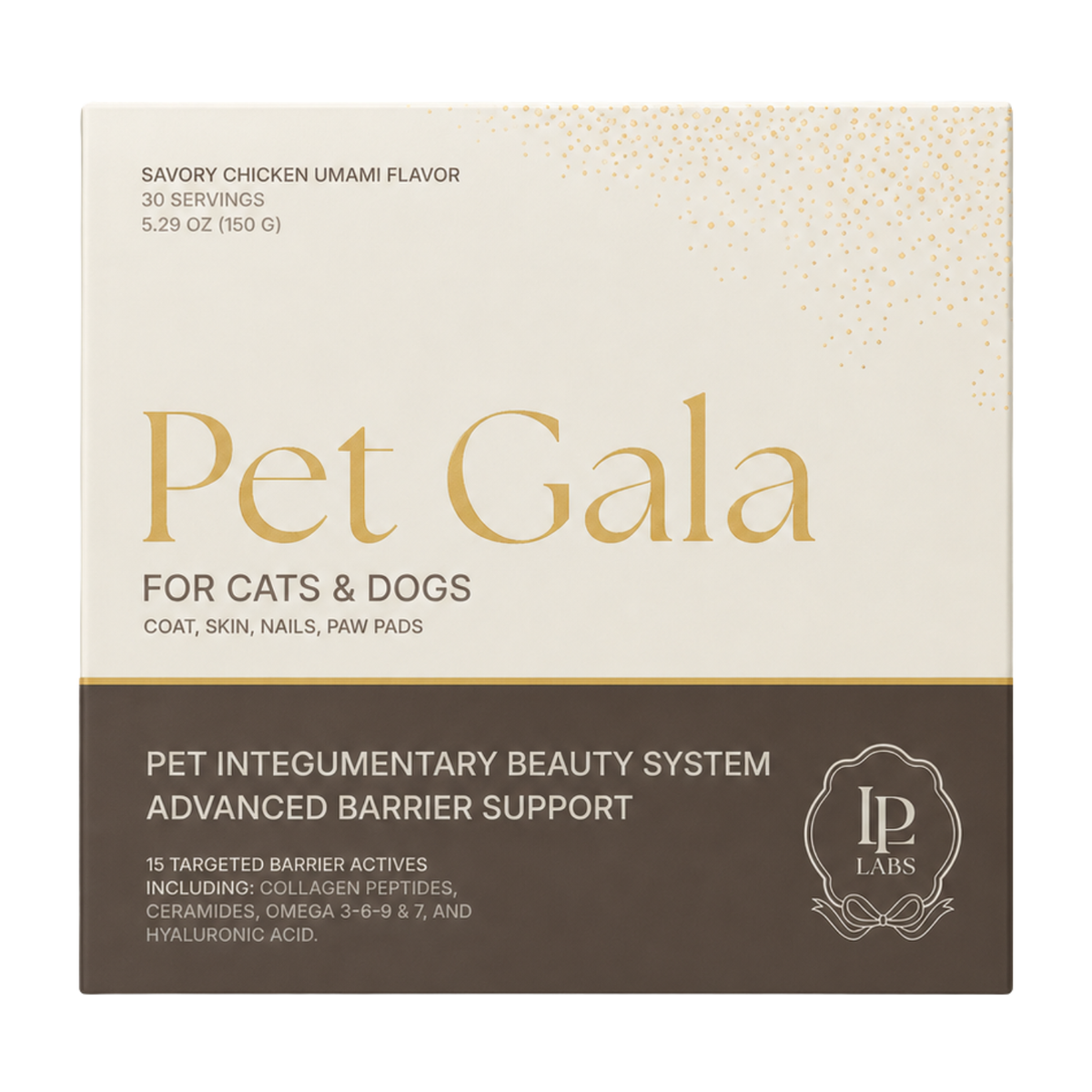
Pet Gala box

Pet Gala™ · Skin & Coat Nutrition

Collagen and skin-barrier nutrition, together at mealtime

Pet Gala pairs marine collagen peptides with fatty-acid ingredients, ceramides, hyaluronic acid, zinc and biotin. The idea starts with skin itself: collagen helps give deeper skin structure, while lipids in the outer barrier help retain moisture. These are different roles, brought into one skin-and-coat formula.

Each full 2.5 g sachet contains 500 mg marine collagen peptides within the combined powder. Mix the directed serving into food. The recipe also contains whey, beef and chicken ingredients, so check the whole label if your dog avoids particular proteins.

From $1.43/day

Shop Pet Gala

Sources and comparison notes ↓

About this formula module

La Petite Labs makes Pet Gala. This module describes the formula and its intended nutritional role, not a clinical result.

Man leaning toward a golden retriever while holding a Pet Gala box beside a food bowl

Fish allergies and human powders change the choice

If your dog has a known fish allergy, do not assume that “hydrolyzed” on a supplement makes it suitable. The term describes processing; it does not demonstrate that the finished product has been tested for your dog’s allergy. During a prescribed food-elimination trial, clear any supplement with the veterinary team so the added ingredients do not undermine the diet being assessed. 8

Human beauty powders and liquids need their entire ingredient list checked. Xylitol, sometimes called birch sugar or wood sugar, can appear in human supplements and is poisonous to dogs. Suspected ingestion calls for immediate veterinary advice. 9

For dogs on medication or a therapeutic diet, bring the actual formula and serving to the discussion. A collagen ingredient does not establish the compatibility of the vitamins, herbs or other additions beside it.

Brown-and-white dog raising a paw beside a Pet Gala box held in a person's hand

Judge new growth over time, and tolerance from the start

The condition of new nail growth can tell a different story from the damaged end that still needs to grow out. Hair growth also unfolds within a cycle. This is one reason a claim of stronger nails or a transformed coat in a few days deserves skepticism. 1 10

If you choose to add a supplement, an occasional photograph in similar light can help you compare the same patch of coat. Note a change in grooming, diet or treatment alongside it. A softer coat after a new conditioner is a welcome result, but it cannot establish what the powder did.

Tolerance is a separate observation. New vomiting, diarrhea, itching or a drop in appetite is a reason to pause the addition and seek advice, rather than increasing it or dismissing the change as an adjustment. 13 A 24-month marine-collagen safety experiment was performed in rats; it does not provide a lifetime safety guarantee for dogs. 7

Choose the fish ingredient for what it actually offers

A plain marine-collagen powder suits someone who wants a focused fish-derived addition and can measure it reliably. Pet Gala suits a different preference: marine collagen alongside other skin-and-coat ingredients in one formula.

Compare the actual contents, your dog’s serving and how readily the supplement fits into a meal. If joint pain is the concern, take the specific preparation and its canine research to the veterinary discussion. If the aim is everyday skin-and-coat care, choose the formula that fits the diet and grooming you already provide.

Pet Gala pairs marine collagen with ingredients for the skin’s moisture barrier and coat. The formula brings those different nutritional roles together in one powder.

Educational content only. This material is not a substitute for veterinary advice. Always consult your veterinarian about your dog’s specific needs. These statements have not been evaluated by the Food and Drug Administration. Products mentioned are not intended to diagnose, treat, cure, or prevent any disease.

Glossary

Marine collagen: Collagen derived from fish material, such as skin or scales.

Collagen peptide: A short chain of amino acids made by breaking down collagen.

Hydrolysis: A process that cuts protein chains into smaller pieces.

Keratin: The structural protein that makes up much of the hair and claws.

Dermis: The deeper skin layer that supports the outer skin and its appendages.

Hydroxyproline: An amino acid abundant in collagen, used in research to trace its digestion and absorption.

Undenatured collagen: Collagen whose native structure has been preserved; it differs from hydrolyzed peptides.

Certificate of analysis: A report of specified tests and results for an identified material or batch.

Related Reading

References

Numbered references identify the sources used for specific claims. Read the study design, species and evidence boundaries alongside each finding.

  1. Karen A. Moriello. Structure of the Skin in Dogs. 2024Species/context: Dog anatomyEvidence boundary: Explains the layers of canine skin, the support provided by the dermis, hair growth and the contribution of skin oils to coat sheen.↩ 1 · ↩ 2 · ↩ 3 · ↩ 4
  2. Nicolina Virgilio and colleagues. Absorption of bioactive peptides following collagen hydrolysate intake: a randomized, double-blind crossover study in healthy individuals. 2024Species/context: HumanEvidence boundary: This six-person study measured blood amino acids and peptides after fish, bovine and porcine collagen. It examined absorption, not coat or joint outcomes in dogs.↩ 1 · ↩ 2 · ↩ 3 · ↩ 4
  3. S. Minami and colleagues. Clinical application of d-glucosamine and scale collagen peptide on canine and feline orthopedic diseases and spondylitis deformans. 2011Species/context: 68 dogs and 3 catsEvidence boundary: Reports lameness changes in 68 dogs and 3 cats given fish-scale collagen together with glucosamine. The combined intervention does not isolate a collagen effect.↩ 1 · ↩ 2 · ↩ 3
  4. Britta Dobenecker and colleagues. The oral intake of specific Bioactive Collagen Peptides (BCP) improves gait and quality of life in canine osteoarthritis patients—A translational large animal model for a nutritional therapy option. 2024Species/context: DogEvidence boundary: A 12-week trial found improvements in selected gait measures with a specific porcine collagen preparation. It did not test marine collagen or coat improvement.↩ 1 · ↩ 2 · ↩ 3 · ↩ 4
  5. R.C. Gupta and colleagues. Comparative therapeutic efficacy and safety of type-II collagen (UC-II), glucosamine and chondroitin in arthritic dogs: pain evaluation by ground force plate. 2012Species/context: DogEvidence boundary: This canine trial tested undenatured type-II collagen, a different preparation from hydrolyzed marine collagen. Its serving amount and results cannot be transferred between the two forms.↩
  6. Erin D. Connolly and Guoyao Wu. Functions and Metabolism of Amino Acids in the Hair and Skin of Dogs and Cats. 2024Species/context: Dog and cat physiologyEvidence boundary: Explains the different amino-acid composition of hair keratin and the collagen-rich deeper skin layers. It does not establish a supplement dose or visible-result timetable.↩ 1 · ↩ 2
  7. Jiang Liang and colleagues. A chronic oral toxicity study of marine collagen peptides preparation from chum salmon (Oncorhynchus keta) skin using Sprague-Dawley rat. 2012Species/context: RatEvidence boundary: This 24-month study examined chum-salmon collagen in rats. Its toxicology findings do not establish lifelong safety or a daily serving for dogs.↩
  8. Constance Hardesty / American Animal Hospital Association. 2023 AAHA Management of Allergic Skin Diseases in Dogs and Cats Guidelines: Executive Summary. 2023Species/context: Dogs and cats; clinical guidanceEvidence boundary: Explains the clinical investigation of itching and the role of a controlled diet trial. A collagen supplement does not identify or treat the cause of an allergic skin problem.↩ 1 · ↩ 2
  9. U.S. Food and Drug Administration. Paws Off Xylitol; It’s Dangerous for Dogs. n.d.Species/context: DogEvidence boundary: Warns that xylitol in human foods and supplements can poison dogs and requires immediate veterinary advice after suspected ingestion.↩
  10. Alexandra Gould. Nail Diseases in Dogs and Cats. 2025Species/context: Dogs and catsEvidence boundary: A veterinary dermatologist explains claw structure and the injuries, infections and other disorders that can cause brittle or damaged nails.↩ 1 · ↩ 2
  11. Stephen D. White. Whole-body Disorders that Affect the Skin in Dogs. 2024Species/context: DogEvidence boundary: Explains how nutritional and internal disorders can affect a dog’s skin. Nutritional skin disease is uncommon in dogs eating balanced diets.↩
  12. La Petite Labs. Pet Gala Supplement Facts. n.d.Species/context: Product intended for dogs and catsEvidence boundary: The manufacturer’s current panel lists 500 mg of marine collagen per 2.5 g sachet, plus the other formula ingredients. This is label information, not an efficacy trial.↩
  13. U.S. Food and Drug Administration. Proper Storage of Pet Food & Treats. n.d.Species/context: PetsEvidence boundary: Explains what to do when a pet becomes unwell after a food or treat, including stopping the suspected product and contacting a veterinarian. It does not measure collagen side effects.↩
  14. Yukiko Mizutani, Susumu Mitsutake, Kiyomi Tsuji, Akio Kihara and Yasuyuki Igarashi. Ceramide biosynthesis in keratinocyte and its role in skin function. 2009Species/context: Mammalian epidermal biology reviewEvidence boundary: Biological background on the skin barrier; not a trial of an oral pet supplement.↩
Sources behind this formula module

La Petite Labs makes Pet Gala. Manufacturer information supports the ingredients and formats described here. Research about an ingredient is not a trial of the finished formula.

  1. Pet Gala: manufacturer formula and directions
  2. NLM: collagen as a structural protein
  3. Canine epidermal lipids and the skin barrier

FAQ

What does marine collagen actually supply for a dog’s skin and coat?

It supplies fish-derived protein fragments. Collagen helps support the deeper skin, while hair and claws are made mainly of keratin. Those different structures explain why marine collagen can be considered within skin-and-coat nutrition, but do not establish that a powder will make a healthy dog’s coat shinier.

Are marine collagen peptides safe for dogs?

Safety depends on the product and the dog, including its allergies, diet and other treatment. A 24-month chum-salmon collagen experiment was in rats, not dogs, so it does not establish lifelong canine safety. A known fish allergy or prescribed diet warrants review of the exact formula before feeding it.

What side effects should I watch for after adding collagen?

If vomiting, diarrhea, increased itching or reduced appetite appears after adding a supplement, pause it and contact your veterinarian. Do not assume those changes are a necessary adjustment or solve them by increasing the serving. Published marine-collagen evidence does not establish a reliable rate of side effects in dogs.

Can a dog take marine collagen alongside medication?

Compatibility needs to be assessed for the entire formula and the dog’s treatment. A collagen ingredient alone does not establish that the herbs, minerals or other additions alongside it are suitable. Show the veterinary team the label and proposed serving, especially when a therapeutic diet is part of care.

How long does marine collagen take to improve coat or nails?

There is no established canine timetable for a softer coat or stronger nails from marine collagen. Hair growth follows a cycle, and damaged nail material must grow out. The joint studies discussed here measured different outcomes with different preparations; they cannot supply a coat-results calendar.

How do I choose a marine collagen supplement for my dog?

Look for a named fish source, a disclosed collagen amount per serving and product-specific testing information. Decide whether you want a simple powder or a broader skin-and-coat formula. Pet Gala includes marine collagen alongside other ingredients; compare its complete formula and current dog serving directions.

Does marine collagen help dogs’ joints?

An uncontrolled 2011 report found improved lameness scores in dogs and cats given fish-scale collagen together with glucosamine; it did not isolate collagen’s contribution. A newer controlled canine trial found improvements in selected gait measures with porcine collagen. That is promising research for specific preparations, not proof that every marine powder relieves joint pain.

Can dogs with fish allergies have hydrolyzed marine collagen?

Do not assume so. Hydrolyzed describes how a protein was processed; it does not establish that a supplement is appropriate for a particular fish-allergic dog. During an elimination diet, use only additions approved by the veterinary team so you can interpret the dog’s response to the prescribed food.

Black-and-white dog between a bowl of food and a Pet Gala box held in a person's hands

Discover LPL-01: How This Fits Into a Complete Canine Integumentary Support System

Skin, coat, and nails aren’t cosmetic features. They’re the visible surface of deeper biological systems—barrier function, hydration balance, structural protein turnover, and lipid integrity—working in concert.

When these systems fall out of sync, it shows: dull coat, shedding, dryness, brittleness, sensitivity.

This article explores one piece of that puzzle. If you want to understand how true coat quality and skin resilience are built—and what actually moves the needle—you need to zoom out.

Start with the underlying science:

Keep exploring

What would you like to understand next?

Search practical guides about skin, coat, barrier health, ingredients, and daily care for dogs.