


Undenatured Type II Collagen for Dogs

What the dog trials found, how much they gave, where the proof runs thin, and why UC-II isn't the collagen in most powders.

By La Petite Labs Editorial 12 min read

As Seen On

  • AVMA, American Veterinary Medical Association
  • Today’s Veterinary Business
  • Petfood Industry
Woman cuddling a golden retriever and a collie beside a Pet Gala box and a food bowl
Pet Gala™ Skin & Coat Supplement for Dogs

15 science-backed barrier actives

From$43/moSave up to 47%Save up to 46%Shop Now
Contents

Undenatured Type II Collagen for Dogs

What the dog trials found, how much they gave, where the proof runs thin, and why UC-II isn't the collagen in most powders.

Undenatured type II collagen (UC-II) eased arthritis pain in several small dog trials, and a 2022 review of the research found only a weak effect. The main trials gave 10 mg of active UC-II once a day, and those that tracked safety found no side effects.4, 5 UC-II is intact collagen from chicken cartilage, a different material from the collagen peptides in most powders.1, 2

This guide covers how UC-II works, what the dog trials found, the amounts used, safety, label reading, and when a stiff dog needs the vet.

  • What it is: Intact type II collagen from chicken breastbone cartilage, given in very small daily amounts.1
  • Does it work: In small trials, arthritic dogs showed less pain and bore more weight on sore legs. A 2022 review of the research rated collagen's effect as weak.5, 11
  • How much: Trials gave 10 mg of active UC-II once a day, which some labels show as 40 mg of UC-II.5, 10
  • How long: Pain scores fell within 30 days, and the largest gains came at 120 to 150 days.4, 5
  • Safety: Liver and kidney blood tests stayed normal for up to 150 days.5 Check with a vet first if your dog has a chicken allergy.
  • See a vet if: Your dog limps, struggles to rise or slows down. A stiff dog needs a diagnosis before any supplement.
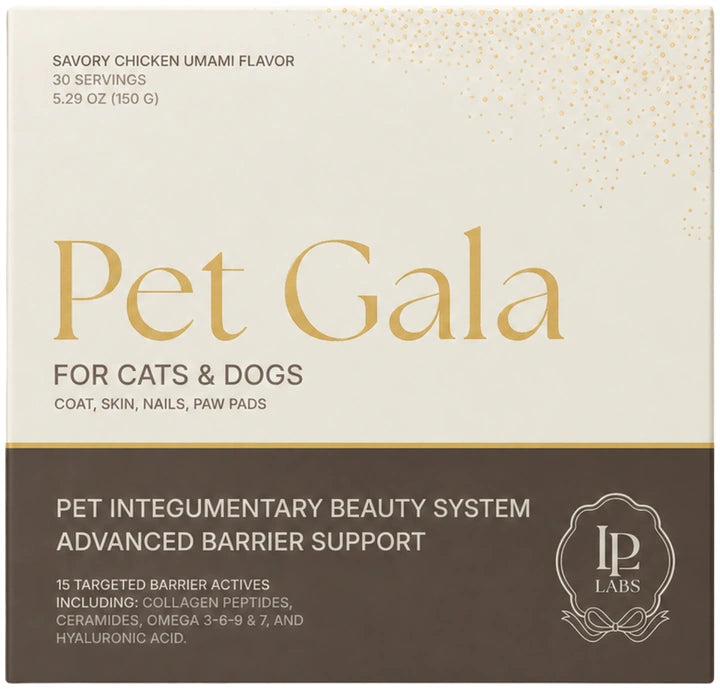
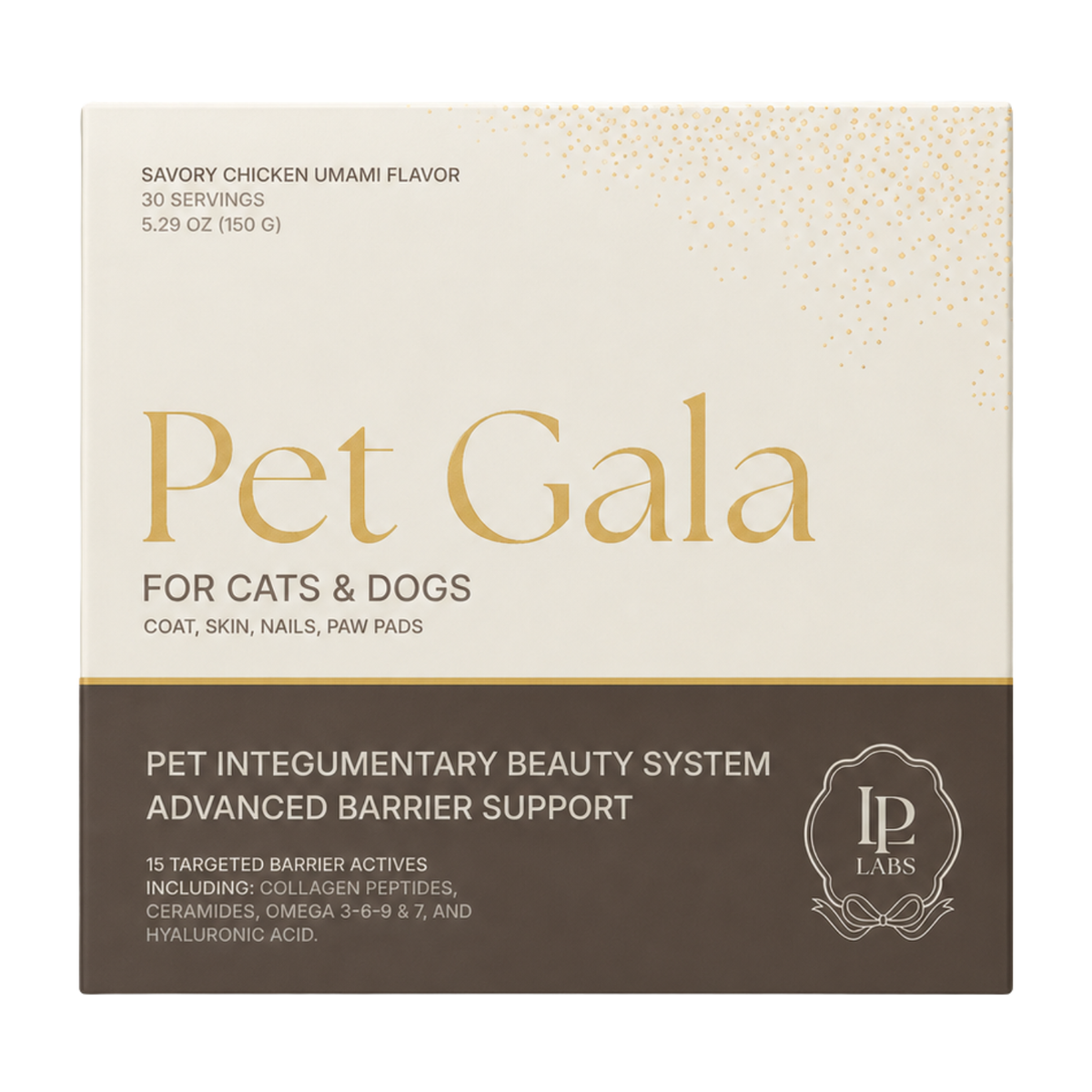
  • In Pet Gala: No. Pet Gala contains no undenatured type II collagen. It's daily skin, coat and nail nutrition.

What is undenatured type II collagen (UC-II)?

Undenatured type II collagen is the main structural protein of joint cartilage, sold with its natural shape intact.1 "Undenatured" means the protein keeps its original three-dimensional form. Labels also call it native type II collagen, or UC-II, the branded ingredient used in the dog trials.

Makers take UC-II from the cartilage of the chicken breastbone and turn it into a shelf-stable powder for chews, tablets and capsules.1

Most collagen on the shelf is a different material. Collagen peptides are hydrolyzed, which means the protein has been broken into small pieces. Researchers think the intact shape is the point of UC-II: undenatured collagen carries markers the immune system can read, and hydrolyzed collagen doesn't.2

Woman cuddling a golden retriever and a fluffy white dog while holding a Pet Gala box beside a food bowl

How does UC-II work in a dog's body?

UC-II is thought to work through the immune system, not by feeding cartilage. The idea is called oral tolerance: immune tissue in the gut learns to treat a swallowed protein as harmless.

In laboratory work, undenatured collagen is taken up by immune patches in the small intestine. There it prompts regulatory T cells, which travel to the joints and release calming signals when they meet type II collagen in cartilage.1

Nearly all of that comes from mouse, rat and cell studies.1 We found no dog trial that measured this immune response, so treat it as a working theory.

Woman holding a Pet Gala box beside a curly-coated brown dog outdoors

Does UC-II work for dogs with arthritis?

UC-II reduced signs of arthritis pain in every dog trial we read, and the proof is thinner than that sounds. Most of the trials were small, and several leaned on owners' or researchers' impressions.

A 2022 systematic review pooled 72 trials of joint diets and supplements in dogs and cats, 11 of them on collagen products. The reviewers found a weak effect for collagen and blamed trial quality: groups as small as 5 dogs, and scoring tools that were never validated.11

The Merck Veterinary Manual describes type II collagen as possibly effective.13 So UC-II is a fair add-on to raise with your vet. It's no stand-in for a diagnosis or for pain relief that already works.

Woman cuddling a Dalmatian while holding a Pet Gala box

What did the controlled dog trials find?

Three controlled UC-II trials in arthritic dogs, run by overlapping teams of researchers, all favored UC-II.

  • 90 days, 15 dogs: dogs given 1 mg or 10 mg a day showed less pain and lameness, and 10 mg did more.3
  • 120 days, 20 dogs: in the 5 dogs on 10 mg, overall pain fell 62% by day 120. The placebo group didn't change.4
  • 150 days, 7 to 10 dogs per group: only the UC-II group improved on a force plate, a sensor that measures how much weight a dog puts on a leg.5

The force-plate result matters most, because it's a measurement and not an opinion. It still rests on a handful of dogs.

Cream-colored dog resting on a person's lap beside a Pet Gala box and a food bowl

How does UC-II compare with a prescription pain reliever?

UC-II scored about as well as a prescription drug on owner questionnaires in two 30-day trials. Neither trial had a placebo group, so read them with care.

In the first, 60 dogs took a UC-II tablet or the anti-inflammatory robenacoxib. Owner-rated scores fell 32.7% on UC-II and 31.5% on the drug.6, 14 In the second, 76 dogs finished. Scores fell 31.4% on UC-II, 29.5% on the drug cimicoxib and 21.1% on both together, and every treated group beat an untreated one.7

With no placebo, hope could have lifted the owners' scores in each treated group. Don't swap a prescribed medicine for UC-II on this evidence. Ask your vet first.

UC-II is thought to work through the immune system, not by feeding cartilage.

How much UC-II do dog studies give, and how often?

Dog studies gave UC-II once a day, in one set amount for every dog in the group. We found no veterinary authority that sets an official amount, so these figures describe the trials and are not advice for your dog.

  • 10 mg of active UC-II a day: the amount in the 120-day and 150-day arthritis trials.4, 5
  • 1 mg a day: also eased pain in the 90-day trial, though 10 mg did more.3
  • 40 mg of UC-II product a day: the capsule in a Labrador exercise trial, which held 10 mg of collagen.10
  • One tablet or chew a day: the wording in trials of commercial products.6, 8

The 10 mg and 40 mg figures can describe the same serving, because only part of the UC-II powder is collagen.10

The trial summaries give one amount per group, with no scaling by body weight. Follow the product label and your vet's advice. We found no dog trial of a larger amount.

Hand lifting a sachet from an open Pet Gala box beside a dog's long golden coat

How long does UC-II take to work in dogs?

UC-II showed its first effects within about a month in dog trials, and the gains kept building for four to five months.

In the 120-day trial, overall pain was down 33% by day 30. Pain on handling the leg and lameness after exercise had improved by day 60.4 In the 150-day trial, improvement peaked at day 150.5

The effect faded when UC-II stopped. In two trials, dogs taken off it for 30 days relapsed into pain and lameness.3, 4

Those timelines suggest judging UC-II after a month or two, not a week or two. Agree a review date with your vet, and don't leave a dog in pain while you wait.

Woman leaning toward a golden retriever in a kitchen while holding a Pet Gala box

Is undenatured type II collagen safe for dogs?

Undenatured type II collagen looked safe in every dog trial that tracked safety. Those trials were small and ran five months at most.

Across the 90-day, 120-day and 150-day trials, researchers saw no adverse effects and no change in blood markers of liver and kidney function.3, 4, 5 In an 8-week trial of a UC-II chew, owners watched daily for vomiting, diarrhea and loss of appetite and saw none.8

Laboratory testing points the same way. In rats, the lethal oral amount was above 5,000 mg per kg of body weight, and 90 days of feeding caused no significant changes in blood work or organ weights.15

We found no longer safety study in dogs, and none in puppies or in pregnant or nursing dogs.

Man cuddling two dogs while holding a Pet Gala box

What are the side effects and risks of UC-II?

UC-II caused no reported side effects in the dog trials we read.3, 4, 8 The risks worth knowing sit around the product more than inside the collagen.

  • Chicken allergy: UC-II comes from chicken cartilage.1 In a review of 297 dogs with food-related skin reactions, chicken was a trigger in 15%.16 We found no study of UC-II in chicken-allergic dogs, so ask your vet first.
  • Other ingredients: one studied chew also held Boswellia, omega-3 fats and vitamin E.8 Read the whole list if your dog has a sensitive stomach or takes medicine.
  • A missed diagnosis: lameness can also come from injury, infection or immune disease, which need different care.13

Stop the supplement and call your vet if your dog vomits, itches or seems worse.

How do you choose a UC-II supplement and read the label?

UC-II for dogs comes as chews, tablets and capsules, and the labels vary a lot.6, 8, 10

  • The exact words: look for "undenatured" or "native" type II collagen. "Collagen peptides" and "hydrolyzed collagen" are different ingredients.2
  • The amount per serving: compare it with the 10 mg of active UC-II, or 40 mg of UC-II product, that trials gave once a day.5, 10
  • The other actives: a chew may add Boswellia, omega-3 fats or glucosamine. A trial of a blend tells you about the blend.8, 13
  • The proof: ask the maker whether the finished product was tested in dogs, or only its ingredients.

Brand matters here more than usual. When a laboratory compared powders and capsules sold as undenatured type II collagen, they differed widely in fiber size and in the immune markers the ingredient depends on.2

Note who paid for the research, too. The 2024 chew trial declared that its funder helped design the study, and the Labrador trial was funded by the company that supplied its UC-II.8, 10

The force-plate result matters most, because it's a measurement and not an opinion.

Woman in a white coat sitting with a pug while holding a Pet Gala box

DVM Voice: Clinical Vignette of When Skin Changes Point Deeper Than the Surface

Case contributed by Sarah Calvin, DVM

Rosey, a 10-year-old Shih Tzu, was brought in after two weeks of paw redness and head shaking. Her owner had also noticed lower energy, thinning abdominal hair, and mild generalized itchiness over the previous few months.

Examination showed inflammation in the ears, skin folds, and paws. Testing confirmed mixed yeast and bacterial infections, while parasites and fungal disease were ruled out. Because Rosey’s skin changes appeared alongside reduced energy and coat thinning, her veterinarian performed a broader workup, which revealed hypothyroidism as a likely underlying contributor.

Her care required a staged approach: treating the infections, addressing the thyroid imbalance, and then restoring the skin barrier through diet, bathing support, paw care, and omega-3 supplementation.

Six months later, Rosey’s owner reported a thicker coat, fewer tangles, less breakage, no itch, and restored energy.

Clinical takeaway: Rosey’s case shows why skin and coat changes should not be treated as cosmetic alone. Healthy skin depends on immune balance, endocrine health, nutrition, barrier integrity, and daily support for resilient coat growth.

Single-case vignette. Not generalizable. Veterinary diagnosis and oversight are essential for itching, redness, ear irritation, hair thinning, recurrent infections, or suspected endocrine disease.

Explore Pet Gala Research →
Woman smiling beside a chocolate-brown dog while holding a Pet Gala box

Is UC-II the same as collagen peptides?

UC-II and collagen peptides are different materials that share a name. UC-II is intact collagen, given in milligrams. Collagen peptides are hydrolyzed collagen, already broken into pieces.

Once swallowed, hydrolyzed collagen is absorbed mainly as amino acids and very short chains of them.19 Its proposed role is to supply building blocks, where UC-II's is to send an immune signal.1

Dog trials of peptides for joints disagree. In 31 arthritic dogs, 12 weeks of collagen peptides improved force-plate results, yet a 2026 trial of 45 dogs on a collagen-enriched diet found no gain over placebo.20, 21

Pet Gala, our skin, coat and nail powder, uses hydrolyzed marine collagen peptides, so it sits on the peptide side of this line. Our guides to collagen for dogs and marine collagen peptides for dogs explain that form.

Hand petting a brown dog beside a Pet Gala box and a bowl of food

Can UC-II help healthy, active dogs?

UC-II has one trial in healthy, active dogs, and the company that supplied the ingredient paid for it. Forty healthy Labrador Retrievers aged 5 to 12 years took 40 mg of UC-II product or a placebo daily through 11 weeks of endurance runs.10

After the runs, the UC-II dogs scored lower on several pain-questionnaire items and on a gait-based inflammation index.10 A companion paper on the same dogs reported lower blood levels of one inflammation marker and one cartilage-breakdown marker.9

That hints UC-II may soften the wear of hard exercise. Whether it keeps arthritis from developing is still open: a 2023 review of 26 records said more studies are needed to answer that.12

German shepherd raising a paw beside a Pet Gala box on a small table

Which dogs is UC-II for, and which should skip it?

UC-II fits best as an add-on for a dog whose arthritis a vet has already diagnosed.

  • Dogs with mild to moderate arthritis: the kind of dog enrolled in the 150-day trial and the 2024 chew trial.5, 8
  • Dogs on pain medicine: one 30-day trial included a group on UC-II plus the drug cimicoxib, and that group improved too.7
  • Older dogs: arthritis signs are usually noticed between 5 and 13 years of age.13
  • Dogs to hold off: dogs with a chicken allergy, puppies, and pregnant or nursing dogs. We found no UC-II studies in any of them.

International guidelines for dog arthritis list UC-II as a minority recommendation, scored 3 out of 9, and put omega-3 fats ahead of other supplements.25

UC-II vs glucosamine, chondroitin and omega-3: which is better?

UC-II ranks below omega-3 fats and above glucosamine with chondroitin in the 2022 review of 72 joint trials.11

  • Omega-3 fats: the clearest evidence of pain relief.11 In a trial of 38 arthritic dogs, 82% of those on a fish-oil diet improved on a force plate, against 38% on a regular diet.17
  • UC-II and other collagen: a weak effect, the lowest score among the supplement types that showed any benefit.11
  • Glucosamine with chondroitin: a marked lack of effect. The reviewers said these products should no longer be recommended for arthritis pain.11

One trial compared them directly. Over 150 days, only the dogs on UC-II improved on the force plate. Dogs on glucosamine with chondroitin, with or without UC-II added, did not.5

Research in people points the same way. In 191 adults with knee arthritis, 40 mg of UC-II a day for 180 days beat both placebo and glucosamine with chondroitin on a symptom score.18

See our guides to chondroitin sulfate for dogs and green-lipped mussel for dogs.

What else helps a dog with stiff joints?

UC-II is one small part of arthritis care, and the parts with the strongest backing don't come in a chew.

  • A lean body: weight control is the main way to slow arthritis in dogs.13 In 14 obese arthritic dogs, lameness eased once they had lost about 6% of their body weight.22
  • Prescription pain relief: vets often prescribe anti-inflammatory drugs (NSAIDs) for arthritis. Dogs on them long term get regular blood tests.14
  • A monthly injection: the antibody bedinvetmab, given every 30 days, is used for dogs with moderate to severe signs.13
  • Omega-3 fats: the omega-3 fat EPA has improved gait and mobility in dogs and can reduce the need for NSAIDs.13

Our guide to Librela, the bedinvetmab injection for dogs, explains that option.

Man leaning toward a golden retriever while holding a Pet Gala box beside a food bowl

Is UC-II different for dogs and cats?

UC-II has far more research behind it in dogs than in cats. Of the 72 joint-supplement trials in the 2022 review, 69 were in dogs and 3 were in cats.11

The one cat trial of UC-II we found was published in 2026: 20 cats with joint disease, given a daily chew for 12 weeks.23 Dog trials go back to 2005.3

Don't pass a dog chew to a cat. Products differ in strength, flavoring and added ingredients, and arthritis care for cats follows its own rules. Our guide to undenatured type II collagen for cats covers the feline trial.

Brown-and-white dog raising a paw beside a Pet Gala box held in a person's hand

When should a stiff or limping dog see the vet?

A stiff dog needs a diagnosis first, and UC-II can wait until you have one. Arthritis builds slowly, and its early signs are easy to miss: slowness to rise after rest, trouble with stairs, and less jumping or play.13

Book a visit soon if your dog:

  • won't put weight on a leg, or the limp came on suddenly;
  • has a hot, swollen or painful joint;
  • cries out, pants at rest or stops eating;
  • keeps getting worse despite rest.

Never reach for a human pain reliever on your own. The FDA's advice is to stop and call your veterinarian first.14

Is undenatured type II collagen in Pet Gala?

No. Pet Gala doesn't contain undenatured type II collagen, and it isn't a joint supplement. It's a daily skin, coat and nail nutrition powder for dogs and cats.

The collagen in Pet Gala is a different material. Each sachet has 500 mg of Marine Collagen Peptides: hydrolyzed collagen, broken into short pieces that serve as building blocks. UC-II is a few milligrams of intact chicken collagen, thought to work through the immune system.

Pet Gala also lists 50 mg of hyaluronic acid and 100 mg of MSM, two ingredients also sold for joints. Here they serve a skin, coat and nail formula, with every active amount printed on the label.

The powder is stirred into food: half a sachet for dogs under 7 lb, one from 7 to 30 lb, and two over 30 lb. It's flavored with chicken, so ask your vet first if your dog has a chicken allergy. Pet Gala is a supplement. It hasn't been tested for arthritis, joint pain or mobility.

If skin, coat or nails are on your list too, see the full Pet Gala formula and serving guide. Our guide to the best supplements for dog nails goes deeper.

A stiff dog needs a diagnosis first, and UC-II can wait until you have one.

Educational content only. This material is not a substitute for veterinary advice. Always consult your veterinarian about your dog’s specific needs. These statements have not been evaluated by the Food and Drug Administration. Products mentioned are not intended to diagnose, treat, cure, or prevent any disease.

Glossary

Undenatured type II collagen: Cartilage collagen kept in its natural shape, usually taken from chicken breastbone.

Hydrolyzed collagen: Collagen broken into short chains called peptides, the form in most collagen powders.

Oral tolerance: The gut immune system's habit of accepting a swallowed protein as harmless.

Osteoarthritis: Long-term breakdown of a joint's cartilage, with pain, stiffness and lameness.

Force plate: A floor sensor that measures how much weight a dog puts on each leg.

NSAID: A nonsteroidal anti-inflammatory drug, the prescription pain relief vets often use for dog arthritis.

Related Reading

References

Numbered references identify the sources used for specific claims. Read the study design, species and evidence boundaries alongside each finding.

FAQ

Can UC-II rebuild my dog's cartilage?

We found no dog trial showing that. The UC-II trials measured pain, lameness and weight-bearing, not cartilage. One study in exercising Labradors found a lower blood marker of cartilage breakdown, which is a long way from regrowth.9

Can I stop my dog's NSAID if UC-II seems to be working?

Not on your own. In two 30-day trials UC-II scored about as well as a prescription drug on owner questionnaires, but neither trial had a placebo group.6, 7 Ask your vet before changing any prescribed medicine.

Is UC-II better with glucosamine and chondroitin added?

The 150-day dog trial says no. Dogs on UC-II without the extras improved on the force plate, and dogs given UC-II with glucosamine and chondroitin did not.5

Does Pet Gala contain undenatured type II collagen?

No. Pet Gala has no UC-II and isn't a joint supplement. Its collagen is 500 mg of hydrolyzed marine collagen peptides per sachet, a different material, alongside hyaluronic acid and MSM for skin, coat and nails.

Can I give my dog a human UC-II capsule?

Ask your vet first. One trial gave Labradors a 40 mg capsule, the same amount used in a human knee trial.10, 18 Human products can carry other ingredients, so check the full list before sharing one.

What happens when a dog stops taking UC-II?

The benefit fades. In two trials, dogs taken off UC-II for 30 days relapsed into pain and lameness.3, 4 If UC-II helps your dog, expect to keep giving it.

Does UC-II work in people?

Modestly, in knee arthritis. A 191-person trial favored 40 mg of UC-II a day over placebo, and a review of supplement trials found its effect on pain was clinically important at medium term only.18, 24

Where does UC-II come from?

UC-II is made from the cartilage of the chicken breastbone and sold as a powder with the protein's shape left intact.1 That origin is why dogs with a chicken allergy should see a vet before trying it.

Can puppies take UC-II?

We found no study of UC-II in puppies, or in pregnant or nursing dogs. The trials enrolled adult dogs with arthritis and healthy Labradors aged 5 to 12 years.10 Ask your vet before giving it to a growing dog.

Black-and-white dog between a bowl of food and a Pet Gala box held in a person's hands

Discover LPL-01: How This Fits Into a Complete Canine Integumentary Support System

Skin, coat, and nails aren’t cosmetic features. They’re the visible surface of deeper biological systems—barrier function, hydration balance, structural protein turnover, and lipid integrity—working in concert.

When these systems fall out of sync, it shows: dull coat, shedding, dryness, brittleness, sensitivity.

This article explores one piece of that puzzle. If you want to understand how true coat quality and skin resilience are built—and what actually moves the needle—you need to zoom out.

Start with the underlying science:

Keep exploring

What would you like to understand next?

Search practical guides about skin, coat, barrier health, ingredients, and daily care for dogs.