

Eggshell Membrane for Cats

What the two cat studies measured, how much they fed, how safe it looked, and why a stiff older cat needs a vet first.

By La Petite Labs Editorial 11 min read

As Seen On

  • AVMA, American Veterinary Medical Association
  • Today’s Veterinary Business
  • Petfood Industry
Woman nuzzling an orange cat beside a fluffy gray-and-white cat, a Pet Gala box and a food bowl
Pet Gala™ Skin & Coat Supplement for Cats

15 science-backed barrier actives

From$43/moSave up to 47%Save up to 46%Shop Now
Contents

Eggshell membrane looks safe for cats in short studies, and its benefits are only lightly tested. In 24 Ragdoll kittens, 56 days of eggshell membrane gave a smoother, brighter coat, and it did more when fed with hyaluronic acid.1 In 71 senior cats on a blend chew, 63% of owners saw better mobility, in a report that describes no placebo group.2

This guide covers what the two cat studies measured, how much they fed, the egg allergy question, and what vets use first for a stiff older cat.

  • What it is: The protein film that lines the inside of an eggshell, made into powders and chews.3, 5
  • Coat evidence: In 24 Ragdoll kittens, 56 days of eggshell membrane gave smoother, brighter fur. Gloss and skin water loss improved only when it was fed with hyaluronic acid.1
  • Joint evidence: One owner-rated study of a blend chew in 71 senior cats. We found no placebo-controlled joint trial in cats.2
  • Amount studied: Food supplemented at 250 mg/kg for 56 days, or one blend chew a day for 60 days.1, 2
  • Safety: No product-related problems in either study, including 8 cats given five chews a day for 28 days.1, 2
  • See a vet if: Your cat jumps less, avoids stairs or grooms less. Joint disease is common in older cats and needs a diagnosis first.
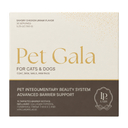
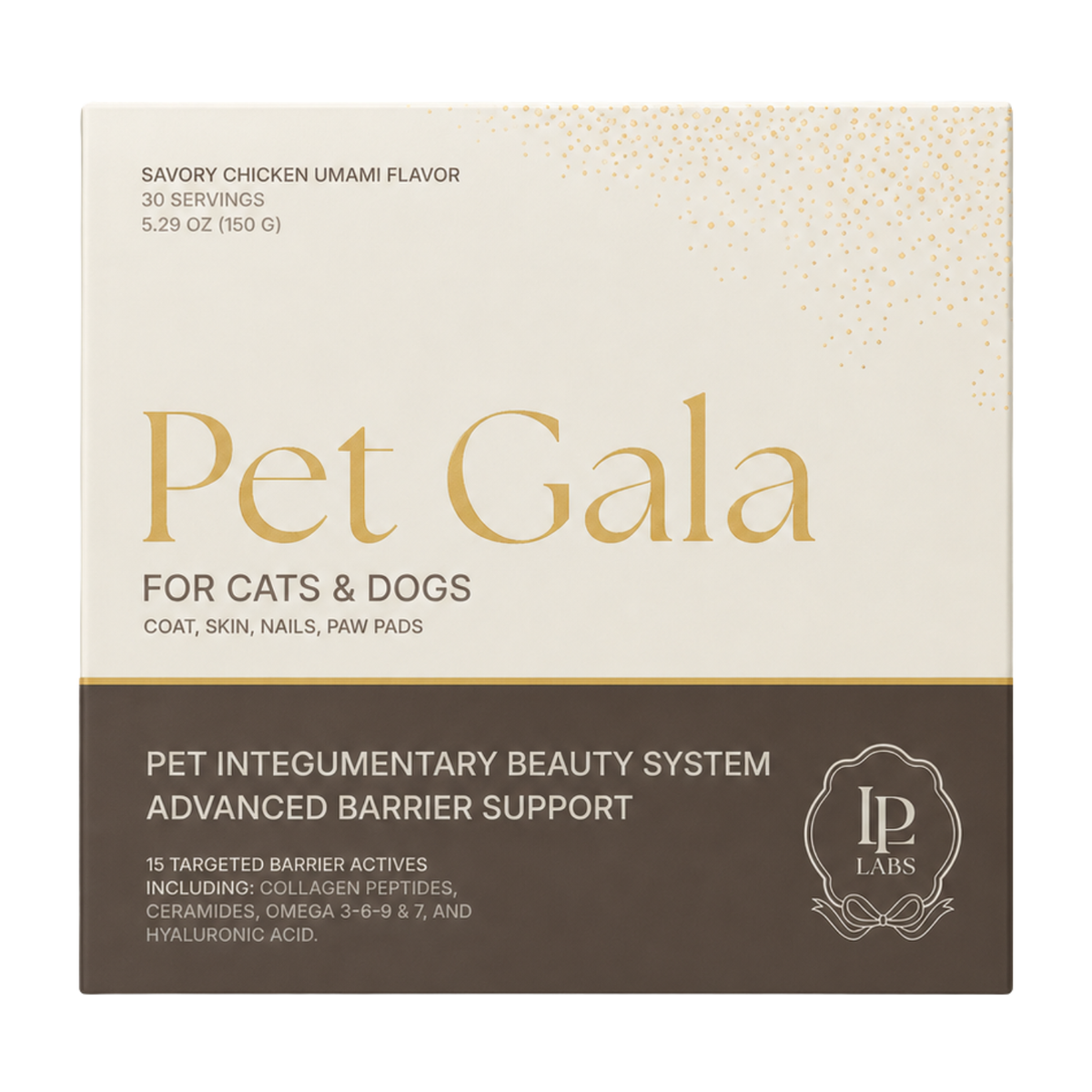
  • In Pet Gala: No. Pet Gala has no eggshell membrane. It's daily skin, coat and nail nutrition.

What is eggshell membrane?

Eggshell membrane is the thin, tough film that lines the inside of a chicken egg's shell, between the shell and the white.3

Protein makes up about 90% of it. The rest is a little fat, sugar and mineral.5 Its proteins are fibrous ones such as type I collagen, and it also holds hyaluronic acid, chondroitin sulfate and dermatan sulfate, compounds found in cartilage.3

Egg processors separate the film from the shell, and it ends up in supplements.5 For cats it has been studied in two roles: in a joint chew for older cats, and as a coat and skin supplement.1, 2

Eggshell powder is something else. The shell is mostly calcium carbonate, a mineral used as a calcium source.6

Woman smiling with a tabby cat on her shoulder while holding a Pet Gala box

Has eggshell membrane been studied in cats?

Eggshell membrane has two cat studies that we could find, and they asked different questions.

  • Coat and skin (2026): 24 healthy six-month-old Ragdoll kittens ate a plain diet, eggshell membrane, hyaluronic acid or both for 56 days.1
  • Mobility (2024): owners of 71 senior cats with mobility problems gave a chew containing eggshell membrane and three other main ingredients for 60 days.2

The first was a controlled feeding study paid for by a provincial research grant in China.1 The second tested a commercial chew, Movoflex from Virbac, and its report describes no placebo group.2

When we searched PubMed for eggshell membrane in cats, the coat study was the only result.

Woman kissing a fluffy gray cat while holding an orange tabby and a Pet Gala box

Does eggshell membrane improve a cat's coat?

Eggshell membrane improved some coat measures in the one cat study that tested it. Six Ragdoll kittens got it in their food for 56 days, and six ate the same food without it.1

Compared with the plain diet, the eggshell membrane group had:

  • smoother, less matted fur, scored by trained judges who didn't know which cat ate what;
  • a brighter coat on a color meter;
  • more zinc in the hair, and a more even hair surface under the microscope.1

Coat gloss was no better with eggshell membrane alone, and neither was skin stretch.1 Our guide to the best cat skin and coat supplement systems compares coat products.

Woman petting a silver tabby on a kitchen counter beside an open Pet Gala box

Does eggshell membrane work better with hyaluronic acid?

Eggshell membrane did more for the kittens' coats when it was fed together with hyaluronic acid. The combination group got half as much of each ingredient, and it still had the widest set of gains.1

Only the combination improved coat gloss. Only the combination lowered water loss through the skin compared with the plain diet. It also gave the brightest coats and the thickest hair fibers of the four groups.1

The authors add a caution of their own. With six kittens per group and one feeding level, the study can't say whether the two ingredients boost each other or simply add up.1

Woman holding a fluffy white cat and a Pet Gala box

What does skin water loss tell you about a cat's skin?

Skin water loss is a test of how well the skin barrier holds moisture in. Its full name is transepidermal water loss, or TEWL, and researchers use it as an objective measure of barrier function in cats.1

In the Ragdoll study, TEWL was lowest in the kittens fed eggshell membrane with hyaluronic acid.1 That points to a tighter barrier in healthy young cats.

Itchy and allergic cats are another matter. The authors say their results are nutrition findings in healthy kittens, with no evidence of benefit in cats with skin disease.1 A cat that scratches, overgrooms or has sores needs a vet. Our guide to skin barrier restoration for cats explains the barrier itself.

Eggshell membrane did more for the kittens' coats when it was fed together with hyaluronic acid.

How much eggshell membrane did the cat studies give?

We found no official recommended amount of eggshell membrane for cats. The two cat studies are the only guide, and they measured it in different ways.

  • Coat study: food supplemented with eggshell membrane at 250 mg/kg, mixed in fresh before each meal, for 56 days. The paper leaves open whether that is per kg of food or per kg of body weight.1
  • Combination group: 125 mg/kg of eggshell membrane plus 125 mg/kg of hyaluronic acid, for the same 56 days.1
  • Mobility study: one chew a day, the label amount, for 60 days. The summary we read gives no mg figure for the eggshell membrane in each chew.2
  • Safety arm: five chews a day for 28 days in 8 cats.2

For scale, the main dog trial gave about 6 mg per pound of body weight a day.3 We found no cat study that set an amount by body weight in that way.

How long does it take? Owners in the mobility study reported better general mobility from day 7, and the coat changes were measured at day 56.1, 2 Follow the label of a product made for cats, and ask your vet before going above it.

Two long-haired cats looking toward a Pet Gala box held above a food bowl

Does eggshell membrane help cats with arthritis?

Eggshell membrane has one cat mobility study, and it leans positive without settling the question. Owners of 71 senior cats gave a daily chew for 60 days and filled in mobility questionnaires. General mobility scores improved from day 7, and 63% of owners judged their cat more mobile by the end.2

Three things limit that result. The chew held three other main ingredients besides eggshell membrane. A scientist from the chew's maker is among the authors.2, 15 And the report describes no placebo group, so hope may have colored the owners' scores.

Dogs do have placebo-controlled trials. Even so, a 2022 review of dog and cat studies rated the pain-relief effect of collagen-type products, eggshell membrane included, as weak.4

Hand gently petting an orange-and-white cat beside a Pet Gala box and a food bowl

Is eggshell membrane safe for cats?

Eggshell membrane was well tolerated by cats in both studies, over one to two months.

In the safety arm of the chew study, 8 cats got one chew a day and 8 cats got five a day for 28 days, alongside 8 untreated cats. Daily health checks, weekly exams, and blood and urine tests turned up no product-related problem.2 In the coat study, none of the 24 kittens had a treatment-related adverse event in 56 days.1

Rat safety tests of one eggshell membrane ingredient found no toxicity at up to 2,000 mg per kg a day for 90 days.7

Longer use is untested in cats. Neither cat study ran past 60 days.1, 2

Man sitting with two long-haired cats on a sofa beside a Pet Gala box and a food bowl

What are the side effects of eggshell membrane in cats?

Side effects of eggshell membrane have not turned up in the cat studies' safety checks. Those checks covered 12 kittens fed it for 56 days and 16 cats given a chew for 28 days.1, 2

Those are small numbers, so watch your own cat. Stop the product and call your vet if you see:

  • vomiting or loose stool;
  • new itching, scabs or overgrooming;
  • a drop in appetite.

Egg allergy is the main caution. In a review of 78 cats with food-related skin reactions, beef, fish and chicken were the usual triggers, and egg was the cause in single cases.8

Which form suits a cat: chew, powder or capsule?

Eggshell membrane for cats has been studied in two forms: a soft chew and a powder mixed into food. The right one is whichever your cat will reliably eat.

  • Soft chews: in the senior-cat study, 92% of cats accepted the chew by hand, from a bowl or mixed with food.2
  • Powder in food: the coat study stirred the powder into each meal just before feeding, and the kittens gained weight normally.1
  • Capsules and tablets: we found no cat study that used them.

Check what a product is made of before you compare prices. Eggshell membrane is hard to dissolve, and makers process it in different ways.5 The powder in the coat study was 6.8% collagen and 0.16% chondroitin sulfate by its maker's figures.1 Another brand could differ.

If a new product puts your cat off its food, stop giving it and tell your vet.

Eggshell membrane has one cat mobility study, and it leans positive without settling the question.

Close-up of long white cat fur beside a veterinary vignette about visible skin and coat changes

DVM Voice: Clinical Vignette of When Skin Changes Point Deeper Than the Surface

Case provided by Sarah Calvin, DVM

Maverick, a 4-year-old Siamese cat, was brought in for hair loss across his lower abdomen and red, flaky skin lesions that had progressed over the previous month. His owners were unsure whether he was itchy or overgrooming.

Examination showed broken hairs, abdominal alopecia, and lesions consistent with bacterial skin infection. Further testing ruled out fleas, FeLV/FIV, and common fungal causes. Because his grooming pattern suggested deeper discomfort, his veterinarian continued the workup.

Radiographs and urinalysis revealed bladder stones, crystalluria, and blood in the urine. Maverick’s overgrooming was linked to urinary pain — a case where skin changes were secondary to an internal problem.

His care required a staged plan: stabilizing the skin infection, surgically removing the bladder stones, managing pain, transitioning to a therapeutic diet, and supporting skin-barrier recovery with appropriate nutrition and fish oil.

Hair regrowth began by 8 weeks. By 6 months, his coat had fully recovered, with no recurrence after the urinary issue was resolved.

Clinical takeaway: Maverick’s case shows why feline coat loss and overgrooming deserve careful veterinary investigation. Skin and coat health can reflect pain, stress, nutrition, infection, barrier weakness, or internal disease — not just surface-level grooming behavior.

Single-case vignette. Not generalizable. Veterinary diagnosis and oversight are essential for overgrooming, hair loss, skin lesions, urinary signs, pain, or suspected infection.

Explore Pet Gala Research →
Long-haired tabby being combed beside a Pet Gala box and a food bowl

How do you choose an eggshell membrane product for a cat?

Choose an eggshell membrane product for a cat by reading three lines on the label.

  • Species: pick one made for cats. The dog chew in one trial was portioned for dogs of 15 to 35 kg.15
  • Ingredient and amount: look for the words eggshell membrane with a figure in mg. Eggshell or eggshell calcium is the mineral shell.6
  • Everything else: the studied cat chew had three other main ingredients.2 Check each one, and the flavorings, if your cat has a food allergy.

Our own skin and coat powder, Pet Gala, lists each active with its amount, and you won't find eggshell membrane there. Expect that level of detail from any brand.

Orange-and-white cat eating from a bowl beside a Pet Gala box

Is eggshell membrane the same as eggshell powder?

Eggshell membrane and eggshell powder are two separate things. The powder is ground shell, which is mostly calcium carbonate. The membrane is the protein film inside it.6

Ground shell is used as a calcium source.6 Nothing in the cat or dog research on eggshell membrane applies to it. Adding shell to a complete cat food changes the diet's calcium, so ask your vet first.

Peeling membranes from kitchen eggs isn't a match either. The studies fed measured amounts of a processed ingredient.1, 2 For eggs as food, see our guide to eggs and egg yolk for cats.

Brown-and-white tabby licking its nose beside a Pet Gala box and a food bowl

Eggshell membrane vs collagen and hyaluronic acid for cats

Eggshell membrane carries collagen and hyaluronic acid as parts of a natural mix.3 A collagen or hyaluronic acid supplement supplies a stated amount of one ingredient.

The Ragdoll study put two of them side by side. Hyaluronic acid alone improved skin stretch and coat brightness. Eggshell membrane alone improved coat smoothness and brightness, and the pair together did the most.1

In people, a 12-week trial of 88 adults found better-looking skin and hair with 450 mg a day of a hydrolyzed eggshell membrane, and no change in nails.14

Our guides to collagen for cats and hyaluronic acid for cats cover those two on their own.

Which cats is eggshell membrane for, and which should skip it?

Eggshell membrane is an optional extra, and no cat needs it. The studies cover two kinds of cat: healthy young Ragdolls and senior cats with mobility problems.1, 2

  • Senior cats with stiffness: the group in the mobility study. See a vet first, because joint disease shows up in over 90% of cats older than 12 years and vets can treat the pain.2, 9
  • Kittens: the coat study fed six-month-old kittens for 56 days with no treatment-related problems. Younger kittens weren't studied.1
  • Cats with egg allergy: skip it unless your vet agrees.
  • Cats with kidney disease: we found no study of eggshell membrane in them, so ask your vet.
  • Pregnant or nursing cats: we found no study in them either.
  • Cats with itchy or sore skin: the coat study used healthy cats only, so it's no guide here.1

If your cat takes medicine for pain or a long-term illness, show your vet the full label before you start.

Is eggshell membrane different for cats and dogs?

Eggshell membrane has stronger joint evidence in dogs than in cats, and cats have the only coat study.

Dogs have placebo-controlled joint trials. In the main one, 51 dogs took eggshell membrane or a placebo for six weeks. Owners' pain and function scores beat placebo after one week, and vets' pain scores did at six weeks.3 Another trial tested a blend chew in 52 arthritic dogs for 90 days.15

Cats have no placebo-controlled joint trial that we could find. What they have is the owner-rated chew study in 71 senior cats and the coat study in 24 kittens.1, 2

The amounts differ too. The dog trial fed about 6 mg per pound of body weight.3 The cat studies used one cat chew a day or a set level in food.1, 2 A dog product's serving tells you nothing about the right amount for a cat.

Our guide to eggshell membrane for dogs goes through the dog trials.

Long-haired tabby beside a Pet Gala box held by a person wearing blue scrubs and a stethoscope

What are the alternatives for a stiff older cat?

A stiff older cat has better-proven options than eggshell membrane, and they start with a vet's diagnosis.

  • Frunevetmab: an antibody injection given every 30 days, described as a valuable treatment for cats with arthritis.
  • Anti-inflammatory drugs: meloxicam or robenacoxib, prescribed and monitored by a vet.
  • A lean body: advised for cats with arthritis.9

Omega-3 fish oil has a little cat data. In a 10-week crossover trial of 16 arthritic cats, owners reported less stiffness and higher jumps on fish oil than on corn oil.13 A 2022 review found omega-3s had the clearest evidence among supplements.4

Never give a cat human pain relievers. Vets are told not to use acetaminophen in cats at all.9 Our guide to green-lipped mussel for cats covers another omega-3 source.

Couple cuddling a silver tabby cat

When should a cat see the vet about stiffness?

A cat should see the vet as soon as you notice a change in how it moves, before you try eggshell membrane or any supplement. Joint disease is more common than most owners expect. In X-rays of 100 cats of all ages, 92% showed signs of it.10

The signs are easy to miss. Researchers built a six-question checklist from the behaviors that best flag joint pain:

  • running;
  • jumping up, and jumping down;
  • going up stairs, and coming down;
  • chasing moving objects.11

Grooming less and a change in temperament count too.12 A cat that suddenly can't use a leg, cries in pain or stops eating needs to be seen the same day.

Is eggshell membrane in Pet Gala?

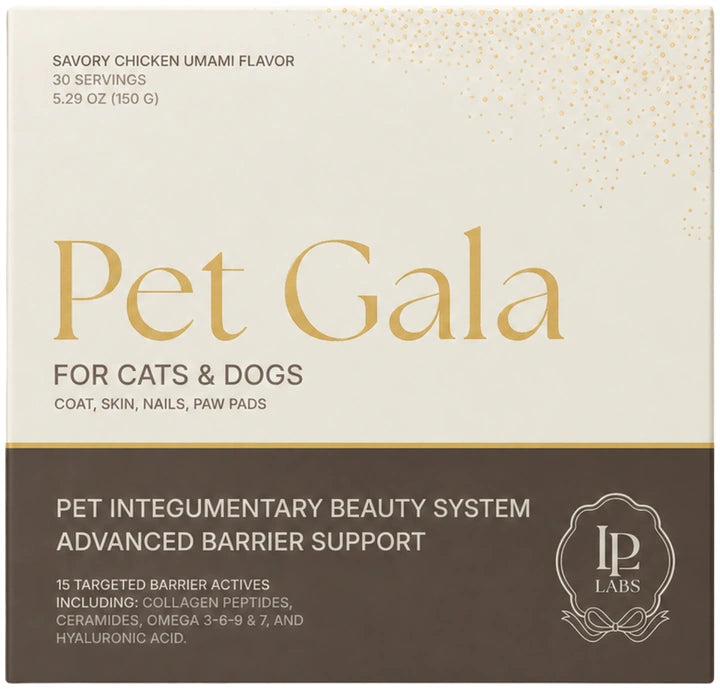
No. There is no eggshell membrane in Pet Gala, and Pet Gala isn't a joint product.

What it is: daily skin, coat and nail nutrition in a powder, made for cats and dogs. Eggshell membrane is a natural mix of collagen and hyaluronic acid. Pet Gala lists both as measured ingredients, 500 mg of Marine Collagen Peptides and 50 mg of Hyaluronic Acid in each sachet, with 100 mg of MSM.

A cat under 7 lb gets half a sachet a day in food, and a cat from 7 to 30 lb gets one. Every active amount is on the label. The powder has a chicken flavor, so check with your vet if your cat has a food allergy.

Pet Gala is a supplement. It hasn't been tested for arthritis, mobility or skin disease in cats.

If coat, skin or claws are what you're working on, see the full Pet Gala formula and serving guide. Our guides to MSM for cats and cat nail health explain more.

A stiff older cat has better-proven options than eggshell membrane, and they start with a vet's diagnosis.

Educational content only. This material is not a substitute for veterinary advice. Always consult your veterinarian about your cat’s specific needs. These statements have not been evaluated by the Food and Drug Administration. Products mentioned are not intended to diagnose, treat, cure, or prevent any disease.

Glossary

Eggshell membrane: The thin protein film lining the inside of an eggshell, used as a supplement ingredient.

Hyaluronic acid: A compound that helps tissues hold water. Sodium hyaluronate is the form fed in the cat coat study.

Transepidermal water loss (TEWL): Water escaping through the skin, measured to judge how well the skin barrier works.

Degenerative joint disease: Long-term damage in a joint. In cats it is common and tied closely to age.

Placebo group: Animals given a look-alike with no active ingredient, so a product's effect can be told apart from hope.

Calcium carbonate: The mineral that makes up most of an eggshell.

Related Reading

References

Numbered references identify the sources used for specific claims. Read the study design, species and evidence boundaries alongside each finding.

FAQ

Does Pet Gala contain eggshell membrane?

No. There's no eggshell membrane in Pet Gala, and it isn't a joint supplement. It's a daily skin, coat and nail powder for cats and dogs that lists marine collagen peptides, hyaluronic acid and MSM as separate ingredients with their amounts.

How long does eggshell membrane take to work in cats?

In the senior-cat chew study, owners reported better general mobility scores from day 7 of a 60-day test. In the Ragdoll coat study, coat and skin were measured after 56 days of eggshell membrane in food.

Can I give my cat a dog eggshell membrane chew?

Use a product made for cats. Dog chews are portioned for a dog's body weight, and the cat studies of eggshell membrane used a cat chew and a powder mixed into cat food. Ask your vet before giving a cat any dog supplement.

Is eggshell membrane safe for kittens?

The only kitten data come from 24 six-month-old Ragdolls. Twelve of them ate eggshell membrane for 56 days with no treatment-related problems and normal growth. Younger kittens haven't been studied, so ask your vet first.

Can eggshell membrane help an itchy cat?

We found no study of eggshell membrane in itchy or allergic cats. The coat study used healthy kittens, and its authors say the results are no evidence of benefit in skin disease. An itchy cat needs a vet to find the cause.

Does eggshell membrane cure arthritis in cats?

No. Eggshell membrane has one owner-rated study of a blend chew behind it, with no placebo group described, and we found no study of it repairing a cat's joints. Vets have prescription options with stronger evidence.

Is eggshell membrane safe for cats with egg allergies?

It hasn't been tested in them. Egg is an uncommon trigger in cats, reported in single cases, but a cat with a known food allergy shouldn't get eggshell membrane unless your vet agrees.

How much eggshell membrane is in a cat chew?

It varies by brand, and the study summary for the tested chew gives no figure. Look for a label that states eggshell membrane in mg per chew, and follow that product's feeding guide.

Can I give eggshell membrane with my cat's arthritis medicine?

We found no study of eggshell membrane alongside prescription arthritis medicine in cats. Show your vet the product's full label before you combine them, and never swap it for prescribed pain relief.

Orange tabby cat stretching on a green rug

Discover LPL-01: How This Fits Into a Complete Feline Integumentary Support System

Skin, coat, and nails in cats are not surface traits. They reflect deeper biological systems—barrier integrity, hydration dynamics, lipid balance, and structural protein turnover—working in coordination.

When these systems drift, the signs are subtle but telling: reduced coat softness, increased shedding, dryness, brittle claws, changes in grooming behavior.

This article explores one piece of that system. If you want to understand how true coat quality and skin resilience are built in cats—and what actually drives visible improvement—you need to zoom out.

Start with the underlying science:

Keep exploring

What would you like to understand next?

Search practical guides about skin, coat, barrier health, ingredients, and daily care for cats.