Barrier Lipids (Ceramides) in Cats

Learn How Ceramides Support Skin Hydration, Allergy Control, Coat Quality, and Gut Resilience

Essential Summary

Why Is Barrier Lipid Balance Important?

Barrier lipids, including ceramides, help a cat’s skin hold water and limit irritant entry. Because cats can show barrier strain as flakes and sensitivity rather than obvious itching, supporting normal barrier function and tracking change signals can prevent over-treatment at home and speed the right veterinary workup.

Pet Gala™ is designed to support normal skin and coat function as part of a daily plan. For cats with flakes or sensitivity, broad nutritional support may help support a less variable routine while owners track change signals over the first 4–6 weeks and coordinate next steps with a veterinarian.

Barrier Lipids (Ceramides) in Cats matter most when a cat looks “dusty,” flaky, or suddenly sensitive to touch, yet does not show the dramatic itch-scratch cycle people expect from allergic skin disease. Cats tend to have a thinner stratum corneum than dogs, so small shifts in ceramides and other barrier lipids can show up as dandruff, static-y coat texture, or a tight, uncomfortable feel during grooming. The confusion is understandable: flakes are often blamed on “dry air,” while itch is blamed on “allergies,” but both can be downstream of the same barrier problem—too much water leaving the skin and not enough lipid structure to hold it in place.

This page uses a compare-and-contrast lens: topical moisturizers versus nutrition; dandruff versus allergy; cats versus dogs; and “just cosmetic” versus clinically meaningful. The goal is not to turn every flake into a diagnosis, but to help owners decide what changes at home are reasonable, what change signals to track over the first 4–6 weeks, and what information makes a veterinary visit more efficient. Along the way, it connects to related cat topics—skin glands, keratin turnover, dehydrated skin, grooming behavior, and the skin microbiome—because barrier comfort is rarely a single-ingredient story.

By La Petite Labs Editorial, ~15 min read

Featured Product:

  • Barrier Lipids (Ceramides) in Cats help keep water in and irritants out; when they thin or shift, flakes and sensitivity can appear before obvious itching.
  • Cats often show barrier strain as dandruff, coat roughness, and grooming discomfort, reflecting a thinner stratum corneum than dogs.
  • Topicals can coat and soften quickly, while diet supports the “supply chain” for lipids over weeks; both can be useful, but they solve different parts of the problem.
  • Sphingolipids are precursors in ceramide biology; research in animal models supports a mechanism where dietary sphingolipids influence epidermal ceramide pathways (Duan, 2012).
  • Diet quality can shift ceramide composition in skin, which helps explain why “same food, new flakes” sometimes follows a diet change or a long stretch of low-variety feeding (Tan, 2022).
  • For cats with allergic patterns, nutrition can be part of a multimodal plan; a controlled study in feline atopic skin syndrome supports diet as a feasible contributor (Watson, 2025).
  • Track change signals (flake load, coat feel, grooming time, and flare triggers) and bring a short timeline to the veterinarian to separate barrier-only issues from infection, parasites, or allergy.

The Confusion: Flakes Versus Allergy in Cats

Many owners assume dandruff is “just dry air,” while itch is “allergies,” but the skin barrier sits underneath both. Ceramides are a major part of the lipid barrier that helps the stratum corneum hold water and keep irritants from slipping between cells. In cats, a thinner outer layer means small changes in barrier lipids can look dramatic: fine white flakes, a papery feel to the coat, or touch sensitivity during petting. That pattern can exist with or without obvious scratching, which is why cats are often misread compared with dogs.

At home, the most useful first step is separating “flake-only” from “flake-plus.” Flake-only tends to be diffuse and mild, with normal appetite and behavior; flake-plus includes ear debris, head/neck overgrooming, scabs, odor, or sudden coat thinning. That distinction changes the next decision: routine barrier support and tracking versus a faster veterinary check for parasites, infection, or allergic disease. A simple phone photo series of the same body areas can make this difference clearer over time.

Lab coat detail showing precision and care aligned with barrier lipids ceramides in cats.

Cats Versus Dogs: Why Signs Look Different

Dog skin discussions often center on itch and redness, but cats frequently broadcast barrier strain through texture and grooming changes. The stratum corneum functions like a brick wall: keratinized cells are the bricks, and ceramides, cholesterol, and fatty acids are the mortar. When the mortar is less reliable, water escapes more easily and the surface becomes fragile, so flakes lift and the coat loses its “slip.” This is also where transepidermal water loss (TEWL) fits as a concept: higher TEWL reflects weaker barrier performance, even if the cat is not visibly inflamed (Shimada, 2008).

Owners can miss cat discomfort because the coping strategy is often quiet: shorter petting tolerance, more time under furniture, or a sudden preference for cooler surfaces. A cat that stops enjoying brushing may not be “moody”; the skin can feel tight when the barrier is under strain. Pair coat observations with behavior notes, because barrier discomfort can change grooming patterns long before obvious lesions appear. This is also a natural bridge to related topics like keratin turnover and grooming mechanics.

Supplement paired with foods emphasizing sourcing integrity for barrier lipids ceramides in cats.

Side a: Topical Lipids and Fast Surface Comfort

Topical moisturizers work from the outside in: they coat the surface, reduce friction, and can temporarily reduce water loss by forming a film. Ceramide-containing topicals are designed to mimic parts of the natural lipid barrier, which is why they are often discussed in barrier care. Evidence in veterinary dermatology is stronger in dogs than cats, but the underlying rationale—replenishing epidermal lipids to support barrier function—is consistent across mammals (Jung, 2013). For cats, the practical takeaway is that topicals can change feel and flake visibility quickly, but they do not automatically address why ceramides were low or imbalanced.

Household reality matters: cats lick. Any topical plan should assume grooming exposure and avoid products not explicitly intended for cats. Human dermatologic products can transfer to pets through contact, and some ingredients are not appropriate for feline use (Asad, 2020). If a topical is used, apply sparingly to a small area first, prevent immediate licking when possible, and watch for drooling, vomiting, or sudden avoidance of grooming. A “less variable” routine beats frequent product switching.

Owner-and-cat moment featuring supplement use supported by barrier lipids ceramides in cats.

Side B: Nutrition and the Ceramide Supply Chain

Nutrition works on a different timeline because it supports the inputs and enzymes that build barrier lipids as skin cells mature. Sphingolipids are dietary lipids that connect to ceramide biology; research supports that dietary sphingolipids can influence epidermal barrier function through ceramide-related pathways (Duan, 2012). That does not mean a single nutrient “fixes” flakes, but it explains why dietary consistency and overall fat quality can change coat feel over weeks rather than days. In cats, this slower route can be valuable when flakes are chronic and widespread.

A practical home routine is to treat diet changes like an experiment with one variable at a time. Sudden food swaps, frequent treat rotations, or “topping” with random oils can make results less reliable and can also trigger gastrointestinal upset. Keep a simple log: food brand and flavor, treat types, and any new supplements. When the barrier is the focus, the goal is to create enough slack in the plan to see whether the skin’s rebound capacity improves over the first 4–6 weeks.

Comparison graphic illustrating broader beauty support profile aligned with barrier lipids ceramides in cats.

What Actually Differs: Ceramide Loss Versus Keratin Shedding

Not all flakes are the same. Some are primarily keratin turnover—skin cells shedding faster than usual—while others reflect poor cohesion because the lipid mortar is thin. Ceramide disruption tends to produce fine, dusty scaling and a “draggy” coat, especially along the back and rump, where owners notice it on dark furniture. Keratin-driven scale can look larger and may come with greasier roots if sebaceous gland output is also shifting. This distinction matters because keratin turnover is often driven by inflammation, parasites, or infection, while lipid loss can be triggered by over-bathing, harsh shampoos, or low-humidity indoor living.

A simple at-home check is the “brush paper test”: brush the same area for 20 strokes over a white paper towel once weekly. Fine powder suggests barrier dryness; larger plates or yellowish debris suggests a different problem that may need veterinary diagnostics. Also note whether flakes worsen after grooming sessions, which can happen when the barrier is fragile and mechanical friction dislodges scale. These observations connect naturally to pages on skin glands and grooming behavior.

The scratching is completely gone, his coat looks healthy and shiny!

— Lena

He was struggling with itching, now he's glowing.

— Grace

“In cats, flakes can be the first loud sign of a quiet barrier problem.”

Case Vignette: the Flaky Cat with No Obvious Itch

A common scenario is a middle-aged indoor cat that develops shoulder-to-tail dandruff in winter, with a coat that feels rougher but minimal scratching. The cat still eats well, yet grooming becomes shorter and more frequent, as if the skin never feels settled. In this pattern, barrier lipids are a reasonable first hypothesis, especially when there is no flea exposure and no focal hair loss. The goal is to decide whether the issue behaves like a surface barrier problem or an inflammatory skin disease that is simply presenting quietly.

In a household plan, the first move is not “more products,” but fewer variables: keep diet stable, reduce bathing, and avoid fragranced wipes. Add humidity if the home is dry, and choose gentle grooming tools that do not scrape. If change signals trend in the right direction within 4–6 weeks, that supports the barrier hypothesis; if flakes persist with new scabs, odor, or ear debris, a veterinary exam becomes the higher-value next step. Photos and a brief timeline make the handoff cleaner.

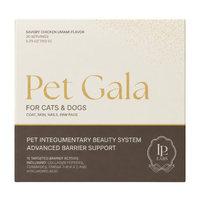
Pet Gala in tidy unboxing shot, reflecting refinement in barrier lipids ceramides in cats.

Owner Checklist: Signs That Point Toward Barrier Lipid Strain

Barrier lipid strain in cats often shows up as a cluster of small, specific signals rather than one dramatic symptom. The lipid barrier influences moisture retention and surface friction, so the earliest changes can be tactile: coat drag, static, and fine scale that returns quickly after brushing. Ceramide-related barrier issues also tend to be diffuse, not sharply localized, unless a secondary trigger is present. Because cats hide discomfort, behavior can be as informative as skin appearance.

Owner checklist (at-home): (1) Fine white flakes along the back that reappear within days, (2) coat feels rougher despite normal grooming, (3) reduced tolerance for brushing or petting over the spine, (4) increased “maintenance grooming” without obvious fleas, (5) flakes worsen after bathing, wipes, or a new shampoo. If two or more are present, a barrier-focused routine and tracking plan is reasonable while watching for red flags like odor, pustules, or patchy hair loss.

Outdoor shot of a cat, symbolizing beauty support from barrier lipids ceramides in cats.

What to Track in the First 4–6 Weeks

Barrier care is easiest to judge when the target is measurable. TEWL is a clinical tool, but owners can still track practical proxies that reflect water loss and surface cohesion (Shimada, 2008). The key is to track change signals, not perfection: a cat with chronic flakes may not become flake-free, but the pattern can become less variable and the coat can regain slip. Tracking also prevents overreacting to a single “bad day,” which is common when humidity or grooming changes.

What to track rubric: (1) Weekly brush-paper flake amount, (2) coat feel score (silky to draggy), (3) grooming time and whether it looks frantic or calm, (4) petting tolerance over the back, (5) trigger notes—bathing, heating running, diet changes, (6) any new odor or ear debris, (7) stool quality if diet or supplements change. Bring this log to the veterinarian if progress stalls; it shortens the path to the right diagnostics.

Lab coat detail with La Petite Labs crest, reinforcing trust in barrier lipids ceramides in cats.

Unique Misconception: “Ceramides Are Only a Topical Thing”

A frequent misunderstanding is that ceramides only matter in creams, so diet cannot influence barrier lipids. In reality, ceramides are built and remodeled inside the skin as cells mature, and dietary sphingolipids can connect to that pathway. Animal research supports the concept that oral ceramide or sphingolipid intake can influence barrier function and epidermal lipid biology, even though the exact translation to individual cats varies (Ohta, 2021). This is not a promise of a cosmetic “quick fix,” but it is a reason nutrition belongs in the conversation.

The household implication is to avoid chasing novelty: switching foods weekly or adding multiple oils at once makes it impossible to learn what actually helps. If a diet change is chosen, keep it consistent long enough for skin turnover to reflect the new inputs. Pair that with stable grooming and a predictable indoor environment (humidity, bedding, detergents). When the plan is less variable, the cat’s rebound capacity is easier to see.

Diet Quality and Lipid Profiles: Why “Same Food” Can Fail

Owners often report, “Nothing changed, but the flakes started,” yet diet quality can drift in subtle ways—formula updates, treat creep, or long-term reliance on a narrow fat profile. Research in an animal model found that a Western-style diet altered skin ceramide composition and was associated with compromised barrier function (Tan, 2022). While cats are not mice, the mechanism is useful: the barrier is built from specific lipid classes, and the mix can shift when the diet pattern shifts. That helps explain why a cat can look stable for months and then become flaky without a single obvious trigger.

At home, the most actionable step is auditing “extras.” Count treats, flavored dental products, and table scraps for one week, and write down brands and flavors. If a change is needed, choose one adjustment—such as reducing treat variety or selecting a consistent, complete diet—and hold it steady. This approach creates slack for the skin to respond without the noise of constant inputs. If flakes worsen after a new bag or flavor, keep the packaging for ingredient comparison.

“A simple plan with tracking teaches more than constant product switching.”

Supplement paired with foods emphasizing clean formulation for barrier lipids ceramides in cats.

When Allergy Enters: FASS and the Barrier Connection

Feline atopic skin syndrome (FASS) can look like overgrooming, head/neck lesions, or miliary dermatitis, and flakes may be part of the picture rather than the headline. Barrier lipids matter here because a leaky barrier exposes immune cells to more environmental triggers, raising the chance of inflammation. A randomized controlled study in cats with FASS found that a dietary intervention contributed to clinical management and was generally feasible over the study period (Watson, 2025). The practical point is not that diet replaces veterinary therapy, but that barrier-supportive nutrition can be part of a multimodal plan.

For owners, the decision hinge is whether flakes are accompanied by pattern clues: seasonal flares, ear involvement, facial itching, or recurrent hotspots from licking. If those are present, barrier support should run alongside a veterinary workup rather than delaying it. Keep notes on flare timing, litter changes, and household cleaning products, because contact irritants can mimic allergy. This also connects to the skin microbiome: barrier disruption can change the surface environment that microbes live on.

Shop Now
Home scene with cat and supplement, showing beauty care supported by barrier lipids ceramides in cats.

What Not to Do: Common Mistakes That Worsen Flakes

Barrier problems often worsen because well-meaning care strips lipids faster than the skin can replace them. Frequent bathing, degreasing shampoos, and fragranced wipes can remove surface lipids and leave the stratum corneum with less mortar. Another common pitfall is borrowing human eczema products without considering feline grooming and ingredient safety; topical exposures can transfer between people and pets in the household (Asad, 2020). The result is a cycle: flakes prompt more cleaning, and more cleaning prompts more flakes.

What not to do: (1) Do not bathe repeatedly to “wash off dandruff,” (2) do not apply essential oils or fragranced lotions to a cat’s coat, (3) do not layer multiple new supplements at once, (4) do not assume flea control is optional when flakes appear—fleas can coexist with dryness. Instead, choose one gentle change, track change signals weekly, and escalate to veterinary care if lesions, odor, or patchy hair loss develops.

Shop Now
Competitive comparison visual emphasizing clean-label design aligned with barrier lipids ceramides in cats.

Vet Visit Prep: Make the Barrier Conversation Efficient

Veterinary dermatology visits move faster when the owner arrives with a barrier-focused timeline rather than a single complaint of “dry skin.” The clinician is sorting among parasites, infection, allergy, endocrine disease, and primary barrier dysfunction. Because cats can present subtly, the best support is specific observations: where flakes start, whether grooming changed, and what products touched the coat. This is especially important when the main sign is dandruff and sensitivity rather than obvious itching.

Vet visit prep questions/notes: (1) “Are the flakes consistent with barrier lipid loss versus infection or mites?” (2) “Should flea control be adjusted even if fleas are not seen?” (3) “Would a cat-safe topical lipid product be appropriate, given grooming?” (4) “Could diet be part of a multimodal plan, and what timeline should be expected?” Bring photos, the brush-paper results, and a list of shampoos, wipes, and supplements used in the last 8 weeks.

Shop Now

Topicals in Cats: Practical Safety and Selection

Topical barrier products can be useful in cats, but the selection logic differs from dogs because of grooming and taste aversion. Ceramide-based moisturizers have been studied more directly in dogs with atopic dermatitis, with a rationale centered on replenishing epidermal lipids (Jung, 2013). That evidence cannot be copied directly onto cats, yet it supports the broader concept that lipid replacement can matter clinically. In cats, the best candidates are formulations explicitly intended for feline use and designed for minimal residue.

Owners should treat any new topical as a trial: apply to a small area, prevent immediate licking, and watch for drooling, vomiting, or agitation. Avoid mixing multiple topicals, because it becomes unclear what caused a reaction or what helped. If a household member uses prescription human skin medications, prevent transfer through bedding and hands; cross-exposure between humans and pets is a documented concern (Asad, 2020). When the plan is simple, the cat’s response is easier to interpret.

Nutrition: Sphingolipids, Fatty Acids, and Timeframes

Dietary support for the barrier is best framed as building materials plus time. Sphingomyelin is a dietary sphingolipid that can serve as a precursor in ceramide pathways; animal research supports a mechanism where dietary sphingolipids help protect barrier function under stress (Oba, 2015). This does not mean a cat needs a specific “ceramide food,” but it supports the idea that lipid classes in the diet can influence the skin’s lipid architecture. Because skin turnover takes time, meaningful coat and flake changes are usually judged over weeks.

A realistic household timeframe is 4–6 weeks for early change signals, with longer for full coat turnover. During that window, keep feeding consistent and avoid adding multiple oils or treats “for skin” at the same time. If stool quality changes, pause and reassess, because gastrointestinal instability can derail consistency. Nutrition works best when paired with gentle grooming and environmental stability, creating a higher ceiling for the skin’s durability.

Pet Gala box nestled in packaging, showing detail supporting barrier lipids ceramides in cats.

Decision Framework: When to Support at Home Versus Escalate

A decision framework prevents both underreaction and overreaction. Home barrier support is reasonable when flakes are mild, diffuse, and not paired with odor, pustules, or focal hair loss. Escalation is warranted when there are scabs, ear involvement, recurrent vomiting with grooming, or rapid coat thinning, because these patterns suggest parasites, infection, or allergic inflammation rather than simple lipid loss. The compare-and-contrast point is that dandruff can be cosmetic, but it can also be the earliest visible sign of a barrier that is becoming less reliable.

A practical rule is “two weeks to stabilize, six weeks to judge.” If gentle changes (humidity, grooming, fewer products) make flakes less variable within two weeks, continue and track. If nothing shifts by six weeks—or if red flags appear—schedule a veterinary visit and bring the tracking rubric. This approach supports better handoff and reduces the temptation to cycle through shampoos, supplements, and diet changes without learning what the cat’s skin is responding to.

Shop Now
Ingredient showcase image explaining core beauty components and support from barrier lipids ceramides in cats.

How Pet Gala™ Fits into a Barrier-support Plan

Barrier Lipids (Ceramides) in Cats sit at the intersection of lipid inputs, keratin turnover, grooming behavior, and the skin microbiome. A broad-spectrum supplement is most appropriate when the goal is to support normal skin function while keeping the overall plan simple and trackable. Nutrition can contribute to clinical management in allergic-pattern cats as part of a multimodal approach, which supports the idea that diet-level support is not “cosmetic only” (Watson, 2025). The key is to introduce slowly, avoid stacking multiple new products, and judge change signals over the first 4–6 weeks.

In a daily routine, use one consistent feeding schedule, stable grooming, and a single supplement choice rather than a rotating cabinet. That structure creates slack for the skin to show whether it can regain rebound capacity. If a cat is already on a veterinary diet or has a history of food sensitivity, the supplement plan should be discussed with the veterinarian first. The goal is a less variable plan that supports comfort without masking problems that need diagnosis.

Shop Now

Putting It Together: a Less Variable Routine That Teaches You

The most helpful contrast is not topical versus diet, but short-term surface feel versus long-term barrier architecture. Topicals can make the coat feel softer quickly, while nutrition supports the inputs that skin cells use as they mature. Animal studies support the concept that orally consumed ceramides can influence barrier function, reinforcing that the barrier is built, not just coated (Ohta, 2021). For cats, where flakes and sensitivity may be the loudest signal, the winning strategy is often a simple plan that can be measured.

A durable routine looks boring on purpose: gentle brushing, minimal stripping products, stable diet, and a short tracking log. If the cat’s coat becomes less draggy and flakes become less frequent, that is meaningful progress even if some scale remains. If the pattern shifts toward lesions, odor, or focal hair loss, the plan should pivot toward diagnostics rather than more home experimentation. This is how Barrier Lipids (Ceramides) in Cats becomes a decision tool, not just a concept.

“Surface softness is fast; barrier architecture takes weeks to reveal itself.”

Educational content only. This material is not a substitute for veterinary advice. Always consult your veterinarian about your dog’s specific needs. These statements have not been evaluated by the Food and Drug Administration. Products mentioned are not intended to diagnose, treat, cure, or prevent any disease.

Glossary

  • Ceramides - A class of sphingolipids that form key “mortar” lipids in the stratum corneum.
  • Barrier lipids - The mix of ceramides, cholesterol, and fatty acids that limits water loss and irritant entry.
  • Stratum corneum - The outermost skin layer that provides the primary physical barrier.
  • Transepidermal water loss (TEWL) - Water loss through the skin; higher values reflect weaker barrier performance.
  • Sphingolipids - Dietary and tissue lipids that include ceramide precursors such as sphingomyelin.
  • Sphingomyelin - A sphingolipid found in foods that can feed into ceramide-related pathways.
  • Corneocyte cohesion - How tightly outer skin cells stick together; weaker cohesion can look like fine scaling.
  • Feline atopic skin syndrome (FASS) - A clinical pattern of allergic skin disease in cats with variable signs including overgrooming and lesions.
  • Sebaceous glands - Skin glands that produce sebum, influencing coat feel and surface lipid balance.

Related Reading

References

Ohta. Dietary Ceramide Prepared from Soy Sauce Lees Improves Skin Barrier Function in Hairless Mice.. PubMed. 2021. https://pubmed.ncbi.nlm.nih.gov/34373410/

Jung. Clinical use of a ceramide-based moisturizer for treating dogs with atopic dermatitis.. PubMed Central. 2013. https://pmc.ncbi.nlm.nih.gov/articles/PMC3694192/

Oba. Dietary Milk Sphingomyelin Prevents Disruption of Skin Barrier Function in Hairless Mice after UV-B Irradiation.. PubMed Central. 2015. https://pmc.ncbi.nlm.nih.gov/articles/PMC4547804/

Tan. A Western Diet Alters Skin Ceramides and Compromises the Skin Barrier in Ears. PubMed. 2022. https://pubmed.ncbi.nlm.nih.gov/34999108/

Watson. A Randomised-Controlled Study Demonstrates That Diet Can Contribute to the Clinical Management of Feline Atopic Skin Syndrome (FASS).. PubMed Central. 2025. https://pmc.ncbi.nlm.nih.gov/articles/PMC12108445/

Duan. Dietary sphingolipids improve skin barrier functions via the upregulation of ceramide synthases in the epidermis.. PubMed. 2012. https://pubmed.ncbi.nlm.nih.gov/22621186/

Shimada. Transepidermal water loss (TEWL) reflects skin barrier function of dog.. PubMed. 2008. https://pubmed.ncbi.nlm.nih.gov/18772562/

Asad. Effect of topical dermatologic medications in humans on household pets.. PubMed Central. 2020. https://pmc.ncbi.nlm.nih.gov/articles/PMC6988634/

FAQ

What are Barrier Lipids (Ceramides) in Cats, simply?

Barrier Lipids (Ceramides) in Cats are part of the skin’s outer “mortar” that helps hold water in and keep irritants out. Ceramides sit between outer skin cells and help them stay cohesive.

When this lipid structure becomes less reliable, cats may show fine flakes, a rough coat feel, or sensitivity during grooming, sometimes without dramatic scratching.

Why do cats get flakes when ceramides are low?

When ceramides and related barrier lipids are reduced or imbalanced, outer skin cells do not hold together as well. Water can leave the skin more easily, and the surface becomes fragile.

In cats, that often looks like fine dandruff and coat “drag” rather than obvious redness. Tracking weekly flake load and coat feel helps confirm whether the pattern is shifting.

How is this different in cats versus dogs?

Dogs are often discussed in terms of itch and redness, while cats can show barrier strain as flakes, coat texture changes, and grooming discomfort. Cats may also overgroom quietly rather than scratch openly.

That difference can delay recognition of a barrier problem. A short photo timeline plus notes on grooming behavior usually communicates the pattern better than a single snapshot.

Do topical ceramide products help cats with dandruff?

Topicals can support surface comfort by coating the skin and reducing friction, and ceramide-based moisturizers are designed to mimic parts of the lipid barrier. The clinical evidence base is stronger in dogs, but the barrier rationale is consistent across mammals(Jung, 2013).

In cats, product choice must account for licking. Use only cat-appropriate products, trial a small area first, and stop if drooling, vomiting, or agitation occurs.

Can diet influence ceramide biology in the skin?

Yes, diet can influence the inputs and pathways involved in building barrier lipids as skin cells mature. Research supports that dietary sphingolipids can affect epidermal barrier function through ceramide-related mechanisms(Duan, 2012).

This is not a guarantee of a specific cosmetic outcome in every cat, but it supports using nutrition as part of a longer-term, trackable barrier plan.

How long does it take to see changes from nutrition?

Skin and coat changes from nutrition are usually judged over weeks, not days, because the barrier is rebuilt as new cells reach the surface. Early change signals are often assessed over the first 4–6 weeks.

During that window, keep the plan less variable: stable diet, minimal new treats, and consistent grooming. This makes it easier to tell whether flakes and coat feel are truly shifting.

Is dandruff always a barrier lipid problem in cats?

No. Flakes can also reflect parasites, infection, allergic inflammation, or changes in keratin turnover. Barrier lipid strain is more likely when scaling is fine, diffuse, and paired with coat drag or grooming sensitivity.

Red flags such as odor, pustules, scabs, ear debris, or patchy hair loss should shift the plan toward a veterinary exam rather than more home experimentation.

What home signs suggest Barrier Lipids (Ceramides) in Cats are strained?

Barrier Lipids (Ceramides) in Cats may be strained when fine flakes recur quickly, the coat feels rough despite grooming, and the cat becomes less tolerant of brushing over the back. Increased “maintenance grooming” can also be a clue.

A weekly brush-paper check and a simple coat feel score can make these signals easier to compare over time, especially across seasonal humidity changes.

What should be tracked during a barrier-support trial?

Track signals that reflect surface cohesion and comfort: weekly flake amount, coat feel, grooming time, petting tolerance over the spine, and any new odor or ear debris. These are practical proxies for barrier performance.

TEWL is a clinical measure of barrier function, and the concept supports why these home markers matter even when redness is minimal(Shimada, 2008). Bring the log if veterinary care is needed.

What is a common misconception about ceramides in cats?

A common misconception is that ceramides only matter in topical creams. In reality, ceramides are built and remodeled within the skin, and oral intake of ceramide-related lipids can influence barrier biology in animal models(Ohta, 2021).

That does not mean any supplement is a shortcut. It supports choosing a consistent plan and judging results over weeks rather than chasing rapid cosmetic changes.

Can diet help cats with allergic-pattern skin issues too?

Yes, nutrition can be part of a multimodal plan for allergic-pattern cats. A randomized controlled study in feline atopic skin syndrome found a dietary intervention contributed to clinical management and was feasible in cats.

This supports using diet-level barrier support alongside veterinary guidance, not as a replacement for diagnostics or prescribed therapy when lesions or recurrent flares are present.

What should not be done when a cat is flaky?

Avoid frequent bathing, degreasing shampoos, and fragranced wipes, which can strip surface lipids and make flakes more persistent. Avoid essential oils and human lotions, since cats lick and can react to residues.

Also avoid stacking multiple new supplements at once. A less variable plan makes it easier to see whether the barrier is gaining rebound capacity or whether a veterinary exam is needed.

Are human eczema creams safe to use on cats?

Human dermatologic products should not be assumed safe for cats. Cats groom and ingest residues, and some ingredients can be inappropriate or trigger adverse reactions.

Household transfer is also a concern: topical medications used by people can expose pets through contact and shared surfaces. A veterinarian should guide any topical plan for a cat with skin signs.

How does Pet Gala™ fit a ceramide-support routine?

A supplement fits best when it supports a simple, trackable routine rather than adding complexity. Pet Gala™ is designed to support normal skin and coat function as part of a daily plan, alongside consistent feeding and gentle grooming.

Introduce one change at a time and track flakes, coat feel, and grooming behavior for 4–6 weeks. If lesions, odor, or patchy hair loss appear, veterinary diagnostics should take priority.

Can Pet Gala™ be used daily for flaky cats?

Daily use is most sensible when it supports a consistent routine and the cat tolerates it well. Pet Gala™ is positioned to support normal skin function rather than act as a rapid “fix.”

Cats with food sensitivities, chronic disease, or complex diets should have supplement choices reviewed by a veterinarian to keep the overall plan safe and less variable.

Are there side effects to watch for with new supplements?

Any new supplement can cause gastrointestinal upset in some cats, especially if introduced abruptly. Watch for vomiting, diarrhea, reduced appetite, or refusal of food due to taste changes.

If side effects appear, stop the new addition and contact a veterinarian. A slow introduction and avoiding multiple simultaneous changes makes cause-and-effect easier to identify.

Do kittens and seniors need a different barrier approach?

Life stage changes the decision framework more than it changes the basic biology. Kittens can develop flakes from parasites or infection, so veterinary evaluation is often higher priority when signs are persistent.

Senior cats may groom less due to arthritis or dental pain, which can make coat changes look like “dry skin.” Pair barrier support with a check for mobility, oral health, and overall medical status.

What questions should be brought to the vet about flakes?

Bring focused questions: whether the pattern fits barrier lipid loss versus mites or infection, whether flea control should be adjusted, and whether a cat-safe topical lipid product is appropriate given grooming.

Also bring a short timeline, photos, and a list of shampoos, wipes, and supplements used. This helps the veterinarian choose diagnostics and reduces trial-and-error.

When should Barrier Lipids (Ceramides) in Cats prompt urgent care?

Barrier Lipids (Ceramides) in Cats are usually a comfort and quality-of-life topic, but urgent care is warranted if the cat is lethargic, not eating, has rapidly spreading redness, facial swelling, or painful skin.

Prompt veterinary evaluation is also appropriate for pustules, strong odor, or sudden patchy hair loss, which can indicate infection or other conditions that should not be managed at home.

How can results be judged without overreacting to day-to-day changes?

Use weekly checkpoints rather than daily judgments. Flakes can vary with humidity, heating, and grooming, so a single “bad day” is not a reliable signal.

A brush-paper test, coat feel score, and grooming behavior notes create a clearer trend line. If the trend is not shifting by 4–6 weeks, the next step is usually veterinary diagnostics rather than more product changes.

5K+ Happy Pet Parents

Excellent 4.8

Barrier Lipids (Ceramides) in Cats | Why Thousands of Pet Parents Trust Pet Gala™

"Magical. He was struggling with itching and shedding. Now he's literally glowing."

Grace & Ducky

"Improves her skin, fur, nails, and eyes. We're loving it!"

Cat & Miso

"It's so good for his coat, and so easy to mix into food."

Alex & Cashew

"The scratching is completely gone, his coat looks healthy and shiny."

Lena & Bear

"Magical. He was struggling with itching and shedding. Now he's literally glowing."

Grace & Ducky

"Improves her skin, fur, nails, and eyes. We're loving it!"

Cat & Miso

"It's so good for his coat, and so easy to mix into food."

Alex & Cashew

"The scratching is completely gone, his coat looks healthy and shiny."

Lena & Bear

"Magical. He was struggling with itching and shedding. Now he's literally glowing."

Grace & Ducky

"Improves her skin, fur, nails, and eyes. We're loving it!"

Cat & Miso

"It's so good for his coat, and so easy to mix into food."

Alex & Cashew

"The scratching is completely gone, his coat looks healthy and shiny."

Lena & Bear

"Magical. He was struggling with itching and shedding. Now he's literally glowing."

Grace & Ducky

"Improves her skin, fur, nails, and eyes. We're loving it!"

Cat & Miso

"It's so good for his coat, and so easy to mix into food."

Alex & Cashew

"The scratching is completely gone, his coat looks healthy and shiny."

Lena & Bear

SHOP NOW