Fatty Acids for Cats

See What Fatty Acid Deficits Look Like and How to Correct Them

Essential Summary

Why are fatty acids for cats important?

Fatty acids for cats support the visible finish owners care about most: comfortable skin, a glossy coat, and strong, clean nails. Cats have specific essential fat needs, including linoleic and arachidonic acids, so feline-appropriate balance matters. A thoughtful supplement can refine everyday presentation when diet, environment, or pickiness makes results uneven.

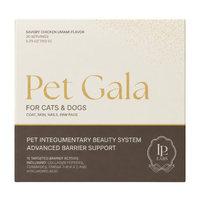
Pet Gala™ is a beauty-forward daily support designed to help your cat’s skin, coat, and nails look consistently cared-for—so the shine, softness, and “well-kept” finish you notice becomes easier to maintain.

Fatty acids for cats are best understood as a foundational nutrition topic, not a cosmetic one. In feline biology, fats include both nonessential fatty acids (which the body can make in adequate amounts) and essential fatty acids (which must come from the diet). This distinction matters because cats have specific dietary requirements that shape how their skin and overall physiology function.

Two essential fatty acids are especially important in cats: linoleic acid and arachidonic acid. Linoleic acid is an omega-6 fat required for normal skin structure and function, and deficiency can affect skin and coat quality (Sinclair AJ, 1979). Arachidonic acid is also an omega-6 and is considered essential for cats because they do not synthesize sufficient amounts to meet needs. Together, these fats help supply the building blocks that the body uses to maintain normal cellular membranes and skin surface lipids—setting the stage for why “fatty acid balance” discussions in cats often start with omega-6 adequacy before adding omega-3s for broader profile support.

By La Petite Labs Editorial, ~15 min read

Featured Product:

  • Fatty acids are part of what makes a coat look glossy, lie smoothly, and feel soft in your hands.
  • Cats have specific essential fat needs, including arachidonic acid, so “any oil” is not the same as feline-appropriate support.
  • Omega balance matters for everyday presentation; the goal is a steady, polished baseline rather than dramatic swings.
  • Diet can meet minimums, but environment, grooming, and pickiness can still leave the coat looking less than its best.
  • Quality signals include freshness, clean sourcing, and a format your cat accepts consistently—because compliance is the real multiplier.
  • Visible changes often begin with texture and manageability, then build toward a more even sheen as the coat cycle turns over.
  • Pet Gala™ supports skin, coat, and nails as a daily ritual—care that starts beneath the surface and shows where it matters.

What Fatty Acids Do in the Skin Barrier (Not Just the Coat)

The most important job of fatty acids in dermatologic health is supporting the skin barrier itself. The outer layers of skin rely on skin barrier lipids arranged into organized sheets called lipid lamellae. These lamellae help regulate water loss and protect against environmental irritants by creating a stable, semi-occlusive structure between skin cells.

Fatty acids contribute to this architecture in two main ways. First, they serve as structural components within barrier lipids and cellular membranes, helping maintain flexibility and integrity. Second, they can influence pathways involved in ceramide synthesis—ceramides are a major class of barrier lipids that help “seal” the spaces between cells. When the diet supplies appropriate essential fatty acids, the skin has better access to the raw materials it uses to build and maintain these lipid layers.

Fatty acids also participate in signaling. Certain fats are converted into eicosanoids, a broad group of lipid-derived mediators that help regulate inflammatory tone in tissues. At a high level, this is why discussions about omega balance often focus on how different fatty acids can shift the types of mediators the body produces—without implying that more is always better or that fats replace medical care when disease is present.

Skin hydration graphic tied to beauty support from fatty acids supplement for cats.

Feline-Specific Needs: Why Cats Are Not Small Dogs (and What That Means for Fats)

Cats have unique fatty acid metabolism, which is one reason nutrition guidance for dogs doesn’t automatically translate to felines. A key difference is that cats have limited conversion of ALA (alpha-linolenic acid, a plant-based omega-3) into the longer-chain omega-3s EPA and DHA. Conceptually, this means that relying only on ALA-rich ingredients may not provide the same downstream fatty acid profile that preformed EPA/DHA sources can.

This sits alongside the broader dietary requirement framing for cats: they must obtain certain essential fatty acids directly from food, including linoleic acid and arachidonic acid, because endogenous synthesis and conversion pathways are not sufficient to meet needs. In a prey-model context, these fats are naturally present in animal tissues, which aligns with why feline diets are typically formulated to ensure omega-6 adequacy and, when appropriate, to include omega-3s.

When considering sources, fish oil is a common provider of preformed EPA/DHA, while algae oil can also supply DHA (and sometimes EPA) without relying on fish. Regardless of source, quality and stability matter—oils can oxidize over time, and oxidized fats are more likely to cause digestive upset. For individualized guidance, it’s reasonable to ask a veterinarian to evaluate the diet and, if adding omega-3s, to discuss the product’s EPA/DHA content in milligrams rather than focusing only on “total fish oil” amounts.

Skin health image symbolizing beauty and wellness supported by natural fatty acids for cats.

When the Coat Looks off: Common Signals Owners Notice First

The most convincing reason to care about fatty acids for cats is that the signs are obvious when they’re missing. Essential fatty acid deficiency is associated with skin and coat problems, including a dull coat and poor skin condition (MacDonald ML, 1984). Owners often describe it as “the coat won’t settle,” “the fur feels dry,” or “she’s grooming more than usual.”

Because cats are meticulous groomers, coat quality is part of their identity. When the coat looks glossy and feels soft, it’s a visible reassurance that daily care is working. A high quality fatty acids for cats routine can support that polished look—especially when paired with brushing and a diet your cat consistently eats. Pet Gala™ is designed to fit into that everyday presentation.

Ingredient structure illustration showing beauty formulation behind high quality fatty acids for cats.

Omega-6 in Cats: Linoleic and Arachidonic as the Foundation

Omega-6 fats are often framed as “common,” but in cats they’re foundational. Linoleic acid is essential for cats and supports normal skin and coat condition; deficiency can contribute to dermatologic changes (Sinclair AJ, 1979). Arachidonic acid is also essential in cats because they don’t make enough from precursors. In other words: omega-6 isn’t optional in feline life.

The goal is not to overload omega-6; it’s to ensure the overall profile is appropriate and balanced with omega-3 intake. When that balance is right, owners tend to notice a more uniform coat finish and fewer “patchy” texture moments. Pet Gala™ supports a balanced, appearance-forward approach to fats.

Expressive dog face reflecting beauty support associated with fatty acids supplements for cats.

Omega-3 in Cats: Complementary Support for a More Even Finish

Omega-3s are often chosen for cats because they complement omega-6 intake and help shape the overall fatty acid balance in the diet. Some omega-3s come from marine sources, while alpha-linolenic acid (ALA) can come from certain plant oils. For cats, source and formulation matter because feline fat metabolism differs from many other species (Magalhães, 2021).

In practical, visible terms, owners usually reach for omega-3s when they want a coat that looks smoother and feels less dry. If you’re considering fatty acids supplements for cats, choose a product designed for feline needs and daily compliance. Pet Gala™ supports that kind of consistent, beauty-first routine.

The scratching is completely gone, his coat looks healthy and shiny!

— Lena

He was struggling with itching, now he's glowing.

— Grace

“The goal isn’t more oil. It’s a coat that looks even, feels soft, and stays easy to keep.”

Fish Oil Versus Vegetable Oils: Why Source Can Change Outcomes

Not all oils behave the same in a cat’s diet. Research in cats has shown fish oil supplementation helps maintain adequate plasma arachidonate, while using similar amounts of vegetable oils can lead to arachidonate deficiency due to nutrient dilution (Angell RJ, 2012). That’s a useful reminder that “adding an oil” isn’t automatically neutral—what you add can shift the overall dietary picture.

If you’re shopping for the best fatty acids for cats, look beyond the marketing label and think in terms of formulation: feline appropriateness, balance, and how it supports visible coat and skin condition without compromising the diet. Pet Gala™ is designed to support that balanced, cat-first approach.

Dog photo highlighting coat health and expression supported by best fatty acids supplements for cats.

When Supplements Make Sense: Seasons, Shedding, and Indoor Air

A fatty acids supplement for cats can be especially appealing during moments when the coat is under “presentation pressure”: seasonal shedding, dry indoor heat, frequent grooming, or after a diet change. Dietary fat concentration and fatty acid composition can influence nutrient digestibility and urine composition in healthy cats, showing that fat choices can have broader effects than coat shine alone (Paßlack N, 2024).

That’s why a measured, consistent approach tends to work best. You’re aiming for a steady baseline—comfortable skin, a smoother coat feel, and nails that stay strong and clean-looking. Pet Gala™ supports this kind of everyday, visible-care routine without asking you to overhaul everything at once.

Dog portrait from the side highlighting beauty supported by high quality fatty acids for cats.

Diet Meets Minimums; Beauty Routines Aim Higher

Owners often ask whether a complete and balanced diet already covers fatty acids for cats. Many diets do meet essential requirements, but “meeting minimums” and “looking exceptional” are different standards. Essential fatty acids are required, and deficiency can contribute to skin and coat issues. Even when a diet is adequate, a cat’s visible condition can still fluctuate with environment, grooming habits, and individual sensitivity.

This is where a beauty-positioned product earns its place: not as a replacement for food, but as support for the integumentary system—the parts of wellbeing you can actually see. Pet Gala™ is designed to help keep skin, coat, and nails looking consistently cared-for.

Ingredient overview graphic showing what's inside and how best fatty acids for cats supports beauty.

Timeline: from Softer Fur to a More Uniform Sheen

Results timing is personal, but the coat gives clues quickly. Some owners notice a softer feel within a few weeks, while the full “new coat” look can take longer because fur growth and shedding have their own rhythm. When essential fatty acids are low, visible coat and skin issues can appear, reinforcing that fats are part of what the body uses to maintain normal condition (MacDonald ML, 1984).

Track small signals: less dandruff-like flaking, a smoother lay along the back, and a more even sheen under natural light. Consistency matters more than intensity. Pet Gala™ is designed for daily use as part of a calm, repeatable grooming-and-care ritual.

Quality Signals That Separate Premium Oils from Noisy Labels

If you’re choosing the best fatty acids supplement for cats, quality shows up in small, practical ways: a clear ingredient story, consistent manufacturing, and a format your cat will actually accept. Oils can oxidize, and rancid fats don’t belong in a beauty-forward routine. Look for products that prioritize freshness, thoughtful packaging, and a clean sensory profile (smell, texture, mixability) so daily use feels easy rather than like a negotiation.

Also consider what the supplement is trying to do. A single oil can be useful, but many owners want a broader “visible care” approach that supports skin comfort, coat luster, and nail integrity together. That’s why some of the best fatty acids supplements for cats are built as part of a wider skin-and-coat system rather than a one-note add-on. Pet Gala™ is designed to fit that kind of everyday, appearance-forward care.

“Quality shows up as consistency: what your cat accepts daily is what can actually work.”

Close-up clinical uniform showing research-driven formulation behind fatty acids supplement for cats.

Cats Aren’t Small Dogs: Why Feline Formulas Matter

Cats are not small dogs, and fatty acid choices should respect that. Cats have unique essential fatty acid requirements, including arachidonic acid, which is one reason feline formulas shouldn’t be treated as interchangeable with canine products (Sun M, 2024). When owners borrow a dog supplement “because it’s fish oil,” they may miss the bigger picture: the overall balance and the rest of the formula can matter just as much as the headline ingredient.

For visible results, the goal is not to chase extremes. It’s to support a coat that looks even, a skin feel that seems calm, and grooming that stays routine instead of reactive. A cat-specific approach keeps the focus on what you can see and feel day to day—exactly the kind of care Pet Gala™ is built to complement.

Shop Now
Ingredients around product reflecting beauty support within natural fatty acids for cats.

What to Expect When You Add a Fatty Acid Routine

A fatty acids supplement for cats should feel like a gentle upgrade, not a dramatic experiment. Many owners notice changes first in “handling”: the coat feels less dry, brushing seems smoother, and the fur lies flatter. Because cats groom constantly, small improvements in coat texture can create a bigger overall impression—less static, fewer rough patches, and a more uniform sheen.

Keep expectations grounded. Diet composition and fat type can influence digestibility and selected blood values in cats, which is a reminder that fats are active dietary components, not inert cosmetics (Paßlack N, 2024). If your cat has a sensitive stomach, introduce any new fat source slowly and keep your veterinarian in the loop. Pet Gala™ is meant to support visible coat-and-skin care as part of a consistent routine.

Shop Now
Home scene with woman and dog featuring Pet Gala and best fatty acids for cats.

Natural Sources, Real-world Fit, and the Meaning of “Clean”

“Natural fatty acids for cats” can mean different things. Sometimes it refers to food sources (like fish-based diets), and sometimes it means supplements derived from recognizable oils. Either way, “natural” isn’t a guarantee of fit. Cats have specific essential fatty acid needs, and deficiencies can show up as skin and coat issues (Sinclair AJ, 1979). The right choice is the one that supports your cat’s visible condition without creating digestive drama or adding unnecessary calories.

If you’re already feeding a complete and balanced diet, supplementation becomes a matter of refinement: supporting the look and feel you want to maintain. Pet Gala™ is positioned for that “polished maintenance” role—helping your cat’s skin, coat, and nails reflect steady care.

Shop Now

Omega 3-6-9: Balance That Shows up in the Coat

Omega 3-6-9 language is everywhere, but the most useful question is simpler: does the overall fat profile support the visible signals you care about? In feline nutrition, the balance of n-6 and n-3 fatty acids is considered important (Burron S, 2024). That balance can influence how a diet “wears” on a cat—how the coat looks, how the skin seems to tolerate everyday life, and how consistent grooming feels.

Omega-9 fats are not essential in the same way, but they can still be part of a well-rounded formulation. The point isn’t to collect numbers; it’s to keep your cat looking fresh and cared-for. Pet Gala™ supports that broader, appearance-forward goal rather than treating fatty acids as a single-ingredient fix.

Omega-7 and the Beauty Conversation: Texture, Not Hype

Omega-7 is often discussed in beauty contexts because it’s associated with softness and surface comfort in other species, but for cats, the practical takeaway is still about the visible finish: coat texture, skin feel, and the “sleekness” you notice when your cat moves. If you’re exploring the best fatty acids for cats, look for a formula that treats the coat as an organ of presentation—supported by multiple inputs, not just one oil.

Cats also have unique fatty acid requirements, including arachidonic acid, which underscores why feline-specific formulation matters (Sun M, 2024). Pet Gala™ is designed to fit into a cat’s daily care ritual with a focus on visible condition.

Comparison layout showing ingredient quality differences relevant to best fatty acids supplement for cats.

Safety, Calories, and When to Ask Your Veterinarian

Safety is mostly about context: your cat’s diet, health history, and total calorie intake. Adding fats can add calories, and overfeeding has been shown to alter fatty acid profiles in cats, with changes observed in tissues and metabolic indices (Iwazaki E, 2019). That doesn’t mean “avoid fats.” It means treat supplements as part of the whole picture—especially for indoor cats who gain weight easily.

If your cat has pancreatitis history, chronic GI disease, or is on a therapeutic diet, ask your veterinarian before adding any fatty acids supplements for cats. Pet Gala™ is intended to support skin-and-coat presentation, and it fits best when it complements (not competes with) your cat’s overall plan.

Shop Now
Open package showing attention to detail consistent with fatty acids supplements for cats standards.

Why Results Stall: Consistency, Compliance, and Coat Cycles

A common frustration is “I bought an oil, and nothing happened.” Often the issue is consistency, mismatch, or expectations. Essential fatty acid deficiencies can contribute to coat and skin problems, but subtle improvements may be easier to notice in touch and grooming than in a dramatic before-and-after photo (MacDonald ML, 1984). Give any change enough time to show up in the coat cycle, and keep the routine steady.

Also remember that cats are precise eaters. If the smell or texture is off, compliance drops—and so do results. Pet Gala™ is designed to support a consistent, daily ritual so the visible signals have a chance to accumulate into a more polished look.

Shop Now

A Daily Ritual That Keeps Skin, Coat, and Nails Looking Cared-for

The best routine is the one you’ll actually keep. Think of fatty acids for cats as part of a “finish” routine: hydration, brushing, clean bedding, and a supplement that supports skin, coat, and nails in a way that feels effortless. When the coat looks glossy and lies smoothly, it’s a quiet confirmation that your care is landing.

If you want a single product that fits that everyday standard—without turning care into a chemistry project—Pet Gala™ is made to support visible condition as a consistent, premium ritual.

“A polished coat is a visible confirmation of care—quiet, immediate, and unmistakable.”

Educational content only. This material is not a substitute for veterinary advice. Always consult your veterinarian about your dog’s specific needs. These statements have not been evaluated by the Food and Drug Administration. Products mentioned are not intended to diagnose, treat, cure, or prevent any disease.

Glossary

  • Essential fatty acids (EFAs): Fats a cat must obtain from the diet because the body cannot make enough for normal function.
  • Linoleic acid (LA): An omega-6 essential fatty acid required for normal skin and coat condition in cats.
  • Arachidonic acid (ARA): An omega-6 fatty acid cats require from diet due to limited synthesis; important in feline-specific nutrition.
  • Omega-3 fatty acids: A family of fats often used to complement omega-6 intake; includes marine-derived fats and plant-derived ALA.
  • Alpha-linolenic acid (ALA): A plant-sourced omega-3 fatty acid sometimes included in cat diets and supplements.
  • N-6:n-3 ratio: A way of describing the balance between omega-6 and omega-3 fats in the diet.
  • Integumentary system: The skin, coat (hair), and nails—key “visible condition” tissues for beauty-focused care.
  • Oxidation (rancidity): Chemical breakdown of oils that can create off odors/flavors and reduce product quality.
  • Palatability: How willingly a cat eats a product; critical for consistent daily use and visible results.

Related Reading

References

Sun M. Considerations on amino acid patterns in the natural felid diet: a review.. PubMed Central. 2024. https://pmc.ncbi.nlm.nih.gov/articles/PMC11603590/

Burron S. The balance of n-6 and n-3 fatty acids in canine, feline, and equine nutrition: exploring sources and the significance of alpha-linolenic acid.. PubMed Central. 2024. https://pmc.ncbi.nlm.nih.gov/articles/PMC11161904/

Angell RJ. Fish oil supplementation maintains adequate plasma arachidonate in cats, but similar amounts of vegetable oils lead to dietary arachidonate deficiency from nutrient dilution.. PubMed. 2012. https://pubmed.ncbi.nlm.nih.gov/22652378/

Paßlack N. Effects of the Dietary Fat Concentration and Fatty Acid Pattern on the Urine Composition, Apparent Nutrient Digestibility, and Selected Blood Values of Healthy Adult Cats.. PubMed. 2024. https://pubmed.ncbi.nlm.nih.gov/39590841/

Iwazaki E. Effects of overfeeding on the fatty acid profile and stearoyl-CoA desaturase-1 indices in the liver and subcutaneous adipose tissue in cats.. PubMed. 2019. https://pubmed.ncbi.nlm.nih.gov/31217402/

Sinclair AJ. Metabolism of linoleic acid in the cat.. PubMed. 1979. https://pubmed.ncbi.nlm.nih.gov/513981/

MacDonald ML. Essential fatty acid requirements of cats: pathology of essential fatty acid deficiency.. PubMed. 1984. https://pubmed.ncbi.nlm.nih.gov/24049889/

Magalhães. Therapeutic Effect of EPA/DHA Supplementation in Neoplastic and Non-neoplastic Companion Animal Diseases: A Systematic Review.. PubMed. 2021. https://pubmed.ncbi.nlm.nih.gov/33910819/

Lenox CE. Potential adverse effects of omega-3 Fatty acids in dogs and cats.. PubMed. 2013. https://pubmed.ncbi.nlm.nih.gov/23323770/

Thomazini VC. Impact of concerning excipients on animal safety: insights for veterinary pharmacotherapy and regulatory considerations.. PubMed Central. 2024. https://pmc.ncbi.nlm.nih.gov/articles/PMC11087455/

Jewell. Dietary Fatty Acids Change Circulating Fatty Acids, Microbial Putrefactive Postbiotics and Betaine Status in the Cat. 2020. https://www.mdpi.com/2076-2615/10/12/2310

Verbrugghe A. Serum Lipid, Amino Acid and Acylcarnitine Profiles of Obese Cats Supplemented with Dietary Choline and Fed to Maintenance Energy Requirements.. PubMed Central. 2021. https://pmc.ncbi.nlm.nih.gov/articles/PMC8388459/

Peloquin. Presumed Choline Chloride Toxicosis in Cats With Positive Ethylene Glycol Tests After Consuming a Recalled Cat Food. 2021. https://www.sciencedirect.com/science/article/pii/S1938973621000416

Ahmed. Bioaccumulation of heavy metals in some commercially important fishes from a tropical river estuary suggests higher potential health risk in children than adults.. Nature. 2019. https://www.nature.com/articles/s41598-021-00467-4

Bilgiç B. Investigation of Trace and Macro Element Contents in Commercial Cat Foods.. PubMed Central. 2025. https://pmc.ncbi.nlm.nih.gov/articles/PMC11633335/

RVA. Toxic element levels in ingredients and commercial pet foods.. PubMed Central. 2021. https://pmc.ncbi.nlm.nih.gov/articles/PMC8546090/

FAQ

What are fatty acids for cats, in simple everyday terms?

Fatty acids for cats are dietary fats that support the look and feel of skin and coat, plus other normal body functions. Some are essential, meaning cats must get them from food because they can’t make enough themselves.

Owners usually care because the results are visible: a smoother coat lay, better sheen, and less “dry” texture. For a daily beauty-forward option, considerPet Gala™

Why do cats need essential fatty acids in their diets?

Cats need essential fatty acids because certain key fats must come from the diet. Linoleic acid is required, and deficiency can contribute to skin and coat issues. Cats also require arachidonic acid because they don’t synthesize enough on their own.

When those needs are met consistently, owners often notice a more polished coat finish and comfortable-looking skin. To support that visible standard, many choosePet Gala™

Do omega-3 and omega-6 balance affect a cat’s coat?

Yes—balance is part of why some cats look consistently glossy while others look uneven. In feline nutrition, the balance of n-6 and n-3 fatty acids is considered important for overall health.

In day-to-day terms, owners often track coat sheen, softness, and how smoothly fur lies after brushing. For a routine that supports those visible signals,Pet Gala™

Is a fatty acids supplement for cats always necessary?

Not always. Many complete and balanced diets provide essential fats, but visible condition can still vary with environment, grooming, and individual sensitivity. Deficiency in essential fatty acids can contribute to skin and coat problems, which is why consistent intake matters.

A supplement is often chosen to refine everyday presentation—more shine, softer feel, and steadier coat texture. For that beauty-forward support,Pet Gala™

How quickly can fatty acids for cats show visible results?

Some owners notice early changes in coat feel and manageability within a few weeks, while the full “new coat” look can take longer because fur growth follows its own cycle. When essential fatty acids are low, coat and skin issues can become noticeable, reinforcing their role in normal condition.

Track small signals: sheen under natural light, less rough texture, and easier brushing. For consistent daily support,Pet Gala™

What are common signs a cat may lack fatty acids?

Common visible signs associated with essential fatty acid deficiency include a dull coat, dry or flaky skin, and overall poor coat condition. These signs can overlap with other issues, so they’re not diagnostic on their own.

If changes are sudden, severe, or paired with itching or hair loss, a veterinary check is the right next step. For everyday coat-and-skin support,Pet Gala™

Are fatty acids supplements for cats safe for daily use?

For many cats, fatty acids supplements for cats can be used daily when they fit the cat’s overall diet and calorie needs. Dietary fat type and amount can influence digestion and other diet-related outcomes, so it’s smart to introduce changes gradually(Paßlack N, 2024).

If your cat has a history of pancreatitis, chronic GI disease, or is on a therapeutic diet, ask your veterinarian first. For a daily beauty-oriented option,Pet Gala™

What side effects can happen when starting a cat fatty acid?

The most common issues are digestive: softer stools, occasional vomiting, or food refusal if the smell or texture is off. Because dietary fat composition can affect digestibility in cats, starting low and going slow is a practical approach.

If side effects persist, stop and check in with your veterinarian to rule out sensitivity or an underlying issue. For a routine designed with daily compliance in mind,Pet Gala™

Can cats take fish oil and still meet arachidonic needs?

Fish oil is often used to add omega-3s, and research in cats has shown fish oil supplementation helps maintain adequate plasma arachidonate(Angell RJ, 2012). That said, cats still have specific essential fatty acid requirements overall, including arachidonic acid from appropriate dietary sources.

Rather than relying on a single oil, many owners prefer a feline-appropriate, appearance-focused formula. For that kind of support,Pet Gala™

Are plant oils good natural fatty acids for cats?

Some plant oils provide alpha-linolenic acid (ALA), an omega-3 fatty acid that can be included in cat diets. But cats have species-specific fatty acid metabolism considerations, so “plant-based omega” isn’t automatically equivalent to marine sources for every goal(Magalhães, 2021).

Also, adding oils can dilute other dietary fats if not balanced thoughtfully. For a cat-first, beauty-forward approach,Pet Gala™

How do I choose the best fatty acids for cats?

Choose based on feline fit, freshness, and consistency. Cats have essential fatty acid requirements that differ from many species, including a need for arachidonic acid from the diet. Look for clear sourcing, quality controls, and a format your cat accepts without fuss.

Then judge success by visible signals: coat sheen, softness, and comfortable-looking skin. For a premium daily option built around those outcomes,Pet Gala™

What makes a high quality fatty acids for cats product?

High quality usually means the fats are fresh, well-sourced, and protected from oxidation, with labeling that makes the formula easy to trust. It also means the product is designed for cats, who have distinct essential fatty acid needs.

From an owner’s perspective, quality also shows up as easy daily use and steady results you can see in the coat. For a beauty-forward formula that supports visible condition,Pet Gala™

Can kittens use fatty acids supplements for cats safely?

Kittens have rapidly changing needs, so it’s best to keep supplementation conservative and veterinarian-guided—especially if they’re already on a complete growth diet. Essential fatty acids are required in cats, and adequacy matters for normal development and coat condition.

If your kitten is picky or you’re seeing a dry coat, discuss options with your veterinarian before adding extras. For a gentle, daily beauty routine option,Pet Gala™

Do senior cats benefit from fatty acids for cats routines?

Senior cats often show coat changes first: less sheen, more dryness, or uneven texture. Essential fatty acids support normal skin and coat condition, and deficiency can contribute to visible issues. The key is choosing a supplement that fits their total diet and any medical plan.

If your cat has kidney disease, GI disease, or is on a prescription food, confirm compatibility with your veterinarian. For daily, appearance-forward support,Pet Gala™

Can overweight cats take fatty acids supplements for cats?

They can, but calories matter. Overfeeding has been shown to alter fatty acid profiles in cats and is associated with metabolic shifts, so added fats should be considered within the whole calorie budget(Iwazaki E, 2019).

If weight is a concern, your veterinarian can help you choose an approach that supports coat quality without undermining body condition goals. For a daily beauty-support option that fits a thoughtful routine,Pet Gala™

Can fatty acids supplement for cats interact with medications?

Potential interactions depend on the medication and your cat’s health status, so it’s best to ask your veterinarian if your cat takes long-term prescriptions. Dietary fat composition can influence digestion and nutrient handling, which is one reason to introduce supplements thoughtfully.

Bring the product label to your appointment so your veterinarian can evaluate fit with the full plan. For a daily skin-and-coat support option,Pet Gala™

Are cats and dogs the same for fatty acid supplements?

No—cats have distinct essential fatty acid requirements, including a dietary need for arachidonic acid because they don’t synthesize enough. That’s a major reason cat-specific products are preferable to “shared” supplements marketed for multiple species.

For owners, the goal is a feline-appropriate balance that supports visible coat and skin condition without guesswork. For cat-first daily support,Pet Gala™

What’s a simple decision framework for best fatty acids supplements for cats?

Start with three checks: (1) feline-appropriate formulation, since cats have unique essential fat needs; (2) freshness and quality controls; (3) a format your cat will take consistently. Then define success by visible signals: sheen, softness, and comfortable-looking skin.

If your cat has a medical condition or is on a therapeutic diet, confirm the choice with your veterinarian. For a beauty-forward daily option,Pet Gala™

When should I call my vet about coat or skin changes?

Call your veterinarian if coat or skin changes are sudden, severe, or paired with itching, hair loss, sores, lethargy, or appetite changes. While essential fatty acid deficiency can contribute to skin and coat issues, similar signs can come from parasites, allergies, or other conditions.

Once medical causes are addressed, a consistent beauty routine can help maintain a polished look. For daily skin-and-coat support,Pet Gala™

What research supports using fatty acids for cats in diets?

Research and nutrition standards recognize essential fatty acids as required in cats, including linoleic acid and arachidonic acid. Work in cats also highlights that fat source matters; fish oil supplementation has been shown to help maintain plasma arachidonate, while similar vegetable oil additions can dilute arachidonate intake(Angell RJ, 2012).

For owners, the practical takeaway is to choose feline-appropriate balance and prioritize consistency for visible coat results. For daily support,Pet Gala™

5K+ Happy Pet Parents

Excellent 4.8

Fatty Acids for Cats | Why Thousands of Pet Parents Trust Pet Gala™

"Magical. He was struggling with itching and shedding. Now he's literally glowing."

Grace & Ducky

"Improves her skin, fur, nails, and eyes. We're loving it!"

Cat & Miso

"It's so good for his coat, and so easy to mix into food."

Alex & Cashew

"The scratching is completely gone, his coat looks healthy and shiny."

Lena & Bear

"Magical. He was struggling with itching and shedding. Now he's literally glowing."

Grace & Ducky

"Improves her skin, fur, nails, and eyes. We're loving it!"

Cat & Miso

"It's so good for his coat, and so easy to mix into food."

Alex & Cashew

"The scratching is completely gone, his coat looks healthy and shiny."

Lena & Bear

"Magical. He was struggling with itching and shedding. Now he's literally glowing."

Grace & Ducky

"Improves her skin, fur, nails, and eyes. We're loving it!"

Cat & Miso

"It's so good for his coat, and so easy to mix into food."

Alex & Cashew

"The scratching is completely gone, his coat looks healthy and shiny."

Lena & Bear

"Magical. He was struggling with itching and shedding. Now he's literally glowing."

Grace & Ducky

"Improves her skin, fur, nails, and eyes. We're loving it!"

Cat & Miso

"It's so good for his coat, and so easy to mix into food."

Alex & Cashew

"The scratching is completely gone, his coat looks healthy and shiny."

Lena & Bear

SHOP NOW