Skin Health for Cats

Identify Barrier Breakdown Early and Use Nutrition and Grooming to Rebuild

Essential Summary

Why is skin health for cats important?

Skin is an organ that shows your cat’s comfort in real time: coat shine, flake level, grooming patterns, and nail quality. The best results come from steady basics—nutrition, hydration, grooming, and parasite control—plus a consistent support layer when life gets dry, stressful, or diet routines shift.

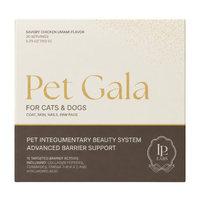
Pet Gala™ is designed for owners who want visible, everyday support for skin, coat, and nails—care that fits into routines and shows up where you can see it: natural softness, a healthier sheen, and a well-kept look between grooming sessions.

Skin health for cats is easiest to support when you treat it like an annual physical: establish a baseline, then watch for meaningful changes over time. “Normal” isn’t one perfect look—it's your cat’s usual pattern across skin, coat, ears, paws, and nails when they’re comfortable and thriving. At baseline, the skin should feel supple (not tight or oily), the coat should feel consistent from neck to tail, and grooming should look routine rather than frantic. Ear edges and the outer ear should look calm, paw pads should be intact without cracking, and nails should grow at a predictable rate without splitting.

This page is a hub for whole-skin wellness: how the skin barrier works, why hydration and grooming habits matter, and how everyday factors like stress and indoor air can show up on the surface. The goal is not to diagnose from a single sign, but to help you notice patterns—what’s stable for your cat, what shifts with seasons, and what deserves a closer look with your veterinarian.

By La Petite Labs Editorial, ~15 min read

Featured Product:

  • Skin is an organ with a public-facing job: comfort, coverage, and a coat that looks settled.
  • Owners usually notice the same signals first—flakes, scabs, overgrooming, and a dull or uneven coat lay.
  • Nutrition supports visible condition, but appetite shifts and calorie restriction can change what a cat actually takes in.
  • Parasites and food reactions are common drivers of itch; supportive care works best alongside proper prevention and vet guidance.
  • The best skin health tips for cats are simple rituals: brushing as bonding, clean bedding, and stable home humidity.
  • A skin health supplement for cats is most valuable when it supports the whole integumentary picture—skin, coat, and nails—consistently.
  • Choose products you can keep using; visible improvements depend on routine, not one-time fixes.

Your Cat’s Skin Health Baseline: What to Check Weekly (2 Minutes)

A quick weekly check helps you keep a clear baseline without turning care into constant inspection. Pick the same day each week and do a simple look–feel–smell scan.

Start by parting the coat in two or three spots (shoulders, mid-back, near the tail base) to glance at the skin underneath. You’re not hunting for problems—you’re confirming what “normal for your cat” looks like: skin tone, how much loose dander (if any) you typically see, and whether the coat feels uniformly soft or slightly coarse.

Then check a few consistent areas: ear edges (calm, not thickened), the chin (where buildup can collect), the belly (often more sensitive), and the paws/paw pads (intact surface, no unusual odor). Finally, take one or two quick photos in the same lighting—especially of the chin, belly, and a parted-coat spot—so you can track subtle shifts over time.

Expect seasonal variation. Many cats show predictable changes with indoor heating, humidity swings, or spring/fall shedding, so comparing week-to-week notes is often more useful than any single snapshot.

Close-up skin health render visualizing beauty support from skin health for cats.

The Skin–Coat–Nail Connection: Nutrition, Grooming, Stress, and Environment

Skin, coat, and nails respond together because they share the same inputs: nutrition, hydration, grooming behavior, stress hormones, and environmental exposure. Diet quality supports the building blocks of the skin barrier and hair shaft; hydration helps maintain comfortable skin surface moisture; and grooming spreads natural oils while also revealing when something feels “off.”

Environment matters more than many owners expect. Low household humidity can make skin feel drier and increase static and coat roughness, while higher humidity can change how oily the coat feels. Parasites such as fleas or mites can disrupt comfort and trigger more licking or scratching, which then alters the skin surface and coat texture.

A simple timeline can help you interpret changes without jumping to conclusions: some shifts show up in days (increased grooming, new odor, sudden greasiness, or a change in how the coat feels). Other changes take weeks (coat density and shine, nail brittleness, or how quickly minor scuffs on paw pads seem to resolve). Stress can influence both timelines—often first through behavior (more grooming) and later through visible skin and coat changes if the pattern persists.

Skin health image symbolizing beauty and wellness supported by skin health tips for cats.

Nutrition and Intake: When “Good Food” Still Looks Inconsistent

Coat quality is a shortcut to understanding skin comfort. When the skin surface is calm, hair tends to sit flatter, reflect light more evenly, and shed in a more predictable way. When the skin is irritated, you may see broken hairs, patchy thinning, or a rough texture that makes petting feel different.

Nutrition supports that visible outcome. Cats require specific amino acids in their diet that are important for maintaining healthy skin and fur, and deficiencies can contribute to skin issues (Sun M, 2024). This is one reason a “good food” can still produce a cat whose coat doesn’t look its best—especially if appetite is inconsistent, treats displace balanced meals, or a weight-loss plan reduces total nutrient intake (Grant CE, 2020).

Bioactive beauty structure illustrating synergy in wellness supported by skin health supplements for cats.

Itch, Scabs, and Overgrooming: Common Triggers Behind the Look

Itch is not a personality trait. When cats scratch, lick, or chew, it’s often a response to a specific discomfort—sometimes obvious, sometimes hidden. Flea allergy is a classic example: a single bite can trigger intense itching, and the scabs often appear along the back and neck (Diesel, 2017). Because cats groom so efficiently, you may never see the flea.

Food-related skin reactions are another common thread. Adverse food reactions in cats can present with dermatologic signs, and sorting them out typically requires a structured elimination approach guided by your veterinarian (Bilgiç B, 2025). While you work on the cause, supportive routines—gentle brushing, stable parasite prevention, and well-chosen skin health products for cats—can help the skin look calmer and the coat feel more touchable.

Expressive dog face reflecting beauty support associated with skin health supplements for cats.

Dryness and Flaking: the Home Environment’s Quiet Influence

Dryness and flaking are often more about the whole environment than a single “missing” ingredient. Indoor heating, low humidity, and frequent lounging on warm surfaces can make skin look dull or dusty. You might notice it most on dark-coated cats or in the light where flakes catch your eye.

Start with the basics that create quick, visible wins: fresh water access, clean bedding, and a grooming routine that removes loose hair without irritating the skin. Then consider whether a skin health supplement for cats fits your cat’s lifestyle—especially if meals are inconsistent or you’re managing weight. Calorie restriction can reduce intake of vitamins and amino acids if not carefully balanced, which may influence skin presentation (Grant CE, 2020).

The scratching is completely gone, his coat looks healthy and shiny!

— Lena

He was struggling with itching, now he's glowing.

— Grace

“The skin is where comfort becomes visible: shine, softness, and a calm grooming rhythm.”

Nails Count Too: Strong, Clean Claws as a Beauty Signal

Nails are part of the skin story. Strong, clean nails support confident play, stable climbing, and less snagging on fabrics. When nails are brittle or overgrown, cats can compensate by changing how they move or by grooming paws more intensely, which can irritate surrounding skin.

A complete approach to skin health for cats includes regular trims, scratching surfaces that feel good to use, and nutrition that supports keratin-rich structures. Owners often focus only on coat shine, but nail quality is one of the most satisfying “proof points” of consistent care. This is also where the best skin health supplements for cats can stand out: they’re designed to support the whole integumentary system, not just make the coat look glossy for a week.

Elegant dog portrait reflecting coat shine and natural beauty supported by skin health tips for cats.

Weight Management and Skin: Keeping Nutrients Dense While Calories Drop

Weight management can quietly affect coat and skin. When calories are reduced, it’s possible for total intake of certain nutrients to drop if the plan isn’t carefully formulated, which may influence skin and coat condition. Owners sometimes interpret the change as “aging” or “winter coat,” when it’s really a math problem: less food can mean less of everything.

If your cat is on a weight-loss program, ask your veterinarian whether the diet is designed to maintain nutrient density at lower calories. Then consider supportive add-ons that don’t disrupt the plan. A skin health supplement for cats can be a practical way to keep visible condition steady—helping the coat stay soft and the skin look comfortable—while you pursue a healthier body weight.

Close-up profile of a dog symbolizing beauty and vitality via best skin health supplement for cats.

Sensitive Skin Types: Building a Routine That Stays Steady

Some cats have a “sensitive skin” look: intermittent redness, recurring flakes, or a coat that never quite reaches that polished finish. In these cases, the goal is not to chase perfection but to reduce the frequency and intensity of flare-looking days. Consistency is the quiet advantage—steady grooming, steady diet, steady prevention.

Omega-3 fatty acids are commonly used in companion animals to support skin and coat appearance, and many owners report a more noticeable sheen and comfort when they’re used appropriately (RVA, 2021). If you’re choosing among skin health supplements for cats, look for a formula that supports visible outcomes without making feeding complicated. The best skin health for cats is the kind you can maintain without negotiating every day.

Product info graphic highlighting testing and standards behind skin health supplement for cats.

Making It Easy: Administration, Consistency, and What to Measure

Administration matters more than people admit. A supplement that looks perfect on paper but fails on day three won’t improve anything you can see. Choose a format your cat accepts, and introduce it when the household is calm—no travel, no new pets, no major diet switch. That way, if you notice a change, you can interpret it with confidence.

Track a few simple markers: flake level, grooming intensity, coat softness at the shoulders, and nail smoothness after trims. These are the everyday signals that define skin health for cats in real homes. If your cat has a history of GI sensitivity, go slowly and check with your veterinarian, especially if they’re on medications that can already cause digestive upset (Robson D, 2003).

Supplements with Medications: Coordinating Care Without Adding Confusion

If your cat is on prescription medication for a skin condition, the goal is to keep the plan simple and coordinated. Some drugs used for feline dermatologic issues, such as cyclosporine, can have variable responses and may cause adverse effects like gastrointestinal upset or increased susceptibility to infections (Robson D, 2003). That doesn’t mean “avoid everything else”—it means avoid surprises.

Bring your vet into the loop before adding a skin health supplement for cats, especially if your cat is immunocompromised, has chronic GI sensitivity, or is on multiple therapies. A thoughtful supplement should complement the visible goals of the plan—less irritation, a calmer grooming pattern, and a coat that looks more even—without complicating monitoring. The best skin health supplements for cats fit into routines you can actually keep, so changes are easier to notice and discuss at rechecks.

“Consistency beats intensity. The best routines are the ones your cat accepts daily.”

Research-style uniform highlighting scientific integrity aligned with best skin health supplements for cats.

Cats in Cancer Treatment: Keeping Coat and Skin Looking Cared-for

Cancer therapies can change how a cat looks and feels, and skin can be one of the first places owners notice it. Toceranib phosphate, used in some feline neoplasia cases, has a toxicity profile that requires careful monitoring, and adverse effects can impact overall wellbeing (Harper A, 2017). In real life, that may show up as reduced grooming, a coat that loses its usual polish, or skin that seems less settled.

During complex treatment, “support” should never compete with medical priorities. Ask your veterinarian what is appropriate for your cat’s specific protocol and appetite patterns, since dosing and safety considerations for toceranib in cats require individualized decision-making (Harper A, 2017). When approved, gentle skin health products for cats can serve as a comfort-forward ritual—something that helps you track visible changes and maintain a sense of normalcy in daily care.

Shop Now
Ingredient spread with supplement box highlighting formulation depth behind best skin health for cats.

Why Supplements Still Matter When Diet Looks Complete on Paper

There is a difference between “healthy enough” and “noticeably well-kept.” Many cats eat complete diets, yet owners still want the best skin health for cats because the proof is visual: a coat that reflects light, fewer dandruff-like specks, and skin that doesn’t look irritated after a grooming session. This is the beauty logic of feline care—small signals, fast feedback, and the quiet reassurance of a cat who looks comfortable.

A well-designed skin health supplement for cats is not just a single-nutrient patch. It’s a way to support the integumentary system as a whole—skin, coat, and nails—so the daily picture improves even when life is messy: seasonal shedding, indoor dryness, stress, or diet transitions. If you’re choosing among skin health supplements for cats, prioritize products that fit your routine and your cat’s preferences, because consistency is what makes the “before and after” feel real.

Shop Now
Lifestyle image showing supplement use in real homes supported by best skin health for cats.

Choosing Products: Quality Signals, Simplicity, and Realistic Expectations

A practical way to evaluate skin health products for cats is to decide what you want to see change. Is it less visible flaking? A coat that feels softer when you pet along the back? Fewer broken hairs on bedding? Nails that seem smoother and less prone to splitting? These are legitimate goals, and they’re easier to track than vague promises.

Then, look for quality signals: clear ingredient disclosure, realistic positioning, and directions that don’t push extreme dosing. If your cat has a history of food sensitivity, choose a formula with a straightforward profile and introduce it slowly. For cats with ongoing itch, remember that parasites and food reactions are common contributors and may need targeted veterinary management (Diesel, 2017). Supplements can still play a role, but they should sit beside—never instead of—good diagnostics and prevention.

Shop Now

Grooming as a Ritual: the Most Reliable Skin Health Tips for Cats

Some of the best skin health tips for cats are the ones that feel like care, not chores. Brushing is a visible reset: it lifts loose hair, distributes oils, and gives you a chance to notice small changes early—tiny scabs, new dandruff, or sensitivity in one area. For many cats, the right brush turns into bonding, and that calm shows up in the coat.

Bathing is rarely necessary for most cats, and frequent bathing can dry skin. Instead, focus on environment and routine: stable humidity, clean bedding, and gentle parasite prevention. If you’re using a skin health supplement for cats, pair it with a consistent grooming rhythm so you can actually see what’s improving. The goal is not perfection; it’s a cat who looks polished and feels comfortable day to day.

What to Expect over Time: Tracking Shine, Flakes, and Comfort

Timeline matters because it keeps expectations fair. Some changes—like reduced flaking from improved grooming and hydration—can look better within a couple of weeks. Coat texture and sheen often take longer because you’re waiting on new hair growth and a steadier grooming pattern. If you’re trying skin health supplements for cats, take a quick photo in the same lighting every two weeks; it’s surprisingly clarifying.

If you see worsening itch, open sores, or sudden hair loss, don’t “wait it out.” Ringworm and other infectious causes can be contagious and require veterinary direction (Summers S, 2022). The best skin health for cats is never about ignoring red flags; it’s about supporting everyday presentation while getting real problems addressed quickly. A supplement can be part of the routine, but it should never be the only plan.

Supplement comparison highlighting clean formulation advantages for best skin health for cats.

Cats Versus Dogs: Why Feline-first Formulas and Routines Matter

Cats are not small dogs, and skin care should respect that. Their grooming behavior, dietary needs, and sensitivity to change can make “copy-paste” approaches backfire. Cats also have distinct amino acid requirements, and deficiencies can contribute to skin and coat concerns (Sun M, 2024). That’s one reason cat-specific formulas and feeding strategies matter when you’re aiming for a visibly healthy coat.

If you’re comparing the best skin health supplement for cats to dog products, look beyond marketing and focus on suitability: palatability for cats, simple administration, and a profile that supports skin, coat, and nails together. The best skin health supplements for cats feel like a natural extension of daily care—something your cat accepts, and you can keep consistent enough to see the difference.

Shop Now
Unboxed supplement reflecting refined experience and trust in skin health tips for cats.

When to Call the Vet: Red Flags You Should Not Ignore

When should you call the vet? Any time the skin story changes quickly or looks painful: oozing lesions, swelling, intense scratching, head shaking with ear debris, or bald patches that expand. Also call if your cat’s grooming becomes frantic or obsessive, because discomfort can escalate fast and may be tied to parasites, infection, or allergy patterns (Atkins CE, 1975).

Bring specifics: photos, a list of foods and treats, parasite prevention dates, and any new household changes. This makes it easier to separate “needs medical treatment” from “needs better daily support.” Once medical causes are addressed, skin health products for cats can help you maintain the visible calm—less irritation, a smoother coat lay, and nails that look clean and strong between trims.

Shop Now

A Simple Decision Framework for Everyday, Noticeable Skin Support

A good decision framework is simple: address triggers, support the baseline, and measure what you can see. Triggers include fleas, food reactions, stress grooming, and environmental dryness. Baseline support includes complete nutrition, hydration, grooming, and a supplement that fits your cat’s life. Measurement is the visible part: coat shine, flake level, grooming intensity, and nail quality.

This is why a careful, science-minded owner still chooses a skin health supplement for cats: it creates a consistent daily layer of care that shows up in the places you touch and notice, even when diet, seasons, or routines shift. The best skin health for cats is not a promise of perfection—it’s the steady look of comfort, softness, and a well-kept coat that reflects your care.

“A well-kept coat is not vanity; it’s reassurance that your cat feels settled.”

Educational content only. This material is not a substitute for veterinary advice. Always consult your veterinarian about your dog’s specific needs. These statements have not been evaluated by the Food and Drug Administration. Products mentioned are not intended to diagnose, treat, cure, or prevent any disease.

Glossary

  • Barrier function: The skin’s ability to hold moisture in and keep irritants out.
  • Dander: Tiny skin flakes that can become more noticeable with dryness or irritation.
  • Pruritus: The sensation of itch that drives scratching, licking, or chewing.
  • Overgrooming: Excessive licking or chewing that can thin hair and inflame skin.
  • Sebum: Natural oils that help the coat look smooth and feel soft.
  • Hot spot: A rapidly worsening, irritated skin area; in cats it may be less common but still needs prompt attention.
  • Dermatophyte: A fungus (often called ringworm) that can affect skin and hair and may be contagious.
  • Flea allergy dermatitis: An allergic reaction to flea saliva that can cause intense itch and scabs.
  • Elimination diet trial: A structured feeding plan used to evaluate adverse food reactions.
  • Integumentary system: The combined system of skin, coat (hair), and nails.

Related Reading

References

Grant CE. Dietary intake of amino acids and vitamins compared to NRC requirements in obese cats undergoing energy restriction for weight loss.. PubMed. 2020. https://pubmed.ncbi.nlm.nih.gov/33160364/

Sun M. Considerations on amino acid patterns in the natural felid diet: a review.. PubMed Central. 2024. https://pmc.ncbi.nlm.nih.gov/articles/PMC11603590/

Robson D. Review of the pharmacokinetics, interactions and adverse reactions of cyclosporine in people, dogs and cats.. PubMed. 2003. https://pubmed.ncbi.nlm.nih.gov/12833934/

Harper A. Toxicity and response in cats with neoplasia treated with toceranib phosphate.. PubMed. 2017. https://pubmed.ncbi.nlm.nih.gov/27090289/

Atkins CE. Clinical toxicities of cats.. PubMed. 1975. https://pubmed.ncbi.nlm.nih.gov/1103436/

Diesel. Cutaneous Hypersensitivity Dermatoses in the Feline Patient: A Review of Allergic Skin Disease in Cats. 2017. https://www.mdpi.com/2306-7381/4/2/25

RVA. Toxic element levels in ingredients and commercial pet foods.. PubMed Central. 2021. https://pmc.ncbi.nlm.nih.gov/articles/PMC8546090/

Bilgiç B. The Values of Potentially Toxic Elements (PTEs) in Prescription and Non-prescription Dry Cat and Dog Diets in Turkey.. PubMed. 2025. https://pubmed.ncbi.nlm.nih.gov/40442459/

Summers S. Evaluation of iron, copper and zinc concentrations in commercial foods formulated for healthy cats.. PubMed Central. 2022. https://pmc.ncbi.nlm.nih.gov/articles/PMC10812249/

Ahmed. Bioaccumulation of heavy metals in some commercially important fishes from a tropical river estuary suggests higher potential health risk in children than adults.. Nature. 2019. https://www.nature.com/articles/s41598-021-00467-4

Peloquin. Presumed Choline Chloride Toxicosis in Cats With Positive Ethylene Glycol Tests After Consuming a Recalled Cat Food. 2021. https://www.sciencedirect.com/science/article/pii/S1938973621000416

Vogelnest LJ. Cutaneous adverse food reactions in cats: retrospective evaluation of 17 cases in a dermatology referral population (2001-2011).. PubMed. 2013. https://pubmed.ncbi.nlm.nih.gov/24571298/

Mazzeranghi F. Clinical efficacy of nutraceutical diet for cats with clinical signs of cutaneus adverse food reaction (CAFR).. PubMed. 2017. https://pubmed.ncbi.nlm.nih.gov/28865210/

Hedrick ED. Evaluation of anti-Fel d 1 IgY ingredient for pet food on growth performance in kittens.. PubMed. 2024. https://pubmed.ncbi.nlm.nih.gov/38505000/

FAQ

What does skin health for cats actually include day to day?

It includes the visible condition of skin, coat, and nails: minimal flaking, a smooth coat lay, comfortable grooming, and nails that look clean and strong. It also includes the routines that keep those signals steady—parasite prevention, hydration, and gentle grooming.

If you want consistent, noticeable support beyond food alone, a daily supplement can help reinforce that “well-kept” look, especially during shedding or dry indoor seasons. For a simple routine option, consider Pet Gala™.

Why is a cat’s skin considered an organ?

Skin is a working surface, not just a wrapper. It helps manage moisture, provides a protective barrier, and supports the coat that regulates comfort and appearance. When skin is irritated, cats often lick and scratch more, which can quickly change how the coat looks.

Because the signals are so visible, many owners build a small daily ritual around coat and skin presentation—brushing, checking for flakes, and supporting shine. That’s also where Pet Gala™ can fit naturally.

What are the most common visible signs of skin trouble?

Owners often notice flakes, small scabs, redness, thinning hair, or a coat that feels rough or greasy. Behavior changes matter too: overgrooming, persistent scratching, or avoiding touch in one area can signal discomfort.

These signs don’t tell you the cause on their own, but they’re useful markers to track while you address triggers and improve daily care. For ongoing, visible support for coat softness and a well-kept look, many owners add Pet Gala™ to the routine.

Can diet affect coat shine and skin comfort in cats?

Yes. Cats have specific amino acid needs that support healthy skin and fur, and shortfalls can show up in coat and skin condition. Even with a good food, inconsistent appetite, treat-heavy days, or diet transitions can change what your cat actually gets.

If you’re aiming for a more consistently polished look, a supplement can provide a steady layer of support that doesn’t depend on perfect meals every day. A simple option to consider is Pet Gala™.

Does weight loss change skin and coat appearance in cats?

It can. When calories are restricted, total intake of certain nutrients may drop if the plan isn’t carefully balanced, which can affect skin and coat presentation. Owners sometimes notice more dullness or flaking during a weight-loss phase.

Your vet can confirm whether the diet stays nutrient-dense at lower calories. For owners who want to keep visible condition steady while managing weight, Pet Gala™ can be an easy daily add-on.

How quickly can I see results from a skin routine?

Some changes can look better within a couple of weeks, especially flaking and overall “freshness” when grooming and hydration improve. Coat texture and sheen often take longer, because you’re waiting for new hair growth and a steadier grooming pattern.

Take photos in the same lighting every two weeks so you can judge progress fairly. If you want consistent support while you track those visible signals, Pet Gala™ fits well into a daily routine.

Are skin health supplements for cats safe for daily use?

Many are intended for daily use, but “safe” depends on your cat’s health history, diet, and medications. Introduce any new supplement gradually, and watch for changes in stool, appetite, or grooming behavior.

If your cat has chronic illness, is on prescription therapy, or has a sensitive stomach, check with your veterinarian before starting. For owners seeking a consistent, routine-friendly option, consider Pet Gala™.

When should I avoid adding a new supplement?

Avoid adding anything new during acute illness, right after a medication change, or when your cat has vomiting, diarrhea, or sudden appetite loss. It’s also smart to pause if your cat is being evaluated for a food reaction, so the diet trial stays clean(Bilgiç B, 2025).

Once your plan is stable, adding support is easier to interpret and easier to keep consistent. When the timing is right, you can fold inPet Gala™as part of daily care.

Can supplements interact with prescription skin medications for cats?

They can, depending on the medication and your cat’s overall health. For example, cyclosporine used for feline skin conditions can have variable effects and may cause gastrointestinal upset or increase susceptibility to infections, so coordination matters(Robson D, 2003).

The best approach is to tell your veterinarian exactly what you want to add and why, so they can advise on timing and monitoring. If approved, a routine-friendly option isPet Gala™.

What is the best skin health supplement for cats to start with?

The best starting point is the one your cat will actually take consistently. Look for clear labeling, simple directions, and a formula positioned for skin, coat, and nails together rather than a single “hero” ingredient.

If your cat has allergies, chronic disease, or is on medication, ask your vet first so you don’t complicate monitoring. For a straightforward daily option designed around visible results, consider Pet Gala™.

Do omega-3s help cats look less flaky or dull?

They’re commonly used to support skin and coat appearance in companion animals, and many owners notice improved sheen and comfort when used appropriately(RVA, 2021). The key is consistency and choosing a product your cat tolerates well.

If you’re already doing the basics—grooming, hydration, parasite prevention—adding a daily support layer can help keep the “fresh” look more stable. A convenient option to consider isPet Gala™.

How do I give a supplement to a picky cat?

Start small and keep the environment calm. Mix the supplement into a familiar food, use a consistent time of day, and avoid stacking changes (new food plus new litter plus new supplement). If your cat refuses, don’t force it—stress can worsen grooming and skin appearance.

The right product should feel like it belongs in your routine, not like a daily negotiation. For an easy-to-integrate option, try Pet Gala™ with your cat’s preferred feeding rhythm.

Is skin health for cats different for kittens and seniors?

The visible goals are similar—soft coat, comfortable skin, tidy nails—but the context changes. Kittens may have more sensitive digestion and rapid growth, while seniors may groom less thoroughly or have chronic conditions that affect coat quality.

For either life stage, keep changes gradual and vet-guided if there’s any medical complexity. When you want gentle, consistent support that fits daily care, consider Pet Gala™.

Are some cat breeds more prone to coat and skin issues?

Yes. Long-haired cats can mat and trap dander more easily, while some short-haired cats show flakes more visibly on dark coats. Breed tendencies don’t replace diagnosis, but they do influence what “good maintenance” looks like—especially grooming frequency and hairball management.

If you’re building a routine around a breed’s needs, a consistent supplement can help keep the coat looking smoother between grooming sessions. A simple option is Pet Gala™.

Can fleas cause scabs even if I never see fleas?

Yes. Cats can groom away evidence, and flea allergy can trigger intense itch from minimal exposure, often leaving scabs along the back and neck(Diesel, 2017). If scabs keep returning, consistent parasite prevention is one of the most important steps you can take.

Once prevention is stable, supportive care can help the coat look calmer and more even as the skin settles. For daily visible support, considerPet Gala™.

What should I do if my cat is overgrooming?

Overgrooming can be driven by itch, pain, parasites, stress, or allergy patterns, and it can quickly create bald patches. Because the behavior itself worsens the visible outcome, it’s worth discussing early with your veterinarian to identify triggers(Atkins CE, 1975).

While you work on the cause, keep routines soothing: gentle brushing, stable environment, and consistent care that supports a calmer skin presentation. For daily support, considerPet Gala™.

How can I tell if a supplement is high quality?

Look for transparent labeling, realistic claims, and directions that emphasize consistency rather than extremes. High-quality brands make it easy to understand what you’re giving and why, and they don’t position supplements as replacements for veterinary care.

Also consider practicality: palatability, ease of serving, and whether the formula supports skin, coat, and nails together. If you want a routine-friendly option built around visible care, consider Pet Gala™.

Can I use dog skin supplements for my cat instead?

It’s better to use cat-specific products unless your veterinarian directs otherwise. Cats have distinct dietary needs and can be more sensitive to flavors and formulation choices, so a dog product may be harder to administer consistently or may not match feline requirements.

If your goal is a smoother, more polished coat and comfortable skin, choose a formula designed for cats and built for daily use. A cat-focused option is Pet Gala™.

What side effects should I watch for with new supplements?

The most common issues are digestive: softer stool, vomiting, or reduced appetite. Also watch for behavior changes like increased hiding or sudden refusal of food. If your cat is on medications that can already cause GI upset, be extra cautious and coordinate with your vet.

Introduce one change at a time so you can interpret what you’re seeing, and stop the supplement if concerning signs appear. For a routine-friendly option to discuss with your veterinarian, consider Pet Gala™.

When is a skin issue urgent enough for a vet visit?

Seek veterinary care promptly for open sores, swelling, oozing, sudden bald patches, intense itch, or signs of ear infection. Also call if multiple pets or people develop skin lesions, since some infections like dermatophytes can be contagious and need specific management(Summers S, 2022).

Once urgent causes are addressed, you can build a calmer daily routine to maintain visible comfort and coat quality. For ongoing support, considerPet Gala™as part of that routine.

What does research suggest about amino acids and cat coats?

Research highlights that cats require specific amino acids that contribute to healthy skin and fur, and deficiencies can be associated with skin issues. In practice, that means coat quality can be sensitive to diet consistency, appetite changes, and overall intake.

Because real life isn’t perfectly consistent, many owners choose a daily support layer aimed at visible condition rather than chasing one nutrient at a time. A routine-friendly option is Pet Gala™.

How do I choose between skin health products for cats?

Start with your goal: less flaking, more sheen, calmer grooming, or stronger nails. Then choose the simplest product you can use consistently, with clear labeling and realistic positioning. If your cat has ongoing itch, make sure parasite prevention and veterinary evaluation are not being skipped.

The best choice is the one that supports the whole visible picture without complicating feeding or monitoring. For a daily option designed around skin, coat, and nails, consider Pet Gala™.

5K+ Happy Pet Parents

Excellent 4.8

Skin Health for Cats | Why Thousands of Pet Parents Trust Pet Gala™

"Magical. He was struggling with itching and shedding. Now he's literally glowing."

Grace & Ducky

"Improves her skin, fur, nails, and eyes. We're loving it!"

Cat & Miso

"It's so good for his coat, and so easy to mix into food."

Alex & Cashew

"The scratching is completely gone, his coat looks healthy and shiny."

Lena & Bear

"Magical. He was struggling with itching and shedding. Now he's literally glowing."

Grace & Ducky

"Improves her skin, fur, nails, and eyes. We're loving it!"

Cat & Miso

"It's so good for his coat, and so easy to mix into food."

Alex & Cashew

"The scratching is completely gone, his coat looks healthy and shiny."

Lena & Bear

"Magical. He was struggling with itching and shedding. Now he's literally glowing."

Grace & Ducky

"Improves her skin, fur, nails, and eyes. We're loving it!"

Cat & Miso

"It's so good for his coat, and so easy to mix into food."

Alex & Cashew

"The scratching is completely gone, his coat looks healthy and shiny."

Lena & Bear

"Magical. He was struggling with itching and shedding. Now he's literally glowing."

Grace & Ducky

"Improves her skin, fur, nails, and eyes. We're loving it!"

Cat & Miso

"It's so good for his coat, and so easy to mix into food."

Alex & Cashew

"The scratching is completely gone, his coat looks healthy and shiny."

Lena & Bear

SHOP NOW