The Science Behind Cat Hair Growth

Identify Why Fur Thins and Which Nutrients Can Rebuild Coat Resilience

Essential Summary

Why is the science behind cat hair growth important?

Cat hair grows in cycles that respond to everyday signals like season, stress, grooming friction, and skin comfort. When the skin barrier feels calm and supported, the coat tends to look smoother, shinier, and more even. The most meaningful “science” is the part you can see: softness, luster, and a tidy shed line.

Pet Gala™ is designed for owners who want coat care that shows: support for skin comfort, coat sheen, and everyday polish that complements good food and good grooming. It’s not about chasing extreme “growth,” but about helping your cat look consistently well-kept—so the difference is visible in the fur you touch and the shine you notice.

A cat’s coat is one of the most immediate forms of reassurance. You notice it in the way light catches the back, in the softness under your hand, and in whether shedding looks like a clean seasonal refresh or a constant mess. That’s why the science behind cat hair growth matters: it turns vague worry into clear, visible signals you can respond to—shine, evenness, flaking, and breakage—without treating your cat like a project.

If you’ve been asking what causes cat hair to grow well, the answer is less about “forcing growth” and more about supporting the follicle’s normal cycle and the skin’s comfort. Mammalian hair growth patterns can shift with physiology and hormones, and stress can be reflected in hair measures over time. In everyday terms, that means routines and environment can show up in the coat—sometimes quickly, sometimes subtly.

A careful, science-minded owner might wonder: if my cat eats a complete diet, why add anything else? Because diet covers the baseline, but visible finish is its own goal. A targeted supplement supports the integumentary system—skin, coat, nails—so your grooming efforts pay off in a coat that looks consistently well-kept, not just “fine.” That’s where Pet Gala™ fits: daily support that begins beneath the surface and shows where it matters.

By La Petite Labs Editorial, ~15 min read

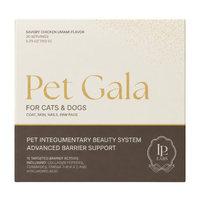
Featured Product:

  • Understanding cat hair growth starts with cycles: growth, transition, rest, and release.
  • What causes cat hair to grow “better” is often skin comfort, not speed.
  • The biology of cat hair growth is shaped by season, light, and routine.
  • Stress can show up as dullness, overgrooming, and uneven presentation.
  • Microbiome balance may influence flaking and the coat’s “clean at the roots” look.
  • Great grooming is a beauty ritual: it distributes oils and reduces breakage.
  • A targeted supplement supports visible finish beyond a good diet’s baseline.

Hair Growth, but Make It Visible: What Your Cat’s Coat Reveals

When people ask how does cat hair grow, they’re usually asking a visual question: why one cat looks plush and glossy while another looks dull, wispy, or uneven. The answer starts in the follicle, a tiny factory that cycles through active growth, transition, and rest. Those cycles are normal, but they’re also sensitive to everyday signals—season, grooming friction, stress, and skin comfort. Mammals can show measurable stress patterns in hair, and physiology can shift growth patterns accordingly (Meyer, 2014).

Understanding cat hair growth means noticing the coat as a dashboard: shine, softness, and evenness often reflect how supported the skin and follicle environment feels (see: Cat Skin Care). This is the science behind cat hair growth in real life—less about a single “magic” nutrient and more about consistent, visible care that keeps the skin barrier calm, the coat hydrated, and shedding looking tidy rather than chaotic.

Close-up skin health render visualizing beauty support from the biology of cat hair growth.

The Hair Cycle: Growth, Rest, Release, and the Shedding You Notice

The biology of cat hair growth is built around a repeating cycle. In the active phase, the follicle produces the hair shaft; in the transition phase, production slows; and in the resting phase, the hair is eventually released. When owners wonder what causes cat hair to grow faster or slower, they’re often seeing changes in how many follicles are in each phase at once. Hormonal and physiological factors can influence mammalian hair growth patterns, including shifts that owners notice as shedding or thinning (Miah, 2019).

This is why “growth” questions are really “cycle” questions. A coat can look sparse not because hair won’t grow, but because more follicles are resting, or because breakage and friction are outpacing new production. Supporting skin comfort and coat conditioning helps the cycle look smoother from the outside (related: The Science Behind the Best Skin and Coat Supplements for Cats).

Collagen structure visualization representing skin elasticity supported by how does cat hair grow.

From Follicle to Finish: Why Hair Texture and Shine Can Drift

Understanding cat hair growth also means understanding the hair shaft itself. Hair is mostly protein, but its appearance depends on surface oils, hydration, and how evenly the cuticle lies. A coat can be “healthy” yet still look flat if the skin is dry or if grooming is too infrequent to distribute natural oils. Conversely, overbathing or harsh shampoos can strip oils and make the coat look dusty (see: Omega 7 for Cats).

If you’re asking how does cat hair grow into that glossy, show-cat finish, the answer is usually a combination of steady nutrition, low irritation, and grooming that respects the coat type. The best results look effortless, but they’re built on repeatable rituals.

Molecular structure graphic reflecting research-driven beauty design behind how does cat hair grow.

Genetics Sets the Blueprint, Daily Life Sets the Final Look

Why does cat hair grow in different textures—silky, plush, wiry, or cottony? Genetics sets the blueprint, but environment edits the final look. Humidity, indoor heating, sun exposure in windows, and even the texture of bedding can change how the coat lies. Long-haired cats may show more tangling and breakage, which can mimic “slow growth” when it’s really hair loss from friction (related: Hair Loss in Cats).

A helpful way to think about the science behind cat hair growth is to separate production from presentation. Production happens in the follicle; presentation happens on the surface. Daily care targets presentation—shine, softness, and reduced static—so the coat looks intentionally cared-for.

Dog portrait symbolizing beauty and wellness supported by understanding cat hair growth.

Nutrition and Coat Luster: Beyond “Adequate” Toward Polished

Nutrition influences coat appearance because follicles are high-demand tissues. Protein quality matters, but so do fats that support skin comfort and the coat’s reflective sheen. Many complete diets meet baseline needs, yet owners still notice a difference when they add targeted support—because the goal isn’t merely “adequate,” it’s visibly polished.

If you’re comparing options, look for formulas that support the whole integumentary system: skin barrier feel, coat shine, and nail strength (see: The Best Cat Nail Supplements for Stronger, Healthier Claws). That’s the commercial reality a science-minded owner can respect: a supplement isn’t a replacement for food; it’s a finishing layer that helps the coat look consistently well-kept.

The scratching is completely gone, his coat looks healthy and shiny!

— Lena

He was struggling with itching, now he's glowing.

— Grace

“A glossy coat is rarely about one ingredient; it’s about a calm skin surface and consistent care.”

Skin Microbiome Balance and Flaking: a Coat Starts at the Roots

Skin microbes are part of the coat story because they influence how the skin feels and behaves. In human research, probiotics have been linked to changes in dandruff and hair-related outcomes through effects on the scalp microbiome (Yin CS, 2024). While feline-specific data may differ, the practical takeaway is straightforward: when skin is balanced, the coat tends to look cleaner at the roots and smoother along the length.

If your cat has recurring flaking or a “dusty” look, it’s worth considering both external care (gentle grooming, appropriate bathing) and internal support that aligns with skin comfort. Visible calm in the skin often reads as visible order in the coat.

Dog portrait reflecting beauty and wellness support tied to what causes cat hair to grow.

Shedding or Hair Loss: How to Tell When It’s Not Normal

When owners ask what causes cat hair to grow back after shedding, they’re often worried about thinning. Normal shedding is not the same as hair loss. Shedding is a planned release from resting follicles; hair loss can involve breakage, inflammation, parasites, allergy, or overgrooming. If the skin is red, the cat is itchy, or you see scabs, treat it as a medical issue rather than a cosmetic one.

For normal shedding, the most effective “regrowth support” is keeping the coat from matting and the skin from drying (related: Biotin for Cats). That way, new hairs emerge into a comfortable surface and the coat looks full rather than frayed.

Canine profile image reflecting coat shine and wellness supported by why does cat hair grow.

Why Human Hair Treatments Don’t Translate to Cats

You may come across hair-growth interventions discussed in people—like microneedling or topical minoxidil—because they can prolong growth phases and have been evaluated for safety in that context (KMA, 2025). These are not DIY ideas for cats. Cats groom, ingest residues, and have different sensitivities, so human topical approaches can be risky.

The safer, cat-appropriate approach is to focus on comfort-first coat care: reduce irritation, support skin barrier quality, and use veterinarian-approved treatments when there’s true hair loss. The best-looking coats are usually the ones cared for gently and consistently.

Inside-the-box graphic showing beauty blend design supporting why does cat hair grow.

A Simple Model for Understanding Cat Hair Growth at Home

If you want a clean mental model for the science behind cat hair growth, picture three layers: the follicle (production), the skin surface (comfort and oil balance), and the owner’s routine (grooming, diet consistency, stress reduction). You can’t micromanage follicles, but you can create conditions where they perform predictably and the coat looks even.

This is where “science” becomes practical. The most persuasive proof isn’t a lab value—it’s the coat you can see: less dandruff on black fabric, fewer tangles, and a sheen that makes your cat look freshly cared for even on ordinary days.

Best Science Behind Cat Hair Growth: What Actually Changes Coat Appearance

If you’re searching for the best science behind cat hair growth, focus on what changes the coat’s visible signals: fewer flakes, less brittle feel, and a smoother lay of the fur. Research in humans suggests the scalp microbiome can influence dandruff and perceived hair quality, and probiotics may play a role in that ecosystem (Yin CS, 2024). While cats aren’t humans, the concept translates well to coat presentation: comfortable skin tends to look better, and better-looking skin tends to shed less “drama.”

A supplement can’t replace grooming, hydration, or veterinary care for skin disease. But it can support the daily baseline that makes brushing more rewarding and the coat more polished. Think of it as helping the skin and coat stay in a “ready for touch” state—so the shine you see feels earned, not accidental.

“The coat is a daily signal: softness, shine, and a tidy shed line are the wins you can see.”

Clinical image tied to evidence-based beauty positioning for cat hair growth explained.

Why Different Body Areas Grow Different Fur, on Purpose

Owners often ask why does cat hair grow differently across the body. The simplest answer is that follicles aren’t identical: they vary in density, hair type, and how long they stay in the growth phase. Some areas are designed for insulation, others for sensory function, and some for sleek coverage. That’s why a cat can have a thick ruff, fine belly hair, and a tail that looks like a bottle brush—all at once.

Cat hair growth explained this way also makes uneven shedding feel less mysterious. When different zones enter rest at different times, the coat can look patchy even if nothing is “wrong.” The goal of daily care is to keep skin comfortable and the coat conditioned so those normal shifts still look tidy and intentional.

Shop Now
Pet Gala in food tableau emphasizing purity aligned with why does cat hair grow.

Stress, Overgrooming, and the Coat That Never Looks Settled

Stress is one of the most overlooked answers to what causes cat hair to grow poorly. Cats don’t always show stress in obvious ways, but their bodies still register it. Hair can even be used to analyze cortisol patterns over time, showing that stress physiology can be reflected in hair-related measures (Meyer, 2014).

In day-to-day terms, stress can show up as overgrooming, dullness, or a coat that never quite looks “finished.” The most coat-friendly stress support is environmental: predictable routines, comfortable resting spots, and gentle grooming that feels like bonding rather than restraint. When the nervous system settles, the coat often looks more cooperative.

Shop Now
Pet owner presenting supplement, highlighting home beauty support from cat hair growth explained.

Seasonal Shedding: the Refresh Cycle That Can Look Like Chaos

Seasonal shedding is part of understanding cat hair growth, especially for indoor cats who still respond to light cycles. As daylight shifts, many cats change how much undercoat they carry. That can make the coat look thicker, then suddenly “explode” into shedding. This isn’t a failure of care—it’s biology doing what it does.

Your job is to keep the transition looking elegant: regular brushing, gentle bathing only when needed, and consistent skin support so the undercoat releases cleanly. When the skin barrier is comfortable, shedding tends to look like a controlled refresh rather than a messy unraveling (see: Zinc for Cats).

Shop Now

Timelines: When Texture Improves Before Fullness Returns

When people search cat hair growth explained, they often want a timeline. Follicles don’t respond overnight; they respond in cycles. You may notice early changes in feel—less static, softer texture—before you see a fuller look. That’s because surface conditioning and skin comfort can improve faster than a full hair-cycle turnover.

A practical expectation is to watch for small, visible wins: easier brushing, fewer flakes on dark furniture, and a coat that reflects light more evenly. If you see sudden bald patches, intense itching, sores, or rapid coat change, that’s a veterinary conversation rather than a supplement project.

Advanced Research Versus Everyday Care That Shows up in Shine

You’ll sometimes hear about advanced hair-regrowth approaches in other species, including stem cell-derived products being explored for alopecia and follicle regeneration (Chien, 2024). That’s interesting science, but it’s not the everyday reality for most cats with “meh” coats. For typical pet parents, the most meaningful gains come from consistent basics: nutrition quality, skin comfort, grooming technique, and reducing triggers that inflame or dry the skin.

The biology of cat hair growth rewards consistency. When you support the skin as an organ—hydration, barrier lipids, and calm—you’re more likely to see the coat settle into a smooth, even look that feels good to touch and looks well-kept in photos.

Visual comparison highlighting no fillers advantage aligned with cat hair growth explained.

Production Versus Presentation: the Hair Shaft Isn’t the Whole Story

A common misconception in what causes cat hair to grow is focusing only on the hair shaft. The shaft is “dead” material once it leaves the follicle; what you can influence is the environment that produces it and the skin that holds it. That’s why coat care is inseparable from skin care: flakes, oil imbalance, and irritation can make even healthy hair look rough.

If your cat’s coat looks greasy near the back, dry along the sides, or dusty at the base, think in terms of balance rather than deficiency. Gentle grooming, appropriate humidity, and a supportive supplement can help the coat look more uniform—like it belongs to the same cat from head to tail (related: Collagen for Cats).

Shop Now
Open package showing attention to detail consistent with the biology of cat hair growth standards.

Supplement Safety: Sensitivities, Stacking, and Vet-guided Choices

Safety matters whenever supplements enter the picture. Cats can be sensitive to certain ingredients, and “more” is not automatically “better.” Research on probiotics and hair-related outcomes notes that dosing guidance is not definitive and more work is needed to establish clear recommendations (Yin CS, 2024). That’s a useful reminder: choose products designed for pets, follow label directions, and ask your veterinarian if your cat is on medications or has chronic conditions.

The safest strategy is simple: prioritize quality, avoid stacking multiple similar products, and track visible changes (shine, flaking, shedding) rather than chasing aggressive “growth” promises. A healthy coat is a comfort signal first, and a beauty signal second.

Shop Now

The Takeaway: Consistent Rituals That Keep the Coat Looking Finished

So, why does cat hair grow in a way that feels so personal—like it reflects your care? Because it does. The coat is one of the few health-adjacent features you can see every day, and it responds to routines: brushing, diet consistency, stress levels, and skin comfort. The science behind cat hair growth becomes most useful when it helps you choose habits that show up as luster, softness, and a cleaner shed line.

If you want a science-minded reason to still choose a coat supplement even with a good diet, it’s this: food covers the basics, but a targeted formula can support the visible finish—skin barrier feel, coat sheen, and nail strength—so your cat looks as cared-for as they are. That’s the point of beauty logic: results you can recognize.

“Support the cycle, protect the surface, and the coat usually looks more finished.”

Educational content only. This material is not a substitute for veterinary advice. Always consult your veterinarian about your dog’s specific needs. These statements have not been evaluated by the Food and Drug Administration. Products mentioned are not intended to diagnose, treat, cure, or prevent any disease.

Glossary

  • Follicle: The skin structure that produces a hair shaft and controls its cycle.
  • Hair Cycle: The repeating phases of growth, transition, rest, and release that shape shedding.
  • Anagen: The active growth phase when the follicle is producing hair.
  • Catagen: The transition phase when growth slows and the follicle changes state.
  • Telogen: The resting phase when hair is retained before being released.
  • Shedding: The normal release of hairs, often seasonal, as follicles cycle.
  • Hair Shaft: The visible hair fiber; its shine depends on surface oils and cuticle smoothness.
  • Cuticle: The outer layer of the hair shaft; when it lies flat, the coat reflects light better.
  • Undercoat: The dense insulating layer that often sheds heavily with seasonal change.
  • Skin Barrier: The skin’s protective surface; when comfortable, the coat often looks smoother and less flaky.

Related Reading

References

Chien WY. Stem cell-derived conditioned medium for alopecia: A systematic review and meta-analysis.. PubMed. 2024. https://pubmed.ncbi.nlm.nih.gov/37983981/

Zhang W. Hair Loss After Metabolic and Bariatric Surgery: a Systematic Review and Meta-analysis.. PubMed. 2021. https://pubmed.ncbi.nlm.nih.gov/33675022/

Jiang S. The efficacy of topical prostaglandin analogs for hair loss: A systematic review and meta-analysis.. PubMed. 2023. https://pubmed.ncbi.nlm.nih.gov/36999072/

Yin CS. Efficacy of probiotics in hair growth and dandruff control: A systematic review and meta-analysis.. PubMed. 2024. https://pubmed.ncbi.nlm.nih.gov/38698995/

KMA. Evaluating the efficacy and safety of combined microneedling therapy versus topical Minoxidil in androgenetic alopecia: a systematic review and meta-analysis.. PubMed. 2025. https://pubmed.ncbi.nlm.nih.gov/40056230/

Liang Y. Traditional Chinese Medicine Treatment for Androgenetic Alopecia Based on Animal Experiments: A Systematic Review and Meta-Analysis.. PubMed. 2022. https://pubmed.ncbi.nlm.nih.gov/36267090/

Meyer. Extraction and analysis of cortisol from human and monkey hair.. Nature. 2014. https://www.nature.com/articles/s41598-024-73226-w

Gasse H. The sinus hair follicle of the cat. Hair growth and hair cycle.. PubMed. 2000. https://pubmed.ncbi.nlm.nih.gov/10867437/

Foitzik K. Control of murine hair follicle regression (catagen) by TGF-beta1 in vivo.. PubMed. 2000. https://pubmed.ncbi.nlm.nih.gov/10744631/

Kong. The Pharmacokinetic and Absolute Bioavailability of Cyclosporine (Atopica for Cats®) in Cats. 2023. https://www.mdpi.com/2306-7381/10/6/399

Miah. Clinical Pharmacokinetics. 2019. https://www.sciencedirect.com/topics/pharmacology-toxicology-and-pharmaceutical-science/clinical-pharmacokinetics

Ahn W. A Case Report of Successful Treatment of Minoxidil Toxicosis Using Hemodialysis in a Cat.. PubMed Central. 2024. https://pmc.ncbi.nlm.nih.gov/articles/PMC11511512/

Hendriks. Seasonal Hair Growth in the Adult Domestic Cat (Felis catus). 1997. https://www.sciencedirect.com/science/article/pii/S0300962996001132

Finno CJ. Veterinary Pet Supplements and Nutraceuticals.. PubMed Central. 2020. https://pmc.ncbi.nlm.nih.gov/articles/PMC7802882/

Baker. Hair Growth and Replacement in the Cat. 1974. https://www.sciencedirect.com/science/article/abs/pii/S0007193517358359

Hedrick. Evaluation of anti-Fel d 1 IgY ingredient for pet food on growth performance in kittens. 2024. https://www.frontiersin.org/journals/veterinary-science/articles/10.3389/fvets.2024.1355390/full

Amundson. Effect of Supplemental Trace Mineral Source on Haircoat and Hair Loss in Adult Cats. 2025. https://www.mdpi.com/2076-2615/15/18/2662

Ahmed. Bioaccumulation of heavy metals in some commercially important fishes from a tropical river estuary suggests higher potential health risk in children than adults.. Nature. 2019. https://www.nature.com/articles/s41598-021-00467-4

Bilgiç B. Investigation of Trace and Macro Element Contents in Commercial Cat Foods.. PubMed Central. 2025. https://pmc.ncbi.nlm.nih.gov/articles/PMC11633335/

Summers S. Evaluation of iron, copper and zinc concentrations in commercial foods formulated for healthy cats.. PubMed Central. 2022. https://pmc.ncbi.nlm.nih.gov/articles/PMC10812249/

RVA. Toxic element levels in ingredients and commercial pet foods.. PubMed Central. 2021. https://pmc.ncbi.nlm.nih.gov/articles/PMC8546090/

FAQ

What is the science behind cat hair growth in simple terms?

The science behind cat hair growth is mainly about cycles: follicles grow hair, pause, then release it. What you see as shedding is often many follicles syncing their timing, not “hair failing.”(Miah, 2019)

Owners get the best visual payoff by supporting skin comfort and gentle grooming so the coat lies smoothly through those cycles. Learn how daily coat support can look withPet Gala™.

Why does cat hair grow in cycles instead of continuously?

Hair cycles help mammals balance insulation, sensory function, and energy use. In cats, different body areas can cycle at different times, which is why the coat can look uneven during seasonal shifts.(Miah, 2019)

When you aim for a polished look, you’re really supporting the skin and coat so those normal cycles still read as tidy and soft. For visible coat support that fits daily routines, considerPet Gala™.

How does cat hair grow back after heavy shedding?

After a shed, many follicles re-enter an active phase on their own, but the coat may look thin until enough new hairs reach the surface. The “in-between” stage can be more noticeable in long-haired cats because breakage and tangles hide fullness.

Support the look by brushing to reduce matting and keeping skin comfortable so new hairs emerge into a calm surface. A coat-focused formula that supports everyday finish isPet Gala™.

What causes cat hair to grow faster or slower?

Growth speed is influenced by genetics, season, and physiology, but owners often notice “slower growth” when hair is breaking or shedding more than usual. Hormonal and physiological factors can shift mammalian hair growth patterns, changing what you see on the surface.

Instead of chasing speed, focus on reducing friction and supporting skin comfort so the coat looks fuller and smoother. For daily support that shows in shine, look atPet Gala™.

Why does my cat’s coat look dull even with good food?

A complete diet can meet baseline needs, yet the coat’s finish still depends on surface oils, hydration, grooming, and skin comfort. Dry indoor air, infrequent brushing, or mild irritation can make fur look flat even when nutrition is solid.

That’s why many owners add targeted coat support: it’s about visible polish, not replacing meals. For a formula designed around skin, coat, and nails, considerPet Gala™.

Is stress part of understanding cat hair growth and shedding?

Yes. Stress can influence grooming behavior and how the body allocates resources, and stress patterns can be assessed through hair cortisol analysis over time.(Meyer, 2014)

In real life, stress may show up as overgrooming, a rough feel, or a coat that never looks “settled.” Pair calm routines with coat-friendly support such asPet Gala™.

Can probiotics affect coat quality in the science behind cat hair growth?

In people, probiotics have been linked to changes in dandruff and hair-related outcomes through effects on the scalp microbiome, suggesting skin ecosystems can influence hair appearance.

Cats have their own biology, but the practical goal is similar: comfortable skin tends to look cleaner and flake less. For daily coat support that complements grooming, considerPet Gala™.

Are human hair-growth products safe for cats to use?

No. Human approaches like topical minoxidil are discussed for human hair growth and have safety data in that context, but cats groom and can ingest residues, creating serious risk.(KMA, 2025)

If your cat has thinning or bald patches, the safest path is veterinary evaluation and cat-specific care. For everyday coat polish that stays within normal wellness support, considerPet Gala™.

When should I call a vet about hair loss versus shedding?

Call your vet if you see bald spots, sores, scabs, intense itching, redness, or sudden coat change. Normal shedding is usually diffuse and seasonal, while medical hair loss often has skin inflammation or discomfort attached.

Supplements can support coat presentation, but they shouldn’t delay diagnosis when the skin looks angry or painful. For routine coat support alongside veterinary care, considerPet Gala™.

How long until I see visible coat changes from daily support?

Some owners notice feel changes first—softer texture or less static—because surface conditioning and skin comfort can shift before a full hair-cycle turnover. Fuller-looking changes often track with the hair cycle, so patience matters without expecting overnight transformation.

Track simple signals: shine in daylight, flaking on dark fabric, and how easily the brush glides. For consistent daily support aimed at visible finish, considerPet Gala™.

What are quality signals of a good coat supplement for cats?

Look for clear labeling, cat-appropriate formulation, and a focus on skin barrier comfort, coat sheen, and nail strength rather than extreme “hair growth” promises. Avoid stacking multiple similar products, and choose brands that emphasize consistency and safety.

A quality supplement should fit daily life and support visible grooming results, not compete with a complete diet. For a coat-focused option built for everyday use, considerPet Gala™.

Can kittens use supplements for the science behind cat hair growth?

Kittens are still developing, so supplement choices should be conservative and veterinarian-guided, especially if your kitten is on a growth diet or has a sensitive stomach. The goal at this stage is gentle support for skin comfort and coat softness, not pushing “growth.”

Ask your veterinarian what fits your kitten’s age and diet, then choose a product designed for visible coat care. For a daily coat-support option to discuss with your vet, seePet Gala™.

Do senior cats have different needs for understanding cat hair growth?

Senior cats may groom less thoroughly, have drier skin, or experience changes that make the coat look unkempt even when they’re otherwise stable. The most helpful support is often comfort-forward: gentle brushing, hydration, and nutrition that supports skin and coat presentation.

If you notice sudden thinning or skin irritation, involve your vet to rule out medical causes. For daily support aimed at a softer, more polished look, considerPet Gala™.

Are some breeds more prone to coat issues and shedding?

Yes. Coat length, undercoat density, and grooming behavior vary by breed and individual, which changes how shedding looks and how easily mats form. Long-haired cats often show more breakage and tangling, while dense undercoats can “dump” seasonally.

Breed sets the baseline, but daily routines shape the finish you see. For a supplement that supports coat presentation across coat types, considerPet Gala™.

Cats versus dogs: how does cat hair grow differently?

Cats and dogs both cycle hair, but cats often have distinct coat patterning and grooming behaviors that strongly affect coat appearance. Cats also self-groom intensely, so skin comfort and residue safety matter more when choosing topical products.

For cats, the best-looking results usually come from internal support plus gentle brushing, rather than heavy topical experimentation. For cat-specific daily coat support, considerPet Gala™.

What causes cat hair to grow unevenly on the belly?

Belly fur is often finer and more exposed to friction from lounging, grooming, and environmental contact. Some cats also overgroom the belly when stressed or itchy, which can make growth look uneven even if follicles are capable of regrowth.

If the skin looks irritated or the area is thinning quickly, involve your vet. For everyday support that helps the coat look smoother and more uniform, considerPet Gala™.

Does brushing change what causes cat hair to grow and shed?

Brushing doesn’t change follicle genetics, but it changes presentation: it removes loose hairs, reduces matting, and distributes natural oils so the coat reflects light more evenly. It also helps you spot early skin changes before they become obvious.

Think of brushing as a beauty ritual that makes normal shedding look controlled and clean. To complement that routine with internal coat support, considerPet Gala™.

Are there contraindications for supplements supporting the science behind cat hair growth?

Any cat with chronic disease, a history of food sensitivities, or current medications should have supplements cleared by a veterinarian. Even generally gentle ingredients can cause GI upset in some cats, and combining multiple products can increase the chance of intolerance.

Start with label directions, introduce slowly, and stop if you see vomiting, diarrhea, or itchiness. For a coat-support option to discuss with your vet, considerPet Gala™.

How do I decide if my cat needs a coat supplement?

Use a simple decision frame: if diet is solid and there’s no medical skin issue, but you still see dullness, flaking, brittle feel, or messy shedding, a coat supplement may help improve visible finish. If there’s redness, sores, or bald patches, prioritize a vet visit.

The goal is not extreme “growth,” but a coat that looks consistently cared-for in everyday light. For daily support aligned with that goal, considerPet Gala™.

What research themes best summarize cat hair growth explained today?

Modern hair research often focuses on follicle cycling, skin ecosystem balance, and how physiology (including stress) influences visible hair outcomes. Stress can be reflected in hair measures, and microbiome-focused approaches have been explored for dandruff and hair quality in humans.

For cat owners, the most useful translation is practical: support skin comfort and consistent routines so the coat looks smooth and bright. For daily coat support, considerPet Gala™.

5K+ Happy Pet Parents

Excellent 4.8

The Science Behind Cat Hair Growth | Why Thousands of Pet Parents Trust Pet Gala™

"Magical. He was struggling with itching and shedding. Now he's literally glowing."

Grace & Ducky

"Improves her skin, fur, nails, and eyes. We're loving it!"

Cat & Miso

"It's so good for his coat, and so easy to mix into food."

Alex & Cashew

"The scratching is completely gone, his coat looks healthy and shiny."

Lena & Bear

"Magical. He was struggling with itching and shedding. Now he's literally glowing."

Grace & Ducky

"Improves her skin, fur, nails, and eyes. We're loving it!"

Cat & Miso

"It's so good for his coat, and so easy to mix into food."

Alex & Cashew

"The scratching is completely gone, his coat looks healthy and shiny."

Lena & Bear

"Magical. He was struggling with itching and shedding. Now he's literally glowing."

Grace & Ducky

"Improves her skin, fur, nails, and eyes. We're loving it!"

Cat & Miso

"It's so good for his coat, and so easy to mix into food."

Alex & Cashew

"The scratching is completely gone, his coat looks healthy and shiny."

Lena & Bear

"Magical. He was struggling with itching and shedding. Now he's literally glowing."

Grace & Ducky

"Improves her skin, fur, nails, and eyes. We're loving it!"

Cat & Miso

"It's so good for his coat, and so easy to mix into food."

Alex & Cashew

"The scratching is completely gone, his coat looks healthy and shiny."

Lena & Bear

SHOP NOW