Hyaluronic Acid for Cats

Connect Stiffness, Dry Skin, and Dehydration Risk to Declining Hyaluronic Acid

Essential Summary

Why is hyaluronic acid for cats important?

Hyaluronic acid for cats is best understood as supportive care for visible comfort: hydrated-looking skin, a softer coat, and easier movement. Because feline dosing and safety data are limited, involve your veterinarian before starting any supplement. Choose simple, high-quality formulas and judge results by the signals you can see—grooming, shine, and relaxed mobility.

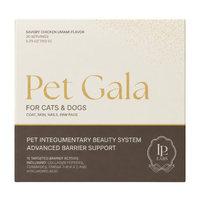
Pet Gala™ is designed for the way wellbeing shows up: calm skin, a polished coat, and strong, clean nails. If you’re exploring hyaluronic acid products for cats, Pet Gala™ fits best as part of a broader visible-care ritual—supporting everyday presentation beyond any single ingredient, with a routine-friendly format that helps consistency feel effortless.

When people look up hyaluronic acid for cats, they’re rarely chasing a chemistry lesson. They’re looking for a cat who looks comfortable: a coat that feels plush again, skin that seems less reactive, and movement that reads as easy rather than careful. Hyaluronic acid (often listed as sodium hyaluronate) is a naturally occurring substance associated with moisture retention in tissues, which is why it’s discussed for hydration and lubrication support. In veterinary medicine, it appears in different forms—topical, injectable, and oral—depending on the intended use.

That variety can make shopping feel noisy. Owners compare hyaluronic acid supplements for cats, wonder about the best hyaluronic acid for cats, and try to decide whether a single ingredient can really change what they see at home. The honest answer is nuanced: feline-specific dosing and safety guidance are not well established, so it’s wise to involve your veterinarian and keep expectations realistic. But the commercial answer is also real: visible condition is holistic. A glossy coat, calm skin, and strong, clean nails reflect a whole routine—nutrition, hydration, grooming, and stress. A well-designed product can support that daily presentation beyond any single ingredient, helping your care show up where it matters most: in what you can see and feel when your cat curls up beside you.

By La Petite Labs Editorial, ~15 min read

Featured Product:

  • Hyaluronic acid for cats is associated with moisture retention, which is why owners connect it to softness, shine, and comfort.
  • Veterinary uses include multiple routes (topical, injectable, oral), and the “right” form depends on the goal.
  • For coat and skin, the most meaningful targets are visible: smoother texture, less dryness, and a more polished look.
  • For mobility, think in terms of comfort signals—easier jumping, steadier play—while keeping expectations realistic.
  • Safety is generally favorable in veterinary contexts, but cats have limited species-specific data, so vet guidance matters.
  • The best hyaluronic acid supplements for cats are simple, clearly labeled, and easy to give consistently.
  • A beauty-forward product still makes sense because visible condition is holistic—skin, coat, nails, grooming, and daily routine.

Why Hyaluronic Acid Shows up in Modern Feline Care Routines

Hyaluronic acid for cats sits at the intersection of comfort and appearance: the way a cat moves, the way their coat lies, and the way their skin looks when it’s calm and well-kept (see: Cat Skin Care). Hyaluronic acid (HA) is a naturally occurring substance that helps tissues hold onto water, which is why it’s often discussed for hydration and lubrication support (Kendra Walker, 2023). In veterinary settings, HA shows up in different forms—topical eye products, injectables, and oral formats—each chosen for a different goal (Becker LC, 2009).

For owners, the “why” is usually visible: a coat that looks less plush, skin that seems touchy, or an older cat whose movements look less fluid. It’s also why people search for the best hyaluronic acid for cats or the best hyaluronic acid supplement for cats—because they want something that fits into a daily care ritual, not a complicated project. The most responsible approach is simple: treat HA as supportive care, choose quality, and keep your veterinarian in the loop because feline-specific dosing and safety data are limited compared with other species (Thomazini VC, 2024).

Coat shine graphic representing skin hydration supported by best hyaluronic acid supplements for cats.

What Hyaluronic Acid Is and Why Moisture Matters Visibly

Hyaluronic acid is best known for one job: holding water. In the body, it contributes to tissue hydration and the slippery, cushioned feel of certain structures, which is why it’s discussed for joints, skin, and eyes. When owners explore hyaluronic acid benefits for cats, they’re usually looking for a gentle way to support comfort that shows—less stiffness in movement, a smoother coat, and skin that seems less easily irritated.

It’s important to separate “support” from “treatment.” HA is used in veterinary medicine in different routes depending on the goal, including injections and oral supplements. For at-home routines, oral formats are the most common discussion, but the right choice depends on your cat’s health history and what you’re trying to improve. If your cat has eye concerns, joint pain, or chronic skin issues, your veterinarian should guide the plan.

Beauty structure visual linked to skin and coat support mechanisms in hyaluronic acid supplement for cats.

Skin and Coat Signals: Softness, Shine, and Comfortable Grooming

For skin and coat, the appeal of HA is straightforward: hydrated tissue tends to look and feel better. When a cat’s skin is comfortable, grooming becomes easier and more thorough, and that can translate into a coat that looks more even and polished. HA’s role in maintaining moisture is one reason it’s used across veterinary and cosmetic contexts (related: The Science Behind the Best Skin and Coat Supplements for Cats).

Owners often describe the goal as “soft again” or “less static and fluffy in a dry way.” Those are reasonable, visible targets. Still, coat quality is multi-factorial: diet quality, parasites, stress, grooming frequency, and indoor humidity all matter. Think of HA as a supportive piece of a visible-care routine—something that complements brushing, hydration, and a nutrient-complete diet rather than replacing them.

Molecular design image tied to beauty support pathways in best hyaluronic acid supplement for cats.

Joint Presentation: Movement That Looks Easier and More Like Them

For joints, HA is often discussed because it’s associated with lubrication and comfort in veterinary medicine. It’s commonly referenced as a support option for joint health and mobility, including in the context of osteoarthritis symptoms in animals. Cat owners tend to notice joint changes as small shifts: less jumping, shorter play sessions, or a reluctance to be handled around the hips.

If your cat’s movement looks different, the best next step is a veterinary exam to confirm what’s going on. Mobility changes can come from arthritis, but also from dental pain, weight changes, or other conditions. If HA is considered, it should be part of a complete plan that prioritizes comfort and quality of life—while still keeping the owner’s “visible signals” in mind: a cat who moves with more ease looks more like themselves.

Dog portrait showing healthy coat and skin with beauty support from hyaluronic acid supplements for cats.

Eyes and Facial Comfort: Where Veterinary Guidance Matters Most

Eyes are another place owners encounter HA. In clinical contexts, sodium hyaluronate derivatives have been studied in cats for corneal considerations, reflecting its relevance in ophthalmic care (Ohguro N, 1991). That doesn’t mean you should reach for a random human eye gel, but it does explain why HA shows up in veterinarian-recommended eye products.

If your cat’s eyes look dull, watery, or irritated, treat that as a “call the vet” signal rather than a supplement-shopping prompt. Eye issues can escalate quickly, and the right product depends on the cause. Once the medical side is addressed, supportive routines—hydration, low-dust litter, gentle grooming around the face—often help your cat look brighter and more comfortable in a way you can immediately recognize (see: Lutein for Cats).

The scratching is completely gone, his coat looks healthy and shiny!

— Lena

He was struggling with itching, now he's glowing.

— Grace

“The best supplement is the one your cat accepts calmly, every day.”

Routes and Forms: Oral, Topical, and Veterinary-directed Options

You’ll see HA described in multiple formats: oral powders or chews, topical products, and veterinary-administered injections. Veterinary references note that HA can be administered in various forms depending on the intended use. For most owners looking at hyaluronic acid supplements for cats, the practical question is whether the format fits the cat you actually live with.

Cats are routine-sensitive. The best plan is the one your cat accepts without stress: a small serving mixed into a familiar food, a lickable treat, or a capsule your vet confirms is appropriate. If administration becomes a daily struggle, the “beauty logic” breaks—stress shows up in the coat, the skin, and the relationship. Choose the simplest route that supports consistency and calm.

Dog headshot symbolizing coat shine and beauty supported by hyaluronic acid supplement for cats.

What to Expect: Timelines, Check-ins, and Visible Progress Markers

What should you expect to notice, and when? With any supportive supplement, the first changes owners report are usually behavioral and tactile: a cat who grooms a bit more, a coat that feels less dry, or a willingness to move that looks less guarded. Because HA is associated with hydration and lubrication support, it’s reasonable to watch for “comfort signals” rather than dramatic transformations.

Set a simple check-in: take a quick photo in the same light once a week, and note grooming time, scratching frequency, and how your cat jumps onto favorite spots. If nothing changes after a veterinarian-recommended trial period, that’s useful information—not a failure. It just means your cat’s visible needs may be better served by a different approach, like parasite control, diet adjustment, or targeted dermatology care.

Canine side view symbolizing beauty confidence supported through best hyaluronic acid supplements for cats.

Quality Signals in Hyaluronic Acid Products for Cats

Quality matters because “hyaluronic acid” on a label doesn’t tell you much by itself. Look for clear identification of the HA form (often sodium hyaluronate), straightforward ingredient lists, and conservative claims. Safety assessments in veterinary contexts generally consider HA and derivatives safe, but product quality and formulation choices still influence tolerability.

Also watch for unnecessary complexity. Many formulas add multiple botanicals or strong flavors to seem more premium, but cats often do better with fewer variables. If you’re searching for the best hyaluronic acid supplement for cats, “best” often means: your cat will take it, your veterinarian is comfortable with it, and it supports the visible goals you care about—softness, shine, and everyday comfort.

Ingredient overview graphic showing what's inside and how hyaluronic acid for cats supports beauty.

Diet Versus Supplements: Supporting Visible Condition Beyond Basics

A common misconception is that if a cat eats a complete diet, supplements are pointless. A complete diet is the foundation, but visible condition is also about how the skin barrier behaves day to day, how well a cat grooms, and how stress shows up on the coat. HA is naturally occurring in the body and plays a role in maintaining moisture, which is why some owners add it as a targeted support for appearance and comfort.

The more honest way to think about a hyaluronic acid supplement for cats is not “replacing a deficiency,” but “supporting a look and feel you can recognize.” When the coat is glossy and the skin seems unbothered, it’s aesthetic confirmation that your care routine is working. That’s a meaningful outcome, even when the diet is already solid.

Choosing Formats That Fit Your Cat’s Temperament and Your Routine

If you’re comparing hyaluronic acid products for cats, the most useful filter is “Does this match the result I want to see?” For coat and skin presentation, owners often prefer oral formats that are easy to give consistently, because consistency is what makes grooming and nutrition look like a lifestyle instead of a one-off fix. For eye-related uses, HA is commonly encountered in veterinary ophthalmology contexts, including corneal applications (Ohguro N, 1991). For joint-focused goals, HA is also used in veterinary medicine to support mobility and ease osteoarthritis-associated discomfort in animals (Kendra Walker, 2023).

The “best hyaluronic acid supplements for cats” are the ones that are transparent about ingredients, avoid unnecessary flavorings that upset sensitive stomachs, and fit your cat’s temperament. A product that’s perfect on paper but impossible to administer won’t deliver the visible payoff you’re after. If your cat has multiple goals—skin comfort plus coat luster plus overall polish—consider a formula designed for visible condition rather than a single-ingredient approach.

“Track visible signals: coat feel, grooming, scratching, and ease of movement.”

Close-up clinical uniform showing research-driven formulation behind best hyaluronic acid supplements for cats.

Safety, Tolerability, and the Real-world Signs Owners Should Watch

Safety is the part that deserves the most grown-up attention. Hyaluronic acid and its derivatives are generally considered safe for use in veterinary contexts, but “generally safe” is not the same as “universally appropriate for every cat”(Becker LC, 2009). Cats vary widely in sensitivity, and the safety of hyaluronic acid in cats has not been extensively studied, which is why veterinary oversight matters—especially if your cat is medically complex or on multiple medications (Thomazini VC, 2024).

Practical safety signals to watch for after starting a hyaluronic acid supplement for cats include appetite changes, vomiting, softer stools, or new itchiness. If anything looks off, pause and call your veterinarian rather than “pushing through.” The goal is a cat who looks comfortable in their own skin—bright-eyed, well-groomed, and relaxed—not a regimen that creates new problems while chasing shine.

Shop Now
Pet Gala in food tableau emphasizing purity aligned with hyaluronic acid products for cats.

Dosing Conversations to Have with Your Veterinarian Before Starting

Because feline dosing guidelines for hyaluronic acid are not well established, avoid internet math and treat dosage as a veterinarian-led decision (Thomazini VC, 2024). This matters even more when you’re using multiple “beauty and comfort” products at once—skin oils, calming chews, joint formulas—because the total ingredient load can become messy fast. Instead of chasing a number, focus on a consistent routine, clear product labeling, and a plan for what you’ll monitor: coat feel, dandruff, scratching, and ease of movement.

If you’re starting an oral hyaluronic acid supplement for cats, ask your veterinarian how long to trial it before judging results, and what “stop signs” should prompt discontinuation. That conversation is also where you can align expectations: HA is supportive care, not a cure, and it should fit into a broader picture of grooming, hydration, nutrition, and stress reduction.

Shop Now
Woman with Pet Gala box in cozy setting aligned with hyaluronic acid for cats.

Interactions, Sensitive Stomachs, and Keeping Supplement Stacks Simple

Interactions and contraindications are less about HA being inherently risky and more about your cat’s context. If your cat has chronic GI sensitivity, a new supplement can be enough to tip the balance into loose stools. If your cat is on medications, your veterinarian can help you choose a schedule that keeps routines simple and reduces the chance of stomach upset. The key point is that cats haven’t been studied as deeply as we’d like for HA supplementation, so it’s smart to be conservative and observant.

Also consider the “hidden” ingredients: flavorings, sweeteners, and extra botanicals can be the real source of problems. When owners say a product “didn’t work,” it’s sometimes because the cat wouldn’t take it consistently, or because the formula included extras that didn’t agree with them. Clean formulas and predictable routines tend to produce the most reassuring, visible outcomes.

Shop Now

Life Stage Considerations for Kittens, Adults, and Senior Cats

Cats at different life stages can have different “presentation priorities.” Kittens and young adults often show their wellbeing through sleek coats and playful movement; seniors show it through comfortable grooming, steady mobility, and a calmer relationship with touch. HA is used in veterinary medicine for joint and mobility support, which is one reason older-cat owners explore it as part of a comfort-forward plan (Kendra Walker, 2023).

For seniors, the most meaningful change is often subtle but visible: getting up with less hesitation, returning to favorite perches, or grooming more thoroughly again. For cats who already look and move beautifully, HA may be more about maintaining that polished, cared-for look—supporting hydration and softness so the coat stays plush and the skin stays calm. Either way, your veterinarian should help you decide whether HA fits your cat’s overall health picture.

Cats Versus Dogs: Why Label Assumptions Don’t Always Translate

Cats are not small dogs, and that matters when you’re shopping. Many HA products are formulated with dogs in mind, with flavors, serving sizes, and add-ons that don’t translate well to feline preferences. Even though hyaluronic acid can be administered in various forms in veterinary medicine, the “right” form depends on the intended use and the patient (Becker LC, 2009). For cats, palatability and simplicity often decide whether a supplement becomes a real ritual or a daily argument.

If you’re choosing between hyaluronic acid supplements for cats and a multi-benefit skin-and-coat formula, ask what you want to notice. If the goal is a visibly fresher coat and comfortable skin, a broader integumentary approach can make more sense than a single-ingredient bet. If the goal is mobility support, discuss the full joint plan with your veterinarian so HA is only one part of a coherent strategy.

Benchmark graphic emphasizing formulation depth and rigor behind hyaluronic acid supplements for cats.

What Research in Cats Suggests, and What It Doesn’t yet Prove

The research story around HA in cats is real, but it’s also specific. In feline ophthalmology contexts, denatured sodium hyaluronate has been studied for effects on the corneal endothelium, reflecting how HA derivatives are evaluated for corneal health applications (Ohguro, 1991). Separately, HA has been used as a subdermal filler to treat entropion in dogs and cats, suggesting a role as a temporary, tissue-supporting option in certain cases (McDonald JE, 2019).

What this means for supplement shoppers: evidence exists for veterinary uses, but oral supplementation in cats is a different question than a targeted clinical application. That’s why the most credible brands avoid dramatic promises and instead position HA as supportive care—one piece of a visible-care routine that includes grooming, hydration, and nutrition. When you keep expectations realistic, you’re more likely to be pleased by the small, reassuring changes you can actually see.

Shop Now
Unboxed supplement reflecting refined experience and trust in best hyaluronic acid supplements for cats.

A Clear Decision Framework Focused on Visible Results and Comfort

A practical decision framework: start with the signal you want to improve. If it’s coat luster and softness, prioritize formulas that support skin barrier comfort and hydration, and that your cat will take daily (related: Omega 7 for Cats). If it’s movement, prioritize a vet-guided joint plan where HA is considered alongside weight, activity, and other joint-support ingredients. If it’s eyes or eyelids, don’t self-treat—those are veterinarian domains where HA may appear as part of professional care (Ohguro N, 1991).

Then check quality signals: clear labeling, conservative claims, and a serving format that fits your household. The best hyaluronic acid for cats is the one that fits your cat’s temperament and your consistency. A supplement that’s skipped half the week won’t create the polished, well-kept look you’re aiming for.

Shop Now

Why a Beauty-forward Formula Still Makes Sense for Science-minded Owners

The commercial question a science-minded owner asks is fair: if HA is only one ingredient, why choose a beauty-forward formula at all? Because visible condition is rarely a single-nutrient story. Coat shine, calm skin, and strong, clean nails reflect a whole routine—nutrition, grooming, hydration, and stress (see: The Best Cat Nail Supplements for Stronger, Healthier Claws). HA can support hydration and lubrication, but it works best when it’s part of a broader, integumentary-first approach rather than a lone “fix”.

When you choose a product designed around how wellbeing shows up—softness you can feel, a coat that lies flatter and looks glossier, skin that seems less reactive—you’re buying coherence. That’s the difference between collecting supplements and building a ritual that makes your cat look unmistakably cared for, day after day.

“Science-minded care can still be beauty-minded—because comfort shows.”

Educational content only. This material is not a substitute for veterinary advice. Always consult your veterinarian about your dog’s specific needs. These statements have not been evaluated by the Food and Drug Administration. Products mentioned are not intended to diagnose, treat, cure, or prevent any disease.

Glossary

  • Hyaluronic Acid (HA): A naturally occurring substance known for holding water in tissues, often discussed for hydration and lubrication support.
  • Sodium Hyaluronate: A salt form of hyaluronic acid commonly used in formulations; frequently seen on labels for HA products.
  • Humectant: An ingredient category that attracts and holds water; HA is often described this way in moisture-focused contexts.
  • Integumentary System: The skin, coat, and related structures (including nails), where “visible condition” shows up day to day.
  • Coat Luster: The reflective, glossy look of fur that owners often use as a signal of good grooming and comfortable skin.
  • Skin Barrier: The outer protective layer of skin that influences comfort, moisture balance, and how reactive skin appears.
  • Palatability: How appealing a supplement tastes/smells to a cat; often the deciding factor for consistency.
  • Mobility Signals: Visible behaviors that suggest comfort in movement, such as jumping, grooming posture, and willingness to play.
  • Osteoarthritis (OA): A degenerative joint condition; HA is discussed in veterinary medicine as a support option for OA-associated symptoms in animals.
  • Entropion: An eyelid condition where the lid rolls inward; HA has been used as a subdermal filler in dogs and cats in select cases (McDonald JE, 2019).

Related Reading

References

Hayes KC. Nutritional problems in cats: taurine deficiency and vitamin A excess.. PubMed. 1982. https://pubmed.ncbi.nlm.nih.gov/7039812/

Ohguro N. The effects of denatured sodium hyaluronate on the corneal endothelium in cats.. PubMed. 1991. https://pubmed.ncbi.nlm.nih.gov/1928245/

Rachel L. Murray. Hyaluronidase. 2023. https://www.ncbi.nlm.nih.gov/sites/books/NBK545163

Becker LC. Final report of the safety assessment of hyaluronic acid, potassium hyaluronate, and sodium hyaluronate.. PubMed. 2009. https://pubmed.ncbi.nlm.nih.gov/19636067/

Kendra Walker. Hyaluronic Acid. 2023. https://www.ncbi.nlm.nih.gov/sites/books/NBK482440

McDonald JE. The use of hyaluronic acid subdermal filler for entropion in canines and felines: 40 cases.. PubMed. 2019. https://pubmed.ncbi.nlm.nih.gov/29520917/

Thomazini VC. Impact of concerning excipients on animal safety: insights for veterinary pharmacotherapy and regulatory considerations.. PubMed Central. 2024. https://pmc.ncbi.nlm.nih.gov/articles/PMC11087455/

Man. Osteoarthritis pathogenesis - a complex process that involves the entire joint.. 2014. https://www.frontiersin.org/articles/10.3389/fvets.2019.00192/full

3Rd. Animal-based hyaluronic acid fillers: scientific and technical considerations.. PubMed. 2007. https://pubmed.ncbi.nlm.nih.gov/18090340/

RVA. Toxic element levels in ingredients and commercial pet foods.. PubMed Central. 2021. https://pmc.ncbi.nlm.nih.gov/articles/PMC8546090/

FAQ

What is hyaluronic acid for cats used for?

Hyaluronic acid for cats is typically discussed as supportive care for hydration and lubrication—two qualities owners often notice as softer skin, a more polished coat, and easier movement. Hyaluronic acid is naturally present in the body and is known for helping tissues retain moisture.

Because cats have limited species-specific supplement data, it’s best chosen with your veterinarian’s input, especially if your cat has medical conditions. For visible, everyday care that complements a routine, consider Pet Gala™.

Why do owners choose hyaluronic acid supplements for cats?

Owners usually choose hyaluronic acid supplements for cats for visible reassurance: a coat that feels less dry, skin that seems less touchy, and movement that looks more comfortable. HA is widely associated with moisture support in tissues, which is why it appears in veterinary and cosmetic contexts.

The best results come from pairing any supplement with grooming, hydration, and a diet your cat thrives on. For a routine built around how wellbeing shows up day to day, many owners use Pet Gala™.

How does hyaluronic acid support a cat’s skin appearance?

Hyaluronic acid is known for binding water, so it’s often framed around moisture and a smoother “feel” in tissues. For cat owners, that can translate into practical, visible goals: less flaky-looking skin, a coat that lies flatter, and a softer texture when you pet along the back.

Skin and coat are still influenced by grooming, parasites, stress, and diet quality, so think of HA as a supportive layer rather than a standalone fix. For a broader visible-care approach, consider Pet Gala™.

Can hyaluronic acid for cats support joint comfort and mobility?

In veterinary medicine, hyaluronic acid is commonly discussed for joint support and mobility, including easing osteoarthritis-associated symptoms in animals. For cats, owners often watch for comfort signals like easier jumping, more relaxed walking, and a return to normal grooming positions.

Mobility changes can have multiple causes, so a vet exam is the right starting point before adding supplements. For daily visible-care support that fits into a simple routine, consider Pet Gala™.

Is hyaluronic acid safe for cats to take daily?

Hyaluronic acid and its derivatives are generally considered safe in veterinary contexts, but “safe” still depends on the individual cat and the product formulation. Cats can be sensitive to flavorings or extra ingredients that come along for the ride.

Because feline-specific safety and dosing data are limited, daily use should be discussed with your veterinarian, especially for seniors or cats on medications. For a routine designed around visible condition, many owners choosePet Gala™.

What side effects might occur with a hyaluronic acid supplement for cats?

Most concerns are mild and practical: stomach upset, softer stools, or a cat refusing food if the flavor is off. While HA is generally considered safe in veterinary use, tolerability can vary by cat and by formulation.

If you notice vomiting, appetite changes, or new itchiness after starting, pause and check in with your veterinarian rather than continuing. For a routine-friendly option focused on visible care, consider Pet Gala™.

Are there cats who should avoid hyaluronic acid supplements?

Cats with complex medical histories, chronic GI sensitivity, or multiple medications should only use HA with veterinary guidance. A key limitation is that the safety of hyaluronic acid in cats has not been extensively studied, so caution and oversight are appropriate.

Also avoid “kitchen sink” formulas that add many extras your cat doesn’t need. If your goal is visible condition with a simpler approach, discuss options like Pet Gala™ with your veterinarian.

How do veterinarians use hyaluronic acid in cats?

Veterinarians may use hyaluronic acid in different ways depending on the problem being addressed. HA can be administered in various forms, including injections and oral supplements, and it also appears in topical applications in some settings.

For owners, the takeaway is that “HA” isn’t one single use-case; it’s a tool that shows up in multiple care contexts. For daily visible-care support at home, consider Pet Gala™.

Do cats and dogs respond differently to hyaluronic acid?

Cats often differ from dogs in palatability needs and supplement tolerance, and feline-specific dosing guidance is less established. Veterinary sources note that safety and dosing guidelines for hyaluronic acid in cats are not well established, which is why vet oversight is recommended.

So a “dog joint chew” isn’t automatically a good match for a cat, even if the ingredient list looks similar. For a cat-centered, visible-care routine, consider Pet Gala™.

How long until hyaluronic acid benefits for cats are noticeable?

Timelines vary, and it’s best to think in terms of small, visible changes rather than dramatic shifts. Because HA is associated with hydration and lubrication support, owners often track coat feel, grooming behavior, and ease of movement as their “early signals”.

Ask your veterinarian what trial period makes sense for your cat, then evaluate consistently (same lighting, same brushing routine). For a product designed around everyday presentation, consider Pet Gala™ as part of that routine.

What makes the best hyaluronic acid for cats in practice?

In practice, “best” means your cat will take it consistently, the label is transparent, and the formula avoids unnecessary extras. HA is used in multiple veterinary contexts and forms, so clarity about the form and intended use is a quality signal.

Also prioritize conservative claims and vet compatibility, since feline-specific guidance is limited. For a broader visible-care formula that fits daily life, consider Pet Gala™.

Should I choose a single-ingredient HA or a blend?

A single ingredient can be appealing for simplicity, but visible condition is rarely a one-nutrient story. HA is associated with moisture support, yet coat shine and calm skin also reflect grooming, diet quality, and stress levels.

If your goal is overall polish—skin, coat, and nails—a blend designed for integumentary presentation can be more coherent than stacking multiple separate products. For that kind of routine, consider Pet Gala™.

Can hyaluronic acid products for cats help with dry eyes?

HA appears in some ophthalmic contexts, and sodium hyaluronate derivatives have been studied in cats for corneal considerations. But “dry eye” symptoms can have different causes, and the wrong product can delay proper care.

If your cat is squinting, pawing at the face, or has discharge, treat it as a veterinary issue first. For general visible-care support that complements professional guidance, consider Pet Gala™.

Can I give hyaluronic acid supplements for cats with other supplements?

Possibly, but stacking supplements is where routines get risky and inconsistent. Cats may react more to added flavors and fillers than to the headline ingredient. Because feline dosing guidance is not well established, it’s smart to review the full list with your veterinarian before combining products.

A cleaner approach is choosing one product that matches your primary visible goal and sticking with it long enough to judge results. For an all-in-one visible-care routine, consider Pet Gala™.

What should I ask my vet before starting hyaluronic acid?

Ask whether HA fits your cat’s specific goal (coat, skin comfort, mobility), what trial period to use, and what signs should prompt stopping. This matters because dosing guidelines for hyaluronic acid in cats are not well established, so individualized guidance is important.

Also ask about ingredient compatibility with your cat’s diet and medications, and whether a broader skin-and-coat approach would better match your goals. For a visible-care option to discuss, consider Pet Gala™.

Are there studies of hyaluronic acid use in cats?

Yes, but much of the cat-specific literature is tied to particular veterinary applications. For example, denatured sodium hyaluronate has been studied for effects on the corneal endothelium in cats, reflecting ophthalmic relevance(Ohguro, 1991).

There are also reports of HA used as a subdermal filler for entropion in dogs and cats, suggesting a temporary tissue-supporting role in select cases(McDonald JE, 2019). For everyday visible-care routines, consider discussingPet Gala™with your veterinarian.

What’s the difference between hyaluronic acid and sodium hyaluronate?

Sodium hyaluronate is a salt form of hyaluronic acid commonly used in products because it can be easier to formulate. Veterinary references discuss HA and its derivatives as generally safe and used in multiple forms depending on the intended purpose.

On a label, what matters most is transparency and simplicity, not buzzwords. If you want a routine built around visible condition rather than ingredient collecting, consider Pet Gala™.

Can hyaluronic acid for cats replace grooming and hydration routines?

No—think of it as supportive, not substitutive. HA is associated with moisture retention, but coat shine and calm skin still depend heavily on brushing, parasite control, hydration, and a complete diet.

The best outcomes usually come when a supplement simply makes the routine look and feel more rewarding: softer fur, easier grooming, and a cat that seems more comfortable being handled. For that kind of daily ritual, consider Pet Gala™.

How do I choose the best hyaluronic acid supplements for cats?

Start with three filters: your cat will take it, the label is clear, and the claims are modest. HA is used in veterinary medicine in different forms depending on the goal, so products should be transparent about what they’re offering.

Then align the product with what you want to see: coat softness, calmer skin, or mobility comfort. For a visible-care formula that fits into a consistent routine, consider Pet Gala™.

When should I call the vet about supplement reactions?

Call your veterinarian if you see repeated vomiting, refusal to eat, marked lethargy, facial swelling, or worsening itchiness after starting any supplement. Because cats have limited HA-specific dosing and safety data, it’s better to be cautious and get guidance early.

For mild changes like softer stools, your vet may suggest pausing, adjusting timing, or switching formulas. For a routine designed around visible comfort and consistency, consider Pet Gala™ as an option to discuss.

What’s a simple decision framework for hyaluronic acid for cats?

Pick one primary visible goal (coat softness, skin comfort, or mobility), confirm there isn’t an untreated medical issue, then choose a product your cat will take consistently. Since feline dosing guidance is not well established, your veterinarian should help you decide whether HA fits your cat’s situation.

Finally, set a simple check-in: weekly photos and notes on grooming, scratching, and movement. For a coherent visible-care routine rather than ingredient stacking, consider Pet Gala™.

5K+ Happy Pet Parents

Excellent 4.8

Hyaluronic Acid for Cats | Why Thousands of Pet Parents Trust Pet Gala™

"Magical. He was struggling with itching and shedding. Now he's literally glowing."

Grace & Ducky

"Improves her skin, fur, nails, and eyes. We're loving it!"

Cat & Miso

"It's so good for his coat, and so easy to mix into food."

Alex & Cashew

"The scratching is completely gone, his coat looks healthy and shiny."

Lena & Bear

"Magical. He was struggling with itching and shedding. Now he's literally glowing."

Grace & Ducky

"Improves her skin, fur, nails, and eyes. We're loving it!"

Cat & Miso

"It's so good for his coat, and so easy to mix into food."

Alex & Cashew

"The scratching is completely gone, his coat looks healthy and shiny."

Lena & Bear

"Magical. He was struggling with itching and shedding. Now he's literally glowing."

Grace & Ducky

"Improves her skin, fur, nails, and eyes. We're loving it!"

Cat & Miso

"It's so good for his coat, and so easy to mix into food."

Alex & Cashew

"The scratching is completely gone, his coat looks healthy and shiny."

Lena & Bear

"Magical. He was struggling with itching and shedding. Now he's literally glowing."

Grace & Ducky

"Improves her skin, fur, nails, and eyes. We're loving it!"

Cat & Miso

"It's so good for his coat, and so easy to mix into food."

Alex & Cashew

"The scratching is completely gone, his coat looks healthy and shiny."

Lena & Bear

SHOP NOW