MSM for Cats

What the sulfur compound contributes, what researchers found in kitten coats, and where it fits in Pet Gala

By La Petite Labs Editorial 14 min read

Woman nuzzling an orange cat beside a fluffy gray-and-white cat, a Pet Gala box and a food bowl
Pet Gala™ Daily skin & coat system · adult & senior cats Starting at $56/month 

MSM can be hard to pin down. You may find it beside glucosamine in a joint supplement, then encounter it again in a powder for skin and coat. The name—methylsulfonylmethane—does little to explain why it is there.

MSM is a sulfur-containing compound. Its connection to skin and hair is a legitimate research question, and scientists have tested it in kittens. The findings are more specific than a general promise of softer fur or easier movement: they concern small changes in the microscopic surface of hair. Understanding that result helps explain why we include MSM in Pet Gala’s broader skin-and-coat formula, while keeping expectations tied to what was actually studied.

MSM is a sulfur-containing compound used in supplements; it is not protein or a substitute for essential amino acids. A small study in Ragdoll kittens found some microscopic hair-surface changes, but hair length and overall coat ratings did not differ significantly between groups. It did not test arthritis relief. Pet Gala contains 100 mg MSM per standard 2.5 g sachet alongside protein and lipid ingredients. Research diet percentages should not be copied into a home dose.

What MSM actually is

MSM stands for methylsulfonylmethane. It is a small sulfur-containing compound used in dietary supplements. It is not collagen, keratin or another protein. 1

That distinction matters because sulfur also appears in amino acids that are important to a cat’s diet. Sharing an element does not make two ingredients nutritionally interchangeable. A scoop labelled MSM cannot replace the amino-acid balance of complete food, even when the label discusses skin, coat or connective tissue.

Woman smiling with a tabby cat on her shoulder while holding a Pet Gala box

Where it sits in Pet Gala

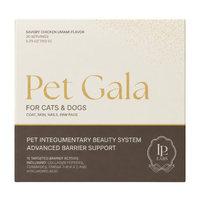
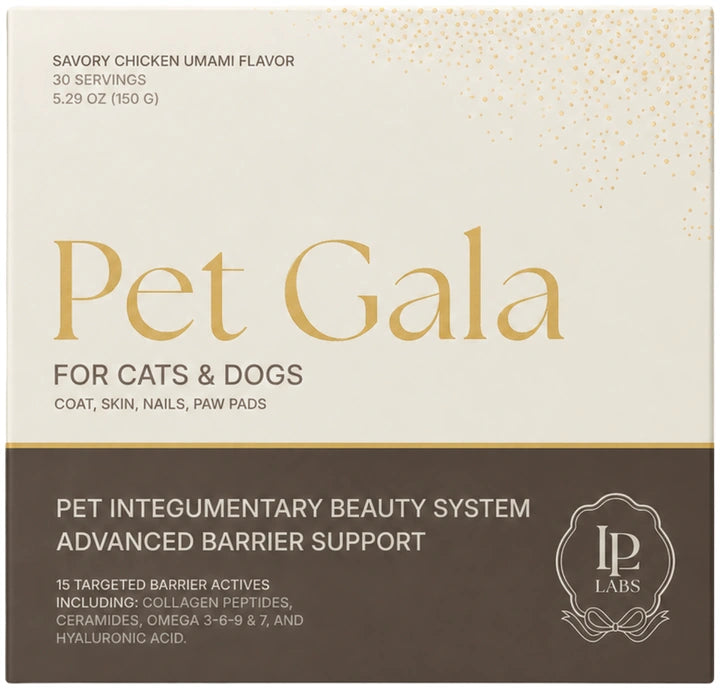
Pet Gala contains 100 mg MSM per standard 2.5 g sachet. It is included with biotin, zinc and other ingredients within a formula that also supplies protein ingredients and lipids. 2

For an owner exploring MSM because of coat condition, this is a relevant way to use the ingredient: as part of a measured combination rather than another isolated powder to manage. The Pet Gala label shows the whole formula and current cat directions. Its purpose is skin-and-coat nutrition, not an MSM-based pain-treatment claim.

Woman kissing a fluffy gray cat while holding an orange tabby and a Pet Gala box

Sulfur matters to hair, but the route matters too

Cat hair is largely keratin, and sulfur-containing amino acids are part of its protein chemistry. 3 That is different from showing that dietary MSM supplies those amino acids or strengthens hair in a particular cat.

Methionine is an amino acid; MSM is a different molecule. The fact that both contain sulfur does not mean one can stand in for the other in a recipe. Complete food still has to supply the cat’s required amino-acid balance. 5 6

Woman petting a silver tabby on a kitchen counter beside an open Pet Gala box

What the researchers fed the kittens

The 2022 study enrolled 21 Ragdoll kittens aged six to eight months. They received diets containing no added MSM, 0.2% MSM or 0.4% MSM during a 65-day protocol that included adaptation. The researchers measured growth, blood markers, hair and aspects of the gut environment. 1

This was a controlled feeding experiment in young cats. It was not an owner survey, a trial in arthritic seniors or a test of a commercial multi-ingredient coat powder. Keeping that setting in view makes the results much easier to interpret.

Woman holding a fluffy white cat and a Pet Gala box

What changed in the hair?

The most interesting finding concerned the small scales on the surface of the hair. The lower-MSM group showed a reduction in scale thickness over time, while the comparison with the control group was a statistical trend rather than a clearly established between-group difference. 1

Hair length and overall coat ratings did not differ significantly between groups. The result gives researchers a reason to study hair-surface effects further; it does not establish faster fur growth or a reliably glossier coat.

MSM contains sulfur, but it is not protein and does not replace a cat’s essential amino acids.

What would you notice at home?

A microscopic hair measurement and the feel of a coat are different observations. At home, you can track whether grooming is easier, whether tangles recur and whether photographs show a consistent change. You cannot tell from those observations which ingredient in a mixed formula was responsible.

Pick the change that matters to you before adding a product. That gives a coat-care routine a purpose beyond finishing the jar—and something concrete to reconsider if the routine is not helping.

Two long-haired cats looking toward a Pet Gala box held above a food bowl

Does MSM help feline arthritis?

The kitten experiment did not measure joint pain or arthritic movement. Its coat findings cannot establish an arthritis benefit. 1

If MSM appears in a joint combination you are considering, assess that specific preparation and its evidence with the veterinarian treating your cat. An ingredient list is not an outcome study. For a cat that has begun hesitating before a jump, the first useful step is to understand the movement problem rather than switch between supplements carrying similar joint language.

Hand gently petting an orange-and-white cat beside a Pet Gala box and a food bowl

Notice the route your cat takes

A cat may stop using the highest shelf, choose an intermediate step or have difficulty getting into a litter box. Joint pain can also make grooming harder. 7

Record the specific change: which jump, which direction, and whether it happens consistently. A short video can make the concern easier to explain. Those details help separate a medical question about comfort from a cosmetic question about fur, even when both first appear as a change in the coat over the back.

Man sitting with two long-haired cats on a sofa beside a Pet Gala box and a food bowl

How MSM differs from collagen

Collagen is a structural protein associated with supporting tissues; MSM is a sulfur-containing compound. They are not two strengths of the same supplement. 1 4

Pet Gala lists them separately because they are different ingredients. 2 Its marine collagen peptides and other protein ingredients belong to the structural-nutrition side of the formula. For the differences between collagen preparations and what cats have actually been studied with, see the collagen guide.

Why the formula also includes fats

The outer skin barrier is built partly from lipids, including ceramides. Those lipids perform a different job from the proteins involved in tissue structure. 4 10

That is why Pet Gala combines its MSM and protein ingredients with an omega blend and ceramides. A skin-and-coat formula should be understandable as a combination of different contributions, rather than a row of ingredients all claiming to do the same thing. The omega 3-6-9 guide explains how to read the lipid declarations.

The kitten study found some microscopic hair-surface changes—not a significant increase in hair length.

Close-up of long white cat fur beside a veterinary vignette about visible skin and coat changes

DVM Voice: Clinical Vignette of When Skin Changes Point Deeper Than the Surface

Case provided by Sarah Calvin, DVM

Maverick, a 4-year-old Siamese cat, was brought in for hair loss across his lower abdomen and red, flaky skin lesions that had progressed over the previous month. His owners were unsure whether he was itchy or overgrooming.

Examination showed broken hairs, abdominal alopecia, and lesions consistent with bacterial skin infection. Further testing ruled out fleas, FeLV/FIV, and common fungal causes. Because his grooming pattern suggested deeper discomfort, his veterinarian continued the workup.

Radiographs and urinalysis revealed bladder stones, crystalluria, and blood in the urine. Maverick’s overgrooming was linked to urinary pain — a case where skin changes were secondary to an internal problem.

His care required a staged plan: stabilizing the skin infection, surgically removing the bladder stones, managing pain, transitioning to a therapeutic diet, and supporting skin-barrier recovery with appropriate nutrition and fish oil.

Hair regrowth began by 8 weeks. By 6 months, his coat had fully recovered, with no recurrence after the urinary issue was resolved.

Clinical takeaway: Maverick’s case shows why feline coat loss and overgrooming deserve careful veterinary investigation. Skin and coat health can reflect pain, stress, nutrition, infection, barrier weakness, or internal disease — not just surface-level grooming behavior.

Single-case vignette. Not generalizable. Veterinary diagnosis and oversight are essential for overgrooming, hair loss, skin lesions, urinary signs, pain, or suspected infection.

Explore Pet Gala Research →
Long-haired tabby being combed beside a Pet Gala box and a food bowl

A percentage in a diet is not a scoop for a cat

In the study, MSM was expressed as a proportion of the experimental food. On a supplement label, the amount may be expressed per sachet or scoop. Those are different bases of measurement.

Our 100 mg declaration refers to a standard 2.5 g sachet of Pet Gala. 2 Use the current cat directions for the formula. Do not increase the whole sachet to imitate a research diet: doing so would also increase every other ingredient. A study quantity is useful context, not an instruction to recreate the experiment at home.

Orange-and-white cat eating from a bowl beside a Pet Gala box

What can we say about safety?

The kitten study did not find significant differences in serum biochemistry or antioxidant measures during its observation period. 1 That is limited tolerance evidence in healthy young cats, not a lifetime safety guarantee for every preparation or health condition.

The relevant practical question is whether the finished product fits the particular cat. Keep the main food and other additions in view, follow the directions, and discuss the full formula when the cat has an existing medical or dietary plan.

Brown-and-white tabby licking its nose beside a Pet Gala box and a food bowl

What about plain human MSM powder?

A plain powder may look simpler than a mixed pet product, but it still requires a reliable amount and an appropriate plan. A kitchen teaspoon is not a universal unit of active ingredient, and a small cat leaves less room for a vague serving estimate.

If a veterinarian has recommended a particular MSM preparation, confirm the concentration and measuring method. If your aim is general coat care, compare that extra measuring task with a formula that already declares MSM alongside its other ingredients. Simplicity should mean fewer uncertainties, not fewer words on the front label.

If the powder makes dinner unacceptable

Cats can reject food after a change in smell or texture. If your cat leaves the supplemented meal, offer the familiar food without the addition. Do not try to make hunger solve a palatability problem.

Loss of appetite deserves prompt attention, and forced feeding can worsen food aversion. 8 Note how much was actually eaten. That observation is as important as any later coat comparison: an optional product is a poor fit if it makes adequate feeding harder.

Restricted diets need the whole label

Pet Gala includes fish-, milk-, beef- and chicken-derived ingredients. 2 A cat receiving a controlled elimination diet should not have those additions made casually. The purpose of the trial is to keep exposures clear enough to interpret. 9

Likewise, when a cat has a medical condition, the decision is about the complete formula and the current care plan. Saying “it is just MSM” is not accurate if the product contains several other ingredients. Bring the actual label rather than a list of selected actives.

Long-haired tabby beside a Pet Gala box held by a person wearing blue scrubs and a stethoscope

How long should you wait for a visible change?

There is no established cosmetic timetable that applies to every cat taking MSM. The research period is not a promise that a home coat will change on the same schedule.

Choose a few observations before starting: photographs in similar light, grooming notes and acceptance of meals. Keep the rest of the routine reasonably steady. If the product is difficult to give, causes a new problem or provides no value you can identify, reassessing it is sensible. Avoid extending a trial only because another jar might finally produce a dramatic result.

Couple cuddling a silver tabby cat

What should a useful quality claim show?

Look for the ingredient amount, serving instructions, lot identification and documentation that states what was tested. A purity or contaminant result addresses product quality; it does not demonstrate a coat or joint benefit.

Ask for clarification if a manufacturer uses “tested” without saying whether that means the raw material, a finished batch or a clinical study. These distinctions let you compare products on the evidence they actually provide instead of treating all forms of testing as the same reassurance.

A clearer reason to choose the combination

MSM has a place in the discussion of feline hair nutrition, but it does not need to carry the entire argument for a coat product. Protein ingredients, lipid nutrition, feeding and grooming all matter to the larger picture. 4 5

That is the case for Pet Gala: MSM in a measured combination designed around skin and coat, with the complete formula available to inspect. Choose it for that purpose. If the concern is pain, persistent itching or new hair loss, let that concern lead to its own assessment as well.

Pet Gala includes MSM within a skin-and-coat formula, alongside ingredients with different protein and lipid roles.

Educational content only. This material is not a substitute for veterinary advice. Always consult your veterinarian about your cat’s specific needs. These statements have not been evaluated by the Food and Drug Administration. Products mentioned are not intended to diagnose, treat, cure, or prevent any disease.

Glossary

MSM: Methylsulfonylmethane, a sulfur-containing compound used in supplements.

Keratin: The main protein in cat hair and cornified claws.

Methionine: A sulfur-containing amino acid; it is nutritionally distinct from MSM.

Hair cuticle: The outer, scale-like surface of a hair shaft.

Between-group comparison: A comparison of a treated group with another group, rather than only with its own starting point.

Serving basis: The amount of food or product used as the reference for an ingredient quantity.

Related Reading

References

Numbered references identify the sources used for specific claims. Read the study design, species and evidence boundaries alongside each finding.

  1. Guo D et al. Effect of Dietary Methylsulfonylmethane Supplementation on Growth Performance, Hair Quality, Fecal Microbiota, and Metabolome in Ragdoll Kittens. 2022Evidence boundary: Controlled feeding study in 21 kittens. Hair-surface findings were exploratory; hair length and overall coat ratings did not differ significantly between groups. Arthritis was not an outcome.↩ 1 · ↩ 2 · ↩ 3 · ↩ 4 · ↩ 5 · ↩ 6
  2. La Petite Labs. Pet Gala official ingredient panel. 2026Species/context: Label for dogs and catsEvidence boundary: Current Pet Gala ingredient quantities per standard 2.5 g sachet. The panel describes the combined skin-and-coat formula; it is not a trial of its effects.↩ 1 · ↩ 2 · ↩ 3 · ↩ 4
  3. Sato J et al. Study of keratin hair of domestic cat under methionine and cystine experimental diet using FT-Raman spectroscopy. 2019Species/context: CatsEvidence boundary: Spectroscopy research identifies keratin as the principal protein in cat hair. This is a different structural protein from the collagen supporting deeper skin.↩
  4. Karen A. Moriello / Merck Veterinary Manual. Structure of the Skin in Cats. 2024Species/context: Feline anatomy guidanceEvidence boundary: Collagen supports the deeper skin; the outer skin provides a barrier, and nutrition and health influence the coat.↩ 1 · ↩ 2 · ↩ 3
  5. Cornell Feline Health Center. Feeding Your Cat. Accessed 2026Species/context: CatsEvidence boundary: Cornell explains the nutritional requirements of cats and the role of complete and balanced food. A targeted supplement does not replace that dietary base.↩ 1 · ↩ 2
  6. U.S. Food and Drug Administration. “Complete and Balanced” Pet Food. Accessed 2026Species/context: Dogs and catsEvidence boundary: Explains what a “complete and balanced” statement means on pet food. A single protein ingredient or supplement does not provide the same assurance of nutritional completeness.↩
  7. Cornell Feline Health Center. Is Your Cat Slowing Down? n.d.Species/context: Feline clinical guidanceEvidence boundary: Joint discomfort can reduce jumping and grooming; changes deserve assessment rather than being dismissed as age.↩
  8. Cornell Feline Health Center. Anorexia. n.d.Species/context: Feline clinical guidanceEvidence boundary: Food refusal can become serious promptly and calls for veterinary assessment of its cause.↩
  9. Merck Veterinary Manual. Cutaneous Food Allergy in Animals. Accessed 2026Species/context: Dogs and catsEvidence boundary: Explains food allergy diagnosis and elimination diets in dogs and cats. Allergy to a milk protein differs from difficulty digesting lactose, and hydrolysis does not guarantee tolerance.↩
  10. Yukiko Mizutani, Susumu Mitsutake, Kiyomi Tsuji, Akio Kihara and Yasuyuki Igarashi. Ceramide biosynthesis in keratinocyte and its role in skin function. 2009Species/context: Mammalian skin biology reviewEvidence boundary: Ceramides help the outer skin form its permeability barrier and limit water loss.↩

FAQ

What is MSM?

MSM is methylsulfonylmethane, a sulfur-containing compound used in supplements. It is not a protein and does not replace the essential amino acids or other nutrients in complete cat food.

What did the kitten MSM study show?

It found exploratory hair-surface changes, not a significant increase in hair length or better overall coat ratings between groups. It did not test arthritis relief.

Why is MSM in Pet Gala?

Pet Gala includes MSM within its skin-and-coat formulation, alongside protein ingredients, biotin and lipids. Those ingredients have different nutritional roles. The product is intended as a combined coat-care addition, not an isolated MSM pain treatment.

How much MSM should I give my cat?

Use the current directions for the exact cat product and individual veterinary advice. Pet Gala declares 100 mg per standard 2.5 g sachet. Do not convert a research diet percentage into a scoop or increase a mixed formula to imitate another preparation.

Does MSM replace methionine or dietary protein?

No. An ingredient containing sulfur is not automatically a source of essential amino acids. Keep complete food as the nutritional foundation rather than using MSM to balance an incomplete recipe.

Can MSM treat my cat’s difficulty jumping?

The coat research does not establish that use. Describe the movement changes to your veterinarian, including any change in stairs, resting places or grooming. If considering a joint combination, evaluate that specific product within the clinical plan.

What if my cat refuses food with MSM in it?

Offer familiar food without the addition. Do not withhold an accepted meal to force an optional powder. Keep track of intake and contact your veterinarian for appetite loss or other concerning changes, with the full product label available.

How should I judge whether an MSM formula is worthwhile?

Choose relevant observations before starting, such as consistent coat photographs, grooming notes and meal acceptance. Keep other changes limited. Assess the whole formula’s usefulness and tolerance rather than attributing every change to MSM or relying on a guaranteed cosmetic deadline.

Orange tabby cat stretching on a green rug in the feline integumentary-system framework section

Discover LPL-01: How This Fits Into a Complete Feline Integumentary Support System

Skin, coat, and nails in cats are not surface traits. They reflect deeper biological systems—barrier integrity, hydration dynamics, lipid balance, and structural protein turnover—working in coordination.

When these systems drift, the signs are subtle but telling: reduced coat softness, increased shedding, dryness, brittle claws, changes in grooming behavior.

This article explores one piece of that system. If you want to understand how true coat quality and skin resilience are built in cats—and what actually drives visible improvement—you need to zoom out.

Start with the underlying science:

Keep exploring

What would you like to understand next?

Search practical guides about skin, coat, barrier health, ingredients, and daily care for cats.