5 Coat Warning Signs of Illness in Dogs & Cats
Read full insightThe Best Cat Nail Supplements for Stronger Claws
By La Petite Labs Editorial 15 min read
Brittle, peeling, or splitting cat claws usually reflect disrupted keratin — the structural protein nails are built from — driven by diet gaps, illness, or heavy wear. Strengthening them is partly nutrition and partly routine, and the nutrients that rebuild nail structure are the same ones that support skin and coat: keratin builders like biotin, zinc, and silica, plus collagen and the barrier fats that keep the whole outer layer healthy.
That's why the best results rarely come from a "nails-only" product. Nails are a small surface that reflects the condition of skin and coat, so a formula that supports the whole outer layer tends to show improvement in several places at once — cleaner trims, fewer flakes, a sturdier feel.
Below you'll find which nutrients matter, what to avoid, when nail changes signal a medical problem, and how to judge progress without hype. The goal is simple: claws that clip cleanly, feel firm, and look smooth.
- Brittle or peeling claws usually mean keratin is disrupted — often from diet gaps, illness, or too much wear.
- The nutrients that rebuild nail structure are keratin builders — biotin, zinc, and silica — plus collagen and barrier fats.
- Nail supplements work best when they support skin and coat too, because claws reflect the whole outer layer.
- Expect gradual change: a smoother, stronger "new growth line" replacing older, brittle nail over weeks.
- Scratching surfaces and trimming habits can matter as much as ingredients.
- See your vet for swelling, discharge, bleeding, or limping — that's not a supplement problem.
- A comprehensive, cat-specific formula your cat actually accepts beats single-nutrient chasing.
Why Strong, Clean Claws Are a Visible Sign of Good Care
Healthy claws are one of those quiet signals of good care: they look smooth, feel firm, and don’t snag on blankets. When nails split, peel, or seem unusually brittle, it’s rarely “just nails.” It can reflect grooming habits, scratching surfaces, hydration, and the overall condition of skin and coat—the same outer layer that makes a cat look polished and well-kept. A smart supplement strategy focuses on visible condition: cleaner edges, fewer flakes, and a sturdier feel when you trim.
This page reviews what people usually mean when they search for the best cat nail supplements for stronger healthier claws: supportive nutrients, quality signals, and realistic expectations. It also explains why a science-minded owner might still choose a comprehensive formula rather than chasing single ingredients—because nails don’t exist alone; they’re part of a whole “presentation system” that includes skin comfort, coat luster, and daily routines that keep a cat looking cared-for.
What Healthy Cat Nails Look Like up Close in Daily Life
Cat nails are made of keratin layers that grow continuously and shed in thin outer sheets. In a well-kept cat, those layers look smooth and compact, with a clean curve and minimal flaking. When the layers separate too easily, the nail can look ragged, feel sharp, and snag on fabric—an everyday annoyance that also makes trimming harder.
Because claws are part of the integumentary system (skin, coat, nails), “nail support” usually overlaps with coat and skin support. That’s why many of the best supplements for healthy cat claws are positioned as beauty-and-comfort formulas: they aim to improve the visible finish owners notice during petting, brushing, and paw checks, not just a lab value.
Why Are My Cat's Nails Brittle? Common Causes of Splitting and Peeling
When owners ask about nail supplements, they're usually reacting to one of three signals: brittle nails that chip during trims, excessive peeling layers, or claws that overgrow because scratching has dropped off. Most of the time the cause is keratin under strain — a diet gap, an illness, dehydration, or simply heavy wear — and the right support depends on which signal you're seeing, plus what else is going on with coat and skin.
It's also worth separating cosmetic from medical. Swelling around the nail bed, limping, bleeding, or a sudden change across multiple nails means a vet visit first. Supplements support visible condition; they don't diagnose or manage infections and injuries.
What “Nail Supplements” Usually Include and Why Blends Win
A “nail supplement” is rarely a single ingredient. The best cat claw supplements for health typically combine skin-and-coat nutrients with supportive compounds that help a cat look and feel well-kept. Think of it as a finish: nails that clip cleanly, paw pads that look comfortable, and a coat that feels softer when you run your hand along the back.
If your cat is already on a complete-and-balanced diet, you may still choose a supplement to enhance visible condition—especially during seasonal shedding, indoor dryness, or aging. The goal isn’t to “fix a deficiency” at home; it’s to support a polished, cared-for look that matches the rest of your routine.
Which Nutrients Rebuild Cat Nail Structure? Biotin, Zinc, and Silica
For nails, the nutrients that matter most are keratin builders — biotin, zinc, and silica — alongside collagen for structure and omega fats for the skin the nail grows from. Cats' essential nutrient needs are well established and met by complete diets (Summers S, 2022), but the most satisfying choice in real life is the formula that supports several visible signals at once — nail integrity, coat sheen, and skin comfort — without upsetting digestion.
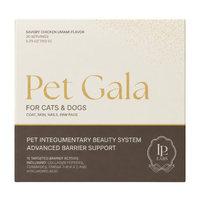
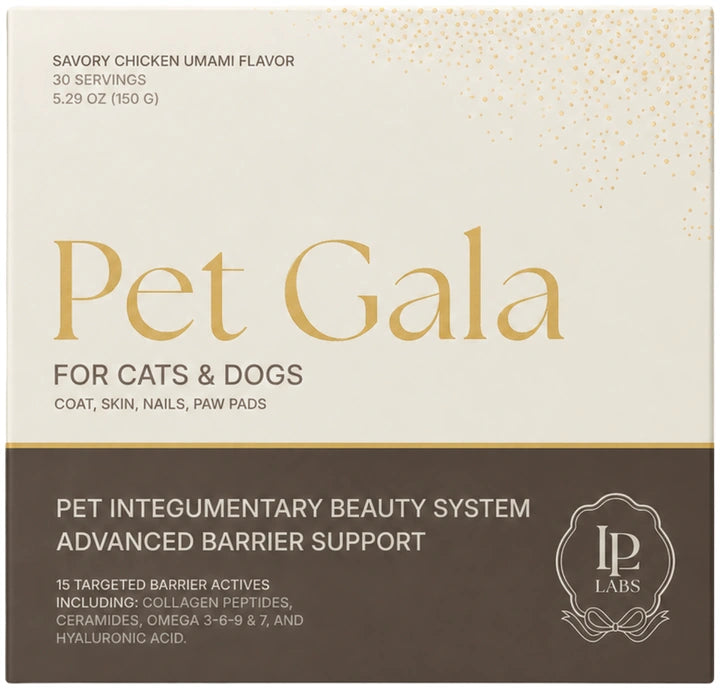
That's where Pet Gala from La Petite Labs fits the nail goal directly: a food-mixed sachet with biotin at 50 mcg, zinc at 1.5 mg, and silica at 10 mg for keratin, plus marine collagen peptides at 500 mg for structure. Every active is disclosed in milligrams, so you can see exactly what your cat is getting. Because claws are a small surface that reflects the whole outer layer, supporting the system tends to show up at the nail tip too.
“Healthy claws are a small detail that makes a cat look unmistakably well-kept.”
When You’ll Notice Change: Timelines and the Role of Comfort
Timeline matters for expectations. Nails grow gradually, so you’re usually watching for a “new growth line” that looks smoother and stronger than the older portion. Many owners notice early changes in coat feel first, then nail improvements as new nail material replaces the old. If nothing changes after consistent use, that’s useful information: it may mean the issue is mechanical (overgrowth, low scratching) rather than nutritional.
If your cat is less active due to discomfort, supporting mobility can help restore normal scratching and grooming. Nutraceuticals have been explored for reducing osteoarthritis-associated signs in cats, with generally favorable safety profiles but variable effectiveness (Vandeweerd JM, 2012). Better movement can translate into better-looking claws because the cat uses them normally again.
Scratching, Trimming, and Home Setup That Make Supplements Work Better
Scratching is nail care. It sheds old layers, keeps length in check, and gives cats a satisfying daily ritual. If your cat avoids scratching posts, consider the surface (sisal vs cardboard), placement (near sleeping areas), and stability. A supplement can support the material the nail is made from, but it can’t replace the natural maintenance that scratching provides.
For the best products for healthier cat nails, pair supplementation with a small “environment upgrade”: multiple scratch options, regular trimming, and paw checks. The combination tends to produce the most noticeable, reassuring results—nails that look clean, feel firm, and don’t catch on fabric.
Making Supplements Easy: Formats, Acceptance, and Consistency
Administration is where good intentions fail. Cats are selective, and a supplement only works if it’s actually taken. Choose a format that matches your cat’s personality: a powder mixed into wet food, a chew they accept, or a liquid your cat tolerates. Introduce it slowly and keep everything else stable for a week so you can judge tolerance.
If you’re aiming for best supplements for healthy cat claws, consistency beats intensity. A smaller daily amount your cat happily accepts is more valuable than a “perfect” product that becomes a struggle. The visible payoff should feel like a calm routine, not a negotiation.
Cats Who Need Extra Caution Before Starting Any Supplement
Some cats need extra caution: kittens, pregnant or nursing cats, and cats with kidney disease, liver disease, or a history of pancreatitis should only use supplements with veterinary approval. If your cat is on medication, ask about timing and potential interactions. This is especially important with multi-ingredient formulas, where the “blend” can be harder to evaluate than a single nutrient.
If you’re searching for the best cat nail supplements for stronger healthier claws because nails look suddenly abnormal, treat that as a signal to rule out pain, infection, or grooming limitations first. Supplements can support appearance, but they should never delay care when a paw looks inflamed or your cat is limping.
Safety, Tolerance, and When to Pause and Call Your Veterinarian
Cats can be sensitive to new supplements, and “natural” doesn’t automatically mean gentle. Watch for soft stool, reduced appetite, or new itchiness after introducing any product. If your cat has a chronic condition or takes prescription medications, your veterinarian should be the decision-maker on compatibility and timing. Nutraceutical safety in cats is generally favorable, but individual responses vary, and product quality matters (Vandeweerd JM, 2012).
Also keep perspective: a supplement should enhance visible condition, not replace basic care. If nails are cracking due to overgrown length or poor traction, you’ll see the biggest improvement when trimming, scratching options, and nutrition align. The best products for healthier cat nails are the ones your cat tolerates daily and that fit into a calm routine.
“The best results come from a blend: nutrition, scratching, and calm grooming—working together.”
DVM Voice: Clinical Vignette of When Skin Changes Point Deeper Than the Surface
Case provided by Sarah Calvin, DVM
Maverick, a 4-year-old Siamese cat, was brought in for hair loss across his lower abdomen and red, flaky skin lesions that had progressed over the previous month. His owners were unsure whether he was itchy or overgrooming.
Examination showed broken hairs, abdominal alopecia, and lesions consistent with bacterial skin infection. Further testing ruled out fleas, FeLV/FIV, and common fungal causes. Because his grooming pattern suggested deeper discomfort, his veterinarian continued the workup.
Radiographs and urinalysis revealed bladder stones, crystalluria, and blood in the urine. Maverick’s overgrooming was linked to urinary pain — a case where skin changes were secondary to an internal problem.
His care required a staged plan: stabilizing the skin infection, surgically removing the bladder stones, managing pain, transitioning to a therapeutic diet, and supporting skin-barrier recovery with appropriate nutrition and fish oil.
Hair regrowth began by 8 weeks. By 6 months, his coat had fully recovered, with no recurrence after the urinary issue was resolved.
Clinical takeaway: Maverick’s case shows why feline coat loss and overgrooming deserve careful veterinary investigation. Skin and coat health can reflect pain, stress, nutrition, infection, barrier weakness, or internal disease — not just surface-level grooming behavior.
Single-case vignette. Not generalizable. Veterinary diagnosis and oversight are essential for overgrooming, hair loss, skin lesions, urinary signs, pain, or suspected infection.
Senior Cats: When Mobility and Grooming Shape Nail Appearance
If your cat is older, nail changes can arrive alongside stiffness: less scratching, less stretching, and less self-grooming. That’s why some owners notice nails looking rougher at the same time their cat seems less eager to climb or jump. Nutraceuticals and therapeutic diets have been studied most often in the context of joint comfort, and improved mobility can indirectly support claw condition by restoring normal scratching and grooming behaviors (Barbeau-Grégoire M, 2022).
For senior cats, choose a supplement approach that supports the whole “outer look”: coat, skin comfort, and the confidence to move. That’s often more satisfying than a narrow “nail-only” product, because the visible results tend to show up together—cleaner coat, steadier gait, and nails that don’t feel as fragile during trims.
Avoiding Human Products and Choosing Cleaner, Tested Ingredients
Some ingredients are popular in human beauty supplements, but cats are not small people. Avoid giving human nail gummies or multivitamins unless your veterinarian specifically approves them; sweeteners, flavorings, and dosing assumptions can be inappropriate. Ingredient sourcing also matters: certain toxic elements can be present in pet food ingredients, which is one reason reputable manufacturers test inputs and control contaminants (RVA, 2021).
If you’re comparing top cat nail supplements for stronger claws, look beyond the front label. Prefer brands that share quality controls, have clear feeding directions, and don’t rely on dramatic promises. The goal is a steady, visible upgrade in nail feel and appearance—not a “quick fix” that risks upsetting digestion.
A Note on Cat’s Claw Herb and Realistic Beauty Expectations
A note on “cat’s claw”: Uncaria tomentosa is an herb sometimes discussed for general wellness. Research describes anti-inflammatory and immunomodulatory properties, but effects vary by extract and context (Arado GM, 2024). That doesn’t make it a direct “nail strength” ingredient, and it shouldn’t be treated as a shortcut to perfect claws.
For owners focused on best cat claw supplements for health, the more reliable path is still a balanced, cat-appropriate formula that supports skin and coat condition—the visible foundation that nails grow from. If an herbal ingredient is included, it should be part of a thoughtful blend, not the entire story.
Claw Hygiene, Infection Red Flags, and Why Supplements Aren’t Treatment
Claw hygiene is an underrated part of “supplement results.” Cats can pick up microbes under the nail sheath, and some fungi can form biofilms on claws, which may contribute to claw health issues in certain situations (Brilhante, 2021). Supplements are not a substitute for veterinary care if you see redness, swelling, odor, discharge, or limping.
For everyday care, keep nails trimmed, provide clean scratching surfaces, and check paws during calm moments. When those basics are in place, effective supplements for stronger cat nails can be judged more fairly—by whether nails look smoother, chip less, and feel sturdier between trims.
How to Measure Progress with Photos, Trims, and Behavior Notes
A practical way to evaluate progress is to track visible signals. Take a quick photo of a front paw every two weeks in the same lighting. Note whether the nail edge looks layered, whether the surface appears chalky, and whether trimming produces clean clips or splintering. These small observations are more useful than vague impressions, especially when you’re comparing best supplements for healthy cat claws.
Also track behavior: scratching frequency, willingness to use posts, and any signs of discomfort. If mobility is limiting normal scratching, addressing joint comfort can indirectly improve nail appearance by restoring natural wear and grooming patterns (Cunningham R, 2022).
Quality Signals That Separate Premium Supplements from Random Picks
Quality is the hidden difference between “a supplement” and a supplement you can trust. Look for clear labeling, consistent batch practices, and conservative claims. WSAVA-style nutrition guidance emphasizes choosing products from manufacturers with strong quality control and transparent formulation practices (RVA, 2021). That matters for nail-focused products because you’re using them repeatedly, and small inconsistencies can show up as digestive upset or no visible change.
If you’re deciding between best products for healthier cat nails, prioritize reliability over novelty. A well-made, palatable formula that your cat accepts daily is more likely to deliver the steady, polished look you’re after.
Diet Sets the Baseline, Supplements Refine the Visible Finish
Diet sets the baseline. Cats need complete-and-balanced nutrition to grow normal keratin structures, including claws; the NRC outlines essential nutrient needs that commercial diets are designed to meet (Summers S, 2022). Still, “meets requirements” isn’t the same as “looks its best.” Owners often choose supplements because they want a more noticeable finish: smoother nails, a glossier coat, and skin that looks calm and comfortable.
That’s the commercial truth a careful reader deserves: a good supplement isn’t a replacement for food; it’s a daily care layer that supports visible condition across skin, coat, and nails—especially when stress, seasonal shedding, or aging makes the outer look feel less polished.
Putting It Together: a Calm Routine for Stronger, Healthier Claws
When you’re choosing natural supplements for healthy cat claws, aim for a calm, consistent plan: a reputable product, a simple routine, and a realistic timeline. Expect incremental improvements you can see—less splitting, cleaner trims, and a sturdier feel—rather than dramatic overnight change. If anything looks painful or infected, pause supplements and call your veterinarian, because nails can hide problems that need hands-on care.
The best cat supplements for strong claws fit into daily life: easy to give, easy to tolerate, and aligned with grooming and scratching habits. That’s what turns “supplement shopping” into a steady, reassuring care ritual.
“A supplement should enhance visible condition, not distract from a paw that needs care.”
Educational content only. This material is not a substitute for veterinary advice. Always consult your veterinarian about your cat’s specific needs. These statements have not been evaluated by the Food and Drug Administration. Products mentioned are not intended to diagnose, treat, cure, or prevent any disease.
Glossary
- Keratin: A tough structural protein that forms claws, hair, and the outer skin layer.
- Nail Sheath: The layered outer covering of the claw that naturally sheds with scratching.
- Brittle Nails: Claws that chip, crack, or splinter easily during trims or play.
- Peeling/Layering: Visible separation of claw layers, often seen as flaky edges.
- Integumentary System: The combined system of skin, coat, and nails that reflects visible condition.
- Palatability: How willingly a cat eats a supplement; critical for consistent daily use.
- Quality Control: Manufacturing practices that reduce contamination risk and improve batch consistency.
- Visible Signals: Owner-noticed outcomes like smoother nail edges, fewer snags, and cleaner trims.
- Scratching Substrate: The material a cat scratches (sisal, cardboard, carpet) that affects nail shedding.
Related Reading
Common Feline Integumentary Issues
• Cat Dandruff
• Why Is My Cat Shedding So Much
• Cat Hair Loss
Comfort & Recovery
• Skin & Coat Supplements for Cats
• Cat Nail Supplement
• Best Supplements for Cat Shedding
Ingredient-Level Articles
• Biotin for Cats
• Silica for Cats
• Hyaluronic Acid for Cats
• Ceramides for Cats
References
Arado GM. Anti-inflammatory and/or immunomodulatory activities of Uncaria tomentosa (cat's claw) extracts: A systematic review and meta-analysis of in vivo studies. PubMed. 2024. Anti-inflammatory and/or immunomodulatory activities of Uncaria tomentosa (cat's claw) extracts: A systematic review and meta-analysis of in vivo studies.
De Paula LC. Uncaria tomentosa (cat's claw) improves quality of life in patients with advanced solid tumors. PubMed. 2015. Uncaria tomentosa (cat's claw) improves quality of life in patients with advanced solid tumors.
Vandeweerd JM. Systematic review of efficacy of nutraceuticals to alleviate clinical signs of osteoarthritis. PubMed. 2012. Systematic review of efficacy of nutraceuticals to alleviate clinical signs of osteoarthritis.
Barbeau-Grégoire M. A 2022 Systematic Review and Meta-Analysis of Enriched Therapeutic Diets and Nutraceuticals in Canine and Feline Osteoarthritis. PubMed. 2022. A 2022 Systematic Review and Meta-Analysis of Enriched Therapeutic Diets and Nutraceuticals in Canine and Feline Osteoarthritis.
Cunningham R. Evaluation of a nutritional supplement for the alleviation of pain associated with feline degenerative joint disease: a prospective, randomized, stratified, double-blind, placebo-controlled clinical trial. PubMed. 2022. Evaluation of a nutritional supplement for the alleviation of pain associated with feline degenerative joint disease: a prospective, randomized, stratified, double-blind, placebo-controlled clinical trial.
Snow AD. In vitro comparison of major memory-support dietary supplements for their effectiveness in reduction/inhibition of beta-amyloid protein fibrils and tau protein tangles: key primary targets for memory loss. PubMed. 2021. In vitro comparison of major memory-support dietary supplements for their effectiveness in reduction/inhibition of beta-amyloid protein fibrils and tau protein tangles: key primary targets for memory loss.
Baker-Nigh. Neuronal amyloid-β accumulation within cholinergic basal forebrain in ageing and Alzheimer's disease. Nature. 2015. https://www.nature.com/articles/s41598-019-38645-0
Brilhante. Biofilm formation on cat claws by Sporothrix species: An ex vivo model. 2021. Biofilm formation on cat claws by Sporothrix species: An ex vivo model
Fusaroli. The Reporting of a Disproportionality Analysis for Drug Safety Signal Detection Using Individual Case Safety Reports in PharmacoVigilance (READUS-PV): Development and Statement. 2024. https://www.frontiersin.org/journals/pharmacology/articles/10.3389/fphar.2025.1584840/full
Bilgiç B. The Values of Potentially Toxic Elements (PTEs) in Prescription and Non-prescription Dry Cat and Dog Diets in Turkey. PubMed. 2025. The Values of Potentially Toxic Elements (PTEs) in Prescription and Non-prescription Dry Cat and Dog Diets in Turkey.
RVA. Toxic element levels in ingredients and commercial pet foods. PubMed Central. 2021. Toxic element levels in ingredients and commercial pet foods.
Summers S. Evaluation of iron, copper and zinc concentrations in commercial foods formulated for healthy cats. PubMed Central. 2022. Evaluation of iron, copper and zinc concentrations in commercial foods formulated for healthy cats.
RVA. Vitamin-mineral supplements do not guarantee the minimum recommendations and may imply risks of mercury poisoning in dogs and cats. PubMed Central. 2021. Vitamin-mineral supplements do not guarantee the minimum recommendations and may imply risks of mercury poisoning in dogs and cats.
FAQ
What are cat nail supplements meant to improve visibly?
Most cat nail supplements are meant to support the look and feel of the claw as it grows: smoother layers, fewer splits, and cleaner trims. Because claws are part of the skin-and-coat “outer layer,” many formulas target overall presentation rather than nails alone.
If you’re comparing the best supplements for healthy cat claws, prioritize products your cat will take daily and that fit your grooming routine. Prioritize products your cat will take daily and that fit your grooming routine.
Why do healthy claws matter for everyday comfort?
Strong, smooth claws help cats scratch comfortably, maintain normal nail shedding, and avoid painful snags. For owners, healthier nails make trims calmer and reduce accidental scratches from sharp, peeling edges.
If nails look brittle or layered, it’s worth supporting the whole outer layer—skin, coat, and claws—so the improvement shows where you can see it. Supporting the whole outer layer—skin, coat, and claws—is where you see the most improvement.
How do cat nail supplements support stronger claws without overpromising?
Supplements can support the materials claws are made from by complementing a complete diet and supporting skin-and-coat condition. The realistic goal is improved appearance over time: cleaner edges, less chipping, and a sturdier feel during trims—not instant transformation.
Because cats’ nutrient needs are specific, stick with cat-formulated products and avoid human “nail” supplements unless your veterinarian approves(Summers S, 2022). Because cats' nutrient needs are specific, stick with cat-formulated products and avoid human 'nail' supplements unless your vet approves.
Are the best cat nail supplements for stronger healthier claws safe?
Many cat supplements are well-tolerated, but safety depends on the formula, your cat’s health status, and product quality. Watch for digestive upset, appetite changes, or itchiness after starting anything new, and pause if you see a clear negative change.
Nutraceutical safety profiles in cats are generally favorable, yet individual responses can differ, so vet guidance is smart for cats with chronic disease or medications.
When should I avoid cat nail supplements or ask my vet?
Ask your veterinarian before supplementing if your cat is pregnant or nursing, very young, has kidney or liver disease, has pancreatitis history, or takes prescription medications. Also seek care first for limping, bleeding, swelling, discharge, or a suddenly painful paw.
Those signs can indicate problems supplements can’t address, including infections that may involve claw surfaces(Brilhante, 2021). Those signs can indicate problems supplements cannot address, including infections that may affect claw surfaces.
Do supplements help with cat scratching behavior and nail maintenance?
Supplements don’t replace scratching, but they can support the condition of the claw and skin so scratching feels comfortable and nails shed normally. If a cat scratches less due to stiffness, addressing comfort and mobility may indirectly improve nail maintenance by restoring normal routines.
Therapeutic diets and nutraceuticals have been discussed in relation to feline joint health, which can influence everyday behaviors like scratching(Barbeau-Grégoire M, 2022). For visible, whole-coat-and-claw support, choose a formula covering more than nails alone.
When should cat nail changes prompt an urgent vet visit?
Seek veterinary care promptly for limping, bleeding, swelling around the nail, foul odor, discharge, or a sudden refusal to bear weight. Also act quickly if multiple nails change at once or if your cat seems painful when you touch the paw.
Claws can harbor organisms and develop issues that require direct treatment, not supplementation(Brilhante, 2021). After your veterinarian rules out urgent causes, you can support visible condition with daily nutrition.
How can I track whether a cat nail supplement is working?
Use visible checkpoints: fewer snags on fabric, cleaner clips during trims, and less peeling at the nail edge. Taking a simple paw photo every couple of weeks in the same lighting can make subtle improvements easier to see.
Also track behavior: scratching frequency and comfort using posts. If your cat is stiff, improving comfort can support normal scratching habits, which helps nail maintenance(Barbeau-Grégoire M, 2022). Also track scratching frequency and comfort using posts; improving comfort can support normal scratching habits.
Discover LPL-01: How This Fits Into a Complete Feline Integumentary Support System
Skin, coat, and nails in cats are not surface traits. They reflect deeper biological systems—barrier integrity, hydration dynamics, lipid balance, and structural protein turnover—working in coordination.
When these systems drift, the signs are subtle but telling: reduced coat softness, increased shedding, dryness, brittle claws, changes in grooming behavior.
This article explores one piece of that system. If you want to understand how true coat quality and skin resilience are built in cats—and what actually drives visible improvement—you need to zoom out.
Start with the underlying science:
- Feline Skin & Coat Framework →
A structured view of how skin, coat, and claw health are maintained across collagen synthesis, lipid nourishment, and barrier function. - Barrier Protection Coverage Modeling →
A systems-level map of which integumentary pathways are most vulnerable—and how layered nutritional inputs can support them. - 2026 Market Research: Best Cat Skin & Coat Supplements →
A feline-focused review of skin and coat formulas shaped by grooming behavior, barrier resilience, coat softness, ingredient quality, and daily usability. - LPL-01 Standard →
The formulation system that translates these models into real-world supplementation—covering multiple pathways in a coordinated way.
Keep exploring
What would you like to understand next?
Search practical guides about skin, coat, barrier health, ingredients, and daily care for cats.
Essential Summary
Why are the best cat nail supplements for stronger, healthier claws important?
Stronger-looking claws usually come from a blend of nutrition, scratching habits, and calm grooming routines. The most satisfying supplements support the whole outer layer—skin, coat, and nails—so improvements show up as cleaner trims, fewer snags, and a more polished feel. Choose reputable formulas, introduce slowly, and involve your veterinarian if anything looks painful or infected.
Pet Gala is designed for visible, everyday care—supporting skin, coat, and nails together so claw strength looks and feels more polished during trims and play. It fits naturally into a daily routine, helping owners focus on the signals they can see: smoother edges, better coat feel, and an overall well-kept finish.
Pet Gala™ Feline Skin & Coat System
From $56/box
The scratching is completely gone, his coat looks healthy and shiny!
— Lena
He was struggling with itching, now he's glowing.
— Grace
Considering the best cat nail supplements for stronger, healthier claws?
If you're looking for the best cat nail supplements for stronger, healthier claws
If you’re choosing the best cat nail supplements for stronger healthier claws, look for a formula that treats nails as part of the whole outer layer—skin, coat, and claws—so results show up in everyday moments: cleaner trims, fewer snags, and a smoother feel when you check paws. Prioritize products your cat will take consistently, with clear directions and reputable quality practices. Pair supplementation with scratch-friendly surfaces and regular trimming for the most noticeable finish. For owners who want a comprehensive, routine-ready option that supports visible condition beyond single-ingredient chasing, Pet Gala fits naturally into daily care.
Learn about how our DVMs think about the feline barrier
Dr. Sarah Calvin DVM
Pet Gala™ Feline Skin & Coat System
From $56/box
Explore the visible signs of whole-body wellness
Related Reading
Claws don’t get the spotlight the way coats do—until something looks off. A nail that peels into layers, splinters during a trim, or catches on a throw blanket can make a cat seem less comfortable and less “put together,” even when everything else looks fine.

