Bone Broth Powder for Cats

From dried stock to an addition your cat will eat

By La Petite Labs Editorial 15 min read

Woman nuzzling an orange cat beside a fluffy gray-and-white cat, a Pet Gala box and a food bowl
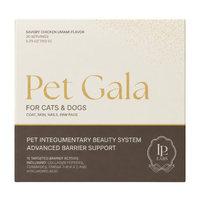
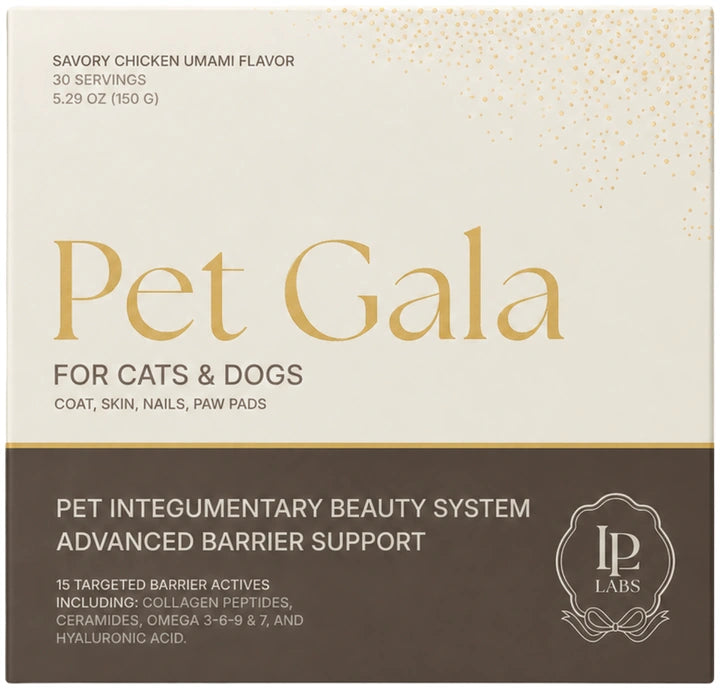
Pet Gala™ Daily skin & coat system · adult & senior cats Starting at $56/month 

Bone broth powder is dehydrated stock, prepared using its product’s directions. 14 Its appeal may be the smell, warmth or texture it brings to a meal. 5 The main food still needs to provide complete nutrition for your cat’s life stage. 7

A plain broth for a few extra sips is a different purchase from a combined skin-and-coat supplement. Compare what you want to put in the bowl: a prepared liquid, a change in food texture, or a measured nutritional addition. Pet Gala includes bone broth within that broader skin-and-coat purpose. 20 22

Follow the powder’s mixing directions to prepare a batch, then its separate serving instructions for the portion. 14 Check both when comparing scoops, cups or prices.

From simmered stock to a dry powder

Cooking bones, skin and cartilage breaks down their connective tissue and releases gelatin into the liquid. When cooled, a gelatin-rich liquid can set. 1 Drying removes water, leaving powder. 14 Our beef gelatin guide explains the gelling and texture differences.

Bone meal is a different ingredient: dried, ground bone material. Feed definitions distinguish cooked and steamed bone meal, and steamed bone meal has calcium and phosphorus guarantees. 2 Do not substitute broth powder for a specified bone-mineral ingredient in a feeding plan. 2

Woman smiling with a tabby cat on her shoulder while holding a Pet Gala box

What your cat makes from broth protein

Digestive enzymes cut dietary proteins into shorter peptides and amino acids. Breakdown begins in the stomach and continues with pancreatic and intestinal enzymes. Small peptides and amino acids then cross the intestinal lining through transport proteins. 15

The absorbed material helps your cat make and renew its own proteins. 16 In the skin, the deeper layer—the dermis—produces collagen for structural support. In the outer layer, the epidermis, new cells form near the base and replace those shed from the surface. 17 The collagen guide for cats explores that structural role and the different preparations.

Woman kissing a fluffy gray cat while holding an orange tabby and a Pet Gala box

Broths differ in what they contain

A laboratory comparison measured amino acids in prepared broths and collagen products. Concentrations varied substantially among broth preparations, particularly recipes that were not standardized. A broth declaration therefore does not establish an equivalent amount of collagen. 3

Minerals also depend on preparation. In separate experiments, longer cooking and greater acidity increased calcium and magnesium extraction. The bones used also affected the results. Those tests did not measure sodium or phosphorus, so they cannot supply the missing figures for a particular cat product. 4

Woman petting a silver tabby on a kitchen counter beside an open Pet Gala box

The water your cat eats counts too

In a crossover study, six healthy adult cats ate the same complete dry food with different amounts of water added. Only the highest-moisture version significantly increased total daily water intake. As moisture in the food rose, the cats drank less from their separate water bowls. 6

The experiment used water in complete food, not broth or treatment for kidney disease. 6 For a broth mixture, notice how much your cat consumes. 6

Woman holding a fluffy white cat and a Pet Gala box

Make the texture work for your cat

Cats respond to a food’s smell, texture and temperature, as well as their previous experience. Thick, sticky wet food and a thinner mixture can be different eating experiences. 5 In one study summarized in a palatability review, older cats preferred warmed wet food to food at room temperature; refrigerated food was least preferred. 5

Try a small prepared portion before changing the whole meal. A cat that dislikes a soupy texture may accept its familiar food without the extra liquid. Keep the rest of the usual meal available so that testing a topper does not make every mouthful unfamiliar.

Older cats in one study preferred warmed wet food to food at room temperature; refrigerated food was least preferred.

Mix a batch, then measure the portion

Nature’s Logic’s dehydrated chicken broth provides a concrete example. Its cat-and-dog directions call for two tablespoons of powder stirred into an eight-ounce cup of warm water. That prepares a batch; the maker gives separate serving guidance. 14

It declares 24 calories per tablespoon of powder, so those two tablespoons contribute 48 calories to the batch. Adding water spreads the same calories through more liquid. 14 Use your own product’s directions. This example is neither a universal broth ratio nor a way to prepare Pet Gala.

Two long-haired cats looking toward a Pet Gala box held above a food bowl

Keep daily extras within the feeding plan

The nutritional-adequacy statement identifies a complete food for its intended life stage. A treat or supplement has a different feeding purpose, even when it contains protein. 8

WSAVA recommends that treats make up less than 10% of a cat’s daily calories. That allowance is shared by the extras—including supplements and foods used with medicine—not a separate allowance for each one. Ask the manufacturer for calories if the label omits them. 9 It is a calorie limit, not an instruction to replace one tenth of the bowl with broth.

Hand gently petting an orange-and-white cat beside a Pet Gala box and a food bowl

Check the whole recipe in human stock

Onion, garlic, chives and leeks can damage cats’ red blood cells. Cooking, drying or powdering them does not remove the hazard; “unsalted” does not tell you whether they are present. 10

Check stock cubes, seasoning mixes and the recipe used for leftover meat or bones. Straining out visible onion is not an established way to make the liquid safe. If your cat may have consumed an allium-containing broth, seek prompt veterinary advice rather than waiting for signs, which can be delayed. 10

Man sitting with two long-haired cats on a sofa beside a Pet Gala box and a food bowl

Kidney diets need the actual nutrient amounts

A renal diet deliberately modifies several nutrients, including phosphorus, sodium and protein, while maintaining nutrition and hydration. A broth’s name or “no added salt” claim does not establish whether its composition fits that plan. 11

Bring the label and proposed portion to the treating team; ask the maker for sodium, phosphorus and calorie amounts if needed. Food acceptance matters too, and a gradual change of renal-food texture or format may help maintain eating. Some cats also need prescribed fluid therapy, which a topper cannot replace. 11

Notice the food left underneath

A cat may lick the liquid and leave the food. That does not mean it has consumed a complete meal. 8 Check what is eaten across the day. If eating has declined, contact your veterinarian promptly instead of repeatedly trying more tempting liquids; appetite loss has many possible causes. 12

The veterinary account below follows a different outward change: Maverick’s abdominal hair loss and excessive grooming. Sarah Calvin’s workup found urinary pain behind those skin signs. His case shows why the cause of a change deserves attention alongside day-to-day feeding care.

Licking broth off a meal is not the same as eating the complete food underneath.

Close-up of long white cat fur beside a veterinary vignette about visible skin and coat changes

DVM Voice: Clinical Vignette of When Skin Changes Point Deeper Than the Surface

Case provided by Sarah Calvin, DVM

Maverick, a 4-year-old Siamese cat, was brought in for hair loss across his lower abdomen and red, flaky skin lesions that had progressed over the previous month. His owners were unsure whether he was itchy or overgrooming.

Examination showed broken hairs, abdominal alopecia, and lesions consistent with bacterial skin infection. Further testing ruled out fleas, FeLV/FIV, and common fungal causes. Because his grooming pattern suggested deeper discomfort, his veterinarian continued the workup.

Radiographs and urinalysis revealed bladder stones, crystalluria, and blood in the urine. Maverick’s overgrooming was linked to urinary pain — a case where skin changes were secondary to an internal problem.

His care required a staged plan: stabilizing the skin infection, surgically removing the bladder stones, managing pain, transitioning to a therapeutic diet, and supporting skin-barrier recovery with appropriate nutrition and fish oil.

Hair regrowth began by 8 weeks. By 6 months, his coat had fully recovered, with no recurrence after the urinary issue was resolved.

Clinical takeaway: Maverick’s case shows why feline coat loss and overgrooming deserve careful veterinary investigation. Skin and coat health can reflect pain, stress, nutrition, infection, barrier weakness, or internal disease — not just surface-level grooming behavior.

Single-case vignette. Not generalizable. Veterinary diagnosis and oversight are essential for overgrooming, hair loss, skin lesions, urinary signs, pain, or suspected infection.

Explore Pet Gala Research →
Long-haired tabby being combed beside a Pet Gala box and a food bowl

What to expect from a broth addition

You can see whether your cat accepts the prepared meal. 5 If it consumes added liquid, that water contributes to intake; digested protein also supplies material the body can use. 6 16

These contributions do not predict when fur will become softer, joints more comfortable or digestive symptoms resolve. 15 17 Persistent symptoms need an assessment of their own, rather than a longer trial of the same topper.

Orange-and-white cat eating from a bowl beside a Pet Gala box

Why broth is part of Pet Gala

Pet Gala pairs bone broth with marine collagen peptides, hydrolyzed whey protein and beef gelatin. 20 Through the digestion route described above, protein ingredients contribute material for the cat’s own proteins. 16 That matters to living skin, which continually renews its outer cells and maintains collagen beneath the surface. 17

The surface has another job: limiting water loss. Ceramides are lipids in the outermost skin layer’s barrier, distinct from the structural collagen deeper down. 19 Pet Gala includes ceramides alongside its protein ingredients and omegas. 20 It brings these material and barrier roles into one daily skin-and-coat addition. 16 19 22

The broth research did not test a coat response to the finished formula. 3 The whey guide for cats explains that companion protein and its different preparations.

Brown-and-white tabby licking its nose beside a Pet Gala box and a food bowl

What the 100 mg declaration means

One standard 2.5 g Pet Gala sachet contains 100 mg of declared bone broth. 20 That is one ingredient within the powder, not 100 mg of measured collagen or a ready-to-drink broth serving. 3

The ingredient guide does not specify a more precise broth preparation or animal source. 21 For the amount of the whole formula to give, use the product’s serving directions below.

Plain broth or a skin-and-coat formula?

If you want a liquid to offer or a different meal texture, compare broths with usable cat preparation and serving instructions. If your goal is daily skin-and-coat nutrition, Pet Gala puts a combined formula into a measured food addition. 22 Its full ingredient guide shows the declarations to compare with the food and supplements you already use. 21

Life stage and food reactions change the choice

Kittens and pregnant or nursing cats need food appropriate to their life stage. 7 Pet Gala’s everyday audience is adults and seniors; its directions reserve use in younger, pregnant or nursing pets for veterinary guidance. 20

Food restrictions apply to the whole addition. Pet Gala names marine collagen, hydrolyzed whey, beef gelatin and chicken ingredients. 20 Supplements can introduce proteins that interfere with an elimination diet. Food reactions in cats may include itching, vomiting or diarrhea; a symptom after a change deserves attention, but timing alone does not prove a broth allergy. 18

Long-haired tabby beside a Pet Gala box held by a person wearing blue scrubs and a stethoscope

Dry powder and prepared broth need different storage

Keep dry pet food products cool and dry, retain the original packaging and lot details, and clean and dry storage containers between refills. Wash food bowls and measuring utensils after use. 13

Once mixed, follow the broth maker’s refrigerator instructions. Nature’s Logic, for example, says to refrigerate leftovers and use them within a few days. 14 That is not a shelf life for every powder. FDA advises promptly refrigerating or discarding unused canned or pouched food, with the refrigerator at 40°F or below. 13 Warm a portion for serving rather than keeping the batch warm. If you want to freeze portions, check the maker’s instructions; there is no single verified freezer duration for every broth.

Couple cuddling a silver tabby cat

Mix the Pet Gala serving into familiar food

Pet Gala directions specify half a sachet for pets under 7 lb, one at 7–30 lb and two over 30 lb. Mix the daily portion into usual food, serve immediately and repeat daily. 20 See the current directions. 20

In a multi-cat home, offer that portion where you can see which cat eats it. If the addition is refused, offer the familiar food without it.

Compare the portions you will actually use

For a plain broth, compare cost per directed portion, how much preparation it needs and how much of each batch you are likely to use. A large tub is poor value if your cat rejects the texture or much of the prepared liquid is discarded. Try a small suitable portion before committing to a larger pack.

For adult and senior skin-and-coat care, Pet Gala offers its combination as a savory powder mixed into the usual food. 22 Choose the directed serving and mix it into a meal your cat enjoys, making daily skin-and-coat nutrition part of the feeding routine.

Broth protein is broken into smaller components during digestion; your cat uses absorbed material to make its own proteins.

Educational content only. This material is not a substitute for veterinary advice. Always consult your veterinarian about your cat’s specific needs. These statements have not been evaluated by the Food and Drug Administration. Products mentioned are not intended to diagnose, treat, cure, or prevent any disease.

Glossary

Broth powder: Dehydrated broth with product-specific preparation instructions.

Gelatin: Collagen-derived protein produced when connective tissue is cooked.

Amino acids: Components supplied by dietary protein for the body’s own molecules.

Complete food: Supplies the required nutrition for its stated life stage when fed as directed.

Ceramides: Lipids in the outer skin barrier that limits water loss.

Related Reading

References

Numbered references identify the sources used for specific claims. Read the study design, species and evidence boundaries alongside each finding.

  1. Harvard T.H. Chan School of Public Health, The Nutrition Source. Collagen. Harvard T.H. Chan School of Public HealthStudy design/context: Nutrition referenceSpecies/context: Food chemistryEvidence boundary: Collagen, gelatin and hydrolyzed preparations.↩
  2. Association of American Feed Control Officials. Official Names and Definitions of Feed Ingredients. Association of American Feed Control Officials · 2024Study design/context: Feed ingredient definitionsSpecies/context: Animal feedsEvidence boundary: Ground bone meal identity.↩ 1 · ↩ 2
  3. Rebekah D Alcock and colleagues. Bone Broth Unlikely to Provide Reliable Concentrations of Collagen Precursors Compared With Supplemental Sources of Collagen Used in Collagen Research. International Journal of Sport Nutrition and Exercise Metabolism · 2018· DOI 10.1123/ijsnem.2018-0139Study design/context: Laboratory food analysisSpecies/context: Broth samplesEvidence boundary: Amino-acid composition varied across preparations.↩ 1 · ↩ 2 · ↩ 3
  4. Der-jen Hsu and colleagues. Essential and toxic metals in animal bone broths. Food & Nutrition Research · 2017· DOI 10.1080/16546628.2017.1347478Study design/context: Laboratory food analysisSpecies/context: Animal brothsEvidence boundary: Mineral extraction varied with preparation; sodium and phosphorus were not measured.↩
  5. Pavinee E Watson and colleagues. Drivers of Palatability for Cats and Dogs—What It Means for Pet Food Development. Animals · 2023· DOI 10.3390/ani13071134Study design/context: Palatability reviewSpecies/context: Cats, dogsEvidence boundary: Texture, temperature and individual food preferences.↩ 1 · ↩ 2 · ↩ 3 · ↩ 4
  6. Catherine M. F. Buckley and colleagues. Effect of dietary water intake on urinary output, specific gravity and relative supersaturation for calcium oxalate and struvite in the cat. British Journal of Nutrition · 2011· DOI 10.1017/S0007114511001875Study design/context: Crossover feeding studySpecies/context: Six healthy adult catsEvidence boundary: Water added to complete food; not a broth intervention.↩ 1 · ↩ 2 · ↩ 3 · ↩ 4
  7. Cornell Feline Health Center. Feeding Your Cat. Cornell UniversityStudy design/context: Feline feeding guidanceSpecies/context: CatsEvidence boundary: Complete nutrition, life stages and food acceptance.↩ 1 · ↩ 2
  8. Association of American Feed Control Officials. Selecting the Right Pet Food. Association of American Feed Control OfficialsStudy design/context: Food-label guidanceSpecies/context: Dogs, catsEvidence boundary: Complete-food and supplemental feeding purposes.↩ 1 · ↩ 2
  9. WSAVA Global Nutrition Committee. Feeding treats to your cat. World Small Animal Veterinary AssociationStudy design/context: Veterinary nutrition guidanceSpecies/context: CatsEvidence boundary: Treat calories and preservation of the main diet.↩
  10. Cristine Hayes. Garlic and Onion (Allium spp) Toxicosis in Animals. Merck Veterinary ManualStudy design/context: Veterinary toxicology guidanceSpecies/context: Cats and other animalsEvidence boundary: Raw, cooked and powdered allium exposures.↩ 1 · ↩ 2
  11. Cornell Feline Health Center. Chronic Kidney Disease. Cornell UniversityStudy design/context: Clinical nutrition guidanceSpecies/context: CatsEvidence boundary: Kidney diets, food acceptance and hydration.↩ 1 · ↩ 2
  12. Cornell Feline Health Center. Anorexia. Cornell UniversityStudy design/context: Clinical guidanceSpecies/context: CatsEvidence boundary: Appetite loss and prompt assessment.↩
  13. US Food and Drug Administration. Proper Storage of Pet Food & Treats. US Food and Drug AdministrationStudy design/context: Food-handling guidanceSpecies/context: Pet foodsEvidence boundary: Dry storage, refrigeration and clean utensils.↩ 1 · ↩ 2
  14. Nature’s Logic. Dehydrated Chicken Bone Broth. Nature’s LogicStudy design/context: Manufacturer directionsSpecies/context: Dogs, catsEvidence boundary: This product’s preparation, calories and storage.↩ 1 · ↩ 2 · ↩ 3 · ↩ 4 · ↩ 5 · ↩ 6
  15. Allison Collier. Malabsorption Syndromes in Small Animals. Merck Veterinary ManualStudy design/context: Veterinary physiology referenceSpecies/context: Dogs, catsEvidence boundary: Normal protein digestion and intestinal uptake.↩ 1 · ↩ 2
  16. Sherry Lynn Sanderson. Nutritional Requirements of Small Animals. Merck Veterinary ManualStudy design/context: Veterinary nutrition referenceSpecies/context: Dogs, catsEvidence boundary: Amino-acid supply and tissue renewal.↩ 1 · ↩ 2 · ↩ 3 · ↩ 4
  17. Karen A. Moriello. Structure of the Skin in Cats. Merck Veterinary ManualStudy design/context: Veterinary anatomy referenceSpecies/context: CatsEvidence boundary: Skin renewal, dermal collagen and barrier function.↩ 1 · ↩ 2 · ↩ 3
  18. Cherie M. Pucheu-Haston. Cutaneous Food Allergy in Animals. Merck Veterinary ManualStudy design/context: Veterinary food-reaction guidanceSpecies/context: Cats, dogsEvidence boundary: Protein exposures, clinical signs and elimination diets.↩
  19. Yukiko Mizutani and colleagues. Ceramide biosynthesis in keratinocyte and its role in skin function. Biochimie · 2009· DOI 10.1016/j.biochi.2009.04.001Study design/context: Mechanistic reviewSpecies/context: Mammalian skinEvidence boundary: Ceramides and the normal permeability barrier.↩ 1 · ↩ 2
  20. La Petite Labs. Pet Gala™ Barrier System. La Petite LabsStudy design/context: Manufacturer declarationsSpecies/context: Dogs, catsEvidence boundary: Ingredient amounts and whole-formula portions.↩ 1 · ↩ 2 · ↩ 3 · ↩ 4 · ↩ 5 · ↩ 6 · ↩ 7 · ↩ 8
  21. La Petite Labs. Pet Gala Ingredients: Skin, Coat, and Beauty Actives. La Petite LabsStudy design/context: Manufacturer ingredient guideSpecies/context: Dogs, catsEvidence boundary: Declared bone broth amount and preparation information.↩ 1 · ↩ 2
  22. La Petite Labs. What Is Pet Gala? Skin & Coat Support for Pets. La Petite LabsStudy design/context: Manufacturer product guideSpecies/context: Adult and senior dogs and catsEvidence boundary: Skin-and-coat purpose and meal format.↩ 1 · ↩ 2 · ↩ 3 · ↩ 4

FAQ

What is bone broth powder for cats?

It is dehydrated broth prepared according to the maker’s directions. Cooking connective tissue can produce gelatin, but dried broth is different from ground-bone meal and is not a substitute for a specified calcium/phosphorus ingredient.

Can bone broth powder help my cat get more water?

Yes, if your cat consumes the prepared liquid. Cats may drink less from a separate bowl when food supplies more water; consider both sources of intake.

Can kittens or nursing cats have bone broth powder?

Their main food must meet growth or nursing needs; broth cannot provide that complete nutrition. Discuss the actual product with your veterinarian. Pet Gala is directed to adults and seniors; younger, pregnant or nursing pets need veterinary direction.

Can I use a bone broth powder labeled for dogs?

Check whether the maker includes cats and gives applicable preparation and serving directions. Do not assume a dog’s serving applies. Check the full recipe: cooked or powdered onion and garlic remain unsafe for cats.

How soon would I notice a difference?

You can observe whether the prepared food is accepted at the meal. That does not predict a timetable for softer fur, joint comfort or improved digestion. If eating has declined, contact your veterinarian promptly instead of waiting for a topper to work.

Can broth replace a complete cat meal?

No. A broth topper does not have the same feeding purpose as complete food. Treats and supplements should not replace meals. Check whether the food itself is eaten, rather than counting liquid licked from the surface as a finished meal.

Does bone broth improve a cat’s skin or coat?

It can contribute protein material: digestion releases smaller components that the cat can absorb and use to make its own proteins. Skin makes structural collagen and continually renews its surface. That explains a nutritional role, without establishing that a particular broth serving improves the coat.

Is bone broth powder worth the cost?

Compare the cost of the directed portion, preparation, storage and how much your cat will actually consume. A convenient powder is useful only if it fits the job you want: a prepared liquid or texture change, versus a combined skin-and-coat addition. A larger pack or higher price does not establish a better result.

Orange tabby cat stretching on a green rug in the feline integumentary-system framework section

Discover LPL-01: How This Fits Into a Complete Feline Integumentary Support System

Skin, coat, and nails in cats are not surface traits. They reflect deeper biological systems—barrier integrity, hydration dynamics, lipid balance, and structural protein turnover—working in coordination.

When these systems drift, the signs are subtle but telling: reduced coat softness, increased shedding, dryness, brittle claws, changes in grooming behavior.

This article explores one piece of that system. If you want to understand how true coat quality and skin resilience are built in cats—and what actually drives visible improvement—you need to zoom out.

Start with the underlying science:

Keep exploring

What would you like to understand next?

Search practical guides about skin, coat, barrier health, ingredients, and daily care for cats.