
5 Coat Warning Signs of Illness in Dogs & Cats
Read full insightMiliary Dermatitis in Cats: Why the Crusty Scabs
Find the trigger behind the scabs and stop the itch-scratch cycle.
By La Petite Labs Editorial 15 min read

Feline miliary dermatitis usually means one thing: your cat's skin is reacting to something — not that your cat "has a scab disease." Those tiny crusty bumps are the skin's alarm pattern, and the question that matters is what set it off: fleas, allergy, mites, infection, or a contact irritant. Find and control the trigger, and the bumps stop forming.
Most owners first notice it while petting along the back or scratching the neck — the coat looks normal, but the fingers feel grit-like scabs, and the cat may be licking, chewing, or restless at night. This page treats it like detective work: start with the most common causes, follow a stepwise diagnosis, and use the home observations that actually change a vet's decision.
Because miliary dermatitis can have more than one trigger at once, the plan usually has layers — parasite control, infection checks, then allergy pathways such as flea allergy, food allergy, or environmental allergy. The goal is fewer relapses by treating the cause, not just the crust.
- Feline miliary dermatitis is a reaction pattern of tiny crusts — the key is finding the trigger behind it.
- The bumps often feel like sand or millet along the back, neck, or tail base, even when the coat looks normal.
- Fleas are the top cause; a cat can react to a few bites with no visible fleas at all.
- Other common drivers include environmental allergy, food allergy, and contact irritation from household residues.
- Diagnosis is stepwise: rule out parasites and infection first, then narrow the allergy category.
- Treatment works in layers — remove the trigger, calm the itch safely for cats, and support skin recovery.
A Reaction Pattern, Not a Single Skin Disease
Feline Miliary Dermatitis is not one single disease; it is a recognizable “reaction pattern” where many tiny crusts form around hair follicles after the skin becomes inflamed. The bumps can feel like sand or millet under the fingers, even when the coat looks normal from a distance. This pattern often shows up when itch and inflammation are happening faster than the skin’s renewal rate, so the surface dries, cracks, and forms little scabs. Thinking of it as a pattern matters, because the real job is finding the trigger that set the skin off.
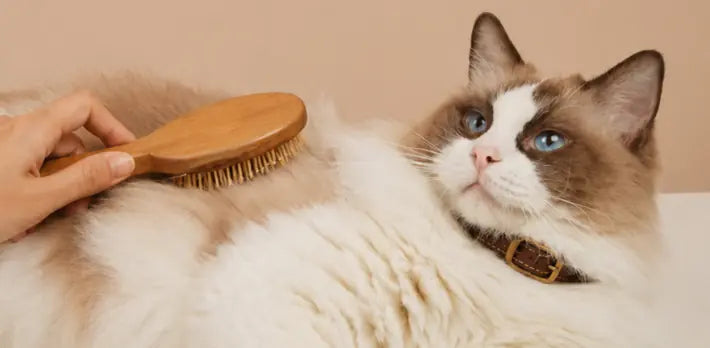
At home, “cat scabby bumps skin” usually means the back, neck, or rump feels rough when petting against the grain. Some cats act only mildly itchy, while others overgroom and leave broken hairs or thin patches. The crusts may be easiest to feel after a few days without bathing or brushing. A simple routine is to check the same three zones daily—neck, spine, and tail base—so changes are noticed early.
Why Tiny Scabs Form Around Hair Follicles
In miliary dermatitis, the crusts are the footprints of itch, not the whole story. Cats can itch hard with little visible redness, and their grooming hides the problem by stripping loose scale while leaving the scabs behind. The immune system can react to parasites, food proteins, airborne allergens, or irritants, and the skin answers the same way each time — inflammation around the follicles, then crusting — which is exactly why the causes are a list of possibilities rather than a single diagnosis.
That shared endpoint is why two cats with completely different triggers can feel identical under your hand. So the useful home data is not "is there a crust" but "what surrounds it": where the bumps cluster, whether the cat overgrooms or barbers the belly, and whether flares track with fleas, food, or a new product. Checking the same three zones daily — neck, spine, and tail base — catches changes early and gives the veterinarian a pattern to work from instead of a snapshot.

Fleas: the Most Common Hidden Trigger
The most common, most missed trigger behind Feline Miliary Dermatitis is flea allergy dermatitis in cats. A cat does not need a visible flea infestation to react; a few bites can be enough to set off days of itch and crusting. Flea saliva is the problem, and the immune response can be outsized compared with the number of fleas present. In controlled studies including cats, effective flea control reduced clinical signs of flea allergy dermatitis, supporting why flea prevention is often the first diagnostic step (Dickin, 2003).
Owners often search for “miliary dermatitis cats” after finding scabs near the tail base and assuming dry skin. A practical check is to part the hair over the rump and look for flea dirt (black specks that smear reddish-brown on a damp tissue). Also inspect bedding and favorite window perches where flea dirt can collect. Even indoor-only cats can be exposed through visitors, shared hallways, or a dog in the home. Consistent flea prevention for every pet is part of the investigation.

Allergy Pathways That Can Look Identical
Allergies beyond fleas can drive the same crusty pattern. Feline atopic dermatitis (environmental allergy) is a clinical diagnosis built from history, exam findings, and ruling out look-alikes; it can show up as itch, overgrooming, and sometimes miliary crusting (Ravens, 2014). Food allergy in cats can also present with itch and scabs, and it does not always come with vomiting or diarrhea. Because the skin has limited ways to “complain,” different allergic pathways can look similar on the surface.
At home, patterns help: seasonal flare-ups suggest environmental allergy, while year-round itch that started after a diet change can raise suspicion for food allergy in cats. Watch for ear scratching, chin rubbing, or licking the belly until the hair looks clipped. If the cat also has lip sores or raised plaques, the eosinophilic granuloma complex in cats may be part of the picture and should be mentioned to the veterinarian. Keeping a simple calendar of flare days can make the history clearer.

Contact Irritants and Household Residues
Not every case is allergy. Contact irritation and household exposures can create small scabs when the skin barrier is disrupted and the cat grooms the area repeatedly. Cats are especially vulnerable to residues because they groom so thoroughly, and substances on human skin or fabrics can transfer to them (Asad, 2020). Even when the trigger is “external,” the result can still be the same miliary crusting pattern. The detective work includes asking what changed in the home, not only what changed in the cat.
Common household clues include a new laundry detergent, carpet powder, essential oil diffuser, or a family member starting a medicated cream. Also consider new collars, grooming wipes, or a different litter that creates more dust. If crusts appear mostly on the chin, neck, or belly where contact happens, that location is meaningful. A helpful routine is to pause new scented products for two weeks while documenting whether the “cat scabby bumps skin” feel less intense.
“The scabs are the clue; the trigger is the diagnosis.”
When Infection Joins the Picture
Secondary infection can ride on top of miliary dermatitis and make the itch much louder. When inflamed skin gets scratched, bacteria or yeast overgrow, adding odor, greasiness, or tenderness — it does not mean the cat is "dirty," it means the barrier is uneven and the surface environment has shifted. Treating the infection brings quick comfort, but it leaves the primary trigger unsolved, so the crusts return if the underlying cause is missed.
At home, infection clues are specific: a sour smell, a sticky coat, or scabs that look moist rather than dry, and a cat that flinches when touched over the bumps — soreness rather than simple itch. Watch for more hiding, resistance to petting, or a cat guarding its back. If there is pus, open sores, or the cat seems unwell, it is no longer a "wait and see" problem; those signs tell the veterinarian that skin cytology is the next step.

A Realistic Timeline That Shows How Clues Add Up
CASE VIGNETTE: A 6-year-old indoor cat develops rough, peppery scabs along the spine two weeks after a new roommate moves in. The cat seems only mildly itchy, but hair thins near the tail base and the cat starts licking the belly at night. The first exam finds no live fleas, yet a flea-control trial and a review of household products reveal both a missed flea exposure and a new scented laundry additive. This is typical of miliary dermatitis cats: small surface clues pointing to a bigger trigger story.
At home, this kind of timeline is gold. Write down the “two weeks before” changes: visitors with pets, travel, new furniture, new foods or treats, and any topical products used on people. Note where the cat sleeps and whether bedding was washed with a different detergent. Also document whether other pets are itchy, even if they have no scabs. A clear timeline helps the veterinarian choose the most efficient next step rather than guessing.

The Stepwise Diagnosis Workflow Vets Use
The diagnosis workflow for Feline Miliary Dermatitis usually starts with the highest-yield, lowest-risk steps: rule out fleas and mites, then look for infection, then consider allergy categories. Skin scrapings, flea combing, and sometimes tape impressions or cytology help separate parasites from infection. If those are negative or treated and the bumps return, the conversation shifts to flea allergy dermatitis in cats, food allergy in cats, and environmental allergy patterns. Because feline atopic dermatitis is often a clinical diagnosis, the process can feel like elimination rather than a single definitive test (Ravens, 2014).
OWNER CHECKLIST: (1) Map the bump zones: tail base, neck, belly, or generalized. (2) Use a flea comb over white paper and check for flea dirt. (3) Photograph the worst area in the same lighting every 3–4 days. (4) List all flea preventives used in the last 3 months, including missed doses. (5) Note any new foods, treats, supplements, or scented household products. Bringing this checklist shortens the path to the real trigger.

Misconceptions That Delay the Real Fix
A common misconception is that Feline Miliary Dermatitis means “dry skin” that needs oils or frequent bathing. In reality, the crusts are usually the end result of inflammation and itch, and adding random topical products can worsen irritation or create new exposures. Another misunderstanding is that if no fleas are seen, fleas cannot be involved; flea allergy can flare with minimal evidence on the coat. Correcting these misconceptions changes the plan from surface fixes to trigger hunting.
WHAT NOT TO DO: (1) Do not apply human steroid, antibiotic, or antifungal creams to scabs; cats lick residues and can be harmed (Asad, 2020). (2) Do not start essential oils or “natural” sprays on bedding—many are irritating and hard to dose safely. (3) Do not switch diets repeatedly week to week; it muddies food-trial results. (4) Do not pick scabs off; it delays healing and can invite infection. These missteps are common when owners see “cat scabby bumps skin” and want fast relief.
How to Prepare for a High-value Vet Visit
VET VISIT PREP: The most helpful appointment is the one that arrives with organized clues. Bring the exact product names and dates for flea prevention, any recent boarding or visitors with pets, and photos showing the crusts at their worst. Ask: “Which parasites are most likely in this region, and what tests rule them out?” “Do you see signs of infection that need cytology?” “If fleas are suspected, what is the household plan for all pets?” These questions keep the visit focused on the trigger rather than only the scabs.
Also ask what findings would point toward eosinophilic granuloma complex in cats versus a pure miliary pattern, since treatment paths can diverge. If overgrooming is prominent, mention whether hair is broken (barbering) or truly falling out, because the cat overgrooming differential includes pain, stress, and itch. Share whether the cat’s appetite, thirst, or energy changed, since systemic illness can alter skin healing. A prepared handoff helps the veterinarian choose a gentler, more balanced plan sooner.
“A few flea bites can create days of crusts.”

DVM Voice: Clinical Vignette of When Skin Changes Point Deeper Than the Surface
Case provided by Sarah Calvin, DVM
Maverick, a 4-year-old Siamese cat, was brought in for hair loss across his lower abdomen and red, flaky skin lesions that had progressed over the previous month. His owners were unsure whether he was itchy or overgrooming.
Examination showed broken hairs, abdominal alopecia, and lesions consistent with bacterial skin infection. Further testing ruled out fleas, FeLV/FIV, and common fungal causes. Because his grooming pattern suggested deeper discomfort, his veterinarian continued the workup.
Radiographs and urinalysis revealed bladder stones, crystalluria, and blood in the urine. Maverick’s overgrooming was linked to urinary pain — a case where skin changes were secondary to an internal problem.
His care required a staged plan: stabilizing the skin infection, surgically removing the bladder stones, managing pain, transitioning to a therapeutic diet, and supporting skin-barrier recovery with appropriate nutrition and fish oil.
Hair regrowth began by 8 weeks. By 6 months, his coat had fully recovered, with no recurrence after the urinary issue was resolved.
Clinical takeaway: Maverick’s case shows why feline coat loss and overgrooming deserve careful veterinary investigation. Skin and coat health can reflect pain, stress, nutrition, infection, barrier weakness, or internal disease — not just surface-level grooming behavior.
Single-case vignette. Not generalizable. Veterinary diagnosis and oversight are essential for overgrooming, hair loss, skin lesions, urinary signs, pain, or suspected infection.

Treatment Layers: Trigger Control, Itch Relief, Skin Recovery
Treatment categories for Feline Miliary Dermatitis are best understood as layers: remove the trigger, calm the itch, and repair the skin surface while it recovers — a rebuilding stage where some owners also read about marine collagen for coat quality in cats as a vet-guided complement. Trigger control might be flea prevention, a strict diet trial for suspected food allergy in cats, or reducing contact exposures. Symptom control can include anti-itch medications chosen for cats, and sometimes antibiotics or antifungals if infection is present. In some cats with allergic itch, long-term oclacitinib use has been reported in a small retrospective series, with monitoring for adverse events (Urkiola, 2025).
At home, the goal is comfort without adding new irritants. Keep nails trimmed to reduce skin trauma, and use a soft cone or recovery collar if licking is relentless. Vacuuming and washing bedding can reduce flea eggs and environmental debris when fleas are part of the story. If a diet trial is prescribed, treat it like a test: no flavored medications, no table scraps, and no “just one treat.” Owners often notice the crusts feel flatter before the cat stops grooming, so patience matters.

Medication Safety: Why Cats Need Cat-specific Plans
Medication safety deserves extra attention in cats because their drug-handling capacity differs from other species. Cats have limited glucuronidation for some compounds, which can prolong exposure and raise the risk of side effects if medications are chosen or dosed incorrectly (Court, 2013). That is one reason veterinarians are cautious with certain human products and why “leftover” prescriptions are a bad idea. When itch control is needed, the safest choice is the one tailored to the cat’s age, weight, and health history.
Owners can support safety by reporting every product the cat might ingest through grooming: topical flea products, wipes, shampoos, and even creams used on people in the home. Watch for outcome cues after any new medication—sleepiness, vomiting, appetite change, or behavior shifts—and report them promptly. If multiple medications are started at once, ask the veterinarian how to separate variables if side effects occur. A careful approach keeps the plan gentler and less uneven over time.

Longer-term Control Options for Allergic Cats
For some allergic cats, longer-term immune-modulating medications may be discussed when trigger control and basic itch relief are not enough. Ciclosporin is one option used in feline allergic dermatitis, and adverse events have been reported in a larger group of cats receiving it, reinforcing the need for veterinary selection and monitoring (Heinrich, 2011). These medications are not “quick fixes”; they are part of a plan that still depends on identifying the most likely trigger. The best outcomes come when medication is paired with a clear diagnostic direction.
At home, monitoring is not about perfection; it is about noticing patterns early. If the cat has recurring crusts, ask the veterinarian what the next decision point is: another parasite check, a stricter flea plan, or a formal elimination diet. Keep a folder with prescription labels and start/stop dates so the story stays accurate across visits. If the cat lives with other pets, document whether they are on the same flea schedule. Consistency is often what turns “miliary dermatitis cats” from recurring to manageable.
Tracking Outcome Cues so the Plan Can Evolve
A “What to track” rubric makes Feline Miliary Dermatitis less mysterious because it turns day-to-day changes into usable data. Skin problems can look random when remembered from memory, but they often follow a pattern tied to flea season, household changes, or diet slip-ups. Tracking also helps separate itch from crusting; a cat may feel less itchy before the scabs fully shed. This kind of documentation supports smarter adjustments rather than repeated resets.
WHAT TO TRACK (what to document for the vet): (1) Daily itch score 0–10 and whether sleep is interrupted. (2) Number of new scab clusters felt on neck/spine/tail base. (3) Grooming focus zones (belly, legs, tail base) and any hair breakage. (4) Flea prevention dates for every pet in the home. (5) Diet “exceptions,” including flavored chewables. (6) Photos weekly from the same angle. These markers make follow-ups faster and more accurate.
Relapse Prevention: Keeping the Trigger from Returning
Prevention is really relapse prevention: keeping the most likely trigger from re-igniting the reaction pattern. For many cats, that means year-round flea control, because even a brief lapse can restart the itch-crust cycle. In studies including cats with flea allergy dermatitis, selamectin controlled flea infestation and clinical signs, supporting why consistent flea prevention is a cornerstone when fleas are suspected (Dickin, 2003). Prevention also includes keeping the skin surface calm by minimizing unnecessary topical exposures, and some owners round out that calm-skin routine by reading about antioxidant support for reactive skin in cats with their veterinarian's input.
At home, prevention looks like routines: set calendar reminders for flea products, wash bedding regularly during warm months, and vacuum along baseboards where flea life stages accumulate. If environmental allergy is suspected, ask the veterinarian which seasons are highest risk and what early signs should trigger a check-in. For cats with food allergy in cats on the short list, keep a “safe treat” plan so visitors do not accidentally derail a diet trial. Small routines create more overhead against flare-ups.

Nutrition Support Without Over-supplementing
Nutrition can support a normal skin barrier, but it cannot substitute for finding the trigger in miliary dermatitis — and over-supplementing creates new problems. Excess vitamin A, for instance, can cause toxicity in cats and accumulates with chronic overuse, which is why any "skin and coat" product should be discussed with your veterinarian, especially if your cat already eats a complete diet (Shastak, 2024). The safest nutrition plan is targeted and measured, not a "just in case" stack.
Miliary dermatitis is a reaction pattern, not a single disease, so the fix starts with your vet finding the trigger. Once that's underway, supporting the skin barrier with omega fatty acids for skin and coat health in cats can be a reasonable complementary step for reactive feline skin.
Timing matters most here: during an active elimination-diet trial, add nothing — no oils, broths, toppers, or flavored supplements — because even small additions can invalidate the test. Once the trigger is identified and your veterinarian signs off, a steady barrier-support routine like Pet Gala (a food-mixed formula built around barrier lipids and structural proteins) can support normal skin and coat condition between flares. Used that way — consistent, vet-cleared, and never as a flare rescue — it complements the medical plan instead of competing with it.

Related Skin Patterns Worth Mentioning
Some cats with miliary dermatitis cats also show signs that overlap with other skin patterns, and recognizing those overlaps can speed the right referral or test. Eosinophilic granuloma complex in cats can appear alongside miliary crusts, and cat overgrooming differential questions matter when hair loss is the main complaint. The key is not to chase every possibility at once, but to let the exam findings guide which branch to follow. A focused plan prevents the workup from becoming scattered.
At home, note whether lesions are raised plaques, linear bumps, or ulcers on the lip—those are not typical “just scabs” and should be flagged. Also document whether the cat is chewing the paws, which can suggest allergy patterns rather than flea-only issues. If stress seems to worsen grooming, mention household changes, but avoid assuming it is “just anxiety” until itch is ruled out. Clear descriptions help the veterinarian decide whether dermatology referral or allergy testing is appropriate.
Putting It Together into a Clear Next Step
The take-home message is that Feline Miliary Dermatitis is a skin alarm, not a final label. The fastest relief usually comes from addressing the most common triggers first—especially fleas—while the veterinarian checks for parasites and infection and then considers allergy pathways. When the plan is working, the skin’s surface becomes less uneven, grooming settles, and new crusts stop forming before old scabs fully disappear. That sequence is normal and helps set expectations.
If the cat seems painful, develops open sores, stops eating, or the itch is intense enough to disrupt sleep, veterinary care should be prompt. For milder cases, a structured two-to-four week plan with consistent flea control, careful documentation, and avoidance of new topical exposures often clarifies the direction. Owners who treat the situation like detective work—rather than a single product problem—tend to reach answers sooner. The goal is comfort now and fewer relapses later.
“Tracking patterns turns guesswork into a plan.”
Educational content only. This material is not a substitute for veterinary advice. Always consult your veterinarian about your dog’s specific needs. These statements have not been evaluated by the Food and Drug Administration. Products mentioned are not intended to diagnose, treat, cure, or prevent any disease.
Glossary
- Miliary dermatitis - A reaction pattern of many tiny crusts felt under a cat’s coat.
- Crust (scab) - Dried surface material made of skin cells, serum, and debris after inflammation.
- Flea allergy dermatitis - An allergic reaction to flea saliva that can cause intense itch with few visible fleas.
- Flea dirt - Flea feces that looks like black pepper and smears reddish-brown when wet.
- Skin cytology - A microscope check of skin debris to look for bacteria or yeast overgrowth.
- Elimination diet trial - A strict, time-limited feeding plan used to test for food allergy in cats.
- Feline atopic dermatitis - An allergy pattern linked to environmental triggers, diagnosed by history and ruling out other causes.
- Eosinophilic granuloma complex - A group of allergic/inflammatory lesion patterns in cats that can overlap with itch and scabs.
- Overgrooming - Excess licking or chewing of fur that can be driven by itch, pain, or stress.
Related Reading
Common Feline Integumentary Issues
• Cat Dandruff
• Why Is My Cat Shedding So Much
• Cat Hair Loss
Comfort & Recovery
• Skin & Coat Supplements for Cats
• Cat Nail Supplement
• Best Supplements for Cat Shedding
Ingredient-Level Articles
• Biotin for Cats
• Silica for Cats
• Hyaluronic Acid for Cats
• Ceramides for Cats
References
Ravens. Feline atopic dermatitis: a retrospective study of 45 cases (2001-2012). PubMed. 2014. https://pubmed.ncbi.nlm.nih.gov/24597491/
Dickin. Efficacy of selamectin in the treatment and control of clinical signs of flea allergy dermatitis in dogs and cats experimentally infested with fleas. PubMed. 2003. https://pubmed.ncbi.nlm.nih.gov/12959381/
Urkiola. Long-term oclacitinib administration for the control of feline allergic pruritus: A retrospective study of 14 client-owned cats. PubMed Central. 2025. https://pmc.ncbi.nlm.nih.gov/articles/PMC12330796/
Court. Feline drug metabolism and disposition: pharmacokinetic evidence for species differences and molecular mechanisms. PubMed Central. 2013. https://pmc.ncbi.nlm.nih.gov/articles/PMC3811070/
Asad. Effect of topical dermatologic medications in humans on household pets. PubMed Central. 2020. https://pmc.ncbi.nlm.nih.gov/articles/PMC6988634/
Shastak. Pet Wellness and Vitamin A: A Narrative Overview. PubMed Central. 2024. https://pmc.ncbi.nlm.nih.gov/articles/PMC11010875/
Heinrich. Adverse events in 50 cats with allergic dermatitis receiving ciclosporin. PubMed. 2011. https://pubmed.ncbi.nlm.nih.gov/21545660/
FAQ
What is Feline Miliary Dermatitis in plain language?
Feline Miliary Dermatitis means a cat’s skin is forming many tiny scabs, often felt as gritty bumps under the coat. It is a reaction pattern, not a single disease, and it usually reflects itch and inflammation happening around hair follicles.
The practical takeaway is that the scabs are a clue. The real goal is to identify what set the skin off—commonly fleas, allergies, or contact irritation—so the problem does not keep cycling back.
Why do the bumps feel worse than they look?
The crusts in miliary dermatitis cats are small but numerous, so hands detect them before eyes do. Each bump is a tiny area where the surface has dried and crusted after inflammation, often centered on a hair follicle.
Cats also groom in a way that hides redness and loose scale. A coat can look tidy while the skin underneath is still irritated, which is why feeling along the spine and tail base can reveal the problem early.
Can fleas cause scabs even if none are seen?
Yes. Flea allergy dermatitis in cats can flare from a small number of bites, and cats often remove fleas while grooming. That can leave little visible evidence even when fleas are the trigger.
Because flea control reduced clinical signs in studies that included cats, veterinarians often start with consistent flea prevention as both treatment and a diagnostic step(Dickin, 2003). A flea comb and a damp tissue test for flea dirt can add useful clues at home.
Are food allergies a common cause of cat scabby bumps skin?
Food allergy in cats can present as itch, overgrooming, ear irritation, and sometimes the crusty bump pattern owners describe as cat scabby bumps skin. Digestive signs may be absent, so the skin can be the main complaint.
A true diet trial needs consistency for weeks and cannot be interpreted if treats, flavored medications, or toppers are added. If food is on the short list, the veterinarian can recommend the most reliable way to run that “test.”
Is Feline Miliary Dermatitis the same as dry skin?
No. While the surface can look flaky, Feline Miliary Dermatitis is usually driven by inflammation and itch, not a simple lack of moisture. The crusts are often the aftermath of scratching or grooming over irritated follicles.
Treating it like “just dryness” can delay the real answer. Random oils, frequent bathing, or scented products may add irritation or confuse the timeline, making it harder to identify the true trigger.
What body areas are most typical for miliary dermatitis cats?
Many cats develop crusts along the back, especially near the tail base, and sometimes on the neck. Those zones are common “flea zones,” but they are not exclusive to fleas.
More generalized bumps, belly licking, or paw chewing can lean the discussion toward broader allergy patterns. Location is not a diagnosis by itself, but it helps the veterinarian choose the most efficient first steps.
How do vets diagnose the cause behind the scabs?
Diagnosis usually follows a stepwise workflow: check for fleas and mites, look for bacterial or yeast overgrowth, then consider allergy categories such as flea allergy, food allergy, or environmental allergy. This is because many different triggers can create the same crusty pattern.
Feline atopic dermatitis is often a clinical diagnosis made from history and ruling out look-alikes, rather than a single definitive test(Ravens, 2014). Photos, timelines, and product lists from home can make the workup faster and more targeted.
What tests might be done at the first visit?
Common first-visit checks include flea combing, skin scrapings for mites, and sometimes tape impressions or skin cytology to look for bacteria or yeast. These tests help separate parasites and infection from allergy-driven inflammation.
The veterinarian may also examine ears, mouth, and paws for patterns that link to eosinophilic granuloma complex in cats or broader allergy signs. The goal is to choose the next step that changes the plan, not to test everything at once.
When is this an emergency rather than a routine visit?
Seek urgent care if the cat is not eating, seems lethargic, has rapidly spreading sores, facial swelling, or signs of significant pain. Also treat it as urgent if there is pus, a strong odor, or the cat is scratching until bleeding.
For milder crusting without systemic illness, a prompt but routine appointment is still appropriate. Early care can prevent secondary infection and can shorten the time it takes to identify the trigger behind the reaction pattern.
What home care is safe while waiting for the vet?
Focus on preventing self-trauma: trim nails, consider a recovery collar if licking is relentless, and keep bedding clean. Avoid applying human creams or essential oils, since cats can ingest residues while grooming.
If fleas are possible, ensure every pet in the home is on veterinarian-recommended flea prevention. Document where the bumps are worst and take clear photos; those details often matter as much as what the skin looks like on appointment day.
Should scabs be picked off or scrubbed away?
No. Picking scabs can reopen the surface, increase soreness, and invite infection. The crusts are part of the skin’s protective response while it tries to recover from inflammation.
If bathing is recommended by a veterinarian, it is usually with a cat-safe product and a clear purpose (for example, addressing infection or removing allergens). Unplanned scrubbing at home often makes the skin more irritated and harder to interpret.
Can human topical medications harm cats with skin scabs?
Yes. Cats groom intensely, so creams and ointments applied to their skin—or residues transferred from human skin—can be licked and swallowed. Household exposure to human topical dermatologic medications is a recognized risk pathway for pets(Asad, 2020).
This matters with Feline Miliary Dermatitis because owners may reach for “something soothing” without realizing the ingestion risk. Any topical plan should be veterinarian-directed and explicitly labeled as cat-safe.
What medications are commonly used for allergic itch in cats?
Veterinarians may use anti-itch medications, parasite control, and treatments for secondary infection depending on findings. For some allergic cats, oclacitinib has been used long-term in a small retrospective study with monitoring for adverse events(Urkiola, 2025).
Medication choice depends on the cat’s overall health, the suspected trigger, and how severe the itch is. Owners should avoid borrowing medications from other pets, since cats handle drugs differently and safety margins can be narrower.
Why are cats more sensitive to some medications than dogs?
Cats have species-specific differences in drug metabolism, including limited glucuronidation for some compounds, which can prolong drug exposure(Court, 2013). That can increase the chance of side effects if a medication is not chosen specifically for cats.
This is especially relevant when skin is itchy and owners are tempted to try human products. The safest approach is to use only veterinarian-prescribed medications and to report all supplements and topicals the cat might ingest through grooming.
How long does it take for scabby bumps to clear?
Timeline depends on the trigger and whether infection is present. Often, itch settles first, then new scabs stop forming, and finally older crusts shed as the skin surface renews. That sequence can take days to weeks.
If crusts keep appearing despite consistent flea control and a clear plan, it usually means the trigger has not been fully addressed or a second factor is involved. Tracking itch scores, photos, and product dates helps the veterinarian adjust the plan efficiently.
Can stress alone cause miliary dermatitis cats?
Stress can contribute to overgrooming, but stress alone is not a reliable explanation for the crusty bump reaction pattern. Itch from fleas, mites, allergy, or infection should be ruled out first, because those causes are common and treatable.
If medical triggers are addressed and grooming remains intense, the cat overgrooming differential may include environmental stressors. The most useful approach is to document when grooming happens and which body zones are targeted, then share that pattern with the veterinarian.
Do certain breeds get Feline Miliary Dermatitis more often?
Any breed can develop Feline Miliary Dermatitis because it reflects a skin response to common triggers like fleas, mites, allergies, or irritants. Breed can influence coat density and grooming habits, which may change how easy it is to notice scabs.
Rather than focusing on breed, it is more helpful to focus on pattern: where the bumps are, whether itch disrupts sleep, and whether flare-ups are seasonal. Those details guide the workup more than breed labels.
Is Feline Miliary Dermatitis contagious to other cats?
The reaction pattern itself is not contagious, but some triggers can spread. Fleas and certain mites can move between pets, and shared environments can keep re-exposing everyone in the home.
That is why veterinarians often recommend treating all pets for fleas when fleas are suspected, even if only one cat has scabs. If a contagious parasite is found, the veterinarian will outline a household plan to prevent ping-pong reinfection.
Can supplements help with Feline Miliary Dermatitis?
Some nutrition strategies can support normal skin barrier function, but supplements do not replace diagnosing the trigger behind Feline Miliary Dermatitis. Over-supplementing can be risky, especially with fat-soluble vitamins like vitamin A that can accumulate over time(Shastak, 2024).
If a veterinarian recommends barrier-support nutrition, keep the plan simple and track changes in itch and new scab formation. Avoid stacking multiple products at once, because it becomes difficult to tell what is helping versus adding irritation or calories.
Where does Pet Gala™ fit into a skin plan?
In a veterinarian-guided plan, barrier-support nutrition can be one supportive layer while the primary trigger is being identified and controlled. That can be especially relevant when the skin surface is dry and easily irritated during recovery. It is not a treatment for fleas, mites, or allergy triggers.
What should be documented for the vet between visits?
Document outcome cues that change decisions: itch severity (0–10), sleep disruption, where new scabs appear, and whether grooming is focused on the belly, legs, or tail base. Add clear photos weekly in the same lighting.
Also record flea prevention dates for every pet, plus any diet “exceptions” such as treats or flavored medications. This kind of tracking turns a vague update into a usable pattern and helps the veterinarian decide whether to pivot toward food allergy, environmental allergy, or another branch.
What is a practical decision framework for next steps?
A practical framework is: (1) assume fleas are possible until proven otherwise and commit to consistent prevention for all pets, (2) rule out mites and infection with veterinary testing, then (3) choose one allergy pathway to test at a time, usually a strict diet trial or an environmental allergy plan.
If the plan is not working, the next step is not “more products,” but a clearer question: are new scabs still forming, or are old ones just lingering? That distinction often determines whether the trigger is still active.

Discover LPL-01: How This Fits Into a Complete Feline Integumentary Support System
Skin, coat, and nails in cats are not surface traits. They reflect deeper biological systems—barrier integrity, hydration dynamics, lipid balance, and structural protein turnover—working in coordination.
When these systems drift, the signs are subtle but telling: reduced coat softness, increased shedding, dryness, brittle claws, changes in grooming behavior.
This article explores one piece of that system. If you want to understand how true coat quality and skin resilience are built in cats—and what actually drives visible improvement—you need to zoom out.
Start with the underlying science:
- Feline Skin & Coat Framework →
A structured view of how skin, coat, and claw health are maintained across collagen synthesis, lipid nourishment, and barrier function. - Barrier Protection Coverage Modeling →
A systems-level map of which integumentary pathways are most vulnerable—and how layered nutritional inputs can support them. - 2026 Market Research: Best Cat Skin & Coat Supplements →
A feline-focused review of skin and coat formulas shaped by grooming behavior, barrier resilience, coat softness, ingredient quality, and daily usability. - LPL-01 Standard →
The formulation system that translates these models into real-world supplementation—covering multiple pathways in a coordinated way.
Essential Summary
Why Is Feline Miliary Dermatitis Important?
Feline Miliary Dermatitis describes a crusty-bump reaction pattern, not a single diagnosis. The most helpful next step is identifying the trigger—often fleas, allergies, or contact irritation—so treatment targets the cause, not just the scabs.
Pet Gala is designed to support normal skin barrier nutrition as part of a veterinarian-guided plan.

Barrier System
Pet Gala™
★★★★★(171)
Soft coat, strong nails, calm skin — so they feel comfortable, beautiful, and at ease in their own body.
From $79
The scratching is completely gone, his coat looks healthy and shiny!
— Lena
He was struggling with itching, now he's glowing.
— Grace
Considering Feline Miliary Dermatitis?
If You’re Researching Cat Scabby Bumps, Here’s What Matters Most
Start by documenting bump locations, itch intensity, and flea-prevention dates for every pet in the home. Bring photos and a timeline of household changes to the veterinarian, then follow one clear diagnostic path at a time.
Once your vet has identified and addressed the trigger, Pet Gala is a gentle daily option to consider for supporting your cat's skin barrier and coat.
Pet Gala™
★★★★★(171)
From $56/mo with subscription · 90-day supply
A complement to your veterinarian's plan — never a replacement for prescribed medication.
Veterinary Insights

Learn about how our DVMs think about the feline barrier
Dr. Sarah Calvin DVM


Barrier System
Pet Gala™
★★★★★(171)
Soft coat, strong nails, calm skin — so they feel comfortable, beautiful, and at ease in their own body.
From $79
Wellness Tools
Explore the visible signs of whole-body wellness


Related Reading
The tiny crusty bumps are the skin’s alarm pattern, and the most important question is what set it off: fleas, allergy, mites, infection, or a contact irritant. When the trigger is found and controlled, the bumps stop forming and the coat becomes easier to live with again.
