IL-31 Itch Pathway in Cats

See how one immune signal fuels itch, and how vets target it.

By La Petite Labs Editorial 15 min read

If your cat is licking, chewing, or barbering its coat into thin or bald patches, an itch signal called IL-31 may be driving the behavior. IL-31 is a cytokine released during certain types of inflammation, and it can switch on itch-sensing nerves in the skin, turning mild irritation into a persistent urge to groom. In cats that urge usually shows up as overgrooming rather than dramatic scratching, so coat changes (smooth "barbered" strips on the belly or inner thighs) are often the first obvious clue.

This page is a mechanism hub for two realities: allergic-pattern itch and overgrooming. It explains how IL-31 fits the broader feline itch pathway, how it overlaps with the Th2 allergy response and JAK-STAT signaling, and why the cat-specific picture is honestly still evolving: IL-31-targeting tests and biologics for cats lag behind the dog versions. So the practical plan rests on careful observation, one controlled change at a time, and a strong handoff to your veterinarian.

  • IL-31 is an immune cytokine that can switch on skin nerves and drive overgrooming.
  • Cats show itch as licking, chewing, and hair breakage more than scratching, so coat changes are often the first clue.
  • IL-31 overlaps with the Th2 allergy response and can feel intense even when the skin looks only mildly red.
  • Nerves can stay sensitized after a trigger passes, so tracking bout length and sleep disruption reveals gradual clearing.
  • Cat-specific IL-31 tools and biologics are still emerging; dog options do not automatically translate to cats.
  • A leaky skin barrier keeps allergens reaching immune cells, so gentle, low-irritant routines make the picture more interpretable.
  • A strong vet handoff includes photos, a grooming log, parasite-prevention dates, and diet details.

What IL-31 Is in Cat Skin and Nerves

IL-31 is a messenger protein made by immune cells that can “talk” directly to itch-sensing nerves in the skin. When IL-31 binds its receptor on those nerves, the signal is carried to the spinal cord and brain as an itch message, not as pain or simple irritation (Cevikbas, 2014). This is why IL-31 is often discussed as a dedicated itch pathway rather than a general inflammation marker. In cats, the same concept applies, but the outward behavior can look different than the classic dog scratch.

At home, IL-31–type itch is often noticed as persistent grooming that seems “automatic,” especially when the cat is resting. Owners may see thinning hair on the belly, inner thighs, or forelegs rather than obvious scabs. A cat may still eat, play, and act normal, which can make the itch easy to underestimate. The key clue is repetition: the grooming returns quickly after being interrupted.

The IL-31 Receptor: Why Feline Details Matter

The IL-31 receptor is a paired receptor system (IL-31RA with OSMR) that sits on certain nerve and skin cells, acting like an “antenna” for itch signals. Feline IL-31 biology has some unique features: feline IL-31 shares overlapping epitopes with parts of the oncostatin M receptor and IL-31RA, which matters when scientists design cat-specific tools to measure or block the pathway (Medina-Cucurella, 2020). This is one reason cat data can lag behind dog data—assays and biologics are not always plug-and-play across species.

In a household setting, this “species gap” shows up as uncertainty: a cat may have clear itch behavior, yet standard allergy testing or routine skin checks do not neatly explain it. Owners may also notice waxing and waning—weeks that look more orderly followed by sudden flare-ups. That pattern can still fit IL-31 signaling, because the pathway can be turned up by multiple triggers, not just one obvious allergen.

How Th2 Allergy Signals Feed Itch Messaging

IL-31 is often linked to “type 2” (Th2) allergic inflammation, where the immune system is primed to react to environmental proteins. In that setting, IL-31 acts like a fast lane between immune activity and nerve sensation, helping explain why itch can feel out of proportion to what the skin looks like (Furue, 2021). This connects directly to the broader “Th2 allergy pathway in cats,” because IL-31 is one of the outputs that makes allergy feel miserable, even before severe lesions appear.

Owners often expect redness to be the main sign of allergy, but cats can be deceptively tidy. A cat may simply groom the same patch until hair breaks off, leaving a smooth “barbered” area. When the itch is driven by cytokines like IL-31, the skin can look only mildly irritated while the cat’s behavior is intense. That mismatch is a practical reason to take overgrooming seriously.

Nerve Channels That Turn Inflammation into Itch

The “feline itch pathway” is not one wire; it is a bundle of signals that converge on sensory nerves. IL-31 is one of the best-described itch cytokines, but it interacts with nerve channels that help translate chemical messages into electrical firing, including TRPV1 and TRPA1 in experimental models (Cevikbas, 2014). This matters because it explains why itch can persist even when the surface looks clean—nerves can remain reactive after the original trigger has quieted down.

In daily life, nerve-driven itch often looks like “start-stop” grooming: the cat pauses, then returns to the same spot minutes later. Some cats also show irritability when touched over the lower back or belly, not because of pain, but because the skin sensation is unpleasant. Owners may notice more grooming after stressors like visitors, schedule changes, or a new pet, which can lower the cat’s leeway for itch.

Why Itch Feels Louder During Flares

A useful way to think about IL-31 cats itch is as a “volume knob” on itch sensation. When IL-31 signaling is high, normal skin sensations—heat, friction from fur, mild dryness—can be interpreted as itch. Inside the nerve cell, pathways such as JAK-STAT influence receptor expression and responsiveness, shaping how strongly the itch message is transmitted (Takahashi, 2023). This is why the “JAK-STAT itch signaling in cats” topic often overlaps with IL-31 discussions.

At home, this can look like a cat that cannot “settle” into sleep without grooming first, or a cat that grooms after using the litter box because the sensation of dust or urine residue feels amplified. Owners may also see seasonal shifts—more grooming during dry indoor heating months or high pollen periods. Those patterns do not prove IL-31 involvement, but they support the idea of a sensitized itch pathway rather than a one-time skin insult.

“In cats, itch often speaks through grooming, not scratching.”

Why Does My Cat Overgroom Instead of Scratch?

Cats usually express itch through grooming, chewing, and hair removal rather than loud scratching. Veterinary reviews of itch across dogs and cats describe feline pruritus as overgrooming, head and neck excoriations, or symmetrical hair loss, often subtle until the coat change is obvious (Sauvé, 2023). That is why "interleukin 31 in cats" can feel confusing: the mechanism is about itch, but the visible behavior is grooming.

A quick home check: look for saliva-damp "wet spots" on the belly or inner legs, and hair that is broken off short rather than fully shed. Timing helps too: grooming that spikes in the evening or after meals often reflects when the cat is finally still enough to feel the itch. Weekly photos in the same lighting make thinning easier to confirm.

A Realistic Overgrooming Scenario That Fits IL-31

CASE VIGNETTE: A 6-year-old indoor cat develops a smooth bald strip on the lower belly and starts licking the inner thighs every night. Flea combing finds no fleas, and the skin looks only faintly pink, but the grooming interrupts sleep and leaves damp fur. This pattern is common when itch signaling is driving behavior more than visible rash, and IL-31 is one pathway that can connect allergy-type inflammation to nerve itch sensation (Furue, 2021).

In a home routine, the most helpful first step is to separate “where the cat grooms” from “what the skin looks like.” Map the top three grooming zones on a simple diagram and note whether the cat switches zones or fixates on one. That map becomes valuable later if diet trials, parasite control, or environmental changes are tried, because response patterns can be compared week over week.

Is My Cat's Overgrooming Stress or a Skin Problem?

A common misconception is that IL-31 only matters when a cat has obvious "allergy skin" with red plaques or crusts. In reality, IL-31 is an itch messenger that can fire even when lesions are minimal, because nerves respond to the cytokine without dramatic surface damage (Cevikbas, 2014). A second myth is that overgrooming is always behavioral; stress can contribute, but medical itch has to be ruled out first.

You can test this gently by watching context. Behavioral grooming tends to shift with attention or environment, while itch-driven grooming returns fast and targets the same zones. If your cat wakes from sleep to groom, or grooms a specific spot right after being petted there, that points to skin sensation, not habit. Short 20-30 second video clips are usually more useful than memory.

Biologics: Why Cat Options Lag Behind Dogs

Biologic drugs that target IL-31 are well developed in dogs, which is why owners often find the “IL-31 itch pathway in dogs” page first. Cats are different: feline-specific biologics for IL-31 are still an evolving area, and decisions about any off-label immune-targeting therapy must be made by a veterinarian with a full history and exam. Human trials show that blocking the IL-31 receptor can rapidly improve itch in allergic skin disease, supporting the general biology of the pathway, but that does not automatically translate to cats (Ständer, 2025).

At home, the takeaway is not to chase a specific injection by name, but to document whether the cat’s itch seems “cytokine-like”: persistent, repetitive, and disproportionate to skin appearance. That documentation helps a veterinarian decide whether the plan should focus on allergy control, parasite control, infection control, barrier care, or a combination. It also helps set expectations that feline options may be more measured and stepwise than canine options.

Why Itch Can Persist After Triggers Improve

When IL-31 binds its receptor, downstream signaling can change how sensitive nerves are and how strongly they respond to inflammatory cues. Research in inflammatory itch shows that neuronal signaling pathways influence IL-31 receptor expression, which helps explain why itch can become self-perpetuating during flares (Takahashi, 2023). This is one reason a cat can keep overgrooming even after the original trigger (like a brief flea exposure) has passed.

In the household, this “carryover” effect can look like a cat that improves for a few days after a change, then slides back without a clear new exposure. Owners may interpret that as the plan “not working,” when it may reflect a nervous system that needs time to become less reactive. Tracking the duration of grooming bouts—not just whether grooming occurs—can reveal gradual clearance of the itch signal.

“Track bout length and sleep disruption to see real response patterns.”

La Petite Labs

DVM Voice: Clinical Vignette of When Skin Changes Point Deeper Than the Surface

Case provided by Sarah Calvin, DVM

Maverick, a 4-year-old Siamese cat, was brought in for hair loss across his lower abdomen and red, flaky skin lesions that had progressed over the previous month. His owners were unsure whether he was itchy or overgrooming.

Examination showed broken hairs, abdominal alopecia, and lesions consistent with bacterial skin infection. Further testing ruled out fleas, FeLV/FIV, and common fungal causes. Because his grooming pattern suggested deeper discomfort, his veterinarian continued the workup.

Radiographs and urinalysis revealed bladder stones, crystalluria, and blood in the urine. Maverick’s overgrooming was linked to urinary pain — a case where skin changes were secondary to an internal problem.

His care required a staged plan: stabilizing the skin infection, surgically removing the bladder stones, managing pain, transitioning to a therapeutic diet, and supporting skin-barrier recovery with appropriate nutrition and fish oil.

Hair regrowth began by 8 weeks. By 6 months, his coat had fully recovered, with no recurrence after the urinary issue was resolved.

Clinical takeaway: Maverick’s case shows why feline coat loss and overgrooming deserve careful veterinary investigation. Skin and coat health can reflect pain, stress, nutrition, infection, barrier weakness, or internal disease — not just surface-level grooming behavior.

Single-case vignette. Not generalizable. Veterinary diagnosis and oversight are essential for overgrooming, hair loss, skin lesions, urinary signs, pain, or suspected infection.

Explore Pet Gala Research →
Neuroimmune itch signaling and feline overgrooming patterns - 9

How Other Cytokines Can Shift Receptor Sensitivity

Inflammation can also regulate the IL-31 receptor itself, which affects how loud the itch message becomes. In experimental work, other cytokines can suppress IL31RA expression in nerve tissue and change IL-31–induced itching, highlighting that the pathway is adjustable rather than fixed (Suehiro, 2023). For owners, the practical meaning is that “itch pathways” can shift over time, and a plan that worked last year may need refinement this year.

This is why a cat may have a more turbulent season during spring pollen, then a calmer period, then a flare during dry winter air. The skin and nerves are responding to a changing mix of triggers, not just one. Keeping routines consistent—litter type, cleaning products, grooming tools—reduces background noise so true response patterns are easier to see.

Neuroimmune itch signaling and feline overgrooming patterns - 10

Owner Checklist for Il-31-pattern Overgrooming

OWNER CHECKLIST: When IL-31 cats itch is suspected, look for (1) repeated licking of one zone until the coat looks “polished,” (2) damp fur or saliva staining, (3) hair breakage with short stubble rather than full shedding, (4) grooming that interrupts rest, and (5) sensitivity to touch over the groomed area. These signs fit a nerve-driven itch pattern even when redness is mild (Sauvé, 2023).

This checklist works best when paired with a simple baseline: take two photos of the main grooming zones and write down the cat’s typical daily grooming “hot times.” If the cat lives with other pets, note whether grooming increases after play or after being licked by a companion. These details help a veterinarian separate itch from social grooming and identify the most likely trigger category.

Neuroimmune itch signaling and feline overgrooming patterns - 11

What to Measure Week over Week at Home

WHAT TO TRACK: To understand response patterns in the feline itch pathway, measure week over week (1) number of grooming bouts per day, (2) average bout length, (3) top two body zones targeted, (4) new scabs or open skin, (5) hair regrowth “fuzz” versus continued barbering, and (6) sleep disruption (waking to groom). These markers reflect itch signaling more reliably than a single “good day” or “bad day.”

A simple method is to use a phone note with three check-ins: morning, evening, and bedtime. Owners often discover that the itch is clustered, which can point toward environmental timing (like heating turning on) or routine timing (like after litter box use). If a diet trial is underway, tracking must stay consistent for weeks, because coat change lags behind itch change.

Does a Weak Skin Barrier Make Cat Itch Worse?

Itch persists when the skin barrier is leaky, because irritants and allergens reach immune cells more easily and keep feeding the loops that generate IL-31. That is why barrier health is not a separate topic from itch; it is the terrain the itch pathway runs on. Even when IL-31 is part of the signal, a calmer barrier makes the environment less provocative for nerves and immune cells (Furue, 2021).

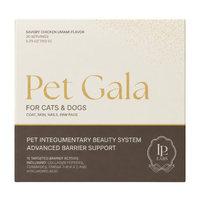
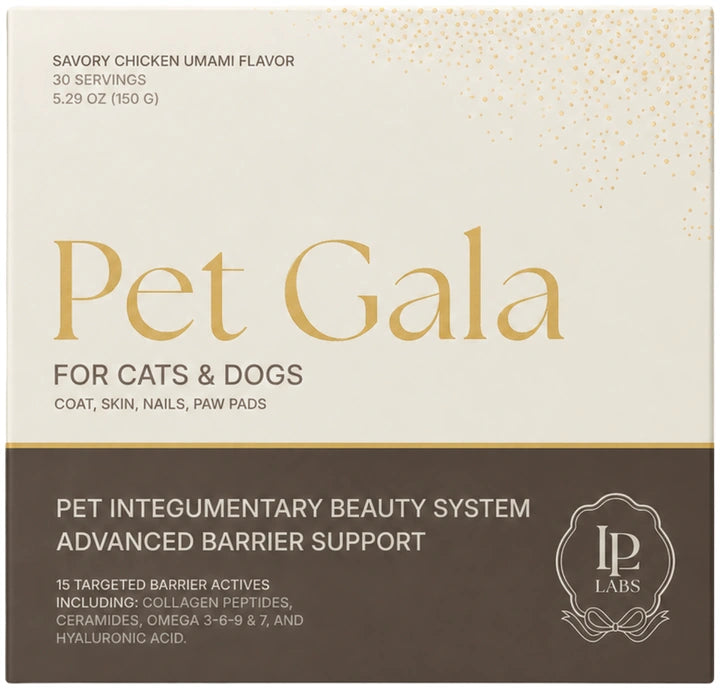
At home, barrier strain shows up as dry dander, a dull coat, or skin that looks "ashy" when you part the fur. Overbathing, harsh shampoos, and fragranced wipe-downs can worsen it, even with good intentions, so lean on vet-approved gentle grooming and fewer irritants where the cat sleeps. On the nutrition side, a label-literacy note: a food-mixed barrier formula like Pet Gala discloses its skin-lipid actives, with ceramides at 8 mg, omega 3-6-9 at 150 mg, and omega 7 at 50 mg per sachet, so you can see what supports the barrier from the inside. It is barrier and coat support, not an itch treatment, and it does not replace a veterinary workup for an overgrooming cat. Explore Pet Gala™ →

Vet Visit Prep That Speeds up Answers

VET VISIT PREP: Bring (1) a 2-week grooming log with bout length, (2) photos of the main zones in consistent lighting, (3) a list of parasite preventives and dates, and (4) diet details including treats and flavored medications. Ask the veterinarian: “Do the patterns fit allergy-type itch signaling such as IL-31?”, “What infections should be ruled out first?”, and “Which step should be tried for the cleanest interpretation—parasites, diet trial, or anti-itch medication?” (Sauvé, 2023).

Also report any household changes that affect exposure: new litter, new detergent, remodeling dust, or a new plant. If the cat has seasonal flares, note the month and whether windows are open or heating is running. This preparation speeds up the diagnostic path and reduces the chance that multiple changes are made at once, which can blur cause and effect.

What Not to Do When a Cat Is Overgrooming

WHAT NOT TO DO: Avoid (1) giving human antihistamines or pain relievers without veterinary direction, (2) applying essential oils or fragranced sprays to “calm the skin,” (3) shaving large areas of coat, which can increase skin exposure and licking, and (4) switching foods repeatedly every few days. These actions can make the skin more turbulent and can hide the true driver of interleukin 31 cats itch signaling.

Another common misstep is focusing only on the bald patch and missing the earliest signs elsewhere, like subtle licking of the wrists or a “busy” tail base. If the cat is wearing a cone or recovery suit, monitor stress and grooming substitution, because some cats redirect licking to a new accessible spot. The goal is to reduce self-trauma while the underlying trigger is clarified.

What Science Suggests—and What Cat Data Lacks

When owners read about IL-31 receptor blockers in people, it can sound like a direct solution for cats. Human phase 3 studies show that IL-31RA blockade can improve itch in allergic skin disease, supporting the pathway’s role in itch biology, but species differences and dosing/safety questions mean cats need cat-specific veterinary guidance (Kwatra, 2023). This page’s role is to clarify mechanism and observation so decisions stay grounded.

A practical decision framework is to ask: is the main problem ongoing trigger exposure, a compromised barrier, secondary infection, or a sensitized nerve pathway? Many cats need more than one lever pulled, but the order matters: parasites and infection checks first, then controlled trials for diet or environment, then targeted anti-itch strategies under veterinary supervision. That pacing keeps the plan interpretable.

Prevention Strategy: Fewer Triggers, More Orderly Skin

Prevention strategy for IL-31 cats itch is less about “blocking one molecule” and more about reducing the situations that repeatedly turn the pathway on. That includes consistent parasite control, minimizing irritants, and keeping the skin surface in a more orderly state so nerves are not constantly provoked. Because IL-31 is part of a broader immune-nerve conversation, the best long-term outcomes usually come from layered management rather than a single change.

At home, choose one adjustment at a time and watch response patterns for at least two weeks unless the cat is worsening. Keep grooming tools gentle, avoid fragranced cleaners where the cat sleeps, and maintain a predictable routine that reduces stress-related flare potential. If skin becomes open, oozing, or painful, or if grooming becomes frantic, that is a prompt for veterinary care rather than continued home experimentation.

“One measured change beats five confusing changes at once.”

Educational content only. This material is not a substitute for veterinary advice. Always consult your veterinarian about your dog’s specific needs. These statements have not been evaluated by the Food and Drug Administration. Products mentioned are not intended to diagnose, treat, cure, or prevent any disease.

Glossary

  • IL-31 - An immune cytokine that can directly trigger itch signals.
  • IL-31RA - One part of the IL-31 receptor that helps cells detect IL-31.
  • OSMR - A receptor partner that pairs with IL-31RA to receive IL-31 signals.
  • Pruritus - The medical term for itch.
  • Overgrooming - Repetitive licking/chewing that removes hair or irritates skin.
  • Th2 Inflammation - Allergy-leaning immune activity that can promote itch signaling.
  • JAK-STAT - An internal cell signaling route that can influence itch receptor responsiveness.
  • TRPV1/TRPA1 - Nerve channels involved in translating chemical irritation into nerve firing.
  • Skin Barrier - The outer skin layer that limits water loss and blocks irritants.

Related Reading

References

Ständer. Rapid improvement of itch with nemolizumab in atopic dermatitis and prurigo nodularis phase 3 studies. PubMed. 2025. https://pubmed.ncbi.nlm.nih.gov/41401055/

Kwatra. Phase 3 Trial of Nemolizumab in Patients with Prurigo Nodularis. PubMed. 2023. https://pubmed.ncbi.nlm.nih.gov/37888917/

Takahashi. Sensory neuronal STAT3 is critical for IL-31 receptor expression and inflammatory itch. 2023. https://www.sciencedirect.com/science/article/pii/S2211124723014456

Sauvé. Itch in dogs and cats. PubMed Central. 2023. https://pmc.ncbi.nlm.nih.gov/articles/PMC10286147/

Cevikbas. A sensory neuron-expressed IL-31 receptor mediates T helper cell-dependent itch: Involvement of TRPV1 and TRPA1. PubMed Central. 2014. https://pmc.ncbi.nlm.nih.gov/articles/PMC3960328/

Suehiro. Oncostatin M suppresses IL31RA expression in dorsal root ganglia and interleukin-31-induced itching. PubMed Central. 2023. https://pmc.ncbi.nlm.nih.gov/articles/PMC10687395/

Furue. Interleukin-31 and Pruritic Skin. PubMed Central. 2021. https://pmc.ncbi.nlm.nih.gov/articles/PMC8124688/

Medina-Cucurella. Feline Interleukin-31 Shares Overlapping Epitopes with the Oncostatin M Receptor and IL-31RA. PubMed Central. 2020. https://pmc.ncbi.nlm.nih.gov/articles/PMC7379511/

FAQ

What is IL-31 and why does it cause itch?

IL-31 is an immune “messenger” (a cytokine) that can activate itch-sensing nerves in the skin. When it binds to its receptor on those nerves, the signal is carried to the brain as itch rather than pain.

In cats, that itch message often shows up as overgrooming, chewing, or hair breakage. The skin may look only mildly irritated, which is why behavior and coat changes matter as much as redness.

How does IL-31 Itch Pathway in Cats (Mechanism Hub) help owners?

IL-31 Itch Pathway in Cats (Mechanism Hub) connects a specific biological signal to what owners actually see: repetitive grooming, sleep interruption, and “barbered” hair. It explains why itch can be intense even when the skin looks fairly normal.

That clarity helps owners track the right markers week over week and avoid making too many changes at once. It also improves the vet handoff by focusing the history on patterns, triggers, and response to prior steps.

Do cats show itch differently than dogs do?

Yes. Dogs often scratch with their hind legs, while cats commonly lick, chew, or pull hair, sometimes with very little visible rash. Reviews covering itch in both species highlight that feline pruritus can be subtle until coat loss or scabs appear.

This difference is why il-31 cats itch searches can feel confusing: the pathway is about itch, but the behavior is grooming. Owners should treat persistent overgrooming as a medical sign until proven otherwise.

Is IL-31 only involved in allergies in cats?

IL-31 is strongly associated with allergy-type (Th2) inflammation, but it is best thought of as an itch messenger rather than an “allergy-only” molecule. Different triggers can feed into the same itch sensation if they activate the immune-nerve conversation.

In practice, parasites, infections, and barrier irritation can all coexist with allergic tendencies. The veterinarian’s job is to sort the most likely trigger category first, then decide whether the itch pattern fits cytokine-driven signaling.

What does IL-31 itch look like at home?

Common home signs include repeated licking of the belly or inner thighs, damp fur from saliva, hair that looks broken off, and grooming that restarts quickly after interruption. Some cats wake from sleep to groom, which is a strong clue that the sensation is driving behavior.

The skin may be only faintly pink, so photos and short videos are useful. Tracking bout length and the top two grooming zones often reveals a clearer pattern than trying to judge redness day to day.

Can stress alone cause overgrooming like this?

Stress can contribute, but it should not be assumed to be the only cause when a cat is removing hair. Medical itch is common, and cats often hide skin discomfort by grooming rather than scratching.

A useful divider is repetition and location: itch-driven grooming tends to target the same zones and returns quickly, while purely behavioral grooming is more variable and context-dependent. A veterinary exam is still needed to rule out parasites, infection, and allergy.

How is the feline itch pathway connected to JAK-STAT?

Inside nerve cells, signaling pathways influence how strongly itch receptors are expressed and how reactive the nerve becomes. Research shows neuronal STAT3 is important for IL-31 receptor expression in inflammatory itch models, linking IL-31 signaling to JAK-STAT biology(Takahashi, 2023).

For owners, this explains why itch can “linger” after a flare and why some cats need layered management. It also explains why the “JAK-STAT itch signaling in cats” topic often overlaps with IL-31 discussions.

Is there a test for interleukin 31 cats itch?

There is no single household test that confirms IL-31 involvement. In cats, even laboratory tools are still developing, partly because feline IL-31 and its receptor-related targets have species-specific features that affect measurement and targeting(Medina-Cucurella, 2020).

Diagnosis is usually pattern-based: history, exam, parasite control review, and ruling out infection. A controlled trial plan (one change at a time) often provides the most useful evidence about which pathway is dominating.

Why can itch be severe with little redness?

IL-31 can activate itch-sensing nerves directly, so the “itch message” can be loud even before the skin shows dramatic inflammation. Nerves can also remain reactive after a trigger, which keeps the sensation going.

Cats then groom to self-soothe the sensation, which can remove hair without creating obvious rash at first. This is why coat change, saliva-wet fur, and sleep disruption are important signs to report.

Are IL-31 biologic injections available for cats?

Targeting IL-31 with biologics is well established in dogs, but feline-specific options are still catching up. Any immune-targeting injection used in a cat would require veterinarian oversight, careful diagnosis, and a discussion of off-label considerations.

Human trials show IL-31 receptor blockade can improve itch in allergic skin disease, supporting the pathway’s general role in itch biology, but that evidence cannot be treated as cat dosing or cat safety guidance(Ständer, 2025).

How quickly should an itch plan show results?

Timelines depend on what is driving the itch. Parasite control and infection treatment can change comfort relatively quickly, while diet trials and barrier-focused plans often take weeks before coat regrowth is obvious.

For IL-31–type signaling, early progress is often seen as shorter grooming bouts and fewer wake-ups, even if bald areas remain. Measuring bout length and sleep disruption week over week usually shows change sooner than hair regrowth.

What should be tracked week over week for this pathway?

Track: number of grooming bouts, average bout length, the top two zones targeted, any new scabs or open skin, and whether grooming interrupts rest. These markers reflect itch signaling more directly than coat appearance alone.

Add one context note: what was happening right before the grooming (after litter box, after petting, after play, evening quiet time). Those context clues can point toward irritants, allergens, or routines that repeatedly turn the itch “volume” up.

What are common mistakes owners make with overgrooming cats?

Common mistakes include applying essential oils or fragranced sprays, giving human medications without veterinary direction, shaving large coat areas, or switching foods repeatedly every few days. These can make the skin more turbulent and complicate diagnosis.

Another mistake is focusing only on the bald patch and missing early signs elsewhere, like wrist licking or tail-base attention. A measured plan works best when it reduces self-trauma while the trigger category is clarified.

When should a vet be called urgently for itch?

Urgent veterinary care is appropriate if skin is open, oozing, bleeding, or painful; if there is facial swelling; if the cat stops eating; or if grooming becomes frantic and nonstop. These signs can indicate infection, severe inflammation, or another problem beyond routine itch.

Even without emergency signs, a visit is warranted when overgrooming persists beyond a week or two, spreads to new zones, or disrupts sleep. Early care can prevent secondary infection and reduce the chance of long-term sensitization.

How does the skin barrier affect IL-31 itch signaling?

A strained skin barrier allows more irritants and allergens to contact immune cells, which can feed cytokine loops that include IL-31. That makes nerves easier to provoke, even from normal friction or mild dryness.

At home, barrier strain often looks like dander, dull coat, or “ashy” skin when the fur is parted. Gentle grooming, avoiding harsh shampoos, and reducing fragranced cleaners in sleeping areas can support a more orderly skin surface while the veterinarian addresses the root cause.

Can diet changes help cats with IL-31-related itch?

Diet can matter when food allergy or food sensitivity is part of the trigger picture, but it needs a controlled plan. Randomly rotating foods makes it hard to interpret response patterns and can delay answers.

A veterinarian-guided diet trial is typically the cleanest way to test diet involvement. During the trial, track grooming bout length and sleep disruption, because those often change before coat regrowth becomes visible.

Are some cats more prone to this itch pathway?

Any cat can develop itch signaling that involves IL-31, but cats with allergic tendencies, recurrent skin infections, or chronic barrier dryness may have less leeway before grooming becomes excessive. Indoor-only cats are not protected, because allergens and parasites can still enter the home.

Age can influence presentation: younger cats may show more head/neck lesions, while adult cats may show more belly and thigh barbering. The most useful approach is still individualized tracking rather than assuming breed or age alone explains the pattern.

How does IL-31 Itch Pathway in Cats (Mechanism Hub) differ from dogs?

IL-31 Itch Pathway in Cats (Mechanism Hub) emphasizes two differences: cats often express itch through overgrooming, and feline-specific measurement/targeting tools are still developing. Feline IL-31 has species-specific features that matter for designing assays and therapies(Medina-Cucurella, 2020).

This is why dog-focused IL-31 discussions can mislead cat owners into expecting identical treatment options. For cats, the most reliable progress comes from careful trigger control, barrier care, and veterinarian-guided anti-itch decisions.

What quality signals matter when choosing skin-support supplements?

Quality signals include clear ingredient labeling, species-appropriate dosing instructions, lot tracking, and a company willing to share testing standards. Supplements should be positioned as support for normal skin function, not as treatment for allergic disease.

If a cat has active skin disease, the veterinarian should guide choices to avoid ingredient conflicts with diet trials or medical plans. The best supplement choice is the one that fits the current diagnostic step without adding confusion.

How should Pet Gala™ be used in an itch plan?

It should not replace parasite control, infection treatment, or prescribed anti-itch medication. To keep response patterns interpretable, add only one new support at a time and track grooming bout length and sleep disruption for at least two weeks. If a diet trial is underway, confirm with the veterinarian that adding a supplement will not interfere.

What should be discussed with the vet about IL-31 options?

Ask which trigger category is most likely (parasites, infection, allergy, barrier strain) and what should be ruled out first. Then ask whether the cat’s pattern fits cytokine-driven itch such as IL-31 signaling, and how that changes the plan.

If immune-targeting medications are discussed, request a clear monitoring plan: what side effects to watch for, what to measure week over week, and when to recheck. This keeps decisions grounded in safety and observable outcomes rather than hope.

La Petite Labs

Discover LPL-01: How This Fits Into a Complete Feline Integumentary Support System

Skin, coat, and nails in cats are not surface traits. They reflect deeper biological systems—barrier integrity, hydration dynamics, lipid balance, and structural protein turnover—working in coordination.

When these systems drift, the signs are subtle but telling: reduced coat softness, increased shedding, dryness, brittle claws, changes in grooming behavior.

This article explores one piece of that system. If you want to understand how true coat quality and skin resilience are built in cats—and what actually drives visible improvement—you need to zoom out.

Start with the underlying science: