Skin and Coat Clues to Systemic Disease: 5 Warning Signs
Read full insightTh2 Allergy Pathway in Cats (IL-4 / IL-13 Axis)
By La Petite Labs Editorial 15 min read
Th2 Allergy Pathway in Cats (IL-4 / IL-13 Axis) is a way to understand why many itchy cats do not look “rash-y,” yet still overgroom, develop miliary scabs, or form eosinophilic lesions. IL-4 and IL-13 are immune signals that steer the body toward an allergy-style reaction; in cats, that reaction often shows up as behavior (licking, chewing, face rubbing) before it shows up as obvious redness. When this pattern is active, the skin becomes easier to irritate, and grooming turns itch into broken hairs, crusts, and sometimes infection.
This page focuses on two primary outcomes owners actually see: overgrooming with hair loss and miliary dermatitis with tiny crusts. It connects those signs to the th2 immune response cats pattern, explains why the skin barrier matters, and outlines what to track so a veterinarian can judge response patterns rather than guess. Related topics—like the IL-31 itch pathway in cats, filaggrin tight junctions and the skin barrier in cats, and eosinophilic granuloma complex in cats—fit into the same story, but the goal here is practical clarity: what this pathway means, what it looks like at home, and how to hand off the right information to the clinic.
- Th2 Allergy Pathway in Cats (IL-4 / IL-13 Axis) explains why many allergic cats overgroom and develop miliary crusts instead of obvious rashes.
- IL-4 and IL-13 are “type 2” immune signals that can keep skin itch-prone and reactive, especially when the barrier is leaky.
- Cats often show allergy as broken hairs, hairballs, and sandpaper-like scabs you feel more than see.
- Barrier strain and secondary infection can stack on top of allergy, making flares more turbulent and harder to clear.
- Trigger control usually starts with strict flea prevention, then considers environmental allergens and carefully run diet trials.
- Diagnosis is pattern-based and rule-out–based; photos, videos, and a timeline often speed up the visit.
- Tracking grooming time, new scabs, and coat regrowth week over week helps the veterinarian adjust treatment early.
The IL-4/IL-13 Allergy Style in Cats
Th2 Allergy Pathway in Cats (IL-4 / IL-13 Axis) describes a “type 2 inflammation cats” pattern where certain immune signals push the skin toward allergy-style reactions. IL-4 and IL-13 encourage antibody switching toward IgE and help recruit cells that amplify itch and swelling, especially when the skin barrier is already leaky. In feline allergic dermatitis, IL-4–producing T cells have been identified in affected skin, supporting a Th2-skewed local response (Roosje, 2002). This helps explain why the same cat can flare from tiny exposures that seem trivial.
At home, this pathway rarely looks like one neat patch of redness. Many cats show “behavior first”: more licking, more face rubbing, or sudden intolerance of being touched along the back. Owners may notice small scabs that feel like sand under the fingers (miliary dermatitis) even when the coat looks normal from a distance. A cat can also seem restless at night, changing sleeping spots because the skin feels uncomfortable.
Why Cats Lick Instead of Showing a Rash
Cats express allergy differently than dogs because grooming is their built-in coping tool. When the th2 immune response cats pattern is active, itch can be driven by inflammatory messengers and by the skin’s own nerve endings becoming easier to trigger. The result is often “barbering” (broken hairs) and overgrooming rather than obvious hives. In allergic feline skin, increased mast cells and eosinophils are common findings, matching a type 2 inflammation cats profile (Roosje, 2004).
A practical household clue is the texture of the coat: the fur may look thinned on the belly, inner thighs, or forelegs, with a sharp edge where normal hair begins. Hairballs may increase because more hair is swallowed during licking. Some cats hide the itch by grooming in private, so the evidence is often on the cat’s body, not caught on camera. A quick daily “hands-on scan” during calm moments can reveal new crusts early.
How Th2 Signals Connect to Itch Nerves
IL-4 and IL-13 do not act alone; they sit in a wider allergy network that also involves itch-focused signals such as the IL-31 itch pathway in cats. The key idea is that Th2-skewed inflammation makes the skin more reactive and less orderly, so nerves fire more easily and minor irritants feel “louder.” Research in feline atopic skin syndrome supports measurable cytokine shifts consistent with allergic inflammation, suggesting these signals can reflect disease activity (Vargo, 2021). This is why flares can seem to come “out of nowhere.”
Owners often describe a pattern: a few days of extra licking, then scabs appear, then the cat becomes touchy about petting. That sequence matters because it suggests itch is driving the skin damage, not the other way around. A phone video of grooming episodes—especially if they happen after meals, after litter box use, or after window time—can help a veterinarian connect triggers to response patterns. Keeping notes also prevents underestimating how often grooming happens.
A Misconception: No Rash Does Not Mean No Allergy
A common misconception is that cats with Th2 Allergy Pathway in Cats (IL-4 / IL-13 Axis) must have a visible rash to “prove” allergy. In reality, cats can have intense itch with minimal redness because the coat hides early inflammation and grooming removes surface clues. Another misunderstanding is that food is always the main cause; inhalant and contact exposures can also feed the same Th2-style loop. Feline allergic dermatitis and feline asthma can show different cytokine patterns, reminding owners that “allergy” is not one single pathway (Older, 2021).
When a cat is labeled “just anxious,” important skin signals can be missed. Overgrooming from allergy often targets predictable zones—belly, inner legs, tail base, neck—while stress grooming may be more variable and linked to household disruptions. The most useful home step is to separate what is seen (where hair is missing, where scabs form) from what is assumed (why the cat is doing it). That clarity improves the vet handoff.
Barrier Breakdown Keeps the Immune Response Active
The skin barrier is the “gate” that decides how much allergen and microbe contact reaches the immune system. When barrier proteins and tight junctions are less effective—often discussed in filaggrin tight junctions and the skin barrier in cats—more material penetrates and the immune response becomes more turbulent. That extra exposure can keep IL-4/IL-13 signaling active, reinforcing the th2 immune response cats loop. Reviews of feline atopic skin syndrome describe this as a combined problem of barrier, microbiome, and immune dysfunction rather than one single defect (Gentry, 2025).
At home, barrier strain often looks like dull coat, dandruff-like flakes, or recurrent “mystery” scabs after minor changes (new detergent, new bedding, seasonal humidity shifts). Frequent bathing with harsh shampoos can worsen dryness and reduce leeway for the skin to recuperate. Gentle grooming tools, rinsing off obvious pollen after supervised outdoor time, and keeping bedding clean can reduce surface load. These steps do not replace medical therapy, but they can make flares less chaotic.
“In cats, itch often appears as grooming first and skin damage second.”
Secondary Infection: a Loud Add-on, Not Always the Cause
Once the barrier is compromised, secondary infections and overgrowth can layer onto allergy and intensify itch. That does not mean the infection is the original cause; it often means the skin lost resistance and clearance. In Th2-skewed skin, inflammation can change the local environment so yeast or bacteria become harder to keep in check, and scratching or licking adds more micro-injuries. This is one reason veterinarians may treat both the allergic driver and the secondary complications in parallel.
Owners can look for clues that suggest infection is joining the picture: a sour or “corn chip” odor, greasy feel, new dark debris in the ears, or pimply bumps under the fur. A cat that suddenly resists being picked up or flinches when the back is touched may be reacting to painful skin, not just itch. Avoid using leftover antibiotics or human antifungal creams; these can delay correct diagnosis and complicate culture results. A timely vet visit prevents weeks of cycling discomfort.
Case Vignette: the Cat with “Invisible” Itch
CASE VIGNETTE: A 6-year-old indoor cat starts licking the belly every evening, then develops tiny crusts along the spine and a “peppered” feel when petted. The coat still looks glossy, so the problem is dismissed until hair thins on the inner thighs and the cat begins head shaking. This is a classic feline presentation where Th2 Allergy Pathway in Cats (IL-4 / IL-13 Axis) can be active even before obvious redness appears. The pattern points toward allergic itch driving self-trauma, not a single isolated sore.
In a household routine, the earliest win is documenting timing and body zones. A simple calendar note—“licking started before scabs,” “worse after window time,” “improves after flea control”—helps separate triggers from consequences. Photos taken under the same lighting once weekly are more useful than many random pictures. If the cat is difficult to handle, a short video of grooming bursts can be safer than repeated restraint that escalates stress.
Triggers That Commonly Feed Type 2 Inflammation
Allergic triggers that feed type 2 inflammation cats include flea saliva, environmental allergens (dust mites, pollens, molds), and sometimes food proteins. IL-4/IL-13 signaling is not “picky” about the trigger; it is a style of immune reaction that can be set off by different inputs. That is why a cat can improve with strict flea control yet still have seasonal flares, or improve seasonally but relapse after a missed flea dose. The same immune style can also relate to eosinophilic granuloma complex in cats, where eosinophils contribute to distinctive lesions.
Owners often want one culprit, but cats frequently have stacked triggers. A practical approach is to stabilize the basics first: consistent flea prevention for every pet in the home, predictable litter, and fewer scented cleaners on floors and bedding. If a food trial is recommended, it must be strict—no flavored medications, no shared bowls, no treats—because tiny “cheats” can keep the immune response active. Adjust one thing, observe, then decide on the next step.
Owner Checklist: Signs That Point Toward Allergy
OWNER CHECKLIST: At home, check for (1) broken hairs or “stubble” on belly/inner legs, (2) sandpaper-like scabs along the back or neck, (3) symmetrical thinning from licking rather than random bald spots, (4) ear debris or head shaking that rises with skin flares, and (5) increased hairballs or vomiting from swallowed fur. These signs fit common feline expressions of the th2 immune response cats pattern. They also help a veterinarian separate allergy from ringworm, pain-related grooming, or parasites.
Do the checklist in good light and with calm handling, ideally when the cat is relaxed after a meal. Use fingertips to feel for crusts rather than relying on sight through the coat. If there are other pets, note whether they itch too; shared itch raises suspicion for fleas or environmental triggers. If only one cat is affected, it can still be allergy, but the differential list shifts. Bring the checklist notes to the appointment.
How Veterinarians Confirm Allergy and Rule out Look-alikes
Diagnosis is usually a process of ruling out look-alikes while mapping response patterns. A veterinarian may check for fleas and flea dirt, perform skin scrapings, cytology (tape or swab), fungal testing for ringworm, and sometimes a biopsy when lesions are unusual. Th2 Allergy Pathway in Cats (IL-4 / IL-13 Axis) is not diagnosed by one home test; it is inferred from clinical pattern plus exclusion of other causes. Some cats also have measurable cytokine differences in blood consistent with allergic inflammation, but these are not yet routine tools for every clinic (Vargo, 2021).
Owners can support diagnosis by avoiding “pre-treatment” that erases clues. Do not bathe right before the visit, and avoid applying creams to lesions unless directed. Bring the exact flea product name and dates used, plus any diet changes in the last two months. If the cat grooms mostly at night, a simple camera clip can show intensity and body targets. Clear history often shortens the time to a workable plan.
“The coat can hide inflammation; fingertips and photos reveal the pattern.”
DVM Voice: Clinical Vignette of When Skin Changes Point Deeper Than the Surface
Case provided by Sarah Calvin, DVM
Maverick, a 4-year-old Siamese cat, was brought in for hair loss across his lower abdomen and red, flaky skin lesions that had progressed over the previous month. His owners were unsure whether he was itchy or overgrooming.
Examination showed broken hairs, abdominal alopecia, and lesions consistent with bacterial skin infection. Further testing ruled out fleas, FeLV/FIV, and common fungal causes. Because his grooming pattern suggested deeper discomfort, his veterinarian continued the workup.
Radiographs and urinalysis revealed bladder stones, crystalluria, and blood in the urine. Maverick’s overgrooming was linked to urinary pain — a case where skin changes were secondary to an internal problem.
His care required a staged plan: stabilizing the skin infection, surgically removing the bladder stones, managing pain, transitioning to a therapeutic diet, and supporting skin-barrier recovery with appropriate nutrition and fish oil.
Hair regrowth began by 8 weeks. By 6 months, his coat had fully recovered, with no recurrence after the urinary issue was resolved.
Clinical takeaway: Maverick’s case shows why feline coat loss and overgrooming deserve careful veterinary investigation. Skin and coat health can reflect pain, stress, nutrition, infection, barrier weakness, or internal disease — not just surface-level grooming behavior.
Single-case vignette. Not generalizable. Veterinary diagnosis and oversight are essential for overgrooming, hair loss, skin lesions, urinary signs, pain, or suspected infection.
Bring the Right Clues to the Appointment
VET VISIT PREP: Bring (1) a timeline of when overgrooming started and which zones changed first, (2) photos of miliary crusts and any lip, chin, or paw lesions, (3) the flea prevention schedule for all pets, and (4) a list of cleaners, litters, and recent home renovations. Ask: “Could this be eosinophilic granuloma complex in cats?” “Do the ears need cytology?” “What would make ringworm more or less likely?” These questions keep the visit focused on the most actionable differentials.
Also ask how progress will be judged week over week: fewer grooming episodes, fewer new scabs, or better coat regrowth. Clarify which medications are for itch control versus infection control, and what side effects should trigger a call. If a diet trial is planned, confirm what counts as “food” (treats, flavored toothpaste, pill pockets). A shared definition prevents accidental setbacks.
Treatment Building Blocks That Calm Feline Itch
Management usually combines trigger control with prescription anti-itch or anti-inflammatory therapy when needed. Because IL-4/IL-13 sit upstream in type 2 inflammation cats, some treatments aim broadly at calming allergic inflammation rather than chasing each scab. Veterinarians may use corticosteroids, cyclosporine, or other options depending on the cat’s health profile and flare severity; newer therapeutics in feline medicine continue to evolve (Susi, 2025). In some cases, oclacitinib has been studied for safety in cats under veterinary supervision, but it is not a do-it-yourself medication choice (Lopes, 2019).
At home, the goal is not perfection; it is a more measured baseline with fewer spirals. Give medications exactly as directed and do not stop early just because scabs look better—itch often returns before the coat regrows. If pilling is difficult, ask about flavored compounds, transdermal options, or long-acting alternatives where appropriate. Keep cones or recovery collars available for short periods when lesions are being re-injured. Comfort and consistency protect recuperation speed.
Common Mistakes That Keep Flares Going
WHAT NOT TO DO: Do not switch diets every week “to test allergies,” because constant change makes patterns unreadable. Do not use essential oils, tea tree products, or human anti-itch creams on cats; ingestion during grooming can be dangerous and can worsen irritation. Do not assume a single flea sighting means fleas are not involved—many allergic cats react to rare bites. Finally, do not delay veterinary care when there are open sores, swelling, or lethargy; infection and pain can escalate quickly.
A common household trap is over-bathing to “wash off allergens.” Frequent washing can strip oils and reduce barrier resistance, feeding the same loop that drives itch. Another trap is punishing grooming; it increases stress without addressing the skin signal that started the behavior. If grooming is intense, use environmental management—soft bedding, trimmed nails, and vet-directed itch control—rather than confrontation. The aim is fewer triggers and less self-trauma.
What to Measure Week over Week
WHAT TO TRACK RUBRIC: Track (1) grooming minutes per day or number of bursts, (2) number of new scabs felt during a weekly fingertip scan, (3) hair regrowth in a fixed photo spot, (4) ear debris or head shaking frequency, (5) stool quality during diet trials, and (6) any medication side effects such as appetite change. These markers make response patterns visible and help a veterinarian decide whether the plan is gaining clearance or simply masking symptoms. They also reduce the guesswork when multiple triggers are possible.
Use a simple weekly template rather than daily perfection. Choose one body zone (for example, the belly) and one lesion type (miliary crusts) as the main “score,” then add notes for anything new. If the cat has seasonal flares, add weather and window-open days to the log. When changes are made—new flea product, new diet, new medication—write the date clearly. This turns a frustrating problem into a trackable one.
Cats Versus Dogs: Same Concept, Different Skin Story
Cats and dogs can share the concept of a Th2-skewed allergy response, but the “output” looks different. The th2 allergy pathway in dogs often presents with obvious redness, ear infections, and paw chewing, while cats more often show overgrooming, miliary dermatitis, and eosinophilic lesions. That difference matters because owners may underestimate severity when the coat hides inflammation. Understanding these species differences prevents copying dog routines—like frequent medicated baths—that may not fit feline skin and behavior.
In multi-pet homes, it is tempting to treat everyone the same. Instead, keep cat-specific handling in mind: cats groom off topical products, resist frequent bathing, and can become food-averse if diets are changed abruptly. If a dog in the home has allergies, it does not prove the cat’s trigger is identical; it only suggests the environment may contain shared allergens. Separate logs for each pet prevent confusion and help the veterinarian see true patterns.
When Allergy Touches Airways: Keep the Focus Clear
Allergy is not only a skin story; some cats have both skin signs and airway signs, and the immune “style” can overlap. Inhalant-mediated allergy biology explains why dust mites or pollens can affect multiple surfaces, even if the most obvious problem is skin (Lam, 2025). Still, this page’s focus stays on the skin patterns owners see: overgrooming, miliary lesions, and eosinophilic plaques. If coughing, wheezing, or open-mouth breathing occurs, that becomes an urgent, separate conversation with a veterinarian.
At home, note whether itch flares coincide with closed-house seasons (winter heating) or high-pollen weeks, and whether the cat seeks cool surfaces or avoids being held. Air quality steps—HEPA filtration, washing bedding in unscented detergent, and reducing dusty clutter—can lower exposure load. These steps are supportive, not curative, but they can add leeway when the immune response is already primed. Any breathing change should be documented and reported promptly.
Long-term Control: Fewer Spirals, Faster Recuperation
Long-term control is usually about reducing flare frequency and shortening flare duration, not chasing a permanent “off switch.” Many cats need a maintenance plan that combines strict flea control, targeted environmental cleanup, and vet-prescribed therapy during predictable seasons. Because the il-4 il-13 cats allergy axis can keep the skin reactive, early intervention at the first signs of overgrooming often prevents the cascade into scabs and infection. This is also where internal links matter: learning about the IL-31 itch pathway in cats and barrier topics can clarify why itch and barrier care must be addressed together.
Owners can plan for predictable stress points: travel, boarding, holiday houseguests, or spring pollen. Keep medications refilled before peak season and confirm with the clinic what to do if a dose is missed. If the cat has a history of eosinophilic lesions, ask how quickly to recheck if a plaque returns, because early treatment can limit self-trauma. A calm, repeatable routine often produces the most orderly outcomes.
Putting the Pathway into a Practical Home Plan
The most useful takeaway from Th2 Allergy Pathway in Cats (IL-4 / IL-13 Axis) is that the immune pathway explains the pattern, but the plan is built from observations. When owners can describe where itch starts, what lesions follow, and what changes week over week, veterinarians can choose therapies with clearer goals. The best outcomes usually come from pairing medical control of inflammation with barrier-friendly home habits. That combination gives the skin more resistance and better clearance, so the cat spends less time trapped in the lick–injure–itch loop.
If the cat is miserable, losing weight, developing open sores, or acting withdrawn, the situation is no longer a “watch and wait.” Seek veterinary care promptly, and bring the tracking rubric and photos. After a plan starts, reassess on the schedule given—many cats need adjustments rather than a single fix. The goal is a more measured life: fewer hairballs from overgrooming, fewer scabs under the coat, and a cat that can rest comfortably.
“A measured plan beats constant product switching and guesswork.”
Educational content only. This material is not a substitute for veterinary advice. Always consult your veterinarian about your dog’s specific needs. These statements have not been evaluated by the Food and Drug Administration. Products mentioned are not intended to diagnose, treat, cure, or prevent any disease.
Glossary
- Th2 (Type 2) inflammation - Allergy-skewed immune pattern that tends to recruit eosinophils and promote itch.
- IL-4 - Immune signal that helps drive allergic responses and IgE-related pathways.
- IL-13 - Immune signal closely linked to IL-4 that contributes to allergic skin inflammation.
- IgE - Antibody type commonly involved in allergic reactions.
- Mast cell - Allergy-associated cell that can release itch and inflammation mediators.
- Eosinophil - White blood cell often increased in feline allergic skin disease and eosinophilic lesions.
- Miliary dermatitis - Many tiny crusted bumps that feel like sand under the fur.
- Overgrooming (barbering) - Excess licking that breaks hairs and thins the coat.
- Eosinophilic granuloma complex - Group of feline lesions (plaques, granulomas, indolent ulcers) often linked to allergy.
- Skin barrier - The outer skin layers that limit water loss and block irritants and allergens.
Related Reading
Common Feline Integumentary Issues
• Cat Dandruff
• Why Is My Cat Shedding So Much
• Cat Hair Loss
Comfort & Recovery
• Skin & Coat Supplements for Cats
• Cat Nail Supplement
• Best Supplements for Cat Shedding
Ingredient-Level Articles
• Biotin for Cats
• Silica for Cats
• Hyaluronic Acid for Cats
• Ceramides for Cats
References
Vargo. Characterisation of the serum cytokine profile in feline atopic skin syndrome. PubMed. 2021. https://pubmed.ncbi.nlm.nih.gov/34180094/
Older. Cytokine expression in feline allergic dermatitis and feline asthma. PubMed. 2021. https://pubmed.ncbi.nlm.nih.gov/34519120/
Roosje. Mast Cells and Eosinophils in Feline Allergic Dermatitis: A Qualitative and Quantitative Analysis. 2004. https://www.sciencedirect.com/science/article/abs/pii/S0021997504000088
Roosje. Interleukin 4-producing CD4+ T cells in the skin of cats with allergic dermatitis. PubMed. 2002. https://pubmed.ncbi.nlm.nih.gov/12009060/
Gentry. Updates on the Pathogenesis of Canine Atopic Dermatitis and Feline Atopic Skin Syndrome: Part 2, the Skin Barrier, the Microbiome, and Immune System Dysfunction. PubMed. 2025. https://pubmed.ncbi.nlm.nih.gov/39732547/
Lam. Inhalant Mediated Allergy: Immunobiology, Clinical Manifestations and Diagnosis. PubMed Central. 2025. https://pmc.ncbi.nlm.nih.gov/articles/PMC12000167/
Susi. Clinical therapeutics in feline medicine: updates for old and new drugs. PubMed Central. 2025. https://pmc.ncbi.nlm.nih.gov/articles/PMC12501467/
Lopes. A blinded, randomized, placebo-controlled trial of the safety of oclacitinib in cats. PubMed Central. 2019. https://pmc.ncbi.nlm.nih.gov/articles/PMC6506962/
FAQ
What is Th2 Allergy Pathway in Cats (IL-4 / IL-13 Axis)?
Th2 Allergy Pathway in Cats (IL-4 / IL-13 Axis) is an allergy-style immune pattern where IL-4 and IL-13 push the skin toward itch, swelling, and allergic cell recruitment. In cats, this often shows up as grooming-driven damage rather than a dramatic rash.
The practical meaning is simple: a cat can be very itchy even when the coat hides redness. Noticing broken hairs, tiny crusts, and repeated licking helps connect behavior to biology.
Why do IL-4 and IL-13 matter for cat itch?
IL-4 and IL-13 are signals that steer the immune system toward a type 2 pattern. That pattern tends to recruit cells that release itch-provoking mediators and can keep the skin reactive to small exposures.
At home, this can look like a cat that cannot “settle” and keeps returning to the same grooming spots. The skin may feel crusty before it looks inflamed.
How does the th2 immune response cats show up at home?
The th2 immune response cats pattern often appears as overgrooming, barbered fur, and small scabs (miliary dermatitis). Some cats also develop eosinophilic plaques or lip lesions that come and go.
Owners may notice more hairballs, a “spiky” feel to the coat when petting, or sensitivity along the back. Photos of the same area once weekly can make changes easier to see.
Is overgrooming always anxiety instead of allergy?
No. Anxiety can contribute, but allergy-driven itch is a very common reason cats overgroom. Allergy grooming often targets consistent body zones and is followed by broken hairs and crusts.
A useful home test is pattern recognition: does the cat focus on belly, inner thighs, tail base, or neck week after week? If yes, a veterinary skin workup is warranted even if the cat seems otherwise calm.
What are miliary lesions and why do they form?
Miliary lesions are tiny crusted bumps that feel like grains of sand under the fur. They form when inflammation and self-trauma create small areas of skin injury that crust over.
Owners often find them first by touch along the back or neck. Because cats groom so efficiently, the skin can be actively inflamed while still looking “clean,” making fingertip checks more informative than visual checks.
How is type 2 inflammation cats different from infection?
Type 2 inflammation cats refers to an allergy-style immune reaction. Infection is an overgrowth of bacteria or yeast that may occur secondarily when the skin barrier is compromised.
At home, infection clues include odor, greasy coat, pus-like bumps, or painful skin. Allergy clues include repeated licking and symmetrical hair loss. Many cats have both at once, which is why veterinarians often treat in layers.
Can fleas trigger the IL-4 IL-13 cats allergy axis?
Yes. Flea saliva is a potent trigger for allergic cats and can feed the IL-4 IL-13 cats allergy axis even when fleas are rarely seen. Some cats react to very few bites.
The practical step is consistent flea prevention for every pet in the home, plus vacuuming and washing bedding. If itch improves after flea control but does not fully resolve, that suggests stacked triggers rather than “no fleas.”
Do food allergies cause the same Th2 pattern in cats?
Food allergy can contribute to a Th2-skewed pattern, but it is not the only driver. Environmental allergens and flea allergy can produce similar skin outcomes, so the trigger cannot be assumed from appearance alone.
If a diet trial is recommended, it must be strict and long enough to interpret. Treats, flavored medications, and shared bowls can keep itch active and make the trial look like a failure.
How do vets diagnose Th2-driven skin allergy in cats?
Diagnosis is usually based on clinical pattern plus ruling out parasites, ringworm, and infection. Vets often use flea combing, skin scrapings, cytology, and fungal testing, then assess response to targeted treatment steps.
Owners can help by bringing a timeline, photos, and product names for flea control and diets. That information makes it easier to connect exposures to response patterns and choose the next most informative step.
Is allergy testing useful for cats with overgrooming?
Allergy testing can be useful in selected cases, mainly to guide allergen-specific immunotherapy rather than to “prove” allergy. It is typically considered after parasites and infections are controlled and a consistent pattern remains.
For many households, the first value comes from strict flea control, a clear diet plan if indicated, and tracking what changes week over week. Discuss timing and expectations with the veterinarian before testing.
What treatments calm Th2-driven itch in cats?
Treatment often includes prescription anti-inflammatory or anti-itch medications, plus management of secondary infection when present. The choice depends on flare severity, age, and other health conditions, so it should be veterinarian-guided.
At home, the most helpful support is consistency: give medications as directed, keep flea prevention uninterrupted, and avoid frequent product switching. Early treatment at the first grooming escalation often prevents a longer flare.
Is oclacitinib safe for cats with allergic dermatitis?
Oclacitinib has been studied in cats in a controlled safety trial, but it is not a medication to start without veterinary direction(Lopes, 2019). Cats can have different risk profiles than dogs, and dosing decisions must be individualized.
Owners should ask what side effects to watch for, how follow-up will be handled, and what the plan is if itch returns. Report appetite changes, vomiting, lethargy, or infections promptly.
How fast should a cat’s skin improve after treatment starts?
Itch behavior often changes before the skin looks normal. Many cats groom less within days to a couple of weeks once the right anti-itch plan is in place, while coat regrowth can take weeks longer.
Track what to measure week over week: fewer grooming bursts, fewer new scabs, and less ear debris. If grooming intensity stays high or sores spread, the plan may need adjustment or infection may be present.
What side effects should be reported during allergy medications?
Report vomiting, diarrhea, appetite changes, marked lethargy, new coughing, or signs of infection such as fever or oozing sores. Some anti-inflammatory medications can affect immune defenses or metabolism, so monitoring matters.
Also report behavior changes that suggest pain: hiding, growling when touched, or reluctance to jump. These can indicate worsening skin lesions or secondary infection rather than “just itch.”
Can kittens or senior cats have Th2-driven skin disease?
Yes, but age changes the differential diagnosis and medication choices. Kittens require careful parasite and ringworm evaluation, while seniors may have additional conditions that affect treatment safety.
Owners should bring a full medication list and note any weight loss, increased thirst, or appetite changes. Those details help the veterinarian choose an itch plan that fits the cat’s overall health, not just the skin.
Are some cat breeds more prone to allergic overgrooming?
Any breed can develop allergic skin disease, and mixed-breed cats are commonly affected. Breed may influence coat type and how easily lesions are seen, but it does not replace a proper workup.
Long-haired cats can hide miliary crusts and broken hairs, so hands-on checks are important. If a breed is known for heavy grooming, it becomes even more important to track whether grooming is escalating and leaving stubble.
How is this different from the th2 allergy pathway in dogs?
Dogs often show allergy with obvious redness, paw chewing, and recurrent ear infections, while cats frequently show allergy through overgrooming, miliary dermatitis, and eosinophilic lesions. The immune “style” can be similar, but the visible pattern differs.
That difference matters for home care: cats groom off topicals and may not tolerate frequent bathing. Cat plans usually rely more on trigger control, vet-guided itch medication, and barrier-friendly routines.
What quality signals matter in a strict elimination diet trial?
The biggest quality signal is controllability: a diet that can be fed exclusively with no extras. Veterinary hydrolyzed diets or carefully selected novel-protein diets are commonly used because they reduce accidental exposure.
Owners should confirm what counts as “extras,” including treats, flavored medications, and shared bowls. A written plan posted near the feeding area prevents well-meaning family members from undermining the trial.
How should owners apply topical products safely on itchy cats?
Only use topical products recommended for cats, because cats ingest what is placed on their coat. Avoid essential oils and human creams, which can be toxic or irritating when licked.
If a veterinarian recommends a topical, apply it to the intended area and prevent immediate grooming if instructed (for example, with brief supervision or an e-collar). Stop and call the clinic if drooling, vomiting, or sudden lethargy occurs.
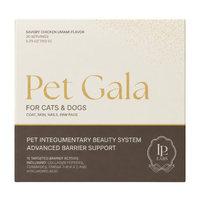
Can Pet Gala™ replace prescription allergy medications for cats?
No. Th2 Allergy Pathway in Cats (IL-4 / IL-13 Axis) often requires veterinary diagnosis and prescription therapy to control inflammation and itch. Supplements cannot replace that decision-making.
If a veterinarian recommends barrier support, Pet Gala™ may help support normal skin barrier function as part of a plan. The most important step is still tracking response patterns and following the prescribed itch-control strategy.
When should a vet be called urgently for itchy cats?
Call urgently if there are open sores, facial swelling, pus, fever, sudden lethargy, refusal to eat, or any breathing change (coughing, wheezing, open-mouth breathing). These signs suggest infection, severe inflammation, or a separate emergency problem.
Also call if itch escalates rapidly despite treatment, because cats can self-injure quickly through grooming. Bring photos, a medication list, and the dates of flea prevention to speed up next-step decisions.
Discover LPL-01: How This Fits Into a Complete Feline Integumentary Support System
Skin, coat, and nails in cats are not surface traits. They reflect deeper biological systems—barrier integrity, hydration dynamics, lipid balance, and structural protein turnover—working in coordination.
When these systems drift, the signs are subtle but telling: reduced coat softness, increased shedding, dryness, brittle claws, changes in grooming behavior.
This article explores one piece of that system. If you want to understand how true coat quality and skin resilience are built in cats—and what actually drives visible improvement—you need to zoom out.
Start with the underlying science:
- Feline Skin & Coat Framework →
A structured view of how skin, coat, and claw health are maintained across collagen synthesis, lipid nourishment, and barrier function. - Barrier Protection Coverage Modeling →
A systems-level map of which integumentary pathways are most vulnerable—and how layered nutritional inputs can support them. - Feline Skin & Coat Evidence Framework →
A breakdown of what is strongly supported in the literature versus what is still emerging in feline skin and coat science. - LPL-01 Standard →
The formulation system that translates these models into real-world supplementation—covering multiple pathways in a coordinated way.
Essential Summary
Why Is Th2 Allergy Pathway in Cats Important?
Th2 Allergy Pathway in Cats (IL-4 / IL-13 Axis) matters because it links hidden itch behaviors—overgrooming, miliary crusts, and eosinophilic lesions—to a specific allergy-style immune pattern that often needs veterinary treatment.
Pet Gala is designed to support normal skin barrier function as part of a broader veterinary plan.
Pet Gala™
Starting at $79/mo
The scratching is completely gone, his coat looks healthy and shiny!
— Lena
He was struggling with itching, now he's glowing.
— Grace
Considering Th2-Driven Cat Itch?
If You’re Researching Cat Allergy Itch, Here’s What Matters Most
Start with strict flea control, a simple tracking log, and a veterinary exam to rule out parasites, ringworm, and infection. Ask for a stepwise plan with clear “what to measure week over week” goals. If barrier support is recommended, Pet Gala supports normal skin barrier function as part of that broader plan.
Learn about how our DVMs think about the feline barrier
Dr. Sarah Calvin DVM
Pet Gala™
Starting at $79/mo
Explore the visible signs of whole-body wellness
Related Reading
IL-4 and IL-13 are immune signals that steer the body toward an allergy-style reaction; in cats, that reaction often shows up as behavior (licking, chewing, face rubbing) before it shows up as obvious redness. When this pattern is active, the skin becomes easier to irritate, and grooming turns itch into broken hairs, crusts, and sometimes infection.