

5 Coat Warning Signs of Illness in Dogs & Cats
Read full insightCat Skin Allergies
By La Petite Labs Editorial 15 min read
The first sign is rarely a diagnosis—it's a coat that suddenly looks rough, a line of tiny scabs you feel while petting, or a cat who grooms one spot until the fur thins. Cat skin allergies are common, usually triggered by parasites, food ingredients, or environmental exposures—and the frustrating part is that all three can look almost identical on the surface. That sameness is why owners feel stuck: you can see the problem, but the "why" stays blurry.
This page is built for the moment you're in. You'll learn how to work through cat skin allergies in a structured way, which patterns point to fleas versus food versus environment, and how to choose a diet without turning meals into a revolving door. Because diagnosis takes time but daily presentation is immediate, consistent skin-and-coat support can soften the rough days you can see—dull coat, flaking, irritated patches—while you and your veterinarian work toward clarity.
- Different triggers, same look. Parasites, food, and environmental allergens all produce similar itching and scabbing—so a structured plan beats guessing.
- The first wins are visible: fewer new scabs, less redness, and a coat that lies flatter instead of standing up from irritation.
- Parasite control comes first. Flea allergy can cause days of itch from a single bite, and cats often groom the fleas away before you see them.
- Keep diet changes clean. A food trial only works if it's consistent and complete—no flavored meds, table scraps, or rotating toppers.
- Prescription options exist (like ciclosporin) for allergic dermatitis, but they're vet-guided and need monitoring—never DIY.
- Grooming is your daily check-in: gentle brushing distributes oils, catches early scabs, and keeps the coat looking cared-for.
- Split the job: diagnosis is your vet's lane; daily skin-and-coat support is yours, keeping the visible surface calm between visits.
The Visible Story Behind Itchy, Reactive Skin and Uneven Coats
When a cat’s skin looks irritated, the story is usually visible before it’s diagnosable: a roughened coat, scattered scabs, over-groomed patches, or a cat who can’t settle because the itch keeps interrupting everything. Cat skin allergies are common, and they’re often triggered by a short list of culprits—parasites, food ingredients, and environmental exposures—yet they can look surprisingly similar on the surface (Rollins AW, 2019). The goal is not to “guess the allergen,” but to restore comfort and polish while you and your veterinarian narrow the cause.
This page focuses on the signals you can see, the steps that reduce flare-ups, and the care choices that support a smoother, calmer look day to day. Even when a diet is technically complete, imbalances or gaps can still show up in coat and skin presentation, which is why balanced nutrition and consistent grooming rituals matter (Summers S, 2022).
What Do Cat Skin Allergies Look Like?
Cat skin allergies are hypersensitivity reactions that show up on the skin: itching, redness, scabs, and hair loss are the common signals. Many owners notice a change in grooming first—either constant licking or sudden avoidance of touch—before they ever see a rash. Because skin is both a barrier and a display surface, allergies hit comfort and appearance at the same time.
The triggers fall into three categories: parasites, food ingredients, and environmental factors. The catch is that different triggers create the same look, and one cat can carry more than one sensitivity. That's why a calm, structured approach—rather than rapid product switching—gets you clearer answers and a faster return to a smooth coat.
Common Signs: from Over-grooming to Scabs You Feel First
The visible signs of a flare can vary by cat. Some develop small crusts along the back or neck; others show thinning hair on the belly or legs from over-grooming. Itching, redness, and hair loss are classic signs of skin allergy in cats, but the pattern can be subtle at first.
Pay attention to “behavioral clues” that are really skin clues: hiding after grooming, twitchy skin, sudden irritability when petted, or waking up to scratch. These are the moments that tell you the skin is not just cosmetically off—it’s uncomfortable. Catching that early helps you protect the coat from breakage and the skin from secondary irritation.
How to Treat Cat Skin Allergies with a Structured, Gentle Plan
If you’re wondering how to treat cat skin allergies, start by treating uncertainty with structure. The first step is a veterinary exam to check for parasites and infection, because those can look like allergies and can also ride alongside them. From there, your vet may suggest a food trial, environmental controls, or prescription support depending on severity.
At home, focus on reducing the itch-scratch cycle: trim nails, keep bedding clean, and avoid fragranced sprays and detergents. Choose one change at a time so you can read the skin’s response. The best plans create quick, visible calm—less redness, fewer new scabs, and a coat that starts to look even again.
Food Triggers and Food Support: Keeping Diet Changes Clean
Food-related reactions are often discussed as “allergies,” but the practical takeaway is simpler: some cats do better when certain proteins or additives are removed. Because nutritional deficiencies can exacerbate skin conditions, any diet change should still be complete and balanced. That’s why veterinary elimination diets are often used when food is strongly suspected.
If you’re trialing a new diet, commit to consistency. No flavored medications, no table scraps, and no rotating toppers. The payoff is clarity: either the skin settles and the coat regains softness, or you can confidently move on to other triggers. Either way, you’re building a cleaner picture of what your cat’s skin is reacting to.
“The best allergy plan is the one that makes your cat look comfortable again.”
Nutrition and Coat Finish: Why Balance Still Shows on the Outside
Nutrition affects how skin and coat present, even when a food meets basic standards. Research evaluating minerals in commercial cat foods underscores that levels can vary, and imbalances may influence overall health (Summers S, 2022). For skin, that can translate into a coat that looks dull, brittle hair shafts, or slower “bounce back” after a flare.
A smart approach is to choose a reputable, consistent diet and then support the visible finish with targeted skin-and-coat care. This is where beauty logic matters: owners don’t just want a diagnosis; they want the cat in front of them to look comfortable, sleek, and well-kept. The right routine makes that improvement easier to see and maintain.
Grooming as a Comfort Ritual That Restores a Sleek Appearance
Grooming is often overlooked in allergy conversations, yet it’s one of the fastest ways to improve daily comfort and appearance. Gentle brushing removes dander, distributes oils, and helps you spot early changes—tiny scabs, new thinning patches, or areas your cat avoids. It also reduces the amount of allergen-laden debris your cat may ingest while self-grooming.
Keep the ritual calm and short. Use a soft brush, stop before your cat gets overstimulated, and reward with affection or play. Over time, the coat often looks more even and reflective, and you gain a reliable “daily check-in” that catches flare-ups before they become dramatic. For many households, this is the most reassuring habit because it produces visible feedback.
Why One Cat Skin Allergy Can Have More Than One Trigger
A cat skin allergy rarely has a single, cinematic cause. Most cats have a primary trigger plus secondary aggravators: dry indoor air, stress grooming, or a diet that's fine on paper but not ideal for that individual. Allergies commonly tie back to environmental factors, food ingredients, and parasites at once, and that overlap is normal—not a sign you're missing something obvious.
That's why the plans that work are layered. You reduce exposure where you can, keep parasite prevention consistent, and support the skin surface so it looks and feels calmer while you work through diagnostics. The win isn't perfection; it's a cat who looks settled—less frantic grooming, fewer visible lesions, and a coat that feels like theirs again.
How Long Until My Cat's Skin Allergy Improves?
Expect changes in a predictable order, not overnight. With allergy management, the first improvements are behavioral—less scratching, longer naps, more tolerance for touch—followed by visible changes like reduced redness and fewer new scabs. The plan that gets you there is identifying and avoiding triggers alongside symptomatic support.
Hair regrowth and coat density take longer, so watch for early "polish signals" in the meantime: less dandruff, a smoother lay of the fur, and fewer broken hairs from over-grooming. Photograph the same patch weekly in similar light—it's the simplest way to confirm progress when day-to-day changes feel too small to trust.
When a Rash Appears: Calm Steps That Protect Skin’s Surface
If your cat has a cat allergy skin rash, think in layers: remove likely irritants, reduce self-trauma, and keep the skin surface clean and comfortable. Start with parasite control and a vet exam, because fleas and mites can mimic many allergy patterns (Sauvé F, 2023). Then look at contact triggers: new detergents, scented litter, carpet powders, or topical products that leave residue.
At home, keep nails trimmed to limit damage from scratching, use a soft cone or recovery collar if your veterinarian recommends it, and consider gentle wipe-downs after high-pollen days. Avoid human anti-itch creams unless your vet approves; cats groom and ingest what you apply. The most reassuring progress is often visual: fewer new scabs, less redness, and a coat that lies flatter instead of “standing up” from irritation.
“Consistency creates clarity: fewer variables, cleaner signals, steadier skin.”
DVM Voice: Clinical Vignette of When Skin Changes Point Deeper Than the Surface
Case provided by Sarah Calvin, DVM
Maverick, a 4-year-old Siamese cat, was brought in for hair loss across his lower abdomen and red, flaky skin lesions that had progressed over the previous month. His owners were unsure whether he was itchy or overgrooming.
Examination showed broken hairs, abdominal alopecia, and lesions consistent with bacterial skin infection. Further testing ruled out fleas, FeLV/FIV, and common fungal causes. Because his grooming pattern suggested deeper discomfort, his veterinarian continued the workup.
Radiographs and urinalysis revealed bladder stones, crystalluria, and blood in the urine. Maverick’s overgrooming was linked to urinary pain — a case where skin changes were secondary to an internal problem.
His care required a staged plan: stabilizing the skin infection, surgically removing the bladder stones, managing pain, transitioning to a therapeutic diet, and supporting skin-barrier recovery with appropriate nutrition and fish oil.
Hair regrowth began by 8 weeks. By 6 months, his coat had fully recovered, with no recurrence after the urinary issue was resolved.
Clinical takeaway: Maverick’s case shows why feline coat loss and overgrooming deserve careful veterinary investigation. Skin and coat health can reflect pain, stress, nutrition, infection, barrier weakness, or internal disease — not just surface-level grooming behavior.
Single-case vignette. Not generalizable. Veterinary diagnosis and oversight are essential for overgrooming, hair loss, skin lesions, urinary signs, pain, or suspected infection.
Safe Relief Questions Owners Ask When Itching Feels Urgent
Owners often ask, what can i give my cat for skin allergies when the itching is intense. The safest answer is: give support, not guesses. Your veterinarian may discuss prescription options for allergic dermatitis, and some therapies require monitoring for side effects (Heinrich NA, 2011). That’s especially true for immune-modulating medications, where the benefit is real but the plan must be individualized.
Meanwhile, you can give your cat a calmer environment: consistent parasite prevention, fragrance-free home products, and a diet plan that avoids frequent ingredient switching. Supportive care—hydration, gentle grooming, and skin-and-coat nutrition—can improve how the coat looks while you pursue a clear diagnosis. The aim is a cat who looks comfortable in their own skin again.
Choosing Foods That Keep Sensitive Skin Looking Steadier
Food can be a trigger, but it can also be part of the visible solution. If you’re searching for the best cat food for skin allergies, prioritize consistency and simplicity: a veterinary elimination diet when indicated, or a limited-ingredient approach under guidance. Nutritional deficiencies can worsen skin issues, so “less” should still be balanced and complete (Rollins AW, 2019).
Also consider quality and sourcing. Studies evaluating commercial cat foods highlight that mineral levels vary, and imbalances may affect overall health and appearance (Summers S, 2022). Choose reputable brands with clear quality controls, and avoid frequent brand-hopping, which can make patterns harder to interpret. A steady plan gives you cleaner signals: fewer flare-ups, steadier coat sheen, and less over-grooming.
Indoor Allergens, Outdoor Pollen, and the Coat Changes They Create
Environmental allergies are often seasonal, but indoor cats can still react year-round to dust, molds, and household residues. Common allergens include environmental factors alongside food ingredients and parasites (Sauvé F, 2023). The visible pattern can be subtle: a cat who looks slightly “ruffled,” with mild redness around the neck, belly, or face, or small scabs you feel before you see.
Practical changes can make the home feel kinder: HEPA filtration, washing bedding on a fragrance-free cycle, and wiping paws and coat with a damp cloth after window-perch time. Keep grooming gentle—think of it as a daily reset that helps the coat look smooth and cared-for, even when the environment isn’t perfectly controllable.
Parasites and Allergy Flares: Why Prevention Shapes the Whole Picture
Parasites deserve special attention because they can create dramatic itch with minimal evidence. Flea allergy dermatitis is a classic example: one bite can set off days of scratching, and cats may groom away the fleas before you ever spot them. Because parasites are a common allergen category, consistent prevention is a cornerstone of management (Rollins AW, 2019).
If you’re seeing peppery debris, scabs along the back, or sudden tail-base irritation, ask your veterinarian about a parasite plan that covers fleas and mites. Treat the environment too—wash fabrics and vacuum regularly. When parasite pressure drops, the skin often looks calmer quickly: fewer new lesions, less frantic grooming, and a coat that regains its natural lay.
Vet-prescribed Options: What Monitoring Means for Comfort and Safety
Some cats with allergic dermatitis are managed with prescription medications, and ciclosporin is one option veterinarians may consider. Studies have evaluated ciclosporin in cats with allergic or hypersensitivity dermatitis, including safety and effectiveness at target dosing, with the reminder that monitoring for adverse events matters (Roberts ES, 2016).
This is not a do-it-yourself category. If your veterinarian recommends a prescription plan, ask what improvements you should see (less scratching, fewer hot spots, better coat coverage), what side effects to watch for, and when to recheck. A thoughtful medical plan can reduce the itch cycle, while daily skin-and-coat care supports the visible finish you’re hoping to restore.
Supplement Quality, Sourcing, and the Difference You Can See
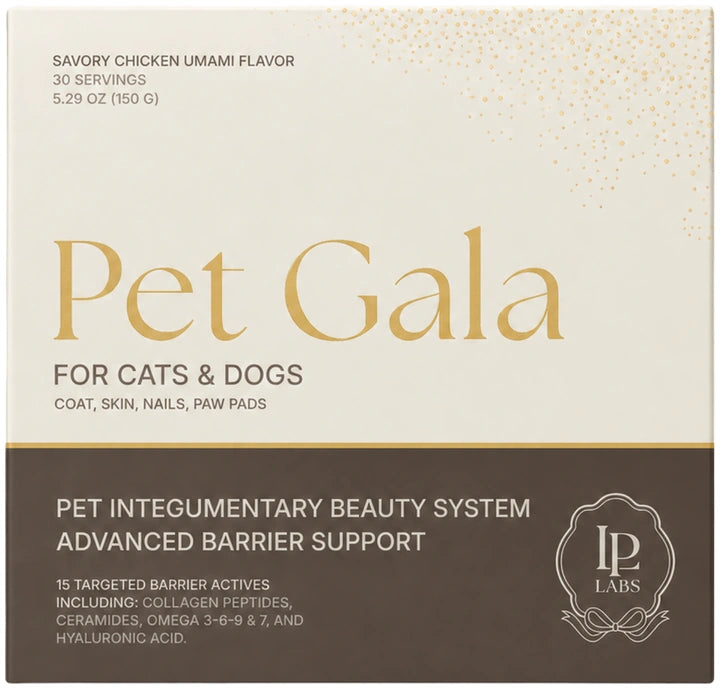
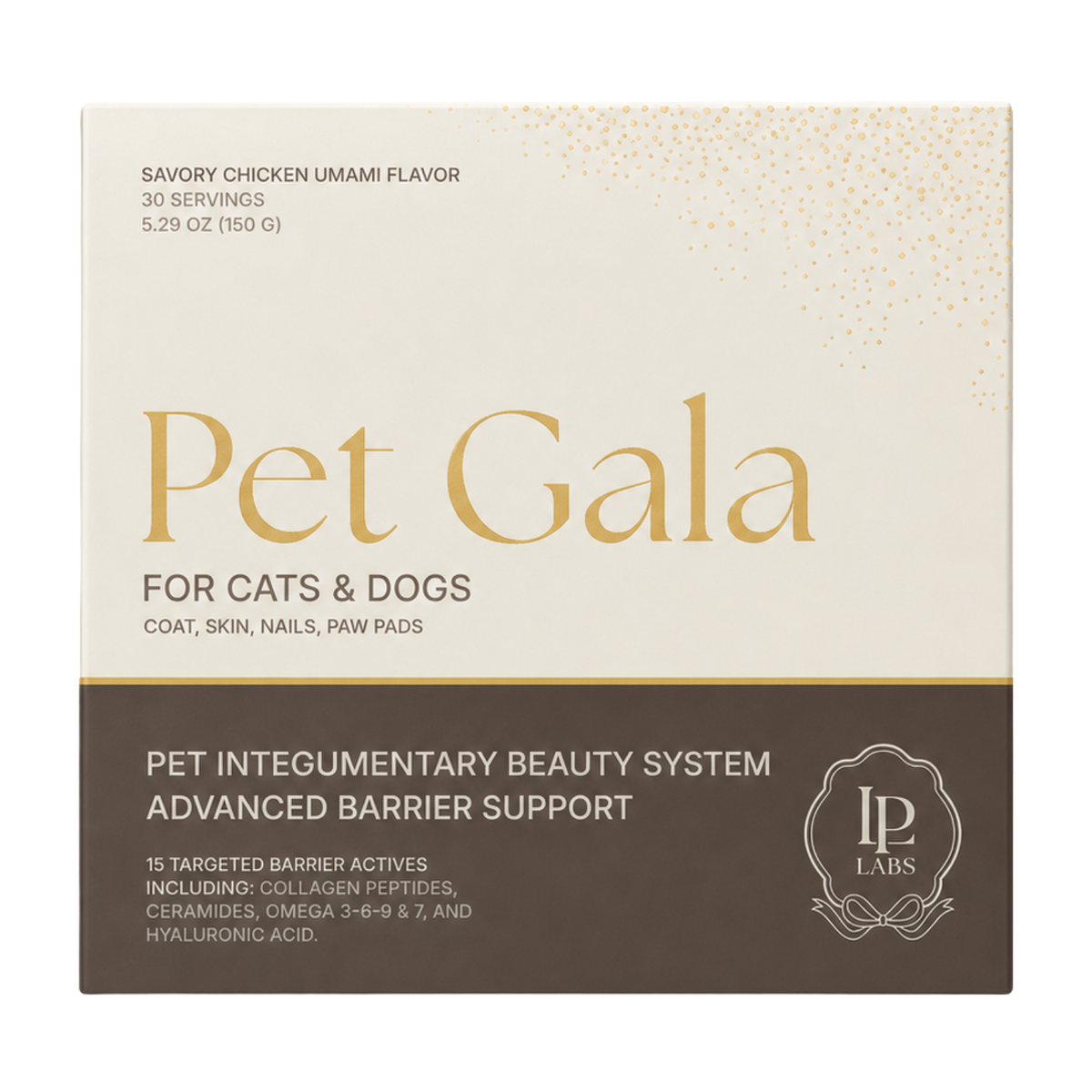
Skin "chews" and supplements can sound interchangeable—the difference is whether you can see the amounts and trust the lot. Pet food ingredients can carry unwanted elements, so careful sourcing and testing genuinely reduce risk (RVA, 2021). That's the lens Pet Gala is built for: a food-mixed skin-and-coat formula with every active disclosed in milligrams—marine collagen (500 mg), ceramides (8 mg), an Omega 3-6-9 (150 mg) blend, and 50 mg of hyaluronic acid for hydration—third-party tested with a lot-level COA you can look up, and dosed for cats rather than generic multi-species amounts.
It's beauty-from-within support for the visible surface, not a treatment for the allergy itself. When the formula fits, the payoff is aesthetic: a coat that reflects light more evenly, less flaking, and skin that looks less reactive. Pet Gala complements—it doesn't replace—parasite control, diet structure, and veterinary diagnosis. Explore Pet Gala →
Red Flags That Deserve a Vet Visit, Not More Guesswork
Knowing when to call the vet is part of good skin care. If your cat has open sores, facial swelling, ear discharge, significant hair loss, or is acting unwell, schedule an exam promptly. Skin allergies commonly present with itching, redness, and hair loss, but those signs can overlap with infections and other conditions that need different treatment.
Bring photos of flare-ups, note any new foods or home products, and track where lesions appear. That record helps your veterinarian move faster from “possible allergy” to a plan that reduces discomfort. The goal is a cat who sleeps normally, grooms normally, and looks like themselves again—sleek, settled, and comfortable.
A Practical Framework for Daily Care and Long-lasting Polish
A practical way to think about cat skin allergy care is to separate diagnosis from daily presentation. Diagnosis is your vet’s lane: ruling out parasites, infection, and food or environmental triggers. Daily presentation is yours: consistent grooming, stable nutrition, and supportive skin-and-coat routines that keep the visible surface calm. Management often involves identifying and avoiding triggers while treating symptoms (Sauvé F, 2023).
That’s also why a beauty-forward skin and coat product can still make sense for a science-minded owner: it doesn’t compete with medical care; it supports the look and feel you’re trying to preserve between vet visits. When the skin looks less reactive and the coat looks more polished, you get the reassurance you can see every day.
“Support the surface daily while your veterinarian sorts the trigger.”
Educational content only. This material is not a substitute for veterinary advice. Always consult your veterinarian about your dog’s specific needs. These statements have not been evaluated by the Food and Drug Administration. Products mentioned are not intended to diagnose, treat, cure, or prevent any disease.
Glossary
- Allergic Dermatitis: Skin inflammation driven by an allergic trigger, often seen as itch, redness, and scabs.
- Flea Allergy Dermatitis: An allergic reaction to flea saliva that can cause intense itching even with few fleas.
- Elimination Diet Trial: A structured feeding plan using a controlled diet to test whether food triggers skin signs.
- Over-Grooming: Excessive licking or chewing of fur that can cause hair breakage and thinning patches.
- Pruritus: The medical term for itching.
- Secondary Infection: Bacterial or yeast overgrowth that can occur after scratching damages the skin barrier.
- Contact Irritant: A substance (like fragranced detergent or litter dust) that can irritate skin on contact.
- Dander: Tiny flakes of skin and coat debris that can accumulate on fur and in the home environment.
- Hypersensitivity: An exaggerated immune response to a trigger that may be harmless to other cats.
Related Reading
Common Feline Integumentary Issues
• Cat Dandruff
• Why Is My Cat Shedding So Much
• Cat Hair Loss
Comfort & Recovery
• Skin & Coat Supplements for Cats
• Cat Nail Supplement
• Best Supplements for Cat Shedding
Ingredient-Level Articles
• Biotin for Cats
• Silica for Cats
• Hyaluronic Acid for Cats
• Ceramides for Cats
References
Summers S. Evaluation of iron, copper and zinc concentrations in commercial foods formulated for healthy cats. PubMed Central. 2022. https://pmc.ncbi.nlm.nih.gov/articles/PMC10812249/
Rollins AW. Nutritional assessment in the cat: Practical recommendations for better medical care. PubMed Central. 2019. https://pmc.ncbi.nlm.nih.gov/articles/PMC10814421/
Heinrich NA. Adverse events in 50 cats with allergic dermatitis receiving ciclosporin. PubMed. 2011. https://pubmed.ncbi.nlm.nih.gov/21545660/
Sauvé F. Itch in dogs and cats. PubMed Central. 2023. https://pmc.ncbi.nlm.nih.gov/articles/PMC10286147/
Roberts ES. Confirmatory field study for the evaluation of ciclosporin at a target dose of 7.0 mg/kg (3.2 mg/lb) in the control of feline hypersensitivity dermatitis. PubMed Central. 2016. https://pmc.ncbi.nlm.nih.gov/articles/PMC11132215/
RVA. Toxic element levels in ingredients and commercial pet foods. PubMed Central. 2021. https://pmc.ncbi.nlm.nih.gov/articles/PMC8546090/
Mueller RS. Allergens in veterinary medicine. PubMed Central. 2016. https://pmc.ncbi.nlm.nih.gov/articles/PMC4716287/
Ahmed. Bioaccumulation of heavy metals in some commercially important fishes from a tropical river estuary suggests higher potential health risk in children than adults. Nature. 2019. https://www.nature.com/articles/s41598-021-00467-4
Miller J. 2023 AAHA Management of Allergic Skin Diseases in Dogs and Cats Guidelines. PubMed. 2023. https://pubmed.ncbi.nlm.nih.gov/37883677/
Hedrick. Evaluation of anti-Fel d 1 IgY ingredient for pet food on growth performance in kittens. 2024. https://www.frontiersin.org/journals/veterinary-science/articles/10.3389/fvets.2024.1355390/full
FAQ
What are cat skin allergies, in simple everyday terms?
Cat skin allergies are sensitivity reactions that show up on the outside: itchiness, redness, scabs, or thinning fur. The same “look” can come from different triggers, which is why a calm, consistent plan matters. Your vet helps sort the cause, while you support daily comfort and coat presentation with steady routines.
Why do cat skin allergies affect coat shine so quickly?
When skin is irritated, cats often over-groom or scratch, which breaks hairs and disrupts the coat’s smooth lay. Even mild inflammation can make fur look lifted, dull, or uneven before you see obvious lesions. A plan that reduces triggers and supports the skin surface tends to restore a more polished look sooner than you’d expect.
What causes a cat allergy skin rash most often?
The most common categories are parasites (especially fleas), food ingredients, and environmental exposures like dust or pollen. These triggers can produce similar rashes and itch patterns, so it’s normal to need a stepwise workup. Start with a vet exam and consistent parasite prevention, then evaluate diet and home irritants without rapid switching.
How can I tell allergies from fleas or mites?
It’s difficult by appearance alone. Flea allergy can cause intense itch with very few visible fleas, and cats may groom evidence away. Because parasites are a common allergen category, vets often start by ruling them out and ensuring prevention is consistent. If itch improves after parasite control, that’s a strong clue.
How to treat cat skin allergies at home safely?
Focus on low-risk steps: keep parasite prevention current, remove fragranced detergents or sprays, wash bedding regularly, and trim nails to reduce self-trauma. Avoid applying human creams because cats lick and ingest residues. If symptoms persist or worsen, involve your veterinarian to rule out infection and guide next steps.
What can I give my cat for skin allergies today?
If your cat is very itchy, the safest “today” move is to book a vet visit and avoid unapproved medications. Prescription options for allergic dermatitis exist, and some require monitoring for side effects under veterinary supervision(Roberts ES, 2016). At home, reduce irritants and keep the coat gently groomed to limit breakage from scratching.
Are cat skin allergies dangerous or mostly cosmetic?
They’re rarely “just cosmetic.” Persistent itching can lead to skin damage, secondary infection, and significant stress. The visible signs—redness, hair loss, scabs—often reflect real discomfort and deserve a structured plan. The good news is that many cats look and feel better once triggers are managed and daily care is consistent.
What is the best cat food for skin allergies?
The “best” option depends on whether food is a true trigger for your cat. Vets often recommend a controlled elimination diet when food allergy is suspected, because it keeps variables tight. Any choice should remain complete and balanced, since deficiencies can worsen skin issues. Once you pick a plan, consistency is what makes it informative and effective.
Can mineral balance in food affect skin and coat appearance?
Yes. Research evaluating commercial cat foods shows essential mineral levels can vary, and imbalances may affect overall health. While minerals aren’t the only factor, coat dullness or slow recovery after irritation can be influenced by the broader nutrition picture. A reputable, consistent diet sets the foundation, and targeted skin-and-coat routines can refine the visible finish.
Do environmental allergies happen even for indoor-only cats?
They can. Indoor cats still encounter dust, molds, cleaning residues, and pollen that comes in on clothing or through windows. Environmental factors are a recognized trigger category for feline skin allergy signs. Small changes—fragrance-free laundry, HEPA filtration, and gentle wipe-downs—can improve daily comfort and coat smoothness.
Are prescription allergy medications safe for cats long term?
They can be appropriate, but safety depends on the medication, the cat, and monitoring. Ciclosporin has been evaluated for feline allergic or hypersensitivity dermatitis, and studies report adverse events that veterinarians watch for during treatment(Heinrich NA, 2011). If your vet prescribes medication, ask what changes to expect and what signs should prompt a recheck.
What side effects should I watch during allergy treatment?
Side effects depend on the therapy, which is why vet guidance matters. In studies of ciclosporin for allergic dermatitis in cats, adverse events were reported and monitoring was emphasized(Roberts ES, 2016). If your cat develops vomiting, diarrhea, appetite changes, lethargy, or worsening skin lesions, contact your veterinarian promptly.
Can supplements interact with prescription allergy medications?
They can, depending on ingredients and your cat’s health status. If your veterinarian is using immune-modulating therapy for allergic dermatitis, it’s especially important to disclose every supplement and topical product so the plan stays coherent. Choose products made for cats with clear quality standards, and introduce only one change at a time.
Are kittens and senior cats managed differently for allergies?
Often, yes. Age affects parasite risk, grooming tolerance, and how aggressively your vet may want to pursue diagnostics or medications. Because allergy signs overlap with infections and other conditions, a veterinary exam is especially valuable at the life-stage extremes. Ask your vet what’s most likely for your cat’s age and what “quick wins” are safest to start with.
Do certain cat breeds get skin allergies more often?
Some breeds may be reported as more prone to skin sensitivity, but any cat can develop allergy signs. What matters most is the individual pattern: where lesions appear, seasonality, and whether parasites or diet changes shift the symptoms. Treat breed as a small clue, not a conclusion, and keep your plan consistent enough to learn from it.
Are cat skin allergies similar to dog skin allergies?
They’re similar in that both can be triggered by food, parasites, and environmental allergens, and both often present with itching and discomfort. But cats may show more over-grooming and subtle coat changes rather than obvious scratching. Because cats groom so efficiently, the “evidence” can disappear quickly, making consistency in prevention and diet even more important.
How fast will I see results after changing food?
With food trials, the timeline varies. Some cats show early behavioral relief (less licking, better sleep), while coat regrowth and density take longer. Because multiple triggers can overlap, a structured plan helps you interpret what’s changing and why. Take weekly photos in consistent light to catch small improvements in redness and coat smoothness.
What quality signals matter most in skin-and-coat supplements?
Look for clear labeling for cats, transparent manufacturing standards, and quality controls that reduce contamination risk. Research notes that unwanted elements can be present in pet food ingredients, which is why sourcing and testing matter(RVA, 2021). Also prioritize consistency: a product you can give daily is more likely to translate into a steadier coat finish you can see.
What is the easiest way to give daily skin support?
Pick one routine your cat tolerates: a consistent feeding schedule, gentle brushing, and a supplement format that doesn’t turn into a daily negotiation. The goal is a calm ritual that supports comfort and a smoother coat presentation. Avoid stacking multiple new products at once; it makes reactions harder to interpret.
What does research say about ciclosporin for feline dermatitis?
Studies have evaluated ciclosporin in cats with allergic or hypersensitivity dermatitis, including its effectiveness and the need to monitor for adverse events. This supports its role as a vet-directed option for some cats when symptoms are significant. If your vet recommends it, ask about expected improvements and what to watch at home.
Discover LPL-01: How This Fits Into a Complete Feline Integumentary Support System
Skin, coat, and nails in cats are not surface traits. They reflect deeper biological systems—barrier integrity, hydration dynamics, lipid balance, and structural protein turnover—working in coordination.
When these systems drift, the signs are subtle but telling: reduced coat softness, increased shedding, dryness, brittle claws, changes in grooming behavior.
This article explores one piece of that system. If you want to understand how true coat quality and skin resilience are built in cats—and what actually drives visible improvement—you need to zoom out.
Start with the underlying science:
- Feline Skin & Coat Framework →
A structured view of how skin, coat, and claw health are maintained across collagen synthesis, lipid nourishment, and barrier function. - Barrier Protection Coverage Modeling →
A systems-level map of which integumentary pathways are most vulnerable—and how layered nutritional inputs can support them. - 2026 Market Research: Best Cat Skin & Coat Supplements →
A feline-focused review of skin and coat formulas shaped by grooming behavior, barrier resilience, coat softness, ingredient quality, and daily usability. - LPL-01 Standard →
The formulation system that translates these models into real-world supplementation—covering multiple pathways in a coordinated way.
Essential Summary
Why are cat skin allergies important?
Cat skin allergies often show up as itch, redness, scabs, or patchy hair loss, and triggers commonly include parasites, food ingredients, and environmental exposures. The most reassuring approach is structured: confirm parasites and infection with your vet, keep diet changes consistent, and support the skin surface daily so your cat looks and feels more comfortable.
Pet Gala is designed for visible skin-and-coat care: a simple daily ritual that supports a smoother look, softer feel, and a more polished coat presentation—especially helpful when you’re managing flare-prone skin and want steady, noticeable upkeep alongside your veterinarian’s plan.
Pet Gala™
From $79
The scratching is completely gone, his coat looks healthy and shiny!
— Lena
He was struggling with itching, now he's glowing.
— Grace
Dealing with cat skin allergies?
If you're searching to understand cat skin allergies
If you’re managing cat skin allergies, the most effective routine is the one you can keep steady: consistent parasite prevention, a diet plan you don’t constantly change, and gentle grooming that protects the coat from breakage. Those steps help your veterinarian interpret what’s happening, but they also improve what you can see—less flaking, fewer new scabs, and a smoother coat finish. Pet Gala fits that reality. It’s not positioned as a replacement for diagnosis or prescription care; it’s daily support for skin, coat, and nails that helps your cat look more comfortable while you work through triggers. For owners who want visible reassurance without adding chaos to the plan, Pet Gala is a simple, consistent layer of care.
Learn about how our DVMs think about the feline barrier
Dr. Sarah Calvin DVM
Pet Gala™
From $79
Explore the visible signs of whole-body wellness
Related Reading
The first sign is rarely a diagnosis. It’s a coat that suddenly looks rough, a line of tiny scabs you feel while petting, or a cat who can’t stop grooming one spot until the fur thins.