Skin and Coat Clues to Systemic Disease: 5 Warning Signs
Read full insightFilaggrin, Tight Junctions, and the Skin Barrier in Cats
By La Petite Labs Editorial 15 min read
Filaggrin, Tight Junctions, and the Skin Barrier in Cats matters because a “behavioral-looking” overgrooming problem can start as a microscopic barrier failure. When the skin’s outer layer dries and the deeper tight junction seams loosen during inflammation, everyday exposures—dust, flea saliva, dry air, friction from licking—can feel intensely itchy. The result is a self-reinforcing itch–lick cycle: licking strips surface oils, raises water loss, and keeps the skin less balanced.
Feline barrier science is less studied than canine, but the clinical pattern is familiar: cats often show hair loss from licking before they show a dramatic rash. That mismatch leads families to try stress fixes first and lose time while the skin becomes more reactive. This page explains the two main barrier layers in owner language, how filaggrin and tight junctions fit into feline skin barrier proteins, and why inflammation is often the turning point. It also connects the biology to what owners can actually do: track outcome cues, reduce household irritants, and arrive at the vet with a clear timeline. For deeper context, the related pages on TEWL in cats, the TH2 allergy pathway in cats, and the cat overgrooming differential help complete the picture.
- Filaggrin, Tight Junctions, and the Skin Barrier in Cats matters because barrier weakness can drive an itch–lick cycle that looks behavioral but starts in the skin.
- Cat skin barrier function depends on both the outer stratum corneum and deeper tight junction “seams,” so problems can persist even when skin looks normal.
- Filaggrin cats searches often focus on one protein, but inflammation can be the switch that makes multiple barrier layers fail together.
- Tight junction disruption is strongly linked to inflammatory skin states, helping explain flare patterns that come and go with stressors.
- Overgrooming is a key clinical focus: licking removes surface lipids, raises water loss, and keeps the barrier uneven.
- Owners can help most by tracking outcome cues (licking time, scabs, dandruff, photos) and bringing a clear timeline to the vet.
- Recovery usually requires both itch control and barrier-friendly routines (humidity, gentle topicals, fewer irritants) while triggers like fleas or allergy are addressed.
The Two-layer Seal That Keeps Cat Skin Comfortable
A cat’s skin barrier is more than “skin thickness.” It is a layered seal that keeps water in and keeps irritants, allergens, and microbes from slipping between cells. Two key parts of cat skin barrier function are the outer “brick-and-mortar” layer (stratum corneum) and the tight junctions that act like zipper seams between living skin cells. When this seal is stressed, the skin’s renewal rate can become uneven, and small exposures start to feel big. Feline atopic skin syndrome is one common setting where barrier weakness and inflammation feed each other (Gentry, 2025).
At home, barrier strain often shows up before obvious sores: dull coat, “static-y” fur, fine dandruff, or a cat that suddenly dislikes being brushed over the back or belly. Some cats feel prickly to the touch or develop tiny scabs that come and go. These are not proof of allergy on their own, but they are clues that the skin’s overhead is low and everyday friction, dry air, or grooming can tip things into itch.
Filaggrin and the Outer Layer: Structure and Hydration
Filaggrin is one of the best-known feline skin barrier proteins owners hear about, even though cat-specific data are more limited than in people. Filaggrin helps bundle keratin inside skin cells and contributes to the outer layer’s structure and hydration chemistry. In broader mammalian research, filaggrin problems can make skin more reactive to irritants and allow more “between-cell” leakiness, lowering the threshold for inflammation (Scharschmidt, 2009). That matters because a cat can look “fine” until a small trigger pushes the skin over the edge.
Owners often interpret this as a personality change: a cat that used to nap calmly now wakes to lick, or refuses cuddling because touch feels irritating. Dry indoor heat, frequent wiping with fragranced products, or a new detergent on bedding can be enough to start the cycle. When the outer layer is thirsty and fragile, grooming becomes both a comfort behavior and a mechanical stressor that keeps the barrier from settling.
Tight Junctions: the Skin’s Deeper Seam Tape
Tight junctions are the skin’s “seam tape,” sitting deeper than the surface flakes. They regulate what can pass between cells, and they help coordinate how the upper layers form. In inflammatory skin conditions, tight junction barrier function can be impaired, meaning the seams loosen when the skin is already irritated (Yokouchi, 2015). A systematic review across atopic dermatitis research also links altered tight junction proteins (like claudins and occludin) with barrier disruption and ongoing inflammation (Katsarou, 2023).
In the home, tight-junction trouble does not look like a single “tight junction symptom.” It looks like skin that cannot settle: a patch that improves for a few days, then flares again after normal grooming or a minor flea exposure. Owners may notice recurring redness in the same zones—chin, belly, inner thighs—without a clear new cause. This is a practical reason to think “barrier plus inflammation,” not just “something touched the skin once.”
Why Inflammation Can Matter More Than One Protein
A common misconception is that filaggrin failure automatically means tight junctions fail in the same way. In experimental work, skin inflammation itself impaired tight junction barrier function, while filaggrin-deficient outer layers alone did not necessarily change tight junction barrier performance (Yokouchi, 2015). The takeaway for worried owners is practical: the barrier is a team, and inflammation can be the factor that turns a manageable weakness into a chronic problem. That is why anti-itch plans often need both “calm the skin” and “protect the seal.”
This also explains why a cat may do well with a simple routine for months, then suddenly spiral after a stressful move, a respiratory infection, or a flea lapse. The trigger is not always a new allergen; sometimes it is a new inflammatory load that makes the seams leaky. When owners see that pattern, it helps to document timing and exposures rather than blaming the cat for “overreacting.”
How Barrier Strain Turns into Chronic Overgrooming
Overgrooming is where barrier science becomes emotionally real. Many cats lick because the skin feels “busy”—tingly, itchy, or burning—long before a rash is obvious. Each licking session removes surface lipids and roughens the outer layer, which can raise transepidermal water loss (TEWL) and leave the skin less balanced. In feline atopic skin syndrome, barrier dysfunction and immune signaling are both part of the picture, so the itch–lick cycle can persist even when the home seems unchanged (Gentry, 2025).
At home, this often looks like “barbering” of the belly or legs, a suddenly thin strip along the flank, or a cat that licks after meals and before sleep. The skin may look normal under the fur at first, which leads families to assume it is purely behavioral. Noticing when licking happens—after litter box use, after play, during quiet evenings—helps separate habit from discomfort and supports a better vet handoff.
“Overgrooming can be a skin sensation problem before it is a behavior problem.”
A Realistic Overgrooming Scenario with a Barrier Root
CASE VIGNETTE: A 6-year-old indoor cat starts licking the lower belly every evening, leaving a smooth “shaved” patch. The family tries more playtime and a calming diffuser, but the licking continues and small scabs appear near the nipples. The pattern fits a skin-driven itch–lick cycle where barrier strain and inflammation keep the sensation going, even when the cat seems relaxed (NKY, 2018).
In real homes, this scenario often overlaps with small changes: a new scented laundry product, a winter humidity drop, or missed flea prevention for “just a month.” The important shift is to treat the licking as a symptom worth investigating, not a misbehavior. Photos taken weekly under the same lighting can reveal subtle redness or new scabs that are easy to miss day to day.
TEWL: Why Dryness Can Behave Like a Medical Problem
TEWL is a measurement of how much water escapes through the skin, and it is a useful way to think about “leakiness” even when TEWL is not being measured at home. When the barrier is porous, skin dries faster, nerve endings are exposed to irritants, and itch signals amplify. Tight junction disruption is one route to increased leakiness, and atopic dermatitis research connects tight junction changes with barrier breakdown and inflammation loops (Katsarou, 2023). This is why “just dryness” can behave like a medical problem in sensitive cats.
Owners can support a more balanced surface by thinking in humidity and friction. Heated winter air, sun-baked window perches, and frequent brushing on a tender area can all worsen water loss. Simple steps—adding a humidifier near favorite sleeping spots, using unscented bedding detergent, and reducing abrasive grooming—often make the skin feel less reactive while the underlying cause is being worked up.
Owner Checklist for Barrier-linked Licking Patterns
OWNER CHECKLIST: Signs the barrier may be driving overgrooming include (1) symmetrical licking on belly or inner thighs, (2) dandruff or “dust” on dark fur, (3) tiny scabs that appear after heavy licking, (4) sensitivity to petting over the back, and (5) flare-ups after dry weather or bathing. These cues do not diagnose allergy, but they point toward cat skin barrier function as a meaningful part of the problem. In cats, barrier dysfunction is discussed as a contributor to allergen penetration and ongoing itch (Gentry, 2025).
Checking at home works best when it is consistent. Pick two body zones to inspect twice weekly, part the fur, and look for pinkness, scale, or broken hairs. Note whether licking is focused (one patch) or roaming (many small areas), because focused licking can also suggest pain or a localized infection. If fleas are not seen, that still does not rule them out in cats that groom intensely.
Filaggrin Cats Searches: Think Teams, Not Single Culprits
When owners search “filaggrin cats,” it is usually because they want a single culprit. The more useful frame is “barrier proteins working as a group,” including filaggrin, lipids, and tight junction components. In atopic skin, tight junction proteins can be altered by inflammatory signals, and IL-17 has been shown to impair tight junctions in skin models, linking immune activity to seam weakness (Yuki, 2016). That kind of cross-talk helps explain why a cat can worsen during a flare even if the original trigger is small.
At home, this group-effect looks like “stacking stressors.” A cat may cope with dry air alone, but dry air plus a flea bite plus a new food topper can push licking into overdrive. Owners can reduce stacking by changing only one variable at a time and keeping routines predictable. This approach also makes it easier for the veterinarian to interpret what helped and what did not.
Overgrooming Differential: Skin, Parasites, Pain, or Stress
The cat overgrooming differential matters because not all licking is barrier-driven. Flea allergy, food allergy, environmental allergy, mites, bacterial or yeast overgrowth, pain (arthritis, bladder discomfort), and stress can all present as licking. Cats are especially good at hiding rash under fur, so the skin can be inflamed even when it looks “clean.” Reviews of feline allergic skin disease emphasize that this is a difficult condition for animals and owners, often requiring stepwise testing and trial plans (NKY, 2018).
Owners can help by separating “where” from “when.” Belly and inner thighs often point toward allergy or barrier issues, while a single flank spot can sometimes suggest pain or neuropathic sensations. Licking that spikes after urination may suggest urinary discomfort rather than skin. A short video of licking episodes—showing intensity and body posture—can be as helpful as photos for the vet.
“Inflammation can loosen the seams, even when the surface looks normal.”
DVM Voice: Clinical Vignette of When Skin Changes Point Deeper Than the Surface
Case provided by Sarah Calvin, DVM
Maverick, a 4-year-old Siamese cat, was brought in for hair loss across his lower abdomen and red, flaky skin lesions that had progressed over the previous month. His owners were unsure whether he was itchy or overgrooming.
Examination showed broken hairs, abdominal alopecia, and lesions consistent with bacterial skin infection. Further testing ruled out fleas, FeLV/FIV, and common fungal causes. Because his grooming pattern suggested deeper discomfort, his veterinarian continued the workup.
Radiographs and urinalysis revealed bladder stones, crystalluria, and blood in the urine. Maverick’s overgrooming was linked to urinary pain — a case where skin changes were secondary to an internal problem.
His care required a staged plan: stabilizing the skin infection, surgically removing the bladder stones, managing pain, transitioning to a therapeutic diet, and supporting skin-barrier recovery with appropriate nutrition and fish oil.
Hair regrowth began by 8 weeks. By 6 months, his coat had fully recovered, with no recurrence after the urinary issue was resolved.
Clinical takeaway: Maverick’s case shows why feline coat loss and overgrooming deserve careful veterinary investigation. Skin and coat health can reflect pain, stress, nutrition, infection, barrier weakness, or internal disease — not just surface-level grooming behavior.
Single-case vignette. Not generalizable. Veterinary diagnosis and oversight are essential for overgrooming, hair loss, skin lesions, urinary signs, pain, or suspected infection.
How to Prepare for a Vet Visit About Barrier-driven Licking
VET VISIT PREP: Bring (1) a timeline of when licking started and what changed in the home, (2) the exact flea prevention product and last dose date, (3) photos of the skin in good light, and (4) a list of any wipes, shampoos, or sprays used. Ask the veterinarian: “Does this pattern fit feline atopic skin syndrome?”, “Could infection or yeast be adding itch?”, and “What is the plan to protect the barrier while we search for triggers?” Barrier dysfunction is recognized as part of feline atopic skin syndrome, alongside immune and microbiome shifts.
Also ask what the first recheck milestone should be. Many cats need a gentler, more balanced plan that includes itch control plus skin-surface care, because waiting for the “perfect diagnosis” can allow the lick cycle to deepen. If the cat is hard to medicate, mention that early; it changes which options are realistic. A good plan fits the household, not just the textbook.
Common Home Mistakes That Keep the Barrier Uneven
“WHAT NOT TO DO” matters because well-meant home fixes can keep the barrier uneven. Avoid (1) frequent bathing with human shampoo, (2) essential oils or fragranced sprays on fur, (3) aggressive brushing over a tender patch, and (4) switching foods repeatedly without a structured diet trial. These steps can strip surface lipids, add irritants, or make it impossible to interpret cause and effect. Cats with allergic skin disease often need careful, stepwise plans rather than rapid product cycling (NKY, 2018).
Also avoid assuming a cone is the solution by itself. A cone can protect skin from damage, but it does not address why the skin feels itchy, and some cats become more stressed and groom harder once the cone comes off. If self-trauma is severe, the vet may recommend short-term protection while inflammation is brought down. The goal is less friction and more recovery time for the barrier.
Break the Itch–lick Loop so Skin Can Rebuild Depth
Recovery strategy starts with breaking the itch–lick loop so the barrier can rebuild. That usually means controlling itch and inflammation quickly enough that the cat stops “polishing” the same skin zones. Once licking slows, the outer layer can regain depth and a more stable renewal rate. Inflammation is a known driver of tight junction barrier impairment in experimental skin models, which supports the idea that calming flares helps the seams function more normally (Yokouchi, 2015).
At home, the first week is about making the skin feel less provocative. Keep nails trimmed to reduce damage from scratching, use soft bedding washed in unscented detergent, and reduce rough play that triggers licking afterward. If the cat is on a vet plan for itch control, give doses on schedule; “as needed” dosing often allows the sensation to return and restarts licking. Owners should expect gradual change, not overnight silence.
Topical Support When Bathing Is Not Realistic
Topical barrier care can be a practical bridge while diagnostics and long-term allergy plans unfold. In cats with pruritic, irritated skin, field research has evaluated topical products designed to support the skin surface and comfort, including mousse formats that are easier than full baths for many cats (Dropsy, 2024). The point is not to “fix filaggrin” directly, but to reduce surface stress so feline skin barrier proteins can do their jobs with more overhead. This is especially useful when the cat’s licking is localized and the household can apply product consistently.
Owners often succeed when application is paired with a calm routine: apply after a meal, use a small amount, and distract with a lick mat or play for a few minutes. Patch-test any new topical on a small area first, because irritated skin can react to even gentle products. If redness spreads, odor develops, or the cat seems painful, the vet should reassess for infection or a different primary driver.
Nutrition as Background Support, Not a Barrier Shortcut
Nutrition does not directly replace missing barrier proteins, but it can be part of a daily plan that supports normal skin turnover and coat quality. Owners often ask whether supplements can “repair the barrier.” The honest answer is that feline-specific evidence for changing filaggrin or tight junction expression with supplements is limited, and expectations should stay realistic. Still, because the skin renews constantly, consistent nutrition that supports normal renewal rate and surface lipids can matter over time, especially in cats with chronic licking patterns.
A practical way to use nutrition is to keep it boring and consistent. Avoid adding multiple new treats, toppers, and supplements at once, because any one of them can trigger stomach upset or complicate a diet trial. If a veterinarian recommends a supplement, give it daily for a set window and document outcome cues rather than relying on memory. This “one change at a time” approach protects both the cat and the diagnostic process.
What to Document for the Vet: Outcome Cues That Matter
“WHAT TO TRACK” RUBRIC: Document (1) minutes of licking per day (estimate), (2) number of new scabs weekly, (3) dandruff level on a dark cloth after petting, (4) coat regrowth in the barbered area (photo grid), (5) flare triggers like dry days or vacuuming, and (6) response to topical days versus skipped days. This turns a vague complaint into a clear story for the veterinarian and helps judge whether the plan is creating a gentler, more balanced skin surface. It also supports smarter decisions about when to escalate diagnostics.
Tracking works best when it is simple enough to keep doing. A note on the phone with two numbers—licking time and scab count—often beats a complicated spreadsheet. Use the same camera distance and lighting for photos, because fur color and shadows can mimic redness. If the cat is on an elimination diet, track stool quality too; digestive upset can increase grooming and muddy the picture.
Cats Versus Dogs: What Transfers and What Does Not
Cats are not small dogs, and that matters when comparing barrier science. Canine studies have more direct measurements of tight junction protein patterns in allergic skin, and those findings help frame what might be happening in cats, but they cannot be copied over without caution. In cats, the best-supported clinical message is that barrier dysfunction, microbiome shifts, and immune signaling can travel together in feline atopic skin syndrome. This page connects that biology to the real-world problem of chronic overgrooming that is often mislabeled as purely behavioral.
For owners, the practical difference is that cats may show fewer classic “eczema-looking” lesions and more grooming-driven hair loss. That is why cross-links matter: the pages on TEWL in cats, the TH2 allergy pathway in cats, and the cat overgrooming differential help build a full picture. When the household treats the skin as the starting point, behavior plans become more effective too, because the cat is not trying to self-soothe a constant sensation.
Putting Filaggrin, Tight Junctions, and the Skin Barrier in Cats to Work
Putting Filaggrin, Tight Junctions, and the Skin Barrier in Cats into action means choosing a recovery strategy that matches the cat’s pattern. If licking is daily and focused, the priority is fast itch control plus barrier-friendly routines so the skin can regain depth. If flares are seasonal, the priority is anticipating trigger months and starting surface care early. Tight junction research in atopic dermatitis highlights how barrier disruption and inflammation can reinforce each other, which supports early, consistent flare management rather than waiting for severe lesions (Katsarou, 2023).
Owners should call the vet promptly if there is open skin, swelling, odor, pus, fever, sudden lethargy, or a cat that cannot settle due to itch. Chronic overgrooming is not “just cosmetic”; it can become painful and can invite infection. With a clear timeline, good photos, and a realistic home routine, many cats can move toward less uneven skin days and a calmer coat.
“Tracking outcome cues turns guesswork into a clearer veterinary plan.”
Educational content only. This material is not a substitute for veterinary advice. Always consult your veterinarian about your dog’s specific needs. These statements have not been evaluated by the Food and Drug Administration. Products mentioned are not intended to diagnose, treat, cure, or prevent any disease.
Glossary
- Skin barrier - The skin’s layered seal that keeps water in and irritants out.
- Stratum corneum - The outermost layer of skin made of flattened cells and surface lipids.
- Filaggrin - A protein involved in organizing keratin and supporting outer-layer structure and hydration chemistry.
- Tight junctions - “Seams” between skin cells that regulate what passes between them.
- Claudins - A family of tight junction proteins that help determine how leaky the seams are.
- Occludin - A tight junction protein involved in maintaining seam integrity.
- TEWL (Transepidermal Water Loss) - Water escaping through skin; higher TEWL suggests a leakier barrier.
- Feline atopic skin syndrome - A common allergic skin pattern in cats involving itch, barrier dysfunction, and immune signaling.
- Overgrooming (barbering) - Repetitive licking that breaks hairs and creates thin or bald patches.
Related Reading
Common Feline Integumentary Issues
• Cat Dandruff
• Why Is My Cat Shedding So Much
• Cat Hair Loss
Comfort & Recovery
• Skin & Coat Supplements for Cats
• Cat Nail Supplement
• Best Supplements for Cat Shedding
Ingredient-Level Articles
• Biotin for Cats
• Silica for Cats
• Hyaluronic Acid for Cats
• Ceramides for Cats
References
Yokouchi. Epidermal tight junction barrier function is altered by skin inflammation, but not by filaggrin-deficient stratum corneum. PubMed. 2015. https://pubmed.ncbi.nlm.nih.gov/25511077/
Katsarou. The Role of Tight Junctions in Atopic Dermatitis: A Systematic Review. PubMed Central. 2023. https://pmc.ncbi.nlm.nih.gov/articles/PMC9967084/
Gentry. Updates on the Pathogenesis of Canine Atopic Dermatitis and Feline Atopic Skin Syndrome: Part 2, the Skin Barrier, the Microbiome, and Immune System Dysfunction. PubMed. 2025. https://pubmed.ncbi.nlm.nih.gov/39732547/
Scharschmidt. Filaggrin deficiency confers a paracellular barrier abnormality that reduces inflammatory thresholds to irritants and haptens. PubMed. 2009. https://pubmed.ncbi.nlm.nih.gov/19733297/
NKY. Atopic dermatitis in cats and dogs: a difficult disease for animals and owners. PubMed Central. 2018. https://pmc.ncbi.nlm.nih.gov/articles/PMC6172809/
Yuki. Impaired Tight Junctions in Atopic Dermatitis Skin and in a Skin-Equivalent Model Treated with Interleukin-17. PubMed Central. 2016. https://pmc.ncbi.nlm.nih.gov/articles/PMC5010286/
Dropsy. Performance of applications of Ophytrium-containing mousse with or without shampoo in cats with pruritic and irritated skin: a multicentre prospective field trial. PubMed Central. 2024. https://pmc.ncbi.nlm.nih.gov/articles/PMC11437543/
FAQ
What does Filaggrin, Tight Junctions, and the Skin Barrier in Cats mean?
Filaggrin, Tight Junctions, and the Skin Barrier in Cats refers to how a cat’s skin keeps water in and irritants out. Filaggrin helps build the outer layer’s structure, while tight junctions act like seams between deeper skin cells.
When either layer is stressed, cats can feel itchy or “tingly” and respond by licking. That licking then strips surface oils and keeps the barrier from settling, which is why overgrooming can be a skin problem first, not a behavior problem.
Why can a skin barrier problem look like anxiety?
Cats often lick to self-soothe, so discomfort and stress can look identical from across the room. If the skin is leaky and dry, small triggers can feel intense, and licking becomes a reliable way to quiet the sensation.
Clues that point to skin first include symmetrical belly or inner-thigh licking, dandruff, tiny scabs, or flare-ups during dry weather. A veterinarian can still assess stress, but treating the skin sensation often changes the behavior more than enrichment alone.
Are filaggrin cats issues proven the same as humans?
Cat-specific filaggrin research is smaller than human research, so it is not appropriate to assume identical genetics or outcomes. However, the basic biology of barrier proteins is shared across mammals, and filaggrin is widely recognized as important for outer-layer structure.
The practical takeaway is not “a cat has a filaggrin mutation,” but “the barrier may have low overhead.” That framing supports sensible steps: reduce irritants, control itch early, and track patterns for the vet.
What are tight junctions in cat skin, in plain terms?
Tight junctions are like seam tape between skin cells. They help control what can slip between cells and help coordinate how the upper layers form.
When the skin is inflamed, those seams can loosen, making the surface feel more reactive. That can show up at home as skin that never fully settles—patches that improve briefly, then flare again after normal grooming or a minor trigger.
Can inflammation damage tight junction function in skin?
Yes. Experimental work shows that skin inflammation can impair tight junction barrier function, meaning the seams become less effective when the skin is already irritated.
For owners, this supports early flare management. Waiting until a cat has open sores can allow more leakiness and more itch. A veterinarian-guided plan that calms inflammation and protects the surface often helps the skin regain depth over time.
Does filaggrin loss automatically mean tight junction failure too?
Not necessarily. In one experimental model, inflammation impaired tight junction barrier function, while a filaggrin-deficient outer layer alone did not automatically change tight junction barrier performance.
This is why a cat can have “dry, touchy” skin for months, then suddenly spiral after a flea lapse or stressful event. The trigger may be the inflammatory load that makes multiple barrier layers behave more unevenly at once.
How does a weak barrier lead to chronic overgrooming?
When the barrier is leaky, skin dries faster and irritants reach nerve endings more easily. That creates itch or burning sensations that drive licking.
Licking then removes surface lipids and roughens the outer layer, raising water loss and keeping the skin less balanced. This loop is a common reason cats develop smooth “barbered” patches on the belly or legs even when the skin looks normal at first.
What home signs suggest cat skin barrier function is strained?
Common signs include dandruff, a dull coat, tiny scabs after licking, sensitivity to petting over the back, and symmetrical hair loss on the belly or inner thighs.
Patterns matter: flare-ups during dry weather, after bathing, or after a missed flea dose often point toward a barrier-plus-inflammation problem. Photos taken weekly in the same lighting help reveal subtle redness that is easy to miss day to day.
How is feline atopic skin syndrome connected to barrier proteins?
Feline atopic skin syndrome is discussed as involving barrier dysfunction alongside immune and microbiome changes. That means allergens and irritants may penetrate more easily, and inflammation can keep the barrier from settling.
At home, this can look like chronic overgrooming with only mild visible rash. Because cats hide lesions under fur, the veterinarian often needs a stepwise plan to rule out fleas, infection, and food triggers while also protecting the skin surface.
Is TEWL testing required to manage a cat’s barrier problem?
No. TEWL (water loss through skin) is a helpful concept, but most cats are managed without formal TEWL measurements. Owners can still act on the idea by reducing dryness and friction.
Humidity support, unscented laundry, and gentler grooming can make the surface feel less reactive. The veterinarian’s role is to identify the main driver—fleas, allergy, infection, or pain—while the household supports a calmer skin environment.
How do cats differ from dogs in barrier research?
Dogs have more direct research on allergic skin and barrier measurements, while feline data are more limited. That does not make cat skin problems less real; it means conclusions must be applied with care.
Clinically, cats often show more grooming-driven hair loss and fewer classic “eczema-looking” patches. Comparing this page with Filaggrin, Tight Junctions, and the Skin Barrier in Cats versus the dog-focused barrier page can help owners see what translates and what does not.
What should be documented for the vet about overgrooming?
Document where licking happens, when it happens, and what the skin looks like under the fur. Include flea prevention dates, diet details, and any wipes, shampoos, or sprays used.
A short video can show intensity and posture, which helps separate itch from pain. Weekly photos of the same patch help track coat regrowth and scab formation. This information often speeds up decisions about parasite control, infection testing, and allergy trials.
What not to do when a cat is licking bald patches?
Avoid human shampoos, essential oils, fragranced sprays, and frequent scrubbing baths. These can strip surface lipids and add irritants to already reactive skin.
Also avoid rapid food switching without a structured diet trial. It makes cause-and-effect impossible to interpret. If self-trauma is severe, a cone may be needed temporarily, but it should be paired with veterinarian-guided itch control and barrier-friendly routines.
Can topical products support the skin barrier in cats?
Some topical products are designed to support the skin surface and comfort, which can be useful while the underlying cause is investigated. A multicentre field trial in cats evaluated an Ophytrium-containing mousse approach for pruritic, irritated skin(Dropsy, 2024).
Topicals are not a substitute for flea control or prescription itch management when needed. They work best as part of a consistent routine: patch-test first, apply gently, and track whether scabs and licking time change over a few weeks.
When should a cat with overgrooming be seen urgently?
Urgent signs include open or bleeding skin, swelling, pus, strong odor, fever, sudden lethargy, or a cat that cannot rest due to itch. These can indicate infection or severe inflammation.
Also seek prompt care if licking is focused on one painful spot, if urination seems uncomfortable, or if appetite drops. Overgrooming can be driven by skin disease, pain, or both, and delaying care can allow deeper damage that takes longer to settle.
How long does it take to see barrier-related changes at home?
Itch comfort can change within days when the right trigger is addressed, but visible coat regrowth and fewer scabs usually take weeks. The skin needs time to rebuild depth and normalize its renewal rate.
Tracking outcome cues helps avoid false impressions. If licking time drops but dandruff remains, the plan may be calming inflammation while the surface is still dry. If scabs increase, infection or fleas may be adding itch and should be reassessed.
Can diet alone fix Filaggrin, Tight Junctions, and the Skin Barrier in Cats?
Diet can support normal skin turnover and coat quality, but it cannot reliably “fix” barrier proteins on its own. When a cat is overgrooming, the primary driver may be fleas, allergy, infection, or pain, and those need targeted veterinary care.
Nutrition works best as a consistent background support while the main trigger is identified. If a food trial is recommended, it must be strict to be meaningful. Adding multiple toppers or treats can derail the trial and prolong the itch–lick cycle.
Is Pet Gala™ safe to use with prescription itch medications?
Many supplements can be used alongside prescription plans, but safety depends on the cat’s full history and other products being used. The safest approach is to show the label and ingredient list to the veterinarian and confirm it fits the current plan.
If a supplement is added, add only one new item at a time and document stool, appetite, and licking time. If the veterinarian agrees it is appropriate, Pet Gala™ can be used as part of a daily plan that supports normal skin and coat maintenance.
What side effects should owners watch for with new skin supplements?
The most common issues with new supplements are digestive: softer stool, vomiting, gas, or reduced appetite. Some cats also become picky if a powder or chew changes food smell.
Stop the new product and contact the veterinarian if vomiting repeats, appetite drops for more than a day, or the cat seems lethargic. If the cat is on an elimination diet, any supplement can invalidate the trial unless the veterinarian approves it as compatible.
How should Pet Gala™ be introduced for a sensitive cat?
Sensitive cats do best with slow, simple changes. Introduce one new product at a time, keep the rest of the routine stable, and watch stool, appetite, and licking time for a full week.
If the veterinarian agrees it fits the plan, Pet Gala™ can be used as part of a daily plan that supports normal skin renewal rate and coat quality. Any worsening itch, new scabs, or digestive upset should trigger a pause and a check-in.
What questions help decide if Filaggrin, Tight Junctions, and the Skin Barrier in Cats applies?
Useful questions include: Is licking symmetrical and recurring? Are there scabs, dandruff, or sensitivity to touch? Do flares track with dry weather, bathing, or missed flea prevention?
If the answer is yes, barrier strain may be part of the story, even if the skin looks normal at first. The next step is a veterinarian-guided differential: parasites, infection, allergy trials, and pain screening, while the household reduces irritants and friction.
Do filaggrin, tight junctions, and the skin barrier change with age in cats?
Age can change grooming patterns and skin comfort. Older cats may groom less efficiently in some areas and over-focus on others, and arthritis can make grooming posture uncomfortable, which complicates the picture.
If a senior cat suddenly starts intense licking, the differential should include pain and urinary discomfort in addition to allergy and barrier issues. A vet exam can identify tender joints, bladder pain, or infection signs that would not be obvious from the skin alone.
Discover LPL-01: How This Fits Into a Complete Feline Integumentary Support System
Skin, coat, and nails in cats are not surface traits. They reflect deeper biological systems—barrier integrity, hydration dynamics, lipid balance, and structural protein turnover—working in coordination.
When these systems drift, the signs are subtle but telling: reduced coat softness, increased shedding, dryness, brittle claws, changes in grooming behavior.
This article explores one piece of that system. If you want to understand how true coat quality and skin resilience are built in cats—and what actually drives visible improvement—you need to zoom out.
Start with the underlying science:
- Feline Skin & Coat Framework →
A structured view of how skin, coat, and claw health are maintained across collagen synthesis, lipid nourishment, and barrier function. - Barrier Protection Coverage Modeling →
A systems-level map of which integumentary pathways are most vulnerable—and how layered nutritional inputs can support them. - Feline Skin & Coat Evidence Framework →
A breakdown of what is strongly supported in the literature versus what is still emerging in feline skin and coat science. - LPL-01 Standard →
The formulation system that translates these models into real-world supplementation—covering multiple pathways in a coordinated way.
Essential Summary
Why Is Filaggrin And Tight Junction Biology Important?
When filaggrin and tight junction “seams” are stressed, a cat’s skin loses water and becomes easier to irritate, which can drive chronic overgrooming. The most effective plans calm inflammation, reduce friction, and support a gentler daily routine while the veterinarian works through allergy and infection causes.
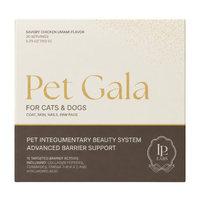
Pet Gala can be part of a daily plan that supports normal skin renewal rate and coat quality, especially when a cat’s barrier feels easily irritated. It should be used alongside veterinarian-guided itch control, parasite prevention, and barrier-friendly home routines—not as a stand-alone solution.
Pet Gala™
Starting at $79/mo
The scratching is completely gone, his coat looks healthy and shiny!
— Lena
He was struggling with itching, now he's glowing.
— Grace
Considering Cat Skin Barrier Support?
If You’re Researching Cat Barrier Proteins, Here’s What Matters Most
For cats stuck in an itch–lick cycle, the most helpful “next step” is usually a plan that supports normal barrier comfort while the veterinarian checks for fleas, infection, allergy triggers, and pain. Look for options that fit real cat life: easy-to-use formats, simple ingredient lists, and routines that reduce friction and dryness. If a veterinarian recommends nutrition support, it should be consistent and measured, with outcome cues documented over weeks. Used this way, supplements can be part of a daily plan that supports normal skin renewal rate and coat quality, without replacing medical care.
Learn about how our DVMs think about the feline barrier
Dr. Sarah Calvin DVM
Pet Gala™
Starting at $79/mo
Explore the visible signs of whole-body wellness
Related Reading
When the skin’s outer layer dries and the deeper tight junction seams loosen during inflammation, everyday exposures—dust, flea saliva, dry air, friction from licking—can feel intensely itchy. The result is a self-reinforcing itch–lick cycle: licking strips surface oils, raises water loss, and keeps the skin less balanced.