

Astaxanthin for Dogs

What this antioxidant protects, when it helps, and how to dose it safely.

By La Petite Labs Editorial 15 min read

As Seen On

  • AVMA, American Veterinary Medical Association
  • Today’s Veterinary Business
  • Petfood Industry
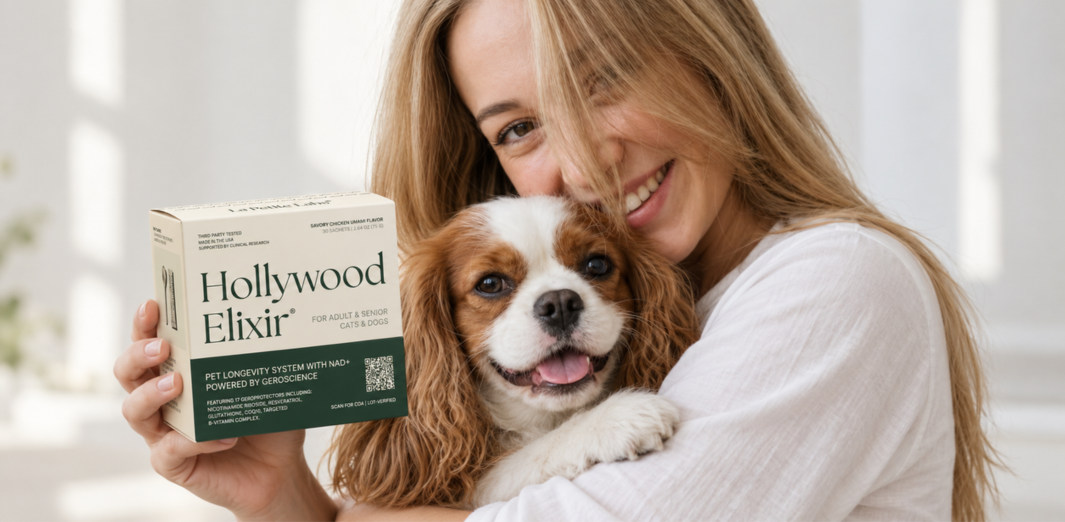
Woman hugging a golden retriever while holding a Hollywood Elixir box
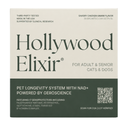
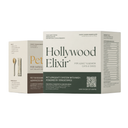
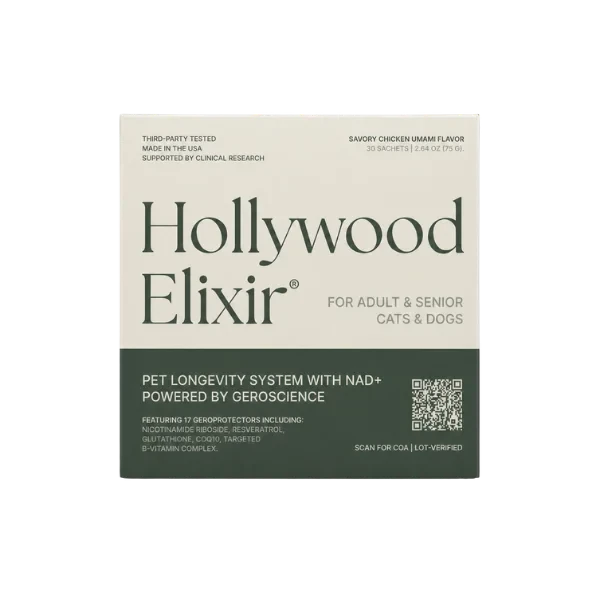
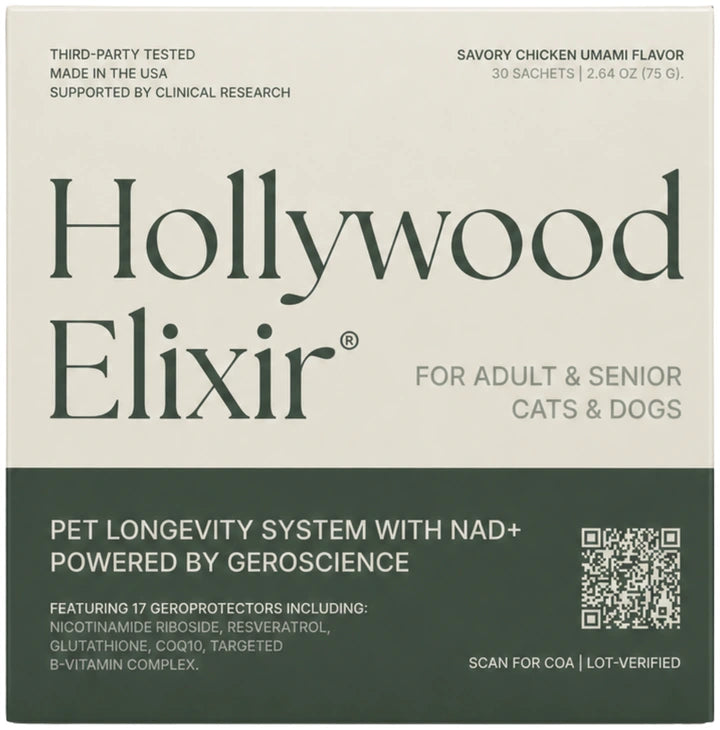
Hollywood Elixir® Senior Dog Supplement

Contains 2 mg Astaxanthin

From$50/moSave up to 47%Save up to 44%Shop Now
Contents

Yes, astaxanthin is generally safe for dogs when used appropriately, and yes dogs can take it — it’s a well-studied algae-derived antioxidant linked to lower oxidative stress and steadier immune function. Most owners don’t arrive for a “hack”; they arrive because something shifted: less spring on the stairs, a tired-looking coat, slower recovery.

The question isn’t whether one ingredient changes everything. It’s whether there’s a safe way to support a dog’s long-term resilience without turning daily care into a chemistry project. Astaxanthin is appealing because it’s straightforward: sourced from algae, absorbed and distributed in the body, easy to fold into good food and vet care. Still, a careful owner hits a tension — if you can buy a single astaxanthin supplement, why choose a broader formula? Because aging is rarely a single-nutrient story; oxidative stress, recovery, appetite, and comfort are intertwined. A system-level product supports that network without a complicated stack. That’s the role Hollywood Elixir is built to play: not a single-nutrient replacement, but a coherent approach to graceful aging.

  • Astaxanthin for dogs is quiet antioxidant support, not a dramatic intervention.
  • Is it safe for dogs? In dog studies, astaxanthin was assessed for safety at recommended amounts with no adverse effects reported [3].
  • Because it’s absorbed and distributed in the body, product quality and consistency matter as much as the ingredient.
  • Owners most often seek it for long-term vitality, immune steadiness, and visible skin-and-coat polish.
  • Diet context matters: fat balance and overall food quality shape how antioxidant support performs.
  • Dosage is vet-guided: skip internet math, especially alongside medications.
  • A system-level formula makes sense when you want broader aging support beyond a single nutrient.

Astaxanthin and the Quiet Work of Supporting Dogs over Time

Astaxanthin for dogs sits in a small, interesting category: it’s not a trendy “detox,” and it’s not a miracle ingredient. It’s a pigment found in certain algae and marine foods, valued because it helps neutralize oxidative stress—one of the quiet pressures that accumulates with age, activity, and everyday inflammation. In dogs, oxidative stress is tied to how cells handle wear-and-tear, which is why owners often look at astaxanthin when they’re thinking about long-term comfort, resilience, and vitality [1].

A useful way to frame astaxanthin supplements for dogs is as “support,” not “replacement.” A good diet matters, but antioxidant needs can shift with lifestyle, stress, and the broader fat balance of the diet—especially the relationship between omega-6 and omega-3 fats, which influences how antioxidant support performs in the body [1].

Woman holding a Hollywood Elixir box beside a pug, a terrier and a food bowl

What Astaxanthin Is, Where It Comes from, and Why It Matters

Astaxanthin is a carotenoid—the same family of compounds that gives certain plants and marine organisms their vivid color. In dogs, its relevance comes from antioxidant activity: it can help reduce oxidative stress, which is one of the background forces associated with aging and recovery [2].

You’ll see it described as coming from algae, and that’s often the preferred source for a consistent, supplement-grade ingredient. Because it’s fat-soluble, it’s typically paired with oils or delivered in a format designed to improve absorption. The best products make this clear on the label without overselling outcomes.

Astaxanthin rarely works alone — it’s most useful as part of a broader antioxidant and cellular-energy routine, which is why many guardians read it alongside NAD+ support for senior dogs and CoQ10, and talk the whole plan over with their vet.

Woman in sportswear holding a Hollywood Elixir box beside a black-and-tan dog outdoors

Oxidative Stress in Dogs: a Background Pressure Worth Noticing

Oxidative stress is not a diagnosis; it’s a condition of imbalance. It happens when reactive compounds outpace the body’s ability to neutralize them. In dogs, oxidative stress can rise with intense exercise, environmental exposures, chronic inflammation, and the simple passage of time.

This is why antioxidants are discussed in “maintenance” language, and it helps to understand how antioxidants support cellular aging in dogs before settling on any single ingredient. The goal isn’t to shut down normal biology; it’s to support the body’s own capacity to stay in balance. For many owners, that translates into a preference for steady, low-drama support rather than aggressive interventions.

Woman holding a Hollywood Elixir box above her forehead beside a Bernese mountain dog outdoors

Absorption and Delivery: Why Form Matters as Much as Ingredient

One of the more practical points in the research is that astaxanthin is absorbed in dogs and can reach significant concentrations in tissues. That matters because it moves the conversation from “nice idea” to “biologically plausible.” If a compound can’t be absorbed, it can’t do much.

Absorption also depends on context. Because astaxanthin is fat-soluble, giving it with food can be sensible. If your dog has a sensitive stomach, the format (soft chew, capsule, oil-based delivery) may matter as much as the ingredient itself.

Golden retriever nuzzling a woman holding a Hollywood Elixir box on the grass beside a food bowl

Benefits Owners Look for, and the Claims to Avoid

The astaxanthin benefits owners care about fall into three buckets — oxidative balance, immune support, and visible skin and coat. Evidence suggests astaxanthin may enhance immune function and reduce oxidative stress in dogs, which is why it’s used as a general wellness ingredient.

Keep expectations measured. Supplements support normal function; they don’t replace veterinary care, and they don’t override poor diet or unmanaged disease. The best outcomes come from consistency — a stable routine, a stable diet, and a supplement your dog tolerates well.

“The best supplement decisions feel boring in the moment—and reassuring months later.”

Diet Context: Fat Balance and the Antioxidant Conversation

Diet composition can change how antioxidant support “lands.” In particular, the balance of omega-6 and omega-3 fatty acids can influence the effectiveness of antioxidants like astaxanthin. If a dog’s diet is heavy in omega-6 fats and light on omega-3s, the body may be managing a different inflammatory tone than intended.

This doesn’t mean you need to perfect your dog’s diet before considering supplements. It means the best astaxanthin supplements for dogs tend to work best when the rest of the plan is reasonable: quality protein, appropriate calories, and a fat profile that isn’t pushing the body toward constant “irritation mode.”

Overhead view of a black-and-white dog beside a food bowl and Hollywood Elixir box

Quality Signals in Astaxanthin Supplements for Dogs

Choosing an astaxanthin supplement for dogs is less about hype and more about signals of care. Look for clear labeling, conservative claims, and manufacturing practices that suggest consistency. If a brand promises dramatic transformations, it’s usually compensating for weak transparency.

Also consider the “stack.” If your dog already takes fish oil, joint support, or a multivitamin, you may be doubling up on ingredients that affect digestion or appetite. A vet can help you decide whether to simplify, rotate, or choose a formula that supports multiple systems without unnecessary overlap.

Woman smiling beside a golden retriever, a green food bowl and a Hollywood Elixir box

Side Effects, Interactions, and Common-sense Guardrails

Side effects with antioxidants are usually not dramatic, but they can happen. The most common issues owners report with new supplements are digestive: softer stool, gas, or a dog who suddenly seems picky. If you notice changes, pause and reassess rather than pushing through.

Interactions are the more important concern. Dogs on long-term medications, dogs with liver or kidney disease, and dogs with complex medical histories should only add new products with veterinary oversight. Even when an ingredient is generally well tolerated, the individual context is what determines safety.

Man holding a Hollywood Elixir box while sitting on an outdoor sofa with a golden retriever

Life Stage and Size: Different Dogs, Different Priorities

Life stage changes the conversation. For young, healthy dogs, the priority is usually diet quality and avoiding unnecessary supplementation. For middle-aged and senior dogs, owners often look for support that feels subtle but meaningful—helping the dog stay comfortable, engaged, and resilient as the years add up [4].

Breed and size matter, too. Small dogs can be more sensitive to dose changes, while large dogs may have different mobility and recovery demands. This is another reason to treat astaxanthin dosage for dogs as a plan, not a number pulled from the internet.

How to Compare Products Without Getting Lost in Label Noise

If you’re comparing the best astaxanthin for dogs, it helps to separate “ingredient quality” from “whole-formula value.” Ingredient quality is about source (often algae), stability, and transparent labeling. Whole-formula value is about whether the product supports the broader system that aging dogs rely on: energy production, cellular repair, and the body’s ability to handle daily oxidative load — the same energy-and-mitochondria territory covered by CoQ10 for mitochondrial and heart support in dogs.

This is where many owners get stuck: they can find an astaxanthin supplement for dogs, but they still want something that feels coherent—supporting more than one narrow target. A system-level formula can make sense when your goal is not a single “before/after,” but steadier comfort, steadier energy, and a dog who seems more like themselves over time.

See how cells make, use and recycle NAD+ in our NADome and NADomics guide.

“Support is a long-horizon word: it’s about steadiness, not spectacle.”

Woman sitting with a beagle in a kitchen while holding a Hollywood Elixir box

DVM Voice: Clinical Vignette of a Common Pattern in Senior Dog Aging

Case provided by JoAnna Pendergrass, DVM

Rex, a 7-year-old Labrador Retriever, was brought in after his owner noticed he was slower to rise, hesitant on stairs, and less able to play as before. Examination showed stiffness and reduced hip mobility; radiographs confirmed degenerative joint changes.

His care required weight management, veterinary-guided pain control, nutritional support, and rehabilitation — a comprehensive plan, but one started only after visible decline appeared.

Clinical takeaway: Rex’s case reflects the value of proactive aging support: maintaining lean body condition, monitoring mobility early, and supporting cellular resilience, antioxidant defense, and healthy inflammatory balance before decline becomes obvious.

Single-case vignette. Not generalizable. Veterinary oversight is essential for pain, stiffness, or suspected joint disease.
Explore Hollywood Elixir Research →
Spotted gray dog beside a Hollywood Elixir box held in a person's hand

Dosing Decisions That Belong in a Vet Conversation

Astaxanthin dosage for dogs should be treated as a veterinarian-led decision, not a DIY calculation. Dogs vary widely in size, health status, and what else they’re already eating. The research base supports that astaxanthin is absorbed in dogs and can reach meaningful tissue levels, which is one reason dosing deserves care rather than guesswork [3].

If you’re adding any new supplement, start by bringing your vet the exact label, the full ingredient list, and your dog’s current medications. That conversation is especially important for seniors, dogs with chronic conditions, or dogs on long-term prescriptions. The goal is a plan that’s safe, consistent, and easy to maintain.

Golden retriever nuzzling a man holding a Hollywood Elixir box beside a food bowl

Safety, Tolerance, and When to Pause or Stop
Safety questions are fair, because antioxidants get misread as “always better.” In dog studies evaluating supplementation, astaxanthin was assessed for safety at recommended amounts, with no adverse effects reported in that context [3]. That doesn’t make every product interchangeable, and it doesn’t mean more is better — it means the ingredient itself has a reassuring safety profile when used appropriately.

The practical checklist is simple: choose a reputable brand, avoid stacking products with overlapping ingredients, and watch for digestive upset or appetite changes when introducing something new. If anything feels off, stop and call your veterinarian.

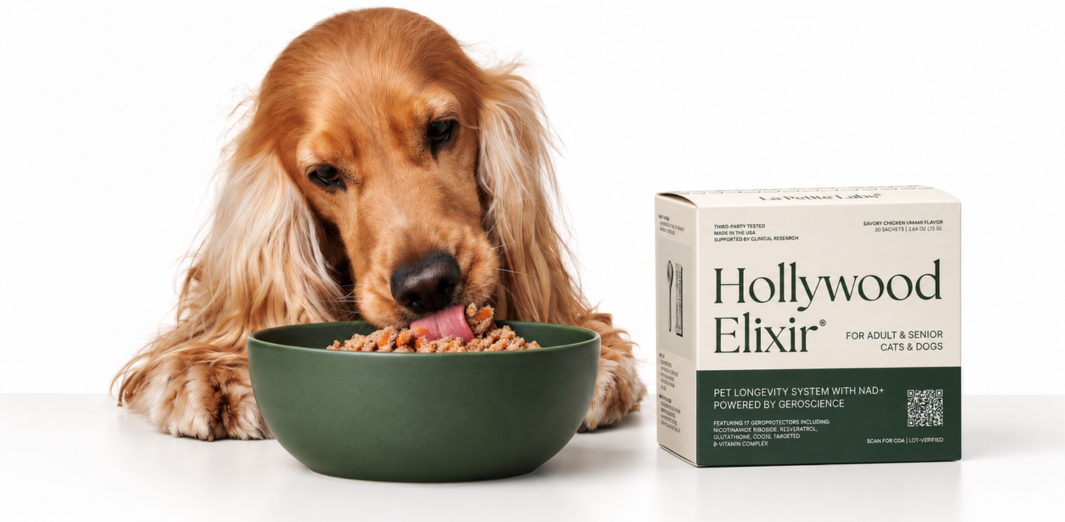
Golden spaniel eating from a green bowl beside a Hollywood Elixir box

Immune Resilience: What Support Can Reasonably Mean

Owners often ask about astaxanthin for dogs benefits in the context of immune resilience. The evidence base in dogs suggests dietary astaxanthin can enhance aspects of immune response, consistent with its role in helping the body manage oxidative stress [4]. This is best understood as support for normal function—helping the body stay steady—rather than a promise of protection from illness.

Immune support is also where “system thinking” matters. Sleep, stress, dental health, gut tolerance, and fatty acid balance can all influence how a dog’s immune system behaves day to day. A supplement can be a piece of that picture, but it shouldn’t be the whole picture.

Skin and Coat: the Visible Side of Oxidative Balance

Skin and coat are among the most visible reasons people explore astaxanthin supplements for dogs. Research notes that astaxanthin may support skin and coat health, likely because oxidative stress can show up at the surface as dryness, dullness, or a coat that seems slower to “bounce back”[2].

Still, coat changes can also reflect diet quality, grooming habits, parasites, allergies, thyroid issues, or seasonal shedding. If skin symptoms are persistent—itching, redness, odor, hair loss—treat it as a medical question first. Supplements are best used once the basics are addressed and the plan is clear.

Natural Sourcing, Transparency, and What “Clean” Should Signal

When people search for natural astaxanthin for dogs, they’re usually asking two things: “Is it derived from a real source?” and “Is it gentle?” Astaxanthin can be sourced from algae, which makes it a plant-based nutrient option in canine diets [2]. In practice, “natural” should also mean traceable sourcing and careful manufacturing, not just a label claim.

Look for clear identification of the source, a straightforward ingredient panel, and dosing instructions that encourage veterinary guidance. If a brand is vague about where it comes from or how it’s standardized, that’s a reason to keep looking.

Woman holding a Hollywood Elixir box beside a dapple dachshund and green food bowl on a sofa

Serious Conditions: Keeping Research Interesting, Not Misleading
Astaxanthin is sometimes discussed in the same breath as serious disease topics, including cancer. Laboratory work has reported protective effects of all-trans-astaxanthin against canine osteosarcoma cell lines, which is scientifically interesting but not the same as proving benefit in living dogs [5]. It’s a reminder to keep claims in proportion: early research can be promising without being clinically actionable.

If your dog has a cancer diagnosis or is undergoing treatment, do not add supplements casually. Some compounds can interfere with treatment plans or complicate monitoring. The right approach is coordination: your primary vet and oncologist should know exactly what you’re considering and why.

Woman cuddling a brown-and-white spaniel while holding a Hollywood Elixir box

What to Expect over Weeks, Not Days

A realistic timeline helps you judge any supplement fairly. With astaxanthin for dogs, owners commonly look for subtle shifts: steadier energy on walks, less “stiff the next morning,” or a coat that looks a bit more polished. Because oxidative stress is cumulative, the most meaningful changes are often gradual rather than dramatic [1].

To keep the evaluation honest, change one variable at a time. Keep notes for two to four weeks: appetite, stool quality, itching, activity tolerance, and sleep. If you’re also changing food, adding fish oil, or adjusting exercise, it becomes hard to know what’s doing what.

Why a System-level Formula Still Makes Sense for Careful Owners

A careful owner might still choose a broader formula — rather than only the best standalone astaxanthin — because aging is rarely a single-nutrient problem. Oxidative stress intersects with energy, recovery, and the body’s ability to maintain normal function across years [3]. A product that supports the wider network tends to match what owners actually want: a dog who stays comfortable and engaged in daily life.

That’s the lane Hollywood Elixir is built for, and the label backs it: astaxanthin sits inside a multi-pathway daily routine alongside disclosed actives like 60 mg nicotinamide riboside, CoQ10, and glutathione, food-mixed and lot-tested via COA lookup. Think of astaxanthin as one strong note in a larger composition. If you’re already doing the fundamentals — good food, movement, dental care, vet check-ins — a well-designed, system-level supplement reinforces what those fundamentals are trying to protect.

“Aging rarely responds to a single ingredient; it responds to a coherent plan.”

Educational content only. This material is not a substitute for veterinary advice. Always consult your veterinarian about your dog’s specific needs. These statements have not been evaluated by the Food and Drug Administration. Products mentioned are not intended to diagnose, treat, cure, or prevent any disease.

Glossary

  • Astaxanthin: A red-orange carotenoid valued for antioxidant support in dogs.
  • Carotenoid: A class of pigments found in plants and algae; some act as antioxidants.
  • Oxidative Stress: An imbalance between reactive compounds and the body’s ability to neutralize them.
  • Antioxidant: A compound that helps limit oxidative damage by neutralizing reactive molecules.
  • Fat-Soluble: Describes nutrients absorbed better with dietary fat; relevant to astaxanthin formats.
  • Algae-Derived: Sourced from microalgae; commonly used for “natural” astaxanthin ingredients.
  • Omega-6 to Omega-3 Ratio: The balance of dietary fats that can influence inflammatory tone and antioxidant needs.
  • Bioavailability: How well a nutrient is absorbed and used by the body after ingestion.
  • Supplement Stack: The total set of supplements a dog takes; stacking increases overlap and tolerance risks.
  • System-Level Support: A formula approach aimed at multiple aging pressures rather than a single nutrient target.

Related Reading

References

Numbered references identify the sources used for specific claims. Read the study design, species and evidence boundaries alongside each finding.

  1. Burron S, Richards T, Krebs G, et al. The balance of n-6 and n-3 fatty acids in canine, feline, and equine nutrition: exploring sources and the significance of alpha-linolenic acid. Journal of animal science · 2024· DOI 10.1093/jas/skae143Study design/context: not-stated-in-titleSpecies/context: dog, cat, other-animalEvidence boundary: The title names cross-species or non-pet context (dog, cat, other-animal); title-level classification does not establish efficacy, dosing, safety, or the actual study population in dogs.↩ 1 · ↩ 2 · ↩ 3
  2. Tanprasertsuk J, Tate DE, Shmalberg J. Roles of plant-based ingredients and phytonutrients in canine nutrition and health. Journal of animal physiology and animal nutrition · 2022· DOI 10.1111/jpn.13626Study design/context: not-stated-in-titleSpecies/context: dogEvidence boundary: The species/context tag is inferred only from the source title; the actual study population and claim-level relevance still depend on the full methods and outcomes.↩ 1 · ↩ 2 · ↩ 3
  3. Park JS, Kim HW, Mathison BD, et al. Astaxanthin uptake in domestic dogs and cats. Nutrition & metabolism · 2010· DOI 10.1186/1743-7075-7-52Study design/context: not-stated-in-titleSpecies/context: dog, catEvidence boundary: The species/context tag is inferred only from the source title; the actual study population and claim-level relevance still depend on the full methods and outcomes.↩ 1 · ↩ 2 · ↩ 3 · ↩ 4
  4. Chew BP, Mathison BD, Hayek MG, et al. Dietary astaxanthin enhances immune response in dogs. Veterinary immunology and immunopathology · 2011· DOI 10.1016/j.vetimm.2010.12.004Study design/context: not-stated-in-titleSpecies/context: dogEvidence boundary: The species/context tag is inferred only from the source title; the actual study population and claim-level relevance still depend on the full methods and outcomes.↩ 1 · ↩ 2
  5. Wakshlag JJ, Balkman CA, Morgan SK, et al. Evaluation of the protective effects of all-trans-astaxanthin on canine osteosarcoma cell lines. American journal of veterinary research · 2010· DOI 10.2460/ajvr.71.1.89Study design/context: not-stated-in-titleSpecies/context: dogEvidence boundary: The species/context tag is inferred only from the source title; the actual study population and claim-level relevance still depend on the full methods and outcomes.↩

Further reading

These sources provide additional context but are not mapped to a numbered claim above.

FAQ

What is astaxanthin, and why is it used for dogs?

Astaxanthin is a naturally occurring pigment found in certain algae and marine foods. It’s used in dog supplements because it acts as an antioxidant, helping the body manage oxidative stress that can build with age, activity, and everyday inflammation.

Many owners choose it as part of a broader “healthy aging” routine rather than for a single, narrow outcome.

Do astaxanthin for dogs benefits include immune system support?

In canine research, dietary astaxanthin has been associated with an enhanced immune response, consistent with its role in supporting oxidative balance(Chew BP, 2011). It’s best framed as support for normal immune function, not as protection from illness.

If immune steadiness is part of your dog’s aging plan, pair it with the fundamentals: good nutrition, exercise, and routine veterinary care.

Is astaxanthin supplementation considered safe for most dogs?

Safety has been evaluated in dogs, with no adverse effects reported at recommended supplemental amounts in that research context. Still, “safe in general” isn’t the same as “safe for every individual dog,” especially if your dog has chronic disease or takes daily medications.

Bring your vet the exact label before starting, and choose products that avoid exaggerated claims.

What side effects might occur with astaxanthin supplements for dogs?

Most issues owners notice with new supplements are digestive: softer stool, gas, or reduced enthusiasm for food. Because dogs differ in tolerance, introduce any new product slowly and watch appetite, stool, and energy for the first week or two.

If symptoms persist, stop and check in with your veterinarian rather than layering on more products.

Can astaxanthin interact with my dog’s medications or conditions?

Potential interactions depend on the full context: your dog’s diagnosis, prescriptions, and other supplements. While astaxanthin has a reassuring safety profile in studied settings, it should still be vet-reviewed for dogs on long-term medications or with liver, kidney, or endocrine disease.

The simplest safeguard is to share a complete list of everything your dog takes, including treats with “active” ingredients.

What is the right astaxanthin dosage for dogs?

There isn’t one universal dose that fits every dog, and it’s not wise to rely on internet charts. Size, diet, health status, and concurrent supplements all change the decision. Because astaxanthin is absorbed and distributed in dogs, dosing should be deliberate rather than casual.

Ask your veterinarian to recommend a product and a plan that match your dog’s goals and medical history.

How long does it take to notice results from astaxanthin?

With antioxidant-focused supplements, changes are usually gradual. Owners may notice subtle shifts first—steady energy, easier recovery after activity, or a slightly more polished coat. Because oxidative stress is cumulative, the most meaningful effects tend to show up over weeks, not days.

Track a few simple markers like stool, appetite, and activity tolerance so you’re not relying on memory.

Is astaxanthin for dogs the same as for humans?

The ingredient can be the same, but the product shouldn’t be assumed interchangeable. Dogs have different dosing needs, different tolerances for flavors and excipients, and different risks when other supplements are stacked. A dog-specific product also makes it easier for your veterinarian to evaluate the label.

If you’re considering a human product, pause and ask your vet first.

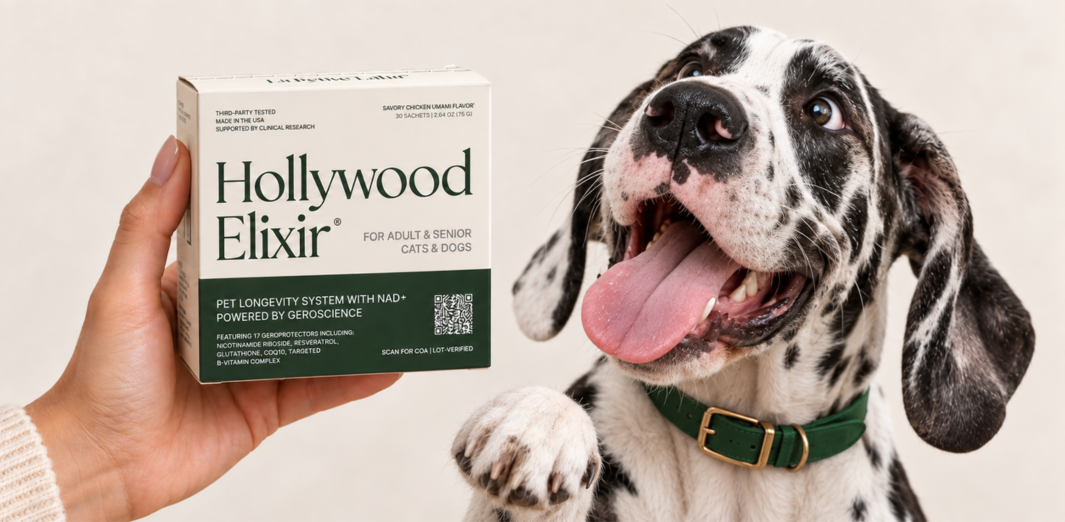
Dalmatian looking toward a Hollywood Elixir box held in a person's hand

Discover LPL-01: How This Fits Into a Larger Canine Longevity System

Aging in dogs is not driven by a single pathway. It’s the result of interacting biological systems—energy metabolism, oxidative stress, immune signaling, and structural integrity—changing over time.

This article explores one piece of that puzzle. If you want to understand how these pieces connect—and what actually moves the needle—you need to zoom out.

Start with the underlying science:

Keep exploring

What would you like to understand next?

Search practical guides about healthy aging, cellular energy, ingredients, and daily support for dogs.