The 12 Hallmarks of Aging in Dogs
Read full insightVitamin B2 (Riboflavin) for Cats
By La Petite Labs Editorial 15 min read
The common misconception is that Vitamin B2 (Riboflavin) for Cats only matters if a cat is eating a clearly “bad” diet. In reality, riboflavin is a daily cofactor that helps cells turn food into usable energy and manage redox balance, so shortfalls can show up as a duller coat, a more choppy appetite, and less endurance long before anything looks dramatic (Preeti Patel, 2024). Cats are also not nutritionally “one-size-fits-all”: diet composition can shift riboflavin needs, which is one reason two cats on different foods can look very different in coat and drive to eat (Gershoff, 1959).
This page focuses on two practical clinical lanes: (1) coat and skin signals that suggest energy/redox strain, and (2) appetite and “vitality” signals that owners can observe at home. It also connects riboflavin to the broader B‑vitamin complex and to related topics like NAD coenzymes, mitochondrial function, and oxidative stress—because riboflavin works as FMN and FAD inside the electron transport chain, not as a standalone “coat vitamin” (Preeti Patel, 2024). The goal is to help owners decide what to watch, what to change safely, and what to bring to a veterinarian so the handoff is more fluid and less choppy.
- Vitamin B2 (Riboflavin) for Cats matters because riboflavin-derived cofactors (FMN/FAD) support cellular energy handling and redox balance, which can influence coat quality and appetite signals (Preeti Patel, 2024).
- A dull coat or picky eating is not automatically “just aging” or “just personality”; diet composition and absorption can shift riboflavin needs and availability (Gershoff, 1959).
- Riboflavin is usually supplied by complete-and-balanced diets, but risk rises with unbalanced home-prepared feeding, prolonged appetite dips, or chronic GI patterns that limit nutrient uptake.
- Owners can look for shift indicators: coat oils and dandruff pattern, grooming time, meal enthusiasm, stool consistency, and weight trend rather than one-off “bad days.”
- Tracking works best when it is simple: weekly weight, a 1–5 coat score, meal completion time, and stool notes to compare between vet visits.
- Vet conversations should include diet brand/formulation, treats and toppers, vomiting/diarrhea frequency, and any eye changes, since riboflavin deficiency has been linked with cataract risk in broader biology (Skalka, 1981).
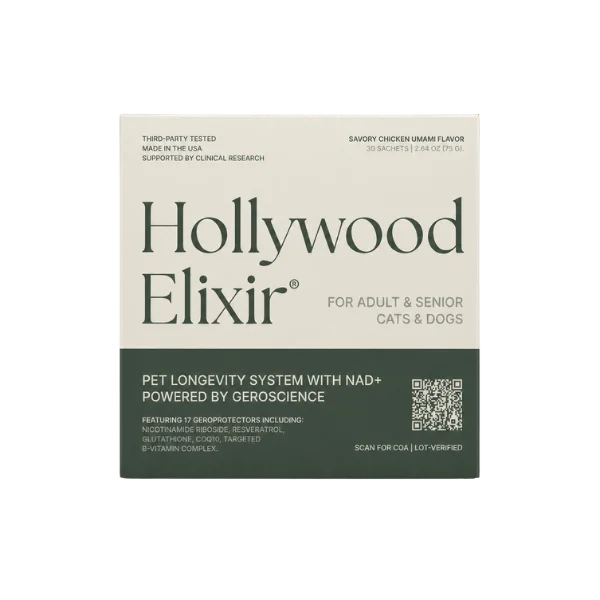
- A supportive plan may include a consistent complete diet, addressing GI inflammation, and considering a broad daily formula such as Hollywood Elixir™ as part of a routine that supports normal cellular teamwork rather than chasing single-ingredient fixes.
The Myth: Riboflavin Only Matters in Extreme Deficiency
A persistent myth is that riboflavin is only relevant when a cat is severely malnourished. Riboflavin is converted into FMN and FAD, cofactors that help enzymes move electrons and handle energy transfer, so “small” gaps can show up as lower restoration pace in tissues that turn over quickly, including skin and hair. Because these cofactors sit inside mitochondrial pathways and the electron transport chain, riboflavin status is less about a single symptom and more about how fluidly a cat converts food into usable cellular work.
At home, the myth often sounds like: “The food is premium, so vitamins can’t be the issue.” Premium can still be mismatched to the cat’s needs if intake is inconsistent, if toppers displace balanced food, or if digestion is chronically unsettled. When appetite is choppy for weeks, even a good formula may not deliver enough daily B vitamins to keep coat oils, grooming, and energy cues looking normal.
What Riboflavin Does in Cat Cells
Riboflavin’s job is not cosmetic; it is biochemical. After absorption, it is used to build FMN and FAD, which enable many oxidation–reduction reactions that keep energy metabolism moving and help manage oxidative stress pressure. In practical terms, riboflavin supports the “handoff” of electrons through key steps that influence how efficiently nutrients become ATP, and how well cells keep reactive byproducts from overwhelming normal redox balance.
Owners often notice the downstream version of this: a cat that still eats, but with less enthusiasm, or a coat that looks dusty despite regular grooming. Those signals are not diagnostic on their own, but they are meaningful when they cluster with diet changes, stress, or GI patterns. Riboflavin is also part of the broader B‑vitamin complex story, so it should be considered alongside other B vitamins rather than treated as an isolated lever.
Why Cats Can Have Different Riboflavin Needs
Cats have species-specific nutrition constraints, and riboflavin needs can shift with what the diet is made of. Research in cats found that macronutrient composition—particularly carbohydrate and fat content—can change the riboflavin requirement, reinforcing that “same calories” does not always mean “same micronutrient demand” (Gershoff, 1959). This matters for owners comparing a high-fat canned diet to a higher-carbohydrate dry diet, or rotating foods frequently.
In the household, the pattern can look like this: a cat does well on one formula, then becomes less interested after a switch, and the coat slowly loses shine over a month. That does not prove riboflavin deficiency, but it does justify a more controlled feeding trial with fewer variables. Consistency makes it easier to see whether appetite and coat cues regain a more fluid rhythm.
Absorption: Food Form, Gut Health, and Availability
Riboflavin has to be absorbed before it can support FMN/FAD-dependent enzymes. General nutrition research shows that absorption can differ depending on food sources and matrices, which is one reason whole-diet context matters more than a single label claim (Vrzhesinskaia, 1994). For cats, this intersects with how much of the diet is complete-and-balanced versus “extras” that dilute micronutrient density.
A practical home clue is the “treat-to-meal ratio.” When a cat grazes on treats, lickable tubes, or unbalanced toppers, total calories may look fine while micronutrient delivery becomes less reliable. Another clue is stool quality: frequent soft stools or mucus can signal that the gut environment is not supporting normal nutrient uptake, which should shift the plan toward veterinary evaluation rather than more switching.
Coat and Skin: Redox Strain Shows on the Surface
Coat quality is often the first place owners look, and it can reflect how well skin cells maintain energy handling and redox balance. Riboflavin-derived cofactors participate in reactions that help keep cellular processes from becoming more choppy under oxidative stress load, which can influence how quickly skin and hair follicles cycle. A dull coat is not “proof” of a vitamin issue, but it is a reasonable prompt to review diet completeness, intake consistency, and GI stability.
In daily routines, coat changes often travel with behavior changes: less grooming, more matting along the back, or dandruff that returns quickly after brushing. Owners can separate grooming mechanics from nutrition by noting whether the cat’s grooming time has dropped or whether the coat feels oily yet looks flat. Those details help a veterinarian decide whether the main lane is dermatology, nutrition, pain, or an internal issue affecting appetite and nutrient delivery.
“Coat changes are often the surface signal of deeper nutrition patterns.”
Appetite Signals: When Energy Handling Feels Less Fluid
Appetite is not only about taste; it is also about how the body anticipates and processes energy. Riboflavin supports enzymes that help convert macronutrients into usable cellular energy, so shortfalls can contribute to a cat that approaches food, sniffs, and walks away, especially when other stressors are present (Navid Mahabadi, 2023). This is not a claim that riboflavin “fixes” appetite, but it explains why nutrition review belongs in the workup for persistent picky eating.
At home, appetite should be judged by pattern, not drama. A cat that eats 70–80% of meals for two weeks, takes longer to finish, and becomes more selective about texture is giving actionable information. Those observations are more useful than changing foods every two days, which makes it harder to see whether the underlying issue is nausea, dental discomfort, stress, or a diet that is not being consumed in sufficient amounts.
Case Vignette: the Dull Coat After a “Healthy” Switch
A realistic scenario: a 9-year-old indoor cat transitions from a consistent canned diet to a rotating mix of boutique foods and frequent lickable treats. Over six weeks, the coat becomes less glossy and the cat’s meal enthusiasm turns more choppy, even though total calories seem similar. Because riboflavin needs can shift with diet composition in cats, the change in formulation and intake pattern becomes a meaningful lead to investigate rather than a cosmetic annoyance.
In that household, the most helpful first step is not another rotation. It is a more controlled two-to-four-week routine: one complete-and-balanced food, measured treats, and a simple log of meal completion and stool quality. If the pattern does not normalize, the owner has clean data to bring to a veterinarian, and the conversation can move beyond “picky cat” toward digestion, dental health, and nutrient delivery.
Owner Checklist: Home Clues That Point Toward B-vitamin Strain
An owner checklist is most useful when it focuses on observable, repeatable clues. For riboflavin-related concern, watch for: (1) coat losing luster despite normal brushing, (2) dandruff that returns within days, (3) grooming time dropping or becoming more rushed, (4) meals taking much longer to finish, and (5) a rising reliance on treats or toppers to get baseline intake. These are not diagnostic, but they are the right “shift indicators” to note when thinking about Vitamin B2 (Riboflavin) for Cats.
Add context to each clue: when it started, what changed in diet, and whether stools became softer or more frequent. Owners should also note whether the cat is drinking more, hiding, or showing pain with grooming, since those can redirect the problem away from nutrition. The goal is a more controlled picture that helps a veterinarian decide whether the next step is diet correction, GI testing, or a dermatologic workup.
What to Track Between Vet Visits: a Simple Rubric
Tracking should be light enough to sustain and specific enough to compare between vet visits. A practical rubric includes: weekly weight on the same scale, a 1–5 coat score (shine, dandruff, matting), meal completion time, number of refused meals per week, stool consistency notes, and vomiting frequency if present. These markers are sensitive to both intake and absorption, which is important because riboflavin must be absorbed to support FMN/FAD-dependent energy handling.
Owners can keep the rubric on a phone note and aim for trends, not perfection. A single skipped meal is less informative than a two-week slide in completion time plus softer stools. When the data show a threshold change—such as steady weight loss or repeated refusal—this becomes a reason to stop experimenting at home and schedule a veterinary visit with a clear timeline and examples.
Misconception: More B2 Is Always Better for Coat Shine
A second misconception is that adding extra riboflavin automatically creates a glossy coat. Riboflavin is essential, but coat appearance is a composite of protein adequacy, fatty acid balance, grooming behavior, parasite control, and inflammation status; riboflavin is one contributor within that larger picture. Treating it like a cosmetic shortcut can distract from the real drivers, especially when appetite is choppy or stools suggest poor digestion.
In practice, the more controlled approach is to protect the foundation first: confirm the diet is complete-and-balanced, reduce unbalanced extras, and stabilize feeding times. If a supplement is considered, it should be part of a broader plan that supports normal cellular teamwork, not a single-ingredient chase. That mindset keeps expectations realistic and helps owners notice whether the cat’s overall vitality signals are changing alongside the coat.
“Consistency creates clarity when appetite and vitality feel choppy.”
When GI Patterns Make B-vitamin Status More Relevant
Chronic GI patterns raise the stakes for any water-soluble vitamin, including riboflavin, because intake and absorption become less predictable. In cats with chronic enteropathies, inflammatory markers such as fecal calprotectin have been studied as tools to characterize intestinal disease, reinforcing that “soft stool for months” is not a minor quirk (Riggers, 2023). When the gut is inflamed, the plan often needs veterinary diagnostics and diet strategy rather than more frequent food switching.
Owners can support a more fluid workup by bringing a short GI timeline: stool photos if possible, vomiting frequency, appetite notes, and every food and treat used in the last month. This also helps the veterinarian decide whether to evaluate other B vitamins that are commonly impacted by GI disease in cats. The key is to treat GI instability as a primary driver of nutrient delivery problems, not as background noise.
B-vitamin Teamwork: Why One Deficiency Can Mask Another
Riboflavin rarely acts alone in real life. B vitamins function as a coordinated set of cofactors for energy metabolism, and GI disease in cats is a well-known context where B-vitamin problems can become clinically relevant. For example, cats with GI signs and severe hypocobalaminemia can show early biochemical and clinical responses to cobalamin supplementation, illustrating how nutrient shortfalls can meaningfully shape appetite and vitality signals (Ruaux, 2005). That does not mean riboflavin is always low, but it supports the “teamwork” framing.
For owners, the takeaway is to avoid self-diagnosing a single vitamin as the answer. If a cat has chronic loose stool, weight loss, or persistent appetite changes, a veterinarian may recommend targeted testing and a structured supplementation plan. That approach is more controlled than stacking multiple products and hoping one hits the right lever.
Eyes and Riboflavin: a Secondary but Important Context
Eye health is not the main focus of this page, but it is a useful secondary context for riboflavin biology. Riboflavin deficiency has been associated with cataracts in broader research, underscoring that riboflavin-dependent redox handling can matter in tissues exposed to oxidative stress (Skalka, 1981). This is not a claim that riboflavin prevents cataracts in cats; it is a reminder that persistent nutrient shortfalls can have consequences beyond coat and appetite.
Owners should treat eye changes as a veterinary priority regardless of supplement plans. Cloudiness, squinting, discharge, or bumping into objects should not be watched at home “to see if vitamins help.” The right move is to document when the change began, whether it is one eye or both, and any concurrent appetite or GI shifts that could signal a broader nutrition or inflammatory issue.
What Not to Do When Appetite and Coat Slip
Common mistakes can keep a cat stuck in a choppy cycle. Do not (1) rotate foods daily, which prevents a controlled read on intake, (2) rely on unbalanced toppers as the main calories, (3) add multiple B products at once, or (4) ignore ongoing soft stool while focusing only on coat shine. Riboflavin is water-soluble and works inside core pathways, so the plan should prioritize consistent delivery and digestion rather than constant novelty.
Another “do not” is delaying veterinary care when weight is dropping or the cat is skipping meals. Cats can deteriorate quickly when intake is low, and the safest path is to treat persistent appetite decline as a medical problem first. Once the primary issue is identified—dental pain, nausea, GI inflammation, stress—nutrition support can be layered in with a more controlled strategy.
Vet Visit Prep: Questions That Make the Workup More Fluid
A productive veterinary visit starts with specific questions and observations. Useful prompts include: “Has diet composition changed in a way that could shift riboflavin needs?” “Are the stools and vomiting pattern consistent with chronic enteropathy?” “Should other B vitamins be assessed given the appetite and GI history?” and “Is the coat change more consistent with dermatology, pain, or nutrition?” This frames Vitamin B2 (Riboflavin) for Cats as part of a diagnostic conversation, not a self-prescribed endpoint.
Bring the food labels or photos, a treat list, and the tracking rubric (weight, coat score, meal completion time, stool notes). If GI disease is suspected, ask whether fecal markers or diet trials are appropriate, since chronic intestinal inflammation can change how reliably nutrients are absorbed (Riggers, 2023). The goal is a clearer handoff so the veterinarian can prioritize the most likely drivers.
Choosing Support: Food First, Then Thoughtful Supplement Design
For most cats, riboflavin needs are met by a consistent complete-and-balanced diet, so the first intervention is usually dietary control rather than chasing single nutrients. Still, supporting the broader system can matter when appetite is inconsistent, when aging changes restoration pace, or when owners are trying to keep coat and vitality signals more controlled. Riboflavin’s role as FMN/FAD inside energy and redox pathways is one reason a well-designed daily plan often emphasizes cellular teamwork rather than one “hero” ingredient.
If a supplement is considered, quality signals include transparent labeling, species-appropriate guidance, and a formulation that fits alongside veterinary care. A broad approach can be easier to use consistently than a stack of separate products, which often leads to missed days and a more choppy routine. Consistency, not intensity, is what makes it possible to judge whether coat and appetite cues are shifting over time.
How Long Changes Take: Setting a Realistic Timeline
Riboflavin supports enzyme function quickly, but visible outcomes like coat quality move on a slower clock because hair growth and skin turnover take time. Appetite cues may become more fluid within days if the primary issue is inconsistent intake, but coat changes often require several weeks of controlled feeding and stable digestion. This is another reason to track simple markers rather than relying on memory, especially when multiple variables—food, stress, season—change at once.
Owners should set a check-in point: for example, two weeks for appetite pattern and stool notes, and six to eight weeks for coat score and shedding pattern. If weight continues to fall, or if vomiting/diarrhea persists, the timeline should shorten and veterinary care should take priority. A supplement should never be used to “wait out” a medical problem.
Owner Action Plan: a More Controlled Path Forward
A more controlled plan for Vitamin B2 (Riboflavin) for Cats starts with foundations: choose one complete-and-balanced diet, measure treats, and protect consistent intake. Then use the home checklist and tracking rubric to identify whether the main issue is coat-only, appetite-only, or a combined pattern that suggests digestion or pain. Riboflavin’s core role in FMN/FAD-dependent energy and redox reactions explains why these signals often cluster rather than appearing in isolation (Navid Mahabadi, 2023).
If the pattern persists, bring the data to a veterinarian and ask targeted questions about GI evaluation and B‑vitamin status. If a daily supplement is added, keep the rest of the routine stable so changes are interpretable. The goal is not a dramatic overnight shift, but a steadier restoration pace in appetite cues, coat feel, and overall vitality signals that can be compared clearly between visits.
“Track trends, not single days, to guide the next best step.”
Educational content only. This material is not a substitute for veterinary advice. Always consult your veterinarian about your dog’s specific needs. These statements have not been evaluated by the Food and Drug Administration. Products mentioned are not intended to diagnose, treat, cure, or prevent any disease.
Glossary
- Riboflavin (Vitamin B2) - A water-soluble vitamin used to build FMN and FAD cofactors.
- FMN (Flavin Mononucleotide) - Riboflavin-derived cofactor that helps enzymes transfer electrons.
- FAD (Flavin Adenine Dinucleotide) - Riboflavin-derived cofactor central to redox reactions in energy metabolism.
- Redox Balance - The controlled balance between oxidation and reduction reactions in cells.
- Electron Transport Chain - Mitochondrial process that uses electron flow to support ATP production.
- Oxidative Stress - Excess reactive byproducts that can strain normal cellular maintenance.
- Complete-and-Balanced Diet - A diet formulated to meet established nutrient profiles when fed as directed.
- Chronic Enteropathy - Long-standing intestinal disease that can affect digestion, absorption, and appetite.
- Fecal Calprotectin - A stool marker studied in cats to help characterize intestinal inflammation.
Related Reading
Foundational Editorials
• The 12 Hallmarks of Aging in Dogs
• The New Age of Pet Longevity
• The Science of Cross-Species Formulation
Anti-Aging & Senior Dog Guidance
• Do Senior Dogs Need Supplements?
• Supplements vs Food for Aging Dogs: What Really Matters
• Best Senior Dog Supplements & Vitamins
Mechanism-Focused Deep Dives
• NAD+ for Dogs
• Nicotinamide Riboside (NR) for Dogs
• Antioxidants for Dogs
• Mitochondrial Support for Dogs
Ingredient-Level Research
• Resveratrol for Dogs
• CoQ10 for Dogs
• Spirulina for Dogs
• Reishi for Dogs
References
Vrzhesinskaia. [Absorption of vitamin B2 from plant and animal food products].. PubMed. 1994. https://pubmed.ncbi.nlm.nih.gov/7713225/
Gershoff. The Effect of the Carbohydrate and Fat Content of the Diet upon the Riboflavin Requirement of the Cat. 1959. https://www.sciencedirect.com/science/article/abs/pii/S0022316623069638
Riggers. Fecal Calprotectin Concentrations in Cats with Chronic Enteropathies. 2023. https://www.mdpi.com/2306-7381/11/11/552
Ruaux. Early biochemical and clinical responses to cobalamin supplementation in cats with signs of gastrointestinal disease and severe hypocobalaminemia.. PubMed. 2005. https://pubmed.ncbi.nlm.nih.gov/15822558/
Skalka. Cataracts and riboflavin deficiency.. PubMed. 1981. https://pubmed.ncbi.nlm.nih.gov/7234715/
Preeti Patel. Vitamin B2 (Riboflavin). 2024. https://www.ncbi.nlm.nih.gov/books/NBK525977
Navid Mahabadi. Riboflavin Deficiency. 2023. https://www.ncbi.nlm.nih.gov/books/NBK470460
FAQ
What is riboflavin and what does it do?
Riboflavin (vitamin B2) is a water-soluble vitamin used to form FMN and FAD, cofactors that help many enzymes run redox reactions and support energy handling. These reactions influence how cells convert food into usable work and manage oxidative stress pressure.
For cat owners, the relevance is practical: when intake or absorption is inconsistent, coat quality and appetite cues may become more choppy. Those signs are not specific, but they justify a closer look at diet consistency and GI health.
Why is Vitamin B2 (Riboflavin) for Cats important?
Vitamin B2 (Riboflavin) for Cats is important because riboflavin-derived cofactors help cells manage energy transfer and redox balance, which can influence vitality signals like appetite and coat condition.
Most cats meet needs through a complete-and-balanced diet, but the topic becomes more relevant when intake is low, when treats displace balanced food, or when digestion is chronically unsettled. In those cases, the goal is a more controlled routine and veterinary guidance.
Can diet composition change a cat’s riboflavin needs?
Yes. Research in cats found that the carbohydrate and fat content of the diet can change the riboflavin requirement, meaning needs are not identical across all formulations. This supports the idea that frequent switching can create unexpected gaps if intake also becomes inconsistent.
Owners can respond by choosing one complete-and-balanced food for a controlled period and tracking meal completion and stool quality. If signs persist, a veterinarian can help decide whether the issue is diet fit, GI disease, or another driver.
What are common signs owners might notice at home?
Home clues that can align with nutrient strain include a coat that looks dull despite brushing, dandruff that returns quickly, reduced grooming time, and a more choppy appetite pattern. These signs are not specific to riboflavin, but they are useful shift indicators.
Add context: recent diet changes, increased treat use, soft stools, or vomiting. A short log helps a veterinarian separate nutrition issues from pain, dermatologic disease, stress, or chronic GI conditions.
Is riboflavin deficiency common in cats on balanced diets?
True riboflavin deficiency is generally uncommon when a cat consistently eats an appropriate complete-and-balanced diet. Riboflavin is a core nutrient in standard formulations because it supports FMN/FAD-dependent enzyme function.
Concern rises when the cat is not eating enough of the balanced food, when unbalanced toppers become the main calories, or when chronic GI patterns limit absorption. In those situations, the safer move is a controlled diet plan and veterinary evaluation.
Can riboflavin help a dull coat in cats?
Riboflavin supports cellular energy handling and redox balance through FMN and FAD, which can matter for tissues with ongoing turnover such as skin and hair follicles. That biology makes riboflavin relevant when coat quality changes alongside appetite or digestion shifts.
However, coat appearance is multi-factorial. Parasites, allergies, pain that limits grooming, and fatty acid balance can all dominate the picture. A veterinarian can help prioritize the most likely lane before owners chase single nutrients.
Does riboflavin affect appetite and eating behavior?
Riboflavin supports enzymes involved in energy metabolism, so it is part of the background biology that can shape appetite cues when intake or absorption is inconsistent(Navid Mahabadi, 2023). Appetite changes are still non-specific and can reflect nausea, dental pain, stress, or systemic disease.
Owners should focus on pattern: meal completion time, refused meals per week, and weight trend. Persistent appetite decline or weight loss should prompt veterinary care rather than extended at-home experimentation.
How quickly might changes show after nutrition is stabilized?
Enzyme cofactors can be supported quickly, but visible outcomes vary. Appetite patterns may become more fluid within days to a couple of weeks if the primary issue was inconsistent intake. Coat changes usually take longer because hair growth and skin turnover are slower processes.
A practical timeline is two weeks for appetite and stool notes, and six to eight weeks for coat scoring. If weight continues to drop or GI signs persist, the timeline should shorten and veterinary evaluation should take priority.
Is Vitamin B2 (Riboflavin) for Cats safe as a supplement?
Riboflavin is water-soluble, and general deficiency/safety references describe it as a nutrient with a wide safety margin when used appropriately. That said, “safe” does not mean “always appropriate,” especially if multiple products are stacked.
Cats with chronic disease, ongoing vomiting/diarrhea, or weight loss should be evaluated before adding supplements. A veterinarian can help choose a product and plan that supports normal nutrition without masking a problem that needs diagnosis.
What side effects might occur with riboflavin products?
Riboflavin is often well tolerated, but any supplement can cause GI upset in some cats, especially if introduced abruptly. Changes in stool softness, appetite, or vomiting after starting a new product should be taken seriously.
The safer approach is to introduce one change at a time and keep the base diet stable. If adverse signs appear, stop the new addition and contact a veterinarian to decide whether the reaction is ingredient-related or a sign of an underlying GI condition.
Should owners give a B-complex instead of riboflavin alone?
Often, a broader B‑vitamin approach makes more sense than isolating riboflavin, because B vitamins work as a coordinated set in energy metabolism. In cats with GI disease, other B vitamins such as cobalamin can be clinically relevant, illustrating the “teamwork” problem(Ruaux, 2005).
The best choice depends on diet completeness, intake consistency, and medical history. A veterinarian can help decide whether a targeted nutrient, a B‑complex, or a broader daily formula is the most controlled fit.
Can chronic diarrhea affect riboflavin and other B vitamins?
Yes. Chronic diarrhea can make both intake and absorption less predictable, which is why long-standing soft stool should not be treated as a minor nuisance. In cats with chronic enteropathies, fecal calprotectin has been evaluated as a marker to help characterize intestinal inflammation(Riggers, 2023).
When GI inflammation is present, the plan often needs veterinary diagnostics and a structured diet strategy. Supplements can be part of support, but they should not replace identifying the driver of chronic GI signs.
Are cats different from dogs regarding riboflavin guidance?
Yes. Cats have distinct nutritional physiology and diet patterns, and cat-specific research shows that diet macronutrient composition can shift riboflavin requirement. That means guidance pulled from dog-focused sources should not be treated as interchangeable.
For owners, the practical implication is to use cat-appropriate products and veterinary advice. The most controlled approach is to focus on complete-and-balanced feeding and to investigate persistent appetite or coat changes with species-specific context.
Should kittens, adults, and seniors be handled differently?
Life stage changes the context. Kittens have rapid growth and high nutrient demand, adults need consistency, and seniors may show slower restoration pace when appetite or digestion becomes less controlled. Across all stages, the priority is a complete-and-balanced diet fed in adequate amounts.
Seniors with weight loss, vomiting, or diarrhea should be evaluated promptly, because nutrition issues can be secondary to disease. Supplements can support normal function, but they should be layered in only after the primary driver is addressed.
What quality signals matter when choosing a supplement?
Quality signals include transparent ingredient lists, clear species labeling, realistic claims, and compatibility with veterinary care. Products should fit into a routine that keeps feeding more controlled rather than adding complexity that leads to missed days.
A broad daily formula can be easier to use consistently than stacking multiple single nutrients. If a cat has chronic GI signs or weight loss, the most important “quality signal” is a plan that includes diagnostics, not just supplementation.
How should riboflavin-related support be given with meals?
Most cats do best when any supplement is paired with a consistent feeding routine, because the goal is steady intake rather than intermittent dosing. Keeping the base diet stable makes it easier to interpret changes in appetite, stool quality, and coat feel.
If using a daily product such as Hollywood Elixir™, it should be treated as part of a routine that supports normal cellular function, not as a substitute for adequate calories or veterinary care.
Can Vitamin B2 (Riboflavin) for Cats replace vet care?
No. Vitamin B2 (Riboflavin) for Cats is a nutrition topic, not a diagnosis or a treatment plan. Persistent appetite decline, weight loss, repeated vomiting, chronic diarrhea, or major coat loss should be evaluated by a veterinarian.
Supplements can support normal function, but they can also delay needed diagnostics if used as a “wait and see” strategy. The most controlled path is to stabilize diet, track shift indicators, and seek veterinary guidance when thresholds are crossed.
What should be tracked to judge whether a plan is working?
Track markers that can be compared between vet visits: weekly weight, meal completion time, refused meals per week, stool consistency notes, vomiting frequency, and a simple 1–5 coat score. These are more reliable than subjective impressions.
If using Hollywood Elixir™, keep other variables stable so the trend is interpretable. If weight continues to fall or GI signs persist, the plan should shift toward veterinary evaluation.
Are eye changes ever relevant to riboflavin status?
Riboflavin deficiency has been associated with cataracts in broader research, suggesting that riboflavin-dependent redox handling can matter in the lens(Skalka, 1981). This is secondary context rather than a primary reason most owners investigate riboflavin.
Any eye cloudiness, squinting, discharge, or vision changes should be treated as a veterinary priority. Supplements should not be used to delay an eye exam, especially when appetite or GI signs are also changing.
How does Hollywood Elixir™ fit into a riboflavin-aware plan?
A riboflavin-aware plan starts with diet consistency and digestion stability, because vitamins only help if they are reliably consumed and absorbed. From there, a broad daily formula can support normal cellular teamwork tied to energy handling and redox balance.
Used this way, Hollywood Elixir™ supports a more controlled daily routine rather than acting as a standalone fix. Persistent appetite decline, weight loss, or chronic GI signs still require veterinary evaluation.
When should an owner call the veterinarian urgently?
Call promptly if a cat stops eating, is losing weight, is repeatedly vomiting, has diarrhea lasting more than a couple of days, seems painful, or shows eye changes. These are threshold events where waiting for nutrition changes is not appropriate.
Bring a short log of meals eaten, stool notes, and any diet changes. This makes the visit more fluid and helps the veterinarian decide whether the primary lane is GI disease, dental pain, dermatology, or another systemic issue.
What is a sensible decision framework for owners?
Start with three questions: Is the diet complete-and-balanced? Is the cat eating enough of it consistently? Are stools and vomiting suggesting absorption problems? If any answer is uncertain, stabilize the routine and track shift indicators for two weeks.
If support is added, choose one change at a time—such as Hollywood Elixir™—and keep everything else controlled. If weight drops, appetite worsens, or GI signs persist, move to veterinary evaluation rather than adding more products.
Discover LPL-01: How This Fits Into a Larger Feline Longevity System
Aging in cats unfolds quietly. It’s not driven by a single failure, but by gradual shifts across interconnected systems — cellular energy, oxidative balance, immune tone, and tissue integrity — each influencing the others over time.
This article explores one layer of that system. To understand what actually shapes long-term health, you need to step back and look at how these layers interact.
Start with the underlying science:
- Feline Geroscience Framework →
A structured view of how aging progresses across cellular energy, inflammation, and resilience systems. - Senior Biological Defense Coverage (BDC) Modeling →
A systems-level map of which biological pathways decline first, and how layered interventions can support them. - Feline Geroscience Evidence Framework →
A breakdown of what is strongly supported in the literature versus what is still emerging. - LPL-01 Standard →
The formulation system that translates these models into real-world supplementation—covering multiple pathways in a coordinated way.
Essential Summary
Why Is Vitamin B2 (Riboflavin) For Cats Important?
Riboflavin helps cats form FMN and FAD, cofactors that support energy handling and redox balance. When intake or absorption is inconsistent, owners may notice a duller coat and a more choppy appetite. A controlled diet routine and veterinary guidance keep decisions safer and clearer.
Hollywood Elixir can be part of a daily plan that supports normal cellular teamwork, including pathways tied to energy handling and redox balance. It is best used alongside a consistent complete-and-balanced diet and veterinary guidance, especially when appetite or digestion has been less controlled.
Hollywood Elixir®
Starting at $89/mo
Hollywood Elixir is amazing! She put back on 5 lbs to a healthy weight, her eyes are shiny, her coat is beautiful!
— Jessie
She hopped up onto the windowsill again for the first time in years.
— Charlie
Considering Riboflavin Support?
If You're Researching Riboflavin For Cats, Here’s What Matters Most
Start by confirming the diet is complete-and-balanced and that the cat is actually eating enough of it each day. Then stabilize the routine long enough to compare shift indicators—meal completion time, weekly weight, stool quality, and a simple coat score. If support beyond food is desired, a broad daily formula such as Hollywood Elixir™ may help support normal energy-handling and redox pathways as part of a consistent plan. Persistent appetite decline, weight loss, or chronic GI signs should be evaluated by a veterinarian before layering multiple supplements.
Learn about how our DVMs think about cat aging
Dr. JoAnna Pendergrass DVM
Hollywood Elixir®
Starting at $89/mo
Related Reading
Riboflavin helps cats form FMN and FAD, cofactors that support energy handling and redox balance. When intake or absorption is inconsistent, owners may notice a duller coat and a more choppy appetite. A controlled diet routine and veterinary guidance keep decisions safer and clearer.