Vetactiv8 NMN Forte: Anti-aging Positioning vs. What a True Longevity Stack Requires

Compare NAD+ Support and Aging Checkpoints for Brain, Joints, and Kidneys

By La Petite Labs Editorial 15 min read

Most “anti-aging” claims for dogs are really claims about supporting one piece of aging biology—often NAD+—while owners are hoping for broad, whole-dog change. The practical answer is that NMN forte for dogs can be a reasonable, focused tool, but it is not the same thing as a true longevity stack. A complete plan covers multiple aging pressures and stays grounded in what can be observed at home.

A useful way to evaluate any product (including when owners search vetactiv8 NMN forte review or do a longevity supplement comparison dogs) is to use a five-checkpoint checklist: NAD+ support, redox balance, mitochondrial support, senescence management, and inflammation resolution. Then add two filters that protect the dog: quality/testing transparency and safety overlap with the current diet, treats, and other supplements.

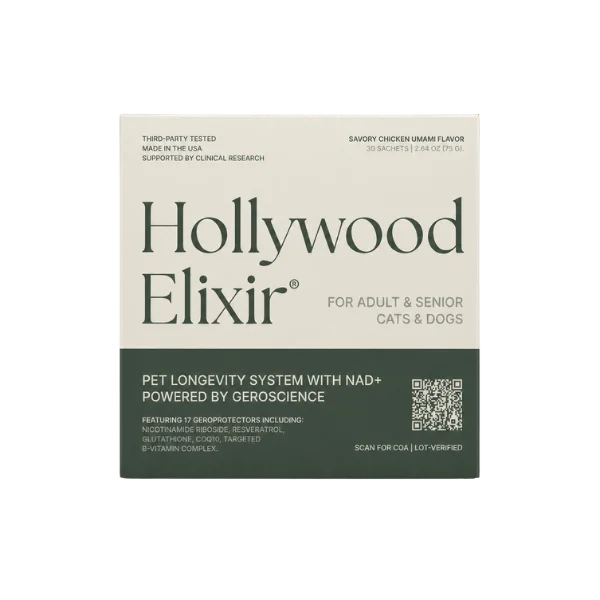
This page keeps the tone fair and industry-wide: “anti-aging” marketing is not automatically wrong, but it often skips the hard part—defining what should look more measured in daily life and how long to track it. The goal is to help owners compare approaches (including a vetactiv8 vs Hollywood Elixir style comparison) without expecting one bottle to cover comfort, sleep, cognition, and organ health all at once.

  • A fair vetactiv8 NMN forte review is less about “anti-aging” and more about whether NMN-only NAD+ support matches your dog’s main bottleneck.
  • “Anti-aging” is a marketing umbrella; dog aging involves multiple pressures that rarely respond to one ingredient.
  • Use a five-checkpoint checklist: NAD+ support, redox balance, mitochondrial support, senescence management, and inflammation resolution.
  • NMN-centered formulas usually cover the NAD+ checkpoint most directly; gaps often appear in senescence and inflammation resolution coverage.
  • Dosing language like “forte” needs context: stability, absorption, and dog-specific tolerance matter more than big numbers.
  • Quality signals to verify include lot numbers, third-party testing, and clear ingredient amounts—especially when vitamins are included.
  • Track sleep, mobility starts, recuperation speed, stool quality, and engagement for 4–6 weeks before changing anything else.

What NMN Forte Is and How It’s Positioned

“Anti-aging” supplements for dogs are usually built around one headline pathway, most often NAD+ support. Vetactiv8 NMN forte is positioned in that lane: a focused product meant to fit into a senior-dog routine rather than replace basics like diet, dental care, pain control, and exercise. NMN is discussed because it sits upstream of NAD+, a coenzyme involved in everyday cellular energy handling and repair housekeeping. The key is separating a plausible mechanism from a complete longevity plan.

At home, owners usually start looking for changes in “old dog” patterns: slower starts in the morning, shorter interest in walks, more restless nights, or a longer recuperation speed after play. Those observations are real, but they are not specific to NAD+ biology. Before any anti aging supplement dogs routine is judged, the dog’s baseline needs to be written down: sleep, appetite, stool, activity, and comfort on stairs.

What “Anti-aging” Implies Versus What Biology Supports

The phrase “anti-aging” implies broad control over many age-linked changes, but biology is more compartmentalized. Aging in dogs involves multiple pressures happening at once: energy production becomes less orderly, oxidative wear accumulates, inflammatory signaling can linger longer after stress, and damaged cells may not clear as efficiently. A single NAD+ precursor may contribute to one slice of that picture, but it cannot automatically cover joints, brain, kidneys, and immune balance all at once.

A useful household translation is this: if a product claims “anti-aging,” it should still be judged by specific, observable outcomes. Owners can ask, “Which daily function is supposed to look less turbulent—sleep, mobility, appetite, or engagement?” If the label never connects to measurable routines, it is easy to over-credit normal week-to-week variation, especially when a dog also changes weather, exercise, or treats.

Reading the Ingredient List Without Overpromising

When reviewing NMN forte for dogs, the first step is to identify what is truly “core” versus what is supportive. NMN is a precursor used by the body to build NAD+, and NAD+ is involved in everyday cellular energy handling and repair housekeeping. In people, NMN has been studied for biomarker and function changes, but results vary by outcome and population (Wang, 2025). That matters because marketing language often jumps from “supports NAD+” to “supports longevity,” which is a much bigger claim than the evidence can cleanly carry.

Owners can make ingredient lists practical by asking two questions: “What is the main lever?” and “What is the safety watch-out?” If a formula also includes fat-soluble vitamins, the safety question becomes especially important because some can accumulate with chronic oversupplementation (Shastak, 2024). A dog already eating a complete senior diet may not need extra vitamin layering unless a veterinarian has a reason.

The Five-checkpoint Longevity Checklist for Dogs

A practical longevity supplement comparison dogs framework uses five checkpoints: NAD+ support, redox balance, mitochondrial support, senescence management, and inflammation resolution. NAD+ support asks whether the formula plausibly contributes to cellular energy handling. Redox balance asks whether the ingredients help keep oxidative wear from becoming more turbulent during stress. Mitochondrial support looks for nutrients that relate to energy “hardware,” not just signaling. Senescence management asks whether the plan addresses old or damaged cells that linger. Inflammation resolution asks whether the body can shut down inflammatory signaling after it has done its job.

This checklist is meant to be used with a notebook, not a shopping cart. Owners can pick one checkpoint to prioritize based on what they see at home: brain changes, mobility changes, or slower recuperation speed after activity. It also prevents the common trap of comparing labels word-for-word instead of comparing which aging pressures each product is actually designed to address.

Where an Nmn-centered Plan Fits, and Where It Doesn’t

Using that checklist, an NMN-centered product tends to cover the NAD+ checkpoint most directly, while the other checkpoints depend on what else is in the formula and how it is dosed. That is not a flaw; it is a design choice. The gap appears when owners expect one bottle to also cover senescence, mitochondrial “hardware,” and inflammation resolution without any ingredients aimed at those areas. In senior dogs, a combined approach has been studied in a controlled trial using an NAD+ precursor alongside a senolytic concept, with owner-assessed cognitive outcomes as one measure (Simon, 2024).

A realistic case vignette: a 12-year-old mixed-breed dog starts pacing at night and seems “lost” in familiar rooms, but still eats well and wants short walks. The owner adds an NAD+ product and expects night behavior to normalize in a week. Two weeks later, the pacing is unchanged because the bigger driver was untreated arthritis pain and disrupted sleep routines, not a single nutrient pathway. The checklist helps redirect attention to comfort, sleep hygiene, and a vet visit.

“Aging support works best when it targets one bottleneck you can measure.”

Why “Forte” Dosing Claims Need Real-world Context

“Forte” language can imply that higher amounts automatically mean better outcomes, but dosing claims need context: ingredient stability, absorption, and how the dog’s body handles the compound. NMN has been evaluated in repeated-dose oral toxicity work in mammals, which helps frame basic safety discussions, but it does not replace dog-specific, long-duration outcome data (You, 2020). Bioavailability also depends on the full formulation and the dog’s gut health, which can change with age, medications, and diet.

At home, “more” can backfire by creating loose stool, appetite changes, or a dog that refuses the product—then the entire routine becomes less orderly. Owners do best when they change one thing at a time, keep the rest of the day consistent, and watch for response patterns over 2–6 weeks. If multiple supplements are started together, it becomes impossible to tell what helped, what irritated the stomach, or what did nothing.

Quality Signals to Verify Before Daily Use

Quality matters more in longevity supplements than most owners expect, because the “active” idea is often subtle and long-term. A fair vetactiv8 NMN forte review should look for third-party testing, clear lot numbers, and transparent amounts for key ingredients rather than proprietary blends. This is especially important when formulas include vitamins that can accumulate over time. Vitamin A, for example, is fat-soluble and chronic oversupplementation is a known safety concern in pets (Shastak, 2024).

Owner checklist (at-home quality and fit): (1) Can the company show a lot number and expiration date? (2) Are amounts listed for the main ingredients? (3) Does the dog accept it without food battles? (4) Any new vomiting, loose stool, or itch after starting? (5) Is the dog already on a complete senior diet plus other supplements that overlap vitamins? These checks keep the plan safer and more measured.

What a True Longevity Stack Looks Like at Home

A true longevity stack architecture is less about stacking “more pills” and more about covering distinct aging pressures without creating conflicts. The base layer is always boring: appropriate calories, protein quality, dental health, parasite prevention, and pain control. The next layer is targeted support based on what is changing first—often mobility, sleep, or cognition. Only after that does it make sense to add a focused NAD+ product, because NAD+ support is not a substitute for comfort, conditioning, or disease screening.

In the kitchen, this looks like a routine that is easy to repeat: one primary supplement goal, one administration time, and one tracking sheet on the fridge. If the dog has a sensitive stomach, the “stack” may need to be smaller, not bigger. The best architecture is the one that the household can keep orderly for months, not the one that looks impressive on a label.

Transparency and Safety: What Owners Should Confirm

Manufacturing transparency is where many longevity supplement comparisons for dogs become meaningful. Owners should be able to find where the product is made, whether it follows recognized quality standards, and how contaminants are screened. This is not about suspicion; it is about risk management when a product is used daily. For nutrients like vitamin D, studies in adult dogs show that higher dietary intake can raise circulating levels without observable adverse effects at tested levels, but it still highlights why amounts and monitoring matter (Jewell, 2023).

What not to do: (1) Do not combine multiple “anti-aging” products that overlap vitamins without checking totals. (2) Do not assume “natural” means side-effect free. (3) Do not ignore new thirst, vomiting, or appetite drop because “it’s just aging.” (4) Do not keep escalating doses to chase a faster change. These are the mistakes that turn a careful plan into a turbulent one.

Which Dogs May Be Good Candidates for NMN Support

Who may be a reasonable candidate for an NMN-forward approach? Often it is a senior dog with stable chronic conditions, good appetite, and a household that can track changes without constantly changing other variables. The goal is not to “make the dog young,” but to support normal cellular housekeeping while the basics—pain control, weight, and exercise—stay consistent. Human NMN research suggests mixed effects across outcomes, which is a reminder to keep expectations measured and tied to specific functions (Zhang, 2025).

What to track week over week: sleep interruptions, willingness to start walks, time to settle after activity, interest in play, stool quality, and any new pacing or vocalizing. These markers are more useful than “seems younger.” If the tracking sheet shows no pattern after 4–6 weeks, it is reasonable to pause and reassess rather than adding more products.

“If the routine becomes less orderly, the plan is too complicated.”

La Petite Labs

DVM Voice: Clinical Vignette of a Common Pattern in Senior Dog Aging

Case provided by JoAnna Pendergrass, DVM

Rex, a 7-year-old Labrador Retriever, was brought in after his owner noticed he was slower to rise, hesitant on stairs, and less able to play as before. Examination showed stiffness and reduced hip mobility; radiographs confirmed degenerative joint changes.

His care required weight management, veterinary-guided pain control, nutritional support, and rehabilitation — a comprehensive plan, but one started only after visible decline appeared.

Clinical takeaway: Rex’s case reflects the value of proactive aging support: maintaining lean body condition, monitoring mobility early, and supporting cellular resilience, antioxidant defense, and healthy inflammatory balance before decline becomes obvious.

Single-case vignette. Not generalizable. Veterinary oversight is essential for pain, stiffness, or suspected joint disease.

Explore Hollywood Elixir Research →
five-checkpoint longevity stack architecture - 9

When Multi-pathway Support Matters More Than NAD+ Alone

Some dogs need broader, multi-pathway support because the visible problem is not just “energy.” Dogs with cognitive changes, arthritis pain, kidney concerns, or recurring stomach upset may have multiple drivers that make day-to-day function less orderly. In those cases, a longevity stack is really a care plan: screening labs, pain management, sleep support, and carefully chosen supplements that do not overlap or conflict. Research in older adults using an NAD+ precursor (NR) has explored cognitive-related outcomes, but translation to dogs is not automatic (Orr, 2024).

Owners often notice this profile as “good days and bad days” that swing widely: one day the dog is engaged, the next day withdrawn or restless. That pattern is a clue to look for triggers—long walks, cold weather, a new medication, or constipation—rather than assuming a single supplement will smooth everything out. The more complex the pattern, the more valuable a veterinarian-guided plan becomes.

five-checkpoint longevity stack architecture - 10

Build a Repeatable Framework for Any Longevity Product

Building an assessment framework keeps the conversation fair, including in a vetactiv8 vs Hollywood Elixir comparison. Start with the five checkpoints, then add two practical filters: safety fit (health conditions, other supplements, medications) and quality fit (testing, transparency, stability). The best product is the one that matches the dog’s current bottleneck without creating new problems. This approach also prevents “label chasing,” where owners switch products every two weeks and never learn what actually changed.

Vet visit prep: bring (1) a two-week tracking sheet, (2) the full supplement list with photos of labels, (3) a note about any stomach changes after starting NMN, and (4) the dog’s main functional goal (sleep, mobility, engagement). Ask: “Which checkpoint is most relevant for my dog right now?” and “Which labs or exams would change the plan?” This makes the appointment more productive.

five-checkpoint longevity stack architecture - 11

The NAD+ Misconception That Trips up Many Owners

A unique misconception is that NAD+ support automatically equals “mitochondrial support.” NAD+ is part of energy chemistry, but mitochondria also depend on structural nutrients, oxygen delivery, and overall health conditions like anemia, pain, and sleep quality. If a dog is under-exercised due to arthritis, the mitochondria in muscle are not being asked to work, and no supplement can substitute for a safe conditioning plan. This is why longevity language should always be tied back to daily function.

At home, this misconception shows up as a dog that still avoids stairs or slips on floors while the owner keeps adding “energy” products. The more direct fix may be traction rugs, nail trims, a joint pain plan, and shorter, more frequent walks. Supplements can be part of that plan, but the household environment often determines whether the dog can use any added cellular support.

Senescence: the Hardest Checkpoint to Translate at Home

Senescence is one of the most misunderstood checkpoints. It refers to older or damaged cells that stop dividing but can still send inflammatory signals, potentially making tissues feel more irritated over time. Some longevity strategies aim to support clearance of these cells or reduce their signaling, but this is not the same as “detox” and it is not a quick, visible change. In senior dogs, a controlled trial has explored a combination approach that included a senolytic concept plus an NAD+ precursor, using owner-assessed cognition as an outcome (Simon, 2024).

In a household routine, senescence-focused ideas should translate into patience and careful tracking rather than rapid stacking. Owners can choose one goal—like nighttime restlessness—and track it consistently. If the dog becomes more unsettled, more picky with food, or develops diarrhea, the plan should be simplified and the veterinarian contacted. Complex biology does not excuse messy routines.

Inflammation Resolution and Why Triggers Come First

Inflammation resolution is different from “blocking inflammation.” The body needs inflammation to respond to injury, but it also needs to shut that response down on time so tissues can settle. Aging can make that shut-off less orderly, especially when pain, dental disease, or gut irritation are ongoing. A longevity stack that respects this checkpoint prioritizes finding and treating the trigger first, then using supportive nutrition to help the body return to baseline.

Owners can spot poor resolution as lingering stiffness the day after a normal walk, recurring ear or skin flare patterns, or a dog that takes longer to recuperate after visitors or travel. The practical response is not to keep adding supplements; it is to reduce triggers, keep exercise consistent, and ask the vet whether pain control, dental care, or diet changes would create more leeway than another “anti-aging” ingredient.

Redox Balance: Beyond the Word “Antioxidant”

Redox balance is the checkpoint most owners have heard of only as “antioxidants,” but the goal is not to flood the body with scavengers. The goal is to keep oxidative wear from rising during stress, illness, or heavy activity, so recovery stays more measured. This is one reason multi-ingredient formulas sometimes make sense: they can cover different parts of the redox story, while an NMN-only approach stays narrow. Still, narrow can be appropriate when the dog’s routine is otherwise stable.

A household way to apply redox thinking is to look for “stress spikes”: a long hike, a grooming day, fireworks, or a new dog in the home. If the dog’s stool, sleep, or appetite becomes less orderly after these events, the priority is often routine management and gradual conditioning. Supplements should be judged by whether those stress spikes become less turbulent over time, not by a single good day.

How to Write a Useful, Measured Supplement Review

The most useful outcome of a vetactiv8 NMN forte review is not a yes-or-no verdict, but a decision framework that can be reused. Step one: define the dog’s main aging pressure (sleep, mobility, cognition, or stamina). Step two: map the product to the five checkpoints and identify what it does not cover. Step three: check safety overlap with the current diet and supplements, especially fat-soluble vitamins and any medical conditions. Step four: set a tracking window and a stop rule.

A simple stop rule keeps the plan safe: stop and call the vet if vomiting, persistent diarrhea, marked appetite drop, new agitation, or sudden weakness appears. Otherwise, keep the routine unchanged for several weeks so response patterns can be seen. This approach protects the dog from constant tinkering and protects the owner from confusing coincidence with cause.

Making Comparisons Without Getting Pulled by Marketing

When owners compare vetactiv8 vs Hollywood Elixir, the fairest question is: “Which philosophy matches what the dog needs right now—single-pathway NAD+ support or broader checkpoint coverage?” Neither approach is automatically superior. The dog’s current bottleneck, the household’s ability to track, and the veterinarian’s input should decide. A true longevity stack is rarely one product; it is a measured plan that keeps the dog comfortable, screened, and supported without creating supplement clutter.

If the goal is graceful aging, the most powerful move is often simplifying: pick one target, track it, and adjust only after enough time has passed to see a pattern. Owners who want deeper context can also explore related topics like nad-plus-for-dogs, anti-aging-supplements-for-dogs, and best-senior-dog-supplements to understand how different checkpoints map to real-life routines.

“Quality signals and safety overlap matter as much as ingredients.”

Educational content only. This material is not a substitute for veterinary advice. Always consult your veterinarian about your dog’s specific needs. These statements have not been evaluated by the Food and Drug Administration. Products mentioned are not intended to diagnose, treat, cure, or prevent any disease.

Glossary

  • NAD+ - A helper molecule used in cellular energy transfer and maintenance tasks.
  • NMN - A precursor the body can use to build NAD+.
  • NR (nicotinamide riboside) - A different NAD+ precursor discussed in aging research.
  • Redox balance - The body’s ability to manage oxidative wear during stress and recovery.
  • Mitochondria - Cell structures that help convert nutrients into usable energy.
  • Senescence - A state where older/damaged cells linger and may keep sending inflammatory signals.
  • Senolytic - A strategy aimed at supporting clearance of senescent cells.
  • Inflammation resolution - The body’s ability to shut down inflammation after it has done its job.
  • Fat-soluble vitamin - A vitamin (like A or D) that can accumulate with chronic oversupplementation.

Related Reading

References

You. Subacute Toxicity Study of Nicotinamide Mononucleotide via Oral Administration. PubMed. 2020. https://pubmed.ncbi.nlm.nih.gov/33384603/

Orr. A randomized placebo-controlled trial of nicotinamide riboside in older adults with mild cognitive impairment. PubMed. 2024. https://pubmed.ncbi.nlm.nih.gov/37994989/

Zhang. Efficacy of oral nicotinamide mononucleotide supplementation on glucose and lipid metabolism for adults: a systematic review with meta-analysis on randomized controlled trials. PubMed. 2025. https://pubmed.ncbi.nlm.nih.gov/39116016/

Simon. A randomized, controlled clinical trial demonstrates improved owner-assessed cognitive function in senior dogs receiving a senolytic and NAD+ precursor combination. PubMed Central. 2024. https://pmc.ncbi.nlm.nih.gov/articles/PMC11137034/

Wang. Effects of Nicotinamide Mononucleotide Supplementation on Muscle and Liver Functions Among the Middle-aged and Elderly: A Systematic Review and Meta-analysis of Randomized Controlled Trials. PubMed. 2025. https://pubmed.ncbi.nlm.nih.gov/39185644/

Jewell. Increased dietary vitamin D was associated with increased circulating vitamin D with no observable adverse effects in adult dogs. PubMed Central. 2023. https://pmc.ncbi.nlm.nih.gov/articles/PMC10445235/

Shastak. Pet Wellness and Vitamin A: A Narrative Overview. PubMed Central. 2024. https://pmc.ncbi.nlm.nih.gov/articles/PMC11010875/

FAQ

What does “anti-aging” really mean for senior dogs?

In dogs, “anti-aging” is not a medical diagnosis or a single switch. It’s a marketing phrase that usually points to supporting normal function as the body changes with time—energy handling, recovery, and comfort.

A safer way to use the term is to translate it into one measurable goal: better sleep routines, easier walk starts, or less turbulent “good day/bad day” swings. If a product can’t be tied to a goal you can track, it’s hard to judge fairly.

What is NMN, in plain language?

NMN (nicotinamide mononucleotide) is a building block the body can use to make NAD+, a helper molecule involved in everyday cellular energy transfer and maintenance tasks.

For owners, the practical takeaway is that NMN is a “pathway ingredient,” not a symptom-specific tool. If the main issue is pain, dental disease, or kidney changes, NMN may be only a small part of what needs attention.

Is nmn forte for dogs the same as NR?

No. NMN and NR (nicotinamide riboside) are different NAD+ precursors. Both are discussed because they relate to the same general NAD+ biology, but they are not interchangeable ingredients.

Some human studies have evaluated NR for outcomes related to aging and function, but that does not automatically predict what a dog will show at home(Orr, 2024). For dogs, the best approach is to track specific routines and review the plan with a veterinarian.

How soon should owners expect to see changes?

Most longevity-oriented supplements are not “day one” products. If anything changes quickly, it is more likely to be appetite acceptance, stool changes, or sleep disruption rather than a true aging shift.

A reasonable window for judging response patterns is often 4–6 weeks with everything else kept consistent. Track one or two markers (like nighttime waking and walk-start hesitation) so normal week-to-week variation doesn’t get mistaken for a supplement effect.

What are common side effects owners might notice?

The most common issues owners report with new supplements are stomach-related: softer stool, gas, occasional vomiting, or food refusal because the smell or texture changes the meal.

Behavior changes matter too: new restlessness, pacing, or a dog that seems “wired” at bedtime should be taken seriously, even if the label sounds gentle. If side effects last more than a day or two, pause the supplement and contact the veterinary clinic.

Is NMN considered safe for long-term daily use?

Safety depends on the dog, the full formula, and what else the dog is taking. NMN has been evaluated in repeated-dose oral toxicity research in mammals, which helps frame basic safety conversations, but it is not the same as long-duration, dog-specific outcome data(You, 2020).

Long-term use should be discussed with a veterinarian for dogs with kidney disease, liver disease, cancer history, or complicated medication lists. The safest plan is measured: one change at a time, with tracking and a clear stop rule.

Can NMN be used with prescription medications?

Sometimes, but it should not be assumed. Interactions can come from the full supplement formula (including vitamins and botanicals), not just NMN itself.

Bring the exact label (or photos) to the vet, along with all prescriptions, flea/tick preventives, and other supplements. The goal is to avoid overlap and to avoid adding anything that could complicate monitoring if a medication dose needs adjustment.

What dogs are poor candidates for longevity supplements?

Dogs with unexplained weight loss, persistent vomiting/diarrhea, sudden behavior change, or new drinking/urination changes need medical evaluation first. Those signs can signal conditions where delaying care costs time.

Dogs with very sensitive stomachs may also do poorly with multi-ingredient formulas. In that situation, the best “longevity move” is often simplifying: stabilize diet and routines, then add only one carefully chosen product if the veterinarian agrees.

How do owners compare longevity supplements without getting overwhelmed?

Use a two-layer filter. Layer one is biology: does the product address NAD+ support, redox balance, mitochondria, senescence, and inflammation resolution? Layer two is practicality: quality testing, clear amounts, and whether your dog will actually take it.

This keeps a longevity supplement comparison dogs process grounded in what you can verify and what you can measure week over week. It also prevents switching products too quickly, which makes it hard to see response patterns.

What is the biggest misconception about NAD+ supplements?

The biggest misconception is that NAD+ support automatically covers “mitochondrial support” and “anti-inflammatory support.” NAD+ is one part of energy chemistry, but comfort, oxygen delivery, conditioning, and trigger control often matter more.

If a dog is limping, waking at night, or skipping meals, those are often pain, dental, or stomach problems first. Treating the driver usually creates more leeway than adding another pathway ingredient.

What should be tracked when starting an anti aging supplement dogs routine?

Pick 3–6 markers you can record quickly: nighttime waking, walk-start hesitation, time to settle after activity, interest in play, stool quality, and appetite enthusiasm.

Write them down daily for the first two weeks, then weekly. This makes it easier to see response patterns and to spot side effects early. If the dog’s routine becomes less orderly after starting, that matters as much as any hoped-for benefit.

Do senior dogs need a multi-pathway “longevity stack”?

Not always. Many senior dogs do best with a simple plan: weight control, pain management, dental care, and one targeted supplement goal. A “stack” becomes useful when multiple aging pressures are present and the plan is still easy to follow.

If the dog has cognitive changes, a combined approach has been studied in senior dogs using a senolytic concept plus an NAD+ precursor, with owner-assessed cognition as one outcome(Simon, 2024). That kind of complexity should be veterinarian-guided and tracked carefully.

How should owners think about “senolytics” for dogs?

Senolytic strategies are aimed at the idea of supporting clearance of older, damaged cells that can keep sending inflammatory signals. This is a developing area and should not be treated like a quick fix.

For owners, the practical rule is caution and clarity: know exactly what ingredient is being used, why it’s included, and what you will measure. If the dog has cancer history or complex illness, discuss any senescence-focused product with the veterinarian first.

What quality signals matter most on supplement labels?

Look for: clear ingredient amounts (not only blends), lot numbers, expiration dates, and third-party testing or certificates of analysis. These are basic signals that the product is being treated like something used daily.

Be extra careful with fat-soluble vitamins, because chronic oversupplementation can be a safety concern in pets(Shastak, 2024). If the dog already eats a complete diet and takes other supplements, ask the vet to review totals rather than guessing.

Can these supplements replace senior wellness exams and labs?

No. Supplements can be part of a plan, but they cannot substitute for screening that finds early kidney changes, anemia, thyroid issues, dental disease, or arthritis pain.

If a dog is “acting old” suddenly, that is a reason to check for a new medical driver, not a reason to add more products. A good longevity plan is built on clarity: what is changing, why it is changing, and what can be measured.

How do owners decide between single-ingredient and blended formulas?

Single-ingredient approaches can be easier to evaluate because any change—good or bad—is easier to attribute. Blended formulas may cover more checkpoints, but they can also create overlap and make stomach sensitivity harder to troubleshoot.

If the dog has a history of loose stool or picky eating, simpler is often safer. If the dog has multiple aging pressures and a stable stomach, a broader formula may fit better—especially when the household can track outcomes consistently.

What should owners bring to the vet when discussing longevity?

Bring a short tracking log (sleep, mobility starts, appetite, stool), plus photos of every supplement label and a list of all medications. Include when each product was started and any side effects noticed.

Ask focused questions: “What is the most likely driver of the changes I’m seeing?” “Which checkpoint should we prioritize first?” and “What would make you stop or change this supplement plan?” This creates a more orderly, safer plan.

Are there breed or size differences in supplement response?

Yes, mostly because size and breed influence aging timelines, joint stress, and common chronic conditions. Large-breed seniors often show mobility bottlenecks earlier, while smaller breeds may show dental-driven inflammation and appetite shifts.

The practical impact is that the “right” longevity checkpoint differs. A Great Dane with arthritis pain may need comfort and conditioning prioritized, while a small dog with dental disease needs oral care addressed before any NAD+ product can be judged fairly.

Is this topic relevant for cats as well?

This page is dog-focused. Cats age differently in household presentation, and they have unique sensitivities and common diseases that change supplement risk decisions.

If a cat is slowing down, hiding more, or losing weight, that should be evaluated promptly rather than approached with a generalized “anti-aging” plan. Cat-specific guidance should come from a veterinarian who can match supplements to kidney, thyroid, dental, and appetite realities.

How does a vetactiv8 vs hollywood elixir comparison stay fair?

A fair comparison uses the same checklist for both: which aging checkpoints are covered, what quality signals are provided, and what safety overlaps exist with the dog’s current diet and supplements.

If considering Hollywood Elixir™, treat it as something that supports normal aging routines, not a substitute for pain control, dental care, or screening labs. The dog’s bottleneck should decide the direction.

What does current research say about NMN outcomes?

In people, NMN has been studied across different outcomes and biomarkers related to aging, with mixed results depending on the population and what is measured(Wang, 2025). That supports cautious optimism about the pathway, not certainty about real-world function.

For dogs, the most responsible approach is to treat NMN as one possible support tool and to judge it by household markers you can track. If the dog’s changes are sudden or severe, medical evaluation should come first.

La Petite Labs

Discover LPL-01: How This Fits Into a Larger Canine Longevity System

Aging in dogs is not driven by a single pathway. It’s the result of interacting biological systems—energy metabolism, oxidative stress, immune signaling, and structural integrity—changing over time.

This article explores one piece of that puzzle. If you want to understand how these pieces connect—and what actually moves the needle—you need to zoom out.

Start with the underlying science: