


The 12 Hallmarks of Aging in Dogs, Explained
Read full insightVitamin B for Dogs
Understand the eight B vitamins, the difference between a B complex and B12, and their place in daily healthy-aging nutrition.

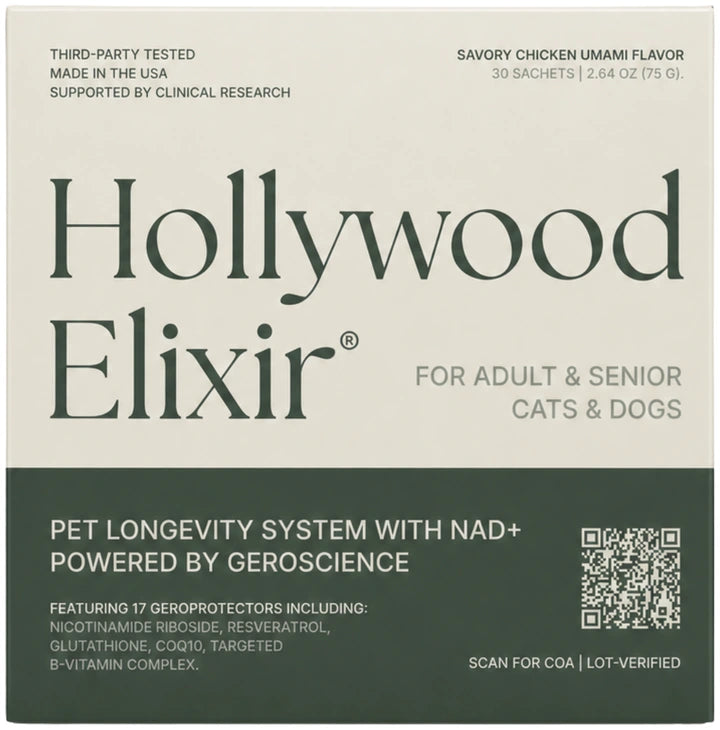
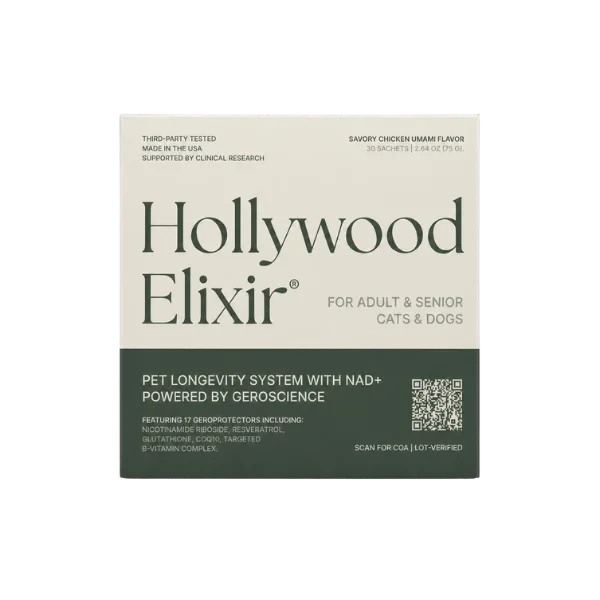
Hollywood Elixir® Senior Dog Supplement
17 science-backed actives
From$50/moSave up to 44%Shop Now
Contents

The eight B vitamins and what each one does

How B vitamins help dogs use energy from food

Which foods provide B vitamins?

B complex for dogs versus a single B vitamin

Which signs should prompt a conversation about testing?

What a canine B12 trial found

Do all B vitamins fall together during illness?

DVM Voice: Clinical Vignette of a Common Pattern in Senior Dog Aging
Case provided by JoAnna Pendergrass, DVM
Rex, a 7-year-old Labrador Retriever, was brought in after his owner noticed he was slower to rise, hesitant on stairs, and less able to play as before. Examination showed stiffness and reduced hip mobility; radiographs confirmed degenerative joint changes.
His care required weight management, veterinary-guided pain control, nutritional support, and rehabilitation — a comprehensive plan, but one started only after visible decline appeared.
Clinical takeaway: Rex’s case reflects the value of proactive aging support: maintaining lean body condition, monitoring mobility early, and supporting cellular resilience, antioxidant defense, and healthy inflammatory balance before decline becomes obvious.
Single-case vignette. Not generalizable. Veterinary oversight is essential for pain, stiffness, or suspected joint disease.

Safety: the full label matters

Will vitamin B stop a dog eating poop?

What changes for a senior dog?

The complete 17-active Hollywood Elixir formula

A serving that fits your dog and the usual meal
References
Numbered references identify the sources used for specific claims. Read the study design, species and evidence boundaries alongside each finding.
-
U.S. Food and Drug Administration. “Complete and Balanced” Pet Food. Evidence boundary: Nutritional adequacy statements, life stages and the purpose of complete pet food.↩ 1 · ↩ 2 · ↩ 3
-
NIH Office of Dietary Supplements. Thiamin—Fact Sheet for Health Professionals. Evidence boundary: Thiamin’s normal coenzyme role in nutrient metabolism.↩
-
Reactome. Vitamin B2 (riboflavin) metabolism. Evidence boundary: Riboflavin-derived cofactors in normal energy reactions.↩ 1 · ↩ 2 · ↩ 3
-
NIH Office of Dietary Supplements. Vitamin B6—Fact Sheet for Health Professionals. Evidence boundary: Normal B6 biochemistry, including amino-acid and neurotransmitter metabolism.↩ 1 · ↩ 2 · ↩ 3
-
Texas A&M University Gastrointestinal Laboratory. Cobalamin (Vitamin B12) and Folate. Evidence boundary: Clinical context for B12 and folate testing, including malabsorption and normal-test limitations.↩ 1 · ↩ 2 · ↩ 3
-
Chang CH, Lidbury JA, Suchodolski JS, Steiner JM. Effect of oral or injectable supplementation with cobalamin in dogs with hypocobalaminemia caused by chronic enteropathy or exocrine pancreatic insufficiency. Evidence boundary: Randomized oral-versus-injectable cyanocobalamin treatment in dogs with low B12 and chronic enteropathy or EPI.↩ 1 · ↩ 2 · ↩ 3
-
Verena Habermaass, Aurora Cogozzo, Francesco Bartoli, Valentina Vitelli, Rebecca Dini, Veronica Marchetti. Water-Soluble Vitamins (Riboflavin, Niacin, Pantothenic Acid) in Dogs with Chronic Liver Disease vs. Healthy Controls. Evidence boundary: An observational comparison of B2, B3 and B5 in dogs with chronic liver disease and healthy controls.↩ 1 · ↩ 2
-
G. Krinke, H. H. Schaumburg, P. S. Spencer, J. Suter, P. Thomann, R. Hess. Pyridoxine megavitaminosis produces degeneration of peripheral sensory neurons (sensory neuronopathy) in the dog. Evidence boundary: Sensory nerve injury after experimental high-dose pyridoxine exposure in dogs.↩
-
U.S. Food and Drug Administration. Paws Off Xylitol; It's Dangerous for Dogs. Evidence boundary: Xylitol-containing products and urgent advice after suspected canine ingestion.↩
-
Debra Horwitz; Gary Landsberg. Dog Behavior Problems - Coprophagia. Evidence boundary: Behavioural and medical contexts for stool eating, plus practical management.↩
-
Fletcher RS et al. Nicotinamide riboside kinases display redundancy in mediating nicotinamide mononucleotide and nicotinamide riboside metabolism in skeletal muscle cells. Evidence boundary: NR-to-NAD pathways investigated in mouse and muscle-cell models, with background on normal NAD biology.↩ 1 · ↩ 2 · ↩ 3
-
Reactome. Complex I oxidises NADH to NAD+, reduces CoQ to CoQH2. Evidence boundary: The mitochondrial reaction linking NADH, flavin and CoQ electron transfer.↩
-
Reactome. GSR catalyzes glutathione (oxidized) + NADPH + H+ => 2 glutathione (reduced) + NADP+. Evidence boundary: Glutathione regeneration using NADPH in a curated biochemical pathway.↩
-
Cline JL, Odle J, Easter RA. The riboflavin requirement of adult dogs at maintenance is greater than previous estimates. Evidence boundary: A controlled riboflavin feeding experiment assessing a biochemical requirement in adult dogs.↩ 1 · ↩ 2

Discover LPL-01: How This Fits Into a Larger Canine Longevity System
Aging in dogs is not driven by a single pathway. It’s the result of interacting biological systems—energy metabolism, oxidative stress, immune signaling, and structural integrity—changing over time.
This article explores one piece of that puzzle. If you want to understand how these pieces connect—and what actually moves the needle—you need to zoom out.
Start with the underlying science:
- Canine Geroscience Framework →
A structured view of how aging progresses across cellular energy, inflammation, and resilience systems. - Senior Biological Defense Coverage (BDC) Modeling →
A systems-level map of which biological pathways decline first, and how layered interventions can support them. - 2026 Market Research: Best Dog Longevity Supplements →
A 2026 industry report and review of leading senior-dog and cellular-aging formulas. - LPL-01 Standard →
The formulation system that translates these models into real-world supplementation—covering multiple pathways in a coordinated way.
Keep exploring
What would you like to understand next?
Search practical guides about healthy aging, cellular energy, ingredients, and daily support for dogs.


