
The 12 Hallmarks of Aging in Dogs, Explained
Read full insightBeta Glucans for Dogs
By La Petite Labs Editorial 15 min read
Beta glucans are natural fibers found in oats, barley, and yeast, and in dogs they're best known for helping the immune system respond with steadier judgment — more alert when needed, less reactive when it isn't. Depending on the source, they act like soluble fibers, immune-active ingredients, or both. If you're searching for beta glucans for dogs, you're usually after something quiet: a dog whose gut and immune system keep their composure through stress, travel, and the years adding up. The evidence is real but specific. In dogs, oral beta-1,3/1,6-glucan can temporarily shift antibody-related immune measures, and separate work in healthy adult dogs reports that purified beta glucans can change the fecal microbiome and digestion-related variables. That dual identity — immune support plus gut support — is why a beta glucans supplement for dogs shows up in thoughtful daily routines. Just keep expectations measured: it's ongoing support for immune tone, not a quick fix, and not a substitute for vaccines or veterinary care.
- Beta glucans are fibers from yeast and grains that can influence immune tone and digestive comfort.
- In dogs, certain beta glucans are linked to temporary shifts in antibody-related immune markers (Stuyven E, 2010).
- They also shape the gut: studies in healthy dogs report microbiome and digestibility changes with supplementation (Marchi PH, 2024).
- Source matters: oat and barley forms act more like soluble fibers; yeast-derived 1,3/1,6 forms are often chosen for immune support.
- Side effects are usually mild GI changes, but rare allergic reactions are reported — introduce slowly (Marchi PH, 2025).
- Quality signals: clear source, standardization, and dosing directions that don't require guesswork.
Why Beta Glucans Matter for Quiet, Lasting Canine Resilience
Beta glucans are a family of naturally occurring fibers found in yeast, oats, barley, and certain fungi. In dogs, they’re best known for their ability to “train” the immune system to respond with steadier judgment—more alert when needed, less reactive when it isn’t. Research in dogs suggests oral beta-1,3/1,6-glucans can shift immune markers such as immunoglobulins for a period of time, which helps explain why owners often associate them with immune readiness rather than a quick fix (Stuyven E, 2010).
Because beta glucans are also fibers, they can matter to digestion, stool quality, and the gut environment. Studies in healthy adult dogs have reported changes in the fecal microbiome and related variables when purified beta glucans were added to the diet (Marchi PH, 2024). That dual identity—immune support plus gut support—is why beta glucans for dogs health tend to show up in thoughtful longevity routines.
Which Beta Glucans Are Best for Dogs: Yeast, Oat, or Barley?
Not all beta glucans are interchangeable, so the source is the first thing to check. Yeast-derived beta-1,3/1,6-glucans are the forms most discussed for immune support, while cereal beta glucans (oat and barley) are framed more as soluble fibers that support digestion. In dogs, oat beta-glucan has been associated with immune-response support and digestive benefits, with an established safety profile in canine use (Ferreira, 2018).
This is why labels matter. A product that just says 'beta glucans' may omit the detail that decides the outcome: what kind, from where, and at what standardization. When owners search for the best beta glucans for dogs, they're really after predictability — something that behaves the same from jar to jar.
Do Beta Glucans Boost a Dog's Immune System?
Immune support is a crowded phrase, so be specific: in controlled work with dogs, oral beta-1,3/1,6-glucan produced temporary changes in total and antigen-specific immunoglobulins — a nudge to immune signaling, not an 'on switch.' That points to supporting immune tone over time rather than forcing a reaction.
For owners, that can mean steadier resilience during seasonal shifts, travel, boarding, or the slow immune drift of age. It isn't a promise of fewer infections, and it doesn't replace vaccines or veterinary care. It's a way to support how the immune system behaves day to day.
Gut Support and Stool Quality: the Understated Daily Wins
The gut is where immune and environmental signals meet. Beta glucans, as fermentable fibers, can influence the microbial community and the metabolites produced in the colon. In healthy adult dogs, purified beta-1,3/1,6-glucans at increasing levels have been reported to positively influence the fecal microbiome, alongside changes in digestibility and immunity-related variables.
That’s one reason beta glucans for dogs health are often discussed in the same breath as stool quality and “sensitive stomach” routines. The effect, when it appears, is usually subtle: less volatility, fewer swings, a calmer baseline. Those are the changes that matter in real households.
Food Versus Supplements: When Consistency Becomes the Point
Food sources of beta glucans include oats and barley, and yeast components can also contribute. Many dogs eating complete and balanced diets will already consume some beta-glucan-containing ingredients. The question isn’t only “is it present,” but whether the amount and type are meaningful for the outcome you care about—immune steadiness, gut comfort, or both.
This is where a beta glucans supplement for dogs can be useful: it narrows variability. Diet changes, treat habits, and brand rotations can all shift fiber intake. Supplementation can provide a more consistent exposure, which matters when you’re trying to observe cause and effect. If you prefer food-first, choose diets with transparent ingredient sourcing and keep changes slow.
“The best outcomes are usually subtle: fewer swings, a calmer baseline, steadier weeks.”
Life Stage Fit: Adults, Seniors, and Dogs under Everyday Stress
Dogs in different life stages can respond differently to the same supplement routine. Puppies are still developing immune tolerance; seniors may have a quieter, slower immune response and a gut microbiome that’s less flexible. Beta glucans for dogs are most often considered for adult and senior dogs where the goal is steadiness—especially during stress, travel, or seasonal change.
If your dog is older and you’re choosing between the best beta glucans supplements for dogs and a broader longevity formula, it helps to zoom out. Immune and gut support are important, but so is the cellular “budget” that funds repair and recovery. A system-level product can support that budget while you decide whether targeted fibers belong in the plan.
Side Effects: What’s Common, What’s Rare, What’s Urgent
Side effects from beta glucans supplements for dogs are usually gastrointestinal—soft stool, gas, or a brief change in frequency—especially if introduced quickly. Because these compounds behave like fibers, the gut often needs time to adapt. If symptoms persist beyond a week or two, or if your dog seems unwell, pause and check in with your veterinarian.
More serious reactions are uncommon but worth respecting. A published case report described an allergic reaction associated with beta-glucans exposure in a dog, underscoring that individual sensitivity can exist (Marchi PH, 2025). Any facial swelling, hives, or breathing changes should be treated as urgent.
Medication and Condition Considerations for Immune-active Additions
Interactions are less about direct “drug conflicts” and more about immune context. If your dog is receiving chemotherapy, steroids, cyclosporine, oclacitinib, or other immune-modifying therapies, don’t add immune-active supplements casually. Beta glucans may influence immune signaling, and the right choice depends on the treatment goal and timing.
Also consider the full ingredient list. Some products pair beta glucans with herbs, mushrooms, or high-dose vitamins. If your dog has liver disease, pancreatitis history, or is on multiple medications, simpler is often safer. Your veterinarian can help you decide whether a single-ingredient beta glucans powder for dogs is preferable to a complex blend.
Toxicity Context: Food-derived, Concentrated, and Still Worth Respect
Toxicity questions come up often, especially when owners see “immune” on a label. Beta glucans are widely consumed in foods, and safety data in animals generally supports low toxicity at dietary inclusion levels. For example, a 28-day feeding study of concentrated barley beta-glucan in rats reported no significant toxicity, supporting its use as a food component (Delaney, 2003).
But species differences matter, and supplements can be more concentrated than foods. Choose products with clear dosing directions, avoid stacking multiple immune-focused supplements at once, and treat any chronic condition as a reason to get veterinary input. “Natural” is not the same as “risk-free.”
Choosing the Best Beta Glucans Supplements Without Label Confusion
If you’re comparing the best beta glucans for dogs, start with traceability and clarity: source (yeast, oat, barley), beta-glucan type (often 1,3/1,6 for yeast; 1,3/1,4 for cereals), and whether the product specifies standardization. A “proprietary blend” can be fine, but it should still tell you what the active is and why it’s there. For powders, look for a scoop size that matches the label directions without forcing guesswork.
Also consider the rest of the formula. Some beta glucans supplements for dogs are essentially single-ingredient fibers; others are built for broader aging support. If your dog’s needs are more systemic—energy, resilience, recovery, appetite shifts—an immune-only approach can feel narrow. That’s where a network-support product can stay relevant even when diet already contains some beta glucans.
“Not all beta glucans are the same; the source often predicts the feel.”
DVM Voice: Clinical Vignette of a Common Pattern in Senior Dog Aging
Case provided by JoAnna Pendergrass, DVM
Rex, a 7-year-old Labrador Retriever, was brought in after his owner noticed he was slower to rise, hesitant on stairs, and less able to play as before. Examination showed stiffness and reduced hip mobility; radiographs confirmed degenerative joint changes.
His care required weight management, veterinary-guided pain control, nutritional support, and rehabilitation — a comprehensive plan, but one started only after visible decline appeared.
Clinical takeaway: Rex’s case reflects the value of proactive aging support: maintaining lean body condition, monitoring mobility early, and supporting cellular resilience, antioxidant defense, and healthy inflammatory balance before decline becomes obvious.
Single-case vignette. Not generalizable. Veterinary oversight is essential for pain, stiffness, or suspected joint disease.
Powders, Chews, and Capsules: Picking What Your Dog Accepts
A beta glucans powder for dogs can be convenient, especially for picky eaters or dogs who do better with food toppers than pills. The tradeoff is consistency: powders demand careful measuring and a routine that doesn’t drift. If you’re using a powder, mix it into a small portion of food first, then add the rest—this reduces “left-behind” residue in the bowl.
For dogs with sensitive stomachs, introduce any new fiber gradually. Even when a beta glucans supplement for dogs is well tolerated, sudden changes can temporarily alter stool texture. If your dog has a history of food reactions, choose simpler formulas and keep your veterinarian in the loop, since rare allergic responses to beta glucans have been reported (Marchi PH, 2025).
Immune Balance Versus Immune Hype: a More Accurate Frame
Owners often ask whether beta glucans for dogs are “immune boosters.” A more accurate framing is immune modulation: helping the immune system respond appropriately. In dogs given oral beta-1,3/1,6-glucan, researchers observed temporary changes in antibody-related measures, suggesting the immune system’s signaling can be nudged rather than forced (Stuyven E, 2010). That nuance matters, especially for dogs with complex histories.
If your dog has autoimmune disease, is on immunosuppressive medication, or has had unusual vaccine reactions, don’t self-prescribe. Beta glucans supplements for dogs may still be appropriate, but the decision should be individualized and monitored. The goal is steadiness, not intensity.
Digestive Comfort: Where Fiber-like Benefits Often Show Up
Gut comfort is one of the quieter reasons people explore beta glucans for dogs health. As soluble fibers, certain beta glucans can influence digestion and the intestinal environment, which is why they’re often discussed alongside prebiotic fibers. In dogs, beta glucans have been described as supporting digestion and gut health, and oat-derived beta glucan has a safety record in canine use (Ferreira, 2018).
That said, “gut health” is not one thing. For some dogs it means stool consistency; for others it’s appetite, gas, or the way stress shows up in the belly. If you’re choosing the best beta glucans supplement for dogs primarily for digestion, prioritize gentle formulas, slow introductions, and a diet that doesn’t change in three other ways at the same time.
What Research in Healthy Dogs Suggests About Real-world Use
The research most relevant to owners is often done in healthy dogs, because it isolates what a supplement does without the noise of illness. In one study, increasing levels of purified beta-1,3/1,6-glucans were associated with positive shifts in the fecal microbiome and changes in digestibility and immunity-related variables (Marchi PH, 2024). That doesn’t guarantee the same outcome for every dog, but it supports the idea that beta glucans can be biologically active in everyday conditions.
Another line of evidence comes from yeast-based supplements. Concentrated brewer’s yeast has been studied in healthy sled dogs with attention to gut permeability and inflammation markers, alongside fecal metabolites (Rummell LM, 2022). While not identical to every beta-glucan product, it reinforces the broader theme: yeast-derived components can interact with the gut-immune interface.
Safety, Sensitivities, and When to Pause or Reconsider
Safety is usually the deciding factor for careful owners. In dogs, oat beta-glucan has been described as safe as a dietary supplement in multiple contexts (Ferreira, 2018). Still, “safe” doesn’t mean “universal.” Individual dogs can react unexpectedly, and a published case report described an allergic reaction associated with beta-glucans exposure in an obese dog (Marchi PH, 2025).
If your dog has a history of allergies, inflammatory bowel disease, or frequent ear/skin flares, introduce any new beta glucans supplements for dogs one at a time and watch for itchiness, vomiting, diarrhea, or facial swelling. Seek veterinary care promptly for any signs of an acute reaction. For multi-ingredient products, remember the trigger could be another component, not the beta glucan itself.
Dosing Decisions That Stay Conservative and Veterinarian-aligned
Owners understandably want a dose. But because products vary by source, purity, and labeling, it’s not responsible to generalize a one-size number. The better approach is to follow the manufacturer’s directions and ask your veterinarian to sanity-check the plan against your dog’s size, diet, and medical history. In research settings, different inclusion levels have been tested in healthy adult dogs, with measurable changes in microbiome and related variables (Marchi PH, 2024).
If you’re using a beta glucans powder for dogs, consistency matters more than intensity. Start low, go slow, and keep everything else stable for two to three weeks so you can interpret what you’re seeing. If your dog is on immune-modifying medications, treat dosing as a shared decision with your clinic.
Timeline and Expectations: Noticing Subtle Changes over Weeks
When do you see results? For immune-facing goals, many owners look for fewer “off weeks” rather than a dramatic change. For digestion, you may notice stool consistency shifts sooner, simply because fiber changes can show up quickly. In studies where immune markers changed after oral beta-1,3/1,6-glucan, the effects were described as temporary—another reminder that this is about ongoing support, not a permanent reset (Stuyven E, 2010).
If nothing changes after a month, that’s still useful information. It may mean the product isn’t the right fit, the dose is too low, or the goal you’re targeting isn’t driven by the gut-immune axis. The best beta glucans supplements for dogs are the ones that match the dog in front of you, not the trend.
Why System-level Aging Support Still Matters Beyond One Ingredient
A fair question: why choose a broader longevity formula when you're already considering beta glucans for dogs? The honest answer — beta glucans can be a strong single lever, but aging rarely moves on one lever. Many dogs need support that also touches energy production, cellular stress, and recovery capacity, which sit upstream of how the immune system and gut behave.
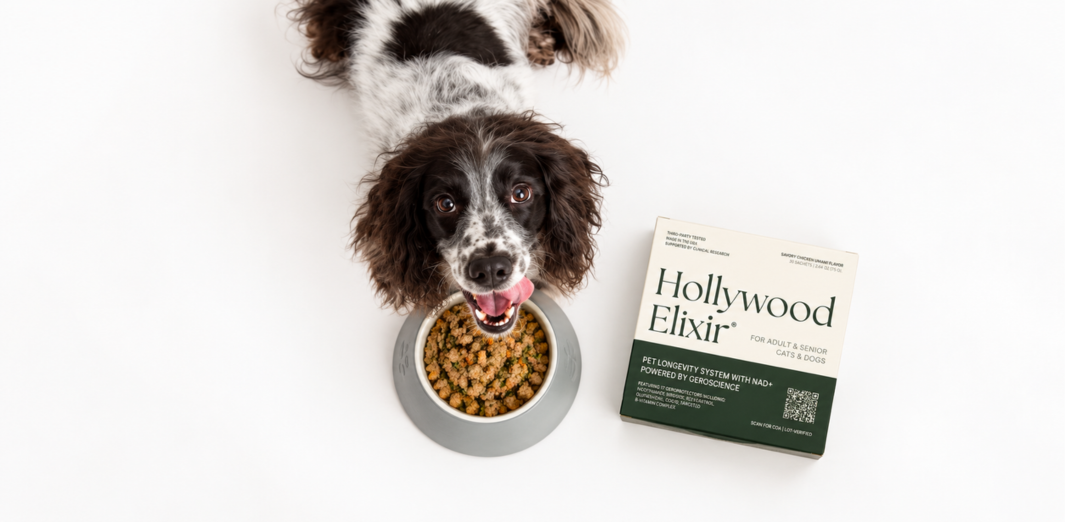
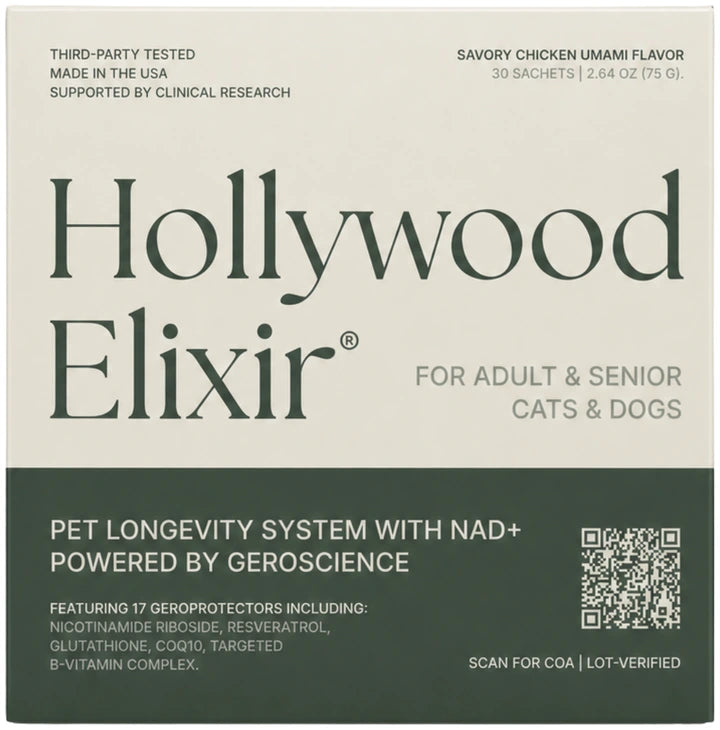
That's why a system-level product can make sense alongside, or instead of, a single-ingredient beta glucans supplement. Hollywood Elixir includes beta glucans at a disclosed 50 mg per serving for immune steadiness — paired with reishi and quercetin — inside a broader formula for graceful aging across the metabolic network. So you support immune tone and the systems around it daily, with amounts you can actually read, rather than chasing one nutrient at a time.
“A single ingredient can help, but aging rarely moves on one lever.”
Educational content only. This material is not a substitute for veterinary advice. Always consult your veterinarian about your dog’s specific needs. These statements have not been evaluated by the Food and Drug Administration. Products mentioned are not intended to diagnose, treat, cure, or prevent any disease.
Glossary
- Beta Glucans: A group of fibers found in yeast, oats, barley, and fungi that can influence immune and digestive function.
- Beta-1,3/1,6-Glucan: A common yeast-derived form often discussed for immune-facing support in dogs.
- Oat Beta-Glucan: A cereal-derived soluble fiber associated with digestive support and immune response support in dogs.
- Soluble Fiber: Fiber that dissolves in water and can be fermented by gut microbes, influencing stool quality and gut comfort.
- Fecal Microbiome: The community of microorganisms in the gut, often assessed through stool samples.
- Prebiotic: A substrate (often a fiber) that is selectively used by beneficial gut microbes, supporting a healthier gut environment.
- Immune Modulation: Supporting the immune system’s balance and responsiveness rather than simply increasing activity.
- Immunoglobulins: Antibodies (such as IgA, IgG) that reflect aspects of immune activity and readiness.
- Standardization: A manufacturing practice that ensures a consistent amount of an active component across batches.
Related Reading
Aging & Senior Dog Guidance
• Dog Age Calculator
• Dog Dementia
• Lethargy in Dogs
• My Dog Won't Eat
• Dog Pacing At Night
• Dog Licking Paws
• Can Dogs Dehydrate
Healthy Aging Support
• NAD+ for Dogs
• NMN for Dogs
• Antioxidants Supplements for Dogs
• Best Senior Dog Supplements & Vitamins
• Rapamycin for Dogs
References
Rummell LM. A proof of principle study investigating the effects of supplemental concentrated brewer's yeast on markers of gut permeability, inflammation, and fecal metabolites in healthy non-challenged adult sled dogs. PubMed Central. 2022. https://pmc.ncbi.nlm.nih.gov/articles/PMC9645558/
Marchi PH. Allergic Reaction to Beta-Glucans in an Obese Dog: A Case Report of Confirmed and Suspected Sources. PubMed. 2025. https://pubmed.ncbi.nlm.nih.gov/40078087/
Stuyven E. Oral administration of beta-1,3/1,6-glucan to dogs temporally changes total and antigen-specific IgA and IgM. PubMed. 2010. https://pubmed.ncbi.nlm.nih.gov/20032218/
Delaney. Evaluation of the toxicity of concentrated barley β-glucan in a 28-day feeding study in Wistar rats. PubMed. 2003. https://pubmed.ncbi.nlm.nih.gov/12615121/
Ferreira. Oat beta-glucan as a dietary supplement for dogs. PubMed. 2018. https://pubmed.ncbi.nlm.nih.gov/30063762/
Marchi PH. Effects of Increasing Levels of Purified Beta-1,3/1,6-Glucans on the Fecal Microbiome, Digestibility, and Immunity Variables of Healthy Adult Dogs. PubMed. 2024. https://pubmed.ncbi.nlm.nih.gov/38257940/
Ferreira CS. Metabolic variables of obese dogs with insulin resistance supplemented with yeast beta-glucan. PubMed. 2022. https://pubmed.ncbi.nlm.nih.gov/34980115/
Marchi PH. Serum Metabolomic Profiling in Healthy Dogs Supplemented with Increasing Levels of Purified Beta-1,3/1,6-Glucans. PubMed Central. 2025. https://pmc.ncbi.nlm.nih.gov/articles/PMC12071151/
Amaral AR. Translating Human and Animal Model Studies to Dogs' and Cats' Veterinary Care: Beta-Glucans Application for Skin Disease, Osteoarthritis, and Inflammatory Bowel Disease Management. PubMed. 2024. https://pubmed.ncbi.nlm.nih.gov/38930453/
FAQ
What are beta glucans for dogs, in plain terms?
Beta glucans for dogs are natural fibers found in ingredients like oats, barley, and yeast. They’re known for supporting a steadier immune response and, in some forms, helping the gut environment feel more settled over time.
Why do owners use beta glucans for dogs health?
Most owners look to beta glucans for dogs health when they want fewer ups and downs—especially during travel, boarding, seasonal shifts, or the slower recovery that can come with age. The goal is usually steadiness rather than a dramatic change.
How do beta glucans work in a dog’s body?
Certain beta glucans interact with immune cells in ways that can shift immune signaling. In dogs given oral beta-1,3/1,6-glucan, researchers observed temporary changes in immunoglobulin measures, suggesting an effect on immune tone rather than a permanent change.
Are beta glucans safe for dogs to take daily?
For many dogs, beta glucans are well tolerated when used as directed, especially when introduced gradually. Oat beta-glucan, in particular, has been described as safe for canine supplementation in various contexts. Daily use should still be individualized for dogs with chronic disease or complex medication plans, and a broader longevity approach can be easier to keep consistent; a disclosed aging-support formula fits well when you want steady, system-level support.
What side effects can beta glucans supplements for dogs cause?
The most common side effects are mild digestive changes: softer stool, gas, or a brief adjustment period, especially if the product is started at full strength. These are often signs the gut is adapting to a new fiber load. Rarely, allergy-like reactions can occur; a case report described an allergic reaction associated with beta-glucans exposure in a dog.
When should I avoid beta glucans for my dog?
Avoid starting immune-active supplements without veterinary input if your dog has autoimmune disease, is on immunosuppressive therapy, or has a history of severe allergic reactions. The goal is to prevent unintended immune shifts in dogs who need tighter medical control.
Do beta glucans interact with my dog’s medications?
Direct drug interactions aren’t the main concern; context is. Because beta-1,3/1,6-glucans can influence immune markers in dogs, they deserve extra caution alongside immune-modifying drugs like steroids or cyclosporine. Bring the full supplement label to your veterinarian so they can evaluate the whole stack.
What’s the difference between yeast and oat beta glucans?
They differ in structure and typical use. Yeast-derived beta glucans are often chosen for immune-facing support, while oat beta-glucan is commonly discussed as a soluble fiber that can support digestion and overall immune response in dogs.
Is a beta glucans powder for dogs better than chews?
Neither is universally better. Powders can be easier to mix into food and may use fewer flavoring ingredients, while chews can be more convenient and consistent for busy households. The best choice is the one you can give reliably without upsetting your dog’s stomach.
How long until I notice changes from beta glucans?
Digestive changes, if they happen, can appear within days to a couple of weeks because fiber shifts can show up quickly in stool quality. Immune-facing goals are usually slower and subtler, often noticed as fewer “off days” over several weeks. Because immune marker changes in dogs have been described as temporary with oral beta-1,3/1,6-glucan, consistency matters more than intensity.
Can puppies take beta glucans supplements for dogs?
For puppies, the immune system is still learning tolerance, and diet changes can have outsized effects on digestion. That doesn’t mean beta glucans are off-limits, but it does mean the decision should be conservative and veterinarian-guided, especially if your puppy has diarrhea, parasites, or food sensitivities.
Are beta glucans for dogs helpful for senior dogs?
Senior dogs are a common fit because the goal is often steadier resilience: digestion that’s less reactive, and an immune system that stays composed during stress. In healthy adult dogs, purified beta glucans have been associated with changes in the fecal microbiome and related variables, which may matter more as flexibility declines with age.
Do different dog breeds respond differently to beta glucans?
Breed differences are usually indirect: appetite, baseline stool sensitivity, allergy tendencies, and lifestyle stressors can all change how a supplement feels. The more useful lens is the individual dog’s history—skin issues, GI volatility, and how they handle change.
Can cats use the same beta glucans supplement for dogs?
It’s better not to assume. Cats have different nutritional needs and different tolerances for certain ingredients and flavors. Even if beta glucans themselves are broadly food-derived, the full product (sweeteners, flavorings, added botanicals) may not be appropriate for cats.
What should I look for in best beta glucans supplements for dogs?
Look for clear sourcing (oat, barley, yeast), transparency about the active ingredient, and dosing directions that are easy to follow. Third-party testing, lot traceability, and minimal unnecessary additives are practical quality signals, especially for sensitive dogs.
Are beta glucans supplements for dogs the same as prebiotics?
They can overlap, but they’re not identical. Some beta glucans act like fermentable fibers that may support the gut environment, which is prebiotic-adjacent. Others are chosen more for immune-facing effects. In dogs, beta glucans have been discussed for both digestion and immune response support, depending on the source.
Can I give beta glucans with probiotics for my dog?
Often, yes, but introduce one change at a time. Probiotics and fibers can both shift stool quality, so staggering starts helps you understand what’s helping and what’s not. If your dog has chronic GI disease, your veterinarian may want a more structured plan.
Do beta glucans help with gut permeability in dogs?
This is an active area of interest, but it’s easy to overpromise. A study in healthy sled dogs using a concentrated brewer’s yeast supplement evaluated markers related to gut permeability and inflammation, alongside fecal metabolites, suggesting yeast-based components can influence gut-immune signals(Rummell LM, 2022).
What is a reasonable decision framework for beta glucans?
Start with the outcome you want: steadier digestion, calmer immune reactivity, or general resilience. Then choose the simplest product that matches that goal, introduce it gradually, and keep diet and treats stable for a few weeks so you can observe changes without noise.
When should I call my vet about beta glucans?
Call your veterinarian if your dog develops vomiting, persistent diarrhea, marked lethargy, hives, facial swelling, or any breathing changes after starting a supplement. Also check in before use if your dog has autoimmune disease, cancer therapy, or is taking immune-modifying medications.
Discover LPL-01: How This Fits Into a Larger Canine Longevity System
Aging in dogs is not driven by a single pathway. It’s the result of interacting biological systems—energy metabolism, oxidative stress, immune signaling, and structural integrity—changing over time.
This article explores one piece of that puzzle. If you want to understand how these pieces connect—and what actually moves the needle—you need to zoom out.
Start with the underlying science:
- Canine Geroscience Framework →
A structured view of how aging progresses across cellular energy, inflammation, and resilience systems. - Senior Biological Defense Coverage (BDC) Modeling →
A systems-level map of which biological pathways decline first, and how layered interventions can support them. - 2026 Market Research: Best Dog Longevity Supplements →
A 2026 industry report and review of leading senior-dog and cellular-aging formulas. - LPL-01 Standard →
The formulation system that translates these models into real-world supplementation—covering multiple pathways in a coordinated way.
Essential Summary
Why are beta glucans for dogs important?
Beta glucans are natural fibers that can support immune steadiness and gut comfort in dogs when used thoughtfully. The best results tend to come from consistency, careful product selection, and realistic expectations. For many families, beta glucans are one useful piece inside a broader, aging-aware plan that supports resilience over time.
If you’re exploring beta glucans for dogs but want support that goes beyond a single ingredient, Hollywood Elixir is designed to reinforce whole-body aging resilience—helping the systems that shape immune balance, digestion, and recovery stay steadier across the years.
Hollywood Elixir®
Starting at $89/mo
Hollywood Elixir is amazing! She put back on 5 lbs to a healthy weight, her eyes are shiny, her coat is beautiful!
— Jessie
We go on runs. Lately he's been keeping up with no problem!
— Cami
Considering beta glucans for dogs?
If you're looking for beta glucans for dogs
If you’re considering beta glucans for dogs, treat it as a measured addition, not a dramatic intervention. Choose a product with clear sourcing and simple directions, introduce it gradually, and keep diet changes minimal while you observe stool quality, itchiness, and overall steadiness. For dogs with autoimmune disease, cancer therapy, or immune-modifying medications, make it a veterinarian-guided decision. And if your bigger goal is graceful aging—energy, recovery, and resilience that holds up over years—consider anchoring the routine with Hollywood Elixir so you’re supporting the broader system, not only one ingredient.
Learn about how our DVMs think about dog aging
Dr. JoAnna Pendergrass DVM
Hollywood Elixir®
Starting at $89/mo
Explore your dog’s changing needs over time
Related Reading
Most people who search for beta glucans for dogs aren’t chasing a trend. They’re trying to protect something quieter: the sense that their dog is steady. That meals don’t turn into stomach drama.