
The 12 Hallmarks of Aging in Dogs, Explained
Read full insightReishi for Cats
How reishi interacts with feline immune balance and stress load
By La Petite Labs Editorial 15 min read

Owners looking into reishi for cats usually want one thing: a quiet, steady kind of support across the small stresses of a cat’s life—not a miracle. Reishi (Lingzhi) is a medicinal mushroom whose beta-glucans and triterpenes can nudge immune signaling, which is why it now appears in feline powders, extracts, and “longevity” blends. The honest headline is that the plausible benefits are modest, and the safety case is incomplete.
Cats are not a blank canvas for human wellness trends. Reishi’s safety in cats has not been extensively studied and feline dosing is not well established—two facts that should shape every decision. A careful owner does not need to be fearful, just deliberate: choose transparent products, introduce slowly, and watch appetite and stool as your first tolerance signals.
There is also a practical question underneath: if your cat already eats a complete diet and sees a vet, why add anything? The most coherent answer is system-level support. Aging is rarely a single-nutrient problem; it is an accumulation of small strains that show up as less bounce and narrower margins. That is why many owners reach for a broader, disclosed-dose formula rather than a standalone powder—a theme this page returns to.
- Reishi may gently support immune steadiness in cats; keep expectations modest and vet-guided.
- Its beta-glucans and triterpenes can shift immune signaling, which explains the popularity in pet blends.
- Cat-specific safety research and dosing are limited, so any reishi use should be conservative.
- Quality matters: clear species ID, extraction details, and testing reduce avoidable uncertainty.
- Watch tolerance first—appetite changes, vomiting, or diarrhea—and stop if signs persist.
- Supplements cannot fix nutritional gaps; cats need species-appropriate diets (RVA, 2020).
- A disclosed-dose, system-level formula can still make sense because it supports resilience across aging, not one nutrient.
Reishi and Cats: a Calm Look at Promise and Limits
Reishi mushrooms for cats sit at an interesting intersection: a long human history of use, a growing pet-supplement market, and a thinner layer of cat-specific research than many owners expect. Reishi (often labeled as Lingzhi) contains bioactive compounds that may support immune function, which is why it shows up in “wellness” blends and longevity conversations (Unknown, 2024). At the same time, feline safety and dosing guidance are not well established, so any reishi supplement for cats should be approached as a vet-guided, quality-dependent decision rather than a casual add-on (Tanprasertsuk J, 2022).
A useful way to think about best reishi for cats is not “strongest,” but “most predictable.” Predictability comes from clear sourcing, careful extraction, conservative serving sizes, and a plan for monitoring tolerance. If your cat has chronic disease, takes medications, or is simply older and more sensitive, the bar for caution rises. The goal is to support the broader system—comfort, appetite, energy, and resilience—without creating new variables you can’t interpret.

What Reishi Is and Why It Shows up in Cat Supplements
Reishi is a medicinal mushroom most commonly associated with long-term wellness traditions. In supplements, it’s typically offered as a powder, capsule, or extract. For cats, the conversation is less about tradition and more about practicality: what is it, what might it do, and what are the tradeoffs. Research suggests reishi may have immunomodulatory effects, which is why it’s often framed as “immune support”(Unknown, 2024).
Still, “may support” is not the same as “will help,” and cats are not small humans. The safety of reishi for cats has not been extensively studied, and dosing guidelines are not well established. That doesn’t automatically rule it out; it simply means the decision should be anchored in your cat’s health status, your veterinarian’s input, and a product you can trust.

Reishi for Cats Benefits: What Owners Commonly Hope For
When owners talk about reishi for cats benefits, they’re usually pointing to three themes: immune steadiness, stress resilience, and support during aging. Reishi contains multiple bioactive compounds that may support immune function, which is one reason it appears in pet wellness formulas. The key word is “support”—a gentle nudge, not a dramatic intervention.
In real life, the most meaningful “benefit” may be that a cat maintains routines more easily: eating reliably, bouncing back after travel, or seeming less unsettled by household changes. Those outcomes are hard to measure and easy to over-attribute. If you try a reishi supplement for cats, treat it like a small experiment: stable baseline, one change, careful observation, and a willingness to stop if it doesn’t fit.

Reishi Forms: Powder, Fruiting Body, and Extract Differences
Not all “reishi” is the same ingredient. Some products use fruiting body; others use mycelium grown on grain. Some are hot-water extracts; others are labeled as dual extracts. These choices can change the profile of what ends up in the scoop. For a cat, the best reishi for cats is usually the one with the clearest identity and the simplest, most transparent label—because transparency is what allows your veterinarian to evaluate it.
Avoid the assumption that a higher “potency” number is automatically safer or more effective. Cats have smaller bodies and different tolerances, and the specific dosage of reishi mushrooms for cats has not been well established (Herreria-Bustillo VJ, 2013). A cautious owner prioritizes consistency, testing, and conservative use over maximal concentration.

Safety First: What We Know and What We Don’t
Safety is the part of this topic that deserves the most attention. The safety of reishi for cats has not been extensively studied, so it’s wise to treat it as a “possibly useful, not fully mapped” ingredient. That means avoiding improvisation, especially if your cat has kidney disease, liver disease, a history of pancreatitis, or is on a complex medication plan.
It also means separating supplement-grade reishi from the broader risk category of mushrooms in general. Certain mushrooms can cause severe toxicity in cats, affecting the liver, nervous system, and gastrointestinal tract (Puschner B, 2018). If there’s any chance your cat ingested an unknown mushroom, treat it as an urgent veterinary issue rather than a supplement question.
“In cats, best usually means most predictable: clear sourcing, conservative use, and easy monitoring.”
Dosing Reality: Why Veterinary Guidance Matters Here
Because dosing guidelines for reishi in cats are not well established, the safest “dose” conversation is really a veterinary conversation. Your veterinarian can weigh your cat’s age, weight, diagnoses, and current medications, then decide whether a reishi extract for cats makes sense at all. If it does, they can help you choose a product and a conservative starting approach.
Be wary of online dosing charts that treat cats like scaled-down dogs. Cats can respond differently, and the cost of getting it wrong is higher because appetite disruption and dehydration can spiral quickly. A good plan includes a stop rule: if vomiting, diarrhea, or marked lethargy appears, you stop and reassess.
Who Should Avoid Reishi and When to Be Conservative
Contraindications are less about reishi being “bad” and more about uncertainty stacking up. If your cat is pregnant, nursing, very young, or medically fragile, the threshold for adding new supplements should be high. Reishi is discussed for immune effects, so it’s also worth extra caution in cats with immune-mediated conditions or those receiving immune-modifying therapies.
Even in healthy cats, the most common contraindication is practical: a cat who won’t eat food once it’s mixed in. In cats, maintaining consistent intake matters more than squeezing in a trendy ingredient. If reishi supplements for cats create feeding battles, it’s usually not worth continuing.

Mushroom Risks: Separating Supplements from Toxic Ingestions
Owners sometimes assume “mushroom” equals “immune support,” but the mushroom category is broad. Some mushrooms can cause muscarinic intoxication signs in cats such as salivation, vomiting, and diarrhea (Herreria-Bustillo VJ, 2013). That’s not a reason to panic about a reputable supplement; it’s a reason to be strict about sourcing and to avoid any DIY foraging or home-dehydrated mushroom powders.
If you ever suspect mushroom poisoning, diagnosis can involve recognizing clinical signs and may require specific tests, and treatment may include supportive care depending on the toxin (Puschner B, 2018). In other words: don’t try to “counterbalance” a bad ingestion with a supplement. Treat it as an emergency and bring any remaining material to the clinic if you can do so safely.

Where Reishi Fits in a Complete Wellness Picture
A fair question is whether reishi for cats is even necessary if your cat eats a complete, species-appropriate diet. Nutrition is foundational, and feline requirements are often unmet by vegan options, where deficiencies can cause real problems (RVA, 2020). Yet even with excellent food, owners still want to support aging cats through stress, environmental change, and the slow accumulation of wear.
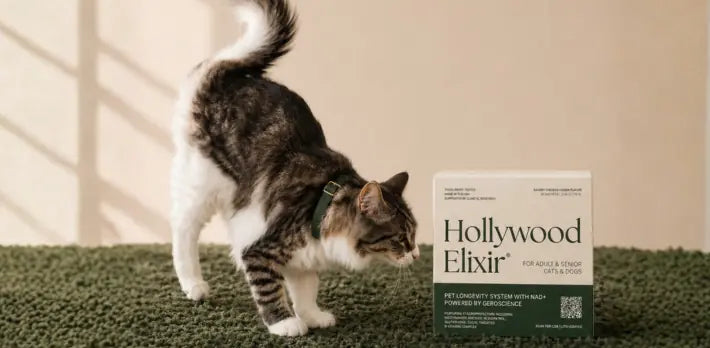
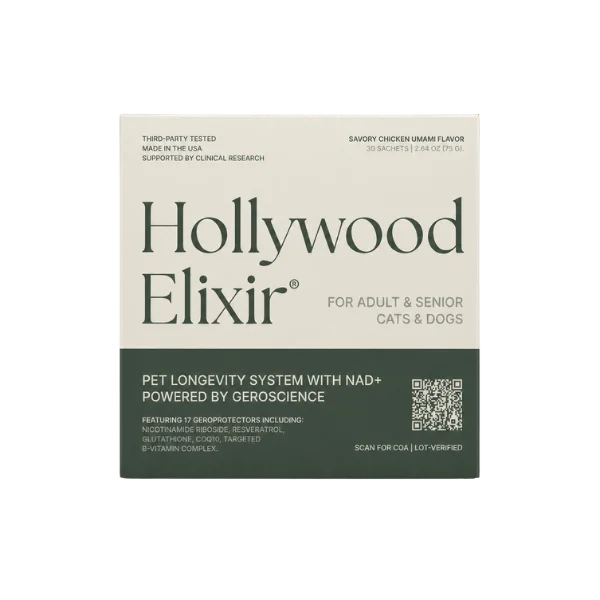
That is where a system-level routine becomes a coherent idea—not replacing nutrients, but supporting the broader network behind daily comfort and vitality. If you want reishi inside a transparent, disclosed-dose formula rather than a standalone powder, Hollywood Elixir is built for dogs and cats and includes reishi mushroom at 25 mg per sachet plus beta-glucans at 50 mg, food-mixed, with a lot-level COA you can look up. It keeps the immune-support ingredient many owners are chasing inside a routine that is easy to read, easy to pause, and easy to discuss with your vet.
Choosing Quality: What “Best” Means for Reishi Products
If you’re comparing reishi supplements for cats, the most meaningful differences are often invisible on the front label. Look for a product that specifies the species (Ganoderma lucidum), the part used (fruiting body vs. Mycelium), and the extraction approach. Extracts can concentrate certain compounds, but “more concentrated” is not automatically “better” for a cat; it can also mean a narrower margin for error. A best reishi supplement for cats is one where you can trace what it is, how it was made, and how it’s meant to be used.
Quality signals include batch testing, contaminant screening, and a serving size that reads like it was designed for small animals rather than scaled down from human products (VanderMolen, 2017). If a label leans on vague “proprietary blends,” it becomes harder to troubleshoot if your cat develops loose stool, reduced appetite, or unusual drooling. In cats, clarity is a safety feature.
“A supplement that disrupts appetite is rarely worth the trade, even if the label is impressive.”

DVM Voice: Clinical Vignette of a Common Pattern in Senior Cat Aging
Case provided by JoAnna Pendergrass, DVM
Sasha, a 12-year-old cat, was brought in after her owner noticed increased thirst and urination, lethargy, vomiting, and a generally unkempt appearance. Examination showed weight loss, elevated blood pressure, and reduced vitality.
Diagnostic testing revealed elevated kidney markers, poorly concentrated urine, and protein loss in the urine — findings consistent with chronic kidney disease, one of the most common chronic conditions in senior cats.
Her care required a kidney-focused diet, blood pressure management, targeted supplementation, medication support, and regular monitoring — a necessary plan, but one started after clinical signs were already visible.
Clinical takeaway: Sasha’s case reflects why senior-cat wellness should begin before obvious decline. Earlier monitoring, body-condition tracking, hydration awareness, antioxidant support, and daily cellular resilience may help support quality of life as cats age.
Single-case vignette. Not generalizable. Veterinary diagnosis and monitoring are essential for increased thirst, urination, vomiting, lethargy, weight loss, or suspected kidney disease.

Making It Work: Formats, Taste, and Daily Routine
Administration matters because cats are not forgiving about taste, texture, or routine disruption. Many owners start with a tiny amount mixed into a strongly flavored wet food, then slowly work toward the intended serving over days. This “slow ramp” is less about chasing a result and more about learning your cat’s tolerance. Because dosing guidelines for reishi extract for cats are not well established, a conservative approach is part of responsible use (Tanprasertsuk J, 2022).
If your cat refuses food when a new powder is added, don’t force the issue. Appetite is a vital sign in cats, and prolonged food refusal can create its own risks. Consider a different format, a smaller amount, or stopping entirely and discussing alternatives with your veterinarian. A supplement should fit the cat, not the other way around.

Side Effects to Watch for and When to Stop
Side effects are usually the first place owners notice whether reishi for cats is a good match. The most common concerns are gastrointestinal—soft stool, vomiting, or a sudden change in appetite. Less commonly, mushroom-related compounds can affect the nervous system, and certain mushroom intoxication patterns in cats can include salivation, vomiting, and diarrhea (Herreria-Bustillo VJ, 2013). While reishi sold as a supplement is not the same as a random wild mushroom, the takeaway is simple: unusual signs deserve prompt attention, not a “wait and see” mindset.
Stop the supplement and contact your veterinarian if symptoms are persistent, severe, or paired with lethargy. If there’s any chance your cat accessed unknown mushrooms outdoors or in houseplants, treat it as a potential poisoning scenario; some mushrooms can cause serious toxicity affecting the liver and nervous system (Puschner B, 2018).

Medication and Condition Interactions Worth Discussing
Drug and supplement interactions are where “natural” can become misleading. Reishi is discussed for immunomodulatory effects, which is exactly why it should be reviewed in cats with immune-mediated disease, cancer therapy plans, or long-term steroid use (Unknown, 2024). It’s also wise to be cautious if your cat is on multiple medications, since any new ingredient can change appetite, hydration, or gut motility—factors that indirectly affect how drugs are tolerated.
Bring the full label (or a photo) to your veterinarian and ask a focused question: “Is there any reason this ingredient complicates my cat’s current plan?” That framing keeps the conversation practical. When the answer is “maybe,” the safest next step is often a pause, not a gamble (Chrysostomou PP, 2024).
Kittens, Adults, Seniors: When Reishi Fits the Moment
Life stage changes the risk-benefit picture. Kittens have developing systems and smaller margins for error, so reishi supplements for cats are typically a low priority unless a veterinarian has a specific reason to include them. For healthy adult cats, the question is often whether a supplement adds meaningful support beyond good nutrition, hydration, enrichment, and preventive care.
In seniors, owners tend to care less about “boosting” and more about steadiness: appetite, mobility, sleep, and stress tolerance. That’s also where system-level support becomes relevant. Even when a diet meets baseline needs, aging can still shift how the body handles everyday wear. A thoughtful supplement strategy aims to support resilience over time, not chase a single lab value (Tokarz D, 2012).
Cats Versus Dogs: Why Feline Caution Is Different
Cats and dogs don’t share the same supplement playbook. Cats are often more sensitive to taste, more prone to appetite disruption, and less tolerant of “just try it” experimentation. That matters when owners borrow dosing ideas from canine products or online anecdotes. With reishi extract for cats, the absence of well-established feline dosing guidance should be treated as a real constraint, not a minor inconvenience (Tanprasertsuk J, 2022).
If a product is marketed broadly for “pets,” look for evidence that the serving size and excipients were designed with cats in mind. Sweeteners, strong flavors, and bulky powders can backfire. The best reishi supplements for cats tend to be the ones that respect feline realities: small bodies, strong preferences, and a need for consistency.

Timeline and Expectations: Subtle Changes over Weeks
Expect reishi’s effects in cats—if they appear at all—to be subtle and slow, measured in weeks rather than days. You might notice steadier stool, calmer responses to stress, or fewer “off” days, but those are also shaped by diet, household routine, and seasonal shifts. That overlap is exactly why you change only one variable at a time and keep short notes.
If you are using reishi as part of an aging-support plan, give it a fair multi-week trial against a stable baseline. If nothing improves and your cat dislikes the routine, stopping is reasonable. A supplement should earn its place by being both tolerable and meaningfully supportive—not by being fashionable.

Diet First: Why Supplements Cannot Replace Nutrition
It’s tempting to treat supplements as a shortcut around nutrition, but cats are uniquely dependent on specific nutrients that must come from appropriate diets. Commercial vegan diets, for example, may lack essential nutrients for cats and can create deficiency risks (RVA, 2020). That doesn’t mean every nonstandard diet fails, but it does mean “wellness” ingredients can’t compensate for foundational gaps.
Where supplements can still matter—even with a strong diet—is in supporting broader networks that influence how a cat feels day to day: stress load, oxidative wear, and the general friction of aging. A system-level product can be relevant precisely because it isn’t trying to replace taurine or other essentials; it’s aiming to support the whole picture (Tokarz D, 2012).
A Practical Bottom Line for Thoughtful Cat Owners
A science-minded owner usually wants two things at once: honesty about what’s unknown, and a practical way to support a cat’s long-term comfort. With reishi for cats, the unknowns are real—especially around dosing and feline-specific safety—so the best approach is conservative, vet-guided, and quality-focused. The practical path is to choose interventions that are easy to tolerate, easy to stop, and easy to evaluate.
That’s also why many owners prefer system-level formulas over single-ingredient experiments. When the goal is graceful aging, you’re rarely trying to “push” one lever; you’re trying to reduce overall strain. A well-designed blend can support that broader aim while keeping the routine simple, which is often the deciding factor in real homes.
“System-level support matters because aging is rarely a single lever.”
Educational content only. This material is not a substitute for veterinary advice. Always consult your veterinarian about your dog’s specific needs. These statements have not been evaluated by the Food and Drug Administration. Products mentioned are not intended to diagnose, treat, cure, or prevent any disease.
Glossary
- Reishi (Lingzhi): A medicinal mushroom (often Ganoderma lucidum) used in supplements for long-term wellness support.
- Fruiting Body: The visible mushroom structure; often preferred when a label aims for clarity about what part is used.
- Mycelium: The root-like fungal network; sometimes grown on grain and used in powders, which can change composition.
- Extract: A concentrated preparation made to pull specific compounds from reishi; may be labeled hot-water or dual extract.
- Immunomodulatory: Describes an ingredient that may influence immune activity toward balance rather than simple “boosting.”
- Tolerance: How well a cat handles a supplement in real life, especially regarding appetite, stool quality, and behavior.
- Palatability: Whether a cat will accept a supplement mixed into food; a major limiting factor for powders and liquids.
- Contaminant Screening: Testing for heavy metals, microbes, or adulterants; important for botanical and mushroom products.
- Muscarinic Signs: A pattern of symptoms (e.g., drooling, vomiting, diarrhea) seen with certain mushroom intoxications in cats.
Related Reading
Aging & Senior Cat Guidance
• Cat Age Calculator: Cat Years to Human Years
• Lethargy in Cats
• Senior Cat Not Eating
• Cat Drinking A Lot
• Why Is My Senior Cat Withdrawn?
Healthy Aging Support
• NAD+ for Cats
• NMN for Cats
• Vitamins For Older Cats
• Senior Cat Food
References
Tanprasertsuk J. Roles of plant-based ingredients and phytonutrients in canine nutrition and health. PubMed Central. 2022. https://pmc.ncbi.nlm.nih.gov/articles/PMC9291198/
RVA. Nutritional inadequacies in commercial vegan foods for dogs and cats. PubMed Central. 2020. https://pmc.ncbi.nlm.nih.gov/articles/PMC6968870/
Herreria-Bustillo VJ. Suspected muscarinic mushroom intoxication in a cat. PubMed Central. 2013. https://pmc.ncbi.nlm.nih.gov/articles/PMC10816653/
Puschner B. Mushroom Poisoning Cases in Dogs and Cats: Diagnosis and Treatment of Hepatotoxic, Neurotoxic, Gastroenterotoxic, Nephrotoxic, and Muscarinic Mushrooms. PubMed. 2018. https://pubmed.ncbi.nlm.nih.gov/30077439/
Unknown. Lingzhi, Reishi. 2024. https://www.ncbi.nlm.nih.gov/books/NBK609014
VanderMolen. Safety assessment of mushrooms in dietary supplements by combining analytical data with in silico toxicology evaluation. 2017. https://www.sciencedirect.com/science/article/pii/S0278691517300984
Chrysostomou PP. A toxicological assessment of Ganoderma lucidum and Cordyceps militaris mushroom powders. PubMed Central. 2024. https://pmc.ncbi.nlm.nih.gov/articles/PMC11558339/
Tokarz D. Amanitin toxicosis in two cats with acute hepatic and renal failure. PubMed. 2012. https://pubmed.ncbi.nlm.nih.gov/22184185/
FAQ
What is reishi for cats, in simple terms?
Reishi for cats refers to using reishi (Lingzhi), a medicinal mushroom, as a supplemental ingredient rather than a food. It’s typically offered as a powder or extract and is discussed for gentle wellness support, especially around aging and immune steadiness.
Because cat-specific dosing and safety data are limited, it’s best treated as an optional, vet-reviewed addition—not a default routine. For owners who prefer broader, system-level support, Hollywood Elixir™ can complement an aging-focused plan.
Why do owners consider reishi for cats at all?
Most owners consider reishi for cats when they want subtle support for resilience—often during senior years, stressful transitions, or periods when a cat seems less steady than usual. Reishi contains bioactive compounds that may support immune function, which is why it appears in many “wellness” formulas.
The most grounded expectation is not a dramatic change, but a gentle layer of support that’s easy to stop if it doesn’t suit your cat. If you prefer a broader approach than single ingredients, Hollywood Elixir™ is built around system-level aging support.
How might reishi mushrooms for cats support wellness?
Reishi mushrooms for cats are mainly discussed for immune-adjacent support and overall resilience. Research in general suggests reishi may have immunomodulatory effects, which is why it’s often framed as helping the body stay balanced rather than “boosted”.
In cats, the practical focus is tolerance and consistency: a supplement only helps if it doesn’t disrupt appetite or routine. For owners who want a steadier, whole-system strategy, Hollywood Elixir™ supports long-term vitality without relying on a single ingredient.
Is reishi for cats considered safe?
Safety is the central question with reishi for cats. The safety of reishi in cats has not been extensively studied, and dosing guidance is not well established, so it’s best approached with veterinary oversight and conservative expectations.
If your cat has chronic disease, takes medications, or is prone to appetite disruption, the margin for experimentation is smaller. For a simpler, system-level routine that still respects caution, consider Hollywood Elixir™ as part of an aging-support plan.
What cats should avoid a reishi supplement?
Cats who are medically fragile, very young, pregnant, or nursing are generally poor candidates for new supplements unless a veterinarian has a specific reason. Because feline dosing isn’t clearly established, adding variables in high-stakes situations can complicate care decisions.
Cats with complex medication plans also deserve extra caution, since even mild GI changes can affect overall stability. If you want broader support that’s designed around aging rather than single-ingredient tinkering, Hollywood Elixir™ may be a better fit to discuss with your vet.
How do vets think about dosing reishi extract for cats?
With reishi extract for cats, many veterinarians start from a place of caution because dosing guidelines are not well established. Rather than relying on online charts, they consider your cat’s diagnoses, medications, and sensitivity to diet changes before recommending any serving size or format.
A responsible plan usually includes a slow introduction and clear stop rules if appetite or stool changes. If you’d rather support aging with a broader, simpler routine, ask your vet about Hollywood Elixir™ as a system-level option.
What side effects can reishi supplements for cats cause?
The most common side effects owners report with reishi supplements for cats are gastrointestinal: soft stool, vomiting, or reduced appetite. Separately, some mushroom-related intoxication patterns in cats can include salivation, vomiting, and diarrhea, which is why any unusual signs should be taken seriously.
If symptoms persist, stop the supplement and contact your veterinarian—especially if your cat seems lethargic or won’t eat. For owners who want a gentler, whole-system approach, Hollywood Elixir™ can be part of a steadier aging routine.
Can reishi for cats interact with medications?
Potential interactions are a key reason to involve your veterinarian. Reishi is discussed for immunomodulatory effects, so it deserves extra review in cats receiving immune-modifying therapies or managing immune-mediated conditions. Even when there’s no direct interaction, changes in appetite or stool can affect how a cat tolerates other treatments.
Bring the full ingredient label to your appointment and ask whether it complicates the current plan. If you want system-level aging support that’s easier to evaluate, consider Hollywood Elixir™ as a vet-discussed option.
Is reishi for cats okay for kittens?
For kittens, the default is usually “not necessary.” Their needs are best met through appropriate growth nutrition, parasite prevention, and routine veterinary care. Because feline dosing guidance for reishi isn’t well established, adding supplements during development is typically reserved for situations where a veterinarian has a clear rationale.
If you’re thinking longer-term—supporting resilience across a life—focus first on fundamentals and keep supplements simple. When aging support becomes relevant later, Hollywood Elixir™ is designed for that broader horizon.
Does cat size or breed change reishi supplement decisions?
Size and breed can influence tolerance, but the bigger drivers are health status and sensitivity. Because dosing guidelines for reishi in cats are not well established, it’s risky to assume a larger cat can simply “handle more,” or that a smaller cat should automatically get a tiny fraction of a human serving.
A veterinarian can help you choose a conservative approach that fits your individual cat and avoids appetite disruption. For owners who want broader aging support without guesswork, Hollywood Elixir™ offers a system-level framework to discuss.
Is reishi for cats the same as reishi for dogs?
The ingredient name may be the same, but cats and dogs often respond differently to supplements. Cats are more likely to refuse food if taste changes, and appetite disruption carries higher downstream risk. That’s one reason feline-specific safety and dosing uncertainty matters more in practice.
Avoid borrowing canine dosing advice or “pet” products that weren’t designed with cats in mind. If you want a cat-friendly, system-level aging routine to review with your vet, consider Hollywood Elixir™ as part of that conversation.
How long until reishi for cats benefits might appear?
If reishi for cats benefits show up, they’re usually subtle and gradual. Many owners look for steadier routines—more consistent appetite, fewer stress-related “off” days, or smoother transitions. Because these changes are easy to misread, it helps to change only one variable at a time and keep brief notes.
If nothing improves and your cat dislikes the routine, stopping is a reasonable outcome. For an aging-focused approach that’s designed to support resilience over time, Hollywood Elixir™ can fit a longer-horizon plan.
What quality signs define the best reishi for cats?
The best reishi for cats is usually the most transparent: clear species identification, whether it’s fruiting body or mycelium, extraction method, and conservative serving guidance. Third-party testing and contaminant screening matter because cats have smaller margins for error, and troubleshooting is only possible when the label is specific(VanderMolen, 2017).
Be cautious with vague proprietary blends or human products repackaged for pets. If you prefer a system-level formula designed around aging support rather than single-ingredient sourcing, considerHollywood Elixir™as a simpler alternative to evaluate.
Powder, capsule, or liquid: which reishi supplement format suits cats?
Format is mostly about compliance. Powders can be mixed into wet food but may change taste; capsules can be hard to administer; liquids can be easier but sometimes contain flavors cats reject. Because dosing guidance is limited, the “best” format is the one you can introduce conservatively and monitor without disrupting appetite.
If your cat refuses meals, stop and reassess rather than escalating. For owners who want an aging-support routine that’s designed to be straightforward, Hollywood Elixir™ can be part of a simpler daily plan.
Can cats take reishi supplements for cats every day?
Daily use can be reasonable for some cats, but it should be a deliberate choice. Because feline safety data and dosing guidelines are limited, daily supplementation is best discussed with a veterinarian, especially for seniors or cats on medications. Consistency also makes it easier to notice small tolerance issues early.
If daily use creates food refusal or GI upset, it’s not the right routine for your cat. For a broader approach to daily aging support, consider Hollywood Elixir™ as a system-level option to review.
Does reishi for cats replace a complete, balanced diet?
No. Supplements can’t substitute for a species-appropriate diet in cats. Cats have specific dietary requirements, and nutritional deficiencies—such as those that can occur in poorly formulated vegan diets—can lead to serious health issues. Reishi is best viewed as optional support layered on top of strong fundamentals.
Even with excellent nutrition, owners may still choose system-level support for aging resilience and day-to-day steadiness. That’s where Hollywood Elixir™ can complement a well-built diet rather than trying to replace it.
What’s the research reality behind reishi for cats?
The research reality is mixed: reishi has a substantial history of use and is studied in broader contexts for immunomodulatory potential, but cat-specific safety and dosing data are limited. That gap doesn’t mean it’s unsafe; it means confidence should be proportionate to the evidence.
A careful owner treats it as a conservative, monitored trial rather than a guaranteed outcome. If you prefer a product framed around whole-system aging support, consider Hollywood Elixir™ as part of a measured plan.
When should I call a vet about reishi mushrooms for cats?
Call your veterinarian if your cat develops repeated vomiting, diarrhea, marked drooling, lethargy, or refuses food after starting a mushroom supplement. Some mushroom intoxication patterns in cats can include salivation, vomiting, and diarrhea, and it’s safer to treat concerning signs promptly.
If there’s any chance of ingesting an unknown wild mushroom, treat it as urgent; some mushrooms can cause severe toxicity in cats. For system-level aging support you can discuss proactively, considerHollywood Elixir™ as part of a calmer, planned approach.
How do I decide between best reishi supplements for cats?
To compare best reishi supplements for cats, prioritize transparency and predictability: clear labeling, testing, and conservative serving guidance. Because feline dosing isn’t well established, a product that’s easy to interpret is safer than one that’s merely “strong”. Also consider whether the format will realistically work in your cat’s daily routine.
If your goal is broader aging resilience rather than a single mushroom experiment, a system-level formula may feel more coherent and easier to evaluate. That’s where Hollywood Elixir™ can fit into a simpler decision framework.
What’s a sensible decision framework for reishi for cats?
A sensible framework for reishi for cats is: start with fundamentals (diet, hydration, dental care), clarify your goal (stress steadiness, aging support), then ask whether adding a new variable is worth it. Because safety and dosing data are limited, the default should be conservative, vet-guided use with clear stop rules.
If you want to support the broader system without chasing a single ingredient, choose a routine designed around long-term resilience. Many owners place Hollywood Elixir™ in that role.

Discover LPL-01: How This Fits Into a Larger Feline Longevity System
Aging in cats unfolds quietly. It’s not driven by a single failure, but by gradual shifts across interconnected systems — cellular energy, oxidative balance, immune tone, and tissue integrity — each influencing the others over time.
This article explores one layer of that system. To understand what actually shapes long-term health, you need to step back and look at how these layers interact.
Start with the underlying science:
- Feline Geroscience Framework →
A structured view of how aging progresses across cellular energy, inflammation, and resilience systems. - Senior Biological Defense Coverage (BDC) Modeling →
A systems-level map of which biological pathways decline first, and how layered interventions can support them. - 2026 Market Research: Best Cat Longevity Supplements →
A feline-specific review of longevity supplements. 2026 Industry report created by LPL-01 Research. - LPL-01 Standard →
The formulation system that translates these models into real-world supplementation—covering multiple pathways in a coordinated way.
Essential Summary
Why is reishi for cats important?
Reishi for cats is often chosen for gentle, whole-body support, especially in older pets. Reishi contains bioactive compounds that may support immune function, but feline safety and dosing are not well established, so veterinary guidance matters. The best approach is conservative: choose transparent sourcing, monitor tolerance, and prioritize routines your cat will accept.
For owners who want a simpler, system-level approach to graceful aging—rather than juggling single-ingredient experiments—Hollywood Elixir is designed to support the broader metabolic network that influences everyday vitality, comfort, and resilience over time.
Longevity Core
Hollywood Elixir®
★★★★★(313)
More good years, starting now — steady energy, engagement, and a pet who keeps showing up fully, every day.
Starting at $89/mo
Hollywood Elixir is amazing! She put back on 5 lbs to a healthy weight, her eyes are shiny, her coat is beautiful!
— Jessie
She hopped up onto the windowsill again for the first time in years.
— Charlie
Considering reishi for cats?
If you're looking for reishi for cats
If you’re considering reishi for cats, treat it as a measured trial, not a promise. Choose a product with transparent sourcing and testing, introduce it slowly, and watch appetite and stool quality closely. Because feline safety and dosing guidance are limited, your veterinarian should be part of the decision—especially for seniors or cats on medications.
If your real goal is graceful aging rather than a single ingredient, a system-level formula can be the more coherent choice: fewer moving parts, easier routine, and support aimed at overall resilience. That’s the role many owners choose for Hollywood Elixir—a broader approach that complements strong nutrition and good preventive care.
Veterinary Insights

Learn about how our DVMs think about cat aging
Dr. JoAnna Pendergrass DVM


Longevity Core
Hollywood Elixir®
★★★★★(313)
More good years, starting now — steady energy, engagement, and a pet who keeps showing up fully, every day.
Starting at $89/mo
Wellness Tools
Explore your cat’s changing needs over time


Related Reading
Interest in reishi for cats tends to come from a particular kind of hope: not a miracle, but a quieter kind of support—something that helps a cat feel steady across the small stresses of a life.
