The 12 Hallmarks of Aging in Dogs, Explained
Read full insightLongevity Diet for Senior Cats
By La Petite Labs Editorial 15 min read
When an older cat’s eating changes — skipping meals, begging at odd hours, losing weight, or passing smaller, drier stools — the best first move is to call the veterinarian and start tracking a few daily readouts. The right longevity diet for senior cats is rarely a dramatic switch; it is a measured plan that keeps protein adequate, hydration higher, and digestion comfortable while the clinic rules out common medical drivers of appetite and weight change.
This page is built for the days before that appointment. It focuses on the two pressure points that most shape what to feed senior cats: protecting lean body mass (so weight loss does not become frailty) and preventing constipation (so discomfort does not suppress appetite). You will find what to observe, what to record, and how to ask diet questions that lead to clear decisions. It also corrects a common myth — automatically lowering protein for “senior” cats — and shows why consistency and safety matter more than novelty.
- The best diet for aging cats keeps protein adequate, hydration higher, and stools comfortable while matching any diagnosed disease.
- Call the vet when appetite turns irregular, weight drops, or litter box output changes; nutrition and diagnostics work together.
- Track daily for 2–3 weeks: grams eaten, wet meals offered, water, vomiting, stool frequency, and weekly weight.
- Use palatability tricks — warming, smaller meals, texture rotation — to make intake steadier without constant food switching.
- Treat constipation as a feeding and comfort problem; moisture and measured changes usually beat “more fiber.”
- Skip the myths: “senior equals low protein” and “homemade is automatically safer” both cause harm — and change one variable at a time.
When Appetite Shifts, Longevity Starts with Measurement
What to feed an older cat starts with a plan, not a trendy ingredient list: keep protein adequate, water intake high, and calories matched to body condition. Aging cats rarely just slow down — appetite, thirst, and digestion shift, and small nutrition gaps surface as weight loss, constipation, or a duller coat. Calorie restriction gets discussed in longevity circles, but responses vary by individual and genetics across mammals, so it is not a one-size rule for older pets (Di Francesco, 2024). (see our Cat Calorie Calculator →)
A common trigger: the bowl stays full, then the cat begs at odd hours yet looks thinner. That alone is reason to call the clinic and start a simple log — what was offered, what was eaten, and whether stools are smaller or drier. When owners ask what to feed senior cats, the first move is to stabilize routine and measurement before swapping foods repeatedly.
Separate Low Appetite from Trouble Eating Comfortably
Before changing foods, separate “not hungry” from “can’t eat comfortably.” Dental pain, nausea, and constipation can all lower intake, and older cats may compensate by nibbling frequently rather than finishing meals. Senior cat nutrition for longevity starts with protecting lean muscle, which depends on consistent protein intake and enough total calories to prevent the body from breaking down tissue. A cat’s natural prey intake can vary widely by environment and season, which is one reason home feeding should aim for consistency rather than mimicry (Krauze-Gryz, 2016).
Owner checklist: (1) count how many times the cat approaches the bowl daily, (2) note any head-tilt chewing or dropping kibble, (3) check water bowl level at the same time each day, (4) look for stool every 24–48 hours, and (5) watch for lip-licking or swallowing after meals. These observations help the veterinarian decide whether the “best diet for aging cats” is primarily a texture change, a hydration plan, or a medical workup first.
Protein Adequacy: Protecting Lean Mass in Older Cats

Protein is the anchor of a senior cat’s diet: adequate high-quality animal protein maintains body condition and slows muscle loss, which accelerates once intake turns irregular. The goal is not maximal protein at any cost, and it is not fear-based restriction either — if kidney disease is suspected, the vet adjusts protein and phosphorus together based on lab results, not a blanket rule.
At home, weigh portions for two weeks even if free-feeding continues. “A little less each day” adds up to meaningful calorie loss, especially when several family members top off bowls. If the cat leaves kibble but eats warmed wet food, that preference is data, not spoiling — it points toward palatability as part of what to feed senior cats.
Hydration Strategy: the Fastest Win for Many Seniors
Hydration is a longevity lever that owners can influence immediately. Older cats often run “drier” because they eat less, move less, and may not seek water frequently, which can contribute to constipation and urinary discomfort. Wet food, added water or broth (without onion/garlic), and multiple water stations can create more uniform daily intake. This matters even when nutrients are “met on paper,” because water supports digestion and stool quality—two areas that commonly derail senior cat nutrition for longevity.
What to track rubric: (1) grams of food eaten, (2) number of wet meals offered, (3) water bowl refill volume, (4) stool frequency and dryness, (5) vomiting or hairball episodes, and (6) weekly body weight. Bring two weeks of these daily readouts to the appointment. It turns a vague worry into a clear feeding and hydration plan the clinic can refine.
Palatability Engineering When Meals Become Irregular
Palatability is not a luxury in older cats; it is often the difference between adequate protein intake and slow decline. Smell drives appetite, and aging can reduce interest in food, especially if nausea is present. Warming wet food, offering smaller portions more often, and rotating textures (pâté vs shreds) can make intake more sustained without chasing novelty. The best diet for aging cats is frequently the one the cat reliably eats, provided it is complete and balanced.
Case vignette: A 14-year-old cat begins waking the household at 3 a.m., crying for food, then eats two bites and walks away. Over a month, the cat loses a pound and stools become pebble-like. This pattern often improves when meals are split into four smaller wet feedings, water is added, and constipation is addressed alongside a veterinary check for nausea or dental pain.
“In senior cats, consistency is a health feature, not a convenience.”
Constipation Management That Supports Appetite
Constipation management belongs in any practical longevity diet for senior cats because it directly affects appetite and hydration. When stool sits longer in the colon, more water is absorbed out of it, making it harder and more difficult to pass. That discomfort can lead to food avoidance, which then worsens dehydration and weight loss. Nutrition changes that increase moisture and digestibility often create room to recover, but some cats also need veterinary-guided stool softeners or fiber adjustments.
What not to do: (1) do not add large amounts of fiber suddenly, (2) do not rely on tuna-only “enticing” as a daily strategy, (3) do not switch foods every two days when stools change, and (4) do not ignore straining in the litter box. Instead, change one variable at a time and give it 3–4 weeks before judging results, unless the cat stops eating or seems painful.
Weight Loss Is a Symptom, Not a Personality Change
Weight loss in a senior cat is a medical clue, not just a feeding puzzle. Hyperthyroidism, kidney disease, diabetes, and dental disease can all change appetite and body condition, and nutrition choices should support the diagnostic process rather than mask it. The most helpful approach is to keep the diet stable for a short window while collecting data, then adjust with the veterinarian once labs clarify the primary driver. Senior cat nutrition for longevity works best when it is paired with timely testing.
Owners can prepare by weighing the cat weekly on the same scale and noting whether weight loss is rapid or gradual. Photograph the body from above and the side monthly; visual records often show muscle loss earlier than memory does. If the cat is ravenous but losing weight, record the exact amount eaten rather than estimating. These details help the clinic decide what to feed senior cats while the workup is underway.
Common Misconceptions That Derail Senior Cat Feeding
A unique misconception is that “senior” automatically means “low protein.” In reality, many older cats need more deliberate protein planning to protect lean mass, unless a veterinarian confirms a condition that requires a specific therapeutic diet. Another misconception is that homemade or “natural complementary” foods are automatically safer; cats have developed vitamin D toxicity from diet formulations with excessive vitamin D (Crossley, 2017). Longevity-focused feeding is less about labels and more about complete, balanced nutrition and careful monitoring.
If a homemade plan is being considered, bring the recipe and supplement list to the appointment rather than summarizing it. Also note any treats, lickable tubes, or table scraps, because small add-ons can unbalance minerals over time. For the best diet for aging cats, “complete and balanced” should be treated as a safety feature, not marketing language.
Food Safety and Consistency in the Senior Years
Food quality and safety matter more as cats age because their latitude for recovering from GI upsets can shrink. Practical signals include consistent manufacturing, clear nutrient adequacy statements, and avoiding unverified supplement stacking. Large-scale reviews of pet food recalls show that chemical contaminants and formulation errors have occurred across years, reinforcing the value of reputable sourcing and lot tracking when possible (Rumbeiha, 2011). This is not about fear; it is about choosing a plan that stays more uniform month to month.
Keep the bag or can label and record the lot number when opening a new package, especially if the cat has a sensitive stomach. If vomiting or diarrhea begins, owners can report the lot information to the veterinarian and manufacturer, which speeds troubleshooting. When deciding what to feed senior cats, reliability is a real health feature—particularly for cats with constipation or intermittent appetite.
Treats, Toppers, and the Hidden Calorie Problem
Treats and toppers can quietly undermine a longevity diet for senior cats by displacing balanced meals. Older cats often prefer soft, high-aroma extras, but frequent “just to get something in” feeding can lower total protein quality and skew minerals. The goal is to use toppers as a bridge back to the main diet, not a permanent replacement. If appetite is inconsistent, the veterinarian may look for nausea, pain, or constipation rather than simply advising more treats.
A practical routine is to pre-portion the day’s treats into a small container so everyone in the household sees the limit. Note which toppers work and how much is needed; needing more and more “enticement” is a clue that something else is going on. For the best diet for aging cats, treats should support the plan, not become the plan.
“Hydration and stool comfort often decide whether appetite stays sustained.”
DVM Voice: Clinical Vignette of a Common Pattern in Senior Cat Aging
Case provided by JoAnna Pendergrass, DVM
Sasha, a 12-year-old cat, was brought in after her owner noticed increased thirst and urination, lethargy, vomiting, and a generally unkempt appearance. Examination showed weight loss, elevated blood pressure, and reduced vitality.
Diagnostic testing revealed elevated kidney markers, poorly concentrated urine, and protein loss in the urine — findings consistent with chronic kidney disease, one of the most common chronic conditions in senior cats.
Her care required a kidney-focused diet, blood pressure management, targeted supplementation, medication support, and regular monitoring — a necessary plan, but one started after clinical signs were already visible.
Clinical takeaway: Sasha’s case reflects why senior-cat wellness should begin before obvious decline. Earlier monitoring, body-condition tracking, hydration awareness, antioxidant support, and daily cellular resilience may help support quality of life as cats age.
Single-case vignette. Not generalizable. Veterinary diagnosis and monitoring are essential for increased thirst, urination, vomiting, lethargy, weight loss, or suspected kidney disease.
Vet Visit Prep: the Feeding Story to Bring
Vet visit prep starts with a short, organized story: what changed, when it started, and what has been tried. For senior cat nutrition for longevity, the clinic will often want to know whether the cat is losing weight, drinking more, vomiting, or producing smaller stools. Bring the food labels or photos of them, including flavor and form, because “chicken wet food” can mean many nutrient profiles. A stable baseline helps the veterinarian interpret lab results without confounding diet shifts.
Vet visit questions to bring: (1) “Is weight loss mostly fat or muscle?” (2) “Should phosphorus or sodium be limited based on labs?” (3) “Is constipation contributing to appetite changes?” and (4) “What texture or feeding frequency best fits this cat’s teeth and nausea risk?” These questions keep the appointment focused on actionable feeding decisions.
Calorie Restriction: Why It Rarely Translates Cleanly
Owners often hear about calorie restriction as a longevity strategy, but translating that idea to older cats requires caution. Across animal research, dietary restriction effects on lifespan can depend on genetics and context, and benefits are not uniform across individuals (Swindell, 2012). For senior cats, aggressive calorie cuts can backfire by accelerating muscle loss or worsening constipation if food volume drops too far. The practical target is a healthy body condition with adequate protein and hydration, not maximal restriction.
If weight loss is needed, it should be slow and veterinarian-guided, with frequent weigh-ins and stool monitoring. If weight gain is needed, increase calories in a measured way and recheck every 3–4 weeks. This approach makes the “best diet for aging cats” a living plan that responds to the cat’s daily readouts, not a rigid rule.
What Lab Tests Mean for Feeding Decisions
What tests mean: basic bloodwork and urinalysis help separate “not eating enough” from “not using nutrients well.” Kidney markers, thyroid levels, glucose, and hydration status can change what to feed senior cats, including whether a therapeutic diet is appropriate. Stool quality and abdominal palpation also matter because constipation can mimic low appetite or nausea. Nutrition decisions become clearer when the underlying driver is named.
Owners can reduce stress by bringing a fresh urine sample if the clinic recommends it, and by writing down medications and supplements with exact brand names. If the cat eats multiple foods, list them in order of preference and note which ones trigger vomiting or softer stools. This level of detail supports a more uniform plan after the visit.
Follow-up Plans That Keep Intake More Uniform
After the appointment, the follow-up plan should prioritize one or two changes at a time: for example, shifting to a higher-moisture feeding format and adjusting meal frequency. This is where senior cat nutrition for longevity becomes practical—small, consistent steps that create more sustained intake and more regular stools. If a therapeutic diet is prescribed, ask how to transition and what early signs suggest it is not agreeing with the cat. The goal is fewer abrupt pivots and more uniform daily patterns.
Set a calendar reminder for a weight check and a stool check-in at 3–4 weeks. If the cat refuses the new food, do not interpret it as “picky” and abandon the plan immediately; adjust texture, temperature, and portion size first. A longevity diet for senior cats is evaluated over weeks, not single meals.
Wet, Dry, or Mixed: Format Choices That Matter
Feeding format is a powerful tool for older cats: wet food supports hydration, while kibble can be useful for some households if intake is reliable and constipation is not worsening. Mixed feeding can work when portions are measured and the cat’s stool and weight remain stable. The best diet for aging cats is often less about “wet versus dry” and more about whether the plan produces adequate protein intake, comfortable digestion, and predictable appetite.
For cats that graze, consider scheduled “checkpoints” twice daily where bowls are picked up and measured, then returned with a known amount. This keeps free-feeding from becoming invisible under-feeding. If multiple cats share food, separate feeding spaces prevent one cat’s decline from being missed. These routines make what to feed senior cats easier to execute consistently.
Supplements as Optional Layers, Not the Foundation
Supplements are an optional layer, not the foundation of a longevity diet for senior cats. Once the diet is complete and balanced, stacking multiple powders and oils risks excesses or GI upset, especially with inconsistent dosing. The safest approach is one support product at a time: document the start date and watch daily readouts for stool, appetite, and skin/coat tolerance so the plan stays orderly for your vet.
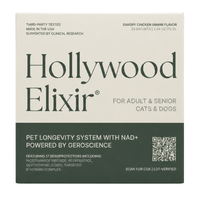
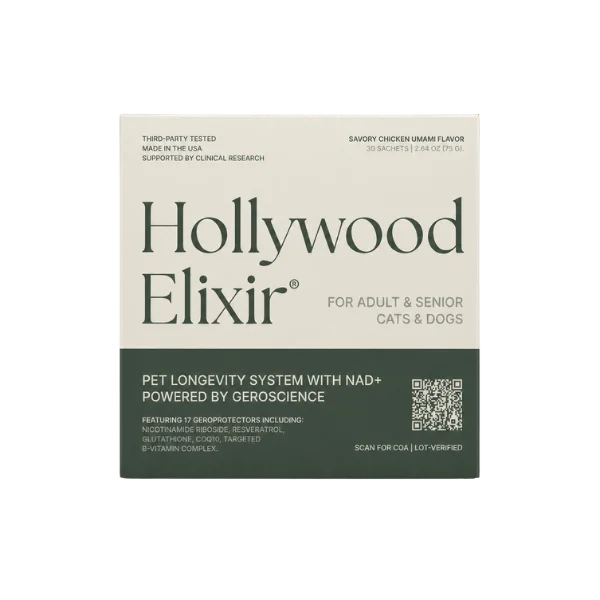
If you want one daily addition aimed at aging itself, Hollywood Elixir is a food-mixed sachet built for the cellular energy and antioxidant defenses older cats rely on, with every active amount printed on the label so you can read it and review it with your veterinarian. Introduce it in a small test portion first, keep notes on acceptance, and use it alongside — never instead of — a complete, vet-aligned diet.
Decision Framework for a Longer, Healthier Senior Stage
When owners ask what to feed senior cats for a longer life, the most reliable answer is a plan that keeps the cat eating well, drinking more, and passing stools comfortably—then adjusts based on labs. That is why the “best diet for aging cats” is usually a collaboration: the household provides accurate daily readouts, and the clinic provides interpretation and guardrails. If appetite drops sharply, vomiting becomes frequent, or the cat strains in the litter box, the timeline compresses and the cat should be seen promptly.
A practical decision framework is to rank goals in order: (1) keep intake adequate, (2) protect hydration and stool quality, (3) match diet to diagnosed conditions, and (4) add optional supports only after the basics are stable. This prevents well-intended changes from creating a less uniform routine that is hard to troubleshoot.
Rechecks and Adjustments: Making the Plan Last
Aging is not a single problem, so follow-up should be planned rather than reactive. Recheck weight, body condition, and stool quality at set intervals, and expect that the feeding plan may need seasonal adjustments as activity and appetite shift. The most useful longevity diet for senior cats is the one that stays consistent enough to reveal true trends, while still leaving room to recover when the cat has a bad week. Long-term success looks like fewer surprises and clearer signals.
Keep a one-page summary on the fridge: current foods and amounts, bowel routine, and the next recheck date. If a new food is introduced, write the transition schedule and the “stop signs” that mean the veterinarian should be called. This turns worry into a workable plan for senior cat nutrition for longevity.
“Track first, change one variable, then reassess at three to four weeks.”
Educational content only. This material is not a substitute for veterinary advice. Always consult your veterinarian about your dog’s specific needs. These statements have not been evaluated by the Food and Drug Administration. Products mentioned are not intended to diagnose, treat, cure, or prevent any disease.
Glossary
- Body condition score (BCS) - A hands-on and visual estimate of body fat used to guide calorie targets.
- Lean body mass - Muscle and other non-fat tissue; a key longevity marker in senior cats.
- Palatability engineering - Using aroma, temperature, texture, and meal timing to make intake more sustained.
- Moisture-first feeding - Building meals around higher water content to support hydration and stool quality.
- Constipation - Infrequent or difficult stool passage, often linked to lower water intake and reduced motility.
- Therapeutic diet - A veterinarian-directed food formulated for a diagnosed condition (for example, kidney disease).
- Daily readouts - Simple at-home measurements (food grams, stool notes, weekly weight) recorded consistently.
- Transition schedule - A staged plan for changing foods to reduce GI upset and keep patterns interpretable.
Related Reading
Aging & Senior Cat Guidance
• Cat Age Calculator: Cat Years to Human Years
• Lethargy in Cats
• Senior Cat Not Eating
• Cat Drinking A Lot
• Why Is My Senior Cat Withdrawn?
Healthy Aging Support
• NAD+ for Cats
• NMN for Cats
• Vitamins For Older Cats
• Senior Cat Food
References
Krauze-Gryz. Annual variation in prey composition of domestic cats in rural and urban environment. 2016. https://www.mdpi.com/2076-2615/16/1/45
Swindell. Dietary restriction in rats and mice: a meta-analysis and review of the evidence for genotype-dependent effects on lifespan. PubMed. 2012. https://pubmed.ncbi.nlm.nih.gov/22210149/
Di Francesco. Dietary restriction impacts health and lifespan of genetically diverse mice. PubMed. 2024. https://pubmed.ncbi.nlm.nih.gov/39385029/
Crossley. Vitamin D toxicity of dietary origin in cats fed a natural complementary kitten food. PubMed Central. 2017. https://pmc.ncbi.nlm.nih.gov/articles/PMC5731632/
Rumbeiha. A review of class I and class II pet food recalls involving chemical contaminants from 1996 to 2008. PubMed Central. 2011. https://pmc.ncbi.nlm.nih.gov/articles/PMC3614097/
FAQ
What is a longevity diet for senior cats?
It is a feeding plan designed to keep an older cat eating enough, staying better hydrated, and maintaining lean body mass over time. In practice, that means adequate protein, measured calories, and a format the cat reliably accepts.
It also includes tracking daily readouts (food grams, stool quality, weekly weight) so the veterinarian can match nutrition to any underlying disease rather than guessing.
What should owners feed senior cats day to day?
Most older cats do well with a complete and balanced diet that prioritizes adequate animal protein and higher moisture intake. Wet food, or adding water to meals, often helps keep stools more comfortable and appetite more sustained.
The best choice depends on body condition and medical findings, so keep the diet stable long enough to collect useful data before making multiple changes at once.
How much protein do aging cats really need?
Older cats generally need deliberate protein planning to help maintain lean mass, especially when appetite becomes irregular. The goal is adequate, high-quality protein that the cat will consistently eat, not an extreme number.
If kidney disease is suspected or confirmed, protein and minerals may need a therapeutic approach. That decision should be guided by lab results and the veterinarian’s plan.
Is wet food better than dry for older cats?
Wet food often supports hydration, which can be helpful for constipation and overall comfort in seniors. It can also be easier to eat for cats with dental pain or reduced interest in food.
Dry food can still fit if intake is reliable and stool quality remains comfortable. Mixed feeding can work well when portions are measured and changes are evaluated over 3–4 weeks.
Why do senior cats get constipated more easily?
Constipation becomes more common when cats eat less, drink less, and move less. When stool stays in the colon longer, more water is absorbed out of it, making it harder and more difficult to pass.
Because constipation can suppress appetite, it can quietly derail senior cat nutrition for longevity. Moisture-first feeding and a consistent routine are often the most practical starting points.
What are signs a diet change is not going well?
Red flags include a sharp drop in total intake, repeated vomiting, diarrhea lasting more than a day, or new straining in the litter box. Also watch for a cat that seems hungry but cannot finish meals.
If any of these appear, pause additional changes and contact the veterinarian. A more uniform plan is easier to troubleshoot than multiple simultaneous switches.
Should older cats eat less for longevity?
Not automatically. While calorie restriction is discussed in longevity research, effects can vary by individual and context, and are not uniform across animals(Swindell, 2012). In senior cats, aggressive calorie cuts can worsen muscle loss or constipation.
A safer target is a healthy body condition with adequate protein and hydration. If weight loss is needed, it should be slow and veterinarian-guided with frequent weigh-ins.
How can owners increase water intake through food?
Use wet meals as the base when possible, then add a measured amount of water to create a softer texture many cats accept. Unsalted broth without onion or garlic can help with aroma, but it should not replace balanced food.
Track stool dryness and water bowl refill volume as daily readouts. Those two markers often show whether hydration strategies are working.
What is the best diet for aging cats with picky appetites?
The best diet for aging cats with picky eating is one that is complete and balanced and can be made reliably appealing through routine. Warming food, offering smaller meals more often, and rotating textures can make intake more sustained.
If “picky” behavior is new, treat it as a symptom. Dental pain, nausea, and constipation are common reasons a cat wants food but cannot finish it.
Are homemade diets safe for senior cats long term?
They can be, but only when formulated and monitored carefully. Nutrient excesses are possible, and cats have developed vitamin D toxicity from diet formulations with excessive vitamin D(Crossley, 2017).
If a homemade plan is being considered, bring the full recipe, supplement list, and treat list to the veterinarian. That documentation is essential for safe adjustments over time.
How should treats fit into senior cat nutrition for longevity?
Treats should be a small, measured part of the day so they do not displace balanced meals. In seniors, frequent toppers can unintentionally lower overall protein quality and skew minerals if they become a major calorie source.
Pre-portion treats daily and record how often they are needed to get the cat to eat. Needing more “enticement” over time is a useful clue to bring to the clinic.
How quickly should a new senior cat diet be evaluated?
Most feeding changes should be evaluated over 3–4 weeks, not meal to meal. That window allows appetite, stool quality, and weight trend to settle into a more uniform pattern.
The exception is a cat that stops eating, vomits repeatedly, or strains in the litter box. Those are reasons to contact the veterinarian promptly rather than waiting out the transition.
What daily readouts should be recorded before the vet visit?
Record grams of food offered and eaten, number of wet meals, water strategy (added water or fountains), vomiting episodes, and stool frequency and dryness. Add a weekly weight on the same scale.
These daily readouts help the veterinarian decide whether the issue is intake, digestion, or an underlying disease process that changes what to feed senior cats.
What questions should owners ask the vet about feeding seniors?
Ask: “Is weight loss mostly fat or muscle?” “Do labs suggest a need to limit phosphorus or sodium?” “Is constipation contributing to appetite changes?” and “Which texture and meal frequency best fit this cat?”
Also ask what changes should happen first and what should wait. A staged plan keeps senior cat nutrition for longevity easier to follow and easier to evaluate.
How can owners make meals more appealing without overfeeding?
Use aroma and texture: warm wet food slightly, offer smaller portions more often, and try pâté versus shreds. Add water to create a softer consistency that many seniors accept.
Measure portions with a scale so “making it appealing” does not become accidental overfeeding. If appetite remains irregular, bring that pattern to the veterinarian rather than cycling foods rapidly.
How does Hollywood Elixir™ fit into an aging cat plan?
It fits as an optional layer after the basics are stable: consistent intake, higher moisture, and a workable stool routine. Used that way, it can support normal aging processes as part of a daily plan rather than replacing nutrition fundamentals. Discuss timing and compatibility with the veterinarian, especially if the cat has a diagnosed condition or is on medications.
Can Hollywood Elixir™ replace a complete senior cat diet?
No. A support product cannot replace complete and balanced nutrition, adequate protein intake, or a hydration plan. For older cats, those fundamentals are what keep weight and digestion from becoming less regular. If used, a disclosed aging-support formula is best viewed as part of a layered plan that supports normal function while the veterinarian guides diet choices and monitoring.
Is Hollywood Elixir™ safe for cats with kidney concerns?
Cats with kidney concerns should have any supplement reviewed by their veterinarian, because kidney diets often manage minerals and appetite carefully. The priority is keeping intake and hydration more sustained while following the clinic’s therapeutic diet guidance.
How should Hollywood Elixir™ be introduced to a picky senior cat?
Introduce any new support product by mixing it into a small test portion first, so refusal does not spoil a full meal. Keep the rest of the meal unchanged to preserve a more uniform routine. If accepted, continue consistently and track stool quality and appetite for 3–4 weeks.
When should owners call the vet about diet changes?
Call promptly if the cat stops eating, vomits repeatedly, has diarrhea that persists, or strains in the litter box. Rapid weight loss, sudden thirst changes, or a cat that seems hungry but cannot finish meals also deserve a near-term appointment.
For slower changes, schedule a visit and bring two weeks of daily readouts. That preparation helps the veterinarian tailor what to feed senior cats with fewer trial-and-error switches.
Discover LPL-01: How This Fits Into a Larger Feline Longevity System
Aging in cats unfolds quietly. It’s not driven by a single failure, but by gradual shifts across interconnected systems — cellular energy, oxidative balance, immune tone, and tissue integrity — each influencing the others over time.
This article explores one layer of that system. To understand what actually shapes long-term health, you need to step back and look at how these layers interact.
Start with the underlying science:
- Feline Geroscience Framework →
A structured view of how aging progresses across cellular energy, inflammation, and resilience systems. - Senior Biological Defense Coverage (BDC) Modeling →
A systems-level map of which biological pathways decline first, and how layered interventions can support them. - 2026 Market Research: Best Cat Longevity Supplements →
A feline-specific review of longevity supplements. 2026 Industry report created by LPL-01 Research. - LPL-01 Standard →
The formulation system that translates these models into real-world supplementation—covering multiple pathways in a coordinated way.
Essential Summary
Why is a longevity diet for senior cats important?
A longevity diet for senior cats is less about a perfect formula and more about reliable intake: adequate protein, higher moisture, and a routine that keeps stools comfortable. Track food grams, water strategy, weight, and litter box output for 2–3 weeks, then use those daily readouts to guide the veterinary plan.
For owners who want an optional layer alongside a complete, balanced diet, Hollywood Elixir can be part of a daily plan that supports normal aging processes. It fits best after appetite, hydration, and stool routine are more uniform, so any change in daily readouts is easier to interpret with the veterinarian.
Hollywood Elixir®
Starting at $89/mo
Hollywood Elixir is amazing! She put back on 5 lbs to a healthy weight, her eyes are shiny, her coat is beautiful!
— Jessie
She hopped up onto the windowsill again for the first time in years.
— Charlie
Considering senior cat longevity nutrition?
If you're researching senior cat diets, here's what matters most
If the household is building a layered plan for senior cat nutrition for longevity, consider adding a support product only after the basics are stable: measured meals, higher moisture intake, and a constipation-aware routine. Hollywood Elixir is designed to support normal aging processes as part of a daily plan, alongside a complete and balanced diet and veterinarian guidance. Introduce it consistently, track stool quality and appetite as daily readouts, and reassess at 3–4 weeks so changes are easier to interpret.
Learn about how our DVMs think about cat aging
Dr. JoAnna Pendergrass DVM
Hollywood Elixir®
Starting at $89/mo
Explore your cat’s changing needs over time
Related Reading
When an older cat’s eating pattern changes—skipping meals, begging at odd hours, losing weight, or producing smaller, drier stools—the most helpful next step is to call the veterinarian and start tracking a few daily readouts.