

NMN for Dogs

Connect NAD+ decline to stamina loss and safety-first dosing

By La Petite Labs Editorial 15 min read

As Seen On

  • AVMA, American Veterinary Medical Association
  • Today’s Veterinary Business
  • Petfood Industry
Woman hugging a golden retriever while holding a Hollywood Elixir box
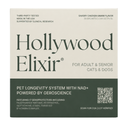
Hollywood Elixir® Senior Dog Supplement

17 science-backed actives

From$50/moSave up to 47%Save up to 44%Shop Now
Contents

NMN for dogs means supplemental nicotinamide mononucleotide — a precursor the body uses to build NAD+, the molecule cells rely on for energy and repair. Dogs can take it, but it deserves caution rather than casual use: NMN sits upstream of NAD+ production, so it supplies a raw material that may be converted into NAD+ through normal cellular steps, and because NAD+ touches so many processes, NMN is discussed as broadly biological rather than a single-symptom nutrient.

What matters most is the evidence in dogs versus what is inferred from other species. Direct canine research on NMN is still limited, and most tolerability data comes from non-canine settings (You Y). That gap does not make NMN inappropriate, but it raises the bar for safety: health status, concurrent medications, and a monitoring plan should guide any trial. Treat NMN as a bioactive compound with potential interactions, not a routine add-on.

  • NMN is a building block for NAD+, the molecule behind cellular energy and repair — the real interest in “NMN for dogs” is aging well: steadier routines and quieter recovery.
  • Can dogs take NMN? Yes, but direct canine research is limited, so treat it as supportive, not a disease solution, and involve your veterinarian.
  • There is no established NMN dosage for dogs; confident numbers online outrun the evidence, so veterinary, conservative dosing is the responsible standard.
  • Safety data comes mostly from non-canine studies; product quality, slow introduction, and monitoring (appetite, stool, energy) are the practical safeguards.
  • Choose supplements with third-party testing, clear labeling, and stability-minded packaging — especially powders.
  • Set a short review window (often 4–8 weeks), track two or three real-life markers, and stop if you see persistent vomiting, diarrhea, or unusual lethargy.

NMN in dogs: what it is biochemically and what questions to ask before using it

NMN (nicotinamide mononucleotide) is a naturally occurring compound and an NAD+ precursor. In practical terms, the “biochemical promise” is straightforward: provide NMN, and the body may convert it into NAD+ as needed. The uncertainty is also straightforward: we don’t yet have robust, dog-specific outcome data that tells us which dogs benefit, which don’t, and which are more likely to experience side effects.

Before using NMN, bring your veterinarian into the decision with a short checklist:

  • What is the goal? Define a realistic, observable target (e.g., overall well-being markers your vet can track) rather than expecting a specific disease to be treated.
  • What comorbidities are present? Dogs with liver or kidney disease, endocrine disorders, cancer history, or chronic GI sensitivity may warrant extra caution or avoidance.
  • What medications and supplements are already in the mix? Request a medication review for potential interactions, duplication, or added GI burden.
  • Is this dog a good candidate for a monitored trial? If you can’t monitor closely, it’s harder to use NMN responsibly.

If your vet agrees to a trial, treat it as time-limited and data-driven, not open-ended.

See how cells make, use and recycle NAD+ in our NADome and NADomics guide.

Woman holding a Hollywood Elixir box beside a pug, a terrier and a food bowl

Practical safety monitoring: tolerance, appetite, stool changes, and stop criteria

Because canine-specific NMN data is still developing, day-to-day tolerance monitoring is a key safety tool. Start with a simple baseline for 7–14 days (appetite, stool quality, vomiting frequency if any, energy/behavior patterns), then compare after introducing NMN.

What to watch most closely:
- Stool changes: softer stools, diarrhea, mucus, straining, or new urgency.
- Vomiting or nausea signs: lip-licking, drooling, repeated swallowing, reduced interest in food.
- Appetite changes: skipping meals, slower eating, or sudden food refusal.
- Behavior changes: restlessness, unusual lethargy, agitation, or sleep disruption.

Stop-and-call-vet triggers:

  • Repeated vomiting, persistent diarrhea, or any blood in vomit/stool.
  • Marked appetite loss lasting more than a day, especially in small dogs or dogs with other illnesses.
  • New weakness, collapse, severe lethargy, or signs of pain.
  • Any rapid change in drinking/urination patterns or jaundice (yellowing of gums/eyes).

If mild GI effects occur, don’t “push through” by adding multiple new products at once; simplify and reassess with your veterinarian.

Woman in sportswear holding a Hollywood Elixir box beside a black-and-tan dog outdoors

Why Aging Feels Different: Energy, Recovery, and Resilience over Time

Aging in dogs is rarely one problem. It’s a collection of small changes: slower recovery, reduced lean muscle, altered sleep, and a quieter appetite for novelty. NMN is discussed because NAD+ levels and NAD+-dependent processes are often linked to how cells respond to stress over time. The promise, in plain terms, is support for the background systems that keep a dog feeling steady.

That said, no supplement replaces the basics. If your dog is overweight, sedentary, or dealing with untreated pain, NMN is unlikely to be the lever that changes everything. Think of it as a potential “supporting actor” in a well-run plan, not the star of the show.

Woman holding a Hollywood Elixir box above her forehead beside a Bernese mountain dog outdoors

Dosing Conversations: Why There Is No One-size Standard

There is no established, canine-specific NMN dose — that is the honest answer behind every “NMN dosage for dogs” search. Confident numbers online outrun the evidence: most tolerability data comes from non-canine studies, including subacute toxicity work that found no significant adverse effects at the levels tested (Cros C, 2021). That tells us something about general tolerability, not the right milligrams for your dog.

Because dogs vary so much by size, age, and health, dosing should be veterinarian-guided and conservative, especially for seniors and dogs with chronic disease. Ask your vet how to introduce it, what to watch for, and whether baseline bloodwork makes sense. A cautious plan is not less advanced — it is simply aligned with what the evidence can actually support today.

Golden retriever nuzzling a woman holding a Hollywood Elixir box on the grass beside a food bowl

Possible Side Effects and When to Stop and Reassess

Side effects, when they occur, are most often discussed as gastrointestinal: softer stools, mild nausea, or reduced appetite. In safety evaluations of NMN in other species and contexts, significant adverse effects were not prominent, which is reassuring but not definitive for every dog (You Y, 2020). The practical takeaway is to introduce slowly and observe.

Stop and call your veterinarian if you see repeated vomiting, persistent diarrhea, marked lethargy, or any abrupt behavior change. Also be cautious if your dog has a history of pancreatitis or is prone to dietary sensitivity. The goal is a supplement that disappears into the routine—quietly supportive, not disruptive.

In 2024, researchers reported an intervention study involving 17 retired police dogs, with an average age of about nine. Five received NMN; the others received rapamycin or a stem-cell treatment. The dogs included Belgian Malinois and Kunming dogs. 3

“The most responsible supplement plan is the one you can track, explain, and stop without drama.”

Age, Life Stage, and the Dogs Most Often Considered

Life stage matters. For young, healthy dogs, the priority is usually avoiding unnecessary complexity: excellent diet, parasite prevention, training, and joint-protective habits. For middle-aged and senior dogs, the conversation shifts toward preserving comfort and function. A randomized, controlled canine study has explored a senolytic plus an NAD+ precursor approach in senior dogs, signaling that the broader category is being tested in dogs rather than only theorized (Simon KE, 2024).

Even so, seniors are also more likely to have hidden kidney, liver, or endocrine issues. Before adding NMN, consider a vet visit and baseline labs. The best supplement decision is one that respects your dog’s current physiology, not just their age on paper.

Overhead view of a black-and-white dog beside a food bowl and Hollywood Elixir box

Breed and Size Differences That Change the Risk Equation

Breed and size influence risk tolerance. A tiny dog and a giant breed can react differently to the same routine change, and seniors often have less physiological “buffer.” That’s one reason broad online recommendations can be misleading. Pharmacokinetic research on NMN highlights that absorption and utilization are measurable variables, not assumptions, and those variables can differ across individuals.

If you’re considering NMN for a toy breed, a dog with a sensitive stomach, or a giant breed with multiple joint supports already on board, involve your veterinarian early. The right plan may be a lower starting amount, a different format, or prioritizing other supports first.

Woman smiling beside a golden retriever, a green food bowl and a Hollywood Elixir box

NMN Versus Other NAD+ Precursors: What Owners Should Know

Owners often compare NMN to other NAD+ precursors. The details get technical fast, but the practical point is simple: different precursors have different absorption and tolerability profiles, and the “best” choice depends on the dog and the product’s quality. Human studies have evaluated oral NMN and reported it was generally well tolerated in healthy adults (Fukamizu Y, 2022) — supportive context, not a green light to self-prescribe for dogs.

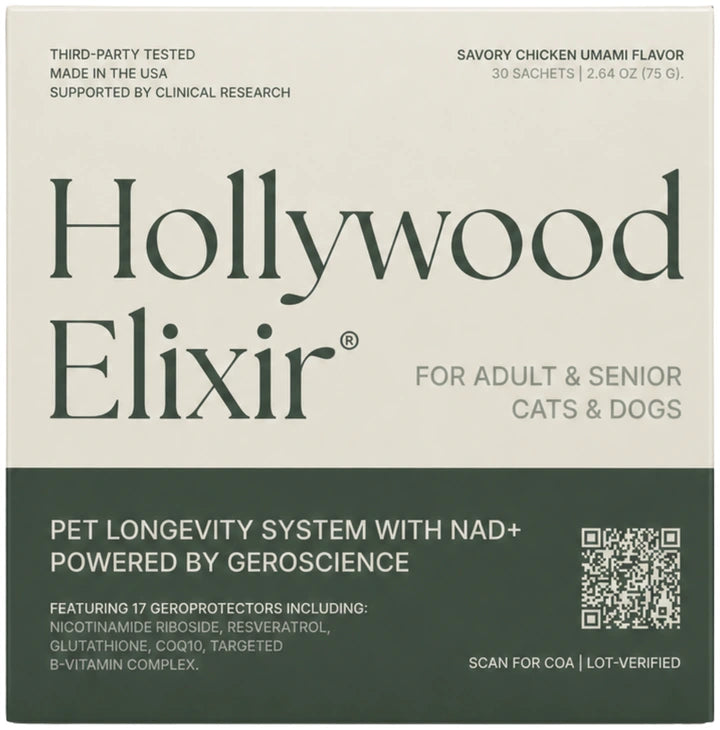
This is also where a finished formula can be clearer than a single raw ingredient. Hollywood Elixir supports the NAD+ pathway through nicotinamide riboside — a different vitamin-B3 precursor at a disclosed 60 mg per serving — rather than NMN, alongside CoQ10, antioxidants, and immune and protein support in one daily, food-mixed routine. It does not contain NMN; if your real goal is broad daily aging support with active amounts you can read and review with your vet, see what Hollywood Elixir is.

Man holding a Hollywood Elixir box while sitting on an outdoor sofa with a golden retriever

Common Misconceptions That Lead to Overconfident Supplement Use

A common misconception is that if a compound exists in the body, supplementing it must be harmless. Biology is more nuanced. NMN can influence broad cellular programs, including gene expression changes observed in research settings, which is part of why scientists are interested—and part of why owners should avoid casual megadosing (Zhang C, 2023).

If you want the benefits of modern longevity thinking without the risks of trend-chasing, keep your approach boring: one change at a time, track outcomes, and keep your veterinarian in the loop. That’s the difference between a thoughtful supplement trial and a noisy experiment.

Choosing Quality: What Matters When Comparing NMN Products

If you’re evaluating the best NMN supplement for dogs, start with what you can verify. Look for third-party testing for identity and purity, plus screening for heavy metals and common microbial contaminants. High-purity NMN has been evaluated in animal safety work without significant adverse findings, which supports the idea that quality and dose discipline matter (Cros C, 2021). Avoid products that hide behind “proprietary blends,” or that promise disease outcomes.

Next, consider format and stability. NMN powder for dogs can be convenient for mixing, but it should come with clear storage guidance and a scoop that matches the label. Capsules can be simpler for consistent dosing, but may be harder for some dogs to take. Finally, choose brands that treat NMN as one part of a system—supporting energy, stress resilience, and healthy aging—rather than as a stand-alone fix.

“Quality is not a luxury in aging supplements; it is the safety feature.”

CHOOSING A SUPPLEMENT

Considering an NR formula instead?

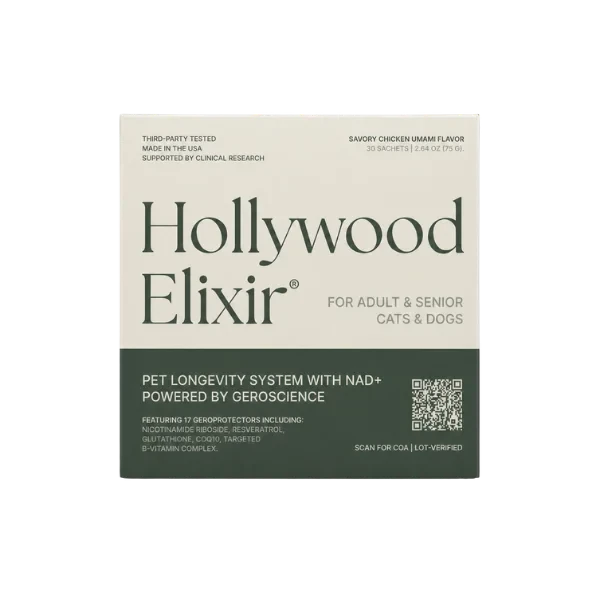
Hollywood Elixir contains nicotinamide riboside (NR), not NMN. It brings that NAD+ precursor into a 17-active healthy-aging formula with CoQ10, glutathione and other companion nutrients for the usual meal.

Hollywood Elixir box

LA PETITE LABS

Hollywood Elixir — Complete NAD+ & Senior Care

The reason to consider the complete formula is what sits alongside the precursor. NAD+ is involved in turning food into usable cellular energy; CoQ10 carries electrons during energy production, while glutathione participates in antioxidant defense. Hollywood Elixir combines ingredients selected for those different roles in a food-mixed powder.

Each full 2.5 g sachet lists 60 mg NR. The NMN amounts and results discussed in this article cannot be transferred to that NR serving or to the finished formula. A clinical advantage of Hollywood Elixir over NMN products in dogs has not been established.

From $1.67/day

Shop Hollywood Elixir

Our NAD+ supplement comparison for dogs places the different precursor formulas side by side. The product page explains Hollywood Elixir’s complete recipe and serving choices.

Sources for this buying guide

La Petite Labs makes Hollywood Elixir.

Woman sitting with a beagle in a kitchen while holding a Hollywood Elixir box

DVM Voice: Clinical Vignette of a Common Pattern in Senior Dog Aging

Case provided by JoAnna Pendergrass, DVM

Rex, a 7-year-old Labrador Retriever, was brought in after his owner noticed he was slower to rise, hesitant on stairs, and less able to play as before. Examination showed stiffness and reduced hip mobility; radiographs confirmed degenerative joint changes.

His care required weight management, veterinary-guided pain control, nutritional support, and rehabilitation — a comprehensive plan, but one started only after visible decline appeared.

Clinical takeaway: Rex’s case reflects the value of proactive aging support: maintaining lean body condition, monitoring mobility early, and supporting cellular resilience, antioxidant defense, and healthy inflammatory balance before decline becomes obvious.

Single-case vignette. Not generalizable. Veterinary oversight is essential for pain, stiffness, or suspected joint disease.
Explore Hollywood Elixir Research →
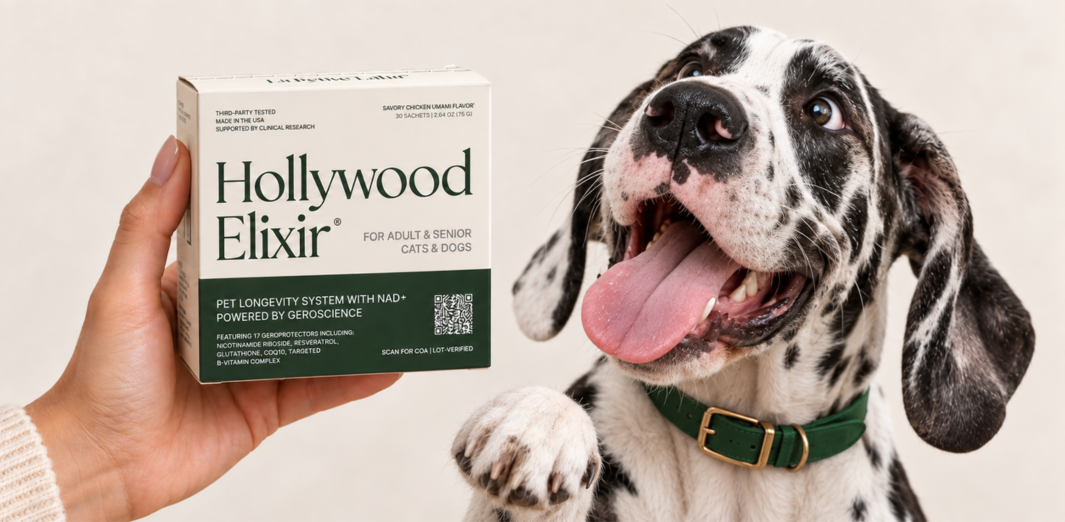
Spotted gray dog beside a Hollywood Elixir box held in a person's hand

When to Expect Changes and What to Track at Home

Owners often ask whether NMN “works” quickly. In reality, changes that matter—steady energy, smoother daily routines, better tolerance for activity—tend to be subtle and gradual. NMN is tied to NAD+ biology, which relates to cellular energy handling and repair processes, so expectations should be measured rather than immediate (Turner J, 2021).

A reasonable way to track response is to pick two or three simple markers: willingness to go on walks, recovery time after play, and overall steadiness in appetite and sleep. Keep notes for a month, and share them with your veterinarian. If you see no change, that’s still useful information—some dogs may not respond in a noticeable way, or may need a different kind of support.

Golden retriever nuzzling a man holding a Hollywood Elixir box beside a food bowl

How NMN Fits Alongside Other Longevity and Mobility Supports
NMN is not the only route owners consider for healthy aging. Other approaches include weight management, targeted mobility nutrients, omega-3s, enrichment that reduces chronic stress, and addressing pain early. The reason NMN stays in the conversation is its relationship to NAD+ availability, which is a broad “infrastructure” issue rather than a single symptom target (Turner J, 2021).

That framing helps you compare options fairly. If your dog’s main issue is orthopedic pain, NMN may be secondary to a mobility plan. If the issue is general aging “slowing,” NMN may be one supportive layer. The best outcomes usually come from stacking small, safe improvements rather than betting on one supplement.

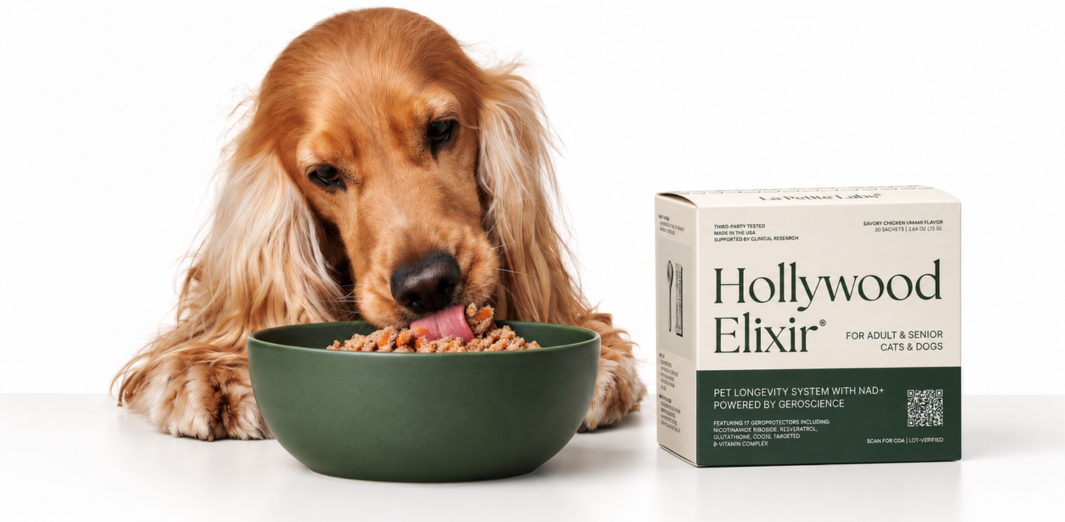
Golden spaniel eating from a green bowl beside a Hollywood Elixir box

What Research Can and Cannot Tell Us Yet

Because canine-specific NMN research is limited, it helps to separate what’s known from what’s inferred. Safety and tolerability have been studied in humans and in animal models, with reports of good tolerability in those contexts (Fukamizu Y, 2022). That does not automatically translate to every dog, especially those with complex medical histories.

There is also canine aging research that examines NAD+ precursor strategies in older dogs, suggesting this area is scientifically active and worth watching (Simon KE, 2024). Still, product decisions should be conservative: start with veterinary input, choose high-quality manufacturing, and treat NMN as supportive rather than curative.

Purity, Stability, and Label Clarity: the Non-negotiables

Owners sometimes ask whether NMN is “natural” or “synthetic.” In practice, what matters is purity, stability, and accurate labeling. NMN exists in biology, but supplements are manufactured, and manufacturing quality determines whether you’re getting what the label claims. Pharmacokinetic work on NMN products also underscores that absorption and utilization are part of the story, not just the ingredient name (Turner J, 2021).

If a brand cannot provide a recent certificate of analysis, or if it relies on dramatic promises, it’s reasonable to walk away. For dogs, the safest “natural” choice is often the one with the most boring documentation: batch testing, clear storage instructions, and conservative guidance to involve your veterinarian.

Practical Administration: Making NMN Easy to Take Consistently

Administration is mostly about consistency. Many owners mix NMN powder for dogs into a small amount of wet food, yogurt (if tolerated), or a topper, then follow with the rest of the meal. If your dog is sensitive, introducing any new supplement slowly can reduce the chance that mild stomach upset gets blamed on the ingredient unfairly.

If your dog refuses food with a new smell or taste, capsules may be easier. Whichever form you choose, keep the container sealed, store it as directed, and avoid leaving powder exposed to humidity. If you’re also using other supplements, add only one new item at a time so you can interpret changes clearly.

Woman holding a Hollywood Elixir box beside a dapple dachshund and green food bowl on a sofa

Is NMN Safe for Dogs? Seniors and Medically Complex Cases

Is NMN safe for dogs? In general, NMN has shown a favorable safety profile — subacute toxicity work and other evaluations in non-canine settings reported no significant adverse effects at tested levels (You Y, 2020). But “safe in general” is not the same as “safe for my dog,” because dogs vary widely by size, age, and medical complexity.

Talk with your veterinarian before starting, especially if your dog has liver or kidney disease, takes long-term medications, is pregnant, or has a history of pancreatitis or chronic GI issues. If you proceed, monitor appetite, stool quality, and energy, and stop the supplement if you see persistent vomiting, diarrhea, or unusual lethargy.

Woman cuddling a brown-and-white spaniel while holding a Hollywood Elixir box

Medication and Supplement Interactions: a Vet-led Checklist

Owners also ask about interactions. NMN is not typically framed as a stimulant, but it is connected to cellular energy systems, so it’s wise to be cautious when your dog is on multiple therapies. Human safety work suggests oral NMN can be well tolerated, yet that doesn’t replace individualized veterinary review for dogs on NSAIDs, anticonvulsants, endocrine medications, or chemotherapy protocols (Fukamizu Y, 2022).

Bring your veterinarian a full list of supplements and medications, including doses and brands. Ask a simple question: “Is there any reason this could complicate our current plan?” That conversation is often more valuable than any online dosage chart, because it accounts for your dog’s labs, diagnoses, and risk factors.

A Thoughtful Decision: Setting Expectations and Reviewing Results

If you’re deciding whether to try NMN for dogs, the most grounded approach is to treat it as a measured experiment. Choose a reputable product, align with your veterinarian, and set a short review window—often four to eight weeks—where you track a few real-life outcomes. The goal is not perfection; it’s clarity.

The owners who feel best about their decision tend to do two things: they avoid grand claims, and they keep the rest of the aging plan strong (weight, mobility, dental, enrichment). NMN may be a supportive layer for some dogs, but it works best when it’s part of a broader system designed to keep daily life comfortable over time.

“Think in weeks, not days—then judge by daily life, not marketing language.”

Educational content only. This material is not a substitute for veterinary advice. Always consult your veterinarian about your dog’s specific needs. These statements have not been evaluated by the Food and Drug Administration. Products mentioned are not intended to diagnose, treat, cure, or prevent any disease.

Glossary

  • NMN (Nicotinamide Mononucleotide): A compound the body can use to build NAD+, often discussed in healthy aging.
  • NAD+: A helper molecule used in many cellular reactions related to energy handling and maintenance.
  • Precursor: A starting material the body converts into another molecule (for example, NMN as a precursor to NAD+).
  • Bioavailability: How much of a compound is absorbed and becomes available for the body to use.
  • Pharmacokinetics: How a compound is absorbed, distributed, processed, and cleared over time.
  • Third-Party Testing: Independent lab verification of identity, purity, and contaminants.
  • Certificate of Analysis (COA): A document showing lab results for a specific batch of a supplement.
  • Tolerance: How well an individual dog handles a supplement without unwanted effects.
  • Conservative Trial: A vet-guided, time-limited supplement test with simple tracking of outcomes.

Related Reading

References

You Y. Subacute Toxicity Study of Nicotinamide Mononucleotide via Oral Administration. PubMed. 2020. Subacute Toxicity Study of Nicotinamide Mononucleotide via Oral Administration.

Zhang C. The identification of new roles for nicotinamide mononucleotide after spinal cord injury in mice: an RNA-seq and global gene expression study. PubMed. 2023. The identification of new roles for nicotinamide mononucleotide after spinal cord injury in mice: an RNA-seq and global gene expression study.

Fukamizu Y. Safety evaluation of β-nicotinamide mononucleotide oral administration in healthy adult men and women. PubMed. 2022. Safety evaluation of β-nicotinamide mononucleotide oral administration in healthy adult men and women.

Simon KE. A randomized, controlled clinical trial demonstrates improved owner-assessed cognitive function in senior dogs receiving a senolytic and NAD+ precursor combination. PubMed. 2024. A randomized, controlled clinical trial demonstrates improved owner-assessed cognitive function in senior dogs receiving a senolytic and NAD+ precursor combination.

Rudd. Global, regional, and national sepsis incidence and mortality, 1990-2017: analysis for the Global Burden of Disease Study. Nature. 2020. https://www.nature.com/articles/s41598-025-95735-y

Cros C. Safety evaluation after acute and sub-chronic oral administration of high purity nicotinamide mononucleotide (NMN-C) in Sprague-Dawley rats. PubMed. 2021. Safety evaluation after acute and sub-chronic oral administration of high purity nicotinamide mononucleotide (NMN-C®) in Sprague-Dawley rats.

Turner J. Safety Evaluation for Restorin NMN, a NAD+ Precursor. PubMed. 2021. Safety Evaluation for Restorin® NMN, a NAD+ Precursor.

Margier M. Nicotinamide Mononucleotide Administration Prevents Doxorubicin-Induced Cardiotoxicity and Loss in Physical Activity in Mice. PubMed. 2022. Nicotinamide Mononucleotide Administration Prevents Doxorubicin-Induced Cardiotoxicity and Loss in Physical Activity in Mice.

Fusaroli. The Reporting of a Disproportionality Analysis for Drug Safety Signal Detection Using Individual Case Safety Reports in PharmacoVigilance (READUS-PV): Development and Statement. 2024. https://www.frontiersin.org/journals/pharmacology/articles/10.3389/fphar.2020.604404/full

Sources for the buying guide

Formula information checked October 25, 2026. Studies concern the interventions and species described; ingredient biology does not establish results from the finished formula.

  1. Hollywood Elixir: current formula and serving options
  2. Bieganowski and Brenner: the NR pathway to NAD+
  3. Reactome: NADH and CoQ in mitochondrial electron transfer
  4. Reactome: glutathione-dependent peroxide handling

FAQ

What is NMN for dogs, in plain everyday terms?

NMN for dogs refers to using nicotinamide mononucleotide as a supplement to support NAD+, a helper molecule involved in cellular energy and repair. Owners usually explore it for healthy aging, not for quick, dramatic changes. Because canine-specific research is still developing, it’s best viewed as a conservative, vet-guided addition to strong basics like weight, mobility, and dental care.

How does NMN relate to NAD+ inside a dog’s body?

NMN is a precursor the body can use to build NAD+, a molecule involved in many routine cellular tasks. Research on NMN products also looks at how they’re absorbed and utilized, which helps explain why quality and consistency matter. For owners, the key point is restraint: broad biology rarely translates into one predictable outcome for every dog.

Is NMN safe for dogs when used conservatively?

When people ask is nmn safe for dogs, the honest answer is: we have reassuring safety context from non-canine studies, but limited direct canine data. Subacute toxicity work found no significant adverse effects in tested subjects, which supports cautious optimism. Still, dogs differ by size, age, and medical history, so your veterinarian should weigh in—especially for seniors or dogs on medications.

What side effects might an NMN supplement cause in dogs?

If side effects show up, they’re often digestive: softer stools, mild nausea, or reduced appetite. In broader NMN safety evaluations, significant adverse effects were not a prominent finding, which is reassuring context but not a guarantee for every dog(Cros C, 2021). Introduce any new supplement slowly, and stop if vomiting, diarrhea, or lethargy persists.

Are there dogs who should not take NMN?

Yes—at least until your veterinarian reviews the full picture. Dogs with significant liver or kidney disease, pregnant or nursing dogs, and dogs with complex medication regimens deserve extra caution. The reason is simple: NMN connects to broad cellular functions, and broad effects can complicate fragile situations(Zhang C, 2023). If your dog is medically straightforward, your vet may still recommend a conservative trial with close observation.

Can cats take NMN, or is it only for dogs?

Cats are not small dogs, and supplement decisions shouldn’t be shared across species without veterinary direction. Even when NMN shows a reassuring safety profile in other settings, species differences in metabolism and sensitivity can matter. If you’re considering NMN for a cat, treat it as a separate question for your veterinarian.

Is NMN powder for dogs better than capsules or chews?

NMN powder for dogs can be easy to mix into food and simple to adjust, but it’s more exposed to humidity and handling. Capsules can be more consistent, while chews may add extra ingredients that don’t suit sensitive dogs. The “best” format is the one your dog reliably takes and your veterinarian is comfortable with.

What does research in dogs suggest about NAD+ precursors?

Direct NMN-only data in dogs is still limited, but canine research has examined NAD+ precursor strategies in older dogs within controlled study designs. A randomized, controlled trial using a senolytic plus an NAD+ precursor reported cognitive-related outcomes in senior dogs, showing the category is being tested in dogs(Simon KE, 2024). That’s encouraging, but it’s not a promise for every dog or every product.

Dalmatian looking toward a Hollywood Elixir box held in a person's hand

Discover LPL-01: How This Fits Into a Larger Canine Longevity System

Aging in dogs is not driven by a single pathway. It’s the result of interacting biological systems—energy metabolism, oxidative stress, immune signaling, and structural integrity—changing over time.

This article explores one piece of that puzzle. If you want to understand how these pieces connect—and what actually moves the needle—you need to zoom out.

Start with the underlying science:

Keep exploring

What would you like to understand next?

Search practical guides about healthy aging, cellular energy, ingredients, and daily support for dogs.