
The 12 Hallmarks of Aging in Dogs, Explained
Read full insightNicotinamide Riboside for Dogs
How NR raises NAD+, how it compares to NMN, and what shapes the dose
By La Petite Labs Editorial 15 min read

Nicotinamide riboside for dogs is a vitamin B3-family compound the body converts into NAD+, the coenzyme behind cellular energy and routine repair. Among NAD+ precursors, NR is the one with the clearest dog-specific evidence: a 90-day repeated-dose study of high-purity NR found no significant adverse effects in the dogs tested, which is why this page is the NR deep-dive while the NAD+ for dogs overview covers the bigger picture. NR differs from NMN and niacin in how it is metabolized, and most canine expectations are still extrapolated from human and rodent work, where animal models link it to better muscle quality. The honest goal is support for steadier energy and more good days, not a quick fix. NR at a disclosed 60 mg per serving already appears in restrained daily formulas that lead with purity and transparency.
- Nicotinamide riboside is a vitamin B3-family precursor cells use to make NAD+, the molecule behind energy and routine maintenance.
- NR is metabolized differently from NMN and from niacin, so the three forms are not interchangeable on a label.
- The strongest dog-specific evidence is safety: a 90-day repeated-dose study of high-purity NR showed no significant adverse effects in the dogs tested.
- There is no fixed nicotinamide riboside dose for dogs; the responsible path is a vet-guided trial with simple tracking of appetite, stool, energy, and sleep.
- Watch the first few weeks and the most plausible real-life signals: mobility, stamina, and recovery rather than dramatic overnight change.
- The best NR products show purity, third-party transparency, and restrained claims, and fit alongside diet, movement, and veterinary care.
Does Nicotinamide Riboside Work for Dogs?
Honest answer up front: NR reliably moves NAD-related biomarkers in dogs, but proof that it improves real-world mobility or stamina is still thin — so keep expectations practical. Owners usually hope for steadier day-to-day energy, better exercise tolerance, or mobility support with age. The catch is that studies often measure biomarkers (NAD status, lab signals) rather than outcomes (walking comfort, willingness to play, recovery), and a favorable biomarker shift doesn't automatically mean a better day for every dog (Mehmel, 2020).
There's also age-versus-disease confounding. Older dogs are more likely to carry osteoarthritis, endocrine disease, heart disease, or chronic inflammation — any of which drags on energy and movement regardless of NAD biology. If fatigue or stiffness is really driven by an underlying condition, a supplement won't fix it.
That's why vet guidance matters: a veterinarian can set realistic expectations, rule out medical causes of low energy or pain, and decide what to monitor if NR is added.

Safety and interactions for NR in dogs: who should avoid self-starting
NR is commonly described as a vitamin B3–related ingredient, but “vitamin-like” does not mean risk-free for every dog. The most common tolerance issue discussed with NR and similar compounds is GI tolerance—soft stool, nausea, reduced appetite, or vomiting can occur in sensitive dogs, especially with sudden introduction.
Dogs with liver or kidney disease deserve extra caution. These organs are central to nutrient metabolism and clearance, and chronic disease can change how a dog handles supplements. If your dog has elevated liver enzymes, chronic kidney disease, a history of pancreatitis, or unexplained weight loss, it’s reasonable to avoid self-starting and instead involve your veterinarian.
A medication review is also important. Dogs on long-term NSAIDs, steroids, anticonvulsants, chemotherapy agents, or complex endocrine regimens should not add NR without a clinician checking for interaction risk and deciding whether baseline and follow-up labs are appropriate.
Stop-and-call-vet triggers include persistent vomiting/diarrhea, marked lethargy, refusal to eat, jaundice, worsening thirst/urination, or any sudden change in behavior after starting.
Finally, avoid stacking multiple NAD products at once (for example, combining several NAD-precursor supplements). Using multiple overlapping products makes side effects harder to interpret and complicates monitoring.

The Cellular Rationale: NAD+ Support and Everyday Energy Resilience
The core rationale behind nicotinamide riboside benefits for dogs is NAD+. NAD+ participates in energy production and helps coordinate cellular responses to stress and repair demands. In plain terms, it’s part of what allows cells to keep doing their jobs efficiently.
In animal models, NR has been linked with improved muscle quality and function, alongside improved cellular energetics (Seldeen KL, 2021). That doesn’t mean every dog will show a visible change, but it explains why owners often focus on mobility, stamina, and recovery as the most plausible “real life” endpoints to watch.

Safety First: What Dog Data Suggests and What It Cannot Prove
Safety is the first filter for any supplement conversation. A 90-day repeated-dose oral study in dogs evaluated high-purity synthetic nicotinamide riboside and included a recovery period; results did not show significant adverse effects in the tested dogs (Marinescu AG, 2020). That’s reassuring as a starting point, but it doesn’t eliminate the need for individualized veterinary guidance.
Real-world safety depends on context: age, concurrent disease, other supplements, and medications. Even well-tolerated ingredients can cause GI upset in a particular dog, especially when introduced quickly or stacked with multiple new products at once.

How Much Nicotinamide Riboside for Dogs? Why Dosing Is Vet-Guided
There's no simple universal milligram number for NR in dogs — dosing is a process, not a fixed dose. Confirm the product's form and concentration, review your dog's health status, and let your veterinarian set a plan for the whole picture; for long-term daily use, dose selection is a medical decision.
If your vet approves a trial, start conservatively and monitor appetite, stool quality, energy, and sleep. Repeated oral dosing in dogs has been studied for safety over 90 days in a controlled setting (Marinescu AG, 2020), but your dog's own ‘n of 1’ response is still the most actionable data you have.
“The most useful supplement plans are the ones you can evaluate: simple, consistent, and honest about uncertainty.”
Side Effects and Tolerance: What to Watch in the First Weeks
Potential side effects are usually discussed in the language of tolerance: mild GI upset, changes in stool, or reduced appetite shortly after starting. Most supplement-related issues show up early, which is why a slow introduction and simple tracking can be so useful.
If side effects occur, stop the product and contact your veterinarian—especially if symptoms persist beyond a day, or if your dog is older or medically complex. Controlled safety data in dogs is encouraging for high-purity NR (Marinescu AG, 2020), but it doesn’t replace clinical judgment for an individual pet.

Medication and Supplement Stacking: Avoiding Unforced Complications
Interactions are less about NR being “dangerous” and more about the reality that supplements can change routines: appetite, hydration, and the timing of medications. If your dog takes prescriptions for seizures, thyroid disease, heart disease, or pain, involve your veterinarian before adding anything new.
Also consider the full stack: joint chews, calming products, probiotics, and fish oil can add up. A clean plan is easier to evaluate than a crowded one, and it reduces the chance that a minor intolerance becomes a bigger problem.

Nicotinamide Riboside Research in Dogs: What the Studies Show
What does the research actually say? The strongest dog-specific signal in the evidence pack is safety: repeated oral dosing of high-purity NR in dogs for 90 days did not produce significant adverse effects, with an additional recovery period observed. That matters because it supports the plausibility of responsible, vet-guided use.
For efficacy, much of the broader NR story comes from animal models and related translational work. NR has been associated with improved muscle quality and function in animal research (Seldeen KL, 2021). Separately, NR has shown neuroprotective signals in a mouse model of glaucoma (Zhang N, 2024). These findings help frame interest, but they are not direct promises for pet outcomes.

What “Best” Really Means: Quality Signals Beyond the Label Front
When owners search for the best nicotinamide riboside supplement for dogs, they're usually after something that feels both modern and safe. The quality signals worth weighing are transparent labeling, third-party testing, and conservative claims that don't drift into disease language.
It also helps to pick products that treat aging as a network. NR's role as an NAD+ precursor is one piece of a larger cellular picture. Hollywood Elixir is built that way: it discloses nicotinamide riboside at 60 mg per serving and pairs it with niacin, CoQ10, glutathione, and other antioxidants — supporting energy, oxidative balance, and everyday resilience at once, with every amount shown rather than buried in a blend.
How to Read Owner Feedback Without Over-interpreting Small Changes
If you’re comparing nicotinamide riboside for dogs reviews, read them like you would a weather report: useful, but local and imperfect. Owners often describe changes in “pep,” willingness to play, or recovery after activity. Those observations can matter, yet they’re also sensitive to season, routine, pain control, and concurrent supplements.
Give more weight to reviews that mention the dog’s age, baseline mobility, diet, and how long the product was used. Be cautious with dramatic claims or rapid timelines. In research contexts, NR is discussed in relation to NAD+ biology and cellular energetics (Mehmel, 2020), which generally suggests gradual, not overnight, shifts.
“Best rarely means highest dose; it usually means clean sourcing, restrained claims, and a coherent formula.”

DVM Voice: Clinical Vignette of a Common Pattern in Senior Dog Aging
Case provided by JoAnna Pendergrass, DVM
Rex, a 7-year-old Labrador Retriever, was brought in after his owner noticed he was slower to rise, hesitant on stairs, and less able to play as before. Examination showed stiffness and reduced hip mobility; radiographs confirmed degenerative joint changes.
His care required weight management, veterinary-guided pain control, nutritional support, and rehabilitation — a comprehensive plan, but one started only after visible decline appeared.
Clinical takeaway: Rex’s case reflects the value of proactive aging support: maintaining lean body condition, monitoring mobility early, and supporting cellular resilience, antioxidant defense, and healthy inflammatory balance before decline becomes obvious.
Single-case vignette. Not generalizable. Veterinary oversight is essential for pain, stiffness, or suspected joint disease.

Choosing Products with Integrity: Purity, Transparency, and Formulation Logic
A practical way to evaluate the best nicotinamide riboside for dogs is to look beyond the label headline. Ingredient identity and purity matter, but so does formulation logic: does the product support the broader metabolic network that aging stresses, or does it simply add a single precursor and hope for the best?
Look for clear sourcing, third-party testing, and conservative claims. Avoid products that imply disease treatment. If a brand discusses NAD+ support, it should also acknowledge uncertainty and the limits of translating findings across species. NR has been studied as a supplement that increases NAD-related biomarkers in humans, though some work is open-label and non-randomized, which constrains certainty (Airhart SE, 2017).

Practical Use: Timing, Food Pairing, and Keeping Routines Consistent
Administration is usually straightforward: most dogs do best when a supplement is paired with a consistent daily routine. If your dog has a sensitive stomach, giving it with food can be gentler. Consistency matters more than “perfect timing,” because the goal is steady support rather than a noticeable stimulant effect.
If you’re adding nicotinamide riboside supplements for dogs alongside other products, introduce one change at a time. That makes it easier to spot intolerance and avoids the common problem of stacking multiple new ingredients and not knowing what helped—or what didn’t agree.

Life Stage Considerations: Adult Maintenance Versus Senior Steadiness over Time
Life stage matters. In younger adult dogs, the question is usually not “repair,” but margin: supporting energy metabolism during training, high activity, or demanding schedules. In older dogs, the goal is often steadiness—maintaining normal appetite, engagement, and comfortable movement as the baseline shifts.
Because NAD+ is central to cellular energy production, NR is often discussed in the context of healthy aging and mitochondrial function (Mehmel, 2020). Still, age-related changes are multi-factorial. A supplement can be a reasonable adjunct, but it should sit alongside veterinary screening, dental care, and pain-aware mobility planning.
Breed and Size Nuance: Setting Expectations Without Chasing Numbers
Breed and size influence how owners think about nicotinamide riboside dosage for dogs, but dosing decisions should remain veterinarian-led. Large breeds may show earlier mobility changes; small breeds may live longer and accumulate age-related shifts more slowly. Neither pattern guarantees who will benefit from a given approach.
Rather than chasing a number, focus on outcomes you can observe and discuss with your vet: stamina on walks, ease of rising, sleep quality, appetite, and overall demeanor. Those are the signals that help a clinician decide whether a nicotinamide riboside supplement for dogs fits your dog’s broader plan.
Complex Health Histories: When Extra Caution Matters Most
If your dog has a chronic condition, the right question is not “Can I use NR?” but “Does it complicate anything else we’re doing?” In a dog model of Duchenne muscular dystrophy, increasing NAD+ content has been explored for muscle health, which underscores why the topic attracts attention (Cardoso D, 2023). But model findings are not a prescription for individual pets.
Dogs with complex medical histories should have supplements reviewed like medications: current diagnoses, lab trends, and the full list of products in the home. That’s especially true when appetite, liver values, or GI tolerance are already fragile.

Dogs Versus Cats: Why Species Boundaries Matter for Supplements
Cats are not small dogs, and supplement decisions shouldn’t be ported over casually. Even when an ingredient seems “gentle,” species differences in metabolism and tolerance can change the risk profile. If you’re shopping for nicotinamide riboside for dogs, keep it dog-specific unless your veterinarian explicitly directs otherwise.
If your household includes both species, store supplements carefully and avoid shared dosing routines. The safest approach is to treat each animal as its own case, with its own plan and monitoring.

A Calm Decision Framework for Science-minded, Observant Pet Parents
A reasonable decision framework starts with clarity: what are you hoping to support, and how will you know whether it’s working? For many owners, the goal is not a dramatic change, but a quieter one—more consistent energy, smoother recovery, or a steadier mood over time.
From there, choose products that respect uncertainty. NR has been studied for its ability to increase NAD-related measures, but study designs can vary and sometimes include limitations like open-label methods (Airhart SE, 2017). That doesn’t make the ingredient irrelevant; it simply argues for modest expectations, careful selection, and tracking.
When to Pause and Call Your Veterinarian for Next Steps
When to call your veterinarian: any new vomiting or diarrhea after starting a supplement, appetite changes that persist, unusual lethargy, agitation, or if your dog is pregnant, nursing, very young, or managing multiple medications. Supplements can be compatible with good care, but they should never obscure a new symptom that deserves attention.
If you and your vet decide NR support is reasonable, treat it like a trial: one change at a time, a defined check-in date, and a shared understanding of what “better” looks like for your dog.
“Aging support works best as a network: food, movement, comfort, and carefully chosen supplements.”
Educational content only. This material is not a substitute for veterinary advice. Always consult your veterinarian about your dog’s specific needs. These statements have not been evaluated by the Food and Drug Administration. Products mentioned are not intended to diagnose, treat, cure, or prevent any disease.
Glossary
- Nicotinamide Riboside (NR): A vitamin B3-related compound used by the body to help build NAD+.
- NAD+ (Nicotinamide Adenine Dinucleotide): A molecule involved in cellular energy production and many maintenance processes.
- NAD+ Precursor: A nutrient the body can convert into NAD+, such as NR.
- Mitochondria: Cellular structures that help generate energy; often discussed in aging and stamina contexts.
- Cellular Energetics: The way cells produce and manage energy to perform normal functions.
- Bioavailability: How much of an ingredient is absorbed and becomes available for the body to use.
- Tolerance: How well a dog handles a supplement without unwanted effects, often referring to GI comfort.
- Third-Party Testing: Independent testing that can help confirm identity, purity, and absence of certain contaminants.
- System-Level Support: A formulation approach that aims to support multiple connected aspects of aging biology rather than one isolated target.
Related Reading
Aging & Senior Dog Guidance
• Dog Age Calculator
• Dog Dementia
• Lethargy in Dogs
• My Dog Won't Eat
• Dog Pacing At Night
• Dog Licking Paws
• Can Dogs Dehydrate
Healthy Aging Support
• NAD+ for Dogs
• NMN for Dogs
• Antioxidants Supplements for Dogs
• Best Senior Dog Supplements & Vitamins
• Rapamycin for Dogs
References
Cardoso D. Replenishing NAD(+) content reduces aspects of striated muscle disease in a dog model of Duchenne muscular dystrophy. PubMed. 2023. https://pubmed.ncbi.nlm.nih.gov/38044436/
Seldeen KL. Short-term nicotinamide riboside treatment improves muscle quality and function in mice and increases cellular energetics and differentiating capacity of myogenic progenitors. PubMed. 2021. https://pubmed.ncbi.nlm.nih.gov/33744645/
Airhart SE. An open-label, non-randomized study of the pharmacokinetics of the nutritional supplement nicotinamide riboside (NR) and its effects on blood NAD+ levels in healthy volunteers. PubMed. 2017. https://pubmed.ncbi.nlm.nih.gov/29211728/
Marinescu AG. Safety Assessment of High-Purity, Synthetic Nicotinamide Riboside (NR-E) in a 90-Day Repeated Dose Oral Toxicity Study, With a 28-Day Recovery Arm. PubMed. 2020. https://pubmed.ncbi.nlm.nih.gov/32715855/
Zhang N. Oral supplementation with Nicotinamide Riboside treatment protects RGCs in DBA/2J mouse model. PubMed. 2024. https://pubmed.ncbi.nlm.nih.gov/39677633/
Mehmel. Nicotinamide Riboside—The Current State of Research and Therapeutic Uses. 2020. https://www.mdpi.com/2072-6643/12/6/1616
Lautrup. NAD<sup>+</sup> in Brain Aging and Neurodegenerative Disorders. Nature. 2019. https://www.nature.com/articles/s41467-023-43514-6
Birkmayer JG. On the safety of reduced nicotinamide adenine dinucleotide (NADH). PubMed. 2004. https://pubmed.ncbi.nlm.nih.gov/15312041/
You Y. Subacute Toxicity Study of Nicotinamide Mononucleotide via Oral Administration. PubMed. 2020. https://pubmed.ncbi.nlm.nih.gov/33384603/
Conze DB. Safety assessment of nicotinamide riboside, a form of vitamin B(3). PubMed. 2016. https://pubmed.ncbi.nlm.nih.gov/26791540/
Cros. Safety evaluation after acute and sub-chronic oral administration of high purity nicotinamide mononucleotide (NMN-C) in Sprague-Dawley rats. 2021. https://www.sciencedirect.com/science/article/pii/S0278691521000946
Yang. NAD(+) metabolism: Bioenergetics, signaling and manipulation for therapy. 2016. https://www.mdpi.com/2072-6643/13/10/3435
Berven H. NR-SAFE: a randomized, double-blind safety trial of high dose nicotinamide riboside in Parkinson's disease. PubMed Central. 2023. https://pmc.ncbi.nlm.nih.gov/articles/PMC10684646/
FAQ
What is nicotinamide riboside for dogs, in plain terms?
Nicotinamide riboside (NR) for dogs is a vitamin B3-related compound used to support the body's NAD+ supply, the molecule cells rely on to produce energy and manage routine wear over time. It is best viewed as general cellular support, not a medication or a promise of specific outcomes. For owners who prefer a broader aging routine, Hollywood Elixir™ pairs NR at 60 mg per serving with antioxidants and other actives in one daily formula.
Why do owners consider nicotinamide riboside for dogs?
Most owners are looking for steadier energy and better bounce-back as dogs age. The interest comes from NR's relationship to NAD+, which is central to normal cellular energy production and maintenance. Because aging has many moving parts, NR is best thought of as one input among diet, weight, and activity, not a single fix.
How does nicotinamide riboside work inside a dog’s body?
NR is used by the body as a building block for NAD+, a molecule involved in energy production and cellular upkeep. The practical idea is supporting the background processes that help tissues handle everyday stress. Effects, if any, tend to be gradual rather than stimulant-like, which is why tracking over weeks matters.
Is nicotinamide riboside supplement for dogs considered safe?
Dog-specific safety data is encouraging for high-purity NR: a 90-day repeated-dose oral study did not find significant adverse effects in tested dogs and included a recovery period. Still, safe depends on the individual dog, other supplements, and medications, so your veterinarian should guide the decision before starting.
When should you avoid nicotinamide riboside for dogs?
Avoid starting any new supplement if your dog is vomiting, has uncontrolled diarrhea, is newly lethargic, or has an undiagnosed appetite change, because those are medical signals first. Also pause if your dog is pregnant, nursing, or very young unless your veterinarian approves. Address the underlying issue before adding NR.
What is a sensible nicotinamide riboside dosage for dogs?
There is no single sensible NR dosage that fits every body size, diet, and health history, so treat dosing as a veterinarian-led decision, especially for long-term daily use. If your vet approves a trial, introduce it slowly and track appetite, stool, and energy so you can tell whether it is helping.
What side effects might nicotinamide riboside supplements for dogs cause?
Most concerns are tolerance-related: mild stomach upset, softer stool, or reduced appetite soon after starting. Any persistent vomiting, diarrhea, or marked behavior change warrants stopping and calling your veterinarian. Controlled dog safety research on high-purity NR is reassuring overall, but individual responses still vary.
Can nicotinamide riboside for dogs interact with medications?
Any supplement can complicate a medication plan indirectly by changing appetite, hydration, or GI tolerance. If your dog takes prescriptions for seizures, thyroid disease, heart disease, or pain, ask your veterinarian before adding NR, and bring a complete list of everything you give, including chews and powders.
Is nicotinamide riboside for dogs appropriate for seniors?
Senior dogs are the most common context for NR because owners notice slower recovery, narrower comfort windows, and less consistent energy. NR relates to NAD+, which supports normal cellular energy and maintenance as bodies age. Keep expectations modest and track mobility, sleep, appetite, and engagement over time.
Can younger dogs take nicotinamide riboside supplements safely?
In younger adult dogs the question is usually necessity rather than safety. A healthy, energetic dog that eats well may gain little from NR. For very young dogs, pregnancy, or nursing, do not start without veterinary direction. Demanding seasons like training or travel are worth discussing with your vet first.
Do breed and size change nicotinamide riboside dosage decisions?
Breed and size influence risk and aging patterns, but they do not create a reliable do-it-yourself dosing rule. Your veterinarian will weigh weight, diet, organ function, and the full supplement stack. Rather than chasing a number, focus on what you are tracking: stamina, recovery, stool quality, and appetite.
How long until you see results from nicotinamide riboside for dogs?
Most owners who notice anything describe gradual changes over weeks, not days, which fits the idea of supporting cellular energy and maintenance rather than creating a stimulant-like effect. Set a check-in date with your veterinarian and track a few simple markers like walk duration, ease of rising, and sleep.
What does research suggest about nicotinamide riboside benefits for dogs?
Direct pet-outcome data is limited, but the rationale comes from NR's role as an NAD+ precursor and from animal research linking NR to improved muscle quality and function. The most concrete dog-specific signal in the evidence is safety under controlled conditions, so keep expectations grounded and vet-guided.
What quality signals define the best nicotinamide riboside for dogs?
Look for transparent labeling, third-party testing, and conservative claims, and avoid products that imply they treat disease or replace veterinary care. Purity and consistency matter more than flashy dosing language. Also consider whether the formula supports the broader aging picture, not just one precursor. For that, Hollywood Elixir™ provides NR at 60 mg per serving alongside antioxidant and immune-support actives.
Should nicotinamide riboside supplements for dogs be taken with food?
Many dogs tolerate supplements better with food, especially if they have a sensitive stomach. The bigger priority is consistency: same time of day, same routine, and one change at a time so you can evaluate tolerance. If your veterinarian approves NR, pairing it with a stable daily ritual makes tracking easier.
Can you combine nicotinamide riboside with joint supplements?
Sometimes yes, but combine thoughtfully. The main risk is not a known bad pairing but confusion: if you start several products together, you will not know what helped or what caused GI upset. Introduce changes one at a time and keep your veterinarian in the loop, especially if your dog uses pain medications.
Is nicotinamide riboside for dogs the same as niacin?
They are related but not identical. NR is a vitamin B3 form used as a precursor to NAD+, while niacin often refers to nicotinic acid, and different B3 forms can behave differently in the body. Because of those differences, do not substitute one for another without veterinary input.
Are nicotinamide riboside for dogs reviews reliable for decisions?
Reviews can be informative but are not controlled observations; they often reflect changes in routine, season, or other products as much as the supplement itself. Use them to learn what owners tracked and how long they tried it, then prioritize veterinary guidance, product quality, and your own tracking plan for the actual decision.
Can cats take nicotinamide riboside supplement for dogs?
No, do not assume cross-species use is appropriate. Cats and dogs metabolize nutrients differently, and a product designed for dogs may not suit cats in dose, excipients, or safety margin. If you are considering NR for any pet, make it a veterinarian-led decision for that specific species.
What should you track during a nicotinamide riboside trial?
Track a small set of observable markers: appetite, stool quality, sleep, willingness to move, and recovery after normal activity. Keep notes brief but consistent, and avoid changing several variables at once. Share your notes with your veterinarian at a planned check-in so the decision stays grounded in what you actually saw.
When should you call a vet about nicotinamide riboside for dogs?
Call your vet if your dog develops persistent vomiting, diarrhea, refusal to eat, unusual lethargy, agitation, or any sudden change that does not fit your dog's normal pattern. Also call before starting if your dog has multiple diagnoses or takes several medications. A supplement should never blur the line between support and symptom.

Discover LPL-01: How This Fits Into a Larger Canine Longevity System
Aging in dogs is not driven by a single pathway. It’s the result of interacting biological systems—energy metabolism, oxidative stress, immune signaling, and structural integrity—changing over time.
This article explores one piece of that puzzle. If you want to understand how these pieces connect—and what actually moves the needle—you need to zoom out.
Start with the underlying science:
- Canine Geroscience Framework →
A structured view of how aging progresses across cellular energy, inflammation, and resilience systems. - Senior Biological Defense Coverage (BDC) Modeling →
A systems-level map of which biological pathways decline first, and how layered interventions can support them. - 2026 Market Research: Best Dog Longevity Supplements →
A 2026 industry report and review of leading senior-dog and cellular-aging formulas. - LPL-01 Standard →
The formulation system that translates these models into real-world supplementation—covering multiple pathways in a coordinated way.
Essential Summary
Why is nicotinamide riboside for dogs important?
Nicotinamide riboside for dogs is best understood as support for cellular energy and age-related resilience, not a quick fix. NR is a precursor to NAD+, a molecule central to normal metabolism and repair. Safety data in dogs is reassuring for high-purity NR in controlled use, but dosing and fit should remain veterinarian-guided.
Hollywood Elixir is designed for owners who want system-level aging support rather than a single-ingredient bet. It complements the NR conversation by focusing on the broader network that shapes day-to-day vitality—energy, recovery, and resilience—while keeping expectations grounded and routines simple.
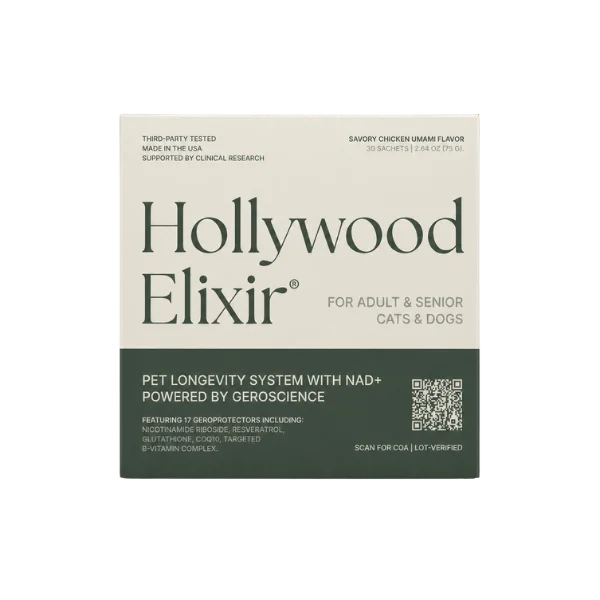
Longevity Core
Hollywood Elixir®
★★★★★(313)
More good years, starting now — steady energy, engagement, and a pet who keeps showing up fully, every day.
Starting at $89/mo
Hollywood Elixir is amazing! She put back on 5 lbs to a healthy weight, her eyes are shiny, her coat is beautiful!
— Jessie
We go on runs. Lately he's been keeping up with no problem!
— Cami
Considering nicotinamide riboside for dogs?
If you're looking for nicotinamide riboside for dogs
If you’re considering nicotinamide riboside for dogs, treat it as a measured, veterinarian-guided trial rather than a leap of faith. Look for products that are transparent about sourcing and testing, avoid dramatic claims, and fit into a routine you can actually keep. Track a few simple markers—appetite, stool quality, sleep, and recovery after normal activity—and set a check-in date. If you prefer a system-level approach that supports the broader aging network beyond any single ingredient, Hollywood Elixir is designed to complement that long-horizon plan.
Veterinary Insights

Learn about how our DVMs think about dog aging
Dr. JoAnna Pendergrass DVM


Longevity Core
Hollywood Elixir®
★★★★★(313)
More good years, starting now — steady energy, engagement, and a pet who keeps showing up fully, every day.
Starting at $89/mo
Wellness Tools
Explore your dog’s changing needs over time


Related Reading
Nicotinamide riboside for dogs is discussed as a vitamin B3–family compound that can be converted into NAD+, a cofactor involved in cellular energy and routine maintenance processes.
