


The 12 Hallmarks of Aging in Dogs, Explained
Read full insightMuscle Health for Dogs
Compare the nutrition and training strategies that support strength and mobility
By La Petite Labs Editorial 15 min read

Can a Dog Lose Muscle but Stay the Same Weight?

Case Vignette: the “Still Happy, Just Slower” Senior

What Are the Earliest Signs of Muscle Loss in Dogs?

What to Track over 30 Days: Trend Points That Help
Nutrition Reality Check: Labels Don’t Guarantee Adequacy

How Much Protein Does a Senior Dog Need for Muscle?

Exercise That Builds Capacity Without Setbacks

DVM Voice: Clinical Vignette of a Common Pattern in Senior Dog Aging
Case provided by JoAnna Pendergrass, DVM
Rex, a 7-year-old Labrador Retriever, was brought in after his owner noticed he was slower to rise, hesitant on stairs, and less able to play as before. Examination showed stiffness and reduced hip mobility; radiographs confirmed degenerative joint changes.
His care required weight management, veterinary-guided pain control, nutritional support, and rehabilitation — a comprehensive plan, but one started only after visible decline appeared.
Clinical takeaway: Rex’s case reflects the value of proactive aging support: maintaining lean body condition, monitoring mobility early, and supporting cellular resilience, antioxidant defense, and healthy inflammatory balance before decline becomes obvious.
Single-case vignette. Not generalizable. Veterinary oversight is essential for pain, stiffness, or suspected joint disease.

Vet Visit Prep: What to Bring and What to Ask

What the Exam Looks for: Muscle, Nerves, and Pain

Labs and Muscle: Interpreting Creatinine and CK Carefully

Follow-up Plan: How to Adjust Without Chasing Noise

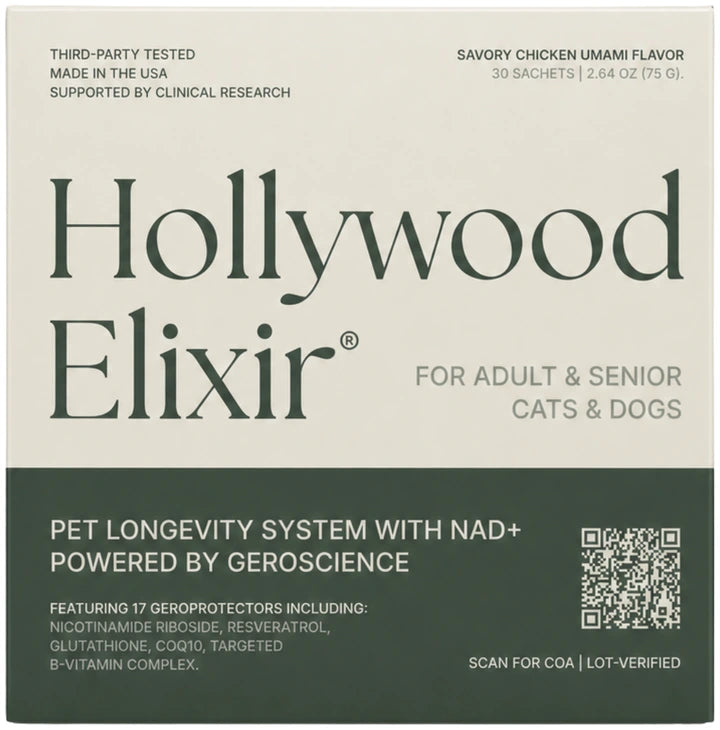
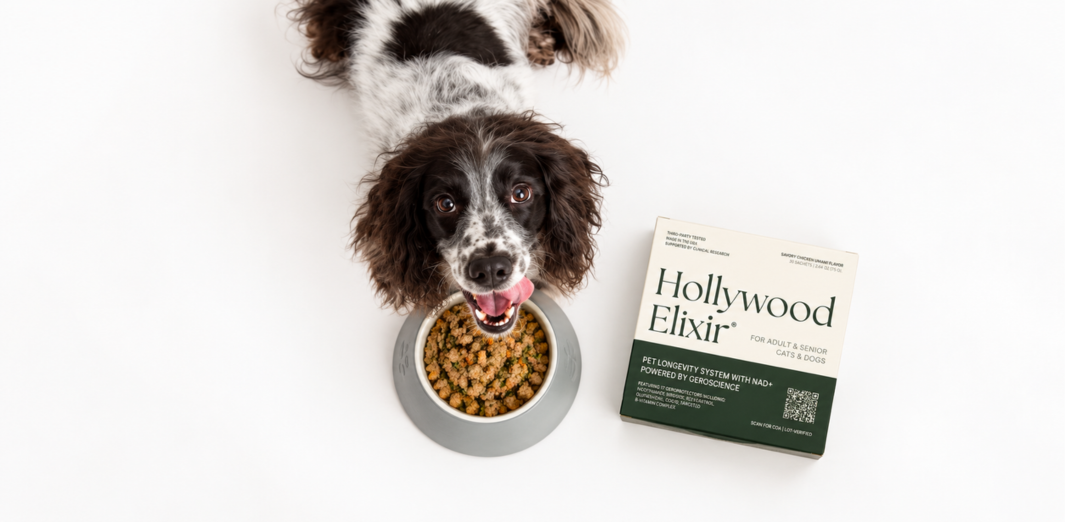
Where Hollywood Elixir Fits in a Muscle Maintenance Plan
References
Numbered references identify the sources used for specific claims. Read the study design, species and evidence boundaries alongside each finding.
-
German K, Melgoza C, Torres-Henderson C. Exploratory analysis of nutrient composition of adult and senior dog diets. Study design/context: not-stated-in-titleSpecies/context: dogEvidence boundary: The species/context tag is inferred only from the source title; the actual study population and claim-level relevance still depend on the full methods and outcomes.↩
-
Aktas M, Auguste D, Lefebvre HP, et al. Creatine kinase in the dog: a review. Study design/context: reviewSpecies/context: dogEvidence boundary: The species/context tag is inferred only from the source title; the actual study population and claim-level relevance still depend on the full methods and outcomes.↩
-
Banton S, Braun U, Squires EJ, et al. Addition of a combination of creatine, carnitine, and choline to a commercial diet increases postprandial plasma creatine and creatinine concentrations in adult dogs. Study design/context: not-stated-in-titleSpecies/context: dogEvidence boundary: The species/context tag is inferred only from the source title; the actual study population and claim-level relevance still depend on the full methods and outcomes.↩
-
Hall JA, Yerramilli M, Obare E, et al. Relationship between lean body mass and serum renal biomarkers in healthy dogs. Study design/context: not-stated-in-titleSpecies/context: dogEvidence boundary: The species/context tag is inferred only from the source title; the actual study population and claim-level relevance still depend on the full methods and outcomes.↩ 1 · ↩ 2
-
Lauren R. Ober, Jennifer A. Larsen, Lauren E. Hoffman, et al. Analysis of selected nutrients and contaminants in fish oil supplements for dogs*. Study design/context: not-stated-in-titleSpecies/context: dog, other-animalEvidence boundary: The title names cross-species or non-pet context (dog, other-animal); title-level classification does not establish efficacy, dosing, safety, or the actual study population in dogs.↩
-
Jewell DE, Panickar KS. Increased dietary vitamin D was associated with increased circulating vitamin D with no observable adverse effects in adult dogs. Study design/context: not-stated-in-titleSpecies/context: dogEvidence boundary: The species/context tag is inferred only from the source title; the actual study population and claim-level relevance still depend on the full methods and outcomes.↩

Discover LPL-01: How This Fits Into a Larger Canine Longevity System
Aging in dogs is not driven by a single pathway. It’s the result of interacting biological systems—energy metabolism, oxidative stress, immune signaling, and structural integrity—changing over time.
This article explores one piece of that puzzle. If you want to understand how these pieces connect—and what actually moves the needle—you need to zoom out.
Start with the underlying science:
- Canine Geroscience Framework →
A structured view of how aging progresses across cellular energy, inflammation, and resilience systems. - Senior Biological Defense Coverage (BDC) Modeling →
A systems-level map of which biological pathways decline first, and how layered interventions can support them. - 2026 Market Research: Best Dog Longevity Supplements →
A 2026 industry report and review of leading senior-dog and cellular-aging formulas. - LPL-01 Standard →
The formulation system that translates these models into real-world supplementation—covering multiple pathways in a coordinated way.
Keep exploring
What would you like to understand next?
Search practical guides about healthy aging, cellular energy, ingredients, and daily support for dogs.


