Dog Skin Care & Hydration

Identify Barrier Breakdown, Then Use Targeted Nutrients to Restore Skin Moisture

Essential Summary

Why is dog skin care and hydration important?

Healthy-looking skin and coat are built from small, repeatable choices: gentle cleansing, targeted conditioning, and daily internal support. When hydration is steady, owners typically notice less flaking, a softer feel, and a more even sheen. The best routines are calm, consistent, and designed for the dog you actually live with.

Pet Gala™ is designed for owners who want daily support that shows up where it matters: comfortable skin, a polished coat, and strong, clean-looking nails. It fits neatly into a simple routine, helping your topical care look more consistent from week to week—without turning skin care into a complicated project.

A dog’s coat is one of the clearest signals of daily care. When it looks glossy, lies smoothly, and feels soft under your hand, it reads as comfort and wellbeing—without you needing to explain anything. When it doesn’t, owners notice immediately: flakes on the couch, a rough collar line, elbows that look ashy, or a coat that seems to “drink up” conditioner and still feel dry. That’s why dog skin care hydration isn’t a niche concern; it’s the foundation of a well-kept look.

Hydration supports skin health and helps prevent dryness and irritation, which can show up as scratching, sensitivity, and a coat that never quite settles. The good news is that the most effective routines are not complicated. They’re built around gentle cleansing, smart conditioning, and targeted moisture where friction and pressure are highest. Add consistent internal support, and the visible finish tends to become easier to maintain—less chasing, more steady results.

A science-minded owner might ask: if my dog eats a decent diet, why add a supplement at all? The practical answer is consistency and coverage. Meals vary, seasons change, and skin needs can shift with bathing, indoor heating, and activity. A daily formula like Pet Gala™ is not about replacing a single nutrient; it’s about supporting the integumentary system—skin, coat, and nails—so your grooming routine produces a more polished, predictable look. In other words: care that begins beneath the surface and shows where it matters.

By La Petite Labs Editorial, ~15 min read

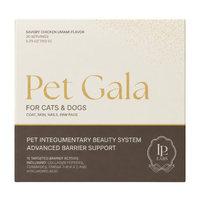
Featured Product:

  • Dog skin care hydration is best judged by visible signals: less flaking, smoother feel, and an even sheen.
  • Gentle bathing and proper conditioning often outperform frequent “deep cleaning” for maintaining a polished coat.
  • Target high-wear zones (elbows, paws, collar line) instead of over-applying product everywhere.
  • Nutrition and supplements can make topical results last longer by supporting baseline skin and coat quality.
  • If itch, odor, redness, or patchy hair loss persists, involve a veterinarian rather than rotating products.
  • Avoid using human lotions or medicated creams on dogs unless your veterinarian directs it.
  • Pet Gala™ supports a simple daily routine that helps skin, coat, and nails look consistently well-kept.

The Visible Signs of Comfortable, Well-hydrated Skin and Coat

When a dog’s skin looks matte, feels rough, or flakes after brushing, owners usually read it as a comfort issue first—and an appearance issue second. Both matter. Dog skin care hydration is the difference between a coat that lies smoothly and one that lifts, frizzes, or sheds in a way that never looks quite finished. Hydration also supports the skin’s everyday barrier feel, which can reduce that “always a little itchy” vibe many dogs show during dry seasons or frequent bathing (Barbeau-Grégoire M, 2022).

The most satisfying results come from stacking visible-signal habits: gentle cleansing, smart moisturizers for dog skin care, and nutrition that supports skin quality from the inside. Enriched diets are associated with improved skin hydration and overall skin condition in dogs (Barbeau-Grégoire M, 2022). That’s why the best skin care for dogs isn’t a single hero product—it’s a coordinated routine that makes softness, sheen, and comfort easier to maintain.

Coat shine graphic representing skin hydration supported by dog skin care moisturizing tips.

What Hydration Means for Skin Texture, Flakes, and Shine

Hydration in skin is not just “water content.” For dogs, it’s the combination of moisture plus a surface barrier that keeps that moisture from evaporating too quickly. When that balance is off, you see it immediately: dandruff-like flakes, a coat that looks dusty, and areas that feel thickened or rough. Hydration is considered essential for maintaining skin health and helping prevent dryness and irritation.

Owners often ask how to hydrate dog skin without over-bathing or making the coat oily. The answer is to treat hydration like fabric care: cleanse gently, condition appropriately, and protect the areas that take the most wear. When you do, the coat tends to lie flatter, reflect light better, and feel softer in the hand—small signals that read as “well cared for.”

Scientific beauty render highlighting skin hydration supported by dog skin hydration solutions.

Common Reasons Dogs Look Dry, Dull, or Rough to Touch

Dry skin rarely has one cause. Common contributors include low humidity, frequent bathing, harsh shampoos, friction from gear, and dietary patterns that don’t support a consistently supple coat. Some dogs also have underlying allergy tendencies that make the skin more reactive, so normal grooming feels like it “never quite fixes it.”

A useful mindset is to separate triggers from maintenance. You reduce triggers by adjusting bathing style, improving indoor humidity, and avoiding irritating products. You improve maintenance by using targeted moisturizers for dog skin care and choosing nutrition that supports visible coat quality. Enriched diets have been associated with improvements in skin hydration and overall skin condition in dogs (see: Best Skin & Coat Supplements for Dogs).

Beauty ingredient image emphasizing scientific formulation standards in how to hydrate dog skin.

Moisturizing Tips Matched to Coat Type and Grooming Reality

Dog skin care moisturizing tips work best when they’re specific to coat type. Short coats often show flakes more clearly and benefit from gentle brushing plus a light leave-on conditioner on elbows and along the back. Double coats can look dull when undercoat is impacted; here, hydration is as much about thorough brushing and proper drying as it is about product. Curly coats can feel dry at the ends, so conditioning and detangling reduce breakage and keep the coat looking even.

Across all coat types, avoid chasing “squeaky.” A coat that feels slightly conditioned is usually the coat that looks the most polished. If you’re unsure, ask your groomer what they use for finish and slip—those are the cues that translate into visible softness.

Close-up of a dog highlighting coat shine and wellness supported by best dog skin hydration treatments.

Inside-out Support: Food and Daily Habits That Show up Fast

Nutrition is the part of skin care owners can’t see directly, yet it often determines how well everything else works. When the diet supports skin quality, the coat tends to rebound faster after bathing and looks less “thirsty” between grooming sessions. Hydration and skin condition can improve with enriched diets in dogs, particularly when there’s a specific need being addressed (related: Omega-3-6-9 for Dogs).

This is where supplements can be appealing: they offer consistency even when meals vary, treats creep in, or seasons change. For owners focused on best dog skin hydration treatments, the most satisfying approach is to pair a stable internal routine with a simple topical finish—so the dog looks fresh without constant product switching.

The scratching is completely gone, his coat looks healthy and shiny!

— Lena

He was struggling with itching, now he's glowing.

— Grace

“The goal isn’t more product. It’s a coat that stays soft, even, and comfortable between real life moments.”

Topicals Done Safely: Avoiding Irritants and Human Products

Topicals can be excellent, but they’re also where mistakes happen fastest. A common one is using human lotions or medicated creams on a dog because they “worked for me.” Some human dermatologic medications and topicals can have unintended effects on household pets, including dogs, especially if licked or applied repeatedly (Asad U, 2020).

Instead, choose dog-formulated products with clear labeling, minimal fragrance, and instructions that match your dog’s coat. If you want a botanical option, look for simple emollients rather than complex essential oil blends. The goal is a coat that feels naturally soft and looks evenly conditioned—not perfumed or heavy.

Portrait of a dog showing beauty presence supported by best dog skin hydration products.

Sensitive Skin and Allergy-prone Dogs: Keeping the Finish Stable

If your dog has a history of allergic skin patterns, hydration becomes less about “adding moisture” and more about keeping the surface calm and consistent. In veterinary contexts, probiotics have been studied as an adjunct for canine atopic dermatitis, with findings suggesting potential improvements in skin hydration and barrier function (RCF, 2025).

This doesn’t replace veterinary diagnosis or targeted therapy, but it helps explain why some dogs look better when gut support is part of the routine. The visible signal owners often describe is a coat that stays smoother between flare-prone periods, with fewer “hot spots” of dryness that keep returning in the same places.

Dog looking radiant, capturing beauty and presence supported by dog skin care moisturizing tips.

Vet Therapies and Monitoring When Skin Needs More Than Moisture

When dryness is driven by a diagnosed inflammatory skin condition, your veterinarian may discuss prescription options. Cyclosporin is one therapy used for canine atopic dermatitis and has been shown to improve skin condition and reduce clinical signs, with dosing adjusted to individual response and monitoring for safety (Steffan J, 2006).

Even in those cases, daily care still matters for appearance and comfort. Gentle bathing, careful drying, and targeted conditioning can make the coat look more even and reduce the “rough patch” feel that owners notice when petting. Think of medical care as stabilizing the situation, while grooming and nutrition refine the finish.

Inside-the-box graphic showing beauty blend design supporting dog skin hydration solutions.

A Simple Routine That Stays Consistent on Busy Weeks

A routine that lasts is one you can do on a normal week. Start with two anchors: a gentle bath schedule that matches your dog’s lifestyle, and a daily habit that takes under 30 seconds (like a quick brush-through or a supplement with breakfast). Dog skin hydration solutions don’t need to be complicated to be effective; they need to be consistent (see: Hyaluronic Acid for Dogs).

Then add one targeted step for problem areas: elbows, paws, or the collar line. This is where leave-on conditioners or balms shine. If you’re evaluating best dog skin hydration products, prioritize the ones that make your dog feel comfortable during application—because compliance is the hidden ingredient in every visible result.

Choosing Products That Deliver a Clean, Soft, Natural Finish

If you’re comparing the best dog skin hydration products, start by sorting them into roles: cleanse, condition, seal, and support. Cleansers remove debris without stripping. Conditioners add slip and reduce static. Leave-on balms or sprays help seal in moisture on high-friction zones like elbows and paw edges. Supplements support the “baseline” so topical care looks better and lasts longer between baths (related: The Best Coat Growth Supplements for Dogs).

A practical buying filter is: can you see the difference within a week of consistent use? With dog skin hydration solutions, the early wins are usually less dandruff on dark coats, fewer dry patches after brushing, and a coat that reflects light more evenly. For sensitive dogs, avoid borrowing human dermatology products—some human topicals can affect household pets in unpredictable ways (Asad U, 2020).

“Hydration shows up as a finish: less flake, more slip, and a sheen that looks naturally well-kept.”

Lab coat with La Petite Labs logo symbolizing science-backed standards for dog skin care hydration.

Supplements That Support Skin, Coat, and Nails as a Set

Supplements for skin are often discussed like they’re only about “getting enough” of a nutrient. For appearance, the better question is whether a formula supports a polished, comfortable look across skin, coat, and nails together. Research in other species suggests certain dietary supplements can improve skin hydration, though individual response varies (Sun Q, 2022). That variability is exactly why owners value a consistent daily routine: it makes the visible outcome more predictable.

Think of supplements as the quiet background that helps your topical routine perform. When the coat is already prone to dryness, even excellent shampoos can feel like they “wear off” quickly. Pairing internal support with external care is often what makes dog skin care moisturizing tips actually stick—less chasing, more maintenance.

Shop Now
Pet Gala with foods symbolizing beauty synergy aligned with dog skin care hydration.

Probiotics and the Calm, Even Look Owners Notice

Probiotics are increasingly discussed in skin conversations because the gut-skin connection can show up as coat quality and comfort. In dogs with atopic dermatitis, probiotics may improve skin hydration and barrier function and can be a helpful adjunct approach alongside veterinary care (RCF, 2025). That doesn’t mean every dry dog needs probiotics, but it does explain why some owners notice a more even-looking coat and calmer skin when digestive support is part of the plan.

For beauty logic, the signal to watch is consistency: fewer “good days/bad days,” less patchy dullness, and a coat that stays soft after normal play and indoor heating. If your dog has ongoing itch, recurrent ear issues, or seasonal flare patterns, it’s worth discussing options with your veterinarian rather than rotating products endlessly.

Shop Now
Pet owner displaying product as part of daily beauty care supported by best dog skin hydration products.

Topical Hydration That Works Without Feeling Heavy or Greasy

Topical hydration can be elegant when it’s targeted. You don’t need to coat the whole dog in heavy product; you need to treat the places that telegraph dryness: elbows, hocks, paw pads, and the “ruff” where collars rub. Plant-based topical products have shown the ability to improve skin hydration in controlled trials in humans, with safety assessed across randomized studies (Cheng F, 2025). While dogs aren’t humans, this supports why many gentle botanical emollients are popular in pet grooming—when chosen carefully and used sparingly.

Choose unscented or lightly scented options, avoid essential-oil-heavy formulas, and test a small area first. The best dog skin hydration treatments are the ones your dog tolerates calmly, so you can apply them consistently without turning care into a struggle.

Shop Now

Bathing and Drying Habits That Protect Softness and Sheen

Bathing is where many routines accidentally sabotage hydration. Hot water, frequent shampooing, and “squeaky clean” expectations can leave skin feeling tight. A better goal is clean and conditioned: lukewarm water, a dog-formulated gentle cleanser, and a rinse-out conditioner that leaves the coat pliable. Hydration supports skin comfort and helps prevent dryness and irritation (Barbeau-Grégoire M, 2022).

After the bath, towel-blot instead of aggressive rubbing, then brush once the coat is mostly dry. This reduces friction and helps distribute natural oils for a smoother finish. If you use a leave-on product, apply it only where needed—hydration should look natural, not greasy.

Home and Lifestyle Tweaks That Reduce Daily Dryness Triggers

Environment matters more than most owners expect. Indoor heating, low humidity, and frequent bedding washes can create a “dry loop” where skin never quite rebounds. A humidifier in the main sleeping area, a soft washable blanket, and gentle detergent can make dog skin hydration solutions feel easier—because you’re reducing the daily drain on moisture.

Also consider friction: harness straps, collars, and repeated licking can roughen the same spots. Rotate gear, keep it clean, and check fit. When you remove the constant irritant, moisturizers for dog skin care can do their job without being asked to “fight” the environment.

Visual breakdown contrasting competitors and quality standards in best dog skin hydration products.

When Dry Skin Signals a Medical Issue Worth Vet Attention

Some dryness is cosmetic; some is a sign your dog needs medical attention. If you see intense redness, oozing, strong odor, hair loss in patches, or persistent itch that interrupts sleep, involve your veterinarian. For diagnosed atopic dermatitis, prescription options such as cyclosporin can improve skin condition and hydration, and are generally used with monitoring for adverse effects and individualized adjustment (Steffan J, 2006).

Even when medication is part of the picture, daily care still matters for appearance: gentle bathing, targeted conditioning, and a supportive supplement can make the coat look more even and feel more comfortable between appointments. The goal is a dog who looks well-kept and feels at ease in their own skin.

Shop Now
Pet Gala in protective wrap, emphasizing quality behind best skin care for dogs.

What a Realistic Timeline Looks Like for Visible Improvement

A simple way to judge progress is to track three visible signals: flake level, coat reflectivity, and “touch comfort” (how the coat feels when you stroke against the grain). With consistent routines, many owners notice early improvements within 7–14 days, while deeper softness and fewer recurring dry patches can take longer depending on coat type and bathing frequency. Enriched diets are linked with improved skin hydration in dogs, which supports why internal and external care together often looks best.

If nothing changes after a few weeks, don’t just add more products. Re-check shampoo choice, water temperature, brushing friction, and whether an underlying allergy pattern is driving the dryness. The best skin care for dogs is the routine that stays calm, repeatable, and visibly rewarding.

Shop Now

Where Pet Gala™ Fits in a Modern Skin and Coat Routine

Where Pet Gala™ fits is straightforward: it’s for owners who want daily support that shows up as smoother skin feel, a more polished coat, and stronger-looking nails—without turning care into a cabinet full of single-ingredient experiments. Research suggests probiotics can support skin barrier function and hydration in dogs with atopic dermatitis as an adjunct approach (RCF, 2025), and broader supplement research in other species supports the idea that oral support can influence skin moisture in some individuals (Sun Q, 2022).

That combination of scientific plausibility and beauty logic is the point: topical products create the immediate finish, while a consistent daily supplement helps the finish look more stable from week to week. If you’re building a routine for dog skin care hydration, Pet Gala™ is designed to be the quiet, reliable “base layer” that keeps the visible results easier to maintain.

“The best routines are calm and repeatable—because consistency is what becomes visible.”

Educational content only. This material is not a substitute for veterinary advice. Always consult your veterinarian about your dog’s specific needs. These statements have not been evaluated by the Food and Drug Administration. Products mentioned are not intended to diagnose, treat, cure, or prevent any disease.

Glossary

  • Barrier function: The skin’s ability to hold moisture in and keep irritants out, influencing comfort and coat finish.
  • Transepidermal water loss (TEWL): Water escaping through the skin surface; higher TEWL often correlates with dryness.
  • Emollient: A topical ingredient that softens and smooths skin, improving the feel of rough patches.
  • Occlusive: A topical that forms a light seal to reduce moisture loss, useful on elbows and paw edges.
  • Humectant: An ingredient that attracts water to the skin surface; best used with a conditioner or sealant.
  • Atopic dermatitis: A common allergic skin condition in dogs that can involve itch, redness, and barrier disruption.
  • Hot spot (acute moist dermatitis): A rapidly inflamed, irritated skin area that can ooze and needs veterinary attention.
  • Undercoat impaction: Packed undercoat that traps debris and moisture, often making the coat look dull and feel dry.
  • Finish: Grooming term for the final look and feel of the coat—softness, slip, and even sheen.

Related Reading

References

RCF. Probiotics as an adjunct in the treatment of canine atopic dermatitis: a systematic review and meta-analysis of in vivo studies in dogs.. PubMed. 2025. https://pubmed.ncbi.nlm.nih.gov/40603066/

Barbeau-Grégoire M. A 2022 Systematic Review and Meta-Analysis of Enriched Therapeutic Diets and Nutraceuticals in Canine and Feline Osteoarthritis.. PubMed. 2022. https://pubmed.ncbi.nlm.nih.gov/36142319/

Steffan J. A systematic review and meta-analysis of the efficacy and safety of cyclosporin for the treatment of atopic dermatitis in dogs.. PubMed. 2006. https://pubmed.ncbi.nlm.nih.gov/16412115/

Cheng F. Efficacy and Safety of Topical Application of Plant-Based Products on Skin Aging in Healthy Individuals: A Systematic Review and Meta-Analysis of Randomized Controlled Trials.. PubMed. 2025. https://pubmed.ncbi.nlm.nih.gov/39654386/

Sun Q. Effectiveness of Dietary Supplement for Skin Moisturizing in Healthy Adults: A Systematic Review and Meta-Analysis of Randomized Controlled Trials.. PubMed. 2022. https://pubmed.ncbi.nlm.nih.gov/35719159/

Asad U. Effect of topical dermatologic medications in humans on household pets.. PubMed Central. 2020. https://pmc.ncbi.nlm.nih.gov/articles/PMC6988634/

Gamble. Pharmacokinetics, Safety, and Clinical Efficacy of Cannabidiol Treatment in Osteoarthritic Dogs. 2018. https://www.frontiersin.org/journals/veterinary-science/articles/10.3389/fvets.2018.00165/full

Steffan J. Cyclosporin A pharmacokinetics and efficacy in the treatment of atopic dermatitis in dogs.. PubMed. 2004. https://pubmed.ncbi.nlm.nih.gov/15305852/

Reppert EJ. Pharmacokinetics and pharmacodynamics of intravenous and transdermal flunixin meglumine in alpacas.. PubMed. 2019. https://pubmed.ncbi.nlm.nih.gov/31353535/

Miah. Clinical Pharmacokinetics. 2019. https://www.sciencedirect.com/topics/pharmacology-toxicology-and-pharmaceutical-science/clinical-pharmacokinetics

Dong. Preclinical Drug Pharmacokinetic, Tissue Distribution and Excretion Profiles of the Novel Limonin Derivate HY-071085 as an Anti-Inflammatory and Analgesic Candidate in Rats and Beagle Dogs. 2022. https://www.mdpi.com/1424-8247/15/7/801

Giraudel. Pharmacokinetic/pharmacodynamic modelling of NSAIDs in a model of reversible inflammation in the cat.. Springer. 2005. https://link.springer.com/article/10.1186/1746-6148-9-250

FAQ

What does dog skin care hydration actually mean day-to-day?

In everyday terms, dog skin care hydration means skin that feels comfortable and a coat that looks smooth rather than dusty. You’re aiming for less flaking, fewer rough patches, and a finish that reflects light evenly.

Hydration supports skin health and helps reduce dryness and irritation. For consistent visible results, pair gentle grooming with daily internal support, such asPet Gala™

Why does my dog look dull even after bathing?

A dull coat after a bath often comes from over-cleansing, hot water, or skipping conditioner. “Squeaky clean” can mean the coat is stripped and prone to static, which reads as dullness.

Try lukewarm water, a gentle dog shampoo, and a rinse-out conditioner, then towel-blot instead of rubbing. Diet can also influence skin condition and hydration, and daily support can be as simple asPet Gala™

How can I hydrate dog skin without making fur greasy?

Use lightweight hydration in the right places: conditioner in the bath, then a small amount of leave-on product only on elbows, paw edges, or the collar line. Greasiness usually comes from applying heavy balms across the whole coat.

Also reduce friction with proper brushing and well-fitted gear. For a steadier baseline so topicals don’t have to work as hard, many owners add daily support like Pet Gala™

Are there signs dryness is more than a cosmetic issue?

Yes. Redness that spreads, strong odor, oozing, patchy hair loss, or itch that disrupts sleep suggests you should involve your veterinarian. Those patterns can indicate allergy or infection rather than simple dryness.

Hydration still matters for appearance and comfort, but medical guidance keeps you from masking symptoms. For daily visible-care support alongside a vet plan, consider Pet Gala™

Do probiotics help dog skin care hydration and coat finish?

In dogs with atopic dermatitis, probiotics have been studied as an adjunct and may improve skin hydration and barrier function. That doesn’t mean every dog needs them, but it helps explain why some owners notice a steadier coat feel when digestive support is consistent.

If your dog has recurring seasonal itch or sensitive skin, ask your veterinarian what fits your dog’s history. For daily support designed around visible skin and coat quality, look at Pet Gala™

What are the best dog skin hydration products to start with?

Start with the basics that change the finish quickly: a gentle dog shampoo, a rinse-out conditioner, and a small targeted balm or spray for elbows and paws. These cover cleanse, condition, and seal without overcomplicating the routine.

Then add daily internal support so the coat stays softer between baths. Diet can influence skin condition and hydration, and a simple daily option isPet Gala™

Can I use coconut oil or human lotion on my dog?

Be cautious. Some human topical dermatologic products can have unintended effects on pets, especially if licked or used repeatedly(Asad U, 2020). Even “natural” oils can trap debris, feel heavy, or trigger licking that worsens irritation.

If you want a topical, choose a dog-formulated, fragrance-light product and apply only to high-wear zones. For a daily inside-out approach that supports visible skin and coat quality, considerPet Gala™

How often should I bathe a dog with dry skin?

There isn’t one schedule for every dog. Many dry-coated dogs do better with less frequent shampooing and more consistent conditioning, plus spot care for elbows and paws. If you bathe often for lifestyle reasons, choose a gentle cleanser and always condition.

Hydration supports skin comfort and helps reduce dryness and irritation. For daily support between baths that keeps the finish looking steadier, addPet Gala™

What dog skin care moisturizing tips work for elbows and paws?

Treat elbows and paws like “high-friction zones.” Use a small amount of dog-safe balm after walks or before bed, and keep nails trimmed so the paw lands evenly. For elbows, add soft bedding to reduce pressure and rubbing.

Consistency beats intensity: a thin layer applied regularly looks better than occasional heavy applications. For daily support that complements topical care and helps the overall finish look more even, try Pet Gala™

How long until I see results from dog skin hydration solutions?

Topical changes can show quickly: less flaking and a softer feel may appear within 7–14 days if you’re gentle with bathing and consistent with conditioning. Deeper improvements in coat finish often take longer, especially if the environment is dry or the dog has sensitive skin.

Diet can influence skin condition and hydration, so daily internal support can make results feel more stable week to week. A simple way to do that isPet Gala™

Is dog skin care hydration different for puppies and seniors?

Yes. Puppies often need extra-gentle products and minimal fragrance because their skin can be reactive. Seniors may show dryness more clearly due to slower coat turnover and more time indoors with heating or AC, so consistency matters.

For any age, avoid harsh shampoos and keep routines calm and repeatable. To support visible skin and coat quality as a daily habit, many owners choose Pet Gala™

Do certain breeds need different best skin care for dogs?

Breed and coat type change what “best” looks like. Short coats show flakes; double coats need thorough brushing and drying; curly coats need conditioning to prevent breakage. Skin folds also require careful drying and gentle cleaning to avoid irritation.

Rather than copying another dog’s routine, match products to coat behavior and lifestyle. For a simple daily baseline that supports visible skin and coat quality across breeds, consider Pet Gala™

Can indoor heating affect dog skin care hydration noticeably?

Absolutely. Low indoor humidity can make skin feel tight and coats look static-y, especially in winter. You may notice more flakes on dark fur, rough elbows, and a coat that doesn’t “settle” after brushing.

A humidifier near sleeping areas and softer bedding can reduce daily dryness triggers. For steady internal support that complements environmental tweaks, many owners add Pet Gala™

Are plant-based moisturizers for dog skin care a good idea?

They can be, if they’re dog-formulated and used lightly. Plant-based topicals have shown improvements in skin hydration in controlled human trials, with safety assessed in randomized studies(Cheng F, 2025). That supports why gentle botanical emollients are popular, but dogs may lick products, so simplicity matters.

Avoid essential-oil-heavy blends and always patch test. For daily inside-out support that pairs well with a minimal topical routine, considerPet Gala™

What should I avoid when choosing best dog skin hydration products?

Avoid strong fragrance, harsh degreasing shampoos, and products that leave a sticky residue that attracts dirt. Also avoid using human medicated creams unless your veterinarian directs it, since some human topicals can affect pets differently.

Look for clear instructions, dog-specific labeling, and a finish that feels natural rather than heavy. For a daily baseline that supports visible skin and coat quality, consider Pet Gala™

Can supplements improve dog skin hydration solutions and coat softness?

They can support the baseline so topical care looks better and lasts longer. In other species, certain dietary supplements have been associated with improved skin hydration, though results vary by individual(Sun Q, 2022). For dogs, owners often judge success by fewer flakes, a smoother feel, and a more even sheen.

If your dog has sensitivities or a medical skin condition, confirm fit with your veterinarian. For daily support designed around visible skin, coat, and nails, considerPet Gala™

Are there side effects with skin supplements for dogs?

Any supplement can cause digestive upset in some dogs, especially if introduced suddenly. Watch for loose stool, decreased appetite, or new itchiness, and pause the product if you notice a clear change.

Dogs with complex medical histories or multiple medications should have supplements reviewed by a veterinarian to avoid unwanted overlap. For a daily option built for visible skin and coat support, consider Pet Gala™

Can dog skin care hydration routines interact with prescription skin meds?

They can, mainly through product choice and timing. If your dog is on prescription therapy for allergic skin disease, your veterinarian may recommend specific shampoos or bathing frequency to avoid irritation. For example, cyclosporin use is typically individualized and monitored for safety(Steffan J, 2006).

Bring your grooming and supplement list to appointments so your vet can align everything. For daily visible-care support that fits alongside a vet plan, considerPet Gala™

Is dog skin care hydration the same for cats and dogs?

No. Cats groom differently, have different sensitivities, and many topical ingredients that seem mild can be risky for them. This page focuses on dogs, where routines can include bathing, conditioning, and targeted leave-on products more commonly.

If you have both species at home, store products securely and avoid cross-use. For dog-focused daily support that complements a visible-care routine, consider Pet Gala™

When should I call the vet about dry, itchy skin?

Call if itch is intense, sleep is disrupted, there’s redness that spreads, open sores, odor, or repeated ear issues. Those signs can indicate infection or allergy patterns that need diagnosis rather than more moisturizer.

Veterinary treatment for allergic skin disease may include options like cyclosporin with monitoring and individualized adjustment. For daily visible-care support that can complement a vet plan, considerPet Gala™

What’s a simple decision framework for best dog skin hydration treatments?

Start with the least complicated routine that can still show a difference: gentle shampoo, conditioner every bath, and targeted leave-on care for elbows and paws. If the coat improves, you’ve likely solved a routine issue rather than a medical one.

If signs persist or worsen, involve your veterinarian. To make the “good finish” easier to maintain day to day, add consistent internal support like Pet Gala™

5K+ Happy Pet Parents

Excellent 4.8

Dog Skin Care & Hydration | Why Thousands of Pup Parents Trust Pet Gala™

"It's so good for his coat, and so easy to mix into food."

Alex & Cashew

"Gives him that glow from head to tail!"

Elisabeth & Chai

"The scratching is completely gone, his coat looks healthy and shiny."

Lena & Bear

"Magical. He was struggling with itching and shedding. Now he's literally glowing."

Grace & Ducky

"It's so good for his coat, and so easy to mix into food."

Alex & Cashew

"Gives him that glow from head to tail!"

Elisabeth & Chai

"The scratching is completely gone, his coat looks healthy and shiny."

Lena & Bear

"Magical. He was struggling with itching and shedding. Now he's literally glowing."

Grace & Ducky

"It's so good for his coat, and so easy to mix into food."

Alex & Cashew

"Gives him that glow from head to tail!"

Elisabeth & Chai

"The scratching is completely gone, his coat looks healthy and shiny."

Lena & Bear

"Magical. He was struggling with itching and shedding. Now he's literally glowing."

Grace & Ducky

"It's so good for his coat, and so easy to mix into food."

Alex & Cashew

"Gives him that glow from head to tail!"

Elisabeth & Chai

"The scratching is completely gone, his coat looks healthy and shiny."

Lena & Bear

"Magical. He was struggling with itching and shedding. Now he's literally glowing."

Grace & Ducky

SHOP NOW