
Ultimate Guide to Senior Dog Care

Build Rhythmic Routines That Support Joints, Digestion, and Sleep Quality

Essential Summary

Why is a senior dog care guide important?

Aging changes how dogs use food, movement, and recovery time, so a plan has to be monitored, not guessed. The most reliable approach is to track a few trend points over a 30-day window and adjust one lever at a time with veterinary input.

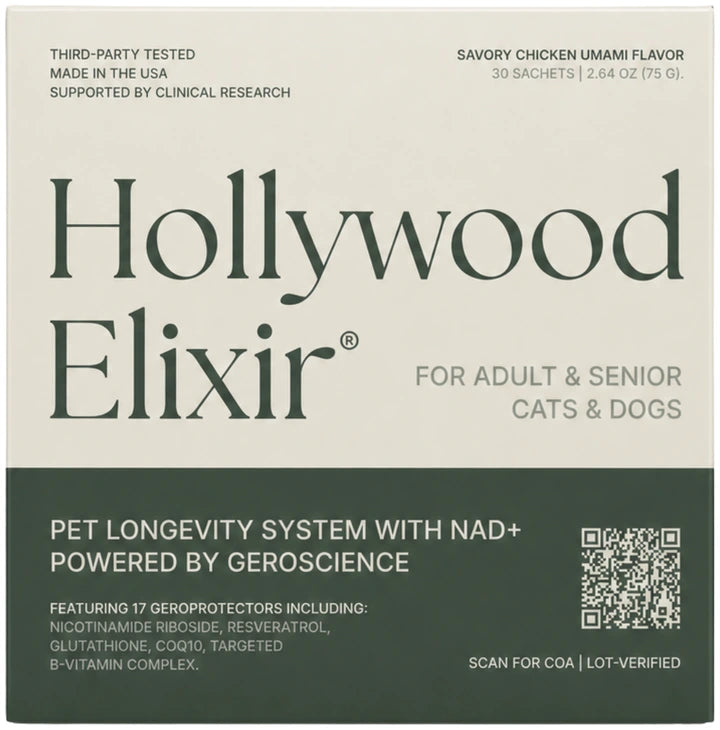
Hollywood Elixir™ can be part of a daily plan that supports normal cellular health as dogs age. It fits best after diet, movement, and comfort routines are stable, so any changes in appetite, stool, sleep, or mobility stay readable over a few weeks.

Older dogs rarely decline in one straight line; they change in competing directions—slower walks but stronger appetite, restless nights but normal lab work, or “fine at home” yet stiff on stairs. The fastest way to help is to stop treating every change as either inevitable aging or a crisis. A workable senior dog care guide compares two paths: add more intensity (conditioning) or add more support (comfort, digestion, environment), then chooses based on trend points over a 30-day window.

This page focuses on two primary clinical realities that drive most day-to-day problems in senior dogs: arthritis-related pain and age-linked nutrition shifts. Aging can change body composition, metabolism, and organ function, which alters how dogs respond to food and activity. Meanwhile, chronic pain can quietly narrow a dog’s adaptability, making routines feel more jagged even when the dog still “looks okay.”

The goal is a complete senior dog care plan that owners can actually run: a baseline week, a short checklist, a tracking rubric, and a vet handoff that leads to cleaner decisions. Diet, exercise, and mental stimulation are treated as a coordinated system—because in real homes, a sore dog sleeps poorly, moves less, loses muscle, and then feels worse. The right plan interrupts that loop with small, measurable changes.

By La Petite Labs Editorial, ~15 min read

Featured Product:

  • The best senior dog care guide builds a stable baseline, then adjusts diet, movement, and comfort using trend points over 30 days.
  • Compare “it’s just aging” versus “it’s pain or disease” by tracking appetite, sleep interruptions, and movement quality.
  • Senior-labeled foods vary widely; choose based on body condition, digestion, and lean-mass support, not the word “senior” (German, 2025).
  • For arthritis-prone dogs, rhythmic low-impact activity often reads cleaner than jagged bursts of weekend exercise.
  • Mental stimulation should be low-stress and success-based, supporting engagement without overloading sore joints.
  • Bring videos, a supplement list, and a 30-day timeline to the vet to speed up decisions and safety monitoring.
  • A complete senior dog care plan avoids sudden changes, adds one module at a time, and revisits priorities monthly.

Why “Just Aging” and “Something Wrong” Both Miss the Point

Aging can look like “slowing down,” but owners often face a real fork in the road: treat every change as inevitable, or treat every change as a medical emergency. The truth sits between. In older dogs, body composition, digestion, and organ function shift, changing how food, activity, and medications land day to day (Cai, 2026). A senior dog care guide works best when it separates normal aging from pain, disease, and avoidable deconditioning.

At home, the most useful mindset is “trend points over a 30-day window,” not single bad days. A dog that naps more after a long walk may be normal; a dog that shortens every walk for three weeks is sending a different signal. Start with two anchors: appetite and movement quality. Those two areas often reveal whether the plan needs cleaner routines or a faster veterinary workup.

Cellular powerhouse illustration symbolizing metabolic support via complete senior dog care plan.

Label Versus Physiology: What “Senior” Really Changes

Side A says “switch to senior food and keep going.” Side B says “protect joints and stop pushing.” What actually differs is the dog’s surplus: how much capacity remains after normal daily demands. Research shows “senior” diets vary widely in nutrient profiles, and age alone doesn’t define the right targets (German, 2025). The more actionable question is whether the dog is losing muscle, gaining fat, or showing digestion changes that alter energy needs.

A complete senior dog care plan starts with a baseline week: weigh the dog, photograph body shape from above and the side, and note stool quality. Then choose one change at a time—food format, meal timing, or treat calories—so cause and effect stay readable. If weight is drifting, adjust calories in small steps and recheck in two weeks rather than making a dramatic cut that leaves the dog hungry and restless.

DNA strand illustration representing antioxidant support pathways in aging dog diet exercise mental stimulation.

Protein Debates: Muscle Maintenance Versus Medical Exceptions

Owners often compare “protein is hard on kidneys” versus “protein prevents muscle loss.” The key difference is context: healthy older dogs commonly benefit from maintaining lean mass, while dogs with diagnosed kidney disease need individualized targets. Reviews of aging nutrition emphasize that physiologic changes can alter responses to protein and energy, and evidence-based targets for seniors are still being refined (Cai, 2026). That uncertainty is exactly why body condition and muscle scoring matter more than label claims.

In an aging dog diet exercise mental stimulation routine, protein decisions should be paired with observation. Watch for muscle loss along the spine and thighs, not just the number on the scale. If the dog is leaving food, vomiting bile in the morning, or producing bulky stools, the issue may be meal timing or digestibility rather than protein “too high.” Bring photos and a 7-day food log to the next appointment to keep the conversation specific.

Protein model representing bioactive synergy and support found in complete senior dog care plan.

Exercise Dose: Rhythmic Movement Versus Jagged Weekends

Exercise debates in senior dogs usually split into “keep them moving” versus “rest to protect joints.” What differs is the type of load. Arthritis pain is often worsened by jagged bursts—weekend hikes after a sedentary week—while rhythmic, low-impact movement can support joint lubrication and muscle maintenance. Pain guidelines for dogs emphasize multimodal plans and ongoing monitoring, because comfort and function change with comorbidities and age (Epstein, 2015).

Build a week that looks the same on Tuesday as it does on Saturday. Two to four short walks, a few minutes of gentle hill work, and controlled sit-to-stand repetitions often read cleaner than one long outing. If the dog is stiff after rest but loosens up within five minutes, that pattern often points toward arthritis management rather than “laziness.” If stiffness worsens during the walk, the plan needs a different intensity.

Pug portrait highlighting companionship and steady support from senior dog care guide.

Mental Stimulation Without Overloading Sore Joints

Mental stimulation is sometimes treated as optional enrichment, but for older dogs it can be the difference between calm adaptability and anxious pacing. The confusion is “brain games” versus “real exercise.” What differs is the stress load: short problem-solving sessions can provide engagement without joint strain, while long, chaotic play can leave a sore dog wired. A senior dog care guide should treat cognition and comfort as linked, because pain and poor sleep can make behavior look like “senility.”

Choose tasks that end with success: scatter feeding on a towel, a simple scent trail, or a frozen lick mat that doesn’t require hard chewing. Keep sessions brief and rhythmic—three minutes, then rest—so the dog finishes relaxed. If nighttime restlessness is rising, track when it happens and what preceded it (late nap, long walk, visitors). Those trend points help a veterinarian separate cognitive change from discomfort or digestive upset.

Hollywood Elixir™ is amazing and makes my 13 y/o young again!

— Jessie

We go on runs. Lately he's been keeping up with no problem!

— Cami

“Track trend points for 30 days before rewriting the whole routine.”

Case Vignette: Night Waking That Wasn’t “Just Bladder Aging”

CASE VIGNETTE: A 12-year-old Labrador starts “asking to go out” at 2 a.m., then stands in the yard and seems unsure why. The family assumes it is bladder aging and cuts evening water, but the dog also hesitates on stairs and pants after short walks. That combination—sleep disruption plus movement change—often signals pain or cognitive shift rather than a simple house-training problem.

In a complete senior dog care plan, that scenario triggers two parallel steps: a comfort check and a routine reset. Add night lights, a predictable last potty break, and a softer sleeping surface. At the same time, schedule an exam with notes on stair hesitation, panting, and any new accidents. When owners bring a timeline instead of a single complaint, the visit becomes a targeted investigation rather than guesswork.

Neutral-tone dog photo highlighting attentive expression supported by complete senior dog care plan.

Owner Checklist for Mobility, Appetite, and Daily Comfort

OWNER CHECKLIST: Home observation works when it is concrete, not emotional. Check (1) time to rise from lying down, (2) willingness to jump into the car, (3) paw licking focused on one joint, (4) changes in gait after rest versus after activity, and (5) appetite shifts tied to exercise days. These signs are specific to aging bodies where pain, muscle loss, and conditioning interact.

Run the checklist twice weekly and write one sentence per item. The goal is a cleaner picture of function, not a perfect score. If three items worsen over a 30-day window, the dog likely needs a new pain plan, a different exercise dose, or both. If only one item worsens, look for a local issue like a nail, paw pad, or a single sore joint before assuming “general aging.”

Canine profile image reflecting strength and steadiness supported by senior dog care guide.

What to Track: Six Trend Points over a 30-Day Window

“WHAT TO TRACK” RUBRIC: Owners get better decisions when they track a few markers consistently. Use (1) weekly weight, (2) monthly body and muscle photos, (3) daily step count or walk minutes, (4) stool form and frequency, (5) sleep interruptions, and (6) a 0–3 mobility note (0 normal, 3 avoids movement). These trend points reveal whether the dog’s span is expanding or shrinking.

Keep tracking simple enough to sustain. A phone note with six lines is better than a spreadsheet abandoned after four days. In an aging dog diet exercise mental stimulation plan, the most informative pairing is mobility plus appetite: when both drift down, pain or systemic illness rises on the list. When appetite stays strong but mobility drops, arthritis or deconditioning becomes more likely, and the exercise dose can be adjusted sooner.

Product info graphic highlighting testing and standards behind aging dog diet exercise mental stimulation.

A Common Misconception That Delays Pain Relief

UNIQUE MISCONCEPTION: “If the dog is old, limping is normal.” Limping is a symptom, not a life stage. Chronic pain can narrow a dog’s adaptability, leading to less movement, less muscle, and then more pain—a loop that looks like aging but behaves like a treatable problem. Pain management guidelines emphasize reassessment and combining approaches rather than relying on a single tool indefinitely (Epstein, 2015).

Owners can correct this misconception by separating “slower pace” from “avoidance.” A slower pace with a happy tail and normal posture may be fine. Avoidance looks like stopping, sitting, refusing stairs, or shifting weight off a limb. When avoidance appears, the plan should change: shorter, more rhythmic walks, traction rugs, and a veterinary discussion about pain options and monitoring. Waiting for a dramatic crisis often makes the next steps harder.

Vet Visit Prep That Leads to Cleaner Decisions

VET VISIT PREP: A productive senior appointment compares two stories—what the owner sees at home and what the exam reveals. Bring (1) a 30-day timeline of mobility and sleep, (2) a list of supplements and treats, and (3) videos of the dog walking on a flat surface and rising from bed. Then ask: “Which changes look like pain versus conditioning?” and “What should be reassessed first if we change the plan?”

Also ask targeted questions about safety: “What bloodwork or rechecks are needed for this pain plan?” and “Which side effects should trigger a call?” Pain guidance stresses baseline assessment and ongoing monitoring, especially when comorbidities are present (Epstein, 2015). Owners who leave with a follow-up date and two clear home metrics (for example, time to rise and night waking) usually get cleaner outcomes than owners who leave with only a prescription.

“Rhythmic movement often reads cleaner than weekend bursts of effort.”

Professional uniform showing commitment to quality in support of aging dog diet exercise mental stimulation.

What Not to Do When a Senior Dog Has a Bad Day

“WHAT NOT TO DO”: Common mistakes in senior dog care are well-intended but create jagged days. Avoid (1) sudden weekend overexertion, (2) steep calorie cuts that increase food-seeking stress, (3) adding multiple supplements at once, and (4) using human pain medications without veterinary direction. Many household items and medications can be toxic to dogs, and the risk rises when owners improvise during a painful flare (Cortinovis, 2016).

Instead, change one variable per week and watch the trend points. If a new chew, treat, or table scrap appears right before vomiting or diarrhea, remove it and return to the previous baseline for several days. If the dog is struggling, call the clinic rather than “trying one more thing” from the medicine cabinet. A calmer, more rhythmic plan often reveals what is actually driving the symptoms.

Shop Now
Ingredient still life illustrating clean formulation principles for complete senior dog care plan.

Choosing Food by Function, Not the Word “Senior”

Diet choices for older dogs often get framed as “senior formula versus adult formula,” but the real contrast is nutrient profile versus the dog’s current physiology. Studies show wide variation in nutrient composition between adult and senior-labeled dog foods, so the label alone is not a guarantee of fit (German, 2025). Owners should prioritize digestibility, appropriate calories, and a protein level that supports lean mass unless a veterinarian has diagnosed a condition requiring a different approach.

A practical approach is to pick a food the dog eats well, then tune the plan with portion size and treat accounting. Measure meals for two weeks, then adjust by small increments based on weight and body photos. If the dog is a picky eater, consider warming food, adding water, or shifting to smaller, more frequent meals before cycling through many brands. Consistency makes it easier to see whether digestion and energy are becoming cleaner.

Shop Now
Home scene with woman and dog featuring Hollywood Elixir and senior dog care guide.

Supplements as Small Modules, Not a Rescue Plan

Supplements create another split: “food should cover everything” versus “supplements fix aging.” What differs is the goal. Diet usually supplies essential nutrients, but older dogs may still benefit from upstream support that contributes to overall cellular health and recovery patterns, especially when appetite, absorption, or activity changes with age (Cai, 2026). Supplements should be treated as small modules added to a stable base, not as a replacement for veterinary diagnosis or a balanced diet.

If a supplement is added, introduce it alone for 10–14 days and track stool, appetite, and sleep. Stop if vomiting, diarrhea, or itching appears, and report the timing to the veterinarian. Owners often get the cleanest results when they choose one target—mobility comfort, digestion consistency, or calm nighttime rest—rather than buying a “kitchen sink” stack. The smaller the change, the easier it is to interpret.

Shop Now

Medication Support for Comfort: Monitoring Makes It Safer

Medication support for senior comfort is often misunderstood as “strong drugs” versus “natural options.” The practical difference is monitoring and fit. Chronic pain plans commonly use multiple tools, adjusted over time, with attention to comorbidities and safety checks. Some dogs may also be prescribed gabapentin for certain pain patterns; its behavior in dogs has been studied, but dosing and selection should remain veterinarian-guided (Kukanich, 2011).

Owners can support safer use by reporting sedation, wobbliness, appetite change, or new anxiety after a medication change. Keep a simple “start date” note for each new product and avoid changing food, exercise, and meds in the same week. If the dog seems dull or unstable, do not “push through” a walk to test them; call the clinic for guidance. Comfort should look cleaner, not simply quieter.

Home Setup Changes That Protect Mobility and Confidence

Home setup is where a senior dog care guide becomes real. The contrast is “the dog will adapt” versus “the house should adapt.” What differs is traction and recovery time. Slips on smooth floors can turn mild arthritis into a flare, and repeated micro-slips can make a dog cautious and less active. Small environmental changes can protect movement quality without reducing the dog’s independence.

Use runners or yoga mats in the most traveled paths, add a low step for the car, and raise food bowls only if the veterinarian agrees it helps posture. Choose a bed with enough padding to keep elbows and hips comfortable, and place it where the dog can rest without being startled. These changes often make daily movement more rhythmic, which supports conditioning and reduces the “start-stop” pattern that amplifies soreness.

Comparison graphic showing senior dog care guide benefits versus typical supplement formulas.

How Often to Recheck: Prioritized Screening over Guesswork

Veterinary support in older dogs is not just “more tests,” but smarter timing. The tension is between waiting for obvious illness and screening early enough to preserve options. Aging changes can alter metabolism and organ function, which can change how a dog handles diet and medications over time. Regular check-ins help catch weight loss, dental pain, arthritis progression, or endocrine shifts before they collapse the dog’s surplus.

Owners can make visits more efficient by arriving with trend points rather than a long story. Bring the tracking rubric, a stool photo if needed, and a list of questions ranked by impact on daily life. If budget is a concern, ask the veterinarian which single test or exam focus would change the plan most right now. A complete senior dog care plan is not maximal; it is prioritized.

Shop Now
Open box with Hollywood Elixir inside, reinforcing senior dog care guide premium cues.

Quality of Life: Comfort and Engagement as the North Star

Quality-of-life decisions create another contrast: “keep doing everything” versus “give up.” What differs is comfort and engagement. When pain is controlled and routines are predictable, many older dogs keep a satisfying span of good days. When appetite, mobility, and sleep all deteriorate together, the plan may need a different focus: comfort-first care, simpler goals, and clearer monitoring.

Owners can define quality-of-life markers in advance: greeting at the door, interest in food, ability to settle, and willingness to go outside. Track those markers weekly and share them with the veterinarian, especially after medication changes. This approach keeps decisions grounded in the dog’s lived experience rather than fear. It also helps families notice when supportive changes are working, even if progress is gradual.

Shop Now

Monthly Review: a Decision Framework for Senior Dog Care

A senior dog care guide becomes durable when it compares two paths every month: add more intensity, or add more support. The right choice depends on the dog’s trend points—mobility, appetite, sleep, and stool consistency—plus what the veterinarian finds on exam. The goal is not to chase youth; it is to keep days cleaner, more rhythmic, and less jagged as the regeneration rate changes with age.

Use a 30-day review: keep what is working, remove what adds noise, and adjust one lever at a time. If the dog is stable, add a small challenge like an extra short walk or a new scent game. If the dog is slipping, simplify—shorter walks, easier meals, earlier bedtime routine—and book a recheck. That decision framework is the heart of a complete senior dog care plan.

“Limping is a symptom, not a life stage.”

Educational content only. This material is not a substitute for veterinary advice. Always consult your veterinarian about your dog’s specific needs. These statements have not been evaluated by the Food and Drug Administration. Products mentioned are not intended to diagnose, treat, cure, or prevent any disease.

Glossary

  • Body condition score (BCS) - A visual and hands-on estimate of body fat that helps guide calorie adjustments.
  • Muscle condition score (MCS) - An assessment of muscle mass over the spine, skull, shoulders, and thighs.
  • Trend points - A small set of repeatable measurements tracked over a 30-day window to reveal meaningful change.
  • Rhythmic exercise - Consistent, low-impact movement dosed across the week rather than occasional intense outings.
  • Arthritis flare - A period of worsened joint pain and stiffness, often triggered by overexertion or slipping.
  • Multimodal pain management - Combining approaches (medications, rehab, environment changes) with monitoring and reassessment.
  • Environmental traction - Floor and pathway changes that reduce slipping and support confident movement.
  • Success-based enrichment - Mental activities designed to be solvable quickly, ending calm rather than frustrated.
  • Surplus - The remaining capacity after daily demands, influencing how well a senior dog handles stressors.

Related Reading

References

Cai. Nutrition Research in Aging Dogs and Cats: What We Know and What We Need to Do. 2026. https://www.mdpi.com/2076-2615/16/4/571

Epstein. 2015 AAHA/AAFP pain management guidelines for dogs and cats.. PubMed Central. 2015. https://pmc.ncbi.nlm.nih.gov/articles/PMC11148887/

Kukanich. Pharmacokinetics of oral gabapentin in greyhound dogs.. PubMed Central. 2011. https://pmc.ncbi.nlm.nih.gov/articles/PMC2891228/

Cortinovis. Household Food Items Toxic to Dogs and Cats.. PubMed Central. 2016. https://pmc.ncbi.nlm.nih.gov/articles/PMC4801869/

German. Exploratory analysis of nutrient composition of adult and senior dog diets.. PubMed Central. 2025. https://pmc.ncbi.nlm.nih.gov/articles/PMC12757753/

FAQ

What changes matter most in older dogs day to day?

The most meaningful changes are the ones that shift a dog’s daily function: appetite, sleep continuity, and movement quality. A single “off day” is less informative than a pattern that becomes more jagged over a few weeks.

Track trend points over a 30-day window—especially time to rise, willingness on stairs, and night waking. Those markers help separate normal slowing from pain, deconditioning, or illness that deserves a veterinary workup.

When is a dog considered a senior?

“Senior” is not a single birthday. It depends on size, breed, and health history, and it is best defined by functional changes rather than age alone.

If a dog’s body condition, digestion, or recovery time is changing, it is reasonable to start a senior dog care guide approach: baseline tracking, a calmer exercise dose, and a veterinary plan for screening and comfort.

Do senior dogs always need a senior-labeled food?

Not always. Senior-labeled diets vary widely in nutrient composition, so the label does not guarantee the right fit for an individual dog.

Choose food based on what the dog is doing: maintaining muscle, keeping a healthy weight, and producing consistent stools. If weight or muscle is drifting, adjust portions first and change diets only when there is a clear reason and a way to monitor the outcome.

How should protein be handled for aging dogs?

Protein decisions should be individualized. Many healthy older dogs benefit from maintaining lean mass, while dogs with diagnosed kidney disease may need different targets set by a veterinarian.

Aging changes how dogs respond to nutrients and energy intake, and optimal “senior” targets are still being refined. Owners get the cleanest decisions by tracking muscle shape (photos) and appetite rather than relying on a single rule about protein.

What is the safest exercise style for senior dogs?

For many older dogs, rhythmic, low-impact movement is safer than occasional intense outings. The goal is to support conditioning and joint comfort without triggering flares.

Pain guidelines emphasize reassessment and multimodal comfort planning, because needs change over time. If stiffness worsens during a walk or the dog avoids stairs afterward, the exercise dose likely needs to be shorter, more frequent, or paired with a veterinary pain plan.

How much mental stimulation does an older dog need?

Older dogs often do best with short, success-based sessions that end calmly. Mental work can support engagement without adding joint strain.

In an aging dog diet exercise mental stimulation routine, aim for a few minutes of scent games, scatter feeding, or simple puzzles once or twice daily. If nighttime restlessness rises, track timing and triggers so a veterinarian can separate cognitive change from pain or digestive discomfort.

What home signs suggest arthritis rather than normal slowing?

Arthritis often shows up as avoidance: refusing stairs, hesitating to jump, shifting weight off a limb, or needing extra time to rise. These are different from a dog simply choosing a slower pace.

Also watch for patterns: stiffness after rest that improves with gentle movement, or soreness after a longer-than-usual outing. If avoidance is increasing over a 30-day window, it is reasonable to ask a veterinarian about a pain plan and a cleaner, more rhythmic exercise schedule.

What should be tracked over a 30-day window?

Track a small set of markers that reflect daily function: weekly weight, monthly body photos, walk minutes, stool consistency, sleep interruptions, and a simple mobility score.

This is the backbone of a complete senior dog care plan because it makes changes interpretable. When mobility and appetite drift down together, the need for veterinary assessment rises. When appetite stays strong but mobility drops, arthritis or deconditioning becomes more likely.

How often should senior dogs see the veterinarian?

Frequency depends on health status, but older dogs generally benefit from more regular check-ins than younger adults. The goal is earlier detection of issues that change comfort, appetite, or medication safety.

Because aging can alter metabolism and organ function, monitoring helps keep diet and medications aligned with the dog’s current physiology. Bring videos and trend points so the visit can focus on decisions rather than reconstructing history.

What questions should be brought to a senior wellness visit?

Bring questions that connect directly to daily life: which changes look like pain versus conditioning, what should be reassessed first, and what monitoring is needed for safety.

Pain guidelines emphasize baseline assessment and ongoing monitoring when managing chronic discomfort. Owners can also ask which two home metrics matter most (for example, time to rise and night waking) so the next adjustment is based on trend points, not guesswork.

Are human pain relievers safe for senior dogs?

Human pain relievers should not be given unless a veterinarian specifically directs it. The risk of toxicity and dangerous interactions is real, especially in older dogs with hidden kidney, liver, or gastrointestinal vulnerability.

If a dog is painful, call the clinic for a plan rather than improvising. Many household items can be toxic to dogs, and “one dose” can still cause harm(Cortinovis, 2016). A safer path is veterinary-guided pain management plus home changes like traction and shorter, more rhythmic walks.

What side effects should prompt a call after new pain meds?

Call the veterinarian if vomiting, diarrhea, black/tarry stool, marked appetite loss, severe sedation, wobbliness, or sudden behavior change appears after a medication change. Older dogs can show narrower margins for side effects.

Pain management guidance stresses ongoing monitoring and adjusting plans for comorbidities. Keep a start date for each medication and avoid changing food or supplements at the same time, so the cause of a new symptom stays readable.

Is gabapentin commonly used for senior dog discomfort?

Gabapentin may be prescribed by veterinarians for certain pain patterns, often as one part of a multimodal plan. It is not a one-size solution, and selection should consider the dog’s overall health and daily function goals.

Its pharmacokinetics have been characterized in dogs, supporting veterinarian-guided use and monitoring(Kukanich, 2011). Owners should report sedation or wobbliness promptly and track whether the dog’s day becomes cleaner and more rhythmic, not simply quieter.

How do supplements fit into a complete senior dog care plan?

Supplements fit best as small, optional modules after the basics are stable: balanced diet, consistent movement, and a comfort plan. That order keeps outcomes interpretable.

Because aging can change nutrient handling and recovery patterns, upstream support may help support overall cellular health in some dogs. Introduce one supplement at a time for 10–14 days and track stool, appetite, and sleep so the effect is not lost in noise.

What is Hollywood Elixir™ designed to do for seniors?

As part of a broader senior dog care guide approach, Hollywood Elixir™ is positioned as an optional daily module that supports normal cellular health as dogs age. It is not a substitute for diagnosing pain, dental disease, or endocrine problems.

It fits best when diet, exercise dose, and sleep routines are already stable, so any changes in trend points are easier to interpret. Discuss timing and fit with a veterinarian, especially if the dog takes prescription medications or has chronic disease.

How long does it take to notice changes from daily support?

Meaningful changes in older dogs often take weeks to surface, because the goal is a cleaner pattern, not a sudden transformation. Owners should look for trend points that become less jagged: steadier appetite, fewer sleep interruptions, and more willingness to move.

Whether adjusting food, exercise, or adding Hollywood Elixir™, keep other variables stable for 2–4 weeks. If multiple changes happen at once, it becomes hard to tell what actually helped.

Can Hollywood Elixir™ be used with prescription medications?

Any supplement should be reviewed with a veterinarian when a dog is on prescription medications. Older dogs are more likely to have comorbidities, and safety depends on the full plan, not a single product.

Share the full list of medications, supplements, and treats, then ask what to monitor after adding Hollywood Elixir™. Tracking stool, appetite, sleep, and mobility trend points helps catch problems early and keeps the plan cleaner.

What makes a senior dog food high quality?

Quality is less about the word “senior” and more about whether the food matches the dog’s needs and stays consistent. Senior and adult diets can differ widely in nutrient composition, so owners should read beyond the marketing.

Look for a diet the dog digests well, maintains healthy body condition on, and eats reliably. Then keep treats and table scraps controlled so the main diet remains the stable base for the rest of the senior dog care guide routine.

Is it safe to add multiple supplements at once?

Adding multiple supplements at once is rarely a good idea for senior dogs. If appetite, stool, or behavior changes, it becomes difficult to identify the cause, and the plan becomes noisy.

Introduce one change at a time for 10–14 days and track trend points. If a dog has vomiting, diarrhea, or itching, stop the newest addition and contact the veterinarian. This slow approach keeps the complete senior dog care plan cleaner and safer.

How should Hollywood Elixir™ be introduced into a routine?

Introduce it when the dog’s baseline is stable—same food, same walk schedule, and no recent medication changes. That timing helps owners see whether trend points shift over the next few weeks.

If a veterinarian agrees it fits, add Hollywood Elixir™ as a single new variable and monitor stool, appetite, sleep, and mobility. If anything becomes more jagged, pause and ask the clinic how to proceed.

What research supports nutrition changes in aging dogs?

Research supports the idea that aging changes physiology in ways that can alter nutrient needs and responses to diet. However, precise nutrient targets for “senior” life stages are still being refined, and individual variation is substantial.

That is why a senior dog care guide should prioritize measurable outcomes—body condition, muscle shape, stool consistency, and energy—over rigid rules. Diet changes work best when paired with tracking and veterinary interpretation.

When should an older dog be seen urgently by a vet?

Urgent evaluation is warranted for collapse, repeated vomiting, black/tarry stool, severe breathing difficulty, inability to stand, sudden extreme pain, or suspected toxin exposure. Older dogs can decompensate faster because their surplus is smaller.

If toxin exposure is possible—such as certain foods, medications, or household products—contact a veterinarian or poison resource immediately rather than waiting(Cortinovis, 2016). A complete senior dog care plan includes knowing which signs are not “watch and wait.”

5K+ Happy Pet Parents

Excellent 4.8

Ultimate Guide to Senior Dog Care | Why Thousands of Pup Parents Trust Hollywood Elixir™

"He seems more happy overall. I've also noticed he has more energy which makes our walks and playtime so much more fun."

Olga & Jordan

"He's got way more energy now! We go on runs pretty often; he use to get tired halfway through, but lately, he's been keeping up without any problem."

Cami & Clifford

"I want her to live forever. She hasn't had an ear infection since!"

Madison & Azula

"It helps with her calmness, her immune system. I really like the clean ingredients. Highly recommend La Petite Labs!"

Maple & Cassidy

"He seems more happy overall. I've also noticed he has more energy which makes our walks and playtime so much more fun."

Olga & Jordan

"He's got way more energy now! We go on runs pretty often; he use to get tired halfway through, but lately, he's been keeping up without any problem."

Cami & Clifford

"I want her to live forever. She hasn't had an ear infection since!"

Madison & Azula

"It helps with her calmness, her immune system. I really like the clean ingredients. Highly recommend La Petite Labs!"

Maple & Cassidy

"He seems more happy overall. I've also noticed he has more energy which makes our walks and playtime so much more fun."

Olga & Jordan

"He's got way more energy now! We go on runs pretty often; he use to get tired halfway through, but lately, he's been keeping up without any problem."

Cami & Clifford

"I want her to live forever. She hasn't had an ear infection since!"

Madison & Azula

"It helps with her calmness, her immune system. I really like the clean ingredients. Highly recommend La Petite Labs!"

Maple & Cassidy

"He seems more happy overall. I've also noticed he has more energy which makes our walks and playtime so much more fun."

Olga & Jordan

"He's got way more energy now! We go on runs pretty often; he use to get tired halfway through, but lately, he's been keeping up without any problem."

Cami & Clifford

"I want her to live forever. She hasn't had an ear infection since!"

Madison & Azula

"It helps with her calmness, her immune system. I really like the clean ingredients. Highly recommend La Petite Labs!"

Maple & Cassidy

SHOP NOW