LOY-002 for Dogs

Learn How LOY-002 May Support Heart, Kidney, Brain, Mobility, and Healthy Aging

Essential Summary

Why is LOY-002 for dogs important?

LOY-002 is important because it tests a focused metabolic aging hypothesis in dogs, but it is still in clinical trials and not a day-to-day option for most families. Understanding the timeline helps owners build a practical “bridge” plan now—nutrition, movement, and tracking—while watching the science mature.

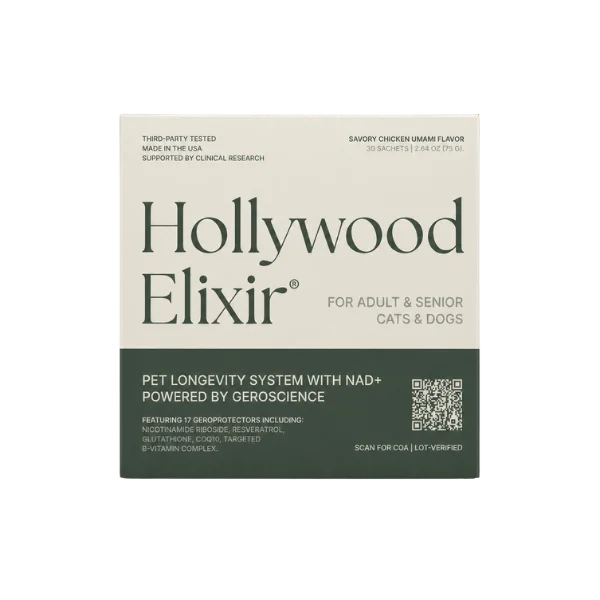
Hollywood Elixir™ is a non-prescription supplement designed to support normal aging function across multiple pathways.

When a dog starts aging in visible ways—slower recovery after walks, mild weight creep, or stiffness after naps—owners often look for something that targets the “why,” not just the symptoms. LOY-002 for dogs is one of the drug-based ideas being studied for that purpose, but it remains in clinical trials and is likely further from everyday availability than earlier candidates. That means most families need two plans: a realistic way to follow the science, and a practical way to support the dog’s daily life right now.

This page explains what the LOY-002 loyal dog aging drug concept is trying to do (a focused metabolic pathway approach), what trial participation can require (time, monitoring, and eligibility), and how to compare that category fairly to daily multi-pathway support. It also addresses the common emotional trap in “LOY-002 vs Hollywood Elixir” discussions: treating a future drug as the only serious option, and treating today’s routines as “not real.” Aging does not wait for timelines, so the most reliable approach is to build a stable baseline—diet, movement, and tracking—while staying curious about dog longevity pharmaceutical trials as they develop.

By La Petite Labs Editorial, ~15 min read

Featured Product:

  • LOY-002 for dogs is a metabolic aging drug concept in clinical trials, so it is not broadly available yet and should be viewed as a future possibility, not a current plan.
  • Its thesis is narrow: one pathway, one hypothesis, tested in dog longevity pharmaceutical trials for durability and safety.
  • “LOY-002 vs Hollywood Elixir” is best framed as drug-based targeting versus daily multi-pathway support; they are different categories with different expectations.
  • Trial participation can involve eligibility rules, travel, time, and monitoring; stress and logistics can matter as much as interest.
  • A bridge routine now focuses on reliable basics: measured diet, gentle consistent movement, and tracking change signals over 4–6 weeks.
  • Owners can prepare for a vet visit with videos, weekly weights, and questions about baseline labs and whether “aging” might actually be pain or disease.
  • Avoid common mistakes like starting multiple new products at once or ignoring new limping; consistency makes outcomes more reliable and safer.

What LOY-002 Targets in Metabolic Aging

LOY-002 is being developed as a loyal metabolic aging drug for dogs, aiming at a specific metabolic pathway tied to how aging changes energy use and body maintenance. The key idea is narrow by design: one pathway, one hypothesis, tested carefully in dog longevity pharmaceutical trials rather than marketed broadly. That focus is also why it is still a “wait and see” topic—promising concepts still have to prove real-world durability, safety, and meaningful outcomes in dogs over time.

At home, metabolic aging often looks like smaller changes that add up: slower rebound capacity after a long walk, less slack for missed meals, or a coat that seems less reliable in shine and shedding. Owners usually notice these shifts before any lab work is done. That’s why it helps to separate “what a drug might target later” from “what can be supported today” through routines like consistent feeding, weight checks, and age-appropriate activity.

Cellular energy graphic representing oxidative balance supported by loyal metabolic aging drug dogs.

Decision Snapshot: Trials Versus Daily Support Today

Decision snapshot: LOY-002 clinical trial dogs means the drug is not a standard option most families can access today, and it is likely further from availability than earlier candidates. Clinical trials are designed to answer specific questions—does it work, for which dogs, and at what cost in monitoring and side effects. That timeline matters because aging is not paused while a study runs, and owners still need a plan for the next 6–18 months, not just the next headline.

A practical way to decide is to hold two truths at once: it can be worth following a metabolic aging intervention in dogs, and it can also be worth building daily support now. The “today plan” is usually simple—stable calories, reliable protein quality, joint-friendly movement, and regular vet check-ins. The “future plan” is tracking trial updates and asking the clinic what participation would realistically require for that household.

DNA strand illustration representing antioxidant support pathways in LOY-002 vs Hollywood Elixir.

Drug Pathway Versus Supplement Pathways: a Fair Comparison

Comparisons work best when they respect categories. A drug like LOY-002 is designed to change a single biological lever with measurable pharmacologic effect, and it may require screening, follow-up visits, and lab monitoring. A supplement approach is not a “drug substitute”; it is typically multi-ingredient and aimed at supporting normal function across several pathways at once. That difference is why “LOY-002 vs Hollywood Elixir” is less about which is “better” and more about what each is built to do.

In a household routine, the drug category often means appointments, eligibility rules, and a strict schedule. The supplement category usually means daily administration and watching for change signals in the first 4–6 weeks, like appetite consistency, stool quality, or willingness to move. Owners can use the comparison to plan time and budget: one path is “trial logistics,” the other is “daily habit,” and many families will choose some of both.

Protein ribbon image emphasizing scientific formulation standards in LOY-002 loyal dog aging drug.

Why the Metabolic Aging Thesis Gets Attention

The metabolic aging thesis matters because metabolism is the background engine for many visible aging changes: body composition, energy, and how well tissues maintain themselves. A targeted approach like the LOY-002 loyal dog aging drug concept tries to test whether shifting one metabolic pathway can raise the ceiling on healthy function for a meaningful stretch of time. If that hypothesis holds, it could offer a new tool alongside the basics—nutrition, weight management, dental care, and pain control.

Owners often ask what “metabolic aging” looks like without a lab report. Common clues are a dog that needs longer warm-ups, seems less durable on back-to-back active days, or gains weight on the same food. These are not proof of a specific pathway problem, but they are strong reasons to tighten routines and get a vet baseline. A good baseline makes any future option—trial or not—easier to judge.

Close-up of a pug highlighting comfort and well-being supported by LOY-002 vs Hollywood Elixir.

Clinical Trial Reality: Access, Monitoring, and Time

Clinical trial reality is often the biggest surprise. Even if LOY-002 clinical trial dogs recruitment expands, trials usually have strict inclusion rules, geographic limits, and time commitments that can be hard on families and dogs. Costs can include travel, time off work, and sometimes additional vet visits or bloodwork outside the study’s coverage. It is also normal for timelines to shift as researchers refine dosing, safety monitoring, and outcome measures.

A helpful household question is: can this dog handle extra handling and clinic time without stress? Some seniors do fine; others lose appetite or sleep after appointments. If a dog already has anxiety, mobility limits, or multiple medications, trial participation may be less realistic. Planning for comfort—non-slip mats, car ramps, calm travel routines—can matter as much as the science when deciding whether to pursue a trial path.

Hollywood Elixir™ is amazing and makes my 13 y/o young again!

— Jessie

We go on runs. Lately he's been keeping up with no problem!

— Cami

“Aging doesn’t pause for trial timelines, so daily basics still matter.”

Daily Support While Waiting: What Owners Can See

While drug development moves forward, daily multi-pathway support is the “do something now” lane. Proof objects that owners can actually see include stable body weight, reliable stool quality, and a dog that keeps interest in walks and play. Nutrition is a central lever because aging dogs can have different needs and different ways of showing inadequacy, especially around protein quality and how it is assessed across life stages (Scarpim, 2026). That makes diet discussions with a veterinarian more than a calorie conversation.

In routine terms, this looks like choosing a consistent, complete diet, measuring meals, and avoiding frequent food swaps that make patterns hard to read. It also means building small, repeatable movement: short walks, gentle hill work, or controlled play that doesn’t trigger a two-day slump. Owners can treat these as the foundation that keeps options open—whether a future metabolic aging drug becomes available or not.

Elegant canine photo emphasizing gentle vitality supported through loyal metabolic aging drug dogs.

Cost Framework: Projected Drug Costs Versus Predictable Routines

Cost is part of medical realism, not a moral test. The projected cost for a drug in the LOY-002 category is often discussed as $100+ per month plus veterinary monitoring, and that monitoring may be essential to keep risk low. By contrast, a supplement plan is usually a predictable monthly expense with fewer clinic requirements, but it also comes with a different level of certainty and a different kind of goal: supporting normal function rather than delivering a targeted pharmacologic effect.

A useful household framework is to separate “fixed costs” from “surprise costs.” Fixed costs include food, parasite prevention, and a chosen support routine. Surprise costs include urgent visits, falls, dental flare-ups, or sudden appetite changes. When owners plan a budget with slack for surprises, they are less likely to stop and start interventions, which makes outcomes more reliable and makes it easier to interpret whether anything is helping.

Dog profile photo emphasizing steady vitality supported by loyal metabolic aging drug dogs.

Who Should Closely Follow LOY-002 Development

Not every dog is the right candidate to closely follow LOY-002 development. The best-fit households are those with a stable schedule, access to a participating clinic, and a dog whose health is otherwise steady enough to meet trial criteria. Owners who enjoy tracking data—weights, activity, appetite, and vet labs—often feel more comfortable evaluating a metabolic aging intervention in dogs because they can tell the difference between a normal week and a meaningful change.

It also helps when a dog tolerates handling well: nail trims, blood draws, car rides, and new environments. If a dog becomes nauseated from stress or refuses food after appointments, the trial process can create noise that hides the signal owners are hoping to see. In those cases, the most compassionate choice may be to focus on comfort-centered routines and let the science mature without forcing a poor fit.

Product overview visual highlighting formulation integrity aligned with LOY-002 vs Hollywood Elixir.

Who Should Start Daily Support Now

Many dogs benefit from starting daily support now, especially seniors showing early “less reliable” patterns: slower recovery after activity, mild weight creep, or stiffness that appears after rest. Waiting for a future loyal dog aging drug can unintentionally mean losing months of habit-building that protects durability. Daily support is not a claim of disease treatment; it is a practical plan to keep the basics consistent so the dog’s normal function has the best chance to stay stable.

The home version is simple: keep meals measured, keep treats predictable, and keep movement frequent but gentle. Add friction-reducing changes like rugs on slippery floors and a ramp for the car if jumping is declining. Owners often find that once routines are consistent, it becomes easier to notice true change signals—whether that’s a new limp, a new cough, or a new reluctance to climb stairs.

Common Objections and the Next Practical Step

Common objections deserve respectful answers because they come from love and urgency. “But drugs are stronger than supplements” can be true in the sense that drugs are designed for a specific measurable effect, but “stronger” is not the same as “right for this dog today.” “But LOY-002 targets root metabolic aging” reflects the thesis, yet trials exist because the root-cause story still needs proof in real dogs. “But I should wait for the real solution” can delay basics that are already known to matter.

Two other objections are practical. “But cost doesn’t matter for my dog’s health” can still lead to burnout if ongoing monitoring and travel are underestimated. “But clinical trials prove it works” is a misunderstanding: trials are how researchers test whether it works, not a guarantee. The next step for any objection is the same—define the goal (comfort, mobility, energy) and choose actions that can be maintained for months.

“The best comparison is category versus category, not hope versus hope.”

Branded lab coat reflecting precision and trust supporting LOY-002 vs Hollywood Elixir.

A Simple Bridge Routine You Can Actually Maintain

Format story: owners do best with a routine that is easy to repeat and easy to measure. A “bridge” routine while science develops usually has three parts: consistent diet, consistent movement, and consistent monitoring. Nutrition matters because older dogs can show different protein needs and different ways of revealing whether intake is adequate, and assessing protein quality across life stages is not always straightforward (Scarpim, 2026). That is why a veterinarian’s input can prevent well-meant changes from backfiring.

In a household, the bridge routine looks like a calendar, not a wish. Meals are measured, walks are scheduled, and a weekly “check day” is set for weight and notes. Owners who do this often feel less pulled around by online claims, including comparisons like LOY-002 vs Hollywood Elixir. The routine creates a stable baseline so any new choice—trial enrollment, diet change, or adding support—can be judged against something real.

Shop Now
Ingredient still life illustrating clean formulation principles for loyal metabolic aging drug dogs.

Turning Curiosity into a Safe, Repeatable Plan

Conversion bridge, education-first: it is reasonable to be curious about a loyal metabolic aging drug for dogs and also to choose supportive steps that do not depend on trial access. The bridge is not “drug versus supplement,” but “future possibility versus present care.” A dog’s day-to-day comfort is shaped by basics that are already available: weight control, dental health, pain recognition, and predictable activity that protects joints and confidence.

Owners can make this bridge concrete by writing down one goal and one constraint. A goal might be “keep stairs manageable” or “keep walks enjoyable.” A constraint might be “no extra clinic visits” or “budget must be predictable.” When those are clear, it becomes easier to evaluate LOY-002 clinical trial dogs updates without feeling that doing nothing is the only way to be “scientific.”

Shop Now
Owner showcasing product beside her pet, reflecting care through loyal metabolic aging drug dogs.

Case Vignette: Following Trials Without Overloading the Dog

Case vignette: A 9-year-old Labrador’s family reads about the LOY-002 loyal dog aging drug and feels hopeful, but the nearest trial site is several hours away. The dog is friendly at the clinic but gets diarrhea after stressful days, and the owner worries extra visits will make things less stable. The family decides to follow trial news monthly and focus on building a baseline that will make any future decision clearer.

At home, they pick one tracking day each week: weigh-in, a short video of the dog rising from a bed, and notes on appetite and stool. They also add rugs on the slick hallway and switch to shorter, more frequent walks to protect rebound capacity. After six weeks, the owner can describe changes with specifics instead of impressions, which makes the next vet visit more productive and less emotional.

Shop Now

Case Vignette: Starting Support While Waiting

Case vignette: A 12-year-old small mixed-breed dog is not a good match for trial travel, but the owner still wants to act while waiting for drug-based options. The owner stops chasing new “longevity hacks” weekly and instead commits to a simple daily plan that supports normal function across multiple areas. The dog’s goal is not to become younger; it is to stay comfortable and keep routines reliable.

The household plan includes measured meals, a consistent bedtime potty schedule, and two short walks with a slow warm-up. The owner also keeps nails trimmed to improve traction and uses a step for the couch to reduce jumping. After a month, the dog’s mornings look less variable, and the owner has clearer change signals to share with the veterinarian if something shifts.

Owner Checklist and What to Track for 4–6 Weeks

Owner checklist (topic-specific) can keep the focus on what is observable, not just what is exciting online. Check: (1) does the dog hesitate before jumping into the car, (2) does appetite change after active days, (3) is there new panting at rest, (4) does the dog take longer to “get going” after naps, and (5) is weight creeping up despite the same measuring cup. These are not diagnoses, but they are actionable signals.

What to track over time (first 4–6 weeks): weekly weight, a 20-second “stand up and walk” video, daily stool notes, willingness to finish walks, and how long recovery takes after a busier day. Add one simple score for “morning stiffness” from 0–3. Tracking makes it easier to judge whether a new plan is helping, and it keeps LOY-002 vs Hollywood Elixir conversations grounded in the dog’s real life.

Side-by-side supplement comparison designed around LOY-002 clinical trial dogs expectations.

Vet Visit Prep: Questions That Clarify Options

Vet visit prep is where curiosity becomes a safe plan. Bring a short summary of what changed, when it started, and what makes it better or worse, plus any videos. Useful questions include: “Is my dog healthy enough to consider a longevity trial if one opens nearby?” “What baseline labs would you want before any metabolic-aging intervention?” “Could pain, thyroid disease, or dental disease be driving these changes instead of aging alone?” These questions help the clinic separate normal aging from treatable problems.

Also ask the practical trial questions early: how many visits, how long each visit, and what happens if the dog needs a new medication mid-study. If the owner is comparing a loyal metabolic aging drug for dogs with daily support options, the veterinarian can help define realistic goals and safety boundaries. That conversation often reduces anxiety because it replaces internet timelines with a plan tailored to the dog in front of them.

Shop Now
Product reveal shot showing premium feel consistent with LOY-002 clinical trial dogs.

What Supplements Cannot Replace and What Not to Do

What supplements cannot replace is just as important as what they can support. They cannot diagnose why a dog is slowing down, they cannot substitute for pain control when arthritis is present, and they cannot replace dental treatment, prescription diets, or disease-specific medications. A unique misconception in this space is assuming that “metabolic aging” explains every senior change; often, the real driver is something fixable like pain, infection, or endocrine disease that needs veterinary care.

Proof stack (owner-level) should be boring and reliable: a stable weight trend, consistent appetite, normal hydration, predictable stools, and a dog that keeps interest in family routines. What not to do: (1) start multiple new products at once, (2) change food and activity in the same week, (3) ignore new limping or panting because “it’s just aging,” and (4) stop prescribed meds to “keep the trial option open.” These mistakes make outcomes less reliable and can raise risk.

Shop Now

Evidence Notes and a Calm Next Step

Evidence notes: LOY-002 remains a developing idea within dog-only longevity research, and the most responsible stance is curiosity paired with patience. Owners can still act decisively by building a baseline and choosing routines that are easy to maintain. Nutrition is a high-impact lever, and it is also easy to oversimplify; protein adequacy and quality assessment can vary by life stage, which is one reason veterinary guidance matters when adjusting senior diets (Scarpim, 2026).

Final next step: pick one tracking method and one routine change, then reassess in 4–6 weeks. If change signals appear—new cough, fainting, sudden weight loss, refusal to eat, or worsening mobility—call the veterinarian promptly rather than attributing it to aging. Following LOY-002 clinical trial dogs updates can be part of the plan, but the dog’s comfort and daily function deserve attention today.

“Tracking turns worry into information a veterinarian can use.”

Educational content only. This material is not a substitute for veterinary advice. Always consult your veterinarian about your dog’s specific needs. These statements have not been evaluated by the Food and Drug Administration. Products mentioned are not intended to diagnose, treat, cure, or prevent any disease.

Glossary

  • Metabolic aging - Age-related changes in how the body uses energy and maintains tissues.
  • Clinical trial - A controlled study that tests safety and outcomes in real dogs under defined rules.
  • Eligibility criteria - The health, age, and other requirements a dog must meet to enroll in a study.
  • Baseline - Starting measurements (exam, labs, videos, weight) used to compare future changes.
  • Monitoring - Follow-up checks (often including lab work) used to watch for side effects or changes.
  • Single-pathway drug - A medication designed to act mainly on one biological target.
  • Multi-pathway support - A routine or supplement approach intended to support normal function in several areas at once.
  • Rebound capacity - How quickly a dog returns to normal after activity, stress, or a busy day.
  • Change signals - Observable shifts at home (appetite, mobility, stool, recovery) that suggest something is different.

Related Reading

References

Scarpim. Challenges and Methodologies to Assess Protein Requirement and Quality Across Different Life Stages in Dogs: A Review. 2026. https://www.mdpi.com/2076-2615/16/2/228

FAQ

What is loy-002, in plain terms for dog owners?

loy-002 is being studied as a drug that targets one metabolic aging pathway in dogs. It is part of dog longevity pharmaceutical trials, which means it is still being tested for real-world outcomes and safety.

For a household, the most important point is access: a clinical-trial drug is not the same as a product a veterinarian can simply prescribe today. Following updates can be worthwhile, but daily care still needs a separate plan.

Why are people calling it a loyal dog aging drug?

That phrasing usually refers to the company’s goal: developing a drug specifically for aging-related biology in dogs, rather than repurposing a medication meant for another condition. The “loyal dog aging drug” label is more of a public shorthand than a medical category.

Owners should treat the label as a sign of intent, not a guarantee of results. The meaningful questions are still the trial questions: which dogs qualify, what outcomes are measured, and what monitoring is required.

How does a metabolic aging drug differ from a supplement?

A metabolic aging drug is designed to create a specific pharmacologic effect on a defined pathway, with dosing and safety evaluated in controlled studies. A supplement approach is typically multi-ingredient and aimed at supporting normal function rather than delivering a targeted drug effect.

This is why comparisons like loy-002 vs Hollywood Elixir can feel confusing: they are different categories. Many families choose a “bridge” routine now while watching drug research develop.

Is loy-002 available from my veterinarian right now?

In general, a drug in clinical trials is not broadly available for routine prescribing. Access is usually limited to study sites and enrolled dogs, with specific rules about eligibility and follow-up.

A veterinarian can help a family understand whether any trials are recruiting nearby and whether the dog’s health and temperament make participation realistic. For most households, the practical plan is still daily care plus monitoring.

What kinds of dogs might be considered for loy-002 trials?

Trials often look for dogs that meet age, weight, and health criteria so results are easier to interpret. Dogs may need baseline exams and lab work, and some ongoing monitoring is common in drug studies.

Temperament matters too. A dog that becomes very stressed with travel or blood draws may have a harder time in a trial setting, and stress can also make day-to-day signs like appetite and stool quality less reliable.

What side effects should owners expect with a trial drug?

Specific side effects depend on the drug and the study design, and they should be explained in the trial’s consent documents. In general, trial drugs can have side effects that require monitoring, which is one reason follow-up visits and lab checks are often part of participation.

Owners should not assume “anti-aging” means low-risk. If a dog in a study shows vomiting, diarrhea, appetite loss, weakness, or behavior changes, the study team and the primary veterinarian should be contacted promptly.

Can loy-002 be used with my dog’s other medications?

Medication compatibility is a trial-specific question. Studies often restrict certain drugs so results are clearer and safety risks are lower, especially if a medication could affect metabolism or lab values.

Before pursuing enrollment, owners should list every medication, supplement, and preventive the dog receives, including as-needed pain meds. The safest approach is to let the study team and the dog’s veterinarian decide what combinations are acceptable.

Does loy-002 replace diet, exercise, or weight management?

No. Even if a metabolic aging intervention in dogs proves useful, it would still sit on top of the basics. Weight management, appropriate activity, dental care, and pain recognition shape daily comfort and mobility in ways no single pathway can fully replace.

Owners get the most reliable feedback when routines are consistent. A stable diet and predictable movement also make it easier to detect true change signals, which matters whether a dog is in a trial or simply aging at home.

How long would it take to notice changes from a trial drug?

Trial outcomes are often measured over months, not days, because aging-related changes are slow and variable. Some studies look at activity patterns, body composition, lab markers, or time-to-event outcomes, which are not always obvious week to week.

At home, it helps to track a few concrete markers—weekly weight, short videos of rising and walking, and recovery after activity. That way, owners are not relying on memory when judging whether anything looks more stable.

Is it true that clinical trials prove a drug works?

A common misunderstanding is that being “in trials” means effectiveness is already confirmed. Clinical trials are the process used to test whether a drug works and whether the benefits outweigh risks for specific dogs.

That is why timelines can feel slow: researchers need enough dogs, enough time, and careful monitoring to separate real effects from normal aging variation. Owners can follow the science while still acting on proven basics today.

What does “metabolic aging” look like in everyday life?

In a home setting, metabolic aging is usually noticed as small shifts: weight gain on the same food, less interest in longer walks, or slower recovery after a busy day. These signs are not specific to one pathway, but they are meaningful signals that the dog’s slack is shrinking.

Because these signs can also come from pain, thyroid disease, dental disease, or heart issues, a veterinary check is important. A baseline exam and labs help prevent owners from labeling treatable problems as “just aging.”

How should owners track change signals while waiting for trials?

Pick a short list that is easy to repeat: weekly weight, daily stool notes, and a 20-second video of the dog standing and walking on the same floor. Add one note about recovery after activity—does the dog bounce back the next morning or need extra rest?

Track for 4–6 weeks before changing multiple things. Consistency makes patterns more reliable and helps a veterinarian interpret whether a new limp, appetite change, or fatigue is a true shift or just a noisy week.

What should owners avoid doing when following loy-002 news?

What not to do: start several new supplements at once, change food and exercise in the same week, or stop prescribed medications to “keep options open.” Those choices can make a dog feel worse and make outcomes harder to interpret.

Also avoid assuming every senior change is metabolic aging. New coughing, fainting, sudden weight loss, or worsening mobility should trigger a veterinary call, not a wait-and-see approach based on online longevity discussions.

How is loy-002 different from the so-called Hollywood Elixir idea?

loy-002 is a drug-in-development concept aimed at one metabolic pathway and evaluated through controlled studies. The “Hollywood Elixir” idea usually refers to a daily, non-prescription support approach that is meant to fit into routine life without trial logistics.

This is why “loy-002 vs Hollywood Elixir” is best treated as a planning question: future targeted therapy versus present-day supportive habits. A veterinarian can help align expectations with the dog’s health status and the family’s capacity.

Can Hollywood Elixir™ be used as a bridge routine?

Some owners choose a supplement as part of a bridge routine while watching loy-002 clinical trial dogs updates. If considering Hollywood Elixir™, the safest framing is that it supports normal aging function and should be discussed with a veterinarian, especially for dogs on medications or with chronic disease.

To keep results interpretable, add only one new item at a time and track change signals for 4–6 weeks. If appetite, stool, or energy becomes less stable, stop and check in with the clinic.

What age should a dog be before considering longevity support?

There is no single age that fits every dog because size, breed, and health history change the timeline. Many owners start paying closer attention when the dog’s recovery after activity becomes less reliable or when weight management becomes harder on the same diet.

The best first step is a senior-focused veterinary visit to establish baselines. Once baselines are set, owners can choose routines—diet consistency, gentle movement, and tracking—that match the dog’s current needs rather than a number on a calendar.

Do breed and size affect metabolic aging plans?

Yes. Larger dogs often show age-related mobility and endurance changes earlier, while smaller dogs may stay active longer but still develop dental disease or heart issues that affect energy. These differences can change what “aging support” looks like in daily life.

For trial interest, size and breed can also affect eligibility and outcome interpretation. A veterinarian can help owners focus on the dog’s specific change signals—stairs, jumping, recovery—rather than assuming one longevity plan fits all.

Is loy-002 being studied for cats too?

LOY-002 is discussed as a dog-focused research effort, and dog longevity pharmaceutical trials do not automatically translate to cats. Cats have different metabolism, different common aging diseases, and different safety considerations.

For multi-pet households, it helps to keep plans species-specific. A veterinarian can recommend cat-appropriate senior monitoring and support rather than assuming a dog-focused metabolic aging intervention applies across species.

What should I bring to the vet to discuss trials?

Bring a short timeline of changes (when they started, what worsens them), plus videos of rising, walking, and stairs if relevant. Include a full list of medications, preventives, and supplements, and note any stress reactions to car rides or blood draws.

Good questions include: what baseline labs are needed, whether pain could be driving “aging” signs, and what trial participation would require week to week. This preparation makes a loy-002 conversation practical instead of hypothetical.

When should an owner call the vet instead of waiting?

Call promptly for sudden appetite loss, repeated vomiting or diarrhea, fainting, new coughing at rest, collapse, or rapid worsening of mobility. These are not “normal aging” signals and should not be delayed while waiting for trial news.

Also call if a dog seems painful—hiding, snapping when touched, reluctance to stand, or trembling. Treatable problems can look like metabolic aging from a distance, and early care often protects comfort and durability.

How can owners judge quality in longevity supplements?

Quality signals include clear labeling, consistent dosing instructions, and a company that can answer questions about sourcing and testing. Owners should also look for a plan that fits the dog’s routine, because inconsistent use makes outcomes less reliable.

Most importantly, supplements should not replace veterinary diagnosis or prescribed care. If a dog has chronic disease or takes multiple medications, the veterinarian should review any supplement plan to reduce interaction risk and confusion about what is causing change.

5K+ Happy Pet Parents

Excellent 4.8

LOY-002 for Dogs | Why Thousands of Pup Parents Trust Hollywood Elixir™

"He seems more happy overall. I've also noticed he has more energy which makes our walks and playtime so much more fun."

Olga & Jordan

"He's got way more energy now! We go on runs pretty often; he use to get tired halfway through, but lately, he's been keeping up without any problem."

Cami & Clifford

"I want her to live forever. She hasn't had an ear infection since!"

Madison & Azula

"It helps with her calmness, her immune system. I really like the clean ingredients. Highly recommend La Petite Labs!"

Maple & Cassidy

"He seems more happy overall. I've also noticed he has more energy which makes our walks and playtime so much more fun."

Olga & Jordan

"He's got way more energy now! We go on runs pretty often; he use to get tired halfway through, but lately, he's been keeping up without any problem."

Cami & Clifford

"I want her to live forever. She hasn't had an ear infection since!"

Madison & Azula

"It helps with her calmness, her immune system. I really like the clean ingredients. Highly recommend La Petite Labs!"

Maple & Cassidy

"He seems more happy overall. I've also noticed he has more energy which makes our walks and playtime so much more fun."

Olga & Jordan

"He's got way more energy now! We go on runs pretty often; he use to get tired halfway through, but lately, he's been keeping up without any problem."

Cami & Clifford

"I want her to live forever. She hasn't had an ear infection since!"

Madison & Azula

"It helps with her calmness, her immune system. I really like the clean ingredients. Highly recommend La Petite Labs!"

Maple & Cassidy

"He seems more happy overall. I've also noticed he has more energy which makes our walks and playtime so much more fun."

Olga & Jordan

"He's got way more energy now! We go on runs pretty often; he use to get tired halfway through, but lately, he's been keeping up without any problem."

Cami & Clifford

"I want her to live forever. She hasn't had an ear infection since!"

Madison & Azula

"It helps with her calmness, her immune system. I really like the clean ingredients. Highly recommend La Petite Labs!"

Maple & Cassidy

SHOP NOW