Neuroprotection for Dogs

Understand Brain-Aging Mechanisms and the Steps That Can Slow Cognitive Loss

Essential Summary

Why is neuroprotection for dogs important?

Neuroprotection for dogs is about supporting the conditions the brain relies on: steady energy, resilient cells, and balanced recovery over time. Diet and age-appropriate nutrition can matter, especially for seniors. The most useful approach is consistent, system-level support paired with veterinary guidance when symptoms are new, sudden, or complex.

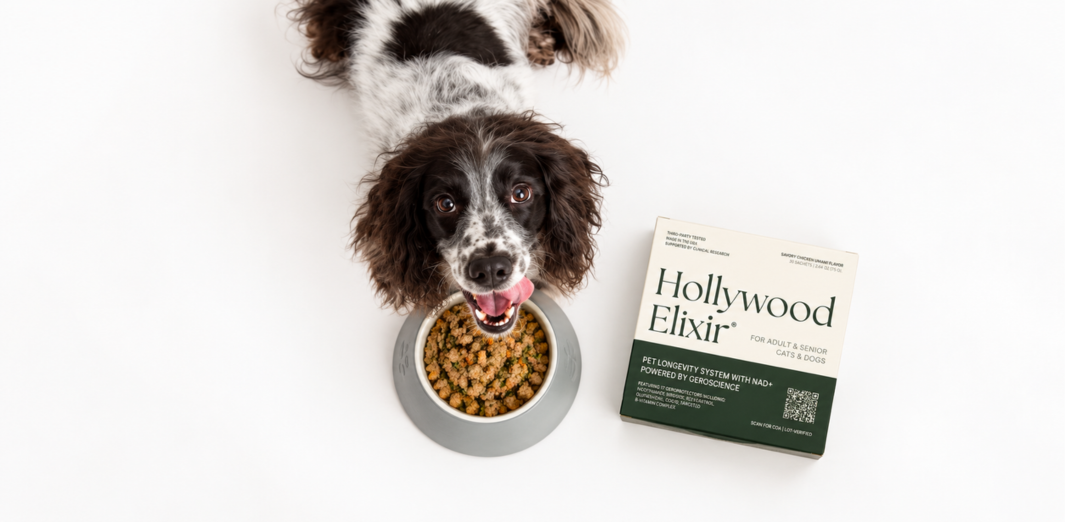
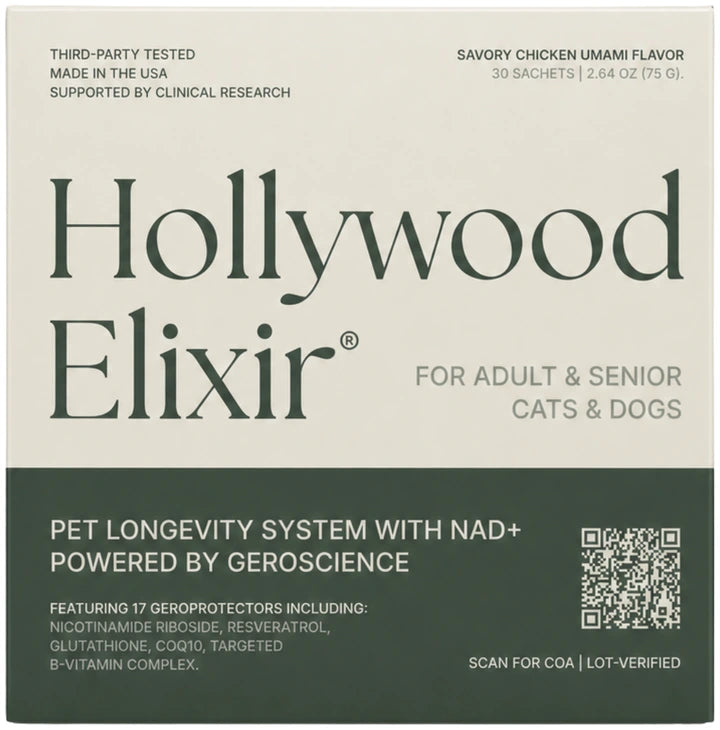
Hollywood Elixir™ is designed as system-level support for graceful aging—helping reinforce the broader metabolic network that underpins brain comfort, daily energy, and recovery, rather than chasing a single “brain” ingredient.

Neuroprotection for dogs refers to preserving nervous-system function by defending core cellular processes that keep neurons working. Mechanistically, it centers on three linked pillars: neuronal energy production (ATP supply and metabolic flexibility), membrane integrity (lipid composition and resistance to peroxidation), and control of neuroinflammation (glial signaling that can shift from adaptive repair to chronic activation). These processes interact: energy shortfalls can impair ion gradients and neurotransmission; oxidized membranes can disrupt receptor function and signal transduction; inflammatory mediators can amplify oxidative chemistry and alter synaptic signaling.

What evidence can and can’t show in dogs matters. In canine research, “neuroprotection” is rarely measured directly at the level of neuronal survival. Instead, studies often infer protection from functional outcomes (learning tasks, attention, sleep-wake patterns, mobility-linked activity) alongside biomarkers of oxidative or inflammatory status. That means a mechanism-first definition is useful: it clarifies what a given intervention is plausibly influencing, while keeping expectations aligned with what canine trials can realistically measure over weeks to months rather than decades.

By La Petite Labs Editorial, ~15 min read

Featured Product:

  • Neuroprotection for dogs is best understood as protecting the brain’s day-to-day operating conditions, not promising personality changes.
  • Aging shifts nutritional needs, which is why senior strategies often emphasize consistency and tailored support over time.
  • Oxidative wear is a common theme in brain aging discussions, making recovery-oriented routines and antioxidant-aware nutrition relevant.
  • Seizure-prone dogs require a veterinarian-led plan; supportive nutrition may be discussed, but strong claims should be treated cautiously.
  • The best neuroprotection supplements for dogs tend to be system-level, transparent, and easy to use consistently.
  • “Natural” should still mean disciplined: clear labeling, sensible guidance, and careful monitoring for individual sensitivity.
  • A science-minded owner chooses a product when it supports the network behind daily function—especially when real life makes perfect routines hard.

Mechanisms of Neuroprotection: Energy, Oxidative Balance, and Synapses

At the cellular level, neuroprotection is often a story of mitochondria, redox control, and how well synapses adapt under stress. Neurons are unusually energy-dependent; their mitochondria must sustain ATP production while limiting electron “leak” that generates reactive species. When mitochondrial efficiency drops, cells may compensate by shifting substrate use or increasing turnover of damaged organelles, but chronic strain can narrow the energy margin needed for neurotransmission.

Oxidative balance is the second axis: reactive species are not purely harmful—they also act as signals—but excess oxidation can damage proteins, nucleic acids, and especially membrane lipids. Lipid peroxidation can reduce membrane integrity, altering receptor dynamics and ion channel behavior that synapses rely on.

Synaptic plasticity—the ability to strengthen, weaken, and remodel synaptic connections—depends on both adequate energy and controlled redox signaling. Inflammatory mediators can further modulate plasticity, sometimes impairing learning-related pathways.

A final constraint is the blood-brain barrier, which regulates what reaches neural tissue and how peripheral inflammation can translate into central effects; barrier dysfunction can increase exposure to circulating cytokines and oxidative byproducts, amplifying local stress responses.

Visualization of mitochondria illustrating cellular support pathways for best neuroprotection for dogs.

Evidence in Dogs: What We Know, What’s Extrapolated, What’s Unknown

The strongest claims come from canine-specific evidence, but that evidence is narrower than many people assume. In dogs, studies commonly use endpoints such as performance on cognitive or problem-solving tasks, owner-reported behavior changes, and objective activity measures (e.g., movement patterns or rest-activity cycles). These endpoints are meaningful, yet they are indirect: improved behavior or activity can reflect changes in arousal, sleep quality, pain, or mobility as much as changes in neuronal resilience.

Mechanistic biomarkers—oxidative status markers, inflammatory mediators, or metabolic readouts—can support plausibility, but they do not prove that neurons were “protected” in the strict histologic sense. Imaging and cerebrospinal fluid measures are less common in routine canine trials, and sample sizes are often modest, which limits statistical power and generalizability.

A large portion of mechanistic understanding is extrapolated from rodent and human neuroscience, especially for pathways involving mitochondrial biogenesis, redox signaling, and glial activation. Extrapolation requires caution because species differences in metabolism, brain aging trajectories, dosing, and blood-brain barrier transport can change both effect size and safety profile.

Key unknowns include which subpopulations of dogs respond best, how durable effects are after stopping an intervention, and whether short-term endpoint improvements track with long-term neurodegenerative risk reduction—questions that require longer, well-controlled canine studies.

DNA structure visual linked to antioxidant protection mechanisms in best neuroprotection for dogs.

Oxidative Wear, Recovery, and the Case for Consistent Support

Oxidative stress is one of the quiet pressures on the aging brain, and it’s part of why antioxidant-rich dietary patterns are often discussed in natural neuroprotection for dogs (Bermingham EN, 2024). This doesn’t mean antioxidants are a magic shield; it means the brain’s high energy demand makes it sensitive to cumulative wear. In working and service dogs, nutrition and dietary antioxidants are also discussed as a way to support neurological resilience under load (Wakshlag J, 2014). For owners, the takeaway is simple: choose support that respects the whole system—energy, recovery, and cellular protection—rather than treating “brain health” as a single checkbox.

Bioactive protein structure illustrating synergy in wellness supported by neuroprotection for dogs.

Seizures and Supplements: Where Veterinary Partnership Matters Most

Seizures are a separate, high-stakes conversation. Some dietary modifications may influence seizure frequency or severity in dogs with idiopathic epilepsy, but the research landscape is still evolving and debated (Verdoodt F, 2022). If your dog has seizures, neuroprotection supplements for dogs should be viewed as supportive—never as a substitute for veterinary diagnosis, medication, or monitoring. The most responsible approach is to ask your veterinarian what “support” means for your dog’s specific pattern, triggers, and current drugs, then choose products that are transparent about ingredients and quality.

Dog portrait symbolizing calm and wellness supported by best neuroprotection for dogs.

Aging Nutrition: When “Good Food” Still Needs Reinforcement

Aging changes what “enough” looks like. Older dogs can have different nutritional needs than younger dogs, which is one reason tailored senior feeding strategies are often recommended (Bermingham EN, 2024). That matters for neuroprotection for dogs because the brain is not isolated; it depends on circulation, mitochondrial energy, and the availability of building blocks for neurotransmitters and membranes. Even when a diet is well-formulated, real life intervenes—picky eating, dental discomfort, GI sensitivity, or simply smaller meals. A system-level neuroprotection supplement for dogs can help fill the consistency gap without pretending to replace food.

Hollywood Elixir™ is amazing and makes my 13 y/o young again!

— Jessie

We go on runs. Lately he's been keeping up with no problem!

— Cami

“The most credible brain support doesn’t promise a new dog. It protects the one you have.”

Safety as Brain Care: Monitoring Exposures and New Treatments

Safety is part of brain support, too. Owners sometimes focus on what to add, but what a dog is exposed to can matter just as much. There are published case concerns about neurological toxicity associated with certain medications in individual dogs, underscoring the importance of monitoring and reporting unusual neurologic signs after new treatments (Gaens D, 2019). Imaging agents have also been investigated for potential neurotoxic effects in canine contexts, raising similar caution around exposures and individual susceptibility (Fitzgerald AH, 2021). If your dog seems “off” after any new drug or procedure, treat it as time-sensitive and call your veterinarian.

Weimaraner portrait reflecting poise and wellness support tied to neuroprotection for dogs.

What “Best” Really Means When Choosing a Daily Supplement

What does “best neuroprotection supplement for dogs” actually mean in practice? It usually means three things: first, the formula supports more than one lever (energy, oxidative balance, and recovery) rather than a single headline ingredient. Second, the product is consistent—clear labeling, stable sourcing, and sensible dosing instructions. Third, it fits your dog’s life: easy to give, tolerated, and compatible with the rest of the routine. The best neuroprotection supplements for dogs are the ones you can use steadily, because the nervous system responds to patterns, not one-off bursts.

Dog looking ahead, capturing presence and calm energy supported by best neuroprotection supplements for dogs.

Natural Support: Routines, Enrichment, and Calm Consistency

Natural neuroprotection for dogs often starts with the unglamorous basics: predictable sleep, gentle daily movement, and enrichment that feels achievable. Scent games, short training sessions, and low-stress novelty can keep attention and confidence engaged without overstimulation. Nutrition remains a central pillar, and antioxidant-oriented strategies are frequently discussed as part of supporting cognitive function in aging dogs. The point is not to keep a senior dog “young,” but to keep their days coherent—less confusion, steadier routines, and more comfort in familiar spaces.

Product overview visual highlighting formulation integrity aligned with best neuroprotection supplement for dogs.

How to Read Labels Without Falling for Overpromises

If you’re comparing neuroprotection products for dogs, look for signals of seriousness rather than hype. Avoid products that imply they can treat, cure, or prevent neurologic disease. Prefer brands that talk in terms of support, resilience, and aging, and that encourage veterinary partnership—especially for dogs with seizures, cognitive changes, or sudden behavior shifts. Because diet and specific nutrients are still being actively studied in epilepsy management, it’s wise to treat strong claims as a red flag (Verdoodt F, 2022). A good product respects uncertainty while still offering a coherent rationale for daily use.

What to Track: Subtle Markers That Matter Week to Week

Owners often ask when they’ll “see results.” With neuroprotection for dogs, the most realistic markers are subtle: steadier sleep-wake rhythms, more consistent engagement, smoother transitions between rest and activity, and fewer “bad days” clustered together. These are not dramatic transformations; they’re signs that the dog’s baseline is being supported. In working dogs, nutrition is framed as foundational to overall performance and resilience, which is a useful lens even for family pets (Wakshlag J, 2014). Track changes weekly, not hourly, and keep notes you can share with your veterinarian.

“Best usually means consistent, tolerable, and designed for the whole system.”

Lab coat visual symbolizing disciplined formulation supporting neuroprotection supplements for dogs.

Medication Compatibility and the Value of a Single, Clear Plan

A thoughtful neuroprotection supplement for dogs should fit alongside medical care, not compete with it. If your dog takes prescription medications—especially for seizures, anxiety, pain, or endocrine disease—bring the full supplement label to your vet. Dietary strategies may play a role in epilepsy management, but the field includes open questions and individual variability (Verdoodt F, 2022). The safest stance is collaborative: you’re building a support plan that your veterinarian can help you adjust over time, based on response, labs when relevant, and any new symptoms.

Shop Now
Supplement box with ingredient spread showing care behind neuroprotection products for dogs.

Avoiding the Stack: Why More Products Can Mean More Noise

There’s also a psychological trap in “best neuroprotection for dogs” shopping: the urge to keep adding. More is not automatically better, and stacking multiple neuroprotection supplements for dogs can increase the chance of GI upset or ingredient overlap. A cleaner approach is to choose one system-level product, give it consistently, and evaluate. If you change food, add a new treat, and start two supplements at once, you won’t know what helped—or what caused a problem. Consistency is a form of care, especially for older dogs who thrive on predictability.

Shop Now
Pet parent holding supplement, symbolizing trust and routine via neuroprotection for dogs.

Middle Age Matters: Supporting Resilience Before It Feels Urgent

Neuroprotection for dogs is not only about seniors. Middle age is often when small vulnerabilities show up: slower recovery after long play, more sensitivity to loud environments, or a shorter attention span during training. Supporting the broader metabolic network earlier can be a way of investing in durability rather than reacting later. Nutritional support is frequently framed as essential to maintaining performance and overall health in demanding roles, which translates well to active family dogs, too (Wakshlag J, 2014). The aim is steadiness—energy that doesn’t spike and crash, and recovery that feels reliable.

Shop Now

Why System Support Still Helps When Diet Quality Is High

If your dog is already on a high-quality diet, why consider neuroprotection products for dogs at all? Because diet quality is necessary, but not always sufficient for the realities of aging. Appetite changes, absorption shifts, and the cumulative burden of oxidative stress are part of why tailored dietary guidelines are discussed for older dogs. A system-level supplement can be a way to support the network that turns food into usable energy and repair, especially when life is messy—travel, stress, picky phases, or post-illness recovery.

Natural Isn’t Automatic: Introducing New Inputs with Discipline

A note on “natural.” Natural neuroprotection for dogs should still be held to adult standards: clear dosing guidance, ingredient transparency, and a willingness to talk about who should not use it. “Natural” does not automatically mean risk-free, and individual dogs can react unpredictably to new inputs. Case reports of neurologic adverse events tied to specific exposures are a reminder that vigilance matters, even when something is widely used (Gaens D, 2019). Introduce any new supplement slowly, watch behavior and stool, and pause if anything feels wrong.

Comparison layout showing ingredient quality differences relevant to natural neuroprotection for dogs.

Complex Histories: Choosing Gentle Support with Full Context

For dogs with complex medical histories, “brain support” should be framed as risk reduction and comfort. If your dog has had anesthesia recently, advanced imaging, or multiple medications, ask your veterinarian what monitoring makes sense. Investigations into neurotoxic concerns in canine contexts highlight why individualized judgment matters more than internet certainty (Fitzgerald AH, 2021). The best neuroprotection supplements for dogs in these cases are the ones that are gentle, consistent, and chosen with the full medical picture in view—not added impulsively after a scary episode.

Shop Now
Packaging reveal image highlighting brand care aligned with neuroprotection supplements for dogs.

A Decision Framework for Science-minded Owners Who Want Clarity

A practical decision framework can keep you honest. Ask: What is my goal—calmer evenings, steadier engagement, better recovery after activity? What is my dog’s baseline, and what would count as meaningful change? What else changed this month—food, schedule, medications? Then choose one neuroprotection supplement for dogs that is designed as system support and commit to a consistent trial window. Nutrition is repeatedly highlighted as central to overall health and performance, which is a useful anchor when evaluating claims.

Shop Now

The Long View: Building More Good Days Without Overpromising

Ultimately, neuroprotection for dogs is an act of stewardship: keeping the internal environment steady enough that the brain can do its quiet work. The science points to the importance of diet, oxidative balance, and age-appropriate nutritional strategies, particularly as dogs grow older. The owner’s role is to choose support that is realistic—something you can give daily, monitor thoughtfully, and discuss with your veterinarian. The best neuroprotection for dogs is rarely dramatic; it’s the slow accumulation of good days.

“Aging support is rarely dramatic. It’s the slow accumulation of steadier days.”

Educational content only. This material is not a substitute for veterinary advice. Always consult your veterinarian about your dog’s specific needs. These statements have not been evaluated by the Food and Drug Administration. Products mentioned are not intended to diagnose, treat, cure, or prevent any disease.

Glossary

  • Neuroprotection for Dogs: A supportive approach aimed at maintaining healthy nervous system function over time, especially through aging and stress.
  • Cognitive Function: Everyday mental abilities such as attention, learning, memory, and adaptability in a dog’s routine.
  • Oxidative Stress: An imbalance between reactive molecules and the body’s protective systems, often discussed in relation to aging tissues.
  • Antioxidants: Nutrients or compounds that help counter oxidative stress as part of a broader protective network.
  • Idiopathic Epilepsy: Seizure disorder with no identified structural cause; management may include medication and veterinarian-guided lifestyle changes.
  • Neurotoxicity: Harmful effects on the nervous system from certain exposures, which can include drugs, toxins, or other agents.
  • Enrichment: Activities that engage a dog’s senses and problem-solving in a low-stress way, supporting emotional balance and engagement.
  • System-Level Support: A product or plan designed to support multiple aspects of aging and resilience rather than targeting a single nutrient.
  • Baseline: Your dog’s typical behavior and daily function when stable; used as the reference point for noticing meaningful changes.

Related Reading

References

Bermingham EN. Nutritional needs and health outcomes of ageing cats and dogs: is it time for updated nutrient guidelines?. PubMed Central. 2024. https://pmc.ncbi.nlm.nih.gov/articles/PMC11188961/

Verdoodt F. The role of nutrition in canine idiopathic epilepsy management: Fact or fiction?. PubMed. 2022. https://pubmed.ncbi.nlm.nih.gov/36341888/

Wakshlag J. Nutrition for working and service dogs.. PubMed. 2014. https://pubmed.ncbi.nlm.nih.gov/24951343/

Gaens D. Suspected neurological toxicity after oral application of fluralaner (Bravecto®) in a Kooikerhondje dog.. PubMed. 2019. https://pubmed.ncbi.nlm.nih.gov/31391054/

Fitzgerald AH. Investigation of suspected gadolinium neurotoxicity in a dog.. PubMed. 2021. https://pubmed.ncbi.nlm.nih.gov/34259371/

Gomes LM. Neurotoxicity of subarachnoid preservative-free S(+)-ketamine in dogs.. PubMed. 2011. https://pubmed.ncbi.nlm.nih.gov/21267045/

Tauro A. Metronidazole-induced neurotoxicity in 26 dogs.. PubMed. 2018. https://pubmed.ncbi.nlm.nih.gov/30478843/

See AM. Toxicity in three dogs from accidental oral administration of a topical endectocide containing moxidectin and imidacloprid.. PubMed. 2009. https://pubmed.ncbi.nlm.nih.gov/19673850/

Podell. Antiepileptic Drug Therapy and Monitoring. 2013. https://www.sciencedirect.com/science/article/pii/S1938973613000603

Di Cesare. Gabapentin: Clinical Use and Pharmacokinetics in Dogs, Cats, and Horses. 2023. https://www.mdpi.com/2076-2615/13/12/2045/html

FAQ

What does neuroprotection for dogs mean in everyday terms?

In everyday terms, neuroprotection for dogs means supporting the conditions the nervous system relies on: steady energy, balanced recovery, and fewer avoidable stressors. It’s less about “boosting intelligence” and more about keeping daily function comfortable and consistent.

Many owners focus on routines plus system-level nutrition, then track subtle changes over weeks. For that kind of steady support, Hollywood Elixir™ fits naturally into a daily plan.

Why do owners look for brain support as dogs age?

As dogs age, small shifts in sleep, attention, and confidence can appear before anything feels “medical.” Nutritional needs also change with age, which is one reason senior feeding strategies are often discussed in relation to cognitive comfort.

Owners often choose support that is gentle, consistent, and compatible with veterinary care. A system-level option many families consider is Hollywood Elixir™.

How can nutrition relate to neuroprotection for dogs?

Nutrition relates to neuroprotection for dogs because the brain depends on reliable fuel and protection from cumulative oxidative wear. Dietary adjustments are often described as meaningful for cognitive function in aging dogs, including the role of nutrients that may help mitigate oxidative stress.

Even with a good diet, consistency can be hard during picky phases or stress, which is why some owners add system support like Hollywood Elixir™ to their routine.

Is a neuroprotection supplement for dogs safe for daily use?

Daily use depends on your dog’s health history, current medications, and the product’s formulation. The safest approach is to introduce one new supplement at a time, monitor stool and behavior, and involve your veterinarian if your dog has neurologic signs or complex conditions.

Choose products that are transparent and designed for steady, system-level support; many owners use Hollywood Elixir™ as part of that daily baseline.

When should I avoid neuroprotection supplements for dogs?

Avoid starting new supplements when your dog has sudden neurologic symptoms, is acutely ill, or is undergoing medication changes—those are moments for veterinary assessment first. Also pause if you notice vomiting, diarrhea, unusual sedation, agitation, or new coordination issues after introducing anything new.

Once your veterinarian confirms it’s appropriate, a steady option like Hollywood Elixir™ can be considered for ongoing support.

Can supplements replace prescription care for seizures or dementia?

No. Supplements should not replace diagnosis or prescription care for seizures or cognitive dysfunction. Dietary modifications may influence seizure frequency or severity in idiopathic epilepsy, but the role of specific components is still being researched and debated.

Supportive products can be part of a broader plan your veterinarian oversees; many owners choose Hollywood Elixir™ for system-level aging support alongside medical care.

How long does neuroprotection for dogs take to notice?

Timelines vary. Many owners look for subtle, practical markers over several weeks: steadier sleep, more consistent engagement, and fewer clustered “off” days. Because brain comfort is tied to whole-body routines, changes can be gradual and easy to miss without notes.

If you want a consistent baseline to evaluate, consider keeping routines stable while adding Hollywood Elixir™ as daily system support.

What signs suggest I should call my veterinarian promptly?

Call promptly for seizures, sudden disorientation, collapse, head tilt, loss of balance, new weakness, or rapid behavior change. Also call if symptoms appear soon after a new medication or procedure; individual adverse neurologic reactions have been reported and should be monitored carefully(Gaens D, 2019).

After urgent causes are ruled out, longer-term support can include routines plus products likeHollywood Elixir™for gentle, ongoing system support.

Do large breeds need different brain support than small breeds?

Breed and size can shape aging pace, orthopedic comfort, and activity patterns, which indirectly affect brain well-being through sleep and movement. The core idea stays the same: support steady energy, recovery, and a low-stress routine that your dog can sustain.

For a simple, size-flexible way to support the broader aging network, many owners use Hollywood Elixir™ as part of their dog’s daily routine.

Is neuroprotection for dogs only for senior dogs?

It’s most commonly discussed for seniors, but not only. Middle-aged dogs can benefit from steady routines and nutrition that supports resilience, especially if they’re highly active or easily stressed. In working and service dogs, proper nutrition is often framed as essential for performance and overall health.

If you’re thinking long-term, a system-level daily option like Hollywood Elixir™ can support graceful aging across life stages.

Can I use the same brain supplement for cats too?

Don’t assume dog and cat supplements are interchangeable. Species differences in metabolism and ingredient tolerances mean a product designed for dogs may not be appropriate for cats. If you have both, ask your veterinarian before sharing any supplement across pets.

For canine-focused, system-level aging support, many dog owners choose Hollywood Elixir™ while keeping cat care separate and vet-guided.

What makes the best neuroprotection supplements for dogs credible?

Credible products are transparent about ingredients, avoid disease claims, and provide clear usage guidance. They’re also designed for consistency—stable sourcing, sensible serving sizes, and a formulation that supports more than one aspect of aging rather than a single trendy compound.

If you want a system-level approach that fits a daily routine, consider Hollywood Elixir™ as a steady baseline.

Should I choose natural neuroprotection for dogs over synthetics?

“Natural” can be a useful preference, but it isn’t a safety guarantee. What matters is quality control, appropriate formulation, and how your individual dog responds. Introduce changes slowly and keep your veterinarian in the loop if your dog has neurologic history or takes medications.

For owners who want a restrained, system-level option aligned with daily aging support, Hollywood Elixir™ is often chosen for consistency and routine fit.

Can diet changes support dogs with idiopathic epilepsy?

Diet changes are sometimes discussed as part of epilepsy management. Research suggests dietary modifications can influence seizure frequency and severity in some dogs, while the role of specific components remains under active study. Any diet shift should be veterinarian-guided, especially if your dog is on anti-seizure medication.

For broader aging and resilience support alongside that plan, some owners add Hollywood Elixir™ with their veterinarian’s awareness.

Could medications or procedures affect my dog’s neurologic comfort?

In some cases, yes. There are reports and investigations that highlight potential neurologic adverse effects tied to certain exposures, reinforcing the value of monitoring after new medications or imaging procedures(Fitzgerald AH, 2021). Most dogs do well, but individual sensitivity exists, and early recognition matters.

Once your veterinarian confirms your dog is stable, ongoing system support can includeHollywood Elixir™as part of a calm, consistent routine.

What are common side effects when starting brain supplements?

The most common issues are GI-related: softer stool, gas, or reduced appetite, especially if introduced too quickly. Less commonly, you might notice restlessness or sleep changes. If anything feels abrupt, severe, or neurologic (stumbling, tremors), stop and contact your veterinarian.

For a measured approach, many owners introduce one product at a time, such as Hollywood Elixir™, and monitor closely for tolerance.

Can neuroprotection supplements for dogs interact with prescriptions?

They can. Interactions depend on ingredients and your dog’s medication list, especially with anti-seizure drugs, sedatives, pain medications, or thyroid treatments. Bring the full label to your veterinarian and avoid stacking multiple supplements that overlap in similar ingredients.

If your veterinarian agrees a system-level support product is appropriate, Hollywood Elixir™ can be integrated thoughtfully into the plan.

How do I give a neuroprotection supplement consistently?

Consistency usually comes down to timing and simplicity. Pair the supplement with a daily anchor—breakfast, the evening meal, or a calm post-walk moment. If your dog is picky, choose a format that blends easily and doesn’t require elaborate preparation.

Many owners build that habit around Hollywood Elixir™, treating it as part of the dog’s steady daily rhythm.

What’s a reasonable way to compare neuroprotection products for dogs?

Compare products by clarity and restraint: transparent ingredient lists, realistic language (support, not cures), and guidance that encourages veterinary partnership. Also consider whether the formula supports the broader aging network rather than hinging on one flashy claim.

If you want a system-level option designed for daily use, Hollywood Elixir™ is a practical benchmark for routine fit and consistency.

What does research suggest about antioxidants and brain aging?

Research discussions often connect antioxidant-oriented nutrition with reduced oxidative stress, which is linked to neurodegenerative conditions in older dogs. In working dogs, dietary antioxidants are also described as potentially beneficial for neurological health under demanding conditions.

For owners, the practical move is steady, system-level support rather than chasing extremes, which is where Hollywood Elixir™ can fit into a calm daily plan.

How do I decide if my dog needs brain support?

Decide based on goals and baseline. If you notice gradual changes in sleep, engagement, or adaptability, it may be reasonable to support the broader aging network while you rule out medical causes. Sudden or severe changes should always be evaluated by a veterinarian first.

If your veterinarian agrees supportive care is appropriate, a consistent system-level option like Hollywood Elixir™ can help you build a steady routine to evaluate over time.

5K+ Happy Pet Parents

Excellent 4.8

Neuroprotection for Dogs | Why Thousands of Pup Parents Trust Hollywood Elixir™

"He seems more happy overall. I've also noticed he has more energy which makes our walks and playtime so much more fun."

Olga & Jordan

"He's got way more energy now! We go on runs pretty often; he use to get tired halfway through, but lately, he's been keeping up without any problem."

Cami & Clifford

"I want her to live forever. She hasn't had an ear infection since!"

Madison & Azula

"It helps with her calmness, her immune system. I really like the clean ingredients. Highly recommend La Petite Labs!"

Maple & Cassidy

"He seems more happy overall. I've also noticed he has more energy which makes our walks and playtime so much more fun."

Olga & Jordan

"He's got way more energy now! We go on runs pretty often; he use to get tired halfway through, but lately, he's been keeping up without any problem."

Cami & Clifford

"I want her to live forever. She hasn't had an ear infection since!"

Madison & Azula

"It helps with her calmness, her immune system. I really like the clean ingredients. Highly recommend La Petite Labs!"

Maple & Cassidy

"He seems more happy overall. I've also noticed he has more energy which makes our walks and playtime so much more fun."

Olga & Jordan

"He's got way more energy now! We go on runs pretty often; he use to get tired halfway through, but lately, he's been keeping up without any problem."

Cami & Clifford

"I want her to live forever. She hasn't had an ear infection since!"

Madison & Azula

"It helps with her calmness, her immune system. I really like the clean ingredients. Highly recommend La Petite Labs!"

Maple & Cassidy

"He seems more happy overall. I've also noticed he has more energy which makes our walks and playtime so much more fun."

Olga & Jordan

"He's got way more energy now! We go on runs pretty often; he use to get tired halfway through, but lately, he's been keeping up without any problem."

Cami & Clifford

"I want her to live forever. She hasn't had an ear infection since!"

Madison & Azula

"It helps with her calmness, her immune system. I really like the clean ingredients. Highly recommend La Petite Labs!"

Maple & Cassidy

SHOP NOW